Sheet 38 · England by Train and Transport · 17 min read
How to Travel Around England Without a Car
How to travel around England without a car: which regions are easy, which are hard, a sample 14-day rail itinerary, costs and first-hand advice.
 Sheet 38
Contents 12 sections
You can absolutely travel around England without a car, and for a lot of trips it is genuinely the better way to do it. England is one of the most train-connected countries on earth, the cities are dense and walkable, and not having a car means no parking, no driving on the left, and no white-knuckle roundabouts. The whole country is roughly the size of New York State, so distances are short.
But I am going to be honest with you in a way that most “ways to get around” listicles are not. Car-free England is brilliant in some places and a real slog in others. The difference is not city versus countryside, exactly. It is whether the place you want to reach sits on a train line, and what happens in the last ten miles after the train stops.
This is the big-picture planning guide I would want beside me before booking anything. It is the strategy hub: how to think about the whole trip, how to choose bases that work without a car, where car-free shines, where it quietly ruins a holiday, and a sample two-week itinerary you could lift more or less as-is. The fiddly mechanics — buying tickets, railcards, coaches — live in their own guides, and I will point you to them rather than repeat them here.
Quick Answer: Can You Travel Around England Without a Car?
Yes. The best way to travel around England without a car is train-first: base yourself in well-connected cities, hop between them by rail, and fill the gaps with local buses, the occasional taxi, walking, and guided day tours. This works beautifully for a classic England trip (London, Bath, York, Oxford, the lot) and starts to struggle only when you want deep countryside — the Cotswolds villages, the Lake District interior, Cornwall’s beaches.
If you remember only one thing from this guide, make it this: choose your bases well and the rest falls into place. Pick the wrong base — a pretty village with two buses a day — and you will spend your holiday reading timetables.
At a Glance: How Hard Is Each Region Without a Car?
Here is the honest version. “Easy” means you can do it with no driving and barely notice the absence of a car. “Hard” means it is possible but eats time, costs more in taxis, or simply is not worth it car-free.
| Region / place | Car-free difficulty | How to actually do it |
|---|---|---|
| London | Very easy | Tube, bus, walking, contactless. Best place in Britain to be car-free. |
| Bath | Very easy | Direct trains from London (~1h30); whole city walkable. |
| York | Very easy | East Coast main line; compact medieval core on foot. |
| Oxford & Cambridge | Very easy | Frequent trains from London (~50min–1h); walk or cycle everywhere. |
| Brighton | Very easy | ~1h from London; seafront and Lanes on foot. |
| Canterbury, Salisbury, Durham | Easy | All on direct rail lines; cathedral cities you walk in an hour. |
| Manchester, Liverpool, Bristol | Easy | Big rail hubs, trams/buses, walkable centres. |
| The Cotswolds | Hard | Reach Moreton-in-Marsh or Cheltenham by rail; villages by sparse bus or taxi. |
| Lake District (towns) | Medium | Train to Windermere/Oxenholme; lake launches and the 555 bus help. |
| Lake District (fells/interior) | Hard | Buses are seasonal and slow; remote trailheads need a taxi. |
| Cornwall & Devon (beaches/villages) | Hard | Main towns by rail; the pretty coves need branch lines, buses, or tours. |
| Yorkshire Dales, Peak District, Northumberland | Hard | Gateway towns reachable; the good bits are deep rural. |
Notice the pattern. Cities and cathedral towns: easy. Wild, scenic, village-y countryside: hard. That is the whole game.
Why Train-First Beats Everything Else
I want to plant a flag here. The best way to get around England without driving is not a coach pass, and it is not relying on buses, and it is certainly not Ubers between towns. It is train-first, with everything else as a supplement.
Rail in England is fast and reaches over a thousand stations. London to York is about two hours. London to Bath is about an hour and a half. Manchester to Liverpool is forty minutes. You sit by a window with a coffee, the countryside slides past, and you arrive in a city centre — not a ring-road car park three miles out. That last point matters more than people realise: trains deposit you in the middle of where you want to be, which is the opposite of how driving works.
The catch is price, and it is a real one. Walk-up rail fares can be eye-watering; advance fares booked ahead can be a fraction of that. I am not going to drown you in fare tables here — that is its own subject. Read the England train travel guide for how booking actually works, and the BritRail pass vs train tickets breakdown to decide whether a pass beats buying point-to-point. The short version: book ahead, travel off-peak where you can, and the maths usually works out fine.
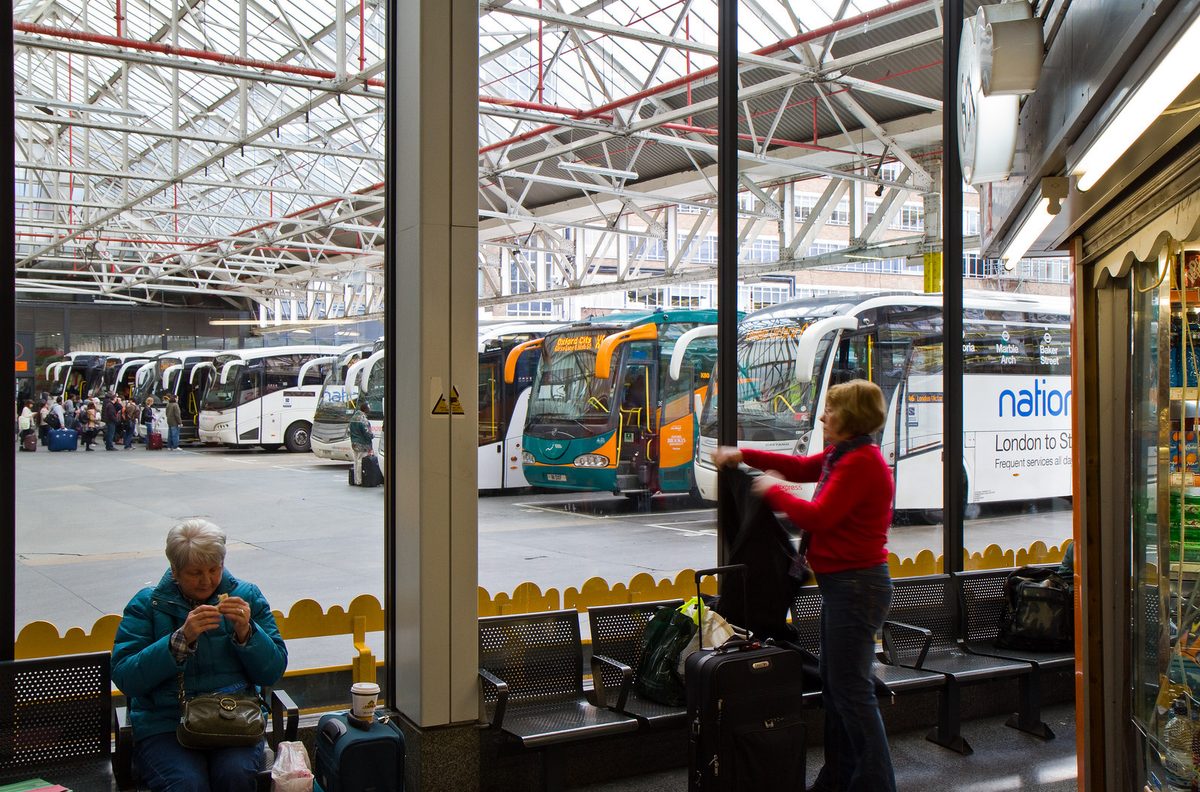
Coaches (long-distance buses like National Express and Megabus) are the budget backstop. Slower than trains, but often much cheaper, and they reach some places trains skip. I treat them as a tactical tool, not the backbone — more in the England coach travel guide.
The “Last Ten Miles” Problem
This is the single concept that determines whether your car-free trip is a joy or a chore, so let me spell it out.
The train will get you near almost anywhere. It is the last ten miles — from the station to the actual cottage, beach, stone circle, or hilltop village — that breaks people. In a city, the last ten miles is a Tube ride or a fifteen-minute walk. In the countryside, the last ten miles can be a bus that runs twice a day, or no bus at all.
Take the Cotswolds. You can ride a direct train from London Paddington to Moreton-in-Marsh in about ninety minutes. Lovely. But then you want Bourton-on-the-Water, or some honey-stone village you saw on Instagram, and now you are waiting for a rural bus that comes every couple of hours, does not run on Sundays, and stops by 6pm. The train was the easy part. The last ten miles is the problem.
So here is the planning rule I live by: judge a destination by its last ten miles, not by whether it has a station. Before you commit to a base, ask: once I step off the train, how do I get to the things I came for, and how often does that service run? If the answer is “a taxi” or “a bus twice a day,” you have found a hard place. That is fine — just go in with your eyes open, or pick somewhere else.
How to Fill the Gaps (Buses, Taxis, Tours, Walking)
Train-first does not mean train-only. The whole trick to car-free England travel is layering the supplements intelligently.
Local buses. In and around cities, buses are frequent, cashless, and cheap — often a flat fare per journey thanks to the national cap. In the countryside they are the opposite: sparse, slow, and prone to vanishing on Sundays and after teatime. For anything rural, do not guess. Check Traveline — it is the official journey planner that actually knows the obscure rural routes, which generic apps often miss.
Taxis. Underrated for car-free travel. A ten-pound taxi from a country station to your cottage is not a failure of planning; it is the smart move. Budget for a handful of these. In rural areas, save the number of a local firm in advance, because there is rarely a rank waiting and phone signal can be patchy.
Guided day tours. This is the secret weapon for the hard regions. If you want Stonehenge plus a couple of Cotswolds villages, or the Lake District’s high passes, a small-group day tour from a nearby city does in one day, with no logistics, what would take you three frustrating days by bus. I use tours surgically — one or two across a trip — to “unlock” a region I could not otherwise reach car-free. It costs money, but it buys back whole days.
Walking. England’s cities reward walking more than almost anywhere. York, Bath, Cambridge, Canterbury, Durham — you can cross the historic core in twenty minutes. And the long-distance footpaths (the South West Coast Path, parts of the Dales) mean that in some “hard” regions, walking is the transport. If you love walking, slow it right down: see the slow travel England itinerary for that mindset.
Picking Car-Free-Friendly Bases
The art of a no-car trip is base selection. Get this right and you barely think about transport again. My rule: base in places that are (1) on a fast rail line, (2) walkable in themselves, and (3) a springboard for day trips by train.
London is the obvious anchor and the easiest car-free city in the country — frankly one of the worst places in England to have a car. From London you can day-trip to Oxford, Cambridge, Bath, Brighton, Canterbury, Windsor and more, all by direct train. The day trips from London and best day trips from London by train guides map these out, and London public transport for tourists covers the Tube, buses and contactless.
Bath makes a superb southwest base: gorgeous, walkable, and a short hop from Bristol, Salisbury and (with a tour) Stonehenge.
York anchors the north beautifully — direct trains to Durham, Newcastle, Leeds and Edinburgh, plus the medieval city on your doorstep.
Manchester or Liverpool work as northwest bases with big stations, trams, and the Lake District a train ride away.
The strategy is base-hopping: spend three or four nights in one well-connected city, see it and its day trips, then take one train to the next base. You are not packing and unpacking every night, and you are never reliant on a car. For the full philosophy, the England itinerary by train guide is built entirely around this idea, and the broader England itinerary hub shows how the regions fit together.

A Sample 14-Day Car-Free England Itinerary
Here is a concrete England without a car itinerary that I would happily do tomorrow. It is built around four bases, all on fast rail lines, with day trips and a couple of tours to reach the hard bits. Times are approximate and “as of 2026” — check current timetables on National Rail before you book.
Days 1–4: London (base 1). Land, settle, go car-free immediately with contactless on the Tube and buses. Two days in the city, then day trips: Cambridge (~50min by train) and Brighton (~1h) or Canterbury (~1h). No car within a hundred miles of this and you will not miss it.
Days 5–7: Bath (base 2). Direct train from London Paddington, around ninety minutes. Walk the whole city. Day trip to Bristol (15 minutes by train), and take a half-day or full-day guided tour to Stonehenge and a Cotswolds village or two — this is where a tour earns its keep, sparing you the rural-bus misery.
Day 8: Bath → York (transfer day). It is a cross-country rail day with a change (often via Birmingham or Bristol), roughly four to five hours door to door. Make it part of the holiday: window seat, lunch on board, watch the country change from soft southwest to harder northern stone.
Days 9–11: York (base 3). The walled city on foot, the Minster, the Shambles. Day trip to Durham (~45min, one of England’s great small cities) and, if the weather holds, a coastal run to Whitby or Scarborough. All by train.
Days 12–14: Lake District via Manchester or Windermere (base 4). Train toward the northwest; alight for the Lakes at Oxenholme then the branch to Windermere. Base in Windermere or Ambleside, use the lake launches and the seasonal bus network for the gentler valleys, and consider one minibus tour for the dramatic high passes you cannot reach otherwise. This is the “medium-to-hard” end of the trip — go in knowing buses are seasonal and a taxi or tour is sometimes the answer.
Then either loop back to a city to fly home, or continue north into Scotland if your trip runs longer. If two weeks feels like a lot, the 10-day England itinerary trims it sensibly, and the 7-day England itinerary keeps to the easy car-free core (London, Bath, Oxford) without the harder Lakes leg.
Notice what this itinerary quietly does: it spends its “easy” days in cities where car-free is effortless, and only touches a “hard” region (the Lakes) once, with a tour as backup. That is the template. Stack the easy wins, ration the hard ones.
The Regions That Are Genuinely Easy
Let me be specific about where you can forget you ever drove.
London is the easiest, full stop. Dense, comprehensive transit, walkable, and a hub for dozens of day trips. Bath, York, Oxford, Cambridge, Brighton, Canterbury, Salisbury and Durham are all cathedral or university cities you cross on foot in under half an hour, every one sitting on a direct rail line from a major hub. Manchester, Liverpool and Bristol are larger but still walkable in the centre, with trams or good buses and serious rail connections.
In all of these, a car would be a liability — somewhere to park, a tax on your day. This is car-free England at its best, and it is honestly most of what a first-time visitor wants to see. You could build an entire two-week trip from this list alone and never feel you compromised. The best places to visit in England guide is full of these, and a good chunk of the England travel guide assumes exactly this kind of city-hopping.
The Regions That Are Genuinely Hard
And now the honest part, because pretending everything is easy helps nobody.
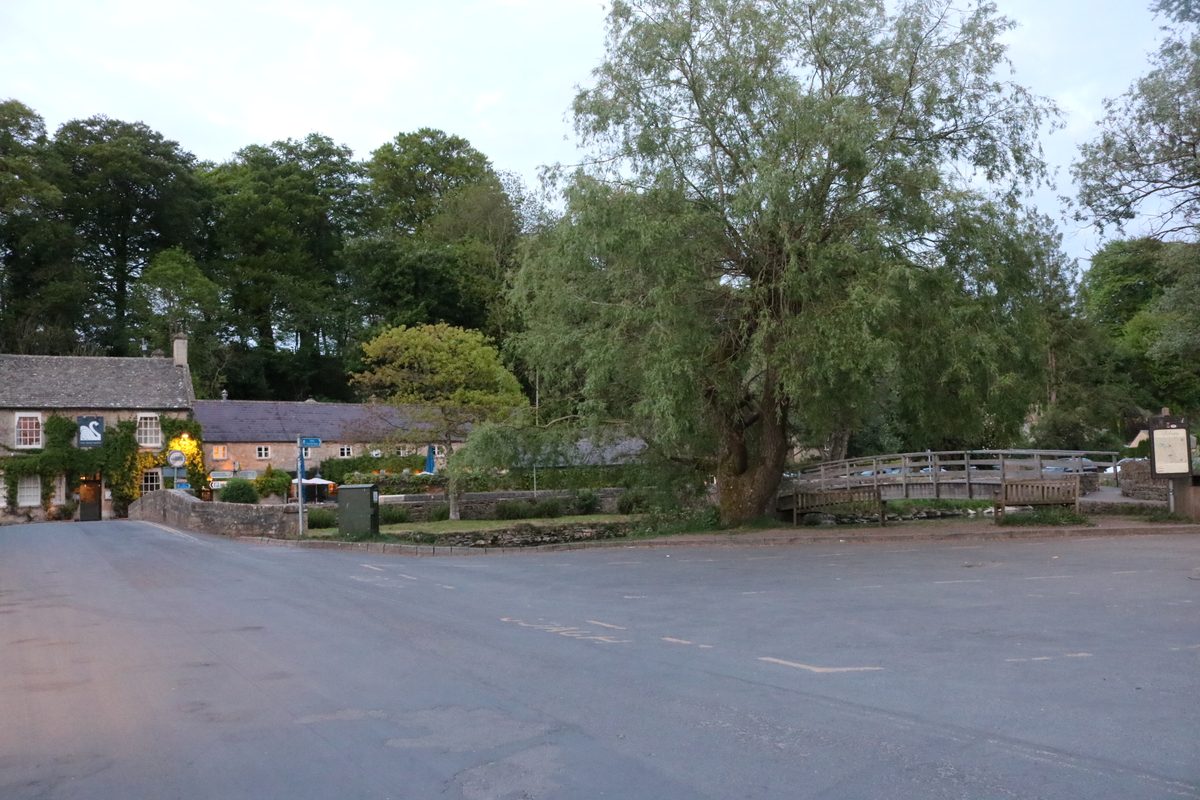
The Cotswolds. Train to the edge (Moreton-in-Marsh, Cheltenham, Kingham), but the villages are joined by thin, infrequent buses that thin out further on Sundays. Doable with patience and a base in Moreton, but it is the classic “last ten miles” trap. If villages are your dream, read the Cotswolds travel guide before deciding car-free — you may conclude a single guided day is the sane way to taste it.
The Lake District interior. Windermere and the main lakes are reachable and the launches are a joy, but the high fells, the dramatic passes, the remote trailheads — those need seasonal buses or a taxi or a tour. Stunning, but not effortless. The Lake District travel guide is candid about this.
Cornwall and Devon’s beaches and villages. Main towns sit on rail lines, including some lovely branch lines, but the coves and clifftop hamlets you came for are scattered far from stations. This is tour-and-taxi country. The Cornwall and Devon travel guide lays out which spots are realistic without a car.
The Yorkshire Dales, the Peak District, and Northumberland. Gorgeous, wild, and built for a car. Gateway towns are reachable; the good stuff is deep rural with sparse service.
I am not telling you to skip these. I am telling you to be realistic. If your heart is set on driving lanes through Cotswold villages at your own pace, stopping wherever the light is nice — that is a road trip, and you should just rent a car for that leg. The renting a car in England and, for visitors, driving in England for Americans guides exist precisely for the moments when car-free is the wrong tool. There is no shame in a hybrid trip: trains between cities, a two-day car rental for one rural stretch. Often that is the smartest plan of all.
Rough Costs: What Car-Free Actually Runs You
Let me frame the money without inventing figures. As of 2026, here is the shape of it.
Trains are your biggest variable. Book advance fares and intercity hops between cities can be very reasonable; turn up on the day and they can be several times more. A pass may or may not beat point-to-point depending on your route — that calculation lives in the England travel passes guide. Budget generously and treat any saving as a bonus.
City transport is cheap and predictable. Contactless with the daily cap means a full day of London buses and Tubes costs a fixed, modest amount. Other cities are similar or cheaper.
Taxis and tours are where the “no car” budget actually goes. A handful of country-station taxis and one or two day tours across a trip add up, but they are still usually less than two weeks of car rental, fuel, insurance and parking combined — and far less stress. When people say car-free is expensive, they are usually comparing walk-up rail fares to nothing; compare the whole picture and it is competitive.
For a proper breakdown, the England trip cost and England budget costs guides do the numbers. My rule of thumb: car-free is cheaper than driving for a city-heavy trip, and roughly a wash for a countryside-heavy one — but with a lot less hassle either way.
A Short Note on Accessibility
Car-free England has real strengths for travellers with mobility needs, and some genuine gaps. Most mainline stations and trains offer step-free access and assisted boarding if you book ahead, and city buses are largely low-floor and wheelchair-accessible. London’s Tube is a mixed picture — many stations are step-free, plenty are not — so route planning matters.
The thinner the rural service, the harder accessibility gets, which is another reason the easy cities suit a wider range of travellers. River services like the Thames Clippers offer ramp access and are a lovely, accessible way to see London. For the full picture, the accessible England travel guide goes deep on assistance schemes and which places work best.
Final Thoughts
I have done England both ways — once with a hire car, fighting hedgerows and parking, and several times train-first with no car at all. The car-free trips were calmer, cheaper than I expected, and somehow more present. You watch the country go by instead of watching the road. You arrive in the middle of cities. You read, you nap, you actually talk to the person next to you.
So here is my honest closing advice. For a classic England trip — London, Bath, York, the great cities and cathedral towns — go car-free and do not look back. It is the better experience, not a compromise. For a countryside-led trip into the deep Cotswolds or the high Lakes, be clear-eyed: either accept the rural-bus rhythm and slow right down, or rent a car for that stretch and keep the rest on rails. A hybrid trip is not a failure. It is often the smartest plan.
Choose your bases like your holiday depends on it, because it does. Get the bases right and England without a car is one of the easiest, most civilised ways to travel anywhere in the world. This is the guide I would want beside me before booking — now go and book the trains early.
For the wider picture, start from the England transport pillar, and round out the planning with England travel tips, the best time to visit England, and where to stay in England.
Research and Source Notes
I leaned on official and primary sources to keep the facts current and the prices honestly hedged. For rail journey times, station coverage and how booking works, I checked National Rail. For rural and regional bus routes — the make-or-break of any car-free countryside plan — I relied on Traveline, the official UK public-transport journey planner that actually knows the obscure rural services generic apps miss. For the realities of visiting heritage sites and the countryside without a car, I drew on guidance from English Heritage and Visit Britain, and I cross-checked the “hard regions” picture against current traveller reporting on the Cotswolds, Lake District and Cornwall. All times and costs are approximate and “as of 2026” — always confirm live timetables and fares before you book, because rural services in particular change with the seasons.
Photo Credits
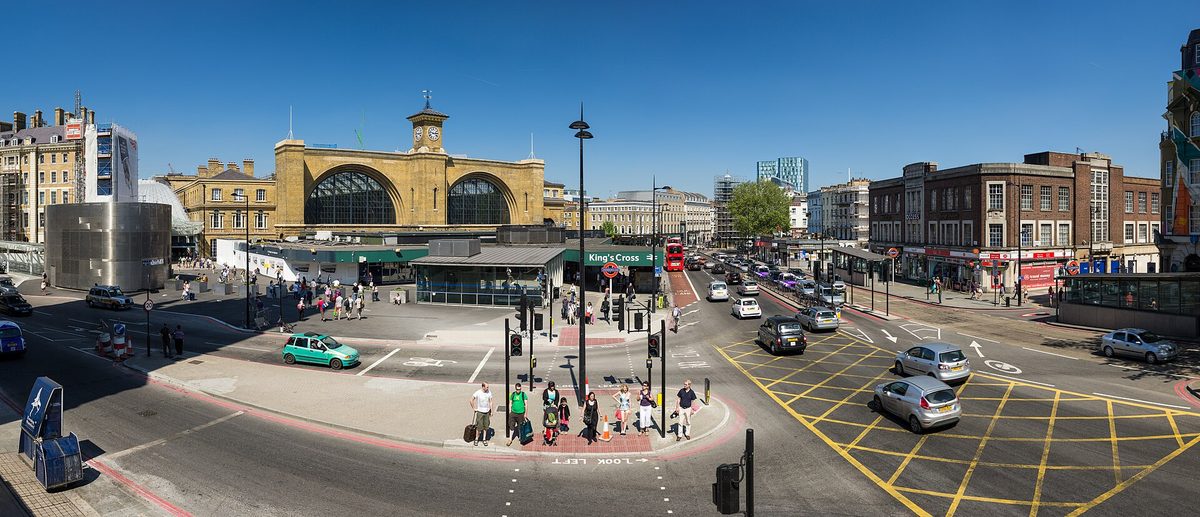
- A traveller boarding an intercity train to travel around England without a car — Photo: Colin / CC BY-SA 3.0 via Wikimedia Commons. Source
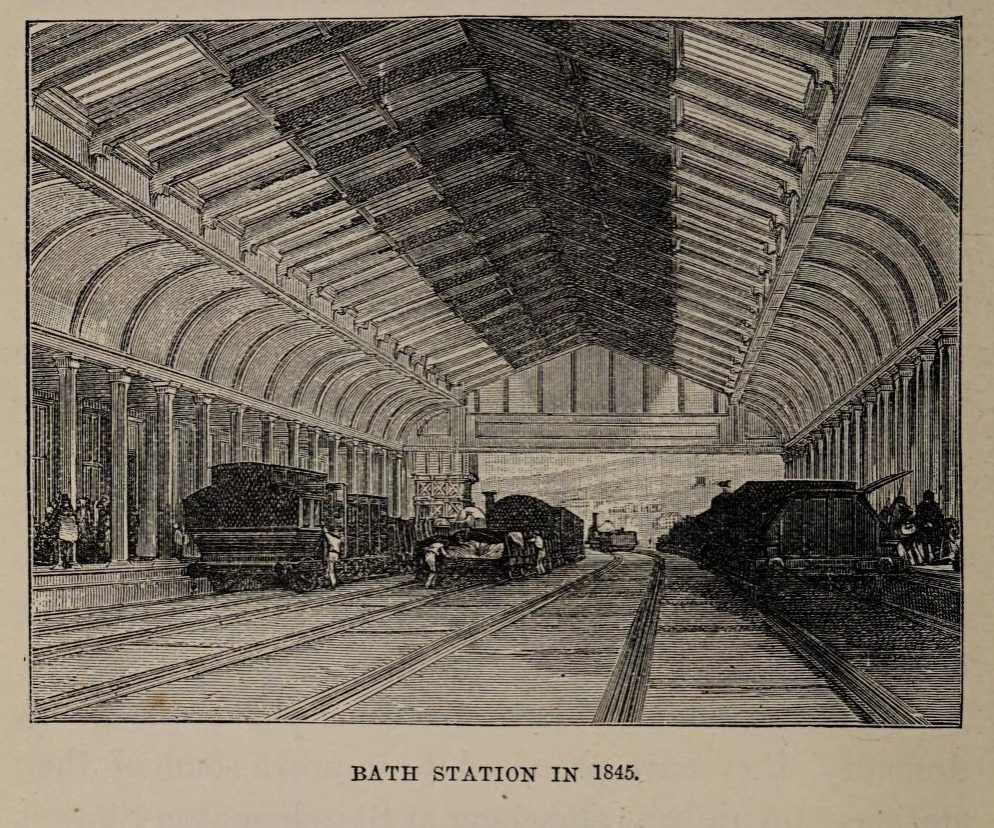
- A train arriving at Bath Spa station, a car-free-friendly base in southwest England — Photo: Unknown authorUnknown author (CC0) via Wikimedia Commons. Source
- York Minster, anchoring an easy car-free base in northern England — Photo: Michael D Beckwith (CC0) via Wikimedia Commons. Source
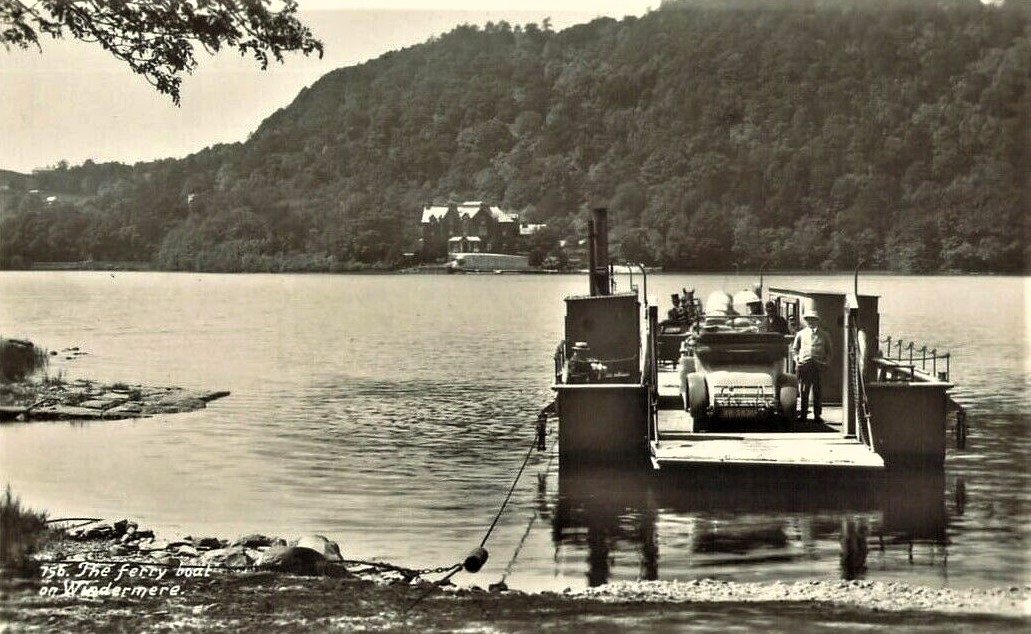
- A lake launch on Windermere, one way to get around the Lake District without driving — Photo: Mark Crombie (CC0) via Wikimedia Commons. Source
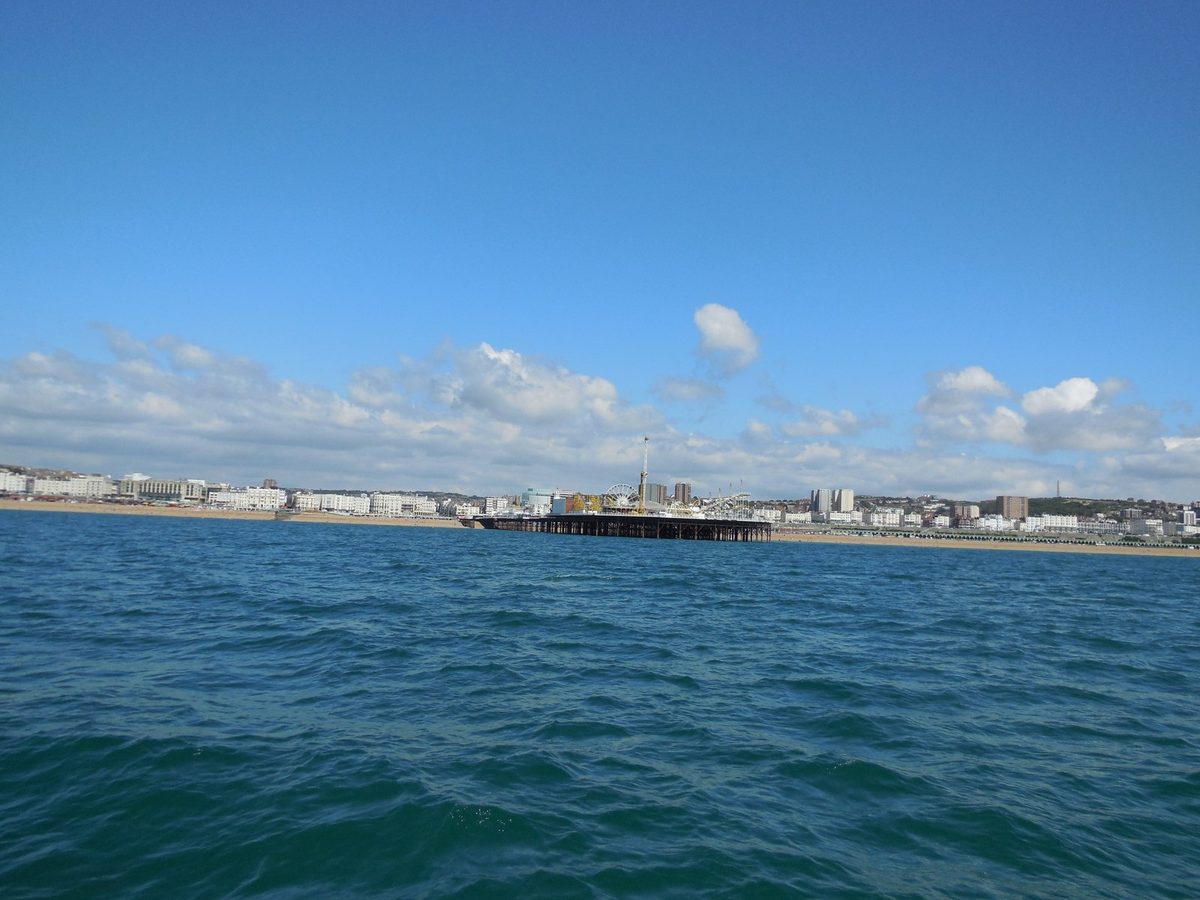
- Brighton’s seafront, an easy car-free day trip from London by train — Photo: Paul Gillett / CC BY-SA 2.0 via Wikimedia Commons. Source
Frequently asked questions
Is it really possible to travel around England without a car?
Yes, comfortably, for most trips. England's rail network reaches over a thousand stations and links every major city, and the cities themselves are walkable with good buses and trams. The only real friction is deep countryside — Cotswolds villages, the Lake District interior, Cornish coves — where buses are sparse. For a city-and-cathedral-town trip, you will not miss a car at all.
What's the cheapest way to get around England without driving?
A mix, chosen per journey. Advance-booked train fares are cheap for intercity hops if you commit early; long-distance coaches are cheaper still but slower; city travel is inexpensive with contactless daily caps. There is no single cheapest mode — the cheapest trip books trains ahead, uses coaches for budget legs, and walks in cities. See the coach and travel-pass guides for specifics.
Can I visit the Cotswolds or Lake District without a car?
Partly. You can reach the edges by train — Moreton-in-Marsh for the Cotswolds, Windermere for the Lakes — and explore the main towns. But the famous villages and remote fells need infrequent rural buses, taxis, or a guided day tour. It is doable with patience, or far easier with one organised tour. If these regions are your main reason for visiting, weigh a short car rental for that leg.
How do I get from the airport without a car?
By train or coach, almost always. Heathrow, Gatwick, Manchester and most major airports have direct rail or dedicated express links into the city, plus coach services. You rarely need a taxi for the airport leg, though it is an option late at night. The England airport transfers guide covers each major airport's car-free options in detail.
Do I need an Oyster card or special ticket for London?
No — a contactless bank card or phone works on the Tube, buses, trams and many trains, with the same daily price cap as Oyster, so most visitors skip Oyster entirely. Just tap in and out (tap in only on buses). It is the simplest system in the country. The London public transport for tourists guide walks through the details.
Will a car-free trip feel like a holiday, or like a logistics project?
In the easy regions, it feels like a holiday — arguably more relaxing than driving, since someone else handles the road. It tips toward "logistics project" only if you base in rural villages with thin bus service. Choose well-connected city bases, ration the hard countryside, and use a tour or two to unlock it, and it stays firmly a holiday.
1 note
Notes are closed on this sheet.