Sheet 68 · England by Train and Transport · 17 min read
England Bus and Coach Travel Guide
England coach travel made simple: National Express vs Megabus vs FlixBus, when a coach beats the train, plus rural buses for the Lakes and Cotswolds.
 Sheet 68
Contents 8 sections
If you remember only one thing about England coach travel, make it this: it is the budget lane and the rural last-mile solver, not the speed lane. Long-distance coaches like National Express, Megabus and FlixBus will get you between cities for a fraction of a walk-up train fare, and local buses reach villages the railway forgot. Both matter. Neither is fast.
I have spent more hours than I care to admit on coaches up the M6 and on tiny single-deckers wheezing between Cotswold villages, and the honest truth is that buses and coaches are wildly underrated by visitors and slightly oversold by people who only ever take the train. So let me give you the real picture, with route numbers, operator names, and prices hedged the way prices should be hedged.
Quick Answer: Is England coach travel worth it?
Yes, for two specific jobs. For long city-to-city hops, England coach travel is the cheap option: fares often start around a few pounds if you book early, versus train fares that can run two to five times higher. The trade is time and traffic. For places trains do not reach, the cheap option becomes the only option, and a £2–£3 local bus is your last mile into the Lake District fells or a Cotswold hamlet.
First, the vocabulary, because it trips up nearly every visitor.
In England, a coach is a long-distance, intercity vehicle: comfy seats, luggage hold underneath, a toilet on board, booked in advance for a named departure (think National Express, Megabus, FlixBus). A bus is local: you flag it or wait at a stop, pay as you board, hop on and off, and it pootles around a town or between nearby villages. Same idea, very different beasts. When a Brit says “get the coach to Manchester,” they mean the big intercity vehicle. When they say “the bus into town,” they mean the local one. Get this distinction straight and half the confusion melts away.
At a glance: which wheels for which job
| Option | Cost feel | Speed | Best for |
|---|---|---|---|
| National Express (intercity coach) | £ to ££ (cheaper booked early) | Slow but steady; motorway speeds | Wide network, comfort, airport runs, towns Megabus skips |
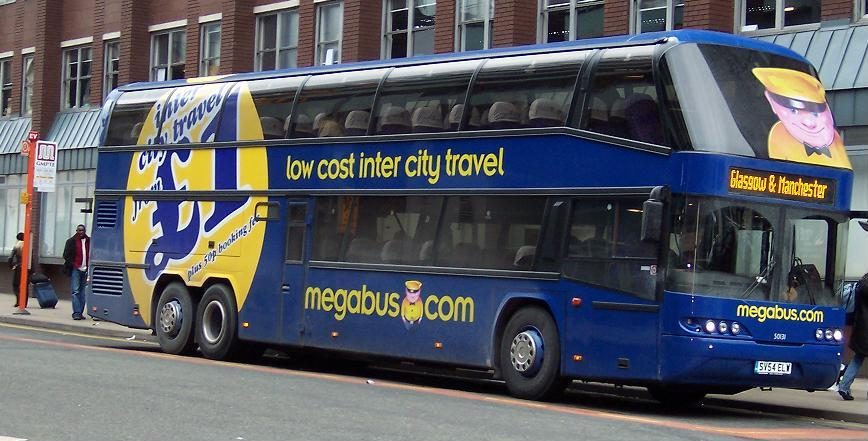
| Megabus (intercity coach) | £ (famously cheap, £1 fares exist) | Slowest of the three on some routes | Rock-bottom budget travel, students, busy city pairs |
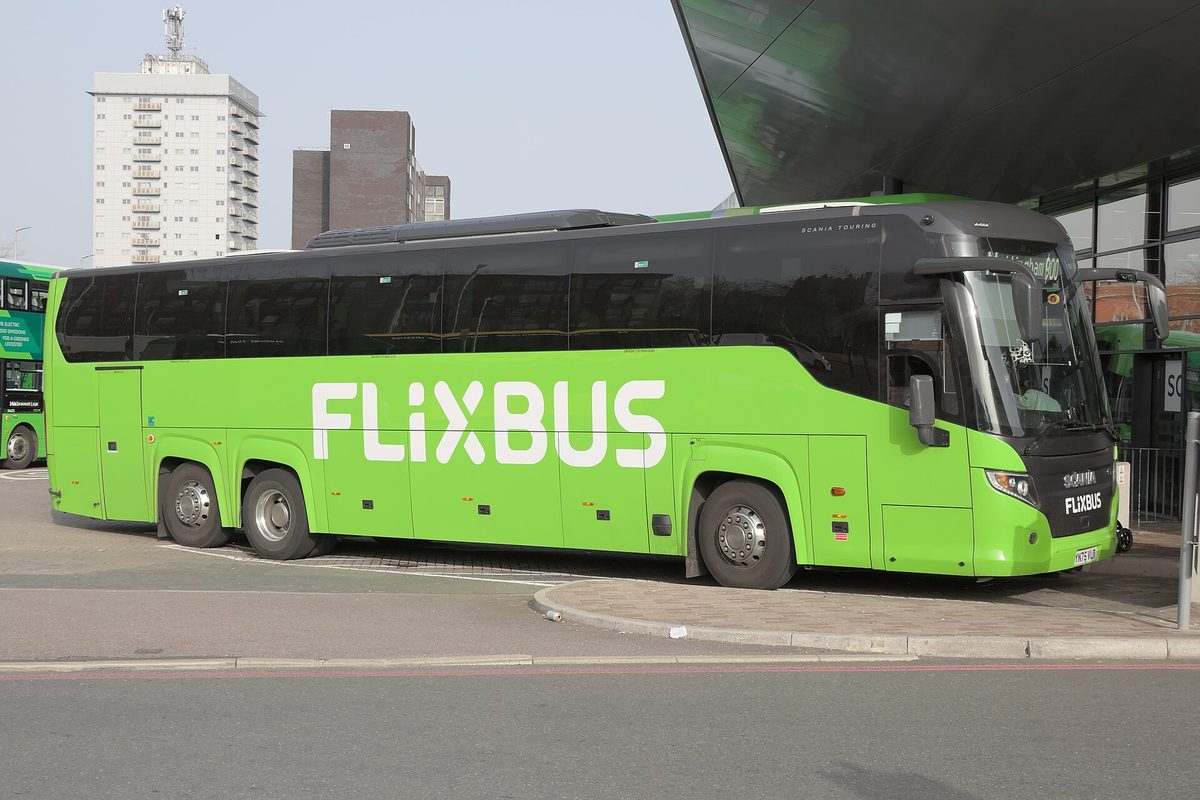
| FlixBus (intercity coach) | £ to ££ | Comparable to the others | App-first travellers, live tracking, growing UK network |
| Local town bus (e.g. London, Manchester) | £ (fare-capped, ~£1.75–£3 a ride) | Stop-start, traffic-dependent | Getting around a city without the Tube/tram |
| Rural/scenic bus (e.g. Stagecoach 555, 599) | £ (fare-capped, day tickets available) | Leisurely, scenic | The last mile into national parks and villages |
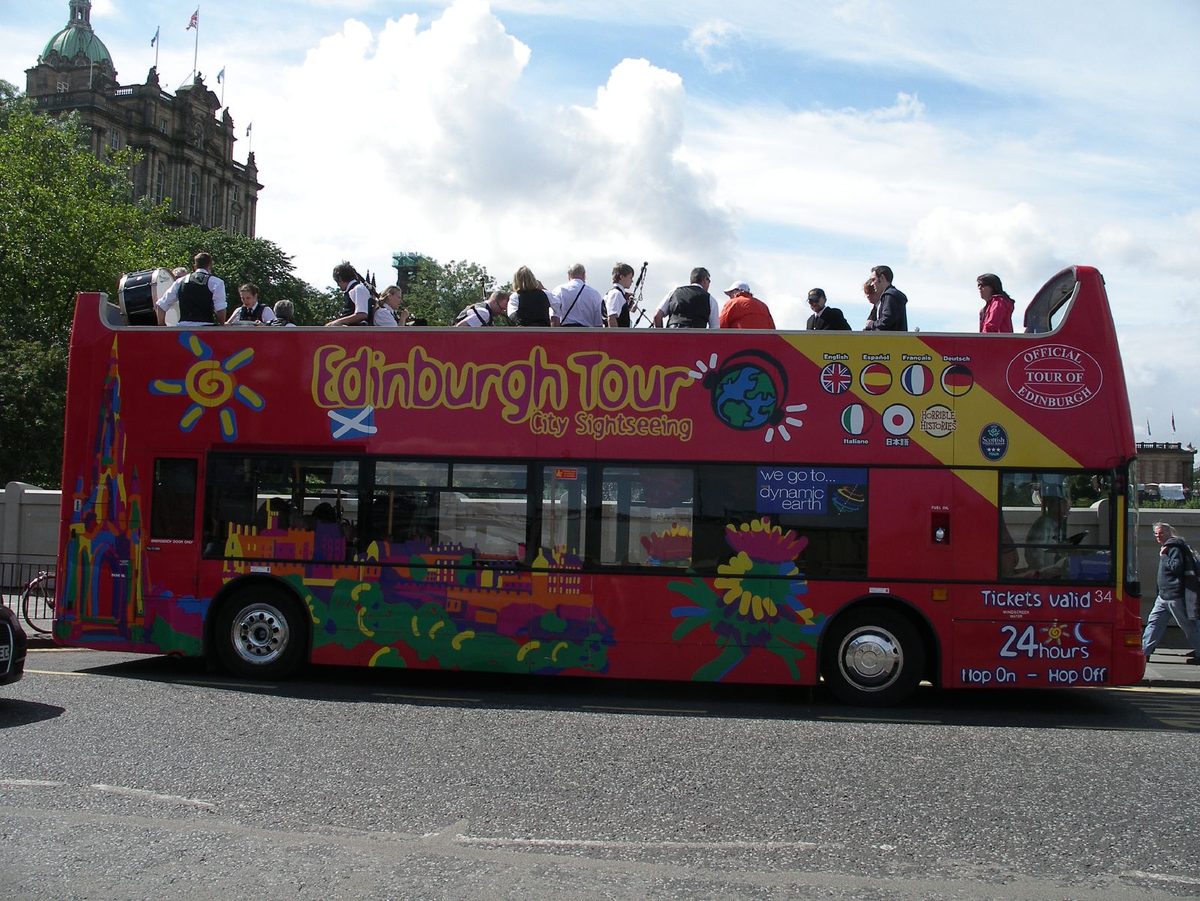
| Open-top sightseeing bus (e.g. Stonehenge Tour) | ££ (tourist-priced, hop-on-hop-off) | Slow by design | Awkward sights with no public route; doubles as transport |
Now let me unpack each lane properly.
Coach vs train (and bus vs coach): the honest trade-offs
Here is the trade in one sentence: a coach saves money and costs time — sometimes that trade is worth it, sometimes it isn’t.
Take London to Manchester. By train it is roughly two hours and ten minutes on a fast service. By coach it is more like five hours, sometimes longer if the M6 sulks. But a coach booked a couple of weeks out might be a fraction of a flexible train fare. London to Edinburgh is starker still: the train is around four and a half hours, the coach can be nine hours or an overnight haul. For that one, I take the train unless the coach is genuinely a tenth of the price and I have nowhere to be.
So when does the coach actually win? In my experience, five situations:
- Price is the whole point. Students, backpackers, anyone counting pennies. Advance coach fares undercut walk-up rail by a country mile.
- The train fare spiked. Walk up to a rail counter for a same-day London–Bristol and you might gasp. The coach barely moves on price by time of day.
- Specific city pairs. Some routes the coach is nearly as quick relative to the faff, especially shorter inter-city hops or anywhere the rail route is indirect.
- Late-night and odd hours. Coaches run overnight services when trains have tucked up for the night.
- Some airport runs. National Express in particular has a dense airport network — though for the nitty-gritty of any specific airport, see my airport transfers in England guide rather than guessing here.
And when does it lose? When you value your time, when the route is motorway-clogged at rush hour, or when you are crossing the country and the rail line is fast and direct. For the full head-to-head on the railway side, my England train travel guide lays out where trains earn their keep.
One more honest note on comfort. Modern coaches are genuinely fine — reclining seats, USB or power sockets, a loo on board, often WiFi. They are not first-class trains, but for a few hours with a podcast and a window seat, they do the job. The bigger comfort gap is between operators, which brings us to the main event.
The big three intercity coach operators
Three names dominate England coach travel: National Express, Megabus, and FlixBus. They overlap, they compete, and — notably — National Express and Megabus now run under a commercial partnership, so on some corridors you may find their services and tickets intertwined. Here is how I think of each.
National Express
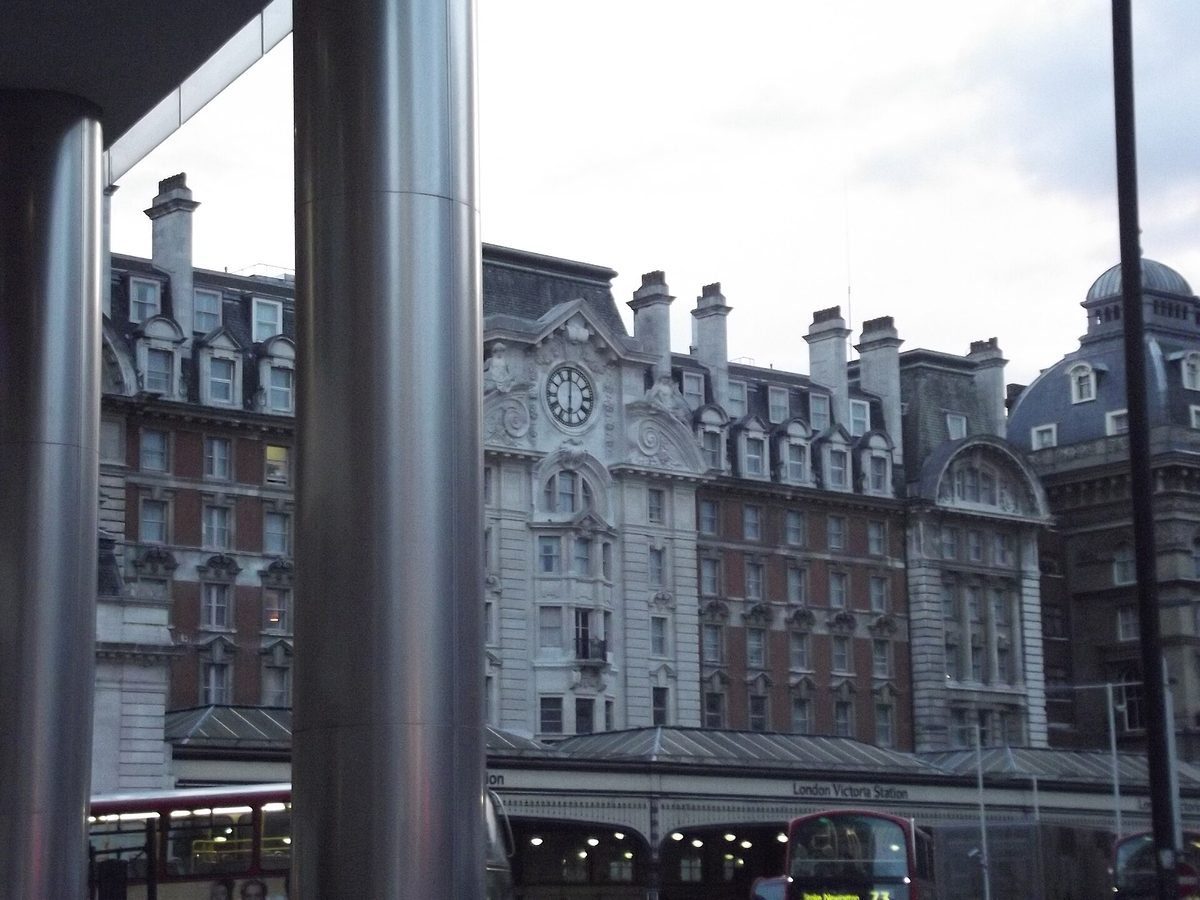
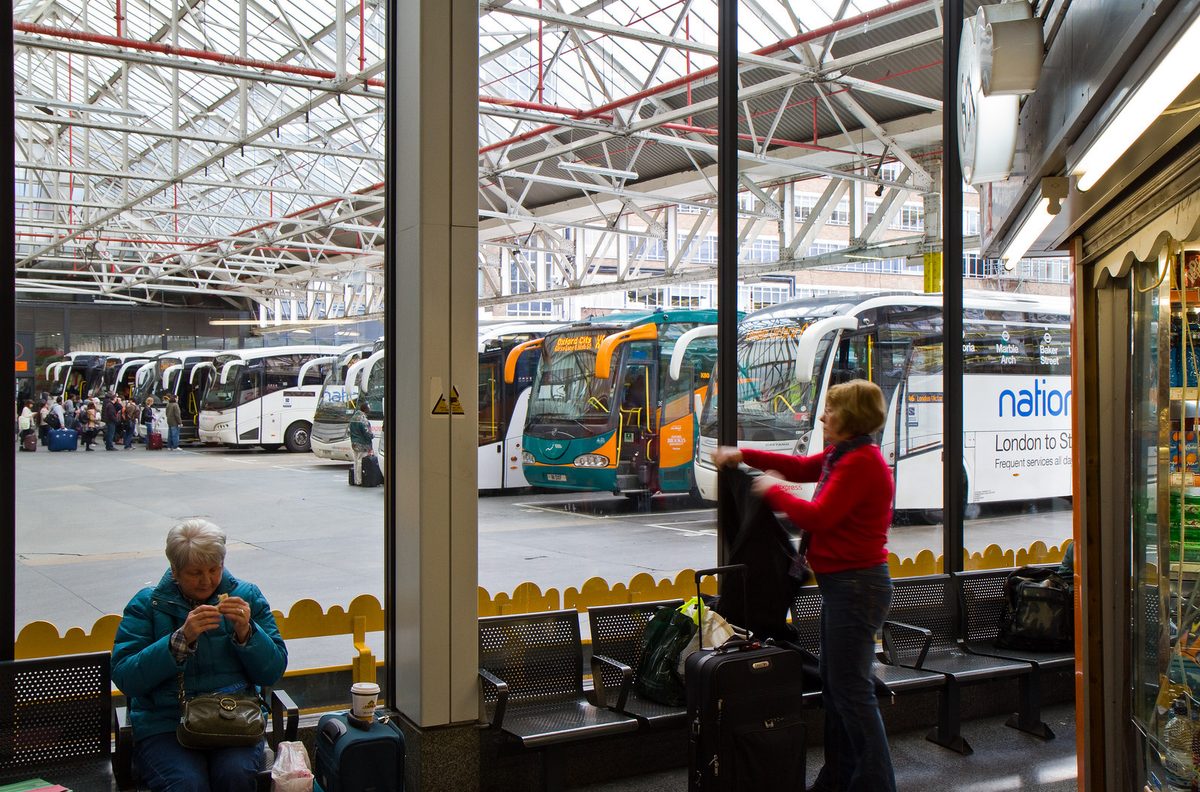
The grandparent of the bunch and the one with the widest reach. National Express serves most towns of any size across England and Wales, not just the big cities, which makes it the default when Megabus simply doesn’t go where you’re going. Comfort tends to be a notch above — proper coach seats, generous-ish luggage, consistent amenities, onboard toilets, family facilities. Prices are dynamic: book four to eight weeks ahead and you’ll find the good deals; walk up on the day and you’ll pay more. Their hub in London is Victoria Coach Station, the city’s one big coach terminal, a short walk from Victoria rail and Tube.
If I’m travelling with luggage, with kids, or to somewhere off the main drag, National Express is usually my pick.
Megabus
The budget legend. Megabus is built around ultra-low fares — yes, the famous £1 seats are real, but they’re the first handful sold on each departure and they vanish fast. Book early (promotional fares appear up to around 60 days out, sometimes more) and you can travel absurdly cheaply. The catch: the network is leaner, concentrated on the busiest city pairs in direct competition with National Express, seats are more basic, and journey times can run a touch longer. Luggage rules are stricter on the cheapest fares, so read the allowance before you pack a wardrobe.
For a student doing London–Birmingham–Manchester on a shoestring, Megabus is hard to beat. That’s its job and it does it well.
FlixBus
The newcomer that competes on tech. FlixBus differentiates with a slick app, e-tickets, free WiFi, and GPS live tracking so you can watch your coach approach in real time. Its UK network has grown steadily and it’s worth a price check on any major route. Ticket flexibility can be generous — changes are often possible until shortly before departure, which I appreciate when plans wobble.
My booking rule: I price the same journey across all three apps (and a comparison site like CheckMyBus is handy for this), because the cheapest operator changes route by route and day by day. Download the app for whichever you book — e-tickets, live tracking, and easy changes all live there. And book early. The single biggest lever on coach price is how far ahead you commit.
A quick word on passes: there are coachcards and discount cards (for under-26s, over-60s, families) that knock money off National Express fares, and these sit alongside the rail railcards and rover tickets. I keep all of that in one place — see England travel passes and railcards so I don’t muddle the two systems here.
When a coach beats the train (and a budget reality check)
I’ll plant a flag: for budget travellers, cheap coach travel England-style is the single best money-saver in the whole transport toolkit. If your itinerary is flexible and your wallet is thin, building city hops around advance coach fares can halve your transport bill versus turning up for trains.
But be realistic about the time cost. A five-hour coach instead of a two-hour train is three hours of your trip spent on a motorway. On a two-week holiday with lots of stops, those hours add up. My rough rule: take the coach on the long, cheap, overnight, or non-urgent legs, and spend a little more for the train when the day is precious or the route is fast.
If you’re trying to do an entire trip without a car and want the strategic overview — which legs to fly, train, coach, or bus — I’ve written that up separately in travel around England without a car. And for honest numbers on what a trip actually costs, England budget costs and the fuller England cost breakdown will keep your expectations grounded.
Rural and last-mile buses: where local buses become essential
Here’s the part most visitors miss entirely, and it’s the part I love. Intercity coaches connect cities. Rural buses England-wide connect the cities to the good bits — the villages, the fells, the coast paths. Trains and coaches drop you at a market town; the local bus carries you the last mile into the landscape. Learn to use them and you unlock car-free corners of the country that most tourists assume require a hire car.
Let me walk through the regions that matter most.
The Lake District: bus heaven
The Lakes are, hands down, the easiest national park in England to explore by bus. Two routes do most of the heavy lifting.
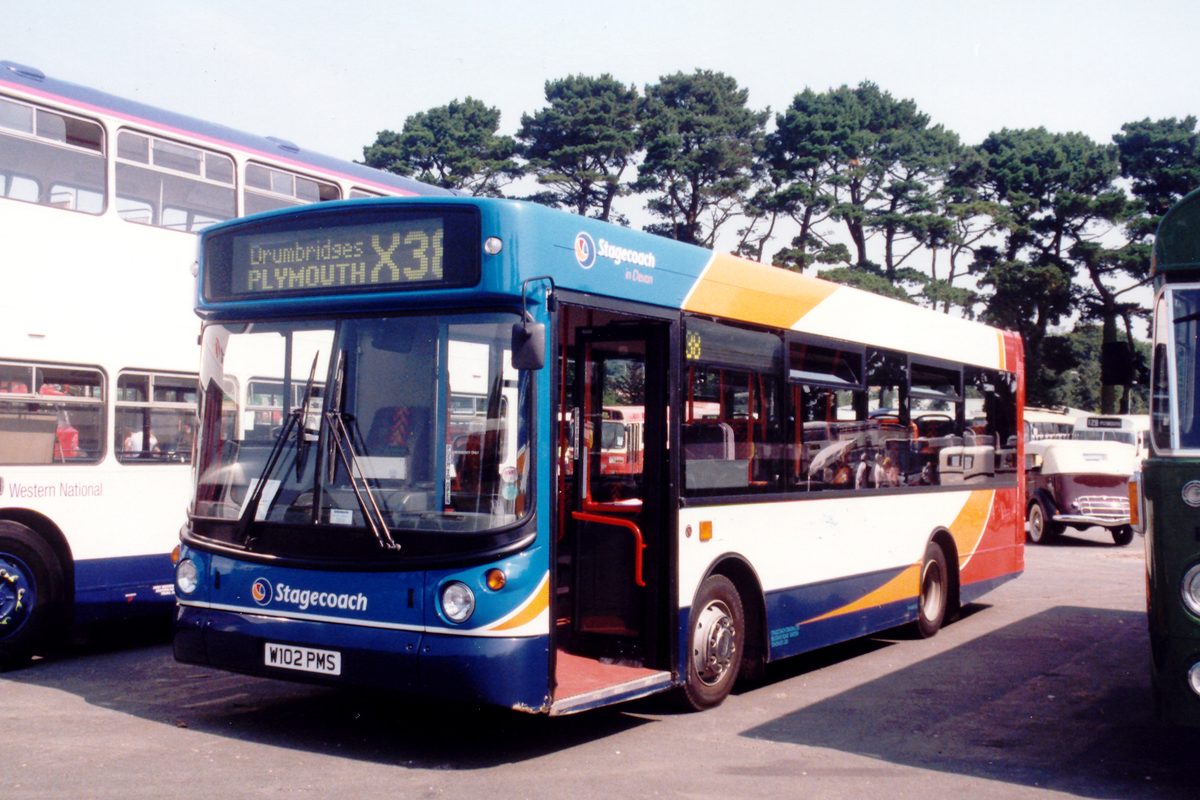
The Stagecoach 555 is the spine of the central Lakes — a frequent, year-round service running roughly Lancaster to Keswick via Kendal, Windermere, Ambleside and Grasmere. It threads through genuinely jaw-dropping scenery, has USB charging and table seating, and announces the stops, so you won’t sail past your fell. Walkers build whole itineraries around it: ride out, walk between two stops, ride back. It’s brilliant.
The open-top 599 is the show-off. It loops between Bowness, Windermere, Ambleside and Grasmere roughly every 20 minutes in season, stopping at or near Brockhole visitor centre, Waterhead, Rydal and Dove Cottage, with audio commentary as you go. In spring and summer the roof is off and the views are absurd; in winter it’s enclosed and cosy. It connects neatly with the mainline station at Windermere. Honestly, riding the 599 on a clear day is a sightseeing experience in its own right, and it costs a tiny fraction of any organised tour.
A Stagecoach day or multi-day ticket (often branded for exploring the Lakes) usually pays for itself fast if you’re hopping on and off. For the wider region — where to base yourself, which walks pair with which bus — see my Lake District travel guide.
The Cotswolds: gorgeous, but plan harder
The Cotswolds are the flip side. Stunning, but a public-transport puzzle: around 800 square miles of scattered hamlets linked by tiny lanes, served by a patchwork of operators rather than one tidy network. Busy routes might run hourly; many run only two to four times a day, and Sundays can be a near-blank. This is the region where I tell people: check the timetable before you fall in love with a village.
The workhorse you’ll meet most is the Pulhams 801, which Pulhams has run in some form since 1934. It links Cheltenham with Bourton-on-the-Water, Stow-on-the-Wold, Moreton-in-Marsh and on to Chipping Norton, with a roughly hourly service Monday to Saturday on the core stretch and handy connections to trains at Moreton-in-Marsh station. From Moreton you can reach Stow in around 20 minutes, Bourton in about 30, and Slaughter Pike (a short walk from Lower Slaughter) in between. Stagecoach runs other useful Cotswold routes too, so you’ll mix operators on a single day out.
For villages off every scheduled route, Gloucestershire runs an on-demand minibus called The Robin that you book to fill the gaps — a genuine lifesaver for the deep-lane hamlets. Base yourself somewhere on a train line and a bus route — Moreton-in-Marsh is my pick — and build days around the timetable rather than against it. My full Cotswolds travel guide goes village by village.
Other parks and the coast
Across England, national-park and coastal bus routes quietly do the same job. In Cornwall and Devon you’ll find seasonal coastal buses linking harbour towns and trailheads where parking is a nightmare and lanes are single-track — riding the bus and walking a coast-path section between stops is often the smartest way to do it. I cover the regional specifics in the Cornwall and Devon travel guide, and for the wider walking-and-buses combo, England national parks and hiking is the companion piece.
The pattern repeats everywhere: train or coach to the gateway town, local bus to the trailhead. Once it clicks, you stop needing a car for an awful lot of trips.
Tickets, fares and apps: paying without the faff
The good news for visitors: paying for buses in England has got dramatically simpler. Here’s the modern playbook.
Contactless tap-on is the default on most town and city buses. Touch your contactless bank card or phone on the yellow reader as you board — no need to buy a paper ticket, and in many cities no need to tap off. Cash is increasingly not accepted on city buses (London hasn’t taken cash for years), so always have a contactless card or phone ready. One tip: if you carry two contactless cards, keep them apart and use the same one all day, or you’ll break your daily fare cap.
The England bus fare cap is your friend. As of 2026 there’s a national cap of around £3 on most single bus journeys in England, and the scheme has been extended (currently to March 2027). It’s voluntary, so a handful of operators sit it out, but the vast majority take part — meaning a single local bus ride is capped at roughly £3 however far you go. Some regions go lower: London has a flat single of about £1.75 with a “Hopper” fare letting you change buses free within an hour, and Greater Manchester caps adult singles at around £2. Day tickets and operator day-rider passes often beat even the cap if you’re hopping on and off a lot. (Treat these figures as “around” and “as of 2026” — fares nudge, and TfL adjusts its prices most years.)
For planning rural buses, two tools do the job. Use Traveline (the national journey-planner that stitches together every operator’s timetable) to find out whether a bus exists between two rural points and when. Then use the relevant operator’s own app — Stagecoach, Pulhams, and the rest — to confirm live times and buy day tickets. I always screenshot the timetable for the return leg, because rural last buses can be early and missing one is a long walk.
The intercity coaches work differently: book a named departure in advance via the National Express, Megabus, or FlixBus app, get an e-ticket, and show it as you board. No tap-on, no cap — these are reserved long-distance services, and the earlier you book, the cheaper they are.
One last cross-reference: if you’re weighing whether a rail rover or a railcard might be better value than paying as you go, I keep that comparison in whether a rail pass is worth it so it doesn’t clutter the bus story here.
Tours-as-transport: the hack for awkward sights
Some of England’s best sights are maddeningly hard to reach by scheduled bus. The clever move is to use a sightseeing or day-tour bus as transport — you’re paying for a ride you couldn’t otherwise get, and the commentary is a bonus.
The textbook example is Stonehenge. There’s no ordinary public bus to the stones. Instead, The Stonehenge Tour runs a hop-on-hop-off bus from Salisbury (it departs from Salisbury rail station and the bus station), looping out via Old Sarum to the monument roughly hourly all year, taking around 30 minutes, with multilingual commentary and tickets buyable online or onboard. Take a cheap train or coach to Salisbury, ride the tour bus to Stonehenge, hop off, look around, hop back on. That’s it — no car, no expensive London day-tour markup unless you want the convenience.
The same logic rescues the Cotswolds for the carless and the time-poor. A guided minibus day tour from a hub like Cheltenham, Bath or Moreton will string together several villages in a day that would take you a frustrating relay of scheduled buses to replicate. I’m normally a purist about doing things independently, but for a single packed day in an awkward, low-frequency area, a tour-as-transport is a legitimate and often cheaper-on-time call.
You’ll find more of these clever connections in my day trips from London guide, where half the trick is knowing which sights have a ready-made bus and which need the tour hack.
Final Thoughts
England coach travel is two tools in one toolbox. The intercity coach — National Express, Megabus, FlixBus — is your budget mover between cities: cheap if booked early, comfortable enough, and slower than the train. The local and rural bus is your last mile: the £2–£3, fare-capped ride that carries you from the gateway town into the fells, the villages, and the coast paths a car-free traveller would otherwise miss.
Use the coach when price matters and you have the hours to spare. Use the local bus everywhere the train stops short. Tap contactless in the cities, plan with Traveline and the operator apps in the countryside, book your intercity seats ahead, and lean on a tour-bus when a sight like Stonehenge has no scheduled route. Do that, and you’ll travel cheaply, see more of the real England, and barely miss having a car.
For the bigger picture — how buses and coaches slot in alongside trains, hire cars, and flights — start at my England transport hub. And if you’re still shaping the trip itself, best places to visit in England, the sample England itinerary, and best time to visit England will help you decide where all these buses should take you. A few England travel tips and the broader England travel guide round things out.
Research and Source Notes
Researched June 2026. Operator details, networks, comfort and luggage notes verified against the official sites and current coverage for National Express (nationalexpress.com), Megabus (megabus.co.uk, including the Megabus x National Express partnership), and FlixBus (e-ticketing, app, live tracking). London hub confirmed as Victoria Coach Station.
Rural and scenic bus details verified against Stagecoach (stagecoachbus.com) for the Lake District 555 (Lancaster–Keswick via Kendal, Windermere, Ambleside, Grasmere) and the open-top 599 (Bowness–Grasmere, ~20-minute frequency in season), and against Visit Lake District. Cotswolds routes — the Pulhams 801 (Cheltenham–Bourton–Stow–Moreton–Chipping Norton) and the on-demand Robin minibus — checked against Pulhams (pulhams.co.uk), Gloucestershire County Council guidance, and Cotswolds tourism sources.
Fares and ticketing reflect the GOV.UK £3 national bus fare cap (extended to March 2027; voluntary participation), London’s ~£1.75 single and Hopper fare via TfL, and Greater Manchester’s ~£2 cap, all as of 2026. Contactless tap-on guidance and journey-planning via Traveline confirmed against TfL and national transport sources. Stonehenge Tour bus details (Salisbury departures, ~hourly, ~30 minutes, multilingual commentary) verified against The Stonehenge Tour / Salisbury Reds.
All prices and fares are given as “around” or “as of 2026” and may change; check the relevant operator or GOV.UK before travelling. No exact fares are guaranteed.
Photo Credits
- A National Express coach at Victoria Coach Station, the heart of England coach travel — Photo: Martin Addison / CC BY-SA 2.0 via Wikimedia Commons. Source
- A Megabus coach on the motorway — the budget end of England coach travel — Photo: Original uploader was Radamfi at en.wikipedia (CC0) via Wikimedia Commons. Source
- A FlixBus coach — the app-first challenger in England coach travel — Photo: Aethonatic (CC0) via Wikimedia Commons. Source
- The open-top 599 winding through the Lake District — England coach travel at its most scenic — Photo: Graham Richardson from Plymouth, England / CC BY 2.0 via Wikimedia Commons. Source
- An open-top sightseeing bus near Stonehenge, using England coach travel as a transport hack — Photo: Shadowgate / CC BY 2.0 via Wikimedia Commons. Source
Frequently asked questions
What’s the difference between a coach and a bus in England?
A coach is a long-distance intercity vehicle — reclining seats, luggage hold, onboard toilet, booked in advance for a set departure (National Express, Megabus, FlixBus). A bus is local: you board at a stop, pay as you go, and hop on and off around a town or between nearby villages. When a Brit says “the coach,” they mean the big intercity one.
Is National Express or Megabus better?
It depends on the job. National Express vs Megabus comes down to reach and comfort versus rock-bottom price. National Express has the wider network and slightly nicer seats and amenities — better for luggage, families, and smaller towns. Megabus is the budget king with £1 fares if you book early, but a leaner network and more basic seats. Price-check both; the winner changes by route.
How do I pay for local buses as a tourist?
Just tap a contactless bank card or phone on the yellow reader as you board — no paper ticket needed, and usually no need to tap off. Most city buses no longer take cash, so always carry a contactless card. England’s bus fare cap keeps most single rides at around £3 (lower in London and Manchester) as of 2026, and day tickets can save more.
Are coaches cheaper than trains in England?
Almost always, yes — especially booked in advance. Cheap coach travel England-style can cost a fraction of a flexible train fare on the same route, which is why students and budget travellers love it. The trade is time: coaches are slower and traffic-prone. On long or fast rail corridors the train wins on hours; on price the coach wins nearly every time.
How do I get around the Lake District or Cotswolds without a car?
In the Lakes, lean on the frequent Stagecoach 555 and the open-top 599 — they reach most central villages and trailheads. The Cotswolds are trickier: use the Pulhams 801 and Stagecoach routes, check timetables carefully (some run only a few times a day), and consider the on-demand Robin minibus for off-route hamlets. Plan rural buses with Traveline first.
How far ahead should I book intercity coaches?
As early as you reasonably can. Megabus releases promotional fares up to roughly 60 days out and the cheapest seats sell first; National Express deals are best around four to eight weeks ahead. Booking on the day still works but costs more. Use the operator apps for e-tickets and live tracking, and compare all three operators before you commit.