Sheet 44 · England by Train and Transport · 20 min read
England Train Travel Guide
An honest England train travel guide: how National Rail works, ticket types decoded, where to buy without the fees, big stations, seats and Delay Repay.
 Sheet 44
Contents 12 sections
The first time I tried to buy a train ticket in England, I stood at a Paddington ticket machine and watched the price for the very same train swing from about £30 to over £90 depending on which buttons I pressed. Nobody explained why. The railway just assumed I knew.
You don’t have to learn it the expensive way. This England train travel guide is the thing I wish someone had handed me: a plain-English walkthrough of how the system fits together, what the ticket types actually mean, where to buy so you dodge needless fees, and how to claim money back when a train lets you down. Read this once and you’ll book like a local.
It’s a brilliant way to travel, genuinely. Fast intercity lines, scenery you’d never see from a motorway, no parking, no hire-car excess. The trains are good. It’s the buying that trips people up. So let’s fix that.
Quick Answer: how the England train travel guide breaks down
Train travel in England runs on a single national network branded as National Rail, with the actual trains operated by separate companies (GWR, LNER, Avanti West Coast, Southern and others) on different routes. You buy one ticket that works across operators on your route. The trick to never overpaying: book Advance fares early for set long-distance trips, use Off-Peak when you want flexibility, avoid Anytime walk-up prices, and buy from operator or National Rail sites to skip booking fees.
That’s the whole game in one paragraph. The rest of this guide is the detail behind it.
Here’s how the main fare families compare before we go deeper:
| Ticket type | Cheapest when | Flexibility | Best for |
|---|---|---|---|
| Advance | Booked early (weeks ahead), fixed train | None — that exact train only | Long-distance trips with a firm plan |
| Off-Peak | Avoiding morning/evening rush | Any off-peak train that day(s) | Day trips, sightseeing, flexible plans |
| Super Off-Peak | Quietest times, certain routes | Restricted to specific quiet trains | Squeezing the price down further |
| Anytime | Never “cheap” — it’s the flexible premium | Any train, any time, break journey | Last-minute or unpredictable schedules |
| Split tickets | When fare quirks make segments cheaper | Same train, multiple tickets | Knocking money off almost any route |
Hedge note before anyone quotes me at a barrier: every price in this guide is rough and “as of 2026.” Fares change, and they vary wildly by route and how far ahead you book. Treat my numbers as ballpark, not gospel.
How the railway actually fits together
This is the part almost nobody explains, and it’s why the system feels confusing. So let me draw the map.
Network Rail owns the tracks, signals and most of the big stations. They’re the infrastructure — the steel and concrete. You’ll rarely buy anything from them.
National Rail is not a company that runs trains. It’s the shared public-facing brand and information service (run by the Rail Delivery Group) that ties everything together. The National Rail website and app give you timetables, fares and live running for every operator, impartially. Think of National Rail as the master timetable and rulebook, not a shop in the usual sense.
Train operating companies (TOCs) are the ones with their names on the actual trains. There are well over 20 of them. Each runs services on particular routes:
- GWR (Great Western Railway) — west and southwest from London Paddington: Reading, Oxford, Bath, Bristol, Cardiff, Exeter, Devon and Cornwall.
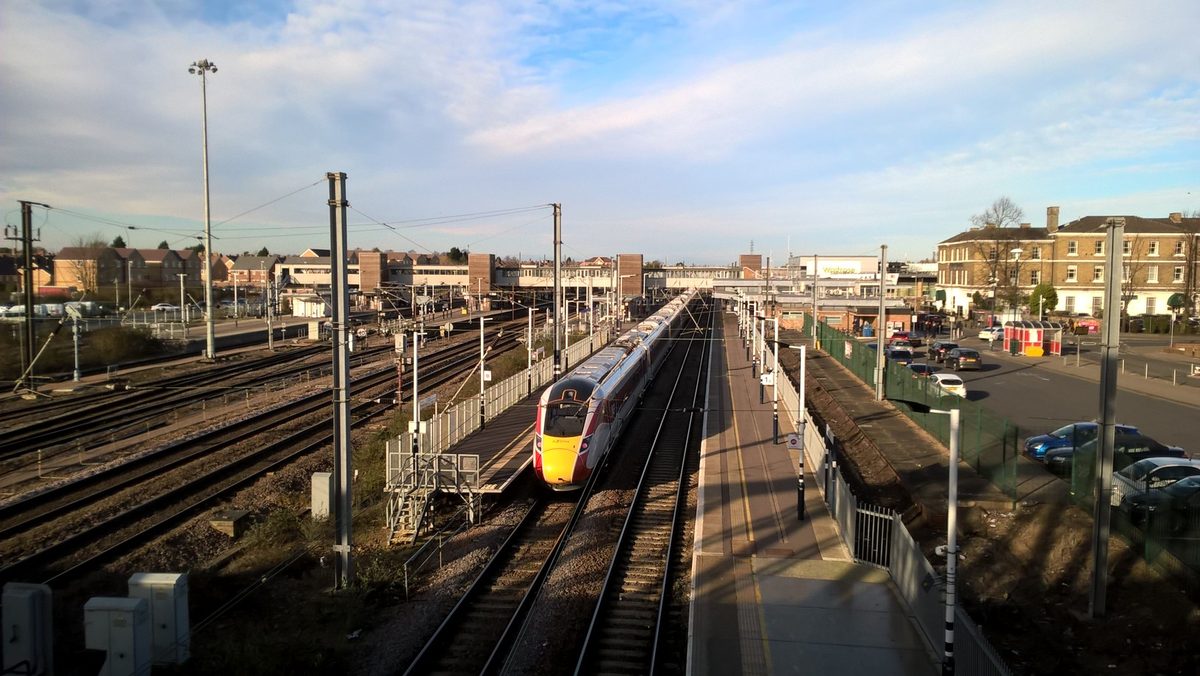
- LNER (London North Eastern Railway) — the East Coast Main Line from London King’s Cross: York, Durham, Newcastle, Leeds and on to Edinburgh.
- Avanti West Coast — the West Coast Main Line from London Euston: Birmingham, Manchester, Liverpool, the Lake District (Oxenholme/Penrith) and Glasgow.
- Southern, Southeastern, South Western Railway, Thameslink, Great Northern — the commuter and regional networks fanning out across the South East from Victoria, London Bridge, Waterloo and elsewhere.
- CrossCountry — long diagonal routes that skip London entirely, like the southwest up to Scotland.
- Plus regional names you’ll meet round the country: Northern, TransPennine Express, East Midlands Railway, Chiltern Railways, and open-access operators like Lumo, Hull Trains and Grand Central.
Here’s the bit that matters for your wallet. Most tickets are “inter-available,” meaning they work on any operator’s train on a sensible route between your two stations. You don’t usually buy “an LNER ticket” — you buy a ticket from A to B, and it’s valid on whoever runs that route. The big exception is operator-specific Advance fares, which are tied to one company’s exact train and are often the cheapest of all.
If you remember only one thing about the structure, make it this: the company name on the train mostly tells you who runs it, not who you have to buy from. You shop around for price; the ticket still works.
Reading a journey: changes, connections and “valid on”
Open National Rail or any decent app, type your two stations, and you’ll get a list of journeys. A few things to read carefully.
“Direct” vs “1 change.” Direct means one train, sit tight. A change means you switch trains at an interchange — the app names the station and shows your connection time. On the inter-available routes you don’t need to match operators; your ticket spans the journey. On the rare occasions you’ve bought operator-specific Advance tickets for each leg, each leg is locked to its own train, so a missed connection is more of a headache (more on protection below).
Connection times. Anything under about 10 minutes at a big station is tight if you’ve got luggage. The official itinerary’s connection is “valid” — if a delay on leg one makes you miss it, you’re generally protected onto the next service on a through ticket. But I still pad connections to 15–20 minutes at giants like Birmingham New Street or Manchester Piccadilly when I can.
That word “valid.” Off-Peak and Anytime tickets are valid on a route, within their time rules. Advance tickets are valid on one specific train only. Always check the time restriction printed on the ticket or shown at checkout before you assume you can hop an earlier service. You usually can’t on Advance, and the on-board penalty for it is brutal.
The ticket types, decoded properly
This is the heart of it. Get these four ideas straight and the machine at Paddington stops being scary.
Advance — cheapest, but committed
Advance fares are released in limited numbers, usually up to around 12 weeks before travel, and they’re tied to one specific train on one specific date. They behave like budget-airline pricing: the earliest, quietest trains go cheapest, and prices climb as seats sell. On a route like London to Manchester or London to York, an Advance single booked weeks out might be somewhere around £20–£40, while the walk-up Anytime fare on the day can be eye-watering — well over £100, sometimes far more.
The catch is rigidity. Miss your booked train through your own fault and that ticket is dead; you’ll buy a new full-price one. Advance tickets are also broadly non-refundable unless the train is cancelled or delayed and you choose not to travel. The upside in 2026 is that many operators now let you change an Advance ticket (date/time) for a small admin fee plus any fare difference — but “change” is not “refund,” so only commit when your plan is firm.
Buy Advance when: you know exactly which train you want, especially for longer intercity hops. That’s where the savings are enormous.
Off-Peak and Super Off-Peak — the flexible sweet spot
Off-Peak tickets cost less than Anytime because you agree to avoid the busiest commuter trains. Broadly, off-peak validity kicks in mid-morning — often around 09:30 on weekdays into and around big cities, sometimes 09:00 elsewhere — and weekends and bank holidays are usually off-peak all day. You’re not tied to one train: any off-peak service that day (and the time window can include evenings, with a quieter spell in the early-evening rush on some routes).
Super Off-Peak is a cheaper, more restricted cousin on certain routes — valid only on the very quietest trains, with tighter time bands. When it exists, it’s a bargain; just read the restrictions.
Buy Off-Peak when: you want a day trip or sightseeing run and can travel after the morning crush. For a wandering, see-where-the-day-goes kind of trip, this is usually the smart choice. If you’re planning that kind of unhurried route, my slow travel England itinerary leans heavily on off-peak flexibility.
Anytime — maximum freedom, premium price
Anytime tickets do exactly what they say: any train, any time, and you can usually break your journey along the way. They’re the most expensive because they’re the most flexible. They make sense if your schedule genuinely can’t be pinned down, or for short hops where the price gap is small. For most leisure travellers on long routes, paying Anytime walk-up is the single most common way to overspend. Avoid it unless you truly need the freedom.
Singles, returns, first and standard
A quick word on the other choices at checkout.
Singles vs returns. The railway has been simplifying long-distance fares so that two singles often cost the same as — or less than — a traditional return, and they let you mix ticket types (an Advance out, an Off-Peak back). My default now is to price two singles and compare; on many intercity routes the old “return is better value” rule no longer holds. For short local journeys, a Day Return can still be tidy and cheap.
First vs Standard. Standard class is perfectly comfortable on English intercity trains — reserved-able seats, tables, plug sockets, decent legroom. First class buys you bigger seats, a quieter carriage and, on some long-distance operators, complimentary food and drink at certain times. Advance First fares are sometimes only a little more than Standard if you book early, which can be a genuine treat. On a packed Friday it can also be the difference between a table to yourself and standing — but never assume; check.
Split ticketing: the legal money-saver
Here’s the quietly brilliant trick. Split ticketing means buying two or more tickets that together cover your journey instead of one end-to-end fare — and paying less, on the exact same train, often in the same seat.
Why does it work? Because fares are set independently for different chunks of the network and the pricing doesn’t always add up logically. A ticket from A to C can cost more than a ticket A-to-B plus B-to-C, even when it’s one through train that happens to stop at B. It’s a quirk, not a hack, and it’s completely legal — explicitly allowed under the National Rail Conditions of Travel.
The one real rule: the train must actually stop at each station where your tickets change. You don’t have to get off; you just need to be “ticketed” for every segment. If a guard checks between A and B, you show the A–B ticket; after B, you show the next one.
You don’t need to work the splits out by hand. Split-finder tools and several booking sites do it automatically and bundle the tickets together (ideally all as e-tickets so you’re not juggling paper). Savings range from trivial to dramatic depending on the route. I always run a quick split check on longer journeys before paying — it takes seconds and sometimes saves a tenner or more.
Two honest caveats. First, splits sometimes assign you reserved seats only for part of the journey, so glance at the seat reservations. Second, some splitting services add their own fee or commission — which brings us neatly to where you should be buying.
Where to buy — and how to dodge the fees
This is where people leak money without realising it. Same ticket, different shop, different price.
The golden rule: the ticket itself costs the same wherever you buy it — fares are regulated. What changes is the booking fee some retailers tack on. So buy from a seller that doesn’t charge one.
National Rail (nationalrail.co.uk). Brilliant for planning — timetables, fares, live running, the lot — and it’ll then hand you off to operators to complete the purchase. Use it as your control tower.
The train operators’ own sites and apps (GWR, LNER, Avanti, Southern, etc.). These generally sell without a booking fee, and the ticket is valid across operators anyway. My habit: find the cheapest fare on National Rail, then buy it on whichever operator runs the route. LNER and GWR have particularly good apps.
Trainline (thetrainline.com). Slick, comprehensive, sells everything in one place — but it typically adds a booking fee (often around £1–£3 per transaction, as of 2026; sometimes waived in-app on the day). For tourists who value one tidy app and don’t mind a small surcharge, it’s fine. Just know you’re paying for convenience, and that you can dodge that fee entirely by buying the identical ticket from the operator. Money-saving folks generally steer clear of paying Trainline’s fee when a free option exists.
So, plainly: plan on National Rail, buy fee-free from the operator, run a split check if the journey’s long. That’s the routine that keeps your fares honest.
E-tickets vs ticket collection
Two delivery formats, and one is much better.
E-tickets are barcodes on your phone (or printed at home). You walk up to the gate, scan, and you’re through. No machine, no queue, nothing to lose at the bottom of a bag. On most long-distance routes this is now the default and it’s wonderful. Take a screenshot in case your signal dies.
Ticket on Departure / collection means picking up paper tickets from a machine at the station using your booking reference and the payment card. It’s the older system, still used for some fares and railcard combinations. It works — but build in a few minutes, because those machines grow queues at rush hour, and you’ll need the right card.
When you have the choice, pick e-tickets. Fewer things to go wrong.
Seat reservations and peak vs off-peak timing
Seat reservations on English trains are usually free when offered. On long-distance Advance fares a specific seat is often reserved automatically — look for the carriage/seat number on your ticket, or a reservation slip on the seat itself. On Off-Peak and Anytime tickets you may be able to add a free reservation when booking, or just sit in any unreserved seat (watch for the little reservation labels above or on the headrest). On busy Fridays, holiday weekends and big-event days, a reservation is the difference between a table and the vestibule by the toilets. Reserve when you can.
Peak vs off-peak timing isn’t just about price restrictions — it’s about comfort and stress. Commuter peaks (roughly 06:30–09:30 and 16:00–19:00 into and out of major cities on weekdays) are crowded, and that’s exactly when the cheapest tickets vanish. If you can shift your intercity trips to mid-morning, early afternoon or mid-evening, you’ll pay less and get a seat with elbow room. Sightseeing? Aim to leave London around 10:00 and you’ve usually nailed both.
The big interchange stations (and luggage)
England’s mainline hubs are mostly in London, and each is essentially a doorway to a different part of the country. Knowing which is which saves real confusion.
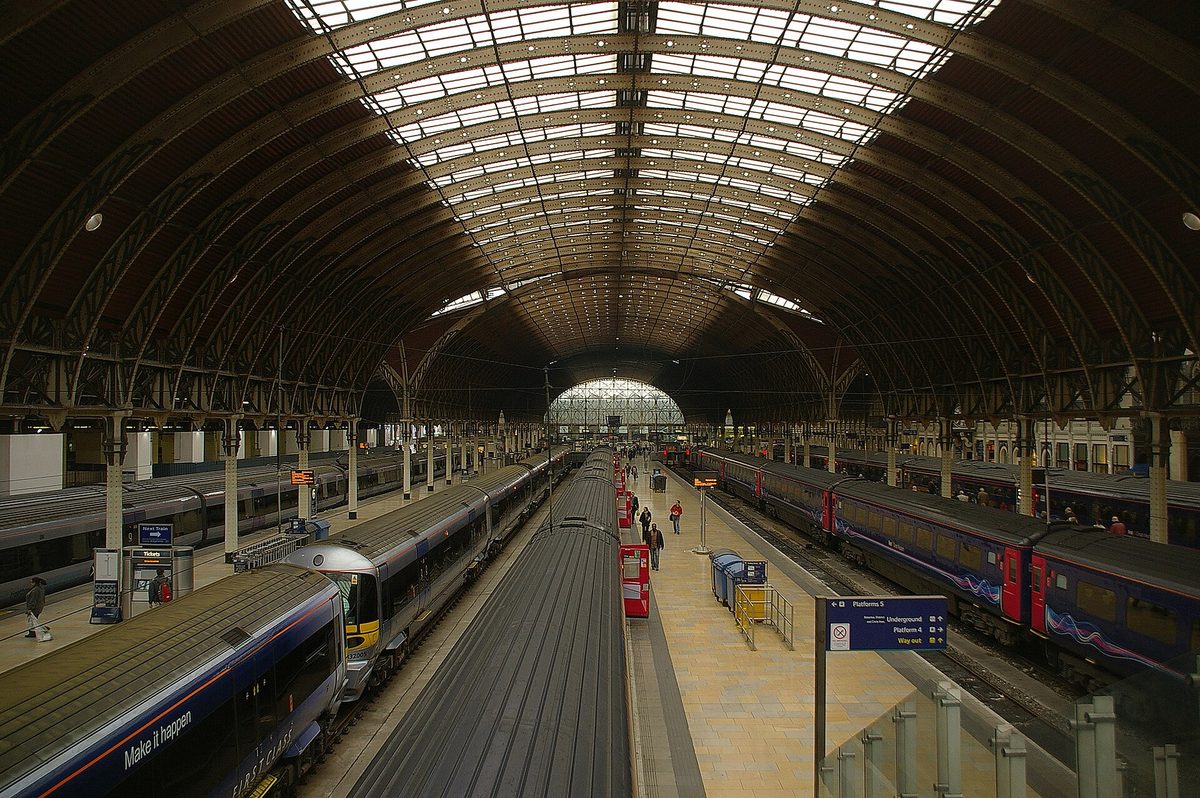
- Paddington — GWR to the west and southwest: Reading, Oxford, Bath, Bristol, Exeter, Devon, Cornwall, South Wales. Also the Heathrow Express.
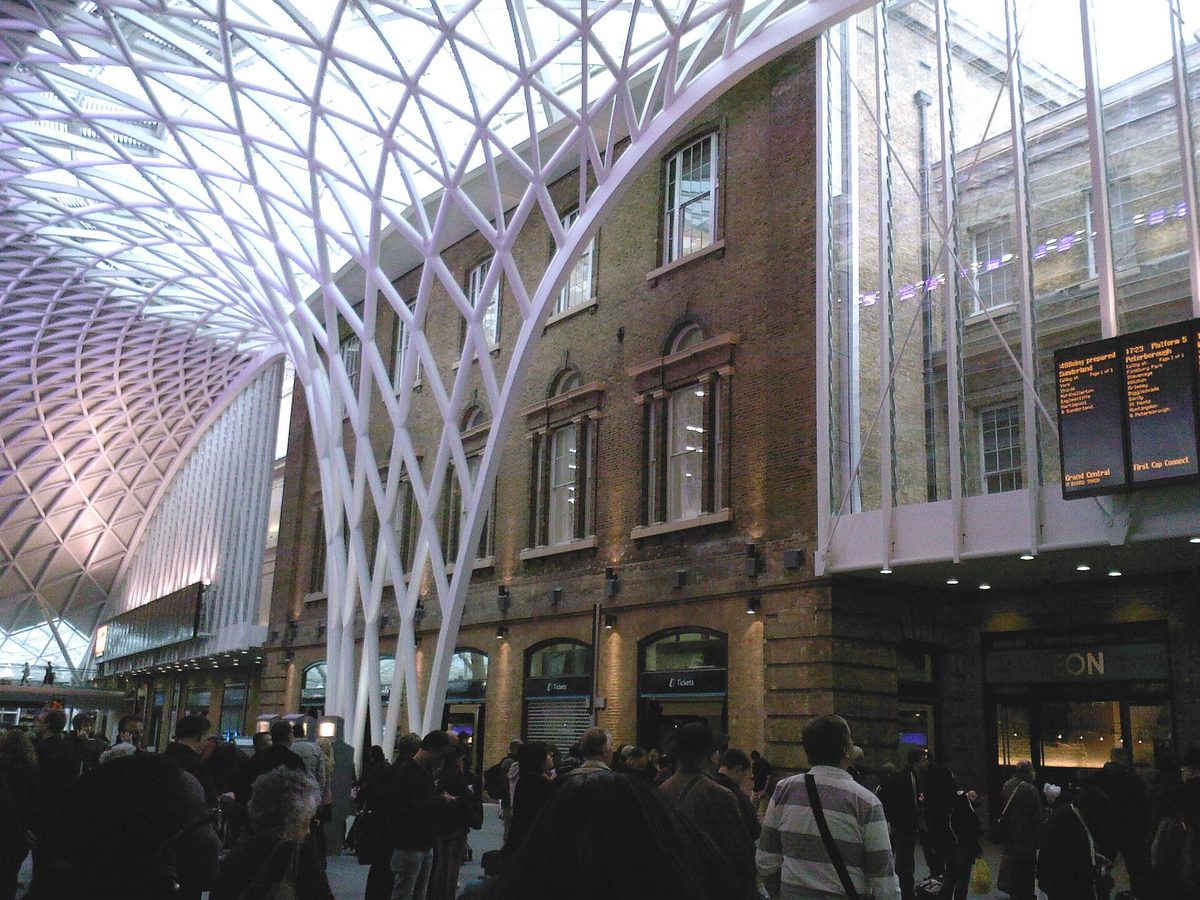
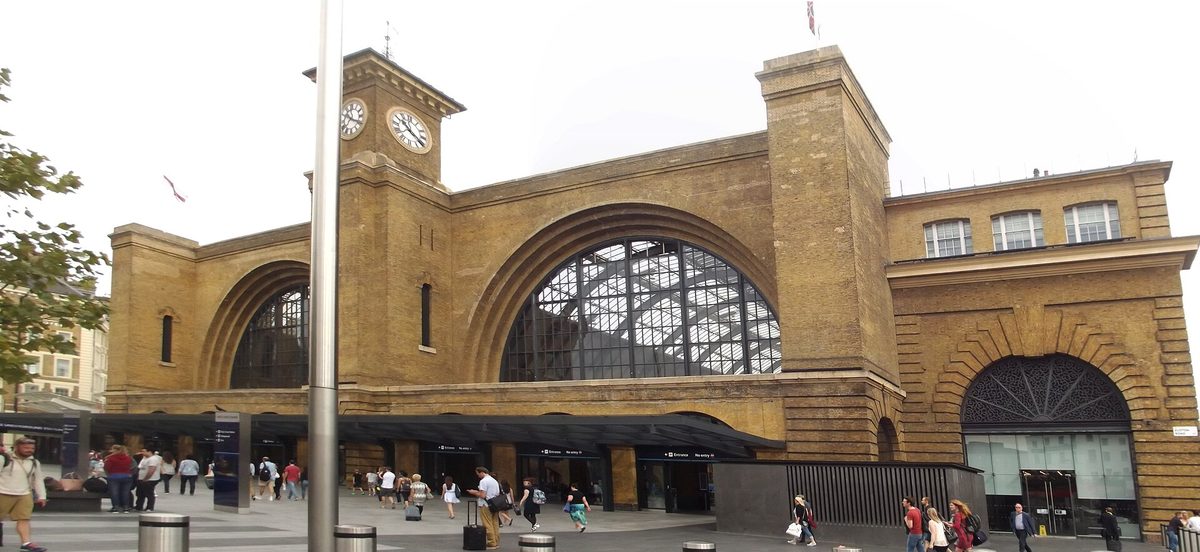
- King’s Cross — LNER (and Lumo, Hull Trains, Grand Central) up the East Coast: Cambridge-ish regional services, York, Newcastle, Leeds, Edinburgh.
- St Pancras International — Eurostar to Europe, plus East Midlands Railway to Leicester/Nottingham/Sheffield and Thameslink running north–south through London. The restored Victorian train shed alone is worth a look.
- Euston — Avanti West Coast up the West Coast: Birmingham, Manchester, Liverpool, the Lake District, Glasgow. (Euston can get crowded and platforms are announced late — arrive with a buffer.)
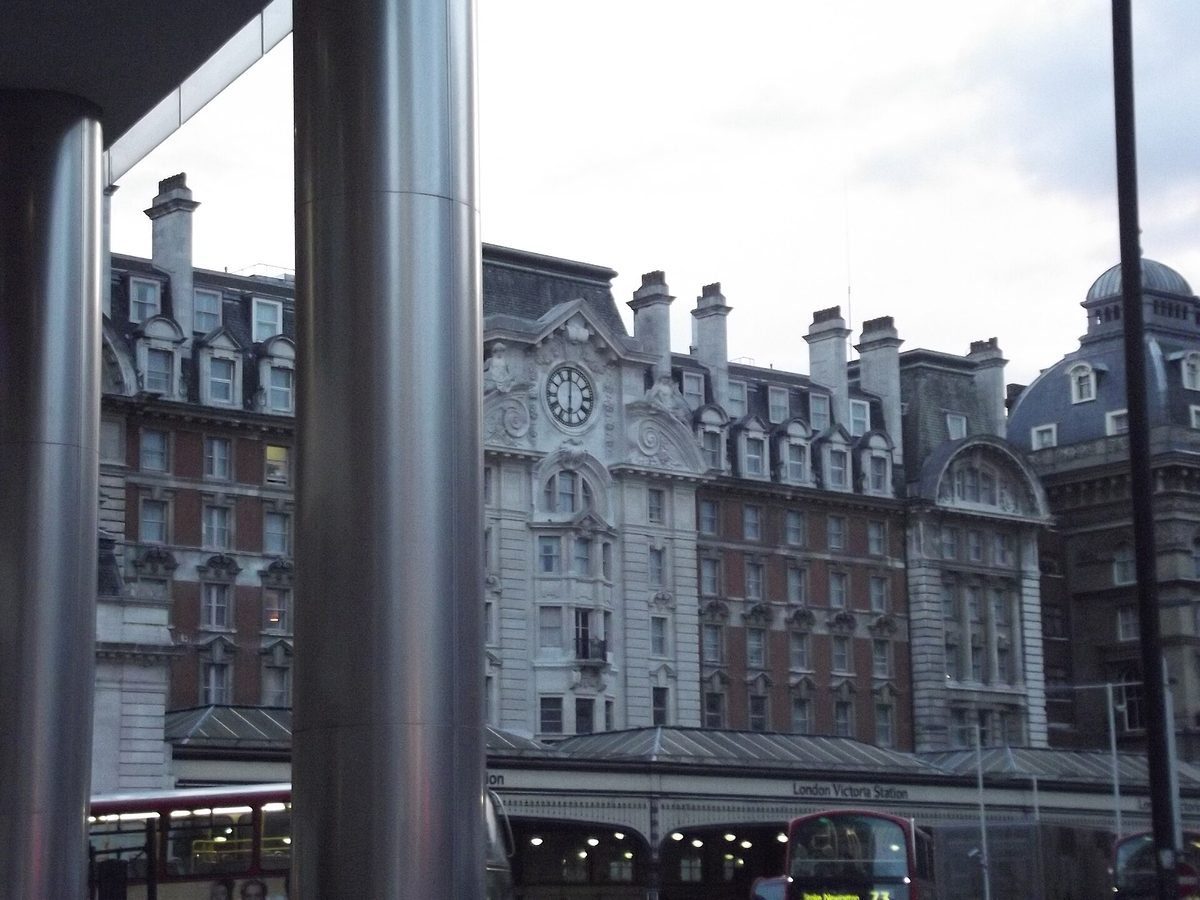
- Victoria — Southern and Southeastern across the South: Brighton, the Sussex/Kent coast, Gatwick Airport via the Gatwick Express.
- Waterloo — South Western Railway to the southwest suburbs and beyond: Portsmouth, Winchester, Salisbury, Windsor.
- Liverpool Street — eastward: Cambridge, Norwich, and the Stansted Express to the airport.
A couple of these double as Underground megahubs, so allow time to walk from the Tube to the mainline concourse. If you’re piecing together airport connections, my airport arrivals guide maps the express links from these stations.
Luggage rules are refreshingly relaxed compared to flying. There’s no weighing, no fees, no check-in. The official allowance is broadly up to three bags (commonly framed as two large plus one small piece of hand luggage) that you can carry and lift yourself, stored on overhead racks, in the seat-end stacks, or in dedicated luggage areas at carriage ends. Common sense applies: don’t block aisles, label valuable bags, and on busy intercity trains grab a luggage rack early because they fill. Bikes usually need a (free) reservation and aren’t allowed on some peak services — check the operator first.
Useful apps and tools
You don’t need many. Here’s my actual kit.
- National Rail app/site — the impartial brain: timetables, fares, and especially live departure boards and disruption alerts. I check it obsessively on travel days.
- Your operator’s app (GWR, LNER, Avanti, etc.) — fee-free buying, e-tickets, live seat info, and usually the cleanest Delay Repay claim flow.
- A split-ticket finder — run your longer journeys through one before paying.
- Citymapper or Google Maps — for stitching the station to the Tube, bus or your hotel at either end.
Turn on disruption notifications for your route the night before. Knowing a line’s in trouble before you leave the hotel is worth more than any clever fare trick.
When things go wrong: delays, refunds and Delay Repay
Trains in England are mostly reliable, but they’re not perfect, and the system for getting your money back is genuinely decent — if you know to use it.
Delay Repay is the nationwide compensation scheme, and most major operators now run “Delay Repay 15.” The threshold and scale are the bit to memorise:
- 15–29 minutes late: around 25% of your single fare back.
- 30–59 minutes late: around 50%.
- 60–119 minutes late: around 100% of the single fare.
- 120+ minutes: up to 100% of a return.
Crucially, it’s based on how late you reach your final destination, not any single leg. If a 10-minute delay on your first train makes you miss a connection and you roll in 45 minutes late overall, you claim for 45 minutes. That’s a big deal on multi-leg trips.
How to claim: keep your ticket (or e-ticket details), go to the delaying operator’s website, fill in the Delay Repay form, and submit — usually within 28 days of the journey. It takes a few minutes and the money comes back to your card or as bank transfer/vouchers. I’ve claimed several times; it’s not a fight, it’s a form.
If you choose not to travel because a train is cancelled or severely delayed, you’re entitled to a full refund — even on an otherwise non-refundable Advance ticket. And if disruption strands you, look out for “ticket acceptance,” where operators let you use your ticket on alternative routes or other companies’ trains to get you home.
One more honest tip: when a train’s cancelled, don’t panic-buy a new ticket. Find a member of staff or check the app — your existing ticket usually still gets you there on the next available service, and you may be owed compensation on top.
Where this guide stops (and what to read next)
I’ve deliberately stayed in my lane here: how the railway works and how to buy smartly. A few neighbouring questions deserve their own proper answers.
- Is a rail pass better than buying tickets? That depends entirely on your itinerary and how far ahead you book — I weigh it up in BritRail pass vs train tickets.
- Railcards and city transport cards (the 1/3-off cards, Oyster/contactless in London, regional travelcards) can stack big savings on top of everything above — that’s the whole of England travel passes.
- Building an entire trip without a car? Start with travel around England without a car, and for the rail-specific version, England itinerary by train.
For the bigger picture, this slots into my master England transport overview, which compares trains against coach travel and renting a car in England. And if you’re still shaping the trip itself, the England itinerary and best places to visit in England are good next stops — many of those routes, like the classic London to Bath day trip and the wider train day trips, live or die on getting the ticket right.
Final Thoughts
The English railway looks baffling from the outside and it really isn’t, once someone pulls back the curtain. The whole thing rewards a little forethought: National Rail to plan, the operator’s app to buy, Advance fares booked when your plan firms up, Off-Peak when it doesn’t, and a thirty-second split check on the long ones.
Honestly, after years of riding these lines, the part I love most isn’t even the savings — it’s the travelling itself. There’s a particular pleasure in sliding out of Paddington with a coffee and a window seat as the city gives way to green, no traffic, no parking, just the gentle business of getting somewhere. Get the ticket right, and that’s the trip you get to have. Get it wrong, and you’ve funded someone’s eye-watering walk-up fare for no reason at all.
So book a little early, buy from the right place, keep your ticket for Delay Repay just in case, and go enjoy the view. The hard part was only ever the buying — and now you’ve got that sorted.
Research and Source Notes
This guide was checked against official and authoritative UK rail sources as of June 2026. Ticket types, buying methods and fare rules draw on National Rail (nationalrail.co.uk), including its guidance on buying a ticket and on split tickets, and on the train operators’ own published information (GWR, LNER, Avanti West Coast, CrossCountry, TransPennine Express and others). The structure of the industry — Network Rail’s role as infrastructure owner, National Rail as the Rail Delivery Group’s information brand, and the train operating companies — is described per Network Rail and standard rail references.
Booking-fee and reseller comparisons reflect published Trainline help information and consumer guidance from outlets such as MoneySavingExpert. Delay Repay thresholds and the claim process follow National Rail’s compensation and refunds guidance and individual operator Delay Repay pages. Station and route details (Paddington, King’s Cross, St Pancras, Euston, Victoria, Waterloo, Liverpool Street) are based on operator and station information. All prices and fees are deliberately approximate and hedged as “around” or “as of 2026,” because real fares vary by route, demand and how far ahead you book; always confirm the live fare at the point of purchase.
Photo Credits
- Travellers reading departure boards in this England train travel guide at London King’s Cross station — Photo: User: (WT-shared) Jackofhearts at wts wikivoyage (CC0) via Wikimedia Commons. Source
- An LNER Azuma intercity train, the kind of long-distance service this England train travel guide covers — Photo: Paul Bryan / CC BY-SA 2.0 via Wikimedia Commons. Source
- The Victorian train shed at St Pancras International, a major interchange in this England train travel guide — Photo: ell brown / CC BY-SA 2.0 via Wikimedia Commons. Source
- A Great Western Railway train at Paddington, a key route discussed in this England train travel guide — Photo: mattbuck (category) / CC BY-SA 3.0 via Wikimedia Commons. Source
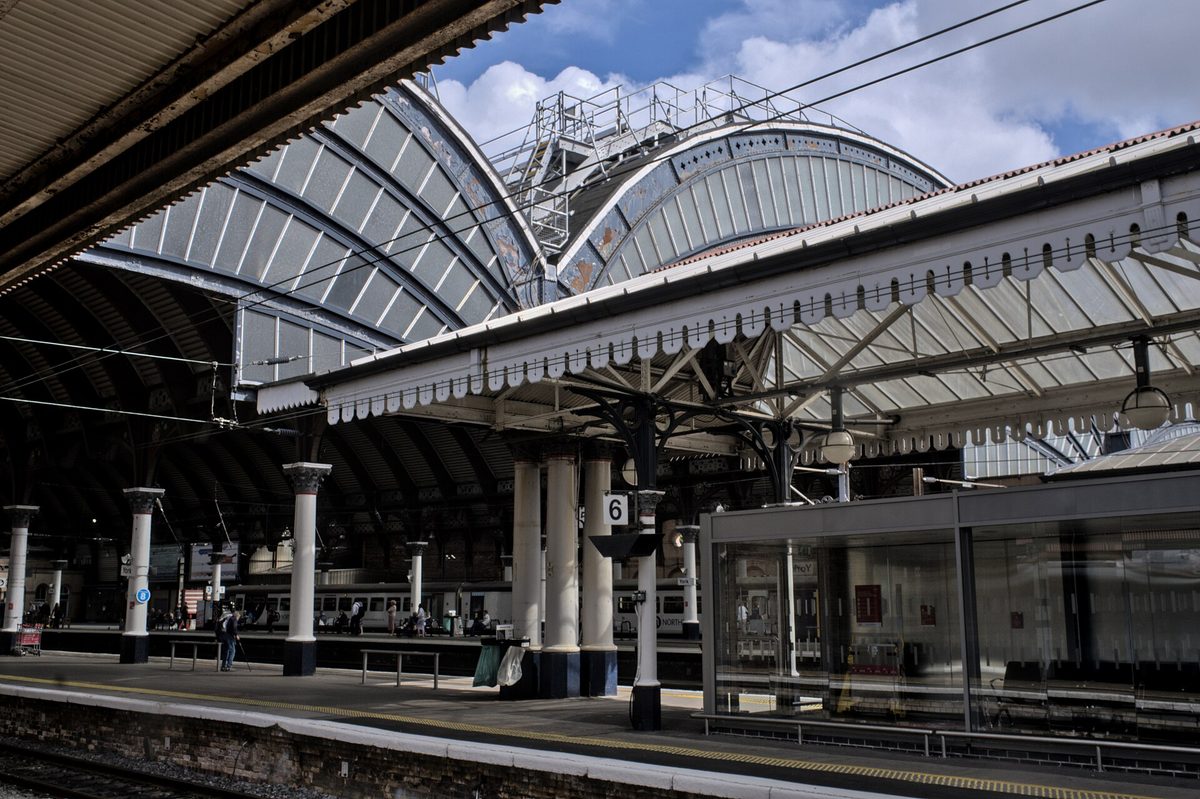
- The historic curved trainshed at York railway station, a major stop on the East Coast route — Photo: Bob Harvey / CC BY-SA 2.0 via Wikimedia Commons. Source
Frequently asked questions
How do I buy train tickets in England without overpaying?
Plan your journey on National Rail (nationalrail.co.uk) to compare times and fares, then buy the same ticket fee-free from the operating company’s website or app rather than a reseller that charges a booking fee. Book Advance fares early for long trips, use Off-Peak for flexibility, and run a quick split-ticket check on longer routes.
What’s the difference between Advance and Off-Peak tickets?
Advance tickets are the cheapest but tie you to one specific train on one date, with little flexibility — perfect when your plan is firm. Off-Peak tickets cost more but let you take any off-peak train that day, so you avoid morning and evening rush restrictions. Choose Advance for committed long hops; Off-Peak for flexible day trips and sightseeing.
Is it cheaper to buy train tickets at the station or online?
The fare itself is the same price everywhere — fares are regulated. Online you can compare options calmly, grab cheap Advance fares before they sell out, and get e-tickets. Station machines and ticket offices charge the same fare with no booking fee, but you can’t access weeks-ahead Advance pricing on the day, so booking online in advance usually wins.
Do I need to reserve a seat on English trains?
Often not required, and reservations are usually free when offered. Long-distance Advance tickets frequently include a reserved seat automatically. On Off-Peak and Anytime fares you can sit in any unreserved seat, but on busy Fridays, holidays and big-event days a free reservation is well worth adding so you’re not standing on a packed intercity service.
Is split ticketing legal in England?
Yes, completely. Split ticketing — buying separate tickets for segments of one journey to save money — is explicitly permitted under the National Rail Conditions of Travel. The only rule is that the train must actually stop at each station where your tickets change; you don’t have to get off. Split-finder tools and several booking sites do the maths for you automatically.
What happens if my train is delayed or cancelled?
You’re protected. Under Delay Repay, most operators compensate you if you arrive 15+ minutes late at your final destination — roughly 25% of the single fare at 15–29 minutes, scaling to 100% for longer delays. Claim via the delaying operator’s website, usually within 28 days. If a train is cancelled and you don’t travel, you can get a full refund even on Advance tickets.