Sheet 50 · England by Train and Transport · 18 min read
BritRail Pass vs Individual Train Tickets
BritRail pass vs train tickets: I run the real numbers with worked break-even examples so you know when the pass wins and when Advance fares beat it.
 Sheet 50
Contents 11 sections
Here’s the honest version, up front. The whole BritRail pass vs train tickets question comes down to one thing: how far ahead you can book. If you can lock in Advance fares six to twelve weeks out, individual point-to-point tickets almost always win, sometimes dramatically. If you’re booking spontaneously, travelling at peak times, or stacking several long hops in a week, the pass can pull ahead. Everything else is detail.
I’ve watched a lot of visitors get talked into a pass by glossy marketing, then realise at the end of the trip they paid double what a planner would have. I’ve also watched stubborn DIY travellers buy a fistful of expensive walk-up tickets when a pass would have saved them a fortune. Both mistakes are avoidable. This article is the one that runs the math so you don’t have to guess.
A quick boundary, because it matters: I’m only covering the cost decision here, pass versus individual tickets. For railcards (the 1/3-off discount cards), Oyster, and city travel cards, see my England travel passes guide. For how to actually buy tickets, split-ticketing, and the mechanics of the system, that’s the England rail guide. This piece is purely: which is cheaper for your trip?
Quick Answer: BritRail Pass vs Train Tickets — Which Wins?
For most first-time visitors doing a relaxed, plannable trip — a few cities, some rest days, tickets booked weeks ahead — the BritRail pass loses to individual Advance tickets, usually by a wide margin. The pass earns its keep in three situations: you’re booking last-minute, you’re travelling at peak times when walk-up fares spike, or you’re doing genuinely heavy long-distance mileage (five-plus big intercity hops in a short window).
If you remember only one thing, make it this: the BritRail pass isn’t priced to beat Advance fares. It’s priced to beat walk-up fares. So the real question is never “pass or tickets?” in the abstract — it’s “can I plan ahead, or not?”
One catch you need to know before anything else, because it’s the single most common nasty surprise: the BritRail pass is sold only to non-UK residents, and you have to buy it before you arrive in Britain. You can’t walk up to a station in London and buy one. If you land in the UK without it, that ship has sailed. (More on that, and where the pass fits in the wider transport picture, in my England transport overview.)
What a BritRail Pass Actually Is (and the Catch)
A BritRail pass is a “hop on what you like” rail pass for tourists. You buy a set amount of train travel — either a block of consecutive days or a number of flexible travel days — and within that, you can ride National Rail services around Great Britain (or just England, depending on which version you buy) without buying a separate ticket each time. Show the pass, board the train, go.
Sounds great. Now the catches, because there are a few and the marketing tends to mumble them:
- Non-UK residents only. This is the big one. BritRail passes are sold exclusively to overseas visitors, through overseas agents, and you must purchase before you set foot in Britain. There’s no buying it on arrival.
- National Rail only. The pass covers National Rail trains. It does not cover the London Underground, Eurostar, or private heritage railways. So your tube journeys, your Channel Tunnel trip — separate.
- Some trains still need a reservation. More on this in the pitfalls section, but a pass is not a free pass to ignore reservations entirely.
- It’s a “use it or lose it” product. Pay for eight days of travel and only use three? You’ve overpaid. The pass only saves money if you actually rack up enough rides to clear the break-even.
The appeal is real, though: total flexibility, no peak restrictions (you can ride the 8am rush-hour train from London with no surcharge, which a cheap individual ticket often can’t), and zero faff buying tickets once you’re here. For the right trip, that’s worth money. The job of this article is to figure out whether your trip is the right trip.
Pass Varieties: Decoding the Menu
There are more variants than you’d expect, and the differences genuinely change the value math. Here’s the lay of the land as of 2026.
Consecutive vs FlexiPass
This is the first fork in the road, and it’s the one people get wrong most often.
- Consecutive pass: unlimited travel on every calendar day for the pass duration (e.g. 8 consecutive days from activation). Best when you’re moving nearly every day — a fast city-hop tour with little downtime.
- BritRail FlexiPass: a set number of travel days used within a two-month window. A 4-day FlexiPass means you pick any four days to travel within those two months; the days don’t have to be back-to-back. Best for the very common pattern of “base in a city for a few nights, take some day trips, move on.”
The golden rule, straight from the pass providers: choose your pass based on how many days you’ll actually travel, not how long you’re in the country. If you’re in Britain for 8 days but only making journeys on 4 of them, you want a 4-day FlexiPass, not an 8-day consecutive pass. Most leisure visitors touring England find a FlexiPass the more sensible (and cheaper) choice, because real trips have rest days, museum days, and “we just want to wander the city” days.
England-only vs all-Britain
- The BritRail England Pass covers England only. Cheaper. Perfect if your whole trip is London, Bath, York, the Lake District, and so on.
- The BritRail Pass (Great Britain) adds Scotland and Wales. Only worth the premium if you’re genuinely heading to Edinburgh, the Highlands, or Cardiff.
If your itinerary stays in England, don’t pay for Scotland you won’t use.
Standard vs First Class
First class adds roughly 40–50% to the price. On British intercity trains, standard class is perfectly comfortable for tourists — you’re not roughing it. First buys a bit more space and sometimes complimentary refreshments on certain operators. For most visitors, standard is the sensible call; first is a treat, not a necessity.
Youth, Senior, Child and Party Discounts
This is where a pass can claw back value, so don’t skip it:
- Youth (roughly 16–25): up to around 20% off.
- Senior (60+): around 15% off on passes that offer it (first class on some versions).
- Child (roughly 5–15): on many adult/senior passes, one accompanying child travels free, and additional children get up to 50% off the adult rate. Under-5s travel free anyway.
- Party / Saver (groups of 3–9 travelling together): around 20% off each pass.
Two things to note. First, not every pass type offers every discount — check the specific pass. Second, the “one child free” perk can genuinely swing a family’s math toward the pass, because individual tickets for a family of four add up fast even with a Family & Friends Railcard. Families should run both numbers carefully.
How BritRail Pass Cost Actually Works
Before the worked examples, you need a feel for BritRail pass cost and how the per-day math works. I’ll hedge hard here, because prices move and vary by season, class, and discount — treat everything below as approximate, as of 2026, and confirm live before you buy.
Passes are priced as a bundle, and the more days you buy, the lower the cost per travel day. Rough, illustrative ballpark figures (adult, standard class):
- England FlexiPass: starts around US$199 for 2 travel days, scaling up from there.
- Great Britain pass (all of Britain): a flexible 2-day standard pass starts around US$240 (roughly US$356 in first class); a 1-month consecutive standard pass runs up toward US$1,100+ (around US$1,680 in first).
- An 8-day consecutive GB pass sits somewhere around the US$399 mark for an adult in standard, give or take by season.
The key concept: divide the pass price by the number of travel days to get your effective cost per day. If an 8-day pass costs ~US$399, that’s ~US$50 per travel day (about £40 at typical exchange rates). To “win,” each travel day needs to deliver more than ~£40 of train journeys you’d otherwise have paid for. On a London–York day that’s easy if you’d have paid walk-up; on a short hop you booked in Advance for £15, it’s a clear loss.
Hold that “cost per travel day” number in your head. It’s the entire game.
For where these prices sit in a wider England budget, my England budget costs breakdown and England trip cost guide put rail spending in context against hotels, food, and the rest.
How Individual Tickets Compare: Advance, Off-Peak, Anytime
To judge the pass, you have to understand the three ticket types it’s competing against. The gap between them is enormous, which is exactly why “it depends” is the only honest blanket answer.
- Advance: released up to ~12 weeks ahead, tied to a specific train on a specific date. Cheapest by far — sometimes from £5 on shorter routes, often £15–50 on long ones — but non-flexible and (crucially) non-refundable if you miss that train. This is the pass’s real competitor.
- Off-Peak: valid on trains outside the busy windows (off-peak typically kicks in around 09:30 on weekdays). Not tied to a specific train, just to certain times. Mid-priced, decently flexible, often £30–70 return on medium-to-long routes.
- Anytime: ride any train, any time, fully flexible, refundable. The most expensive — easily £50 to well over £100 one-way on long routes, and these walk-up prices are what scare people into buying a pass.
Here’s the comparison at a glance.
| Option | Cost feel | Flexibility | Best for |
|---|---|---|---|
| BritRail FlexiPass / pass | Medium–high flat fee; only “cheap” if you travel a lot | Total: any train, any time, no peak ban; reservations recommended on busy services | Spontaneous trips, heavy long-distance mileage, peak-time travellers, some families |
| Advance single | Cheapest (from ~£5; ~£15–50 long routes) | Lowest: locked to one train/date, non-refundable | Planners who can commit 6–12 weeks ahead |
| Off-Peak | Mid | Good: any off-peak train, no specific seat | Daytime travellers who want flexibility without Anytime prices |
| Anytime | Highest (£50–£100+ long routes) | Highest: any train, any time, refundable | Last-minute, must-catch-this-train, fully flexible needs |
The takeaway: a pass and an Advance ticket are almost opposite products. One is “maximum flexibility, flat fee,” the other is “minimum flexibility, rock-bottom price.” When people ask is a BritRail pass worth it, what they’re really asking is “is the flexibility worth the premium over Advance fares?” For most plannable trips, no. For chaotic or peak-heavy ones, sometimes yes.
Worked Break-Even Example 1: The Classic Loop (London → Bath → York → Lake District → London)
Let’s run a real-shaped itinerary. Say you’re touring England for 10 days and want a satisfying loop: a few nights in London, then Bath, then York, then the Lake District, then back to London. That’s four travel days with proper long-distance legs. A FlexiPass with 4 travel days is the natural comparison.
Approximate Advance fares, booked ~8 weeks out (illustrative, as of 2026):
- London → Bath: ~£20–35
- Bath → York (via connections): ~£40–70
- York → Lake District (Oxenholme/Windermere): ~£35–60
- Lake District → London: ~£35–70
Advance total: roughly £130–235 for all four legs.
Now the pass. A 4-day England FlexiPass for an adult in standard sits somewhere in the US$280–360 range as of 2026 — call it £220–290 at typical exchange rates.
Verdict: if you book Advance fares ahead, individual tickets win, landing around £130–235 versus £220–290 for the pass. The pass only catches up if you’d otherwise be buying these legs as walk-up Off-Peak or Anytime tickets — at which point those four journeys could easily run £350–500+, and the pass becomes the clear bargain.
So for this loop: planner buys Advance tickets; procrastinator buys the pass. If you’re the kind of traveller who books accommodation months out, you’re almost certainly the planner here — skip the pass. If you’re winging it, the pass is your insurance against ugly walk-up prices. The detailed version of this exact route, with timings, lives in my England itinerary by train.
Worked Break-Even Example 2: London Base + Day Trips
This is the trip a huge share of first-timers actually take: base yourself in London, sleep in the same hotel all week, and fan out on day trips — Oxford, Cambridge, Bath, Stonehenge-via-Salisbury, the coast.
Here’s the thing that kills the pass for this pattern. Day trips from London are short and cheap, and many are best done with a railcard-discounted Off-Peak return, not a pass. A few illustrative Off-Peak or Advance day-trip returns from London (as of 2026):
- London → Oxford: ~£15–28 return
- London → Cambridge: ~£18–30 return
- London → Bath: ~£40–70 return (or much less on Advance singles)
- London → Brighton: ~£15–30 return
Even on five separate day-trip days, you’re often looking at £100–180 total with Off-Peak returns — less if you snag Advance fares or hold a railcard.
A 5-day FlexiPass costs meaningfully more than that, and it covers Britain-wide travel you simply won’t use from a London base. You’d be paying for long-distance capability to take short hops.
Verdict: for a London-base-plus-day-trips trip, the pass loses, clearly. Buy individual Off-Peak returns (and seriously consider a railcard — see railcards and travel passes). The pass is built for people criss-crossing the country, not radiating out from one city. For the day-trip itinerary itself, my day trips from London guide lays out the best options and the cheapest way to do each.
Worked Break-Even Example 3: The Long One-Way Hop (London → Edinburgh)
Now flip to the scenario where passes shine: a single long, expensive intercity journey, possibly booked late or travelled at peak.
London → Edinburgh on the East Coast Main Line is the poster child. Approximate fares (as of 2026):
- Walk-up Anytime single: ~£150–200+. Brutal.
- Off-Peak single: often ~£90–120.
- Advance single, booked weeks ahead: can drop to ~£35–50.
A 2-day GB FlexiPass starts around US$240 (~£190) in standard. So:
- If you booked an Advance fare at ~£40, individual tickets demolish the pass. Even adding a second long journey within that 2-day pass window (say Edinburgh → London on the way back, another ~£40 Advance), you’re at ~£80 versus ~£190 for the pass. Tickets win easily.
- If you’re buying walk-up at peak — that £150–200 Anytime single — a 2-day pass at ~£190 that also covers your return and any other journeys those two days suddenly looks smart. Pass wins.
Verdict: the long one-way hop is genuinely the closest call, and it hinges entirely on when you book. Plan ahead → Advance fare → tickets win. Book at the last minute or need peak flexibility → pass wins. (Note: London→Edinburgh leaves England, so you’d need the all-Britain pass, not the England-only one.) If a Scotland leg is on your radar, the 10-day England itinerary and 2-week England itinerary show how to fold it in sensibly.
The Pitfalls Nobody Mentions in the Brochure
Before you decide, know what the marketing glosses over.
- Some trains still need a reservation. Seat reservations generally aren’t required with a pass — you can sit in any free seat. But they’re strongly recommended on busy services (leaving London at rush hour, bank holidays, when you need to sit together), and on some trains, notably sleeper trains, reservations are compulsory. Always check with the operator. A pass guarantees you can board; it doesn’t guarantee a seat on a packed Friday-evening train.
- No peak restrictions — that’s the genuine upside. Unlike a cheap Off-Peak or Advance ticket, a pass lets you ride at any time, including peak, with no surcharge. If your trip forces peak-hour intercity travel, this is real value in the pass’s column.
- Advance tickets are non-refundable. The flip side. The cheap individual fares that beat the pass come with strings: miss your booked train and that ticket is dead. If your plans are genuinely uncertain, the “wasted Advance ticket” risk tilts things back toward the flexibility of a pass (or Off-Peak tickets).
- You must buy the pass before arriving, as a non-UK resident. Said it before, saying it again, because it’s the one that ends the conversation. Decide before your trip.
- Pass validity windows. Passes are issued open-dated and typically must be activated within 11 months of issue and before first use. FlexiPass travel days must fall inside the two-month window. Don’t buy so early it expires.
A Clear Decision Framework
Strip away the noise and it comes down to a handful of yes/no questions. Run yourself through these.
Lean toward individual tickets (usually the winner) if:
– You can book 6–12 weeks ahead and grab Advance fares. (This alone settles it most of the time.)
– Your trip is a London base with short day trips.
– You’re making only one or two long journeys total.
– Your plans are firm enough that non-refundable Advance tickets don’t scare you.
Lean toward a BritRail pass if:
– You’re booking last-minute and facing walk-up Anytime prices.
– You must travel at peak times on long intercity routes (no surcharge with a pass).
– You’re stacking five-plus substantial long-distance hops in a short window.
– You’re a family who can use the “one child free” perk, or a group of 3–9 eligible for the Saver discount.
– You value zero-faff flexibility over squeezing out the last pound, and you’ve accepted you’re paying a premium for it.
The cleanest gut-check: work out your pass’s cost-per-travel-day, then ask whether each travel day will genuinely deliver more than that in journeys you’d otherwise pay for. If yes across the board, buy the pass. If even a couple of days fall short, buy tickets.
And if you’re not married to trains at all, remember the pass-vs-tickets question assumes rail is your mode. For some routes, coach travel is far cheaper than either, and for rural regions like the Lakes a hire car can beat both — see my wider take on getting around England without a car, plus the Lake District travel guide for that specific corner.
Final Thoughts
The BritRail pass isn’t a scam, and it isn’t a magic deal — it’s a flexibility product priced to beat walk-up fares, not Advance ones. That single sentence resolves about 90% of the confusion. If you’re a planner, you’ll almost always do better buying individual Advance tickets and pocketing the difference. If you’re spontaneous, peak-bound, or doing serious mileage, the pass buys you genuine peace of mind that can be worth every pound.
So don’t ask “is the pass good?” in the abstract. Sketch your actual itinerary, count your travel days, price both options for your trip, and let the numbers decide. Do that for ten minutes and you’ll never second-guess it.
When you’ve made the call, the train travel guide covers the how-to-buy mechanics, the practical tips post has the broader practical playbook, and the full England guide ties the whole trip together. For where to point all these trains, see the roundup of England’s best places, a sample England itinerary, and the best time to visit England so you’re not fighting peak-season crowds and fares.
Research and Source Notes
This guide draws on current pass-provider and rail-industry sources, checked in 2026. All prices are framed as approximate and illustrative — exchange rates, seasons, classes, and discounts shift the numbers, and you should always confirm live fares before booking.
- BritRail / ACP Rail (britrail.com, acprail.com) — pass varieties (England vs Great Britain, Consecutive vs FlexiPass), class options, youth/senior/child/Saver discounts, the non-UK-resident purchase rule, activation windows, and seat-reservation conditions.
- National Rail (nationalrail.co.uk) — ticket-type logic for Advance, Off-Peak, Super Off-Peak, and Anytime fares, and the time windows that define off-peak travel.
- Rick Steves’ travel guidance and forums (ricksteves.com) — practical break-even reasoning on passes vs point-to-point tickets and consecutive vs flexi choices.
- General fare-comparison and visitor-guide sources discussing typical Advance, Off-Peak, and walk-up price ranges on major routes (London–Edinburgh, London–Manchester, day trips from London).
Where sources disagreed on exact figures, I’ve widened ranges and hedged accordingly rather than quote a single precise price. The verdicts and worked examples are my own synthesis, built to help you run the math for your specific trip rather than to push a product.
Sources:
– BritRail official site
– BritRail England Pass
– ACP Rail — BritRail Pass
– National Rail — Off-Peak and Super Off-Peak Tickets
– Rick Steves — Britain Rail Passes
Photo Credits
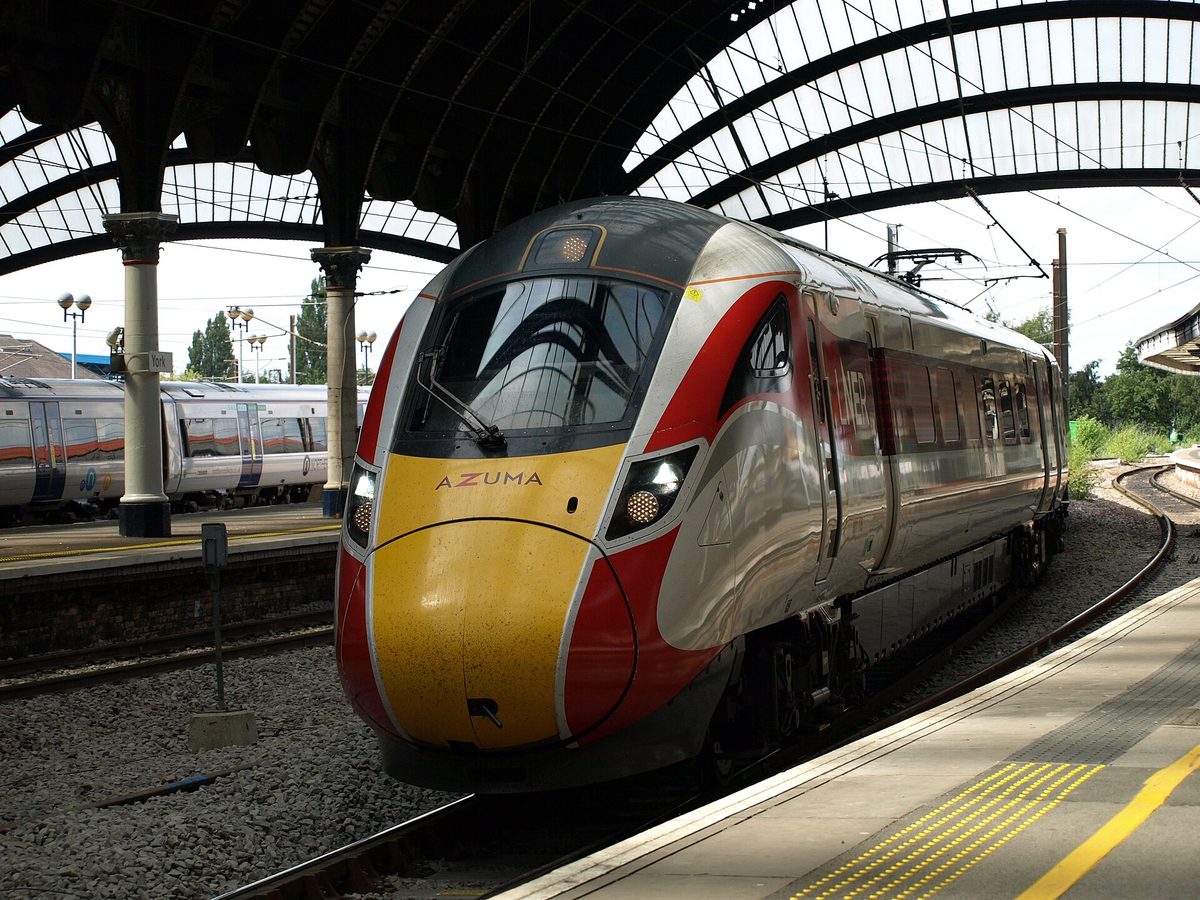
- An LNER train at a UK platform, the kind of long-distance service at the heart of the BritRail pass vs train tickets decision — Photo: Trainlordyt / CC BY-SA 4.0 via Wikimedia Commons. Source
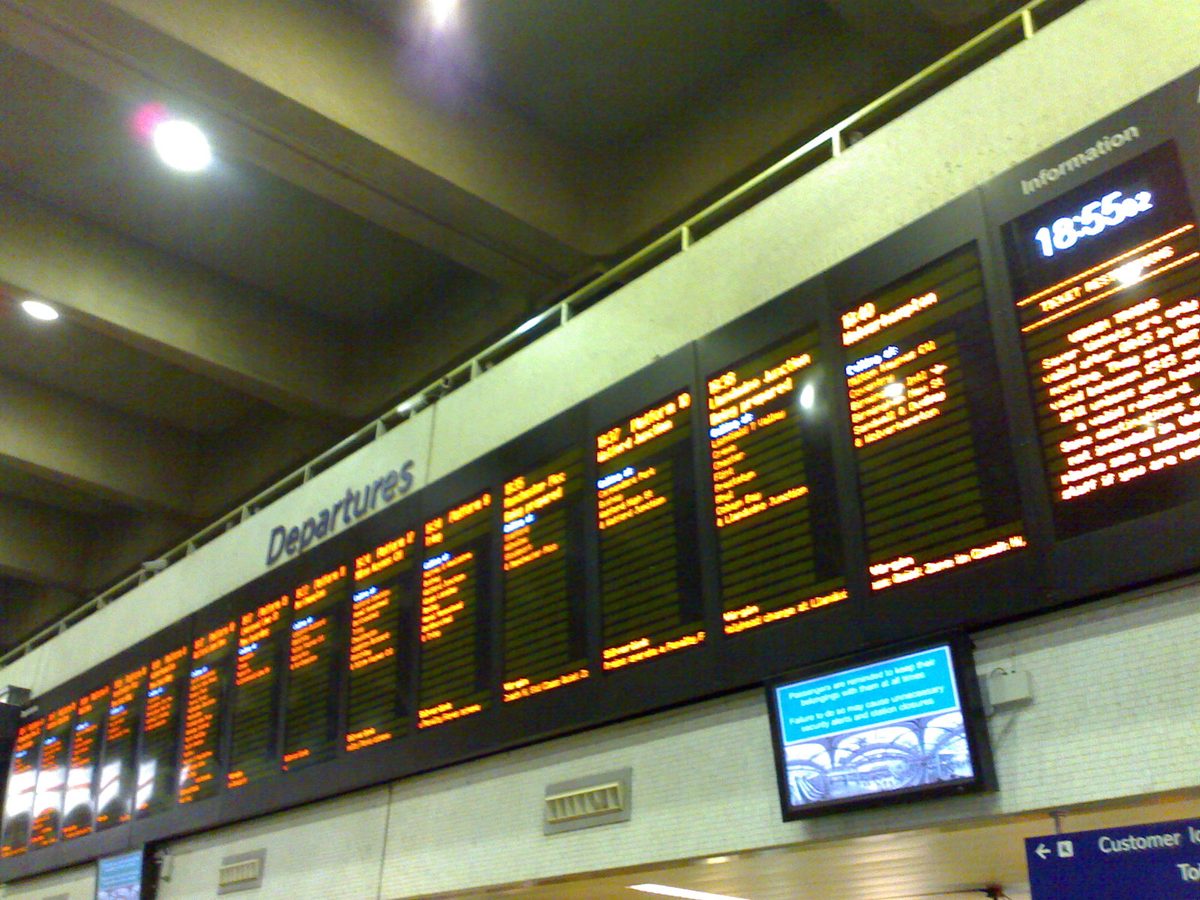
- The departures board at a major London terminus, where walk-up fares can be eye-watering at peak hours — Photo: Mark Hillary / CC BY 2.0 via Wikimedia Commons. Source
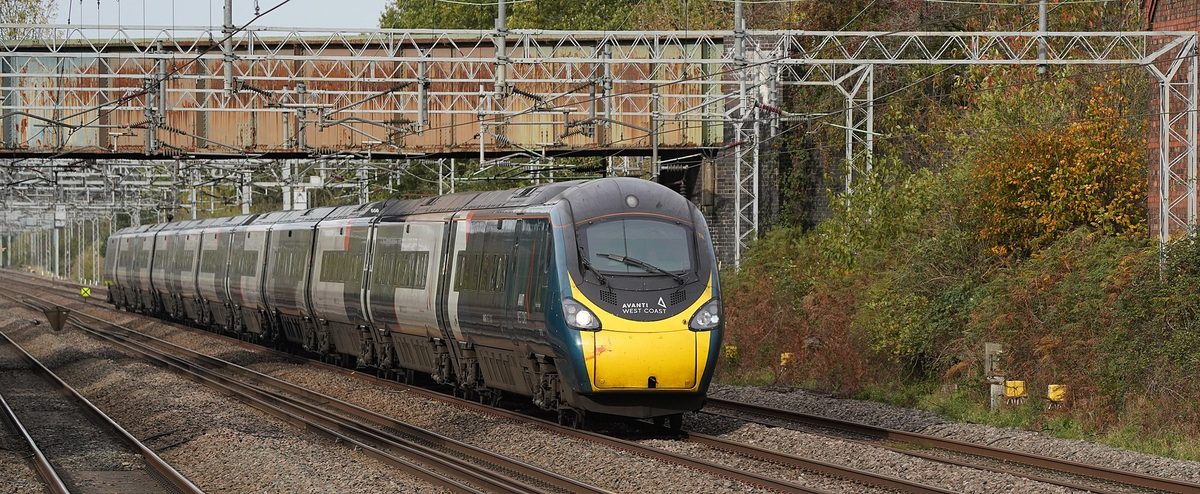
- An Avanti West Coast Pendolino, typical of the London–Manchester–Lake District route used in the worked examples — Photo: kitmasterbloke / CC BY 2.0 via Wikimedia Commons. Source
- York’s grand curved train shed, a key stop on the classic London–Bath–York–Lake District loop — Photo: Ermell / CC BY-SA 4.0 via Wikimedia Commons. Source
- A British rail ticket — the individual point-to-point option weighed against the pass throughout this guide — Photo: railfan 44 (CC0) via Wikimedia Commons. Source
Frequently asked questions
Is a BritRail pass worth it for most visitors?
For most first-time visitors on a plannable trip, no — Advance point-to-point tickets booked weeks ahead usually beat it, often by a lot. The pass becomes worth it when you’re booking last-minute, travelling at peak times, doing heavy long-distance mileage, or using family/group discounts. The deciding factor is almost always how far ahead you can book.
How much does a BritRail pass cost in 2026?
As of 2026, prices are approximate and vary by season, class, and discount, so confirm live before buying. Roughly: an England FlexiPass starts around US$199 for 2 travel days; an all-Britain flexible 2-day standard pass starts near US$240; longer consecutive passes climb toward US$1,100+. First class adds about 40–50%. Divide by travel days to get your per-day cost.
What’s the difference between a BritRail consecutive pass and a FlexiPass?
A consecutive pass gives unlimited travel on every calendar day for its duration (great if you move daily). A BritRail FlexiPass gives a set number of travel days used within a two-month window, and those days needn’t be back-to-back (great for trips with rest days). Choose based on how many days you’ll actually travel, not how long you’re in the country.
Can I buy a BritRail pass after I arrive in the UK?
No. BritRail passes are sold only to non-UK residents and must be purchased before you arrive in Britain, through overseas agents. You cannot buy one at a UK station or once you’re in the country. If a pass might suit your trip, you have to decide and buy it before you travel — there’s no buying it on arrival.
Do I still need seat reservations with a BritRail pass?
Usually not required — you can sit in any free seat. But reservations are strongly recommended on busy services (leaving London at peak, bank holidays, travelling as a group), and on some trains, notably sleeper services, reservations are compulsory. A pass lets you board; it doesn’t guarantee a seat on a crowded train, so reserve when it matters.
Are individual Advance tickets really cheaper than a BritRail pass?
Very often, yes. Advance singles released up to 12 weeks ahead can be a fraction of walk-up prices — sometimes from £5, often £15–50 on long routes — easily undercutting the pass’s per-day cost. The catch: they’re tied to a specific train and non-refundable. If you can plan and commit, Advance fares typically win; if you can’t, the pass’s flexibility may be worth the premium.