Sheet 60 · England Itinerary Planner · 17 min read
Slow Travel England Itinerary
A slow travel England itinerary built on 2-3 bases instead of nightly hotel hops. Cottage rates, sample routes, day trips and how to slow down right.
 Sheet 60
Contents 10 sections
The first time I “did” England, I changed hotels eleven times in fourteen days. I have a photo of myself at York station, sitting on a suitcase, genuinely unsure which direction the platform was. I saw a great deal of England that trip. I remember almost none of it.
The second time, I rented a cottage in the Cotswolds for a week and barely left a ten-mile circle. I remember everything.
This is the trip I wish someone had talked me into the first time. So let me talk you into it.
A slow travel England itinerary means picking just two or three bases for your whole trip and day-tripping out from each one, instead of repacking your bag every single night. You rent a cottage by the week, you settle in, you learn the good bakery, and you let the place come to you. Fewer hotels, less stress, deeper memories, and usually a lower bill.
Quick Answer: How to Build a Slow Travel England Itinerary
A slow travel England itinerary trades breadth for depth. Instead of seeing eight regions in two weeks, you choose two or three bases, rent a self-catering cottage in each for a full week, and explore everything within roughly an hour by car or train. You unpack once per region. You build in proper rest days. You shop the village butcher and cook in. The result is cheaper, calmer, and far more memorable than a hotel-a-night dash. My own favourite version is two weeks split between a Cotswolds week and a Lake District week, with nothing booked too tightly.
Why Fewer Bases Beats Hotel-Hopping
I want to be honest about something. The “see-it-all” itinerary looks brilliant on paper and feels brutal in practice. You spend your mornings checking out and your afternoons checking in. You never quite land anywhere. By day five you are tired in a way that no amount of sleep fixes, because the tiredness is logistical, not physical.
Slow travel solves a specific set of problems. Here is what actually changes when you stop moving every night.
You stop living out of a suitcase
This sounds small. It is not small. When you base yourself for a week, you unpack properly. Your clothes go in a drawer. Your toiletries stay in the bathroom. You stop doing the nightly ritual of repacking a damp toothbrush and hunting for your phone charger behind a strange bed. Travel writers who specialise in this consistently flag the same thing: moving less frequently is the single biggest stress reducer on a trip, and it lets you pack lighter from the start because you are not optimising for constant transit.
The place starts to feel like yours
By the third morning in a village, the woman in the bakery recognises you. You know which pub does the better Sunday roast. You have a favourite bench. This is the texture that a one-night stay can never give you, and it is, for me, the entire point. Slow travel is less about ticking off and more about belonging for a little while.
It is calmer, and your days have shape
When you are not racing to the next town, an unhurried day stops feeling like wasted time and starts feeling like the holiday. You can have a slow breakfast. You can change your plans because it is raining, without it cascading into a booking disaster. Constant movement is genuinely tiring emotionally as well as physically, which is why travel burnout is so common on the cram-it-all trips.
It is usually cheaper
This surprises people, so let me be specific. Weekly cottage rates are very often meaningfully lower per night than the equivalent nightly hotel rate, and many self-catering owners discount the seven-night stay outright. Then there is the food. With a kitchen, you are not eating every meal out at restaurant prices. You can do a big shop, cook a few dinners in, and save your eating-out budget for the meals that matter. Add in fewer paid transfers between cities, and the savings stack up. If you want the granular numbers, my deep dive on England budget costs breaks down where the money actually goes.
The only honest caveat: slow travel is not automatically cheaper for everyone. If you would otherwise have done England in five rushed days, then yes, a two-week slow trip costs more simply because it is longer. The comparison that matters is slow versus fast over the same number of nights. On that basis, fewer bases almost always wins.
How to Choose Your Bases
This is the part that makes or breaks the trip. Pick the wrong base and you spend the week driving; pick the right one and everything you want is within easy reach. I use three filters.
First, a strong “home” that you would happily not leave. Your base needs to be somewhere you are content to spend a full day doing nothing. A pretty market town beats a convenient-but-soulless one.
Second, a roughly one-hour radius of good day trips. The magic number is about an hour each way by car or train. Closer is a bonus. Much further and the day starts to feel like the very rushing you came to avoid.
Third, at least one base near a good rail hub if you are not driving the whole trip, or want a car-free week in the middle. Bath and York are the two I recommend most often, because both are gorgeous in their own right and sit on excellent train lines. You can read more on getting around in my England transport guide, and if trains are your whole plan, my siblings have written a dedicated England itinerary by train.
Here is how the main candidate bases stack up.
| Base region | Stay in | Day-trip within ~1 hour | Best for | Car needed? |
|---|---|---|---|---|
| Cotswolds | Stow-on-the-Wold, Chipping Campden, Burford | Bibury, Bourton, Broadway, Oxford, Cheltenham, Blenheim | Villages, gentle walks, honey-stone charm | Yes (mostly) |
| Lake District | Ambleside, Grasmere, Keswick | Windermere, Coniston, Buttermere, Derwentwater, Wordsworth sites | Lakes, fells, walking, literary history | Helpful, not essential |
| Cornwall (west) | Penzance, Marazion, St Ives | St Michael’s Mount, Mousehole, Land’s End, Porthcurno, Sennen | Beaches, coast path, fishing villages | Mostly yes |
| Bath (rail hub) | Bath city, or a village nearby | Bristol (12 min), Wells, Castle Combe, Lacock, Salisbury, Oxford | Architecture, day trips by train, no-car week | No |
| York (rail hub) | York city, or a Dales village | Harrogate, Malton, Whitby, Scarborough, the Moors | Northern history, food, coast, no-car week | No |
A couple of these deserve their own pillar guides if you want to go deeper before booking: my Cotswolds travel guide, my complete Lake District guide, and the complete Cornwall and Devon guide for the southwest. For the Bath cluster of day trips, Bath, Stonehenge, Oxford and Cambridge covers the heavy hitters.
Renting a Cottage: The Heart of Slow Travel
If there is one thing I would urge you to do, it is to rent a self-catering cottage rather than string together hotels. The cottage is the slow trip. It is where the rest happens.
What you are actually paying
Let me give you rough figures, all hedged as of 2026 and varying wildly by season, size, and how fancy you go. In the Cotswolds, a modest two-person cottage tends to start somewhere around £900 to £1,250 for a seven-night week, climbing fast for anything luxurious or large. In the Lake District, I have seen comfortable cottages sleeping six from around £620 to £850 a week off-peak, with last-minute deals dipping lower and school-holiday weeks costing considerably more. These are ballpark, not gospel; always check live dates, because August and bank holidays can roughly double the shoulder-season price.
The point is the shape of the cost. One weekly figure, paid once, often working out cheaper per night than a decent inn, and with a kitchen attached.
Where to look
The big, reputable names I would start with are Sykes Holiday Cottages, Cottages.com, and the regional independents like Lakelovers or Keswick Cottages for Cumbria. Two lovely and slightly different options: the National Trust and English Heritage both rent out properties on their own estates, sometimes genuinely historic ones, which is a treat if you want to sleep somewhere with a story. My where-to-stay guide goes wider on neighbourhoods and accommodation types if you want the full picture.
What to look for in the listing
I have learned to read past the photos. I want: a real kitchen (not a “kitchenette” that is a kettle and a microwave), a washing machine for a long stay, parking if I have a car, and walkable access to at least a shop and a pub. Wi-Fi matters if you are a remote worker; check the actual review comments, not just the tick-box, because rural England and broadband have a complicated relationship.
Book early for the obvious weeks. The good cottages in the Cotswolds and Lakes for summer go months out. If you are flexible, the shoulder seasons of late spring and early autumn are the sweet spot: lower rates, thinner crowds, and in my experience the nicest light. My seasonal timing guide gets into the month-by-month detail.
Building in Rest Days (Yes, On Purpose)
Here is the instruction that feels wrong and is right: schedule days where you do nothing of note.
On a fast itinerary, a rest day feels like a waste of an expensive trip. On a slow itinerary, rest days are the trip. I now plan one genuine do-nothing day for roughly every two or three active days. On those days I read in the cottage garden, walk to the village and back, cook something slow, and go to bed early. They are the days I remember most fondly, and they are the reason I come home rested instead of needing a holiday from my holiday.
Practically, this also gives you weather insurance. England’s weather does what it likes. If your “active” day gets rained off, you simply swap it with a rest day and lose nothing. The flexibility is only possible because you have not pre-booked yourself into a corner.
Eating and Shopping Like a Local
This is where self-catering quietly transforms the trip. You are not a guest passing through a hotel breakfast room. You are, for a week, a temporary local doing a temporary local’s shopping.
My routine is simple. On the first full morning I find the village shop, the butcher, the farm shop if there is one, and the nearest decent-sized supermarket for the boring staples. I do one big shop for breakfasts, lunches, and a few dinners, then I top up daily with the fun stuff: fresh bread, local cheese, eggs from a roadside honesty box, whatever is good that day.
Then I am deliberate about eating out. With a kitchen, I do not need to eat every meal in a restaurant, so I save the eating-out budget for the meals worth having: a long Sunday roast in a proper old pub, a cream tea, a single good dinner in the nearest market town. England’s food has come a long way, and the regional specialities are a pleasure to chase. My food and pubs guide is essentially a love letter to exactly this.
Cooking in is not a compromise. Standing in a cottage kitchen with the back door open, chopping vegetables you bought from someone who grew them, is one of the most contented I ever feel on holiday. It is the opposite of the airport sandwich.
A Concrete Two-Week, Two-Base Sample Route
Enough philosophy. Here is a real route I would happily do tomorrow. Two weeks, two bases, one big region in the south and one in the north, with rail bookending it so you can fly into one airport and out of another. Adjust freely; this is a skeleton, not a schedule.
Week one: a Cotswolds base
Fly into Heathrow, pick up a car, and drive west to your Cotswolds cottage. I would base in or near Stow-on-the-Wold or Chipping Campden for the central position.
- Day 1 (arrival, rest): Land, drive, food shop, unpack, walk the village. Do nothing else. You are allowed.
- Day 2: The honey-stone villages close to home: Bibury and its famous Arlington Row, Bourton-on-the-Water, Lower Slaughter. Short drives, lots of stopping.
- Day 3 (rest): Cottage and village. A walk, a pub lunch, a book.
- Day 4: Broadway and Broadway Tower, then Chipping Campden if you are not based there. Gentle.
- Day 5: A bigger day out: Oxford, about an hour, for the colleges and the covered market. Or Cheltenham and Blenheim Palace.
- Day 6 (rest / flex): Weather day. Swap in anything you missed, or genuinely rest.
- Day 7: A long walk on the Cotswold Way, a farm-shop lunch, a final slow dinner. Pack tonight, lightly, because you have only done it once all week.
Travel day
Return the car or keep it, and make your way north. By train, Cotswolds to the Lake District is doable in a few hours with a change; by car it is a longer haul, so I would split it or just commit to a driving day with a good lunch stop. Either way, treat the travel day as a travel day and do not also try to sightsee. That restraint is the whole skill.
Week two: a Lake District base
Settle into a cottage in or near Ambleside, Grasmere, or Keswick. The Lakes reward a base because the distances are short and the scenery is relentless.
- Day 8 (arrival, rest): Arrive, shop in Ambleside or Keswick, unpack, short lakeside stroll.
- Day 9: Windermere and a cruise on the lake, or the Wordsworth sites around Grasmere (Dove Cottage, the gingerbread shop, the churchyard).
- Day 10: A proper walk scaled to your fitness: Catbells above Derwentwater is a manageable classic; Loughrigg or a flat valley walk if you want gentler.
- Day 11 (rest): Cottage day. A drive to Buttermere just to look at it counts as resting.
- Day 12: Coniston and the Ruskin connections, or a boat on Derwentwater from Keswick.
- Day 13 (rest / flex): Weather day again. The Lakes will absolutely use this on you.
- Day 14: A final favourite. Repeat the walk you loved, or the lake you loved, then a last dinner. Depart the next morning, ideally from Manchester airport, which is the nearest major hub.
That is fourteen nights, two unpackings, four built-in rest days, and two regions properly known rather than glimpsed. If you want to compare this against the more-regions approach, my siblings cover a two-week England itinerary that moves faster across more ground, and a three-week England itinerary that adds even more regions. The deliberate contrast is the point: those go wide, this goes deep.
A Car-Free Variation: Two Rail-Hub Bases
If you would rather not drive, swap the route above for two rail-hub bases and let the trains do the work. This is the version I recommend to nervous drivers and to anyone who simply likes train windows.
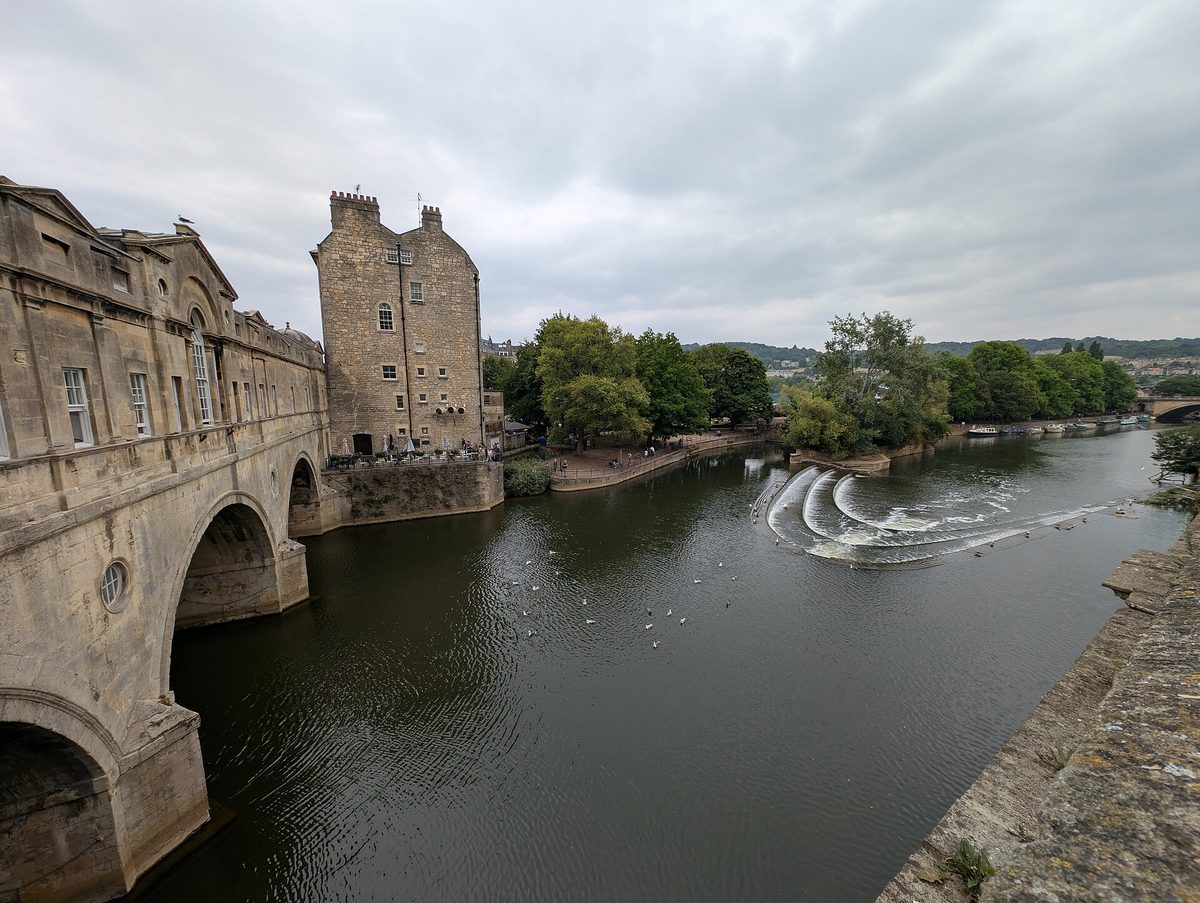
Week one in Bath. Stay in the city or a village just outside. Bristol is twelve minutes away by train; Wells, Salisbury, Castle Combe and Lacock are all comfortable day trips; Oxford is reachable for a bigger day. You can fill a week without ever touching a steering wheel, and Bath itself is worth two full days.
Week two in York. A different England entirely: northern, historic, with a food scene people underrate. Day-trip to Harrogate (30 to 40 minutes), Malton for the food, Whitby and Scarborough for the coast, or out into the Moors. York to Bath is a single cross-country train day with one change.
For the day trips themselves, my London day trip guide is useful if you bolt on a few London nights at either end, and the broader England by train sibling has the rail logistics in full.
Day-Trip Discipline: The One Rule That Makes It Work
The failure mode of slow travel is sneaky. You base yourself somewhere beautiful and then, because the car is right there, you start doing two-hour drives “just this once” until suddenly you are hotel-hopping without the hotels, exhausted in your own cottage.
So here is my one rule: respect the one-hour radius. If a sight is more than about an hour from your base, it does not belong on this trip. Let it go. It will be there next time, and there should always be a next time. The whole proposition of a slow travel England itinerary is that you are not trying to see everything; you are trying to properly see a little. The further afield day trips, the great castles, the bucket-list sights two hours away, those are the spine of a different, faster trip. If that is calling to you, my England road trips guide and the England castles and historic sites pillar are built for it. Just do not try to graft them onto a slow week.
If you are travelling as a family, the same discipline helps even more, because short days suit children. My sibling on an England itinerary with kids and the broader England with kids pillar both lean into the fewer-bases approach for exactly that reason.
For first-timers weighing it all up, the first-time England itinerary sibling is a gentler on-ramp, and the master England itinerary hub links out to every length and style so you can see where slow travel sits in the wider menu. If you are still narrowing your regions before committing to bases, the best of England region by region and the prettiest villages roundup are good for inspiration.
Final Thoughts
I have done England both ways now, and I will never go back to the suitcase-on-the-platform version. The eleven-hotels trip gave me a camera roll. The cottage-for-a-week trips gave me a relationship with a few small corners of a country I have grown to love.
Slow travel asks for one act of faith: that doing less will give you more. It always has for me. You will come home with fewer photographs of fewer places, and a much stronger sense of having actually been there. You will know a village. You will have a bakery. You will have sat on a particular bench enough times that it became your bench.
So pick two or three bases. Rent the cottages. Build in the rest days. Respect the one-hour radius. And when the rain comes, as it will, put the kettle on and let the day be slow. That is not the trip going wrong. That is the trip going exactly right.
Research and Source Notes
In researching this guide I checked a range of slow-travel and accommodation sources, then cross-referenced the practical details. For the slow-travel philosophy and its stress and cost benefits, I drew on BecomeNomad, druganov.travel, The Good Trade, Cheapest Destinations Blog and Teaspoon of Adventure. For cottage pricing and providers (hedged as of 2026, and highly seasonal), I checked Sykes Holiday Cottages, Cottages.com, Independent Cottages, Lakelovers, Keswick Cottages, the National Trust and English Heritage holiday cottages, plus Tripadvisor and Expedia rate listings for the Cotswolds and Lake District. For base towns and rail day trips I used National Rail’s “Great British Destinations” pages for Bath and York, Visit Bath and Avanti West Coast. For Cornwall bases and the scenic St Ives Bay branch line I referenced VisitCornwall, Great Western Railway material and the St Ives Bay Line guides. Regional timing came from Rick Steves Travel Forum threads and several itinerary blogs. All prices and journey times
Photo Credits
- A row of honey-stone cottages on the Slow Travel England itinerary in Bibury, the Cotswolds — Photo: John H Darch / CC BY-SA 2.0 via Wikimedia Commons. Source
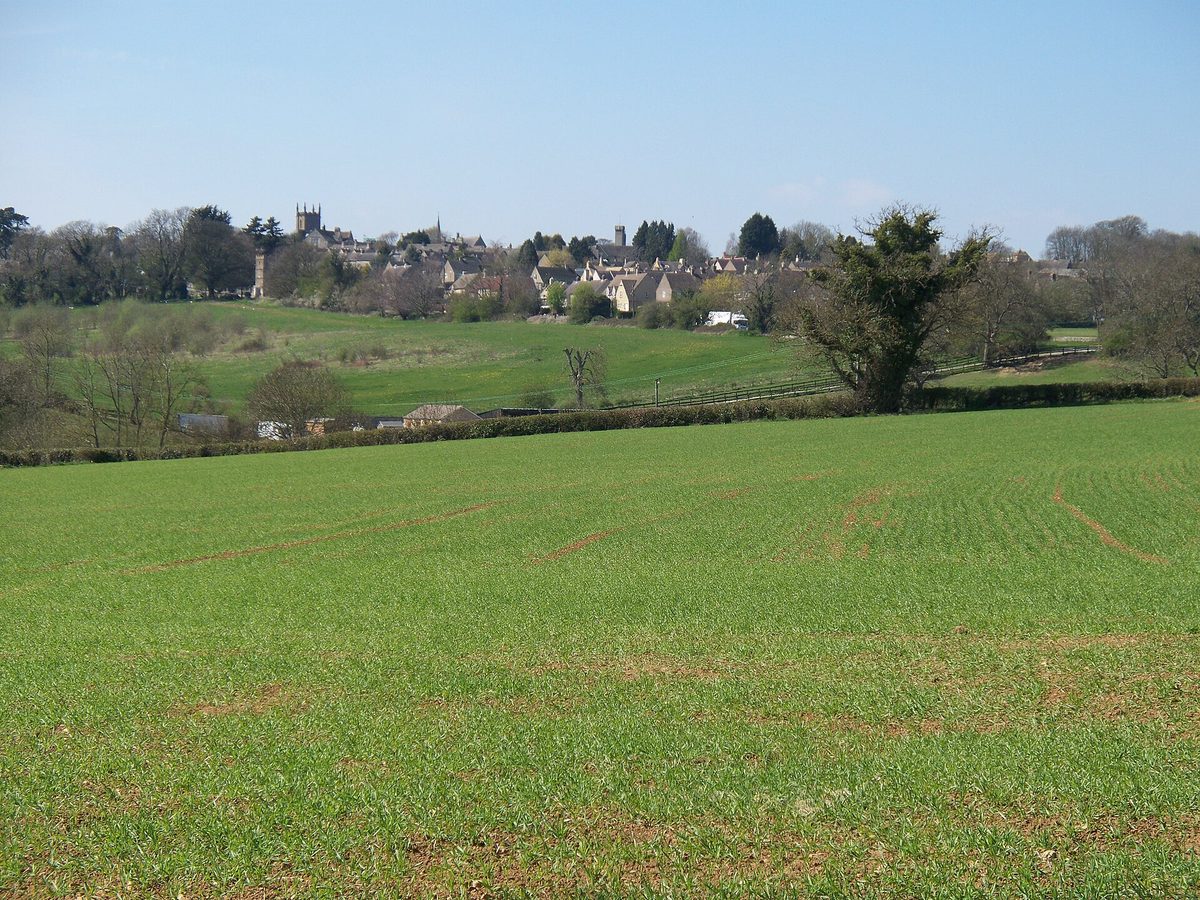
- A quiet Cotswolds market square, an ideal slow travel base town — Photo: Michael Dibb / CC BY-SA 2.0 via Wikimedia Commons. Source
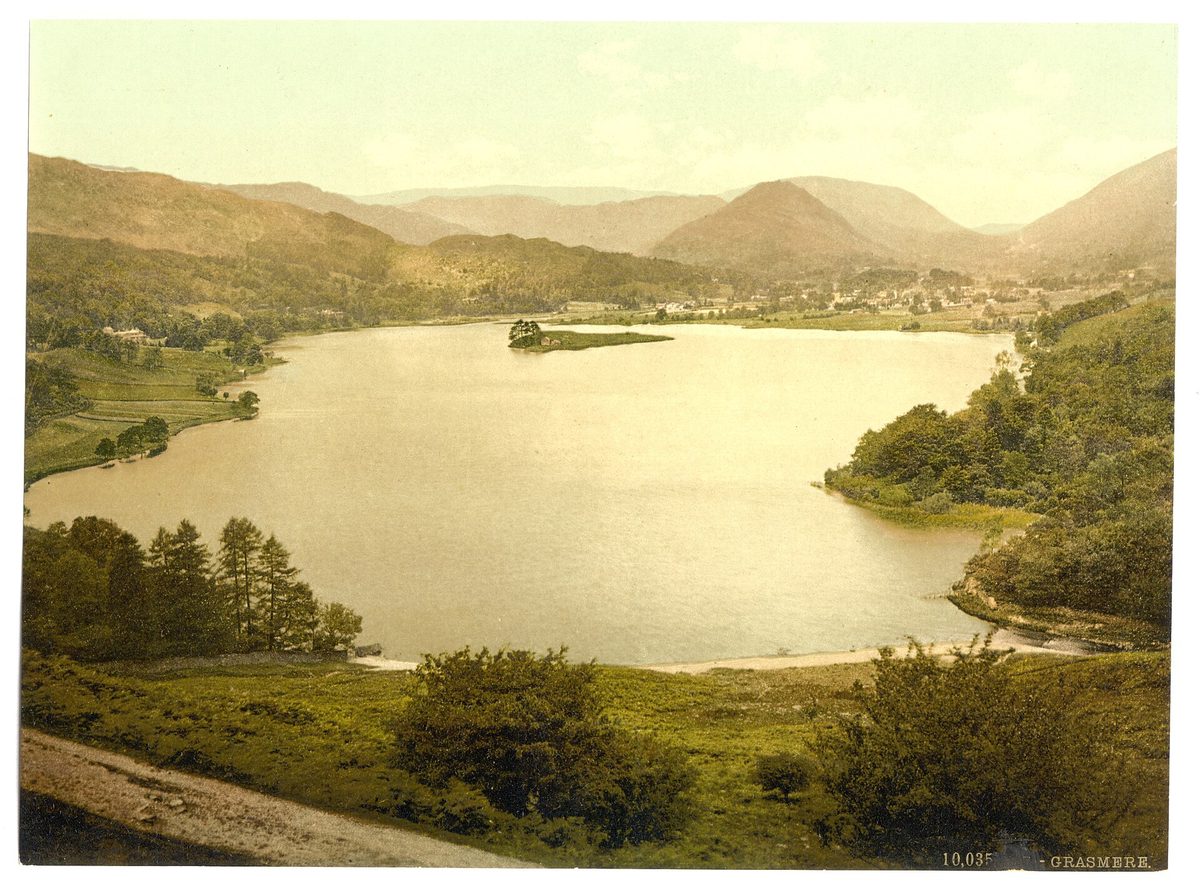
- Still water and fells at Grasmere, a classic Lake District slow-travel base — Photo: Photochrom Print Collection (CC0) via Wikimedia Commons. Source
- St Michael’s Mount across the causeway, an easy day trip from a west Cornwall base — Photo: Lewis Clarke / CC BY-SA 2.0 via Wikimedia Commons. Source
- Pulteney Bridge over the River Avon in Bath, a perfect car-free slow-travel base — Photo: Andy Li (CC0) via Wikimedia Commons. Source
Frequently asked questions
How many days should I spend in one place in England?
For a slow trip, I would not base anywhere for fewer than four nights, and a full week per region is the sweet spot. Three regions in three weeks, or two regions in two weeks, gives each base enough time to feel like home while still showing you real variety. Anything shorter and you are back to packing every other day.
Is slow travel actually cheaper in England?
Compared night-for-night, usually yes. Weekly cottage rates are often lower per night than equivalent hotels, owners frequently discount seven-night stays, a kitchen cuts your eating-out bill, and you pay for far fewer transfers between cities. It is not cheaper if it simply makes your trip longer; the saving comes from comparing slow versus fast over the same number of nights.
Do I need a car for a slow travel England itinerary?
It depends on your bases. The Cotswolds and west Cornwall really want a car for the villages and beaches. But Bath and York are superb car-free bases with excellent train day trips, and the Lake District is manageable with buses and boats if you base centrally. Many people happily do a car week and a rail week.
Which regions are best for a slow trip to England?
My top three for first slow trips are the Cotswolds for villages and gentle walks, the Lake District for lakes and fells, and west Cornwall for beaches and coast path. Each rewards a base because the good stuff is clustered within about an hour. Bath and York are my favourite rail-hub bases for a no-car week.
Is a week long enough in the Cotswolds or the Lake District?
A week is generous and lovely in either. You will not run out of things to do, but more importantly you will not feel obliged to. Both regions actually reward leftover time: a repeated favourite walk, a lake you liked, a village you want to revisit. If anything, a week is what makes them feel slow rather than seen.
What should I look for when renting a self-catering cottage?
A real kitchen rather than a token kitchenette, a washing machine for longer stays, parking if you are driving, and walkable access to a shop and a pub. Read the actual review comments for the truth about Wi-Fi and warmth. Book the popular summer weeks months ahead, and consider late spring or early autumn for lower rates and thinner crowds.