Sheet 42 · England Itinerary Planner · 16 min read
First Time England Itinerary
Planning your first time England itinerary? Here's what to prioritise, the rookie mistakes to skip, how long to go, and skeleton 5/7/10-day routes.
 Sheet 42
Contents 11 sections
I’ve built a first time England itinerary for friends more times than I can count, and the conversation always opens the same way: someone has a spreadsheet with fourteen cities on it and a slightly panicked look. They want to “see England.” All of it. In nine days.
So let me say the kind thing first, the thing nobody told me before my first trip: you cannot see England in one go, and trying to is the single fastest way to ruin a perfectly good holiday. England is small on a map and enormous in reality, because everything is dense, layered, and worth slowing down for.
This guide isn’t a rigid day-by-day route. It’s the thing I wish someone had handed me before I built mine — how to think about a first trip, what genuinely deserves your limited days, and which “must-sees” you can guiltlessly skip.
Quick Answer: How to Build a First Time England Itinerary
For a first time England itinerary, anchor your trip in London for three to four nights, then add one or two regions you can reach by train without backtracking — the classic pairings are Bath/Stonehenge, the Cotswolds, or York. Pick fewer places, stay longer in each, and budget far more travel time than the map suggests. Seven to ten days is the realistic sweet spot.
That’s the whole philosophy in one paragraph. The rest of this is me explaining why, and showing you what it looks like in practice. If you want the full, hour-by-hour versions, I’ll point you to my dedicated England itinerary hub and the specific length-based guides as we go.
The One Mindset Shift That Fixes Most First Trips
Here is the mental reframe that changes everything. Stop thinking in cities and start thinking in bases.
A base is a place you sleep for at least two or three nights and use as a hub. From a base, you can do day trips, you can have a slow morning, you can leave your suitcase in one place. The opposite — a string of one-night stops — is the most common way first-timers exhaust themselves. You spend your mornings packing and your afternoons checking in, and you never actually land anywhere.
My rule of thumb: no single-night stays on a first trip unless they’re genuinely unavoidable. Two nights minimum, three is better. You’ll see less on paper and experience far more in reality.
The second shift: England’s appeal isn’t a checklist of monuments. It’s the texture between them — a pub lunch in a 400-year-old building, a footpath through sheep fields, a market town where nothing famous happens. If your whole plan is landmarks, you’ve planned someone else’s holiday. Leave gaps. The gaps are where the trip actually lives.
What You Can Realistically See, By Trip Length
Before anything else, be honest about your days. Here’s roughly what each trip length supports without turning into a forced march. “Days” here means full days on the ground — your arrival day is mostly a write-off (more on jet lag below), and your departure day rarely counts either.
| Trip length | Realistic scope | Don’t try to add |
|---|---|---|
| 5 days | London deeply + one day trip (Bath, Oxford, or Windsor) | A second region; the north |
| 7 days | London (3–4 nights) + one region base (Bath OR Cotswolds OR York) | Three regions; Lake District and the south |
| 10 days | London + two regions, e.g. south-west or Cotswolds + the north | Scotland; Cornwall on the same trip as York |
| 14 days | London + south-west + north (York/Lakes), with room to breathe | “Everywhere” — it’s still not enough for everywhere |
| 3 weeks | A genuinely broad loop, slow pace, true variety | Honestly, relax — you finally have the time |
Notice what’s missing from the shorter rows: the dramatic stuff is gone. No Lake District in five days. No Cornwall in seven. That’s not me being stingy — it’s geography. Cornwall is a five-hour-plus train from London. The Lakes are roughly three hours to Penrith or Oxenholme and then you still need to get into the valleys. These are wonderful and they reward the trip that’s built around them, not bolted onto it.
If you’re already leaning toward a specific length, jump straight to the dedicated guide: the 7-day England itinerary, the ten-day England itinerary, or the 2-week England itinerary. Each one is the granular, day-by-day version this page deliberately isn’t.
The Genuine Must-Sees (And What I’d Skip)
Opinions ahead. I’ll stand behind every one of them.
Worth your limited days
London — yes, all the obvious things. First trip, you should do Westminster, the Tower of London, a walk along the South Bank, a museum or two (the British Museum and the National Gallery are both free, which still delights me). It’s a cliché because it’s correct. My full breakdown lives in the London travel guide, but on a first trip, lean into the classics without apology.
Bath. Honey-coloured Georgian crescents, the genuinely remarkable Roman Baths, and it’s only about 90 minutes by train from London Paddington. It pairs naturally with Stonehenge. The whole cluster — Bath, Stonehenge, Oxford, Cambridge — gets its own deep dive in my Bath, Stonehenge, Oxford & Cambridge guide.
The Cotswolds. This is the postcard England people picture — Bibury, Castle Combe, dry-stone walls, villages that look unchanged for centuries. It’s also the place first-timers most often get wrong (see the day-trip mistake below). My honest take on doing it properly is in the Cotswolds travel guide.
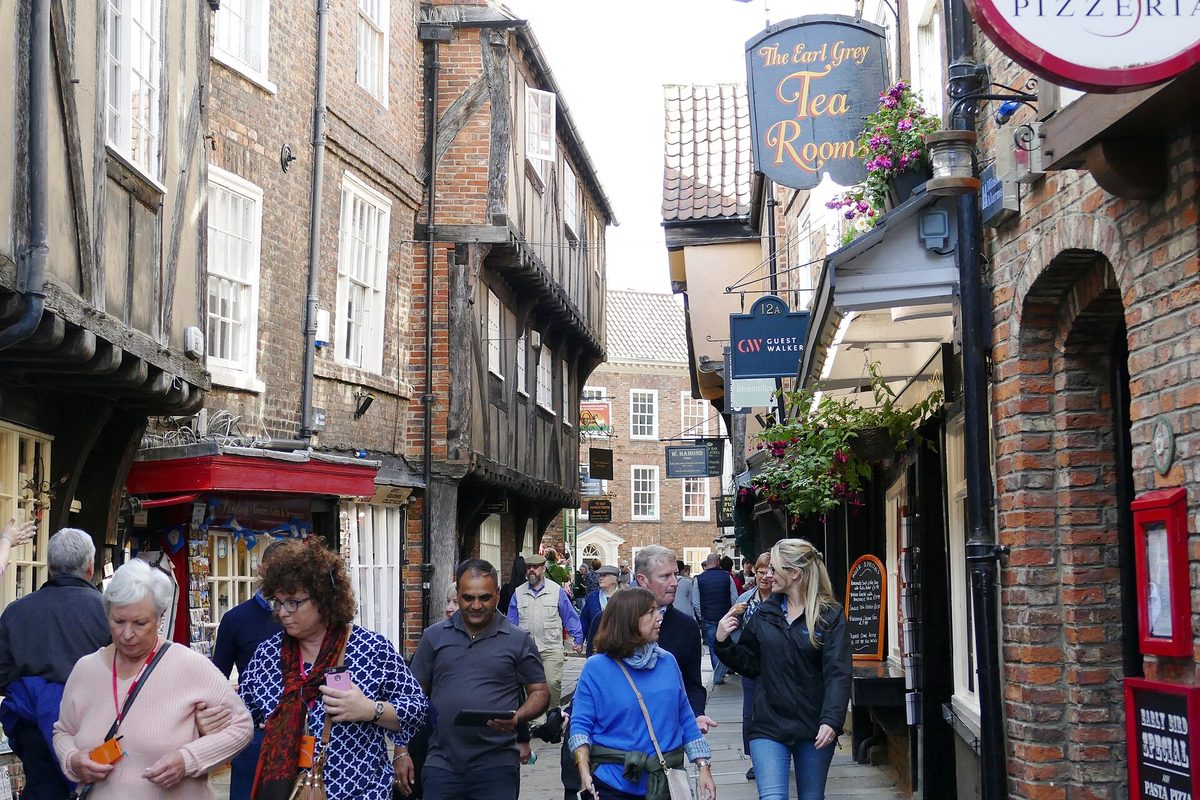
York. If you want one northern city that delivers history with almost no effort, it’s York. The Minster, the medieval Shambles, walkable city walls. Around two hours direct from London King’s Cross — genuinely doable, and a brilliant base for the north.
Honestly overrated, or at least skippable on a first trip
Stonehenge as a destination in itself. I know. But you stand behind a rope, fairly far back, for a stone circle you’ll absorb in about twenty minutes. It’s worth seeing — pair it with Bath and you’re sorted — but don’t build a whole day around it. The nearby stones at Avebury, which you can walk among for free, often move people more.
The London Eye and Madame Tussauds. Fine if you have kids or spare time; skippable otherwise. The view from the Eye is good; the queue and the price often aren’t worth it when free skyline views exist (the Sky Garden, for one, if you book ahead).
Trying to “do” Oxford and Cambridge. They’re similar enough that on a tight first trip, pick one. Both are glorious; you don’t need the set.
Anywhere requiring a 5-hour transfer for a single night. If it’s that far, it deserves two nights or it shouldn’t be on the list. Cornwall, I’m looking at you — beautiful, and entirely wrong for a rushed first trip. (When you do go, the Cornwall & Devon travel guide is waiting.)
For a broader, less opinionated survey of contenders, my England destination page lays out the full field so you can weigh them yourself.

The Rookie Mistakes I See Every Single Time
If you avoid only these five things, your first trip will already be better than most.
1. Overpacking the schedule. The big one. Six cities in seven days reads as “ambitious” on a spreadsheet and feels like a punishment by day three. Every move costs you a half-day minimum once you factor in packing, checking out, the journey, checking in, and getting your bearings. Cut your list in half. Then consider cutting it again.
2. Too many one-night stays. I’ll keep banging this drum. One-nighters mean you’re perpetually mid-transit. Three solid bases over ten days will show you more of England than ten one-night towns ever could.
3. Underestimating travel time. “It’s only two hours on the train” ignores the hour of getting to the station, buying coffee, the platform faff, and the taxi or bus at the other end. A “two-hour” hop is really a half-day. Distances also lie on a UK map — England is compact, but the rail network radiates from London, so going between two provincial cities can be slower and pricier than you’d guess. Plan with my England transport guide open in another tab.
4. Doing day trips that should be overnights. The Cotswolds is the worst offender. People do it as a day trip from London and spend more time on coaches than in villages. Bath, York, and the Cotswolds all reward a night or two — you get the golden-hour light and the empty morning streets after the day-trippers leave. A day trip from London makes sense for Windsor, Oxford, Cambridge, or Greenwich; my day trips from London guide is honest about which ones are worth it as day trips and which secretly want an overnight.
5. Booking nothing in advance — or everything. Two failure modes. Book nothing and you’ll queue an hour for the Tower of London and find the restaurant you wanted is full. Book everything and you’ve handcuffed yourself to a timetable with no room for the rainy-day pivot or the place a local recommends. Pre-book the timed-entry headliners (Tower of London, Westminster Abbey, Roman Baths, any West End show) and leave the rest loose.
How Long Should Your First Trip Actually Be?
The honest answer is “as long as you can get,” but let me be more useful than that.
Five days is the floor where a trip stops feeling like a layover. You can do London properly and steal one day trip. It’s a real holiday, just a focused one.
Seven days is where I think the first trip clicks. London for three or four nights, then one region as a second base. You come home having tasted both the city and the countryside without the whiplash. For most first-timers, this is my default recommendation.
Ten days is the luxury of breathing room. Two regions beyond London become possible, the pace softens, and you stop optimising every hour. If you can swing ten, do.
Two weeks or three opens up real range — south and north, a proper run at the Lake District, maybe a slower rhythm entirely. If slowing down is your instinct, my unhurried England route is built for exactly that temperament, and the 3-week England itinerary shows how far you can roam without rushing.
One more thing on timing: when you go matters nearly as much as how long. June, when I’m writing this, is glorious — long daylight, gardens in full swing — but it’s busy. May and September are my quiet favourites. The full seasonal breakdown is in when to visit England.

Money, SIM and Transport: The 60-Second Briefing
You don’t need to master this before you arrive, but knowing it saves real stress on day one. As always, treat these figures as “around, as of 2026” — verify the current numbers via the official sources I list at the end.
Paying for things. England is effectively cashless now. Tap your contactless card or phone for nearly everything; you’ll rarely need more than £20 in cash, mostly for the odd rural pub, market stall, or tip. Don’t bother changing huge sums of currency at home.
London transport. Just tap a contactless bank card or phone on the yellow readers — no need to buy a separate Oyster card anymore. It automatically “caps” your daily spend so you never overpay: within Zones 1–2 the daily cap sits at around £8.90, and the weekly cap around £44.70 (TfL has frozen these until at least March 2027). Buses are a flat fare of about £1.75, and the “Hopper” lets you change buses free within an hour. The classic Oyster card still works but carries a non-refundable £10 deposit, so for most visitors, contactless is simpler.
Trains beyond London. This is where money leaks if you’re careless. Walk-up fares can be eye-watering; Advance tickets bought ahead for a specific train are dramatically cheaper. If two of you travel together, a Two Together Railcard (around £35) gives a third off most fares and usually pays for itself in one or two journeys — though note railcard discounts don’t apply to contactless pay-as-you-go in London, only to actual train tickets. I go deeper on all of this in the England transport guide.
Staying connected. Roaming on a US or non-EU plan can sting at several pounds a day. An eSIM (Airalo, Holafly and similar) loaded before you fly, or a cheap UK prepaid SIM grabbed at the airport, is almost always better value for a stay of more than a few days.
Budgeting overall. England isn’t cheap, but it flexes. Free museums, picnic lunches, and trains booked early keep it sane; central London hotels and last-minute rail do the opposite. For a realistic sense of daily costs, see England budget & costs.
Surviving Day One: The Jet-Lag Reality
Most first-timers fly overnight and land in the morning, foggy and wrecked. Here’s the playbook that actually works, drawn from doing it the hard way more than once.
Do not nap. I know your body is begging. A “quick” afternoon nap becomes four hours and wrecks your first night. Push through to a normal local bedtime — 9 or 10pm — and you’ll mostly reset by the next day.
Get outside into daylight. Sunlight is the strongest signal to your body clock. The South Bank walk from Westminster to Tower Bridge is my standard arrival-day prescription: flat, scenic, full of cafés, and you can stop whenever the wall hits.
Keep day one gentle and non-bookable. Don’t put your Tower of London timed ticket or a theatre show on arrival day — you might sleep through it. Plan something forgiving: a stroll, a park, a long lunch, a market. Save the headliners for day two when you’re human again.
Eat on local time. Have meals when England says to, not when your stomach insists. It nudges your clock along faster than almost anything else.
Skeleton Routes: 5, 7 and 10 Days
These are deliberately skeletons — the shape of a sensible first trip, not the day-by-day. For the full hour-by-hour versions, follow the links to the dedicated guides, which exist precisely so I don’t have to cram three detailed itineraries into one page.
The 5-Day First-Timer (London + one taste)
- Days 1–4: London. Arrival day gentle (South Bank, a park). Then Westminster and the Tower, a free museum afternoon, a South Bank or East End wander, and one evening at the theatre.
- Day 5: One day trip — Bath for Roman/Georgian grandeur, Oxford for dreaming spires, or Windsor for the castle. Back to London for your last night.
Five days is London-with-a-garnish. Embrace that rather than fighting it. The deeper city plan is in the complete London guide.
The 7-Day First-Timer (London + one region base)
- Days 1–4: London, as above but unhurried.
- Days 5–7: Pick one second base and stay two or three nights. Bath (with a Stonehenge half-day) is the smoothest first-trip choice; the Cotswolds if you want pure countryside; York if you’d rather a northern historic city.
This is the itinerary I recommend most often. The complete, detailed version is the week-long itinerary — use it for the actual day-by-day once you’ve decided on your shape here.
The 10-Day First-Timer (London + two regions)
- Days 1–4: London.
- Days 5–7: South-west base — Bath, with Stonehenge and a Cotswolds day from there.
- Days 8–10: North base — York, or push on to a Lake District valley if you want mountains and lakes.
Ten days lets you feel both halves of England — the polished south and the wilder, hillier north — without sprinting. The full treatment, with transport timings and where to sleep, is the 10-day England itinerary.
A note for two specific groups: if you’re travelling with children, the priorities shift (shorter days, more breaks, castles over churches) and I’ve written it all up in the kid-friendly itinerary. And if the idea of changing hotels at all makes you tired, the England itinerary by train shows how to do a first trip car-free and stress-light.

Where to Base Yourself, Briefly
A quick word on the where you sleep question, since it shapes everything.
In London, prioritise being central and near a Tube station over square footage or price. South Kensington, Bloomsbury, Covent Garden, or anywhere Zone 1–2 with a good line will save you hours over a cheaper room in Zone 4. Outside London, choose somewhere with its own evening life — a town with pubs and restaurants, not a roadside hotel you have to drive away from to eat. My full regional breakdown is in where to stay in England, and for the broader practical picture — etiquette, tipping, plugs, weather — keep the full England guide handy.
Final Thoughts
The best first time England itinerary is the one with the fewest pins on the map. I mean that sincerely. Every time I’ve talked a friend down from their fourteen-city plan to a three-base trip, they’ve come home raving — about the pub they found, the morning they had a Cotswolds lane to themselves, the museum they wandered with no agenda. Nobody has ever come home wishing they’d added a fourth one-night stop.
England rewards depth, not breadth. Pick a couple of places, give them real time, leave room for weather and whims, and trust that you’ll be back. You almost certainly will be — first trips to England have a way of becoming the first of several.
When you’re ready to turn this thinking into an actual plan, start at the England itinerary hub and pick the length that fits your days. The detail’s all there. This page was just to make sure you build the right shape first.
Research and Source Notes
For this guide I checked current London fares, caps and the Hopper bus fare against Transport for London (tfl.gov.uk) and cross-referenced pay-as-you-go contactless caps with National Rail (nationalrail.co.uk); the Zone 1–2 daily and weekly caps were confirmed as frozen until at least March 2027. Railcard pricing and eligibility (including the Two Together Railcard and the fact that railcard discounts don’t apply to London contactless pay-as-you-go) were verified via Railcard.co.uk / National Rail. General first-time planning context, day-trip-versus-overnight advice, and “how many days” benchmarks were informed by published guidance from Visit London / Visit Britain, Rough Guides, and **Lon
Photo Credits
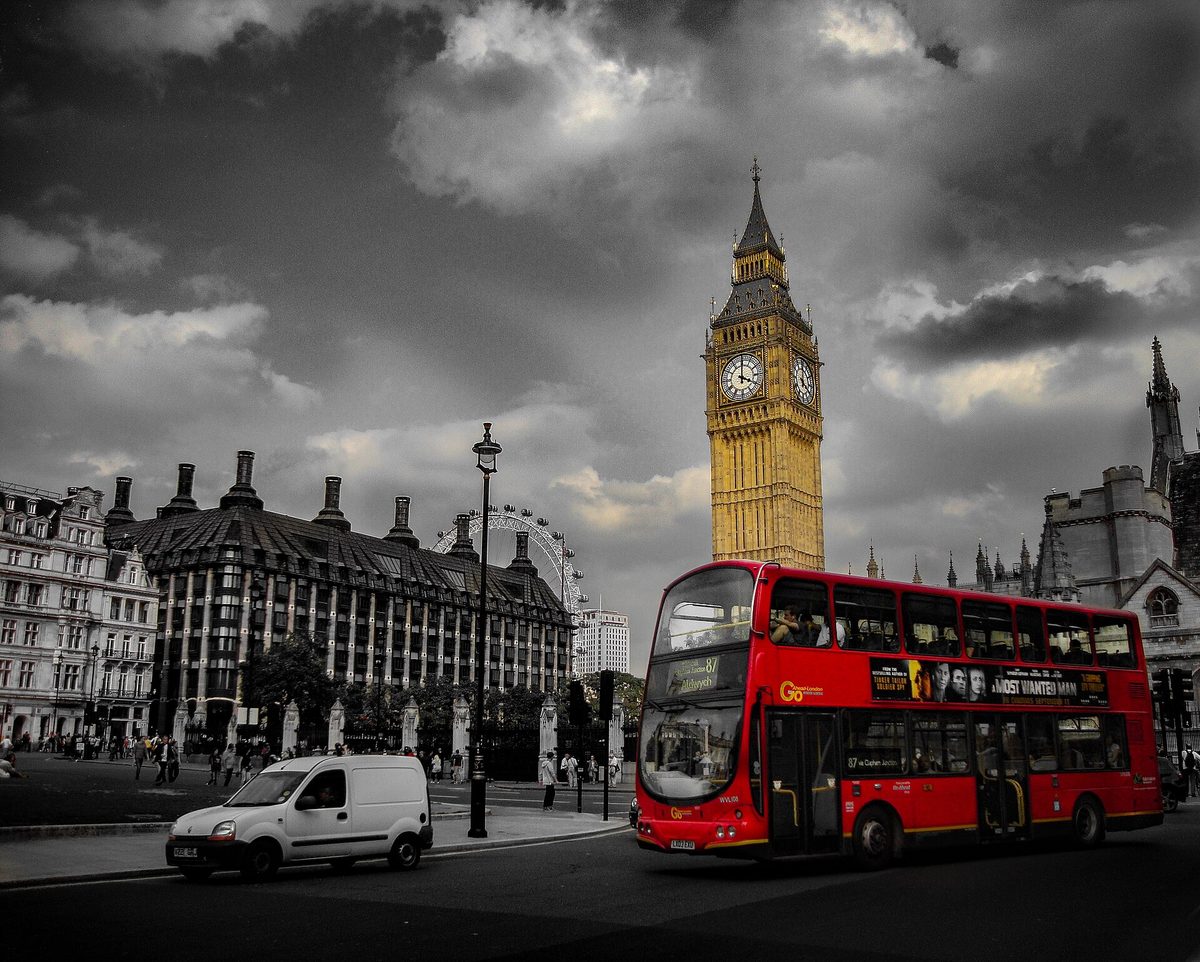
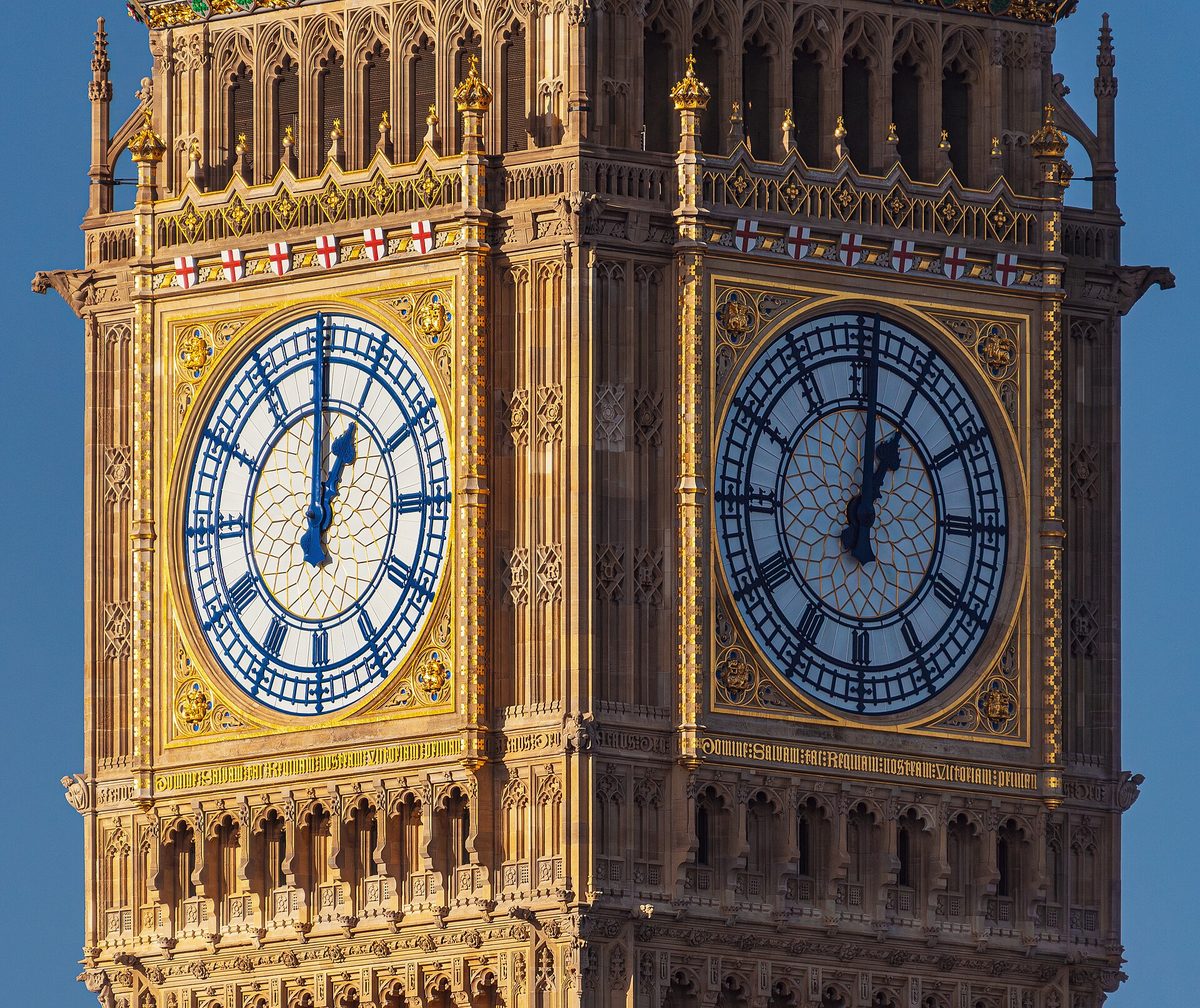
- A first time England itinerary almost always begins in London, with Big Ben and the Houses of Parliament by the Thames — Photo: Julian Herzog (Website) / CC BY 4.0 via Wikimedia Commons. Source
- The Roman Baths in Bath, an easy 90-minute train from London and a top pick for a first time England itinerary — Photo: Diego Delso / CC BY-SA 4.0 via Wikimedia Commons. Source
- Arlington Row in Bibury — the Cotswolds reward an overnight, not a rushed day trip, on any first time England itinerary — Photo: John H Darch / CC BY-SA 2.0 via Wikimedia Commons. Source
- The medieval Shambles in York — an easy two hours from London and a strong second base for a first trip — Photo: Myself (Adrian Pingstone) (CC0) via Wikimedia Commons. Source
- Tower Bridge over the Thames — a gentle South Bank walk past it is the ideal jet-lagged first day of any England trip — Photo: Aleem Yousaf / CC BY-SA 2.0 via Wikimedia Commons. Source
Frequently asked questions
How many days do you need for a first trip to England?
Seven to ten days is the realistic sweet spot. Five days lets you do London well plus one day trip; seven adds a single region beyond the capital; ten gives you two regions at a comfortable pace. Fewer than five and it’s really a London city break. More than two weeks and you can finally roam the whole country slowly.
Is London worth it on a first trip, or should I skip it?
London is absolutely worth it, and on a first trip I’d never skip it. Three to four nights covers the headline sights — Westminster, the Tower, the free museums, a South Bank walk, a show — without exhausting you. It’s also your most convenient hub for day trips and your easiest arrival and departure airport. Skip it only on a return visit.
Do I need to rent a car for a first England itinerary?
For a first trip centred on London plus Bath, York, or the Cotswolds, no — trains and the occasional taxi cover it, and London driving is genuinely miserable. A car earns its place only if you’re going rural for several days, like the Lake District or deep Cotswolds. If you do drive, my England road trips guide covers the routes worth the wheels.
What’s the biggest mistake first-time visitors make?
Cramming too many places into too few days, usually via a chain of one-night stays. You end up spending your trip in transit and your evenings packing. Pick two or three bases, stay multiple nights in each, and accept you’ll “miss” things. You’ll experience far more of the actual England than the person who ticked twelve cities.
When is the best time for a first trip to England?
May, June, and September are my picks — long daylight, decent weather, and gardens at their best, with May and September dodging peak crowds. July and August are warm but busy and pricier. Winter is quiet and atmospheric but short on daylight. The full season-by-season breakdown lives in England's seasons month by month.
How much cash should I bring to England?
Very little. England is effectively cashless in 2026 — tap a contactless card or phone almost everywhere, including all London transport. Around £20 in cash covers the rare exception: a rural pub, a market stall, a parking meter, a tip. Don’t change large sums in advance; you’ll mostly just carry it around unused.