Sheet 64 · Best Places to Visit in England · 14 min read
Most Beautiful Villages in England
The most beautiful villages in England, region by region: the Cotswolds, Cornwall, the Lakes and Yorkshire, plus when to go and how to visit.
 Sheet 64
Contents 12 sections
Most lists of England’s prettiest villages make the same quiet mistake: they stop at the Cotswolds. The honey-stone villages there are genuinely gorgeous, and we will spend plenty of time among them, but if you only chase Bibury and Castle Combe you miss the fishing coves of Cornwall, the slate villages of the Lakes, the stone hamlets of the Yorkshire Dales, and a handful of one-off beauties scattered across the rest of the country.
So here is the honest version. The most beautiful villages in England are spread across several regions, each with its own building material, landscape, and mood: golden limestone in the Cotswolds, whitewash and granite in Cornwall, grey slate in the Lakes, gritstone in the Peaks, and timber-framed colour in Suffolk. The best plan is not to see them all. It is to pick a region, slow right down, and let two or three villages soak in.
This is the village-focused companion to our regional roundup of England pillar, and a more scenic sibling to the best cities to visit in England guide. If cities are where England shows off, villages are where it relaxes.
Quick Answer: The Most Beautiful Villages in England
The most beautiful villages in England include Bibury, Castle Combe, and the Slaughters in the Cotswolds; Grasmere and Hawkshead in the Lake District; Malham and Grassington in the Yorkshire Dales; and Mousehole, Polperro, and Clovelly on the southwest coast. The single prettiest is usually said to be Castle Combe or Bibury, but the best one for you depends on the region you are already exploring.
If you have a car and a free afternoon in the Cotswolds, you are spoilt for choice. If you are car-free, base yourself in a village with a train station or good bus links and treat one or two neighbours as walks. Below, I have grouped the villages by region so you can plan around where you actually are, rather than zig-zagging across the country chasing photos.
| Village | Region | Best for | Nearest base | Car helpful? |
|---|---|---|---|---|
| Bibury | Cotswolds | Iconic cottages, Arlington Row | Burford, Cirencester | Yes |
| Castle Combe | Cotswolds | “Prettiest village” looks | Bath, Chippenham | Yes |
| Bourton-on-the-Water | Cotswolds | Riverside bridges, families | Moreton-in-Marsh | Partly |
| Grasmere | Lake District | Lakes, poetry, walks | Ambleside, Windermere | Partly |
| Hawkshead | Lake District | Car-free centre, charm | Ambleside | Partly |
| Malham | Yorkshire Dales | Dramatic landscape walks | Skipton, Settle | Yes |
| Mousehole | Cornwall | Harbour, seafood | Penzance | Partly |
| Polperro | Cornwall | Car-free fishing village | Looe | Partly |
| Clovelly | Devon | Cobbled, car-free street | Bideford | Yes |
| Lavenham | Suffolk | Timber-framed medieval | Sudbury | Yes |
What Makes an English Village Beautiful
The villages that stay with you usually share three things: a strong local building material, water or hills close by, and a centre that has not been swallowed by car parks. The Cotswolds have all three, which is why they dominate the lists. But the same recipe plays out everywhere with different ingredients, and recognising it helps you find beauty well beyond the famous names.
It also helps to be honest about crowds. The most photographed villages can be very busy and, in a few cases, a little weary of visitors. The fix is simple: go early or late, park considerately, and spend money in the local shops and pubs rather than just snapping a cottage and leaving. You will have a calmer visit and be a better guest. For quieter alternatives to the honeypots, our lesser-known England guide leans further off the beaten track, and many of these villages also feature among the most beautiful places in England more broadly.
The Cotswolds: England’s Postcard Villages
If you want the classic English village fantasy, the Cotswolds deliver it more reliably than anywhere else: honey-coloured limestone, church towers, village greens, old coaching inns, and lanes that make you slow down whether you planned to or not.
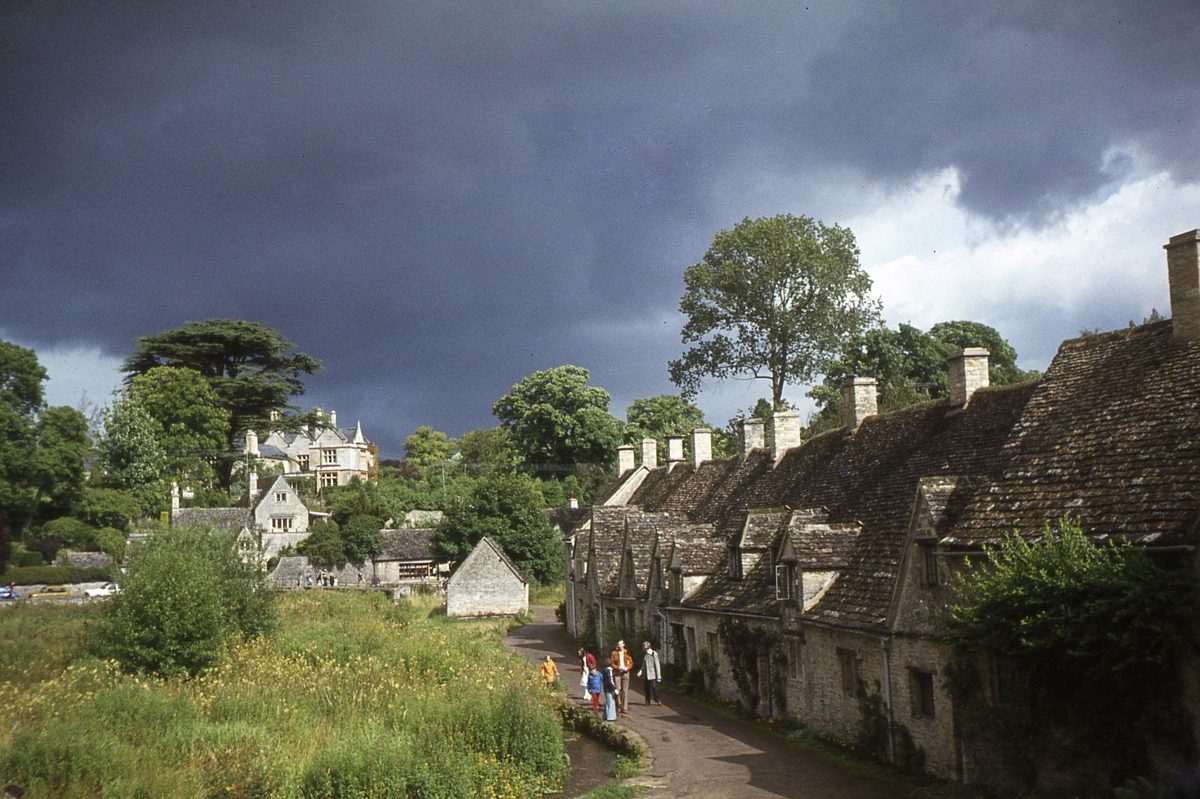
Bibury is the headline. Arlington Row, a line of seventeenth-century weavers’ cottages above the River Coln, is so iconic it appears inside the UK passport. Come early or late, because by mid-morning the narrow road past it fills with cars and coaches. Just downstream, the trout farm and the riverside walk make it more than a single photo. Castle Combe is Bibury’s rival for the title of prettiest village in England: a former wool town with a market cross, a packhorse bridge, and almost no modern clutter, which is why it keeps appearing in films from War Horse to Stardust. The Slaughters, Upper and Lower, are a pair of impossibly tidy hamlets linked by the little River Eye, best reached on foot from Bourton along a flat, pretty path.
Do not rush past the larger villages, either. Bourton-on-the-Water, threaded by low stone bridges over the River Windrush, is nicknamed the Venice of the Cotswolds and is genuinely lovely outside peak hours. Burford tumbles down one grand High Street to a medieval bridge and makes an excellent base. Chipping Campden has the finest High Street in the north Cotswolds, a sweep of honey-hued buildings barely changed in centuries, while Snowshill and Painswick (the “Queen of the Cotswolds,” famous for its churchyard yews) reward those who venture beyond the obvious trio. To plan a proper Cotswolds trip rather than a rushed photo stop, use the full complete Cotswolds guide.

Lake District Villages
Swap golden stone for grey slate, add mountains and dark water, and you have the Lake District’s villages, which are beautiful in a wilder, more dramatic way.
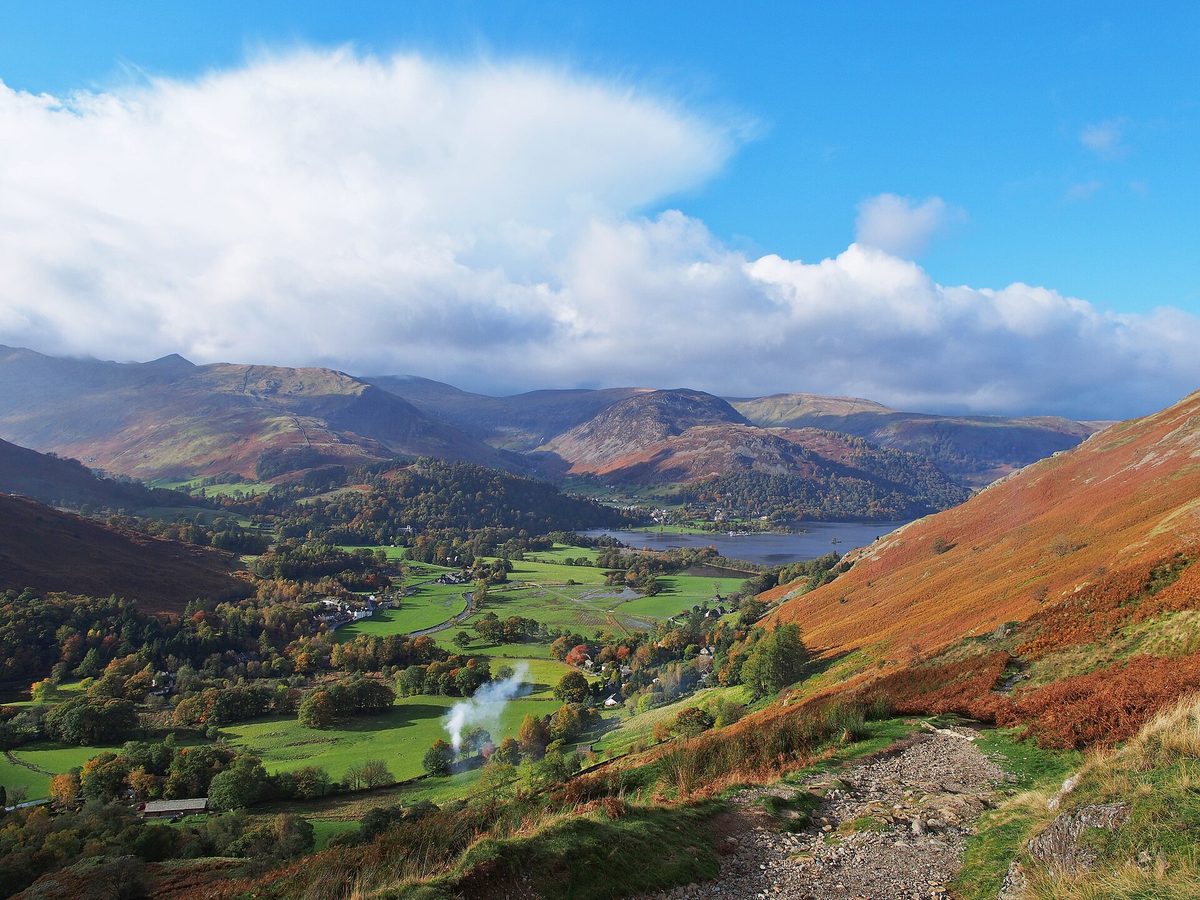
Grasmere is the most famous, a small village wrapped in fells and forever linked to William Wordsworth, who lived at Dove Cottage and is buried in the churchyard here. It is also home to the legendary Grasmere gingerbread shop, sold from a tiny seventeenth-century cottage and worth the queue. Hawkshead is a delight to wander, a tangle of whitewashed lanes and archways with a largely car-free centre and strong Beatrix Potter and Wordsworth connections. Ambleside makes the busiest and best-connected walking base, with the much-photographed Bridge House perched over a stream, while tiny Elterwater and lakeside Grasmere suit travellers who want a quieter valley.
These villages are best treated as part of a wider Lakes trip rather than as quick stops, because the drives are slow and winding and the walks are the whole point. The Lake District travel guide covers bases, walks, and how to manage without a car, and the wider hiking guide puts them in context.

Yorkshire Dales and Moors Villages
The villages of the Yorkshire Dales are all dry-stone walls, field barns, and green valleys, and they feel both open and intimate at once.
Malham is the standout, a small village that sits beneath the vast natural amphitheatre of Malham Cove; the short walk up the limestone pavement and around to Janet’s Foss and Gordale Scar is one of the best half-days of walking in England. Grassington is a handsome market village of cobbles and good pubs that doubles as the set for the recent All Creatures Great and Small. Hawes is the working heart of Wensleydale, complete with its famous creamery and cheese. Over on the North York Moors, Goathland stands in as both Hogsmeade and Heartbeat’s Aidensfield, and the coastal village of Robin Hood’s Bay tumbles down a cliff to the sea in a maze of tiny lanes and smugglers’ passages. These pair well with a stay in York; see the best historic towns in England for more in the area.
Cornwall and Devon: Coastal Village Beauty
The southwest trades stone cottages for harbours, and its villages are some of the most atmospheric in the country.
In Cornwall, Mousehole (say “Mowzel”) is a cluster of granite cottages around a tiny tidal harbour, magical at dusk and especially during its famous Christmas lights. Polperro is a car-free fishing village of impossibly narrow, whitewashed lanes that funnel down to a working harbour; you park at the top and walk in. Port Isaac doubles as the television village of Portwenn, all steep alleys and fishermen’s cottages, while St Ives straddles the line between village and small town, with a harbour, three beaches, and the Tate to its name. In Devon, Clovelly is a one-off: a privately owned village whose impossibly steep cobbled street tumbles to the sea with no cars at all, goods still moved down by sledge.

These coastal villages reward time and patience, especially in summer when parking is tight and the lanes are narrow. Plan around them with the Cornwall and Devon travel guide and our guide to the England coast and beaches, which covers the wider stretches of coastline they sit on.
Peak District, Suffolk, and Other Regional Gems
Some of England’s loveliest villages sit outside the obvious regions, and they are well worth a detour.
In the Peak District, Castleton is ringed by hills and show caves and packed with good pubs, making it a brilliant walking base, while Tissington, with its limestone cottages and well-dressing tradition, and the market town of Bakewell (irresistible for its pudding) round out the area. In Suffolk, Lavenham is the finest medieval village in England, a riot of crooked, timber-framed, pastel-painted houses that have leaned cheerfully out of true for five centuries. In Dorset, the village of Corfe Castle sits beneath its dramatic ruined fortress; in Northumberland, Bamburgh lives in the shadow of its enormous castle above one of England’s great beaches; and in the New Forest, Lyndhurst and Beaulieu mix heath, free-roaming ponies, and thatch. Further north, Cartmel in Cumbria pairs a medieval priory with the birthplace of sticky toffee pudding, and Great Budworth in Cheshire is a tidy estate village of timber and brick that few visitors ever reach.

This regional spread is exactly why a village trip pairs so well with understanding the country’s geography. The England regions explained for tourists guide shows how these areas connect, so you can group villages sensibly instead of crossing the country twice.
Three Village Days Worth Planning
If you would rather follow a route than assemble one, here are three village days I would happily repeat.
In the Cotswolds, start early at Bibury before the crowds, drive to the Slaughters and walk the flat riverside path into Bourton-on-the-Water for lunch, then finish in Stow-on-the-Wold or Chipping Campden for golden-hour light on the High Street. It is a gentle day with an enormous amount of beauty and very little driving.
In the Lake District, base in Ambleside, take the bus or a short drive to Grasmere for the village, Wordsworth’s grave, and gingerbread, then carry on to Hawkshead before finishing with a late-afternoon lake cruise from Bowness. You get villages, poetry, and water without a punishing schedule.
In Cornwall, build a day around the far southwest: Mousehole for the harbour, Lamorna or Porthcurno for the coast, and St Ives for galleries, beaches, and an early seafood dinner. Distances are short here, but the lanes are slow, so resist the urge to over-plan. Each of these slots neatly into a longer trip; pair them with the England itinerary planner to build a full route.
Beautiful Villages Near England’s Big Cities
You do not have to commit to a rural week to see a beautiful village; several sit within easy reach of the cities you are probably visiting anyway. From Bath, Castle Combe and the photogenic National Trust village of Lacock (a regular film set for Harry Potter and Cranford) are short drives or guided tours. From Cambridge, the riverside village of Grantchester, immortalised by Rupert Brooke and a Sunday-night drama namesake, is a classic walk or punt along the Cam. From York, the whole sweep of Dales and Moors villages opens up by car or organised tour. From Manchester or Sheffield, the Peak District villages of Castleton, Edale, and plague-history Eyam are quick to reach. And from London, while the Cotswolds make a long day, pretty Surrey and Kent villages such as Shere and Chilham offer gentler escapes.
This is where pairing a city break with a village day really pays off. Use the England cities guide to choose your base, then add a village or two as a contrast. It is one of the most satisfying ways to structure a trip, especially if you are relying on trains and the occasional tour rather than your own car, and it keeps you from spending the whole holiday in transit.
How to Visit England’s Villages (Without the Car Headache)
A car genuinely helps for the Cotswolds, the Dales, and rural Devon, where buses are infrequent and the joy is in linking several villages in a day. But you do not always need one. Many beautiful villages are walkable from a town with a train station, and some, such as Grasmere or Hawkshead, are best reached by a short bus hop from a hub like Windermere or Ambleside.
If you are car-free, base yourself smartly: Moreton-in-Marsh for the Cotswolds, Windermere or Ambleside for the Lakes, Skipton or Settle for the Dales, and Penzance for west Cornwall. Then treat the nearest villages as day walks or bus trips rather than trying to reach every famous name. Our England by train and transport guide covers the rail-and-bus combinations, and where to stay in England helps you choose a base that does the planning work for you.
A little courtesy goes a long way in small villages: park only in marked areas, keep your voice down in residential lanes, and spend in the local cafes, farm shops, and pubs. These places are people’s homes first and photo opportunities second, and they stay beautiful only because someone still lives and works in them.
Best English Villages by Type
If you want the single most famous, go to Bibury or Castle Combe. For the quietest beauty, choose Snowshill, Elterwater, or a lesser-known Dales hamlet such as Arncliffe. For coastal charm, Mousehole, Polperro, and Clovelly are unbeatable. For genuinely car-free wandering, Clovelly, Polperro, and Hawkshead keep the traffic out. And for a village that doubles as a great walking base, Grasmere, Malham, and Castleton are hard to beat.
When you are ready to fold villages into a wider route, the most beautiful places in England and bucket list guides help you balance villages with cities, coast, and countryside so the trip has variety rather than ten cottages in a row.
Final Thoughts
The most beautiful villages in England are not a checklist to conquer; they are places to slow down in. Choose a region, pick two or three villages, and give yourself time for the walk between them, the churchyard you did not plan to enter, and the pub you stumble into when it starts to rain. That is when these places stop being postcards and start being memories.
From here, build the wider trip with the best places to visit in England pillar, then add the Cotswolds, Lake District, and Cornwall and Devon guides for the regions your favourite villages sit in.
Research and Source Notes
This guide draws on current travel-search patterns and was checked against official and regional tourism information, including VisitEngland and regional destination resources, national park information, and individual village and town visitor pages. Access, parking, and opening details change, so confirm current information before you travel.
Photo Credits
- Arlington Row in Bibury, one of the most beautiful villages in England — Photo: Colin Park / CC BY-SA 2.0 via Wikimedia Commons. Source
- Castle Combe, often called the prettiest village in England — Photo: Chris Andrews / CC BY-SA 2.0 via Wikimedia Commons. Source
- Grasmere village in the Lake District, one of England’s most beautiful villages — Photo: Photochrom Print Collection (CC0) via Wikimedia Commons. Source
- The harbour at Mousehole, a beautiful Cornish fishing village — Photo: Mark Crombie (CC0) via Wikimedia Commons. Source
- Lavenham in Suffolk, England’s finest medieval timber-framed village — Photo: Colin Park / CC BY-SA 2.0 via Wikimedia Commons. Source
Frequently asked questions
What is the prettiest village in England?
Castle Combe and Bibury are the two most common answers, both in the Cotswolds and both genuinely lovely. Castle Combe edges it for many visitors thanks to its almost untouched market-cross centre, while Bibury wins on the strength of Arlington Row. Outside the Cotswolds, Clovelly in Devon and Mousehole in Cornwall are strong contenders for sheer atmosphere.
Which English villages are worth visiting beyond the Cotswolds?
Plenty. Grasmere and Hawkshead in the Lake District, Malham and Grassington in the Yorkshire Dales, Mousehole and Polperro in Cornwall, Clovelly in Devon, Lavenham in Suffolk, and Robin Hood’s Bay on the Yorkshire coast are all among the most beautiful villages in England, each with a completely different character and building style.
Can you visit English villages without a car?
Yes, with smart planning. Base yourself in a town with a train station and good bus links, then reach nearby villages on foot or by bus. The Cotswolds and the Dales are easiest with a car, but the Lakes, parts of Cornwall, and many individual villages are perfectly reachable car-free if you choose your base well.
When is the best time to visit English villages?
Late spring and early autumn are ideal: gardens and countryside look their best, and the worst of the summer crowds and parking pressure ease off. Summer is lovely but busy in the honeypots, and many coastal villages are quietest and most atmospheric out of season. See choosing when to go for the full seasonal picture.
How many villages should you visit in a day?
Two or three is the sweet spot. Cramming in six villages turns a relaxed day into a parking-and-photo sprint, and the whole appeal of these places is slowing down. Pick a couple, leave time for a walk or a long lunch, and let the region breathe around you.
Are the Cotswolds the most beautiful villages in England?
The Cotswolds are the most consistently beautiful cluster, which is why they dominate the lists, but “most beautiful” is really a tie across regions. For coastal drama, Cornwall wins; for mountain settings, the Lakes; for medieval timber, Suffolk’s Lavenham. The Cotswolds are the easiest place to see several stunning villages in one trip, but they are not the only answer.


2 notes
Notes are closed on this sheet.