Sheet 74 · Lake District Travel Guide · 15 min read
Lake District Without a Car
How to do the Lake District without a car: trains to Windermere, the 555 and 599 buses, lake launches, bike hire, the best car-free bases and sample days.
 Sheet 74
Contents 10 sections
I’ll be honest: the first time I planned a Lakes trip, half a dozen people told me I’d be mad to attempt it without a car. They were wrong. I’ve now done the fells, the lakes and the chocolate-box villages on buses and boats more than once, and I genuinely prefer it.
You can absolutely do the Lake District without a car. You take a train to Windermere (the only town in the central Lakes with its own station), then lean on a surprisingly good network of buses, lake launches and bike hire to reach Ambleside, Grasmere, Keswick, Coniston and Ullswater. It takes a little planning around timetables, but it works.
Quick Answer: Can You Do the Lake District Without a Car?
Yes, you can do the Lake District without a car, and it’s easier than its reputation suggests. Arrive by train at Windermere or Penrith, then use Stagecoach buses (the 555 and open-top 599 are the backbone), lake cruises, and bike hire to get around. Base yourself in Windermere, Ambleside, Grasmere or Keswick for the smoothest connections.
The catch — and there’s always a catch — is frequency. The headline routes run often enough that you barely think about them, but the buses that climb to remote trailheads can be every couple of hours, and almost everything thins out in winter. Plan your days around the timetable rather than fighting it, and the Lakes open up beautifully.
For the bigger picture on the region, see my Lake District travel guide. This page is purely about the logistics of getting around car-free.
At a Glance: Key Car-Free Routes
Here are the routes I actually use. Frequencies are typical for the main season (roughly Easter to October) and are quieter in winter — always check the live timetable for your dates.
| Route | Operator | Connects | Rough frequency | Why it’s useful |
|---|---|---|---|---|
| Lakes Line (train) | Northern | Oxenholme – Kendal – Staveley – Windermere | ~Hourly | Your way in from the main line; ~20 min branch ride |
| Bus 555 “Lakeslink” | Stagecoach | Kendal – Windermere – Ambleside – Grasmere – Keswick | Every 30–60 min, daily | The spine of the network; links north and south |
| Bus 599 (open-top) | Stagecoach | Bowness – Windermere – Ambleside – Grasmere | ~Every 20 min (seasonal) | Scenic top-deck views; great for first-timers |
| Bus 505 | Stagecoach | Kendal – Windermere – Ambleside – Hawkshead – Coniston | Roughly hourly (seasonal) | Reaches Coniston and Hawkshead |
| Bus 508 | Stagecoach | Penrith – Pooley Bridge – Aira Force – Glenridding | A few times daily | The Ullswater valley from the north |
| Bus X4 / X5 | Stagecoach | Penrith – Keswick – Cockermouth – Workington | Roughly hourly | The Keswick side from the main line |
| Windermere Lake Cruises | Windermere Lake Cruises | Bowness – Ambleside – Lakeside | Frequent in season | Boat instead of bus along the lake |
| Ullswater ‘Steamers’ | Ullswater Steamers | Glenridding – Howtown – Pooley Bridge | Several daily | Walk one way, sail back |
Fares and timetables shift, so treat these as a planning sketch rather than gospel.
Getting There by Train
Here’s the single most important thing to understand: the West Coast Main Line runs down the eastern edge of the Lake District, not through it. So you don’t take a train “to the Lakes” so much as to one of two gateway stations, then transfer.
Coming in from the south (and London)
If you’re heading for Windermere, Ambleside, Grasmere or the central lakes, you want the branch line to Windermere. Fast Avanti West Coast trains on the main line stop at Oxenholme (Lake District), a small junction station just outside Kendal. From London Euston that’s roughly two and three-quarter hours; from Manchester and the northwest it’s quicker. At Oxenholme you change onto Northern’s Lakes Line, a charming little branch that trundles via Kendal and Staveley to Windermere in about 20 minutes, roughly hourly.
A handy quirk: some Northern services run direct from Manchester (including the airport) straight through to Windermere with no change at all, which is a gift if you’re flying in. As of 2026 the through trains aren’t every hour, so check, but when they line up they’re the easiest arrival of the lot.
Windermere station deserves a special mention because it is the only railway station in the central Lake District. Read that twice. Keswick, Ambleside, Grasmere and Bowness do not have stations — the old Keswick railway closed decades ago. So when you step off the train at Windermere, you’ve reached the end of the rail network and the start of the bus-and-boat network. The good news is the 555 and 599 buses stop right outside.
Coming in from the north (Ullswater and Keswick)
For the Ullswater valley and Keswick, the better gateway is Penrith (North Lakes), also on the main line, around an hour north of Oxenholme. Penrith has no branch line into the hills, but it’s the launchpad for the X4/X5 buses to Keswick and the 508 down to Ullswater. If you’re coming from Scotland or the far north, Penrith is your natural entry point.
I won’t go deep on national rail strategy here — for ticket types, railcards and booking tactics, see my England train travel guide, and for the wider lay of the land the England transport overview is the place to start. If trains are pricey for your dates, coaches are worth a look too; I cover them in the England coach travel guide.
The Bus Network: Your Real Workhorse
Trains get you to the edge; Lake District buses get you everywhere else. The operator is Stagecoach (branded “Stagecoach in Cumbria & the Lakes”), and once you’ve got your head around four or five route numbers, the whole national park feels reachable. Contactless works on board, and the Stagecoach Bus app shows live times, which I check obsessively.
The 555 “Lakeslink” — the spine
If you remember one number, make it the 555. It’s the route everything else hangs off. The full run goes Lancaster to Keswick, but the stretch you’ll care about threads Kendal – Windermere – Ambleside – Grasmere – Keswick, following the A591 past Rydal Water and Thirlmere. It calls at both Kendal and Windermere stations, so it stitches the railway to the rest of the Lakes.
Frequency is generous by rural standards — roughly every 30 to 60 minutes through the day, daily, with twice-hourly running in high summer. The buses themselves are smart double-deckers with tables and wireless chargers, and the top deck along Thirlmere is a journey in its own right. This single route alone lets you base in one town and day-trip to most of the others.
The 599 open-top — the scenic one
The 599 “Lakesider” is the tourist favourite and, frankly, the most fun. It’s an open-top double-decker running Bowness – Windermere – Ambleside – Grasmere, every 20 minutes or so in peak season, with audio commentary, USB points and space for bikes and buggies. On a clear day the top deck between Ambleside and Grasmere is worth the fare on its own.
It’s seasonal in spirit — the roof closes up in colder months — so in deep winter you’ll rely on the 555 for the same corridor. From late March 2026 the 599 returns with an enhanced timetable, which is good news if you’re visiting in spring.
The 505 to Hawkshead and Coniston
Want Beatrix Potter’s Hill Top, the cobbled charm of Hawkshead, or Coniston Water? The 505 is your route: Kendal – Windermere – Ambleside – Hawkshead – Coniston, roughly hourly in season. It’s quieter than the 555, so check return times carefully — you don’t want to be stranded in Coniston wondering when the last bus leaves (more on that below).
The 508 to Ullswater
Over on the eastern side, the 508 “Kirkstone Rambler” runs from Penrith down to Pooley Bridge, Aira Force and Glenridding beside Ullswater. In the main season some journeys continue south over the dramatic Kirkstone Pass towards Windermere — one of the great bus rides in England — though this leg was suspended during the 2025–26 A592 Kirkstone landslip closure, so check it’s running before you count on it. It runs only a handful of times a day, though, so this is one to build your plans around rather than turn up for.
The X4 / X5 to Keswick
From Penrith, the X4/X5 carries you west through Keswick and on to Cockermouth and Workington, roughly hourly. Combined with the 555 from the south, it means Keswick is well-served from both directions — reassuring, given it’s the biggest town with no railway of its own.
Lake Launches and Ferries
This is the part people don’t expect: several of the lakes have scheduled boat services, and they’re not just sightseeing fluff. They’re genuine transport that lets you stitch together walks and avoid backtracking. Sailing across a lake to start a walk and catching a different bus home is, for me, the whole point of doing this car-free.
Windermere Lake Cruises
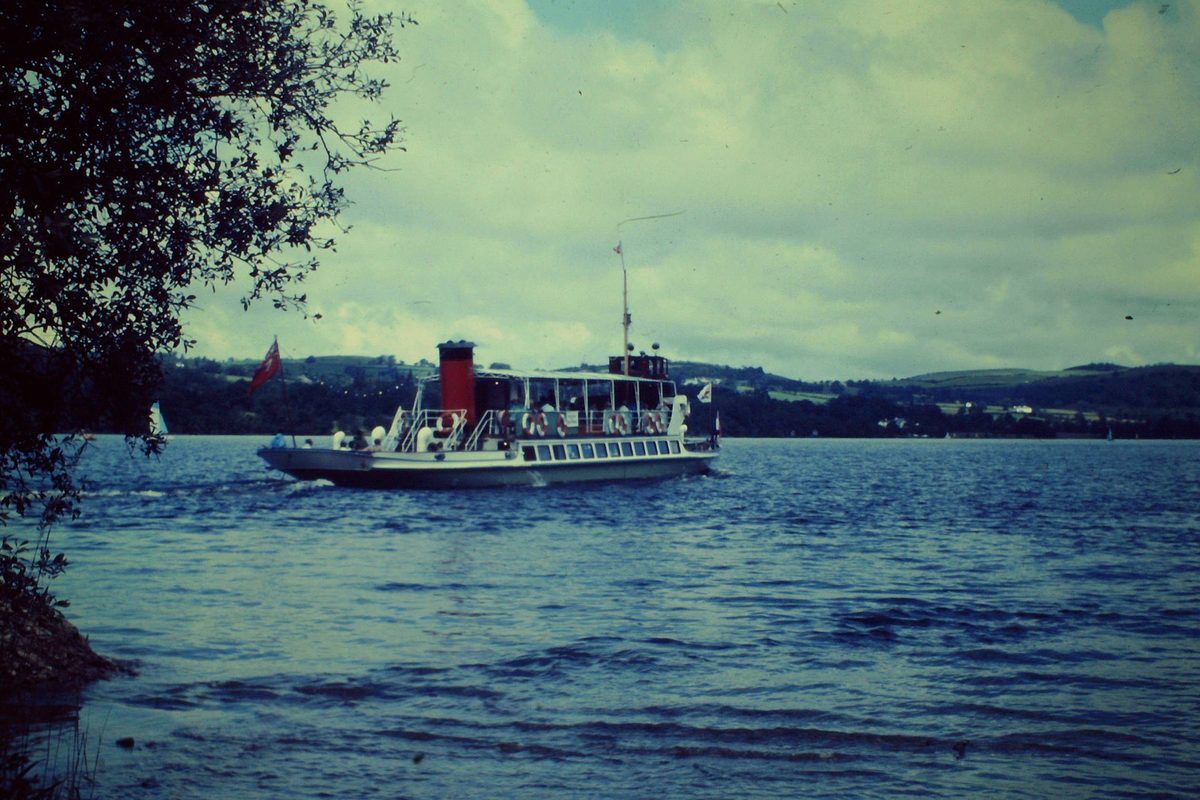
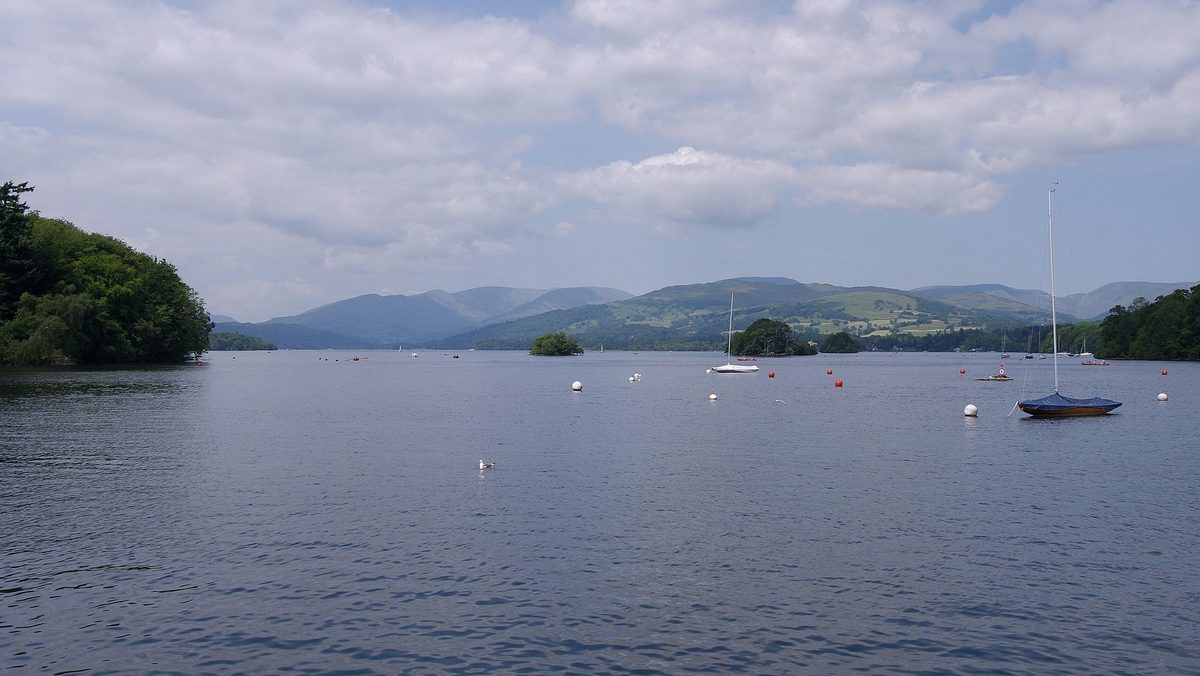
The big one. Windermere Lake Cruises operate from the pier at Bowness-on-Windermere, with frequent sailings up to Ambleside (Waterhead) at the north and down to Lakeside at the south. The fleet mixes genuinely historic vessels — one launched in 1891 — with modern boats. You can use them simply as a scenic loop, or as a way to travel: boat one way along the lake, bus back. Bowness is a short walk or quick 599 hop down from Windermere station, so it slots easily into a car-free plan.
There’s also the small Windermere car and passenger ferry crossing the lake from Ferry Nab (near Bowness) to Far Sawrey on the quieter western shore. As a foot passenger it’s a few minutes and costs very little — around £1.50 as of spring 2026 — and it’s the neat shortcut towards Hill Top and Hawkshead.
Ullswater ‘Steamers’
My personal favourite. The Ullswater ‘Steamers’ have been sailing for over 150 years, calling at Glenridding, Howtown and Pooley Bridge. The classic car-free day is to sail from Glenridding to Howtown and walk the gorgeous lakeshore path back — no car needed, no shuttling, just a boat and your boots. Combine it with the 508 from Penrith and you’ve got a full, satisfying day from the main line.
Keswick Launch on Derwentwater
Up north, the Keswick Launch circles Derwentwater, calling at seven jetties around the lake. The full round-the-lake trip takes about 50 minutes and costs around £16 (as of April 2026); you can also hop off at jetties to reach Catbells and other walks, then sail on. It’s a brilliant way to explore from a Keswick base without a single road mile.
Coniston
Coniston Water has its own character: the Coniston Launch and the National Trust’s restored Steam Yacht Gondola both potter across the lake, linking the village with Brantwood (Ruskin’s old home) and walking spots. Reach Coniston on the 505, then let the boats do the rest.
Bike Hire: The Flexible Option
Buses and boats cover the arteries; a bike fills in the gaps and gives you freedom on a sunny afternoon. The detail that makes this genuinely car-free is that Country Lanes’ cycle centre sits right on Windermere railway station — you can step off the train and onto a bike within minutes, no transfer required.
There’s a healthy spread of options beyond that: Total Adventure around Windermere, e-bike specialists who’ll deliver to your accommodation, and trail-centre hire up at Whinlatter Forest near Keswick. E-bikes (often from around £29 a day as of 2026) flatten the famous Lakeland hills and make far more of the area reachable on two wheels. Just know that the main valley roads can be busy and narrow in summer — the quieter lanes and forest trails are where cycling here really shines.
Best Car-Free Bases
Where you sleep matters more than anything else when you’ve no car. Pick well and you’ll spend your days exploring; pick badly and you’ll spend them waiting at bus stops. Here’s my honest take — for the full rundown of neighbourhoods and accommodation, see where to stay in the Lake District.

Windermere and Bowness
The obvious, sensible choice. Windermere is the only town with a train station, and both the 555 and 599 stop outside it, so you’re plugged straight into the network. Bowness, a 20-minute walk or short bus down the hill, puts you on the lake itself with the cruise pier on your doorstep. If it’s your first car-free Lakes trip, start here. I’ve pulled together the specifics in my Windermere travel guide.
Ambleside
My favourite all-rounder. Ambleside sits at the head of Windermere where the 555, 599 and 505 all converge, and the lake boats reach Waterhead just outside town. It’s compact, full of good cafes and walking shops, and ringed by some of the most accessible fells. No station, but the bus connections are so frequent it barely matters.
Grasmere
Tiny, gorgeous, Wordsworth’s village, and better connected than its size suggests thanks to the 555 and seasonal 599. Grasmere works well if you want quiet evenings and easy access to the central lakes — just be aware that the last buses back can be earlier than you’d like, so it suits people happy to keep walker’s hours.
Keswick
The best base for the northern Lakes. Keswick has no railway, but the 555 from the south and the X4/X5 from Penrith both serve it well, and Derwentwater’s launches start right in town. If your priorities are Catbells, Borrowdale and a more rugged feel, base here. My Keswick travel guide goes into the detail.
Sample Car-Free Days
To show how the pieces fit, here are a few real days I’d happily repeat. They’re deliberately built around the timetable, not against it. For a full multi-day plan, hand off to my 3-day Lake District itinerary — this is just to demonstrate the rhythm.
Day one: Windermere, boat and Ambleside
Arrive into Windermere by train. Catch the 599 down to Bowness, mooch the waterfront, then board a Windermere Lake Cruise north to Waterhead. Walk into Ambleside for lunch and a stroll, and ride the 555 or 599 back to base in the evening. No road miles, two different ways of seeing the same lake.
Day two: Grasmere and an easy fell
Hop on the 555 up to Grasmere for gingerbread and a lakeshore wander, then — if the legs are willing — a gentle climb for the views. The 555 runs regularly enough that you can play it by ear. Pair this with my easy Lake District walks to pick a route that matches a bus stop.
Day three: Ullswater from the north
If you’re near Penrith, take the 508 to Glenridding, sail across on an Ullswater ‘Steamer’ to Howtown, and walk the lakeshore path back. It’s one of the finest car-free days in England, and it ends with a boat. Alternatively, swap in Keswick: arrive on the X4/X5, then ride the Keswick Launch around Derwentwater with a stop for Catbells.
And if the famous Lakeland weather turns? It will, at least once. I keep a list of rainy day activities in the Lake District for exactly those mornings — most are reachable on the same buses.
Tickets and Passes
You can pay as you go with contactless on every bus, but if you’re hopping around it pays to look at the day tickets. Stagecoach sells a Lakes Dayrider for unlimited bus travel within a central zone, and broader Explorer tickets covering more of Cumbria over one or several days — handy if you’re criss-crossing the region. There are also bus-and-boat combinations that bundle a Windermere cruise with bus travel. As a rough guide, a central day ticket lands somewhere in the region of £10–13 (as of 2026), but prices change, so confirm the current fare on the day.
One more trick: if you’re buying a train ticket to Windermere, ask about adding PlusBus, which tacks on local bus travel for a small extra sum. For the wider menu of regional and national options, I’ve gathered them in the England travel passes guide. And the broad principles of getting round the country sans car apply here too — see travelling around England without a car.
Final Thoughts
Doing the Lakes without a car changed how I travel here, and almost entirely for the better. You see more from the top deck of a bus than you ever would from a windscreen, the boats turn ordinary days into something memorable, and you never once circle Bowness hunting for a parking space in August. It asks a little patience around timetables and a willingness to keep walker’s hours, but in return it gives you a slower, richer, more connected trip.
My advice: base yourself somewhere on the 555, download the Stagecoach app, screenshot a couple of timetables, and then relax. The Lake District rewards people who travel through it gently — and there’s no gentler way than by bus and boat. For everything else you might want to do once you’re there, start with my best things to do in the Lake District, and for general planning the England travel guide has you covered.
Research and Source Notes
- Stagecoach in Cumbria & the Lakes (stagecoachbus.com) — route numbers, the 555/599/505/508/X4-X5 corridors, Dayrider and Explorer ticket structure, and live timetables; cross-checked against the Wikipedia page for Stagecoach route 555 for frequency and termini.
- Lake District National Park Authority (lakedistrict.gov.uk) and Visit Lake District (visitlakedistrict.com) — gateway stations (Oxenholme, Penrith, Windermere), guidance on which towns lack railways, and car-free planning advice.
- Northern / Avanti West Coast and the Lakes Line (via Community Rail Cumbria and operator pages) — the Oxenholme–Windermere branch, ~20-minute journey, roughly hourly service, and direct Manchester trains.
- Windermere Lake Cruises, Ullswater ‘Steamers’, Keswick Launch Co. and the Windermere ferry (operator sites and Westmorland & Furness Council) — sailing routes, jetties and indicative 2026 fares (Keswick Launch ~£16; foot-passenger ferry ~£1.50).
- Cycle hire providers (Country Lanes at Windermere station, Total Adventure, Whinlatter) — confirming station-side hire and indicative e-bike pricing.
Fares, frequencies and seasonal timetables change. Everything here is hedged to 2026 and should be confirmed against operator websites before you travel.
Photo Credits
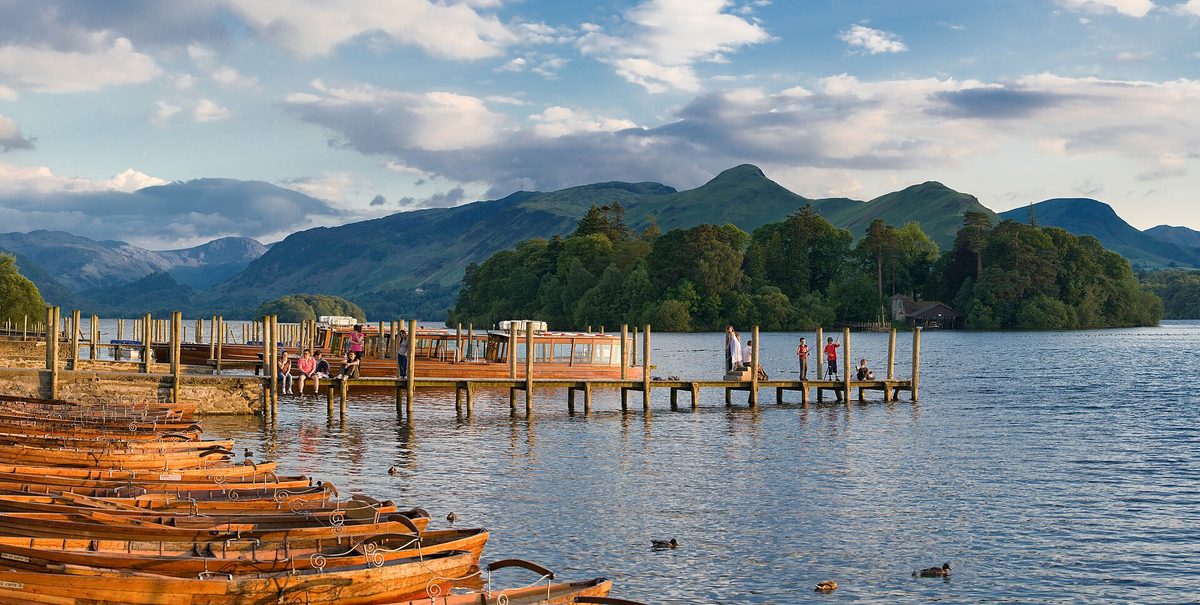
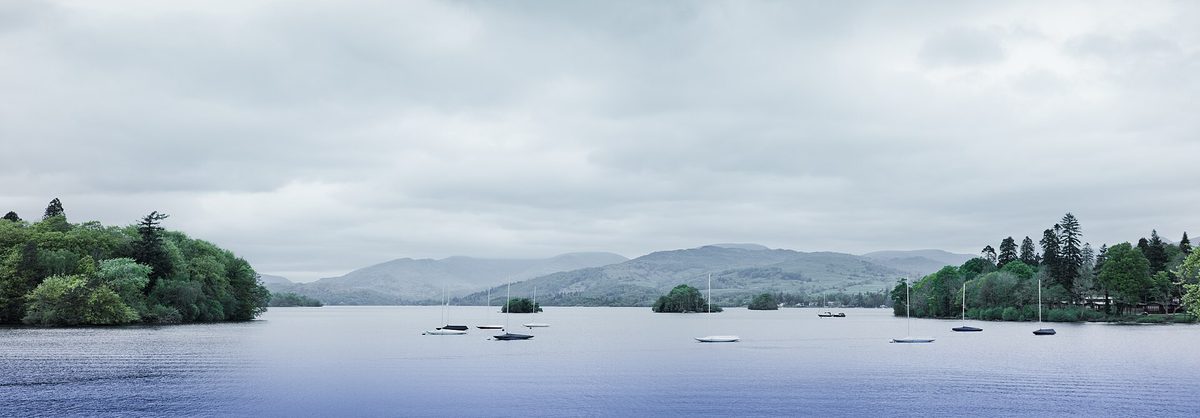
- Lake Windermere seen from a boat, the easy way to explore the Lake District without a car — Photo: Michael D Beckwith (CC0) via Wikimedia Commons. Source
- An Ullswater Steamer at the jetty, part of exploring the Lake District by public transport — Photo: Colin Smith / CC BY-SA 2.0 via Wikimedia Commons. Source
- The bustling waterfront at Bowness-on-Windermere, hub for Windermere Lake Cruises — Photo: mattbuck (category) / CC BY-SA 3.0 via Wikimedia Commons. Source
- The market town of Keswick, the best car-free base for the northern Lakes — Photo: Tony Webster from Portland, Oregon / CC BY-SA 2.0 via Wikimedia Commons. Source
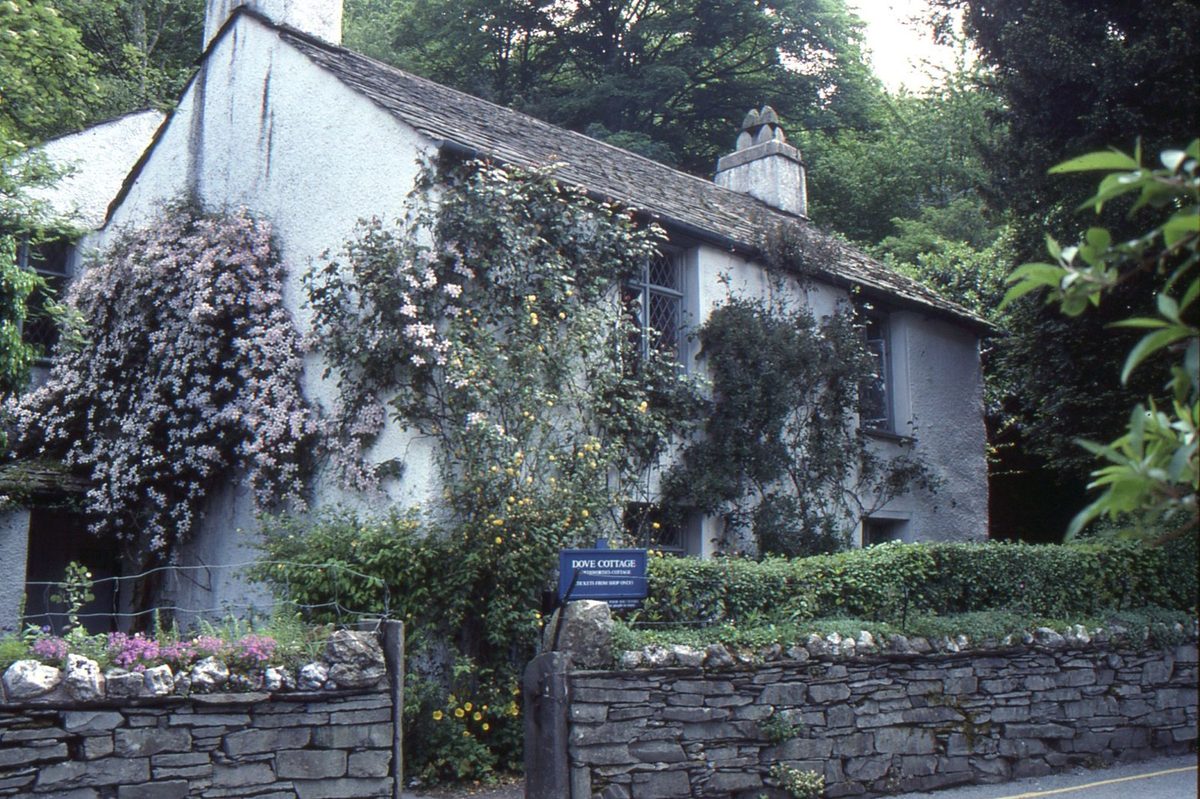
- Stone cottages in Grasmere village, an easy stop on the 555 bus — Photo: Lewis Clarke / CC BY-SA 2.0 via Wikimedia Commons. Source
Frequently asked questions
Can you really visit the Lake District without a car?
Yes, comfortably. Take a train to Windermere or Penrith, then use Stagecoach buses, lake launches and bike hire. The central corridor between Windermere, Ambleside, Grasmere and Keswick is especially well-served by the 555 and 599. You'll plan around timetables, and remote trailheads need more thought, but a car genuinely isn't necessary.
Which Lake District towns have a railway station?
Only Windermere has a station in the central Lakes, on Northern's branch line from Oxenholme. Keswick, Ambleside, Grasmere and Bowness do not have stations — the old Keswick line closed long ago. For the northern Lakes you arrive at Penrith on the main line and continue by bus. Everywhere else, buses and boats fill the gap.
What's the best base for a car-free Lake District trip?
For first-timers, Windermere or Bowness, because the station and main buses are right there. Ambleside is my favourite all-rounder for its bus connections, and Keswick is best for the northern fells despite having no railway. Grasmere is lovely but suits earlier evenings. All four sit on frequent routes.
How often do the Lake District buses run?
The headline routes are frequent: the 555 runs every 30–60 minutes daily, and the open-top 599 around every 20 minutes in season. Quieter routes like the 505 to Coniston or the 508 to Ullswater run roughly hourly or just a few times a day. Everything reduces in winter, and last buses can be surprisingly early — always check return times.
When is the best time to visit the Lake District without a car?
Spring to early autumn (roughly Easter to October) is ideal, when bus frequencies are at their best, the open-top 599 is running and the lake launches sail their full timetables. Winter is doable but services thin out and daylight is short. For the wider seasonal picture, see my guide to the best time to visit England.
Do I need to book buses or boats in advance?
For buses, no — just tap on with contactless or buy a day ticket on board. Lake cruises don't usually require booking for scheduled sailings either, though it's worth checking at peak times and for any special trips. The one service with no fixed timetable is the small Windermere car ferry, which simply runs back and forth across the lake.