Sheet 62 · Lake District Travel Guide · 15 min read
Where to Stay in the Lake District
Wondering where to stay in Lake District? A local-style guide to the best bases, who each suits, lodging types, and rough nightly prices for 2026.
 Sheet 62
Contents 13 sections
The Lake District is small enough to drive across in under two hours, yet the question of where to put your bags trips up almost everyone planning their first visit. I’ve stayed in five or six different bases over the years — some I’d go back to tomorrow, one I’d quietly steer you away from — and the honest truth is that the “right” base depends entirely on you.
So here’s the short version. When it comes to where to stay in Lake District, first-timers and people without a car should pick Windermere/Bowness or Ambleside; keen walkers should head north to Keswick or to Glenridding on Ullswater; couples after a quiet, pretty village want Grasmere or Coniston; and if you crave silence, the remote valleys of Borrowdale, Buttermere and Eskdale deliver — but you’ll need a car.
Quick Answer: Where to Stay in Lake District
The best base in the Lake District is the one that matches how you’ll spend your days. For your first trip, or if you’re relying on public transport, choose Windermere/Bowness (great transport links, lots of choice) or Ambleside (central, slightly calmer, good for walks). For serious hiking, base yourself in Keswick or Glenridding/Ullswater. For a romantic or slower break, Grasmere and Coniston are gorgeous. For peace and dark skies, retreat to Borrowdale, Buttermere or Eskdale — but bring a car.
You don’t need to see the whole park from one base. The region is compact, the bus and boat network is decent, and most people happily day-trip out from a single town. Pick one place, settle in, and let the rest come to you. If you want the full lay of the land before you decide, my Lake District travel guide covers the geography, seasons and getting-around basics in one place.
At a Glance: Comparing the Main Bases
Here’s how the main areas stack up. Prices are rough nightly rates for a standard double in a mid-range hotel or B&B, hedged because they swing wildly by season and how far ahead you book — verify on Booking.com, the official Cumbria tourism site or YHA for current numbers.
| Base | Vibe | Best for | Car needed? | Rough price band (double, 2026) |
|---|---|---|---|---|
| Windermere / Bowness | Busy, touristy, well-connected | First-timers, no car, families | No | ~£90–£200 a night |
| Ambleside | Central, lively but calmer | First-timers, walkers, no car | No | ~£90–£200 a night |
| Grasmere | Pretty, peaceful, literary | Couples, slow breaks | Helps, not essential | ~£100–£220 a night |
| Keswick | Outdoorsy, sociable, northern | Walkers, families, no car | No | ~£85–£190 a night |
| Coniston | Quiet, scenic, southern | Walkers, couples, families | Yes (mostly) | ~£90–£180 a night |
| Ullswater (Glenridding/Pooley Bridge) | Dramatic, walker-focused | Serious hikers, couples | Yes (mostly) | ~£95–£210 a night |
| Borrowdale / Buttermere / Eskdale | Remote, wild, quiet | Walkers, off-grid seekers | Yes | ~£80–£200 a night |
Budget travellers can do far better than these bands — YHA hostels and camping pods routinely run around £20–£60 a night per person (as of 2026) — and the top country-house hotels can run well north of £300. The bands above are just the middle of the market, where most visitors land.
Windermere and Bowness-on-Windermere: The Easy First-Timer Base
If you’ve never been to the Lakes and you’re not sure where to start, this is the safe, sensible choice — and there’s no shame in that.
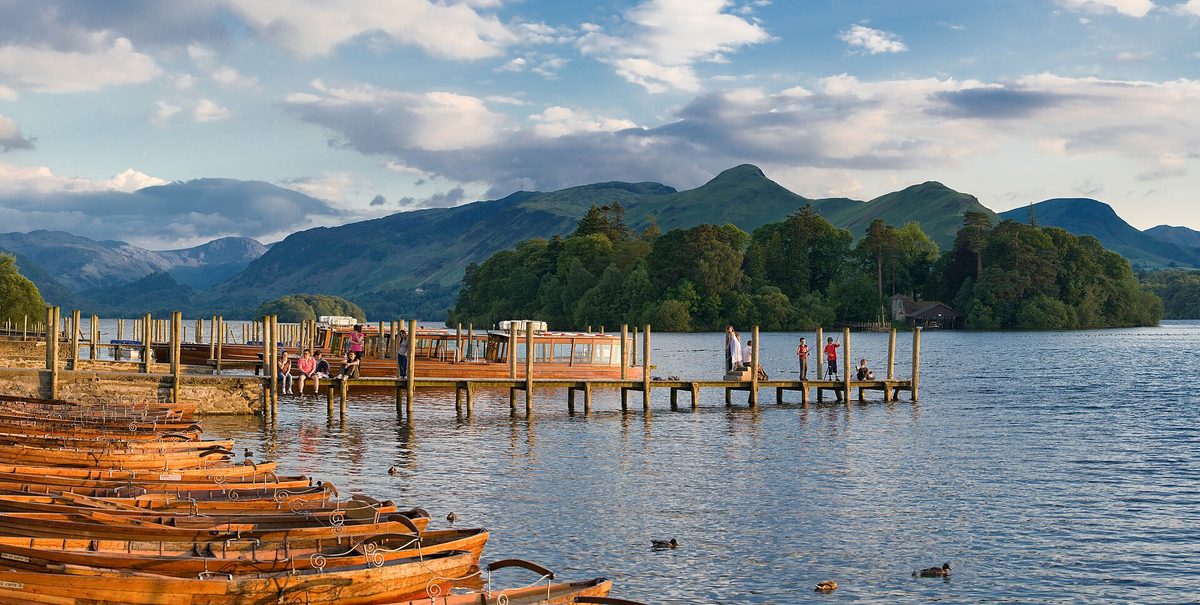
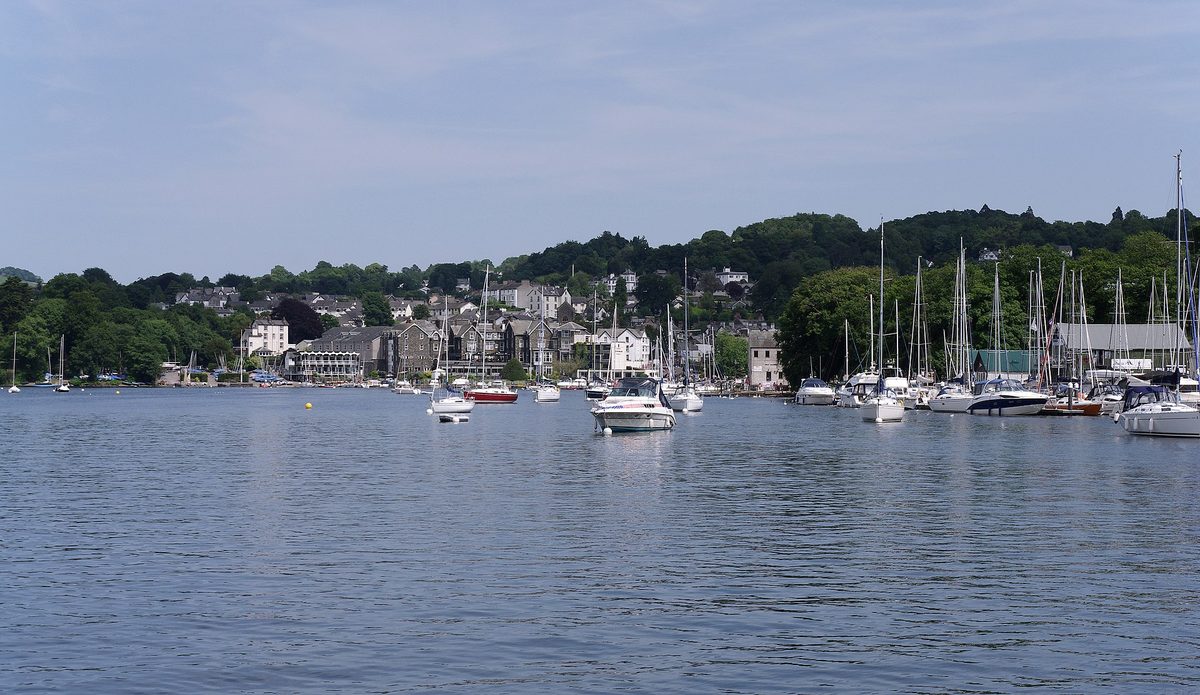
Windermere is the town with the train station; Bowness is its lakeside twin a mile downhill, where the boats leave from and the crowds gather. People muddle the two constantly. Practically, you book a hotel “in Windermere” and you might actually be in Bowness — check the exact location on a map before you commit.
Why I’d send a first-timer here: the choice of accommodation is enormous, the transport links are the best in the park, and you’re sitting beside England’s largest lake with cruises, shops and restaurants on tap. If you don’t have a car, this is one of the three bases that genuinely works (more on that below).
The honest downside: it’s the most touristy corner of the Lakes. In July and August, Bowness lakefront can feel like a seaside resort — ice cream queues, car-park scrums, the lot. It’s not the place to come for solitude. But for ease, variety and “we just want a comfortable first trip,” it’s hard to beat.
Families do especially well here. There’s plenty to keep children occupied without a long drive, and the England with kids guide has more on planning a family trip up here. For what’s actually worth doing once you’ve checked in, see my dedicated Windermere travel guide — I’m staying in my lane here and only helping you choose the base.
Lodging types: the full spread, from big lakeside hotels and spa resorts to dozens of B&Bs and guesthouses, plus a YHA. Prices run around £90–£200 a night for a mid-range double (as of 2026), more for lake views.
Ambleside: My Pick for Most First-Timers and Walkers
If Windermere is the safe choice, Ambleside is the smart one. It sits at the northern tip of Lake Windermere, about a mile from the water, and it’s the base I most often recommend.
Here’s the logic. Ambleside is central — almost everything in the southern and central Lakes is a short hop away — yet it feels a notch calmer and a touch more grown-up than Bowness. There are proper restaurants, good cafés, a couple of outdoor shops, even a little cinema, and footpaths leave straight from town. It threads the needle between “enough going on” and “not overrun.”
It’s also one of the best no-car bases, plugged into the same bus network as Windermere and Keswick. You can ride the open-top 599 down to Bowness or up toward Grasmere without ever touching the steering wheel.
For walkers, Ambleside is a brilliant launchpad. Loughrigg Fell, the Fairfield Horseshoe and dozens of gentler routes are within reach. If you’re easing in, my round-up of easy Lake District walks pairs well with a stay here.
Lodging types: strong on mid-range hotels, country inns and characterful B&Bs, with a YHA on the lake. Expect around £90–£200 a night for a mid-range double (as of 2026).
Grasmere: For Couples and Slow Mornings
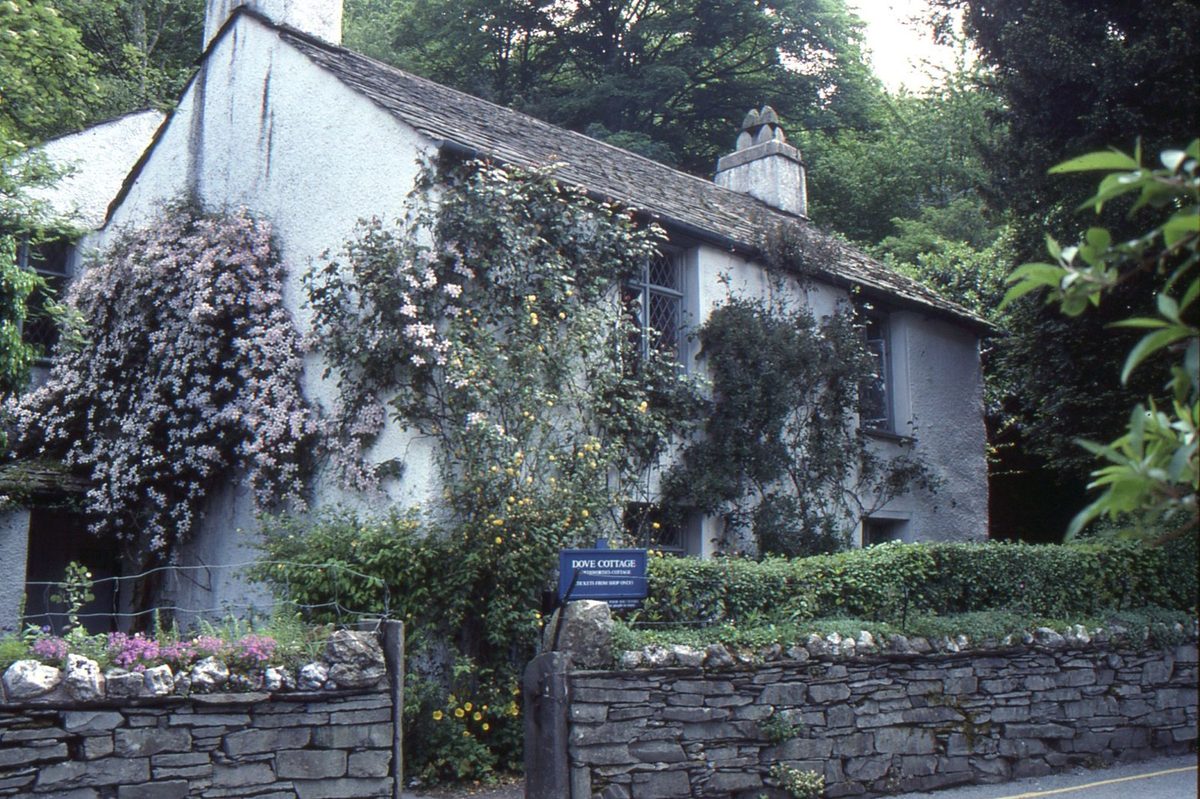
Grasmere is small, photogenic and steeped in Wordsworth — he lived here, and the village leans into it with the famous gingerbread shop and his old home at Dove Cottage. It’s the base I’d choose for a romantic weekend.
What makes it work for couples is the scale. There are enough good places to eat and drink to give you a choice in the evening, but it’s small enough that it never feels crowded once the day-trippers leave. Mornings are quiet, the surrounding fells are postcard-pretty, and you can walk to Grasmere lake and Rydal Water on foot.
It’s not the place for a car-free trip with kids who need entertaining, and nightlife is essentially “a nice dinner and a pub.” That’s the point. You can reach Grasmere by bus from Ambleside, but having a car opens up the surrounding valleys, so I’d call a car “helpful, not essential” here.
Lodging types: lovely small hotels, a clutch of romantic inns, B&Bs, and a YHA. Doubles tend to run around £100–£220 a night (as of 2026), with the boutique places at the top end.

Keswick: The Walker’s Town in the North
Cross over from the southern Lakes and the landscape gets bigger, wilder and — to my eye — more dramatic. Keswick is the hub up here, sitting at the northern end of Derwentwater, and it’s the base I’d pick if hiking is the whole point of the trip.
You can walk straight out of town: a gentle loop around Derwentwater, a scramble up Catbells, or a full day on the high fells. Cat Bells, Skiddaw, Borrowdale and the path over Honister to Buttermere all start from here or close by. The town itself is sociable and outdoorsy, with the landmark Moot Hall in the market square, a thicket of gear shops, decent pubs and a surprising amount of rain-day backup.
Crucially, Keswick is also a strong no-car base — it anchors the northern bus network, including the 555 link down to Windermere. So it’s not just for hardened hikers; families and first-timers who fancy the northern half of the park do well here too.
For what to actually do once you arrive — and what to do when the weather turns, which it will — see my Keswick travel guide and the Lake District rainy day activities round-up.

Lodging types: plenty of mid-range hotels, traditional inns, B&Bs and a couple of hostels, plus the much-loved YHA Borrowdale a short drive south. Doubles sit around £85–£190 a night (as of 2026) — often slightly better value than Windermere.
Coniston: Quiet, Scenic and Underrated
Coniston is the one I think people overlook. It’s a modest village in the southwestern Lakes, on the shore of Coniston Water, with the brooding bulk of the Old Man of Coniston rising behind it.
It suits walkers, couples and families who want the southern Lakes without the Windermere bustle. The Old Man is a classic, rewarding climb; the lake has a steam yacht and a launch; and the whole place feels a few degrees quieter than the central honeypots. There’s a real village atmosphere here rather than a tourism machine.
The catch is access. Coniston isn’t on the train line and bus links are thinner than in Windermere or Keswick, so I’d treat a car as close to essential unless you’re confident planning around timetables. If car-free travel is your constraint, read Lake District without a car before booking here.
Lodging types: country inns, B&Bs, a holiday-cottage scene, and YHA Coniston options including camping. Mid-range doubles run around £90–£180 a night (as of 2026).

Ullswater (Glenridding and Pooley Bridge): For Serious Walkers
Ullswater is, for my money, one of the most beautiful lakes in the park — a long, sinuous ribbon of water with steep fells crowding its southern end. Glenridding sits at that dramatic foot of the lake; Pooley Bridge is the gentler village at the northern tip.
Base yourself in Glenridding and you’ve got Helvellyn — and its famous Striding Edge — practically on the doorstep. This is walker country, full stop. The village has cafés, pubs and gear shops, and the Ullswater Steamers glide up and down the lake, which makes for a glorious low-effort day even if you’re not summiting anything.
It’s also genuinely romantic, in a wilder way than Grasmere. But it’s geographically a bit apart from the central Lakes, and public transport is limited, so a car makes life much easier — especially over the high Kirkstone Pass to Windermere.
Lodging types: a handful of hotels (including grand lakeside places), inns, B&Bs and the well-placed YHA Helvellyn. Doubles run around £95–£210 a night (as of 2026), with the lake-view hotels at the top.
Borrowdale, Buttermere and Eskdale: The Quiet Valleys
If your idea of a Lake District holiday is no crowds, dark skies and the sound of a beck outside the window, these are your valleys — and they’re some of my favourite places in England.
Borrowdale runs south from Keswick into properly mountainous terrain; it’s lush, dramatic and an easy strike-off point for Scafell and Honister. Buttermere is a tiny hamlet wrapped around two small lakes and ringed by high fells — the YHA there has, hands down, one of the best views of any hostel I’ve stayed in. Eskdale is remote and quiet on the western side, the launchpad for Scafell Pike, England’s highest mountain, and home to the little Ravenglass and Eskdale steam railway.
Be clear-eyed about the trade-off: a car is non-negotiable out here. Shops are minimal, dinner options are “the pub or self-catering,” and the lanes are narrow and slow. That’s exactly why they stay quiet. Come for the walking and the silence, not for variety.
Lodging types: a few atmospheric country inns and hotels, farmhouse B&Bs, working campsites, and excellent YHA hostels with camping pods and glamping (Borrowdale, Buttermere and Eskdale all have YHAs). Inn doubles run around £80–£200 a night (as of 2026); pods and dorm beds are far cheaper.
Choosing by Lodging Type
Beyond the where, there’s the what. The Lakes do every category well.
Hotels and spa resorts cluster around Windermere, Bowness and Ambleside, plus a scattering of grand country houses out in the valleys. This is the comfortable, predictable end — book ahead in summer.
Country inns are, for me, the sweet spot in the Lakes: a good pub with rooms, a fire, a proper dinner downstairs and walks from the door. You’ll find them everywhere, including the quiet valleys.
B&Bs and guesthouses are the classic Lakeland stay — family-run, often excellent value, big breakfasts. Towns like Keswick and Ambleside are stuffed with them.
YHA hostels punch above their weight here. Many occupy spectacular buildings (Borrowdale, Buttermere, Black Sail), offer private rooms as well as dorms, and now run camping pods, “landpods,” bell-tent glamping and even vintage Airstreams. Budgets of around £20–£60 a night per person (as of 2026) are realistic; check current rates on the YHA site.
Camping and glamping pods are the cheapest way to wake up in the mountains, and the pods (insulated, with a heater and lights) take the edge off British weather. They’re ideal for walkers on a budget who don’t mind a shared shower block.
Choosing by Traveller Type: A Quick Cheat-Sheet
- First-timers: Windermere/Bowness or Ambleside. Easy, central, lots of choice.
- Walkers: Keswick, Glenridding/Ullswater, or a quiet valley like Borrowdale.
- Families: Bowness/Windermere for variety and transport; Keswick for the outdoorsy northern half.
- No car: Windermere/Bowness, Ambleside or Keswick — the three bus-and-train hubs. See Lake District without a car.
- Couples / romantic: Grasmere, Coniston or a lakeside hotel on Ullswater.
- Budget: any town’s YHA, or camping pods in the valleys.
If you’re still weighing the Lakes against other parts of the country, my where to stay in England overview zooms out to the national picture, and best places to visit England puts the region in context with everywhere else worth your time.
How Long to Stay, and When
Most people underestimate the Lakes and over-pack their schedule. My honest advice: pick one base and give it three or four nights minimum so you’re not living out of a suitcase. If you’ve only got a long weekend, follow a tight plan like my Lake District 3-day itinerary and resist the urge to change hotels mid-trip.
Timing matters for both price and crowds. Summer and school holidays are busiest and dearest; late spring and early autumn are my favourites — quieter, often cheaper, still long days. Whatever you choose, book early for July and August. For a season-by-season breakdown, see best time to visit England, and for working out a realistic daily spend, England budget costs is a useful sanity check.
Final Thoughts
After several trips, the place I keep recommending first is Ambleside — central, walkable, well-connected and just calm enough — with Keswick as my pick whenever the walking is the main event. But there’s no single right answer, and that’s the joy of it. The Lakes pack an astonishing amount of variety into a tiny area, so almost any base will leave you within an hour of somewhere spectacular.
My one firm piece of advice: choose one base, stay put, and let the days unfold from there. Resist the temptation to hop hotels chasing the “perfect” spot. Then go and actually explore — start with the best things to do in the Lake District and let the rest of your trip fall into place. If you’re folding the Lakes into a wider trip, my England travel guide ties it all together.
Research and Source Notes
- Visit Lake District / Cumbria Tourism (visitlakedistrict.com) and the Lake District National Park Authority (lakedistrict.gov.uk) — used for official area descriptions, transport context and accommodation overviews.
- YHA (yha.org.uk) — used to confirm hostel locations and the range of budget options (dorms, private rooms, camping pods, landpods and glamping at Borrowdale, Buttermere, Eskdale, Coniston and others).
- Booking aggregators (Tripadvisor, Kayak, momondo) — used to sanity-check the rough nightly price bands cited for Windermere, Keswick and Ambleside; all prices hedged as 2026 estimates and should be verified for your dates.
- Independent Lake District travel guides (e.g. Anywhere We Roam, UK Travel Planning, The Broke Backpacker) — cross-referenced for which bases suit first-timers, walkers, families and car-free travellers.
- All nightly prices are approximate as of 2026 and fluctuate by s
Photo Credits
- Stone buildings and fells around Ambleside, a central base for where to stay in Lake District — Photo: Mtaylor848 / CC BY-SA 4.0 via Wikimedia Commons. Source
- Boats and lakefront at Bowness-on-Windermere — Photo: mattbuck (category) / CC BY-SA 3.0 via Wikimedia Commons. Source
- Cottages and fells surrounding Grasmere village — Photo: Jorge Franganillo / CC BY 2.0 via Wikimedia Commons. Source
- The Moot Hall in Keswick market square — Photo: The original uploader was Mick Knapton at English Wikipedia / CC BY-SA 3.0 via Wikimedia Commons. Source
- Coniston Water with the Old Man of Coniston rising behind — Photo: Peter Bond / CC BY-SA 2.0 via Wikimedia Commons. Source
Frequently asked questions
Where is the best place to stay in the Lake District for first-time visitors?
For a first trip, base yourself in Windermere/Bowness or Ambleside. Both are central, have the widest range of accommodation and restaurants, and connect easily by bus, boat and train — so you can sample several parts of the park without committing to a remote valley. Ambleside feels slightly calmer; Bowness is livelier and right on the lake.
What's the best base in the Lake District for walking and hiking?
Keswick and Glenridding (Ullswater) are the top walking bases. Keswick puts Catbells, Skiddaw and Borrowdale within reach, while Glenridding sits beneath Helvellyn and Striding Edge. Both have gear shops and good pubs. For the highest peaks, a quiet valley like Borrowdale or Eskdale (the gateway to Scafell Pike) gets you even closer to the action.
Can I visit the Lake District without a car?
Yes. Stay in Windermere/Bowness, Ambleside or Keswick — the three hubs linked by the Stagecoach bus network (the 555 and 599 are the key routes) plus the Windermere train line. You can reach many trailheads, lakes and villages this way. The remote valleys (Coniston, Ullswater, Buttermere) are much harder car-free, so steer toward the hubs.
How much does Lake District accommodation cost per night?
Expect a mid-range double in a hotel or B&B to run around £90–£200 a night (as of 2026), more for lake views or in peak summer, and well over £300 at top country-house hotels. YHA hostels and camping pods are far cheaper, often around £20–£60 per person. Prices swing by season and booking lead time, so check Booking.com and the YHA site for live rates.
Which Lake District base is best for couples or a romantic break?
Grasmere is my top pick — small, pretty and peaceful, with enough good restaurants for nice evenings but no crowds once the day-trippers leave. Coniston offers a similar quiet charm in the southern Lakes, and a lakeside hotel on Ullswater delivers drama and seclusion. All reward slow mornings and walks straight from the door.
Is Windermere or Keswick better as a base?
It depends on which half of the park you prefer. Windermere/Bowness sits in the gentler, busier south with the best transport links — ideal for first-timers and families. Keswick anchors the wilder, more mountainous north and is better for serious walkers. Both work without a car. If you can't decide, split your trip with a few nights in each.