Sheet 95 · England Road Trips · 16 min read
Lake District Road Trip
Plan the perfect Lake District road trip with honest pass difficulty, a drivable scenic loop, the best bases, and real tips on single-track roads and
 Sheet 95
Contents 9 sections
The first time I crested Honister Pass with the Buttermere valley dropping away beneath me, I pulled into a passing place, killed the engine, and just sat there for a minute. That’s the thing about driving here. The Lakes pack more drama into a half-day loop than most countries manage in a week, and you experience all of it through a windscreen smeared with the kind of weather that makes the green so unreasonably green.
A Lake District road trip is the best way to see the national park if you’re confident behind the wheel: a compact, self-drive loop linking the great lakes and the famous mountain passes. Base yourself in Keswick, Ambleside, or Windermere, drive Honister, Newlands, and Kirkstone for the scenery, and brave Hardknott only if steep single-track doesn’t scare you. Expect roughly two to four days.
I’ve driven these roads in glorious June sun and in sideways October rain, in a sensible hatchback and once, regrettably, in a van I should never have taken up Hardknott. This is the honest version. Below you’ll find a loop you can actually drive, a frank rating of every pass, and the practical stuff other guides skip.
Quick Answer: Planning Your Lake District Road Trip
A Lake District road trip works best as a loop through the central and northern valleys, taking in Windermere, Derwentwater, Buttermere, and the high mountain passes. Spend at least two days, base in Keswick or Ambleside, and drive Honister, Newlands, and Kirkstone for the views. Tackle Hardknott and Wrynose only if you’re a confident driver in a small vehicle.
That’s the headline. But “best” depends entirely on your nerve and your car, and the difference between a magical drive and a white-knuckle ordeal often comes down to which passes you choose and what time of day you set off. Let me walk you through it properly.
For the wider picture, this trip slots neatly into a larger England road trips plan, and if you’re stitching the Lakes into a bigger northern circuit, the North England road trip route handles the connections beyond the park boundary.
At a Glance: The Lake District Mountain Passes
Here’s how the main passes stack up. I’ve rated difficulty for an average driver in a normal car, in dry conditions. Add a full grade of difficulty for rain, and consider most of these closed in your head whenever there’s ice.
| Pass / Drive | Route | Difficulty | Why drive it |
|---|---|---|---|
| Kirkstone Pass | Ambleside to Ullswater (A592) | Moderate | Highest pass open to traffic; sweeping, manageable, brilliant views |
| Honister Pass | Borrowdale to Buttermere (B5289) | Moderate–Hard | ~25% gradient, slate mine at the top, jaw-dropping descent |
| Newlands Pass | Braithwaite to Buttermere | Moderate–Hard | Single-track with passing places; waterfalls and big skies |
| Whinlatter Pass | Braithwaite to Lorton (B5292) | Easy–Moderate | England’s only true mountain forest; gentlest of the high roads |
| Wrynose Pass | Little Langdale to Cockley Beck | Hard | Steep, narrow, hairpins; the warm-up act for Hardknott |
| Hardknott Pass | Cockley Beck to Eskdale | Very Hard | ~30% gradient, brutal hairpins; England’s steepest road, not for the nervous |
Print that, screenshot it, do whatever you like. The single most useful decision on this whole trip is being honest about which row you belong in.
Where to Base Yourself for the Drive
You don’t need to move hotels every night. The park is small enough that you can pick one good base and radiate out, and I’d genuinely argue against constantly repacking. Choose your base by which part of the loop excites you most.
Keswick — the northern base
If the high passes are your priority, Keswick is where I’d stay. It sits at the top of Derwentwater with Honister, Newlands, Whinlatter, and Borrowdale all within twenty minutes, and Buttermere just over the hills. It’s a proper working market town with good pubs, gear shops, and somewhere to get a fried breakfast before an early start. For the full picture of the town, the Keswick travel guide goes deeper than I can here, and the broader Lake District travel guide is worth a skim before you book anything.
I keep coming back to Keswick because the best driving in the park is genuinely on its doorstep. You can do the Buttermere loop in a morning and be back for lunch.
Ambleside and Windermere — the central base
For a first visit, or if you’ve got non-drivers in the car who want shops, boat trips, and cafes, base in Ambleside or Windermere. You’re central, you’re close to Kirkstone Pass and the Langdales, and you’ve got the easiest access to the Hardknott run via Little Langdale. The trade-off is traffic. The Windermere–Bowness corridor is the busiest part of the park by a distance, and in summer it can swallow an hour of your day before you’ve even reached open road. The Windermere travel guide covers the town itself, and if you’re weighing up neighbourhoods, where to stay in the Lake District lays out the options.
Coniston — the quiet southern base
Coniston is my left-field pick. It’s quieter, it’s gorgeous, and it puts you closest to the Wrynose and Hardknott approach from the south. If you want the wildest driving with the fewest crowds, this is the corner of the park I’d choose. You’re a little further from the northern passes, but for a few days focused on the western and southern lakes it’s hard to beat.
The Drive: A Lake District Scenic Loop
Here’s the loop I’d actually do, and the one I send friends on. It’s built around Keswick because that’s where the driving is best, but you can join it from anywhere. Done at a relaxed pace with stops, it’s a full day; rushed, it’s a long morning. Don’t rush it.
Leg one: Keswick to Buttermere via Newlands
Leave Keswick early — and I mean before nine if it’s high summer — and head out on the Newlands Pass road. This is one of my favourite stretches in England: a single-track ribbon climbing past Newlands valley, with Moss Force waterfall tumbling beside the road near the top. You drop down to Buttermere, which is, without exaggeration, one of the most beautiful places I’ve ever parked a car. The lake sits in a ring of crags, and on a still morning the reflection is almost too much.
Park at the National Trust car park in the village (around £8 for the day as of 2026, free for members) and at least walk the short stretch to the shore. If you’ve got legs for it, the flat circuit of the lake is one of the easy Lake District walks worth building into a driving day, and it’s only a couple of hours.
Leg two: Buttermere to Borrowdale via Honister
From Buttermere you climb Honister Pass, the B5289, and this is where a few drivers get a fright. The gradient hits around one in four (25%), the road narrows, and there are sections where you’re praying nothing meets you coming the other way. Take it slow, use your gears on the descent rather than riding the brakes, and pull into passing places early. At the top sits the Honister Slate Mine — the last working slate mine in England — which makes a great coffee and toilet stop, and runs mine tours if you want to break up the day.
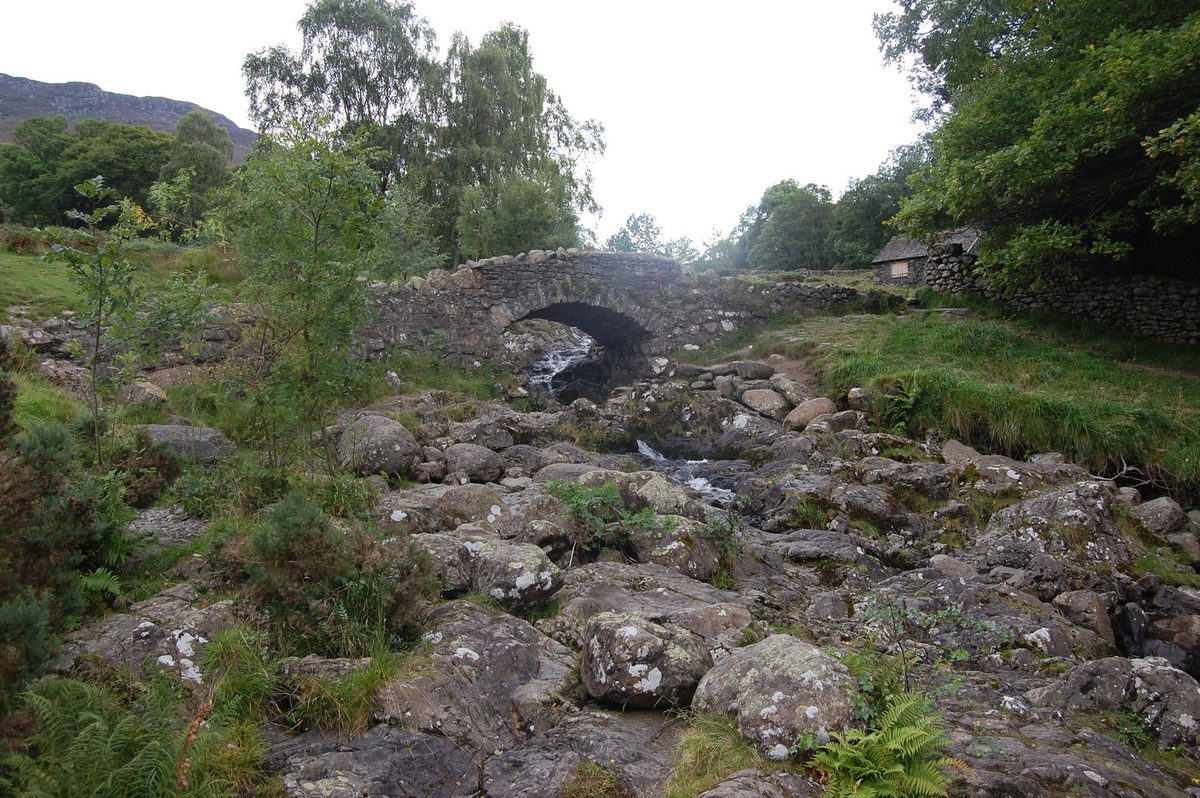
The drop into Borrowdale on the far side is sublime. The valley narrows through the “Jaws of Borrowdale,” and you wind back toward Derwentwater with the fells closing in around you. Stop at Ashness Bridge if you can find a spot — the little packhorse bridge framed against Skiddaw is one of the most photographed views in the Lakes, and for good reason.
Leg three: Derwentwater and back to Keswick
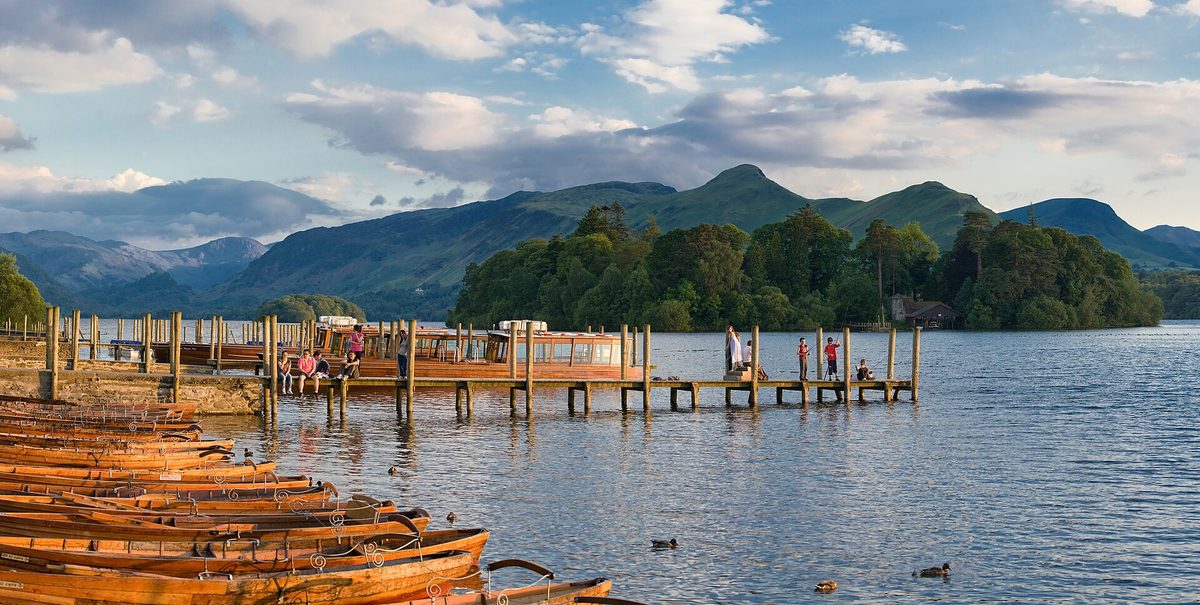
The road hugs the eastern shore of Derwentwater back toward Keswick, and it’s an easy, pretty finish to the loop. If you’ve still got daylight and appetite, you can extend over Whinlatter Pass — the B5292 through England’s only genuine mountain forest. It’s the gentlest of the high passes, more of a graded climb than a single-track ordeal, and there’s a Forestry England visitor centre with a cafe and family trails. It’s the pass I’d send a nervous driver up first to build confidence.
That’s the core loop. Around 30 to 35 miles depending on diversions, and a complete sampler of what a Lake District driving route can deliver in a single day. For a fuller three-day plan that mixes driving with walks and towns, that itinerary is the place to look.
Kirkstone Pass and Ullswater: the eastern extension
If you’re based in Ambleside or want a second day with a different flavour, point the car at Kirkstone Pass. At 454 metres it’s the highest pass in the Lakes open to traffic, and the climb out of Ambleside is so steep the old road up to it is literally called “The Struggle.” The modern A592 is far more forgiving — wide, sweeping, genuinely enjoyable — and at the top you’ll find the Kirkstone Pass Inn, reputedly the third-highest pub in England and a fine spot for a stop.
Over the top, the road drops toward Ullswater, the second-largest lake in the park and, to my eye, the most underrated. The A592 runs right along the north-western shore, so you get lake views from the driver’s seat for miles. The stretch between Glenridding and Pooley Bridge is one of the loveliest lakeside drives in England, and far quieter than the Windermere side. There’s a steamer here too if you want to swap four wheels for a boat for an hour.
This eastern loop pairs beautifully with the central bases and is a much gentler day than the Honister–Newlands run — a good “recovery drive” if the high passes have rattled you.
Hardknott and Wrynose: the serious one
Now the big one, and I’m going to be straight with you. Hardknott and Wrynose are not for everyone. These two passes, run back to back between Little Langdale and Eskdale, are widely rated the most challenging public road in England, and Hardknott has been crowned the most scenic drive in Britain by Tripadvisor reviewers — both things are true at once.
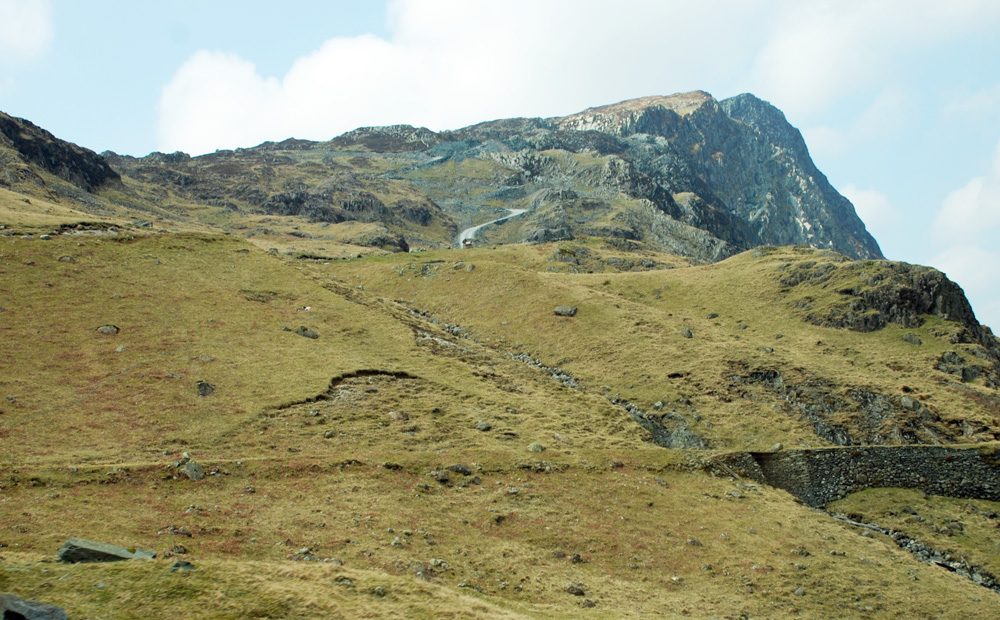
Hardknott hits a gradient of around 30%, roughly one in three in places, making it the joint-steepest road in England. The hairpins are tight enough that you’ll be sawing at the wheel, the surface is rough, there are no barriers between you and a long drop, and the passing places are sparse. Wrynose, immediately to the east, is a touch easier but still steep and narrow with its own set of hairpins. The road is signed for cars and light vehicles only, and that sign means it. I took a van up once and I will never do it again — it was genuinely frightening.
So, honestly: should you drive it? If you’re a confident driver in a small car, on a dry day, outside peak hours, and you’re comfortable reversing on a steep single-track when you meet someone — then yes, absolutely, it’s one of the great drives of your life. The Roman fort halfway up and the view toward the Isle of Man on a clear day are unforgettable. If any part of that sentence made you nervous, skip it. There’s no shame in it, and you can hike to the same fort instead — these are some of the dramatic landscapes covered in England national parks hiking.
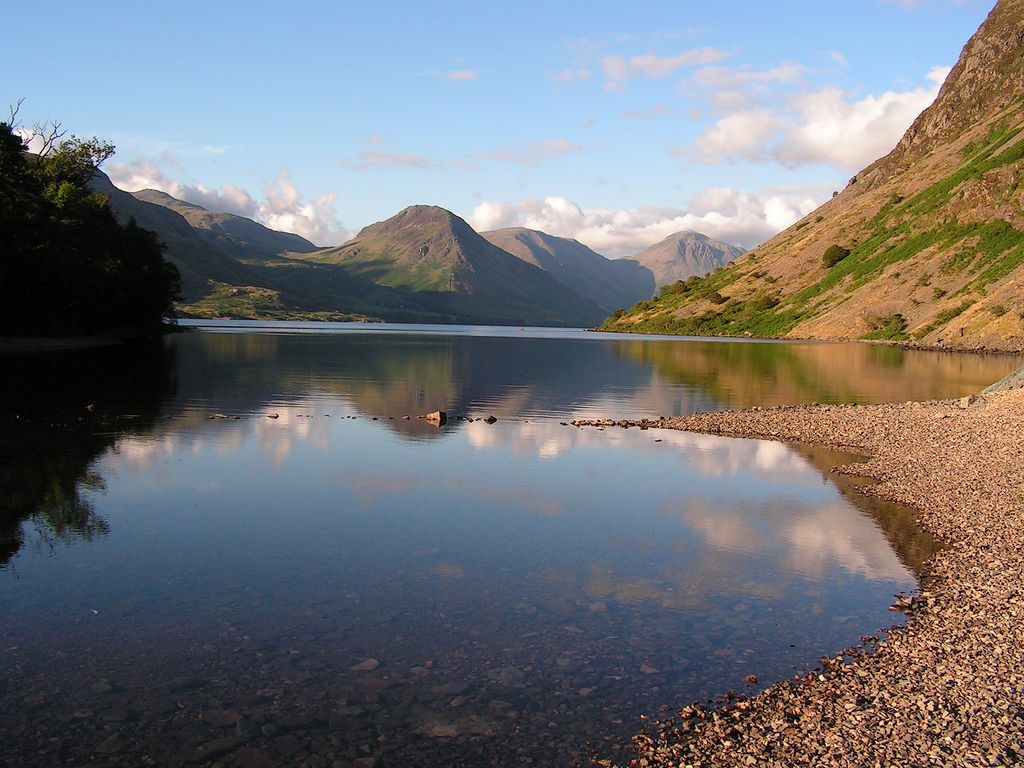
A word on the western reward: drop off Hardknott and you can detour to Wastwater, the deepest lake in England, with its famous wall of scree plunging into black water beneath Scafell Pike. The road in is quiet and the scenery is the wildest in the park. It feels like the edge of the country, because it more or less is.
The Real Driving Stuff: Single-Track Roads, Passing Places and Parking
This is the section I wish someone had given me before my first trip. The scenery gets all the attention, but the driving itself has rules and rhythms, and knowing them turns a stressful day into a smooth one.
Single-track roads and passing places
Most of the good driving here is single-track, meaning one lane shared by both directions, with passing places — short widened bays marked by a white sign with a black diamond — dotted along the way. The etiquette is simple and not optional: the vehicle nearest a passing place gives way. If the bay is on your left, pull in. If it’s on your right, stop opposite it and let the oncoming car pull into it; never cross over into a right-hand passing place yourself.
A few more things I’ve learned the hard way. Never park in a passing place, even for a quick photo. Let faster local traffic past when you can — they’re not tourists, they’re trying to get to work, and a wave through earns a lot of goodwill. Slow down early when you see oncoming traffic rather than braking hard at the last second. And a brief wave of thanks after passing is standard courtesy; it keeps the whole system friendly.
Gradients, gears and brakes
On the steep passes, use a low gear going down, not just going up. Riding your brakes for a long descent overheats them, and on Honister or Hardknott that’s exactly when you don’t want fade. Engine braking in second or first gear keeps you in control. If you’re driving an automatic, find its low or manual setting before you start the descent, not halfway down.
Parking and congestion
Parking is the genuine pain point of a Lakes road trip. The honeypots — Windermere, Bowness, Buttermere, Ullswater’s Glenridding — fill early and stay full. The Windermere–Bowness area alone sees something like 15,000 tourist cars a day at peak, and roughly half struggle to find a space. Your defences are simple: arrive before 10am or after 3pm, visit midweek if you possibly can, and use the official National Trust and national park car parks, which take cards and often offer member discounts. Pre-booking where it’s available is worth it on summer weekends.
If your dates are flexible, May, June, September, and October give you the best mix of weather and breathing room — and the best time to visit England guide breaks down the seasons in more detail. Peak summer is busy enough that I’d start every drive at dawn.
Your car, and renting one
You don’t need a 4×4. A normal car with decent tyres handles all of these passes fine in dry conditions — what matters far more than four-wheel drive is good tyres and a driver who’s comfortable on narrow roads. What you don’t want is something long or wide: big SUVs, vans, and anything towing will struggle on Hardknott and Wrynose, and are best kept to the A-roads. If you’re hiring, the smaller the car the easier these lanes become; renting a car in England covers the practicalities of picking one up.
Wet weather and winter
The Lakes are one of the wettest places in Britain, so plan for rain — it’ll find you. A wet road doubles the difficulty of every pass and makes the hairpins genuinely slippery. In winter, the high passes ice over and Hardknott in particular closes for long stretches; drivers do get stranded up there every year, so don’t gamble on it. If the forecast is grim, the Lake District rainy day activities guide will save your day far better than a soaking on a mountain road.
Beyond the Driving: What to See When You Stop
A road trip isn’t only the road. The whole point of basing yourself and looping out is that you can park up and dive into the places themselves. Climb a fell, take a boat, find a tea room with a fire going. There’s far more to fill the gaps than I can list here, so I’ll point you at the best things to do in the Lake District for the proper rundown of stops worth building your loops around.
My own non-negotiables: the Honister Slate Mine tour, a steamer on Ullswater, the short walk to Buttermere’s shore, and at least one slow pint in a fellside pub watching the light change on the water. The driving is the spine of the trip, but the stops are the soul of it.
Final Thoughts
If you take one thing from all this, let it be honesty about which driver you are. The Lakes reward confident drivers with some of the finest roads in Europe, but they punish overreach, and there’s no glory in being the van wedged sideways on a Hardknott hairpin while a queue of cars reverses behind you. Know your limits, drive the passes that suit them, and you’ll have the trip of a lifetime.
My own ideal version is simple: base in Keswick, drive the Newlands–Honister loop on the first clear morning, take the Ullswater run as a gentler second day, and save Hardknott for the day the forecast promises sun and my hire car is reassuringly small. Stop often. Let the locals past. Pull over for the views — there are passing places for exactly that reason.
The weather will do what it wants, the lakes will look impossible in the best way, and somewhere near the top of a pass you’ll have your own engine-off, just-sit-there moment. That’s the whole point. Drive safe, and enjoy every gear change.
Research and Source Notes
Pass elevations, gradients, and seasonal closure guidance were cross-checked against the Lake District National Park Authority (lakedistrict.gov.uk), the official source for road and access information within the park, including its Ullswater and places-to-go pages. Car park and site details for Buttermere, Honister, and the wider valleys draw on the National Trust (nationaltrust.org.uk), which manages much of the land and many of the car parks referenced. Broader regional context and seasonal visitor advice were checked against VisitBritain (visitbritain.com). Difficulty ratings, distances, and prices reflect my own repeated drives and are hedged as approximate and accurate as of 2026; alwa
Photo Credits
- Honister Pass winding down toward Buttermere on a classic Lake District road trip — Photo: Brian Clift / CC BY-SA 2.0 via Wikimedia Commons. Source
- A quiet morning over Lake Windermere, the busiest base on a Lake District driving route — Photo: Michal Klajban / CC BY-SA 4.0 via Wikimedia Commons. Source
- Derwentwater seen from above on the Borrowdale leg of a Lake District scenic loop — Photo: User:Diliff / CC BY-SA 3.0 via Wikimedia Commons. Source
- Wastwater’s dark waters and scree slopes, the wild reward beyond the Lake District mountain passes — Photo: Andrew Hayward / CC BY 2.0 via Wikimedia Commons. Source
- The packhorse Ashness Bridge framed by Skiddaw, a classic stop on any Lake District road trip — Photo: Stephen Darlington / CC BY-SA 2.0 via Wikimedia Commons. Source
Frequently asked questions
How many days do you need for a Lake District road trip?
Two to three days covers the highlights comfortably — one for the northern Honister–Newlands loop and one for the eastern Kirkstone–Ullswater run, with a third for Hardknott or the western lakes if you're keen. Four days lets you slow right down and add walks. A single day is doable but rushed.
Is Hardknott Pass safe to drive?
Hardknott is safe for a confident driver in a small car in dry weather, but it's England's steepest road at around a 30% gradient, with tight hairpins, no barriers, and few passing places. It's not suitable for nervous or inexperienced drivers, large vehicles, or anyone uncomfortable reversing on a steep single-track lane.
What is the most scenic drive in the Lake District?
Hardknott Pass has been voted the most scenic drive in Britain by Tripadvisor reviewers, with views toward the Isle of Man on clear days. For something easier but still spectacular, the Honister and Newlands loop from Keswick, or the A592 along Ullswater, deliver world-class scenery without the white-knuckle gradients.
Do you need a 4x4 for the Lake District passes?
No. A normal car with good tyres handles every pass fine in dry conditions — traction is rarely the issue, narrow roads and steep braking are. Avoid long or wide vehicles like big SUVs and vans on Hardknott and Wrynose. In winter ice, no car should attempt the high passes regardless of drive type.
When do the Lake District mountain passes close?
There's no fixed date — closures depend on weather. Hardknott and Wrynose ice up readily and can shut for long spells through winter, sometimes days at a time. Honister and Kirkstone are more resilient but still risky in snow. Always check conditions before setting off between roughly November and March, and never assume a pass is open.
What's the best base for a Lake District driving route?
Keswick is best for the high passes, sitting minutes from Honister, Newlands, and Buttermere. Ambleside or Windermere suit first-timers wanting shops, boats, and central access, though they're busier. Coniston is the quiet pick, closest to the wild Wrynose and Hardknott approach from the south.