Sheet 83 · England Road Trips · 19 min read
North England Road Trip
Plan a North England road trip the smart way: Peak District to Lake District to Northumberland, real drive legs, overnight bases and the best of the North
 Sheet 83
Contents 12 sections
A proper North England road trip is something I have driven as one long loop more times than is probably sensible, and the moment that sticks is always the same: cresting a rise on the B6318 with Hadrian’s Wall running away over the crags beside me, sheep on the verge, not another car in sight, the whole empire’s old edge laid out in the grass. People rave about the Lake District, and rightly so. But the North is so much bigger than its honeypots, and the joy of doing it by car is stringing the lot together.
This is the umbrella guide to that whole circuit. A proper North England road trip ties the Peak District, Yorkshire, the Lake District and — the part most articles skimp on — Northumberland and the North East into a single coherent loop, climbing from the Midlands through one national park after another and out to a coast lined with castles. I will keep Yorkshire and the Lakes deliberately brief here and send you to their own dedicated guides, because my real depth, and the bit that earns this article, is the North East.
A North England road trip at its best is a clockwise loop: in via the Peak District as a southern gateway, north through the Yorkshire Dales, west over to the Lake District, then a big swing across the top to Hadrian’s Wall, Northumberland’s castle coast and the cities of Newcastle and Durham, before dropping back south. Reckon on seven to ten days and somewhere around 600 to 750 miles, much of it slow, single-carriageway and worth every minute.
For the wider family of routes — shorter loops, regional drives, the whole menu — start with my England road trips hub. This piece is the grand northern circuit specifically.
Quick Answer: Is a North England road trip worth it?
Yes — and a car is genuinely the only way to do the whole North justice, because the best of it sits between the famous towns, not in them. The classic North England road trip is a loop: Peak District first, up through the Yorkshire Dales, west to the Lake District, then across the top to Hadrian’s Wall, the Northumberland coast, Durham and Newcastle, and back south. Budget seven to ten days, expect mountain passes and tidal causeways, and book ahead in summer.
If you would rather have a fixed day-by-day plan than a flexible loop, my 10 day England road trip itinerary lays a trip out plan-style instead. This guide is organised by region and leg, so you can lift the bits you want.
At a glance: the northern loop in legs
| Leg / area | Roads & route | Suggested nights | Highlights |
|---|---|---|---|
| Peak District (gateway) | M1/A6 in; Snake Pass A57, Winnats Pass | 1 | Bakewell, Castleton, Snake Pass, Chatsworth |
| Yorkshire Dales (brief) | A65/B6160 to Skipton, Grassington, Wensleydale | 1 | Malham, Bolton Abbey, Aysgarth Falls |
| Lake District (brief) | A65/A591 via Kendal; Kirkstone & Honister passes | 2 | Windermere, Keswick, Derwentwater, Ullswater |
| Across the top | A66 over Pennines, A69 to Hadrian’s Wall | — | A66 Pennine crossing, Stainmore views |
| Hadrian’s Wall | B6318 Military Road, Housesteads, Vindolanda | 1 | Sycamore Gap, Housesteads, Vindolanda |
| Northumberland coast | A1/A697 to Alnwick, B1340 coast road | 2 | Alnwick & Bamburgh castles, Holy Island |
| Durham & Newcastle | A1(M) south; A167 into Durham | 1 | Durham Cathedral, Newcastle quayside |
| North Pennines (optional) | A689/A686 Hartside, Teesdale & Weardale | 1 | High Force, Hartside Pass, dark skies |
Drive times between regions are real but the joy is in the dawdling. Treat the nights above as a minimum; if you have a fortnight, double up in the Lakes and on the Northumberland coast and you will not regret it.
Planning the loop: which direction, how long, when to go
First, direction. I run it clockwise — Peak District, Dales, Lakes, then over the top to the North East — for one practical reason: it saves the emptiest, quietest, most underrated stretch (Northumberland) for last, when you have your road legs and have stopped flinching at single-track passing places. You can absolutely reverse it. There is no wrong way round a loop.
Second, length. The honest minimum to touch all four regions without it becoming a forced march is seven days. Eight to ten is the sweet spot. With four or five days you should drop a region rather than rush — most likely either the Peak District or Yorkshire, both of which deserve trips of their own. The drives between regions are short by American standards (you are rarely more than two hours from the next base), but the roads are slow, and the whole point is to stop.
Third, timing. I would go in late spring or early autumn if I had the choice — May, June, September. July and August are gorgeous but the Lakes in particular get genuinely clogged, and Lake District parking in Windermere and Keswick can defeat you by mid-morning. Northumberland, by contrast, is almost never crowded even in peak season; it is one of England’s last quiet corners. Winter is wild and beautiful on the coast but the high passes (Kirkstone, Honister, Hartside, Snake) can close with snow, so check before you commit. For a fuller month-by-month breakdown, see my guide to the best time to visit England.
A word on the car. Bring the smallest one you can live with. A compact hatchback is a pleasure on Dales lanes and Lakeland passes; a large SUV is a liability in Castleton or on the B1340. If you are renting, my hire-car guide covers the bookings, insurance and what the desk will try to upsell you. And if the raw mileages matter for your planning, driving distances in England has the numbers between the major points.
Leg 1: The Peak District — your southern gateway
The Peak District is where the North announces itself, and it makes a far better starting gun than slogging up the M6. Britain’s first national park, designated back in 1951, sits right above the big Midlands cities, so it is the natural on-ramp if you are coming from London, Birmingham or the south. Come off the M1 around Sheffield or the A6 from Manchester and you are into it within the hour.
I would give it a night and a proper half-day of driving. The drive everyone names is the Snake Pass (the A57), a roughly 20-mile climb between Glossop and the Ladybower reservoir at Ashopton, topping out over 1,600 feet on the bleak Dark Peak moors with blind summits and bends to keep you honest. It is a genuine driving road, not just a transit route, though it does close in bad weather and after landslips, so check it is open. For drama in miniature, Winnats Pass near Castleton is hard to beat — a steep narrow gorge between limestone pinnacles that feels far bigger than its length.
For bases, Bakewell is the obvious one: the Peak’s largest town, all honey-coloured stone, tea rooms, independent shops and the famous Bakewell pudding (which the locals will tell you is not a tart, and they are right). Castleton is the other I love, tucked in a limestone amphitheatre with show caves under the hills and the ruin of Peveril Castle above. If you have an afternoon to spare, Chatsworth House — the great Derbyshire seat of the Dukes of Devonshire — is one of England’s finest stately piles and right on the route; I cover it and others in my stately homes in England guide.
Then point north. From Bakewell the A6 and A623 thread you out of the park toward the M1 or the back roads up into Yorkshire.
Leg 2: The Yorkshire Dales — kept brief, on purpose
Here is where I show some discipline. Yorkshire could eat your entire holiday — the Dales, the Moors, York itself, the coast at Whitby and Robin Hood’s Bay — and it deserves its own trip. So on the grand loop I treat the Yorkshire Dales as a single glorious leg between the Peak and the Lakes, give it a night, and send you to the dedicated guide for the rest.
Coming up from the Peak, aim for Skipton, the “Gateway to the Dales,” with its proper medieval castle and a busy market. From there the B6160 north is one of the great Dales drives, threading Bolton Abbey (ruined priory on a curve of the River Wharfe), Grassington (handsome stone village, used as the fictional Darrowby in the recent All Creatures Great and Small) and up Wharfedale. Malham is the must-stop for scenery — the great curved cliff of Malham Cove and the limestone pavement above it. Swing through Wensleydale for Aysgarth Falls and, yes, the cheese, and you can join the A66 westbound for the run to the Lakes.
That is the headline reel. For the full Dales-and-Moors treatment — York, Whitby, the moors, the proper detail on each dale — go to my Yorkshire road trip guide, which is built for it. I am not going to do it badly in three paragraphs when there is a whole article waiting.
Leg 3: The Lake District — brief here, deep elsewhere
Same discipline applies to the Lakes. The Lake District is England’s mountain country and the most beloved national park in the land — Scafell Pike, sixteen major lakes, Wordsworth and Beatrix Potter, the lot — and it has so much going on that it gets its own full driving guide. On the umbrella loop I give it two nights as a non-negotiable minimum and treat it as the western pivot of the circuit.
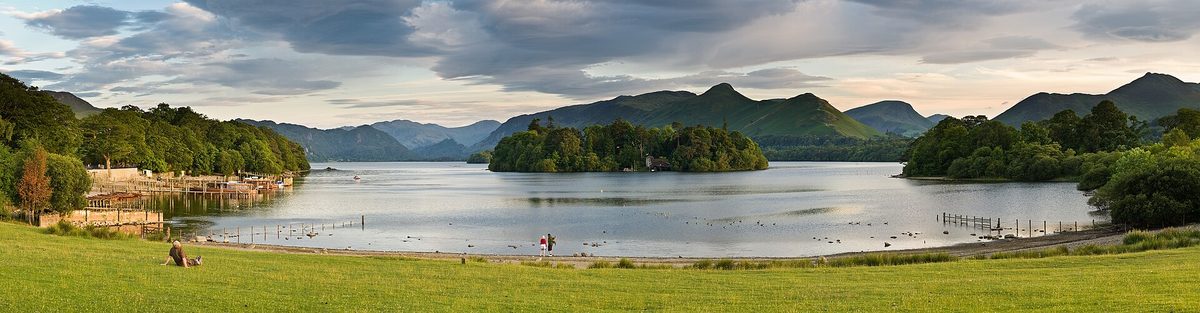
Come in on the A65 to Kendal, then the A591 to Windermere and Ambleside. The two passes you will hear about are Kirkstone (the highest road pass in the Lakes, linking Ambleside to Ullswater, with the famously steep “Struggle” up from the town) and Honister (the dramatic slate-quarry pass between Borrowdale and Buttermere). Keswick in the north, on the shore of Derwentwater, is my favourite base — walkable, lively, ringed by fells, and well placed for the drive over the top to Hadrian’s Wall.
But I am genuinely not going to compress the Lakes into a few lines and pretend that is enough. For the real route, the passes, the lake-by-lake detail and where to stay, use my Lake District road trip guide. For the area as a whole — when to go, what to do, the towns — there is the Lake District travel guide, and for the two best bases specifically, the Keswick travel guide and Windermere travel guide. If hiking is your main reason to be there, my round-up of England national parks hiking covers the best fell walks across the North.
When you are ready to leave, the A66 east over the Pennines is the link road, a fast and surprisingly scenic crossing over Stainmore that drops you toward the A69 and the Roman frontier. This is the moment the trip changes character. From here on, it is my home turf.
Leg 4: Hadrian’s Wall — the empire’s edge by car
This is where the article earns its keep, because most North England road trip guides wave at Hadrian’s Wall and move on. Do not let them. The Wall is a UNESCO World Heritage Site running 73 miles coast to coast, roughly 1,900 years old, once the north-west frontier of the Roman Empire — and the central section, where it climbs the Whin Sill crags, is one of the most atmospheric places I know.
The road that matters is the B6318, the Military Road, which runs parallel to the Wall across the high middle section. Drive it slowly. The honest truth is the Wall is patchy along much of its length — long stretches are buried under field or city — so you want to aim for the dramatic central sector between Hexham and Haltwhistle, where the crags rear up and the surviving stonework follows the ridgeline.
Three stops, and I would do at least two of them:
- Housesteads Roman Fort — the best-preserved Roman fort in Britain, with the most spectacular setting, perched high on the ridge. It is National Trust land maintained by English Heritage; you walk up from the car park. The latrines alone are worth the climb (genuinely the best-surviving Roman loos in the country).
- Vindolanda — a separate, privately run fort and museum just south of the Wall, and it is extraordinary: a live archaeological dig where they are still pulling finds out of the ground, including the famous Vindolanda writing tablets, the oldest surviving handwritten documents in Britain. Allow a couple of hours.
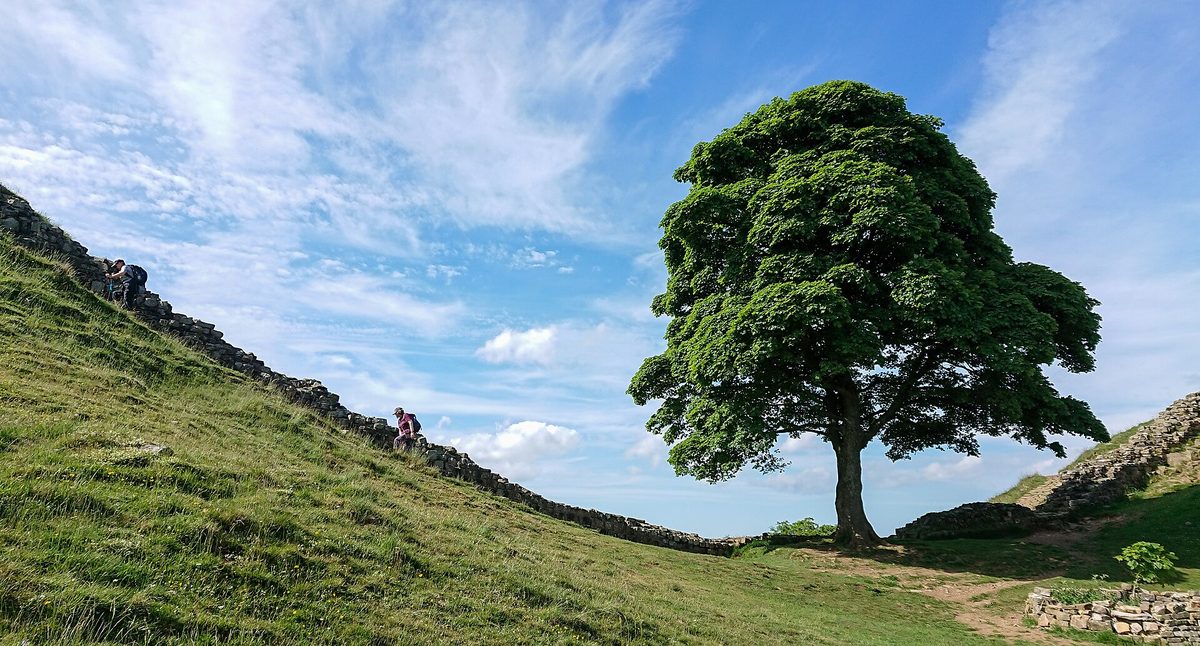
- Sycamore Gap — the iconic dip in the crags where the much-loved sycamore stood until it was felled in 2023. The tree is gone but the stump remains and is showing signs of regrowth, and the spot itself, between Housesteads and Steel Rigg, is still a stunning short walk along the Wall.
If Roman Britain is your thing, I have a whole guide to the wider picture in Roman sites in England — the Wall is the headline, but it is far from the only act.
Base yourself in Hexham, a handsome old market town with a fine abbey, or push on toward the coast. One night here, minimum, and resist the urge to do the Wall as a drive-by; the walks along the crags are short and the payoff is enormous.
Leg 5: The Northumberland coast — castles, beaches and an island you reach at low tide
If you take one thing from this guide, take this: Northumberland is the secret weapon of any northern England driving route. It has the darkest skies in Europe, the emptiest beaches in England, and a coastline studded with castles, and it is almost never crowded. After the Lakes it feels like exhaling.
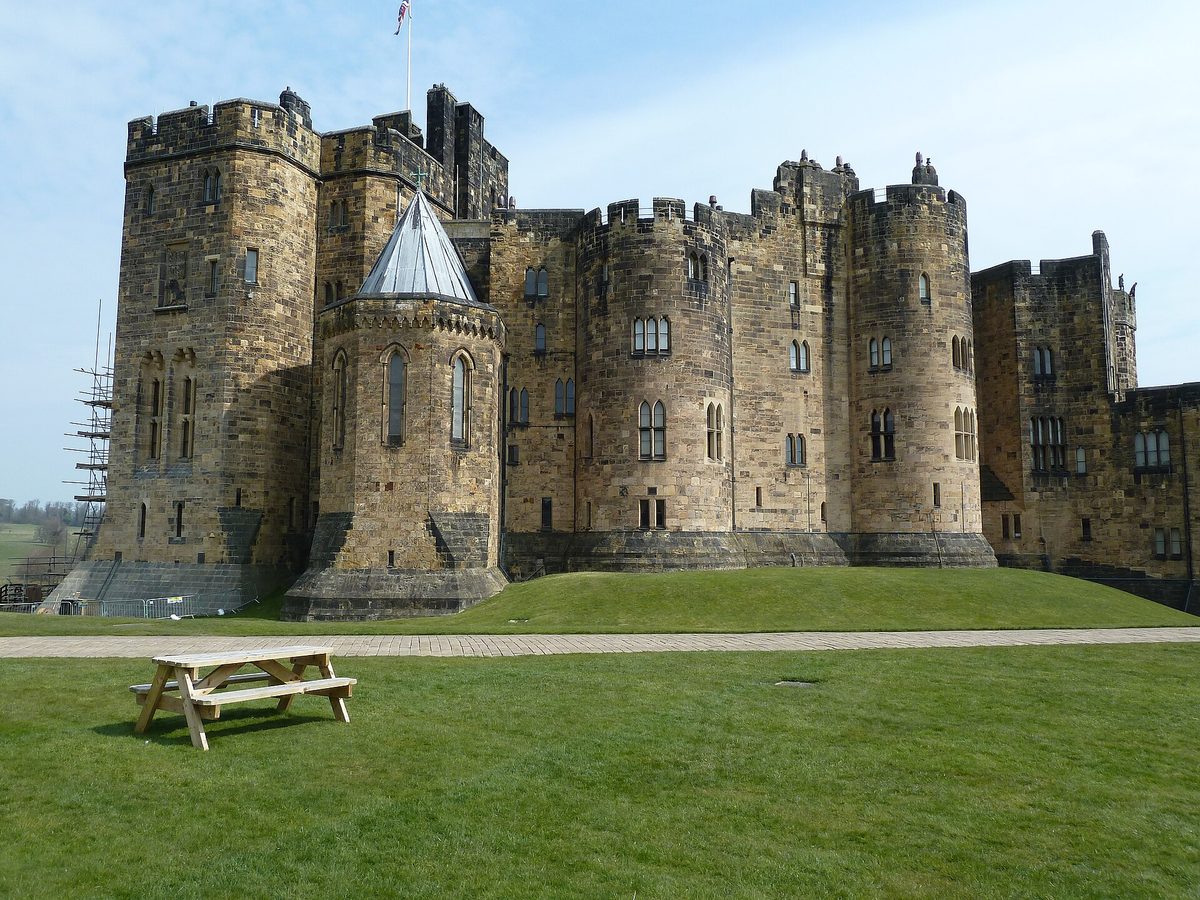
From Hadrian’s Wall, run the A69 to the A1 and head north, or take the prettier A697. Your hub is Alnwick, and the headline is Alnwick Castle — 950-plus years of history, still the seat of the Dukes of Northumberland, and familiar to anyone who has watched Harry Potter (the broomstick-flying lawn) or Downton Abbey. As of 2026 the castle is open roughly late March to the end of October, grounds typically 10am to 5pm; book ahead in summer and budget around £25 for an adult ticket, hedged, as prices creep up. Right next door, the Alnwick Garden with its Grand Cascade and notorious Poison Garden is a separate ticket and a genuinely good one.
Then drop to the coast on the B1340 and take the coast road north. This is the leg I would slow right down for:
- Craster — a tiny fishing village famous for its kipper smokehouse, and the trailhead for the lovely cliff walk to romantic, ruined Dunstanburgh Castle, which you can only reach on foot (about a mile each way, and worth it).
- Seahouses — the workaday harbour town from which boats run out to the Farne Islands, the National Trust seabird and seal sanctuary; puffins from roughly late spring into July are the draw.
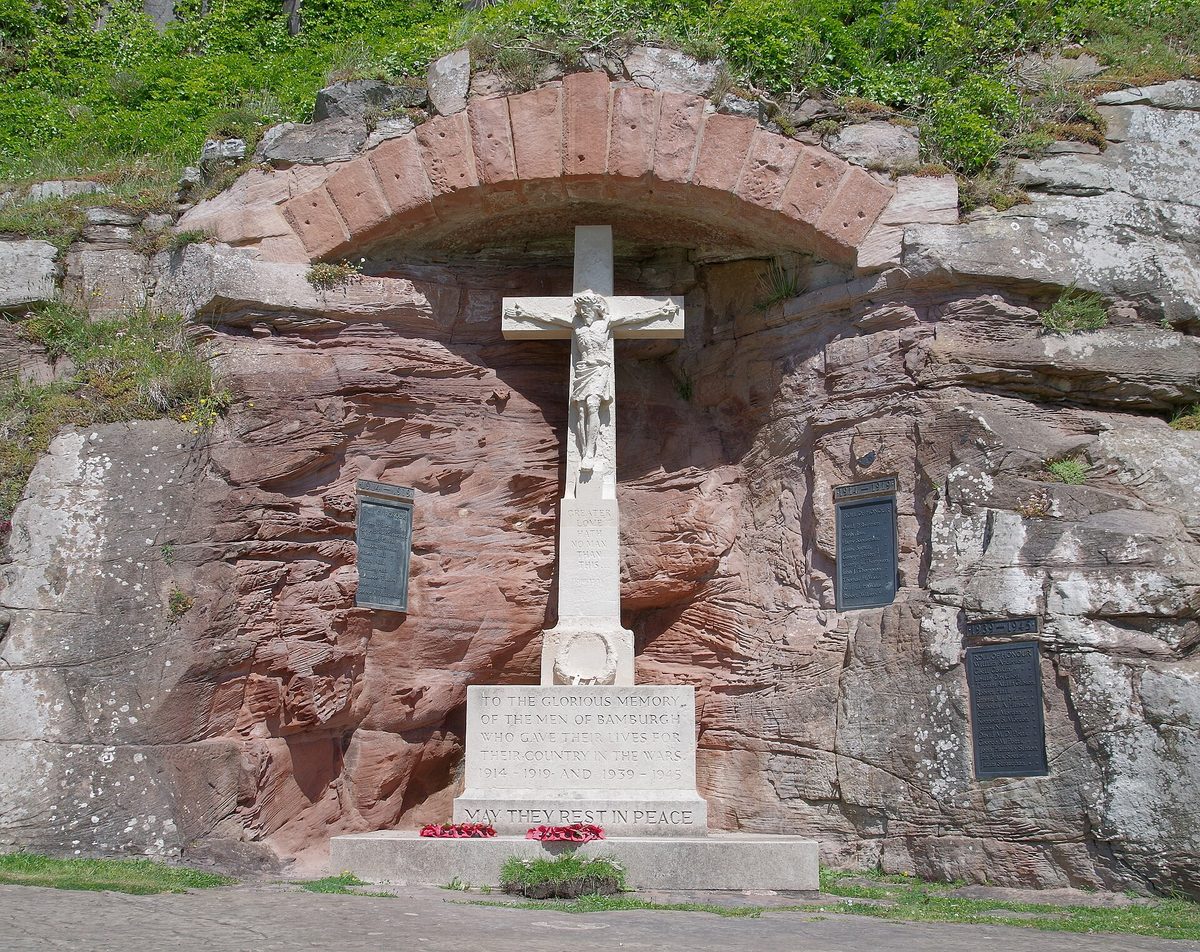
- Bamburgh — and here is the showstopper. Bamburgh Castle stands on a basalt crag right over a vast sweep of golden beach, has guarded this coast for over 1,400 years, and is, to my eye, the most dramatically sited castle in England. It is open daily, typically 10am to 5pm with last admission around 4pm; reckon on roughly £16 to £18 for an adult as of 2026. The beach below it is one of the finest in the country — I cover it and others in my England coast and beaches guide.
Then the trip’s most distinctive moment: Holy Island (Lindisfarne), reached across a tidal causeway that floods twice a day. This is non-negotiable to get right. The road is cut off for roughly three to seven hours per tide, and it is genuinely dangerous to ignore — every year someone gets caught and abandons a car to the sea. Check the official safe crossing times published by Northumberland County Council before you go, allow a 30-minute buffer for weather, and never start across on a rising tide. Get it right and you have a cradle of English Christianity to yourself: the priory ruins, Lindisfarne Castle on its little hill, and an island that empties of day-trippers the moment the tide returns. It is magic.
Give the coast two nights if you can — Alnwick, Bamburgh or Seahouses all make good bases. For more on the region’s fortresses generally, my best castles in England guide ranks them, and a remarkable number of the best are right here.
Leg 6: Durham and Newcastle — the North East’s two great cities
Heading back south, you hit the two cities that anchor the North East, and they are a study in contrasts. From the Northumberland coast the A1(M) runs you down in well under an hour.
Durham is the jewel, and you should not skip it. Durham Cathedral is one of the greatest Romanesque buildings in Europe — a UNESCO World Heritage Site alongside the adjacent castle — sitting high on a wooded peninsula in a loop of the River Wear, with the cobbled old city tumbling below. Harry Potter fans will recognise the cloisters. Entry to the cathedral itself is free (donations welcome), though there is a charge for the tower climb and the Open Treasure exhibition. Honestly, the view of it from the riverbanks at dusk is one of the best urban scenes in England. Durham is compact and walkable; park on the edge and go on foot, as the centre is tight and partly pedestrianised.
Newcastle, half an hour further north (or your first city if you reverse the loop), is the swaggering, friendly heart of the region. The Quayside is the photo: the great arc of the Tyne Bridge, the tilting Gateshead Millennium Bridge, the BALTIC arts centre and the Sage music venue facing each other across the river. Grainger Town’s Georgian streets are genuinely grand, the nightlife is legendary, and the people are about the warmest you will meet anywhere in Britain. Just across the river mouth, Tynemouth offers a ruined priory on the headland and proper sandy beaches, an easy half-day. If cities are your thing, I rank the contenders in best cities to visit in England, and Newcastle punches well above its tourist profile.
One night split between or near these two, and you have the urban North East covered. If your taste runs to old streets and market squares more than big cities, the wider region is full of gems I gather in my historic towns in England guide — Hexham, Alnwick, Barnard Castle and more.
Leg 7: The North Pennines — the optional wild finale
If you have a spare day before you drop south for good, spend it in the North Pennines — a landscape of heather moor, deep dales and waterfalls that almost nobody visits, and one of the country’s designated International Dark Sky reserves. This is the loop’s quietest leg and a fitting bookend to the Peak District you started in.
The two dales to know are Teesdale and Weardale. Teesdale gives you High Force, one of England’s most powerful waterfalls, where the River Tees crashes over a 70-foot drop — there is a short walk in from the car park on the B6277, and after rain it is thunderous. The town of Barnard Castle, with its riverside ruin and the wildly opulent Bowes Museum, makes the natural base. For the drive, the A686 over Hartside (toward Alston, England’s highest market town) and the moorland roads above Allendale are gloriously empty, climbing to big-sky views with barely a vehicle on them.
It is a genuine “end of the road” feeling out here, and on a clear night the stargazing is among the best in England. From Alston or Barnard Castle you can rejoin the A66 or A69 and point the car wherever home is.
Where to stay along the way
I have flagged bases leg by leg, but to gather them: Bakewell or Castleton in the Peak; Skipton or Grassington in the Dales; Keswick or Windermere in the Lakes; Hexham for the Wall; Alnwick, Bamburgh or Seahouses on the coast; and Durham or Newcastle for the cities. Book the Lakes and the Northumberland coast earliest — the Lakes because demand is brutal in summer, the coast because the good small hotels and pubs-with-rooms in Bamburgh and Alnwick are limited and fill fast.
A practical note on style: the North does country pubs with rooms exceptionally well, and I would take a good inn over a chain hotel every time on this trip. For a fuller steer on regions, price brackets and booking strategy, see my where to stay in England guide.
Final Thoughts
The thing I want you to take away is that the North of England is not a single destination, it is a sequence, and a car is what turns the sequence into a story. You climb out of the Midlands into the Peak, you thread the green folds of the Dales, you cross the mountain wall of the Lakes, and then — the bit I will always argue for hardest — you come over the top into Northumberland, where the crowds thin to nothing and the castles stand over empty beaches and you have one of England’s quietest, grandest corners more or less to yourself.
Most road trip guides treat the North as Lakes-plus-Yorkshire and stop there. I think that misses the best of it. Give the North East its due, get the Holy Island tides right, drive the Military Road slowly, and stand on Bamburgh beach with the castle above you and the North Sea in front, and you will understand why I keep coming back to do this loop. Take longer than you think you need. The North will fill every day you give it.
Research and Source Notes
Opening hours, prices and access details were cross-checked against official and authoritative sources, current as of June 2026; admission prices in particular change seasonally, so confirm before you travel. For Hadrian’s Wall and Housesteads Roman Fort, see the National Trust and English Heritage, which manage the site jointly. Holy Island safe crossing times are published officially by Northumberland County Council via gov.uk and the council’s dedicated causeway page; always check the live tide table before crossing. For regional planning, attractions and where-to-go inspiration across the North, [VisitBritain](ht
Photo Credits
- North England road trip view of Hadrian’s Wall running across the Northumberland crags — Photo: Gordon Leggett / CC BY-SA 4.0 via Wikimedia Commons. Source
- Alnwick Castle in Northumberland, a highlight of any northern England driving route — Photo: IanChristopherWeston / CC BY-SA 4.0 via Wikimedia Commons. Source
- Durham Cathedral above the River Wear, a key stop on a North East England road trip — Photo: Tilman2007 / CC BY-SA 4.0 via Wikimedia Commons. Source
- Derwentwater near Keswick, the Lake District pivot of a North England road trip — Photo: Diliff / CC BY-SA 3.0 via Wikimedia Commons. Source
- Bamburgh Castle above its beach on the Northumberland coast, the dramatic high point of a Northumberland road trip — Photo: mattbuck (category) / CC BY-SA 4.0 via Wikimedia Commons. Source
Frequently asked questions
How many days do you need for a North England road trip?
Seven days is the realistic minimum to touch the Peak District, Yorkshire, the Lake District and Northumberland without rushing, and eight to ten is the sweet spot. With only four or five days, drop a region — usually the Peak District or Yorkshire — rather than trying to do everything and spending the whole time behind the wheel. The North rewards lingering.
What is the best route for a northern England driving route?
A clockwise loop works best: Peak District first, north through the Yorkshire Dales, west to the Lake District, then across the A66 and A69 to Hadrian's Wall, up the Northumberland coast to Alnwick and Bamburgh, and back south via Durham and Newcastle. Running it clockwise saves Northumberland, the quietest and most underrated leg, for last.
Is Northumberland worth visiting on a road trip?
Absolutely — it is the highlight for many people and the part most guides neglect. Northumberland has England's emptiest beaches, the darkest skies in Europe, a coast lined with castles like Bamburgh and Alnwick, and Hadrian's Wall running across its interior. Crucially, it stays quiet even in peak summer, so a Northumberland road trip feels worlds away from the busy Lakes.
How do you safely cross to Holy Island (Lindisfarne)?
Holy Island is linked to the mainland by a causeway that floods twice daily, so you must check the official safe crossing times published by Northumberland County Council before you set out. Never start across on a rising tide, allow an extra 30 minutes for weather, and plan your visit around the window when the road is open. Getting caught means losing your car to the sea.
Can you do a North East England road trip in a long weekend?
Yes, if you focus tightly. A three-day North East England road trip can cover Hadrian's Wall, the Northumberland coast (Alnwick, Bamburgh and Holy Island) and Durham, basing yourself in Hexham then Alnwick or Bamburgh. Skip the Lakes and Yorkshire entirely on a short trip — they each deserve their own visit, and the North East alone easily fills a weekend.
What is the best time of year to drive around Northern England?
Late spring and early autumn — May, June and September — give you the best balance of decent weather and manageable crowds. July and August are warmest but the Lake District in particular gets very busy, with parking a real challenge. Winter is dramatic on the coast but the high passes such as Kirkstone, Honister and Hartside can close with snow, so check before you commit.