Sheet 34 · England Castles and Historic Sites · 16 min read
Roman Sites in England
My honest guide to the best Roman sites in England, from Hadrian's Wall to the Roman Baths at Bath, with rough 2026 prices, what survives, and how to plan.
 Sheet 34
Contents 8 sections
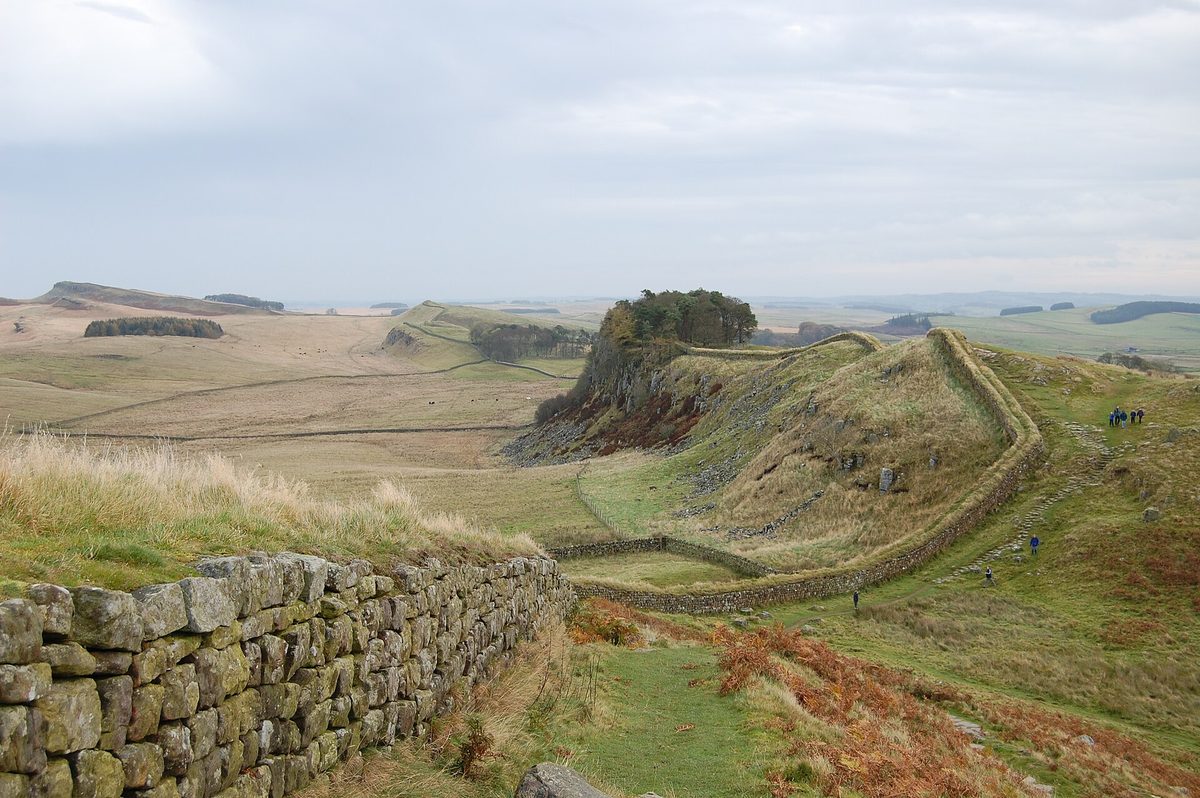
The first time I stood on Hadrian’s Wall near Housesteads, the wind came across the crags hard enough to make my eyes water, and I remember thinking that no photo had ever prepared me for it. The Romans built this. Out here. On purpose. Almost nineteen centuries later the stones are still stacked, still running off across the ridge towards the next fort, and you can walk right up and put your hand on them.
That moment is why I keep coming back to Roman Britain, and why I wanted to write this properly. The best Roman sites in England aren’t a dusty afterthought to the castles and cathedrals everyone photographs. They’re the foundations of the whole story, and a handful of them are among the most extraordinary ancient remains anywhere north of the Mediterranean.
So here’s my road-tested guide to where to go, what actually survives, which sites are worth a special trip, and roughly what you’ll pay to get in.
Quick Answer: Where Are the Best Roman Sites in England?
The most rewarding Roman sites in England are Hadrian’s Wall and its forts (Housesteads, Vindolanda, Chesters, Corbridge) in Northumberland, the Roman Baths at Bath, Roman Chester, Roman London’s amphitheatre and Mithraeum, Fishbourne Roman Palace near Chichester, and Verulamium at St Albans. Between them you get standing walls, in-situ mosaics, and Britain’s best Roman museums.
At a Glance: Roman Sites Compared
Before I get into the regions, here’s a quick comparison to help you sort the headline sites. Prices are rough adult walk-up rates as of 2026 and shift a little year to year, so always check the official site before you set off. Booking online almost always shaves a bit off.
| Site | Where | What survives | Rough ticket (2026) | Best for |
|---|---|---|---|---|
| Hadrian’s Wall (the Wall itself) | Northumberland | Miles of standing wall, turrets, milecastles | Free to walk | Big landscapes, walking |
| Housesteads Roman Fort | Hadrian’s Wall | Most complete fort plan in Britain | Around £9.50 | The classic fort visit |
| Vindolanda | Hadrian’s Wall | Live excavation, writing tablets, leather finds | Around £11 (or saver) | Archaeology in action |
| Chesters Roman Fort | Hadrian’s Wall | Britain’s best Roman cavalry fort, baths | Around £9.50 | Bathhouse ruins |
| Roman Baths | Bath | Great Bath, sacred spring, museum | Around £20+ | The single best Roman experience |
| Roman Chester | Cheshire | Amphitheatre, walls on Roman lines | Free (amphitheatre) | City breaks |
| Roman London | City of London | Amphitheatre, London Wall, Mithraeum | Free | A free Roman afternoon |
| Fishbourne Roman Palace | West Sussex | Largest in-situ mosaics in Britain | Around £9.90 | Mosaics |
| Verulamium / St Albans | Hertfordshire | Mosaic, hypocaust, theatre, walls | Museum paid; ruins free | Day trip from London |
| Wroxeter Roman City | Shropshire | Town ruins, reconstructed villa | Around £6 | Quiet, uncrowded |
One quick note before anyone emails me: Stonehenge is not Roman. It’s prehistoric, thousands of years older than the legions, and it belongs in a different conversation entirely. I mention it only because I get asked, and because the assumption that “ancient England equals Romans” misses how deep the timeline really runs.
The North: Hadrian’s Wall Country
If you only do one Roman thing in England, make it Hadrian’s Wall. Nothing else compares for sheer scale and atmosphere. Emperor Hadrian ordered it built from around AD 122, and at its peak it ran roughly 73 miles coast to coast, studded with forts, milecastles, and turrets. It’s a UNESCO World Heritage Site, one of several in England worth planning a trip around, and the central stretch in Northumberland is where the magic lives.
A word on geography, because it trips people up. The Wall is a frontier line, not a single attraction with a car park. The best-preserved, most dramatic section runs between Chollerford and Greenhead, roughly along the B6318 (“the Military Road“). That’s where you’ll find the famous forts clustered within a short drive of each other. The Sycamore Gap tree that everyone loved was felled in 2023, so don’t go looking for that particular silhouette anymore, but the dip it stood in is still a striking spot on the central walk.
Housesteads: the fort everyone pictures
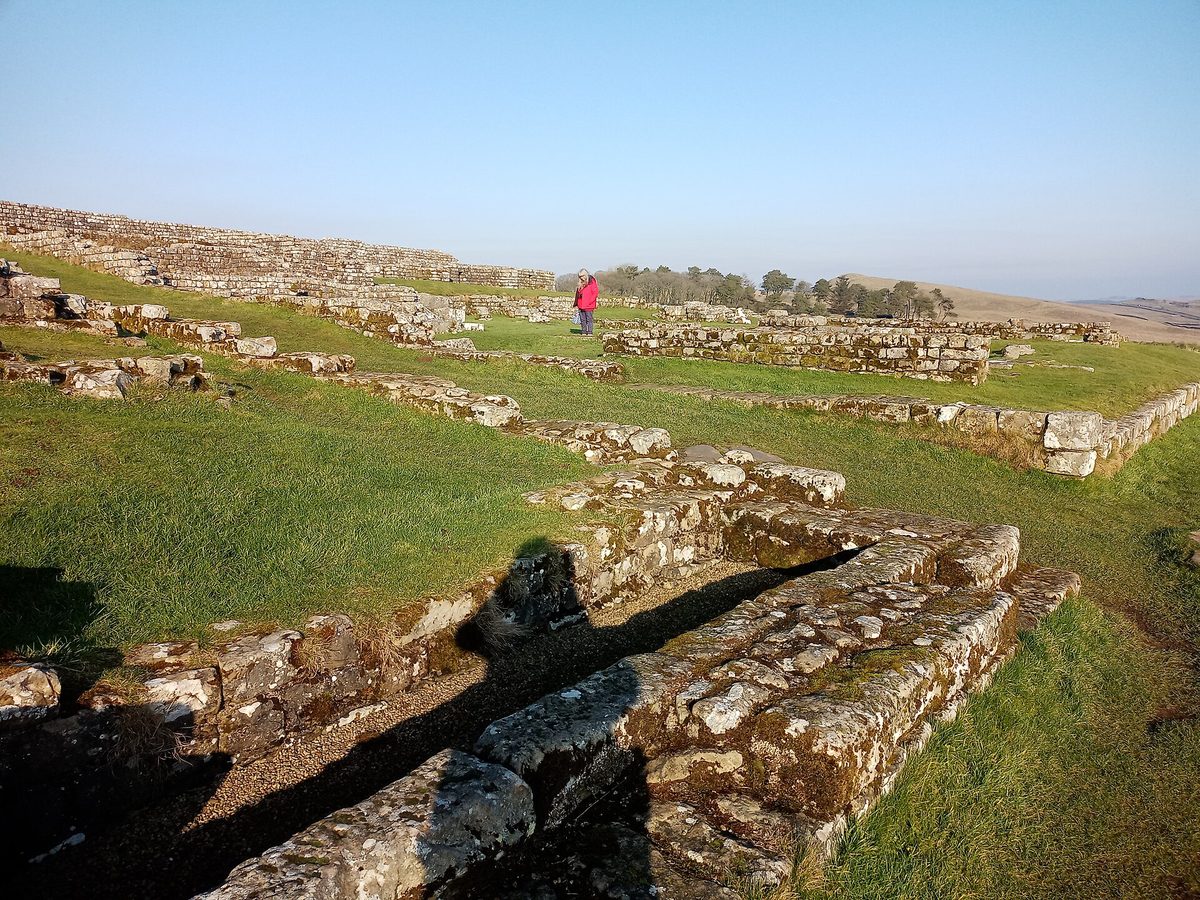
Housesteads is the one on the postcards, set high on a ridge with the Wall snaking off in both directions. It’s the most complete Roman fort plan in Britain, and walking the outline, you can read the whole layout: the barracks, the commanding officer’s house, the granaries with their raised floors, and the famous communal latrines, which children find endlessly funny and which were, frankly, a feat of engineering.
It’s run by English Heritage in partnership with the National Trust, with adult admission around £9.50 as of 2026 (free for members of either). Be warned: there’s a stiff uphill walk of around ten to fifteen minutes from the car park to the fort, so wear proper shoes and bring a layer. Even in July the wind up there can be brutal. I’d budget an hour and a half, more if you walk a stretch of the Wall afterwards, which you absolutely should.
Vindolanda: where the digging never stops
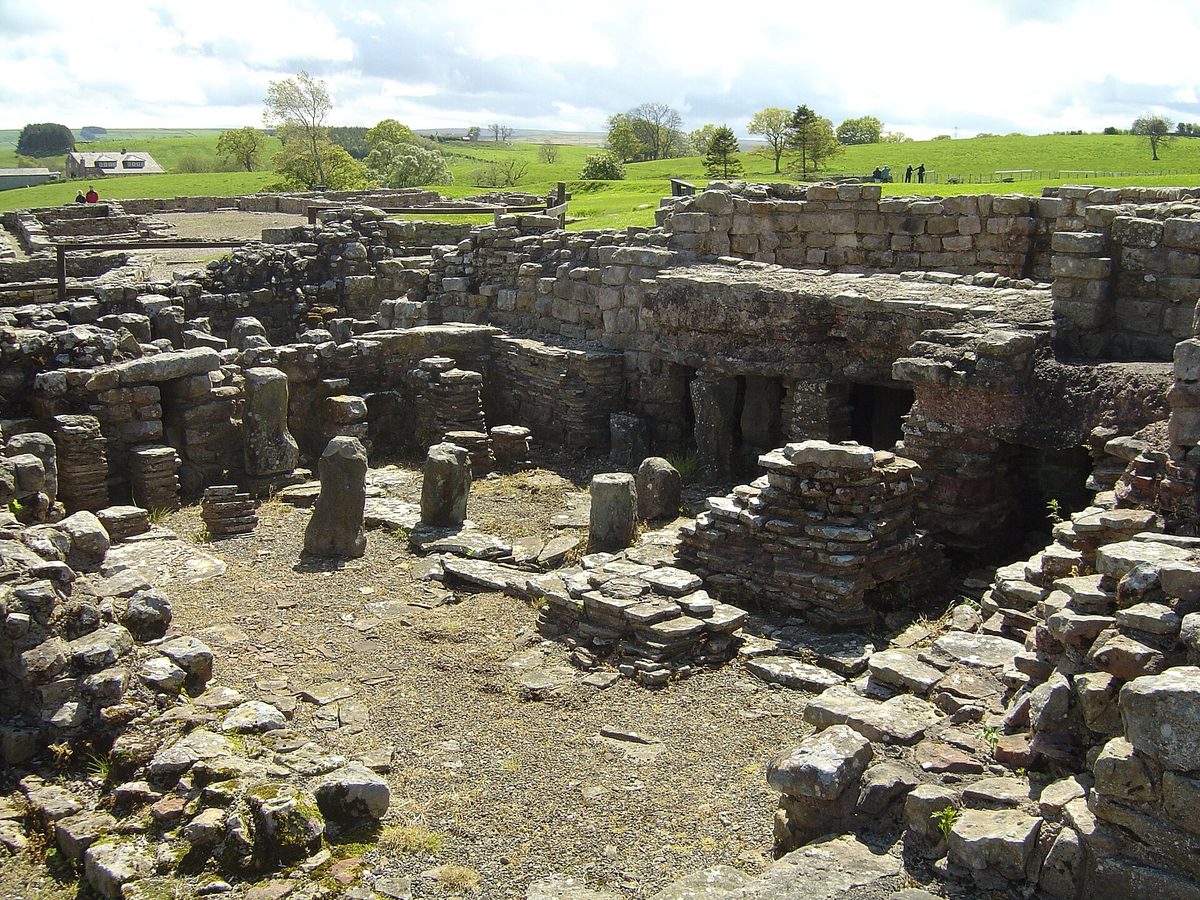
Vindolanda is my personal favourite, and it’s run by the independent Vindolanda Trust rather than English Heritage, so your membership card won’t get you in. It’s worth every penny anyway. This is a live archaeological excavation: in summer you can stand at the edge of a trench and watch archaeologists pulling Roman objects out of the ground in real time. The waterlogged soil here has preserved things that rarely survive anywhere, leather shoes by the thousand, wooden combs, and most famously the Vindolanda writing tablets, thin slips of wood with ink letters still legible. One is an invitation to a birthday party. Another is a soldier grumbling about a delivery of socks and underpants. They make the Romans feel suddenly, startlingly human.
Adult admission is around £11 as of 2026, and the Trust sells a saver ticket combining Vindolanda with its Roman Army Museum (near Greenhead) for around £19.80 online, valid for twelve months and not even tied to the same day. If you’re making a proper Roman pilgrimage, that’s the one to buy. Give Vindolanda a good two to three hours; the museum alone could hold you for an hour.
Chesters and Corbridge: the underrated pair
Two more English Heritage sites round out a perfect Wall day. Chesters Roman Fort, on the banks of the North Tyne near Chollerford, is the best-preserved Roman cavalry fort in Britain, and its riverside bathhouse survives to above head height, you can clearly see the changing room, the hot rooms, and the niches where soldiers left their clothes. Adult entry is around £9.50 as of 2026. Corbridge Roman Town, a few miles east, sits just south of the Wall on the older Stanegate road and was a bustling garrison town and supply depot rather than a fort; its main street, granaries, and fountain house are laid out for you to walk, and the museum holds the wonderful Corbridge Lion sculpture.
A realistic Hadrian’s Wall day, in my experience, is two sites done well plus a walk, not all four in a frantic dash. Housesteads in the morning, a walk along the Wall, lunch, then Vindolanda or Chesters in the afternoon. The whole area sits within stunning hiking country, and if you want to combine ruins with serious walking, the Northumberland landscape is some of England’s finest for it. The Hadrian’s Wall Path National Trail runs the full length if you’ve got the legs and the days.
If you’re trying to decide whether an English Heritage or National Trust membership pays off for a Roman trip, the Wall is exactly where it earns its keep: Housesteads, Chesters, and Corbridge are all English Heritage, so a membership can pay for itself in a single weekend, though remember Vindolanda and the Roman Army Museum sit outside both schemes.
The South and Bath: the Roman Baths
If Hadrian’s Wall is the wild north, the Roman Baths at Bath are the polished jewel, and they are, without much argument, the finest Roman site to visit in England for sheer preservation and presentation. Built around a natural hot spring that still pumps out roughly a million litres of steaming, mineral-rich water a day, the complex was the religious and social heart of Roman Aquae Sulis.
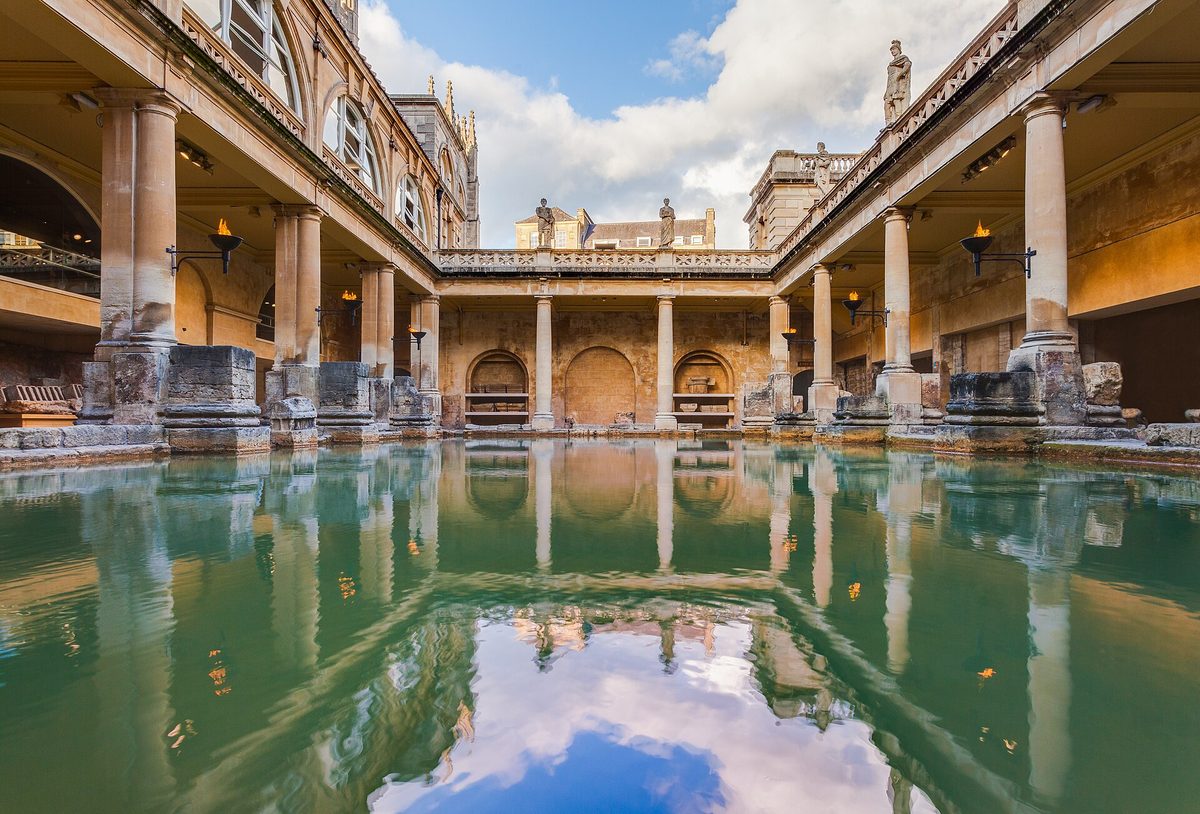
The centrepiece is the Great Bath, an open-air pool of green, steaming water ringed by paving the Romans actually walked on. Below ground you’ll find the sacred spring, the temple remains, the heated rooms, and a genuinely excellent museum packed with finds, including the gilded bronze head of Sulis Minerva and the carved Gorgon’s head from the temple pediment. The audio guide is one of the better ones I’ve used, and there’s a version narrated by Bill Bryson that’s worth it for the wry asides.
Now the honest bit: it’s not cheap, and it’s busy. Adult admission runs around £20 and up as of 2026, more at peak times, and I’d strongly advise booking a timed ticket online in advance, both to save a couple of pounds and to skip the queue that snakes around the abbey on summer afternoons. There’s an optional guided tour for a few pounds extra, and a lovely (if pricey) ritual where you can taste the spa water at the end, which is warm, faintly metallic, and absolutely worth trying once. Allow around two hours minimum. The whole of Bath is a treat, so I’d build it into a longer stay; my full guide to Bath covers where to eat, where to sleep, and how to pair the Baths with the Georgian city around them. Like the Wall, Bath is a UNESCO World Heritage Site, and the two together make a satisfying Roman bookend to any England trip.
Fishbourne Roman Palace: mosaics by the sea
Down on the south coast near Chichester sits a site that doesn’t get a fraction of the attention it deserves. Fishbourne Roman Palace is the largest Roman residential building ever found in Britain, a vast first-century villa-palace, and it holds the biggest collection of in-situ Roman mosaics in the country. The star is the Cupid on a Dolphin mosaic, astonishingly intact, viewed from a walkway that lets you appreciate the whole floor at once. There are recreated Roman gardens outside, replanted with species the original occupants would have grown. Run by Sussex Past (the Sussex Archaeological Society), adult admission is around £9.90 as of 2026. It’s an easy day from London or Brighton and a must if mosaics are your thing.
Roman London: an entire afternoon for free
People are always surprised by how much Roman London survives, hiding in plain sight among the glass towers of the City. Londinium was the provincial capital, and you can trace it for free in an afternoon if you know where to look. This is the budget visitor’s dream, and I dig into the wider category in my guide to free historic sites in England, but here’s the Roman shortlist.
Start at the Guildhall Art Gallery, where the remains of London’s Roman amphitheatre sit in an atmospheric basement, the arena’s curved walls lit and marked out with a clever projected outline of the crowd. Entry is free (you may want to book a slot). A ten-minute walk away is the London Mithraeum beneath the Bloomberg building, the reconstructed temple of the soldier-god Mithras, presented with a genuinely theatrical light-and-sound show and a wall of Roman finds from the excavation. It’s also free, with a timed ticket booked online. And then there’s the London Wall itself: substantial chunks of the Roman city wall still stand, best seen near Tower Hill and at the aptly named London Wall street, with a fine stretch by the Museum of London’s old site. String those three together and you’ve had a properly Roman day in the capital without spending a penny on admission.
The Midlands and the Roman Heartland
England’s middle holds some of the quietest and most rewarding Roman remains, the sort of places where you might have the ruins largely to yourself.
Roman Chester
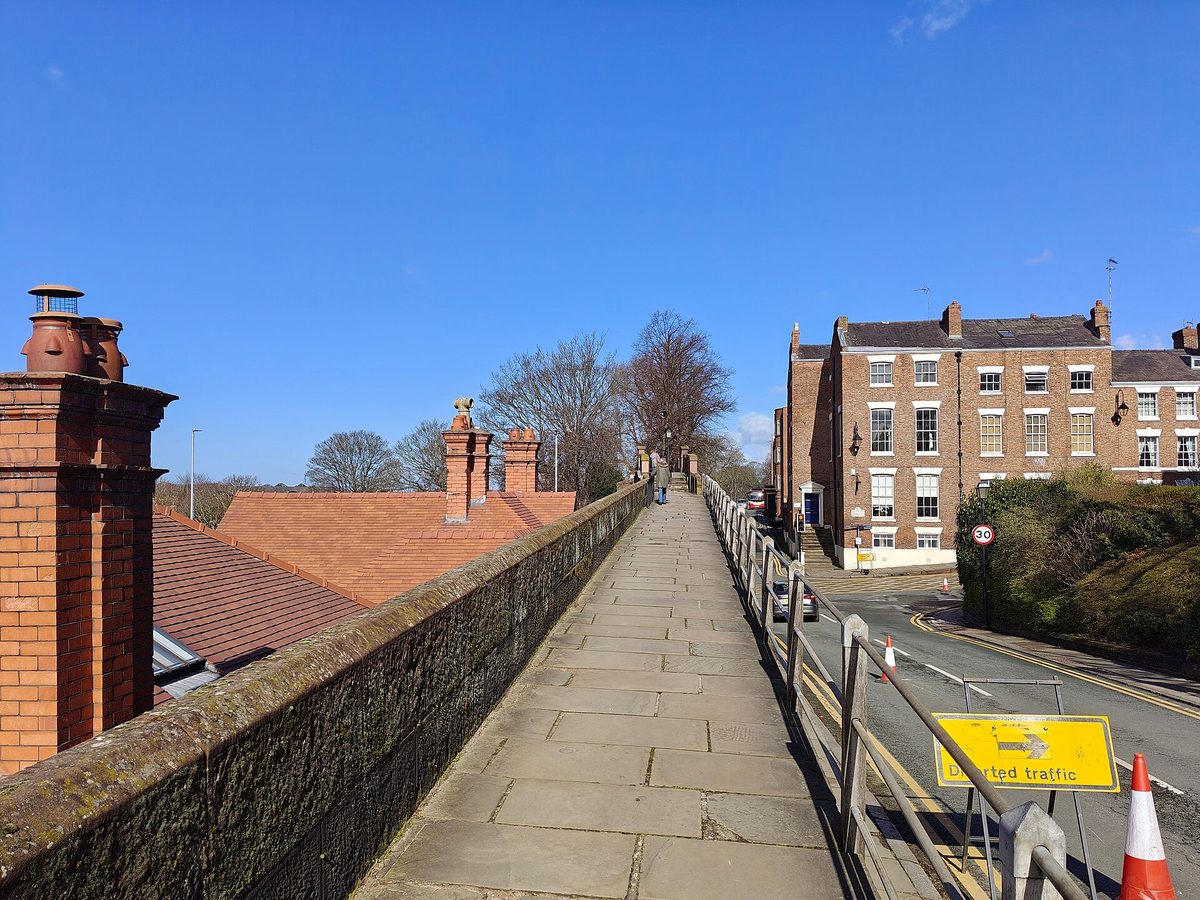
Chester wears its Roman past more openly than almost any English city. Founded as the fortress of Deva, it gives you Britain’s largest known Roman amphitheatre, just outside the city walls, free to wander during daylight, where you can see the arena, the seating banks, and a reconstructed section that helps you picture the 8,000-plus crowd. The famous Chester city walls are largely medieval in their current form, but they follow the Roman line, and you can walk almost the full circuit. Down by the river, the Roman Gardens display rescued columns and a stretch of the old bath system. Chester is one of my favourite historic towns in England full stop, Roman bones under a gorgeous Tudor-and-Georgian skin, and it makes a brilliant base for the northwest.
Verulamium at St Albans
Just outside London, Verulamium was one of the largest towns in Roman Britain, and modern St Albans sits right on top of it. The excellent Verulamium Museum holds some of the finest mosaics outside the Mediterranean and a set of recreated Roman rooms; admission is modest and worth it. But the real joy is Verulamium Park next door, where you can visit a beautifully preserved mosaic and hypocaust (the Roman underfloor heating system, sheltered under its own little building) for free, then walk over to the remains of the city walls and across the road to the only fully excavated Roman theatre in Britain. It’s a genuinely easy day trip from London and a soft introduction to Roman Britain if the long haul north feels daunting.
Wroxeter Roman City
Out in Shropshire, Wroxeter (Roman Viroconium) was once the fourth-largest city in Roman Britain, and today it’s one of the most peaceful Roman sites you’ll visit. The standout is the towering “Old Work,” a surviving fragment of the public baths’ basilica wall, plus the laid-out bath complex. English Heritage has also built a full-scale reconstructed Roman town house on site, raised in 2010 using Roman techniques and a 2,000-year-old building manual, which does more to help you picture daily Roman life than a hundred interpretation boards. Adult admission is around £6 as of 2026, and you’ll often have space to breathe.
How I’d Plan a Roman-Themed Trip
A few practical thoughts after doing this more times than I can count.
For most people, the smart move is to pick a region rather than try to sweep the whole country. A Hadrian’s Wall long weekend based in Hexham or Haltwhistle gives you the Wall plus three or four forts at a humane pace. A Bath-and-the-south loop pairs the Roman Baths with Fishbourne and a day in Roman London on the way through. A gentler option is a day trip to St Albans from London, with Roman London itself the day before.
On membership: if you’re hitting several Hadrian’s Wall forts, the English Heritage versus National Trust question genuinely matters, and I’ve broken it down in detail in my English Heritage vs National Trust comparison. Just remember Vindolanda, the Roman Army Museum, the Roman Baths, and Fishbourne all sit outside both, so factor those in separately.
On timing: the Wall and Wroxeter are exposed and far more enjoyable from late spring to early autumn. Bath and the indoor London sites are fine year-round. And whatever the season, book the popular sites (the Roman Baths above all) online ahead of time.
Finally, on where Roman fits in the wider story. Roman Britain ends around AD 410, centuries before the castles and grand churches most travellers come to see, so don’t try to weld it onto a medieval route by force. If you’re building a longer history trip, my Middle Ages itinerary handles the post-Roman centuries, while the castles and cathedrals guides cover the headline acts that came later. Think of the Romans as chapter one, best enjoyed on its own terms.
Final Thoughts
What I love about the Roman sites in England is how varied they are. You can stand in the wind on a frontier wall built to keep an empire’s edge, then a few days later watch steam rise off a sacred spring the Romans worshipped at, then trace a forgotten amphitheatre under the City of London with office workers eating lunch a few feet above. It’s the same civilisation, scattered across a thousand miles and nearly two thousand years of weather, and somehow so much of it is still here to touch.
If you only manage one, make it Hadrian’s Wall or the Roman Baths. If you can manage a proper trip, weave together a region and take your time. And whichever Roman Britain attractions you choose, go on a clear day, wear good shoes, and let yourself imagine the people who were here first. For more on fitting it all together, my main England travel guide and the broader castles and historic sites guide are the places I’d start.
Research and Source Notes
I researched this article by reading the most useful existing coverage of Roman Britain for visitors (History Hit, Historic England’s Heritage Calling blog, Roman-Britain.co.uk) alongside current ticket and visiting information for Hadrian’s Wall, Housesteads, Vindolanda and the Roman Baths, and by looking at the questions travellers ask most often: the best sites, free entry, walking the Wall, and trip length. I organised the sites by region, hedged every price, and tried to be honest about which sites are worth a special trip.
Facts and prices were verified against official and authoritative sources as of June 2026, including English Heritage (Housesteads, Chesters, Corbridge, Wroxeter, Chester Roman Amphitheatre), the official Roman Baths site (romanbaths.co.uk), the Vindolanda Trust (vindolanda.com and the Roman Army Museum site), Sussex Past for Fishbourne Roman Palace, St Albans Museums for Verulamium and its hypocaust, and the City of London / Guildhall and London Mithraeum pages for Roman London. UNESCO World Heritage status for Hadrian’s Wall and Bath was confirmed via those listings.
All ticket prices are quoted as rough adult walk-up rates “as of 2026” and rounded; they change year to year, online booking usually saves a little, and members of English Heritage or the National Trust enter many sites free. Please confirm current prices and opening times on the official websites before you travel, as details can change without notice.
Photo Credits
- A long stretch of Hadrian’s Wall running across the green crags of Northumberland under a dramatic sky — Photo: Steven Fruitsmaak (CC0) via Wikimedia Commons. Source
- Stone foundations of Housesteads Roman Fort laid out on a high green ridge above the Northumberland countryside — Photo: Victuallers / CC BY-SA 4.0 via Wikimedia Commons. Source
- The steaming green water of the Great Bath at the Roman Baths in Bath, ringed by stone terraces and statues — Photo: Diego Delso / CC BY-SA 4.0 via Wikimedia Commons. Source
- The sandstone Roman and medieval city walls of Chester with a walkway running along the top — Photo: Bill Harrison / CC BY-SA 2.0 via Wikimedia Commons. Source
- Excavated stone foundations of the Roman fort and town at Vindolanda, with archaeologists working in a trench — Photo: Voice of Clam (CC0) via Wikimedia Commons. Source
Frequently asked questions
What is the best Roman site to visit in England?
For sheer preservation and presentation, the Roman Baths at Bath are the best single Roman site in England, with a steaming spring-fed Great Bath and a superb museum. For atmosphere and scale, Hadrian's Wall wins. I'd happily call them joint champions; many visitors do both on one trip.
Can you walk on Hadrian's Wall for free?
Yes. The Wall itself runs across open countryside, and walking alongside or on accessible stretches is completely free. You only pay to enter the forts and museums, such as Housesteads, Chesters, or Vindolanda. The Hadrian's Wall Path National Trail follows the whole line if you fancy a multi-day walk.
How much does it cost to visit the Roman Baths in Bath?
As of 2026, adult admission is around £20 and up, with higher prices at peak times and a small saving for booking online in advance. There's an optional guided tour for a few pounds extra. Always check the official Roman Baths website for current rates, as prices vary by date.
Are Roman ruins in England free to visit?
Many are. Roman London (the amphitheatre, Mithraeum, and London Wall), Chester's amphitheatre, and the mosaic, hypocaust, and theatre at St Albans are all free. The forts along Hadrian's Wall and the Roman Baths charge admission. My free historic sites guide rounds up the best no-cost Roman remains in detail.
Is Stonehenge a Roman site?
No. Stonehenge is prehistoric, built thousands of years before the Romans arrived in Britain, so it predates Roman Britain by a very long stretch. Romans did visit it, but they didn't build it. If you're touring ancient England, it's worth seeing, just file it under prehistory rather than Roman remains.
How many days do you need to see the main Roman sites?
To cover the headliners properly, I'd allow around four to five days: two for a Hadrian's Wall long weekend, one for Bath, one for Roman London, and a half-day each for somewhere like St Albans or Fishbourne. You can absolutely do a satisfying single region in two or three days.