Sheet 28 · England Castles and Historic Sites · 16 min read
Best Cathedrals in England
The best cathedrals in England, ranked by a repeat visitor: Canterbury, York, Durham, Salisbury and more, with 2026 entry tips, evensong and what to see.
 Sheet 28
Contents 11 sections
I have lost count of how many times I have walked into an English cathedral expecting to be impressed and instead been genuinely floored. It happens at York, where the nave opens up like the inside of a stone whale. It happens at Durham, where the great Norman columns make you feel about four years old. And it happened, most unexpectedly, at Wells, on a wet Tuesday, when I rounded a corner and met those scissor arches face to face.
So let me save you some guesswork.
The best cathedrals in England are Canterbury, York Minster, Durham, Salisbury, Winchester, Lincoln, Ely, Wells and Gloucester. Each one is the seat of a bishop, centuries old, and free to enter for prayer or a service even where sightseeing now carries a charge. If you only see two, make them Durham and York for sheer Norman-to-Gothic drama.
That is the short version. Below is everything I have learned sitting in the back pews of these places, often during evensong, often with cold hands and a cheap paper service sheet, working out which ones are actually worth your day.
Quick Answer: The Best Cathedrals in England, Ranked by a Repeat Visitor
If you want a fast answer, here is mine. The best cathedrals in England, in the order I would send a first-time visitor, are Durham (the finest Norman building in Europe and a UNESCO site), York Minster (the largest medieval cathedral in England, unmatched stained glass), Canterbury (the mother church of the Anglican world and the oldest), Salisbury (the tallest spire and a 1215 Magna Carta), Wells (the most poetic, with the scissor arches), Ely (the “Ship of the Fens” with its octagon lantern), Lincoln (a hilltop giant that was once the world’s tallest building), Winchester (England’s longest medieval nave and Jane Austen’s grave) and Gloucester (the fan-vaulted cloister of Harry Potter fame).
Pick by region and by what moves you. I will break all of that down. First, the table.
English Cathedrals to Visit at a Glance
A quick word on prices. Sightseeing charges change every year and vary by season, day and even time of day, so treat every figure here as a rough guide as of 2026 and check the cathedral’s own website before you set off. Crucially, it is always free to enter for worship, prayer or to light a candle, even at the ones that charge tourists.
| Cathedral | City | Architecture / era | Don’t miss | Rough entry (as of 2026) |
|---|---|---|---|---|
| Durham | Durham | Norman / Romanesque | Nave columns; Galilee Chapel; tower climb (325 steps) | Suggested donation ~£5; tower ~£10 |
| York Minster | York | Gothic | Great East Window; Chapter House; nave | Around £13–28 sightseeing; valid 1 year |
| Canterbury | Canterbury | Norman + Gothic | Becket’s martyrdom site; crypt; quire | Around £18–21 by season |
| Salisbury | Salisbury | Early English Gothic | Tallest spire (123m); 1215 Magna Carta | Donation-led; tower tour extra |
| Wells | Wells | Early English Gothic | Scissor arches; clock; Vicars’ Close | Around £14; under-18s free |
| Ely | Ely | Norman + Gothic | The Octagon lantern; Lady Chapel | Charged sightseeing; service free |
| Lincoln | Lincoln | Gothic | West front; St Hugh’s Choir; views | Charged sightseeing; service free |
| Winchester | Winchester | Norman + Gothic | Longest nave; Austen’s grave; crypt | Annual pass; small discount online |
| Gloucester | Gloucester | Norman + Perpendicular | Fan-vaulted cloister; Edward II’s tomb | Free; donation welcome |
Now, the cathedrals themselves, grouped the way I actually think about them.
The Norman Heavyweights: Durham, Ely and the Romanesque Story
Before England went Gothic, it built in the Romanesque style the Normans brought after 1066: round arches, colossal cylindrical piers, walls thick as a castle’s. If that muscular, ancient look is what you are after, three names matter.
Durham Cathedral
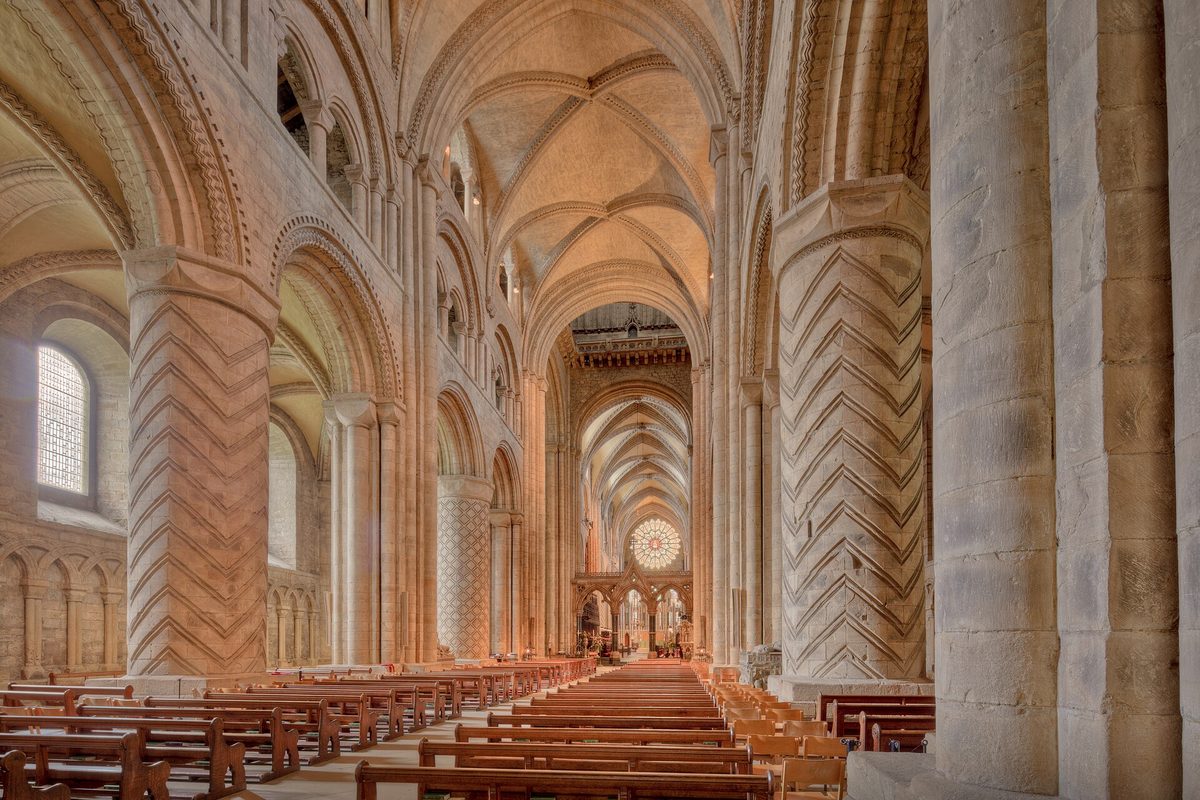
Durham is, for my money, the single most impressive building in England, and I do not say that lightly. It sits on a wooded rock in a loop of the River Wear, with the castle beside it, the whole peninsula a UNESCO World Heritage Site. Walk in and the nave stops you dead: enormous drum columns carved with chevrons and lozenges, holding up the first major stone-vaulted roof of its kind in Europe. It is nearly a thousand years old and it feels both heavy and impossibly confident.
Behind the high altar lies the shrine of St Cuthbert; at the west end, the cool, low Galilee Chapel holds the tomb of the Venerable Bede. There is no fixed admission charge, but the cathedral asks visitors who can to give around £5 as of 2026 to keep the place standing. The central tower climb, around £10, is 325 steps to a view over the whole city. Children under eight cannot climb it, for what should be obvious reasons once you are up there. If you read one thing before you go, make it my UNESCO World Heritage Sites in England guide, because Durham and Canterbury both feature.
Ely Cathedral
They call Ely the “Ship of the Fens” because it rides above the flat Cambridgeshire landscape for miles around, visible long before you reach it. The thing everyone comes for is the Octagon: after the old central tower collapsed in 1322, the medieval builders did something audacious and replaced it with an eight-sided lantern of stone and timber that floods the crossing with light from above. Stand directly underneath and look up. It is one of the great “how on earth” moments in English architecture, and the historian Nikolaus Pevsner rated it among the finest things ever built in this country.
The Lady Chapel, the largest attached to any English cathedral, still bears the scars of the Reformation in its smashed-off carvings, which is its own kind of history lesson. Ely charges for sightseeing as of 2026, with services free as ever. It pairs beautifully with a wider medieval-themed trip through the eastern counties.
The Gothic Giants: York, Lincoln and Canterbury
Gothic is the style most people picture when they think cathedral: pointed arches, soaring height, walls dissolved into glass. England did it superbly, and these three are the giants.
York Minster
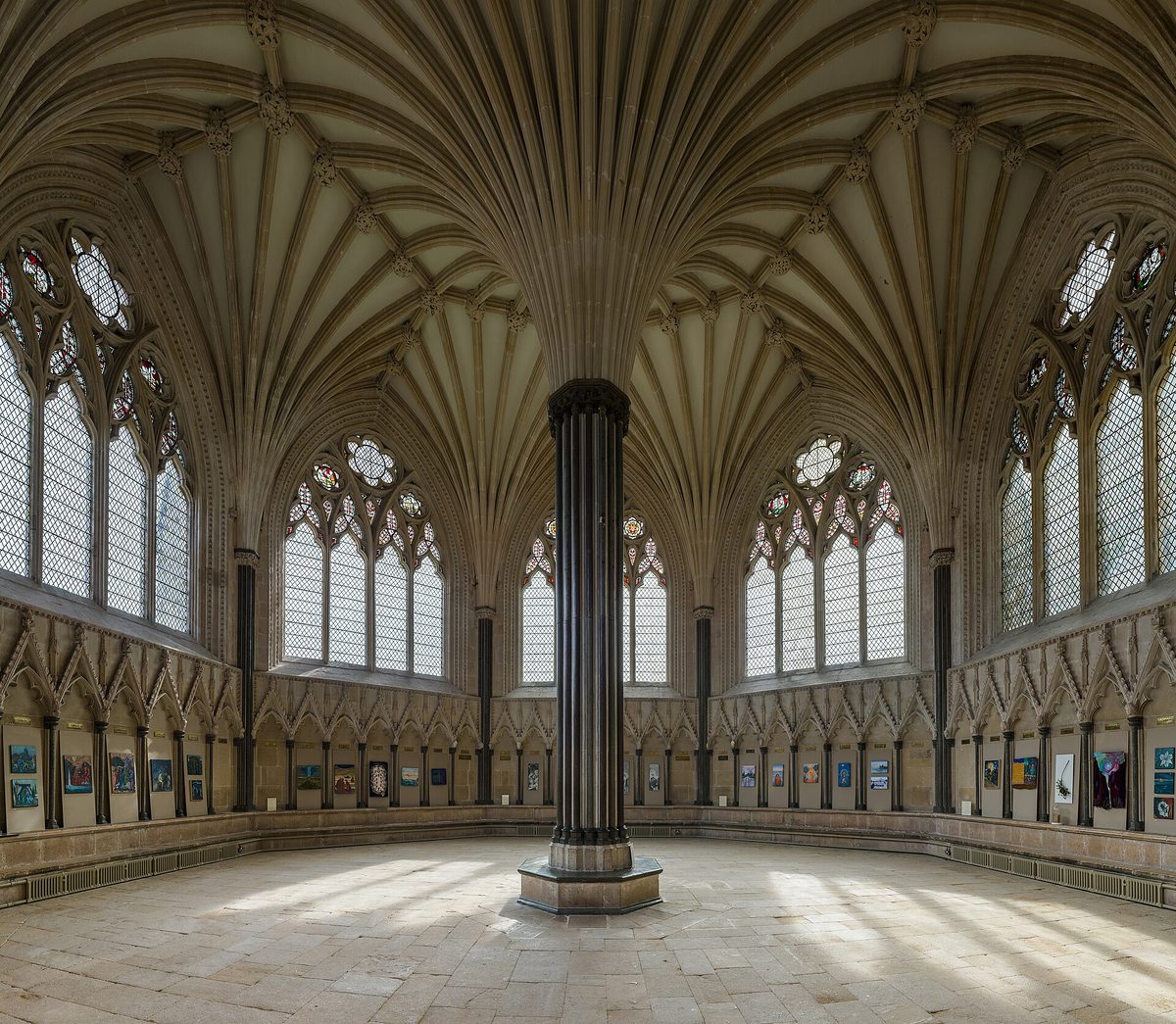
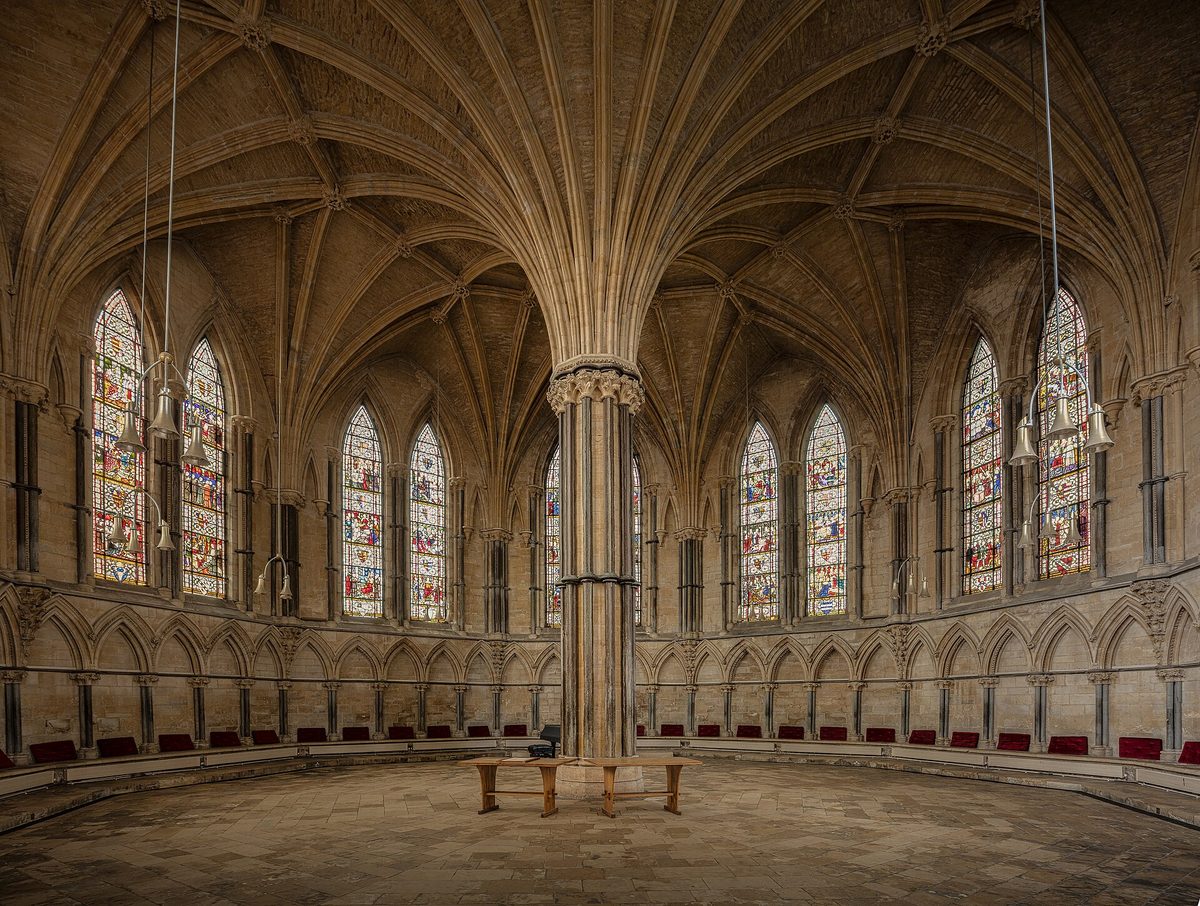
York Minster is the biggest medieval cathedral in England and the largest Gothic church in northern Europe, and it earns every superlative. The Great East Window is the size of a tennis court and the largest expanse of medieval stained glass in the country; the octagonal Chapter House has a vaulted ceiling with no central column at all. I always tell people to walk in, then stop and just look up before doing anything else.
Sightseeing tickets run roughly £13 to £28 as of 2026 depending on what you add on, but here is the part worth knowing: your ticket is valid for a whole calendar year, includes several children, and entry is always free if you come for worship. York is the easy centrepiece of a few days exploring the best cities to visit in England, and the historic towns of England nearby make natural side trips.
Lincoln Cathedral
Lincoln does not get the crowds it deserves, and that is partly a quirk of geography: it sits at the top of a genuinely steep hill, up a street honestly named Steep Hill. Make the climb. The west front is a vast screen of arcading, and for 238 years, after the central spire was finished, Lincoln was reputedly the tallest building in the world, beating the Great Pyramid. The spire is long gone, blown down in a storm, but the scale inside remains breathtaking, and St Hugh’s Choir is some of the earliest pure Gothic in England. Sightseeing is charged as of 2026; services are free.
Canterbury Cathedral
Canterbury is the senior cathedral of them all: founded in 597, the seat of the Archbishop of Canterbury, mother church of the worldwide Anglican Communion. Its history is heavier than its stone. In 1170 Archbishop Thomas Becket was murdered here by knights of Henry II, and the spot in the north-west transept is marked simply and chillingly; the medieval pilgrimage to his shrine is the one Chaucer’s pilgrims are riding toward.
Architecturally it is a layered thing, Norman crypt below and lofty Gothic quire above. Sightseeing tickets run around £18 from October to March and £19.50 to £21 in the busier months as of 2026, though attending a service or praying in the chapels is always free. It is one of the most rewarding English cathedrals to visit, and genuinely doable as a day from the capital. I have laid out exactly how in my Canterbury and Dover day-trip guide.
The Most Poetic Ones: Salisbury, Wells and Winchester
Some cathedrals impress by sheer size. These three win on grace, setting and atmosphere, and they are among the most beautiful cathedrals England has.
Salisbury Cathedral
Salisbury is the one in the painting. Constable’s view across the water meadows is, for many people, the image of an English cathedral. It was built fast, mostly in one Early English Gothic campaign in the 13th century, which gives it a rare unity of style, and it is topped by the tallest spire in Britain at around 123 metres. Inside the Chapter House sits one of only four surviving 1215 copies of Magna Carta, and it is the best-preserved of them.
Entry is donation-led as of 2026, with tower tours up into the spire structure costing extra and booked separately. The medieval clock here is sometimes claimed to be the oldest working clock in Europe, which makes a nice argument with the one at Wells.
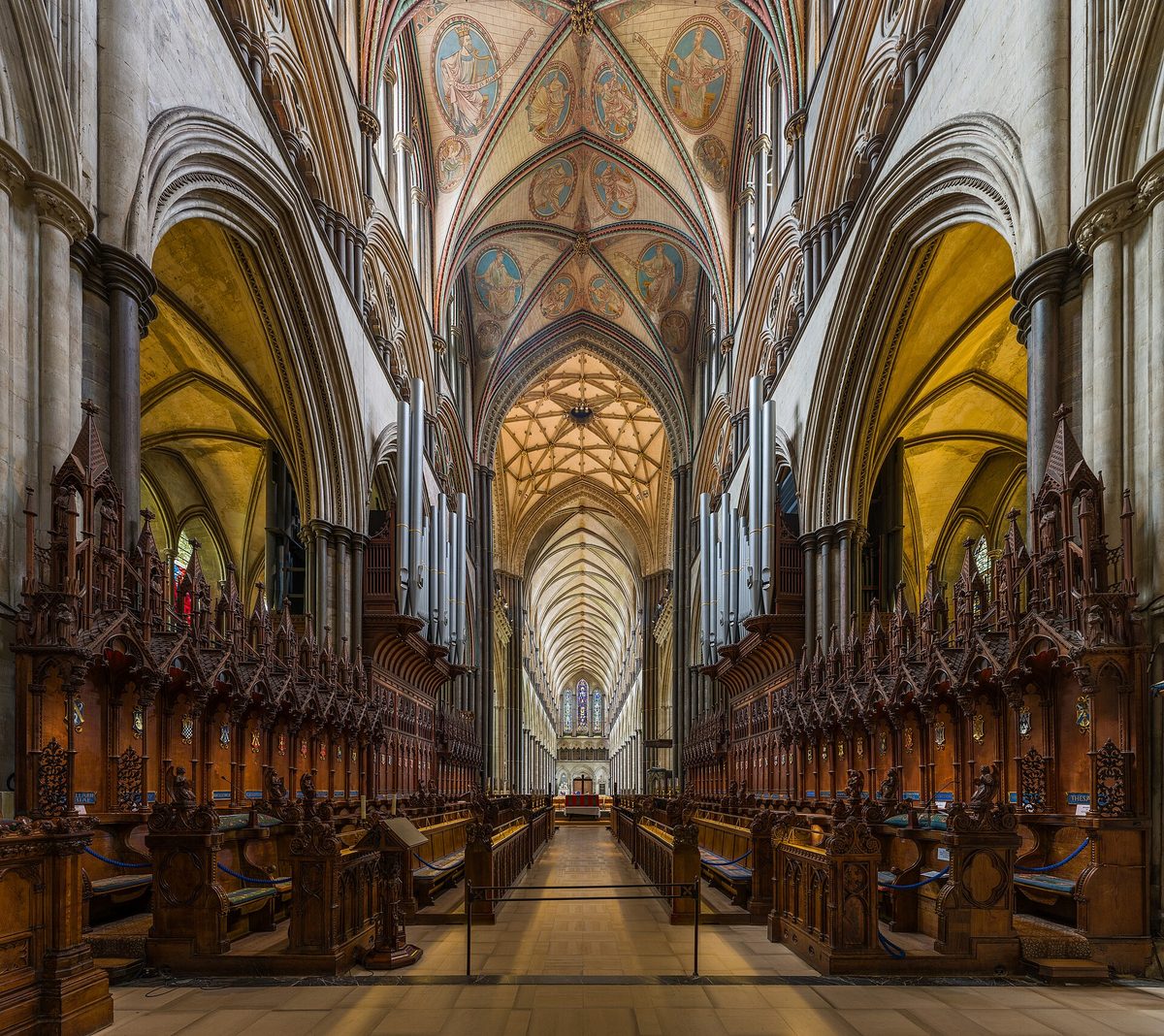
Wells Cathedral
Wells is my quiet favourite. It is the smallest of England’s cathedral cities, and the cathedral dominates it completely. The west front is a vast gallery of medieval sculpture, hundreds of carved figures, the largest such collection in the country. But the showstopper is inside: the scissor arches, built in the 1330s as an ingenious fix when the central tower started to sink, crossing like giant stone tongs. There is nothing else quite like them anywhere.
Do not leave without seeing the 14th-century astronomical clock, where a little figure called Jack Blandifer kicks two bells every quarter hour, and step outside to Vicars’ Close, the only complete medieval street left in England, still lived in. Sightseeing is around £14 as of 2026 with under-18s free and a suggested donation welcome; worship is always free.
Winchester Cathedral
Winchester has the longest medieval nave in Europe, a great Norman backbone reclothed in Gothic, and it rewards a slow walk from end to end. Literary pilgrims come for Jane Austen, buried in the north nave aisle under a plain black stone near the house where she died in 1817; the memorial brass nearby was added later, once the world worked out who she was. The early Norman crypt floods in winter and is the home of Antony Gormley’s solitary figure sculpture, standing in the water, which is worth timing a visit around. Entry works as an annual pass as of 2026, usually a pound or so cheaper booked online. Winchester was the old Saxon capital, and it threads naturally into any Tudor England trail given its Tudor and Stuart history.
The Wildcard: Gloucester and the Perpendicular Cloister
Gloucester earns its own category because of the cloister. England invented the Perpendicular style here in the 14th century, and the result is a fan-vaulted cloister so beautiful it stops conversation, all ribbed stone fanning out overhead. If it looks familiar, that is because it doubled as Hogwarts corridors in the early Harry Potter films, which has done wonders for its visitor numbers.
There is more than film trivia, though. The cathedral holds the elaborate tomb of King Edward II, deposed and murdered nearby at Berkeley Castle in 1327, and the change in his fortunes funded much of this glorious rebuilding. Entry is free with a donation welcome as of 2026, which makes it one of the more generous free historic sites in England for what you get.
Westminster Abbey vs Westminster Cathedral: Clearing Up the Confusion
This trips up almost everyone in London, so let me settle it. They are two completely different buildings, half a mile apart.
Westminster Abbey is the famous one: a 13th-century Gothic church, Anglican, a “Royal Peculiar” answering directly to the Sovereign. It is where coronations happen and where more than 3,000 people are buried or commemorated, from Isaac Newton and Charles Darwin to Chaucer and Dickens. It charges for admission. Strictly speaking, though, it is an abbey, not a cathedral, despite its scale.
Westminster Cathedral is the Roman Catholic mother church of England and Wales, finished in 1903 in a striking striped Byzantine style of red brick and pale stone, with glittering mosaics inside. Entry to the cathedral itself is free, and you can take a lift up the campanile for a great view. If you want the architecture without the abbey’s crowds and ticket price, it is a lovely, calm surprise.
What to See Inside Any Great Cathedral
After enough visits you learn where to look. A quick checklist that applies almost everywhere:
- The west front and towers. Stand back outside first; the facade is the cathedral’s calling card. Many towers can be climbed for a fee.
- The nave, looking up. This is where height and light do their work. Resist the urge to start reading plaques and just take in the volume.
- Stained glass. Medieval glass is rare and precious; York and Canterbury are the giants here, but almost every cathedral has something jewel-like.
- The cloisters. Often the most peaceful corner, especially at Gloucester and Salisbury.
- Tombs and shrines. Kings, saints, bishops and the occasional novelist. They are the cathedral’s memory.
- The crypt. Usually the oldest surviving part, cool and atmospheric, as at Canterbury and Winchester.
Evensong and Visiting Etiquette
If you do one thing I recommend in this whole article, go to choral evensong. It is sung most days, usually around 5.15 to 5.30pm on weekdays and earlier at weekends, it lasts roughly 45 minutes to an hour, and at almost every English cathedral it is completely free, no sightseeing ticket required. You sit in the quire, often closer to the heart of the building than day visitors ever get, and the choir does the work while you simply listen. You do not need to believe anything, sing anything or know anything; everyone is welcome, and there is an order of service to follow along.
A few simple courtesies. Arrive a little early and be seated before it starts. Keep quiet, switch your phone to silent, and do not photograph during worship. Dress is casual but tidy. Note that during a service the tourist routes, towers and crypts are usually closed, so come for the music, not the sightseeing. The Association of English Cathedrals and the Church of England both run service finders online if you want to plan around a specific evening.
How to Choose if You Only Have Time for Two or Three
Most people visiting England are not on a cathedral tour; they are squeezing one or two into a wider trip. Here is how I would choose.
If you are in the north, do Durham and York. Between them they tell the entire Norman-to-Gothic story, they are an hour apart by train, and they are both genuinely world-class. This is the strongest pairing in the country.
If you are near London, take the day trip to Canterbury, then see Westminster Abbey and the free Westminster Cathedral in town for contrast.
If you are touring the south-west or doing Bath, route through Wells and Salisbury; Wells is a short hop from Bath, whose own honey-coloured Bath Abbey is well worth an hour, and Salisbury sits near Stonehenge.
If history is your thing, Canterbury, Lincoln and Ely reward the deepest reading.
And if you are weaving cathedrals into a bigger heritage trip, my guides to England’s castles and historic sites and the best castles in England cover the fortresses that so often sit in the very same cities, while the stately homes of England make a gentler counterpoint. For where to base yourself between them, see my notes on where to stay in England and the wider England travel guide.
Final Thoughts
England’s cathedrals are the best free, or near-free, theatre in the country. Even the ones that now charge for sightseeing will let you in for nothing to sit through evensong, and that is consistently the most moving way to experience them, the music doing what the architecture started.
If I had to send you to just two, I would say Durham and York, no contest, for the full sweep from Norman muscle to Gothic light. Add Wells if you want the one that surprises people most. Whatever you choose, look up when you walk in, stay for a service if you possibly can, and do not let the entry desk be the most memorable thing about your visit.
Research and Source Notes
Coverage was checked against the leading published guides to England’s cathedrals, including Forever Karen, Historic England’s Heritage Calling, Countryfile, Martin Randall Travel and Frommer’s, and against the questions travellers most often ask. I aimed to improve on those by adding hedged 2026 pricing, evensong specifics, the Westminster Abbey vs Cathedral distinction and a “choose two or three” section most listicles omit.
Entry, donation, evensong and feature facts were verified against official and authoritative sources and hedged as “around” / “as of 2026” because they change seasonally: Canterbury Cathedral (canterbury-cathedral.org), York Minster (yorkminster.org), Durham Cathedral (durhamcathedral.co.uk), Wells Cathedral (wellscathedral.org.uk) and the Bath & Wells Diocese, Salisbury Cathedral (salisburycathedral.org.uk), Winchester Cathedral (winchester-cathedral.org.uk), plus the Association of English Cathedrals (englishcathedrals.co.uk) and the Church of England for evensong guidance. Architectural and historical detail (Pevsner on Ely, the scissor arches, the Octagon, Becket, Magna Carta, the Gloucester fan vault) was cross-checked against Britannica, Wikipedia and the cathedrals’ own heritage pages. Prices were last reviewed June 2026; always confirm on the cathedral’s website before travelling.
Photo Credits
- The Gothic nave and stained glass of York Minster, one of the best cathedrals in England — Photo: Michael D Beckwith (CC0) via Wikimedia Commons. Source
- The Norman nave and great drum columns of Durham Cathedral — Photo: Michael D Beckwith (CC0) via Wikimedia Commons. Source
- Salisbury Cathedral and its record-breaking spire seen across the water meadows — Photo: Diliff / CC BY-SA 3.0 via Wikimedia Commons. Source
- The medieval scissor arches at Wells Cathedral, among the most beautiful cathedrals in England — Photo: Diliff / CC BY-SA 3.0 via Wikimedia Commons. Source
- The towering west front of Lincoln Cathedral on its hilltop — Photo: Michael D Beckwith (CC0) via Wikimedia Commons. Source
Frequently asked questions
What is the oldest cathedral in England?
Canterbury Cathedral is the oldest, with its origins going back to 597, when St Augustine arrived to convert the Anglo-Saxons. The present building is mostly Norman and Gothic, since the original was rebuilt many times, but the foundation itself is the most ancient Christian site of its kind in the country and the seat of the Archbishop of Canterbury.
What is the largest cathedral in England?
York Minster is the largest medieval cathedral in England and the biggest Gothic church in northern Europe, famous for its vast Great East Window. By footprint and internal volume it is the giant among the historic cathedrals. St Paul's in London is also enormous, but it is a much later, 17th-century Baroque building rather than a medieval one.
Is it free to visit cathedrals in England?
It varies. Many big cathedrals, including Canterbury, York, Wells and Ely, now charge for sightseeing, roughly £14 to £28 as of 2026. But it is always free to enter for worship, to pray or to light a candle, and free for attending services like evensong. A few, such as Gloucester, ask only for a donation, so check each website first.
Which English cathedral has the tallest spire?
Salisbury Cathedral has the tallest church spire in Britain, rising to around 123 metres, a record it has held since the 1500s. You can take a tower tour up into the structure for an extra fee and an unforgettable view. Lincoln Cathedral once topped it with a wooden spire that made it the tallest building on earth, but that spire blew down in a storm centuries ago.
What should I wear to a cathedral or evensong?
There is no strict dress code at English cathedrals; smart-casual is completely fine, and tourists in everyday clothes are normal. For evensong I would simply dress tidily and respectfully, as you would for any quiet, formal occasion. Shoulders covered and no loud slogans is plenty. The main courtesies are about behaviour, staying quiet and switching off your phone, rather than what you wear.
How much time do I need at a cathedral?
Allow around an hour to an hour and a half for a proper visit to a major cathedral, longer if you climb a tower or sit through evensong, which adds about 45 minutes to an hour. A quick look round takes 30 to 40 minutes. The giants like York, Durham and Canterbury genuinely reward a slower half-day if you can spare it.