Sheet 93 · Where to Stay in England · 36 min read
Where to Stay in England: Best Bases, Areas and Accommodation
Decide where to stay in England by route, trip length, transport, budget, families, coast, countryside, city bases, pubs, inns, cottages, and hotels.
 Sheet 93
Contents 24 sections
Where you stay in England can make the whole trip feel easy, or quietly turn it into a daily negotiation with trains, parking, luggage, restaurant hours, and the map app. This guide to where to stay in England starts with location logic, so your base works for the trip instead of against it.
That sounds dramatic until you start planning. London looks convenient for everything because it is the capital. The Cotswolds look like one small countryside place until you realize the villages are spread across a wide rural region. The Lake District looks compact until you choose a base on the wrong side of the lake for the walks you want. Cornwall looks romantic until every dinner, beach, and harbor requires another narrow-lane drive. A cheap hotel outside a city looks sensible until the taxi fares and lost time start eating the savings.
So this guide is not a hotel roundup. It is not trying to name the one perfect inn, apartment, B&B, family hotel, or country-house stay. Those change too quickly, and they depend too much on your dates, budget, room needs, and taste.
This is the more useful question: where should you base yourself in England?
Once that decision is right, the accommodation search becomes much simpler. You can decide whether you want a hotel near a station, a pub with rooms in a village, a Cotswolds inn with parking, a Lake District B&B near a bus route, a Cornwall cottage for a week, a family apartment in London, a country-house hotel, or a budget chain hotel that does exactly what it needs to do.
If you are still building the shape of the trip, use this guide with the England itinerary planner, best places to visit in England, and transport in England. If you already know your destination, keep the deeper regional guides nearby: London travel guide, the Cotswolds in detail, my Lake District guide, Cornwall and Devon together, and England driving routes. For pub rooms, village dinner access, hotel breakfasts, market lunches, and food-hour traps, use the English food guide before booking a remote stay.
Quick Answer: Where To Stay In England For Most Trips
For a first trip to England, most visitors should stay in London for the opening part of the trip, then move to one or two well-chosen bases outside London if they want countryside, coast, historic cities, or national parks. Do not stay in London for the whole trip if your dream is the Cotswolds, the Lake District, Cornwall, Devon, York, Northumberland, or slow village evenings. Do not move every night either. England rewards good bases more than constant hotel changes.
If I had to simplify it:
| Trip Style | Best Places To Stay | Why It Works | Watch Out For |
|---|---|---|---|
| First time, 5-7 days | London plus one second base such as Bath, York, Oxford, or the Cotswolds | You get the capital and one different England experience | Too many day trips from London can become tiring |
| First time, 10 days | London, Bath or Cotswolds, York or Lake District | A strong mix of city, countryside, heritage, and north/south contrast | Three bases is usually enough |
| First time, 14 days | London, Bath/Cotswolds, York, Lake District or Cornwall/Devon | Enough time for four meaningful bases | Do not add every famous region |
| No-car trip | London, Bath, York, Oxford, Cambridge, Brighton, Canterbury, Durham, Winchester, Liverpool, Manchester | Rail-friendly bases with walkable centers | Countryside and villages need stricter planning |
| Road trip | London without car, then Bath/Oxford/Cotswolds, Devon/Cornwall, Lake District, Yorkshire, Northumberland, Dorset, or Peak District | Use the car where it improves the trip | Parking and dinner access matter as much as scenery |
| Countryside villages | Cotswolds, Peak District, Yorkshire Dales, New Forest, Lake District valleys | Best for inns, walks, pubs, gardens, and slow days | Romantic bases can be awkward without a car |
| Coast | St Ives, Falmouth, Dartmouth, Salcombe, Lyme Regis, Weymouth, Whitby, Brighton, Southwold, Bamburgh/Seahouses | Seaside evenings are different from seaside day trips | Summer booking pressure and parking can be serious |
| Families | London South Bank/South Kensington, York, Bath, Devon, Dorset, Lake District, Cotswolds with car | Good mix of museums, parks, trains, beaches, walks, and flexible lodging | Check room configuration before trusting “family friendly” |
| Budget travelers | London near useful transport, university cities, northern cities, chain hotels near stations, apartments for longer stays | Saves time and transport if chosen carefully | Cheap outside the center is not cheap if transport is poor |
| Romantic/slow trip | Bath, York, Cotswolds, Lake District, Cornwall, Devon, country inns, pub rooms, small historic towns | Strong evening atmosphere and less commuting | Book early for weekends and peak seasons |
My default base rule is this: if you have fewer than five nights in England, stay mostly or entirely in London unless you have one very clear second destination. If you have seven to ten nights, use two or three bases. If you have two weeks, use three or four bases. If you have three weeks, you can build a proper multi-region trip, but even then I would rather use fewer bases well than collect hotel keys like souvenirs.
The Base Rule: Choose Location Before Accommodation
The most common mistake is choosing a charming stay before choosing a practical base.
I understand why it happens. Accommodation websites are seductive. A room with beams, a roll-top bath, a sea view, a garden, a four-poster bed, or a pub downstairs can make the map seem less important. But in England, the location does a lot of the work. A beautiful inn can be wrong if it leaves you driving after dinner. A country cottage can be wrong if every grocery run becomes an errand. A city hotel can be wrong if it is “central” in a way that is central to nothing you are doing.
Before you book the room, answer these questions:
- What are the next two days built around?
- Can you reach the base without making arrival day miserable?
- Can you eat dinner without a stressful drive or expensive taxi?
- If you are using trains, how far is the station with luggage?
- If you are driving, is parking included, reserved, or realistic?
- If it rains, does the base still give you useful options?
- Does the place work after dark?
- Are you moving hotels because the route needs it, or because the map looks exciting?
That last question matters. A good England itinerary has movement, but it also has roots. One-night stays can be useful for positioning. Too many one-night stays make the trip feel like a packing exercise with sightseeing attached.
I usually like two nights as the minimum for most non-London bases. Three nights is better for the Cotswolds, Lake District, Cornwall, Devon, Yorkshire, Northumberland, and any road-trip region where the pleasure is not one monument but the rhythm of a place.
Should You Stay In London Or Outside London?
London is the right base for London. It is also a good base for some day trips. It is not the right base for all of England.
Stay in London if this is your first visit, if you have three to five nights, if your main goals are museums, theatre, royal sights, neighborhoods, food, shopping, and classic day trips, or if you want to avoid moving luggage. London also works well at the start of a longer England trip because you can arrive, recover, use public transport, and delay any car rental until you actually need a car.
Move outside London when the trip becomes about evenings somewhere else. Bath is better when you can see it after the day-trippers leave. York is better when you wake up inside the walls. The Cotswolds are better when you are not racing back to London after a village lunch. The Lake District is not a London day trip in any meaningful holiday sense. Cornwall and Devon deserve nights, not a heroic commute. Northumberland, Yorkshire, Dorset, and the national parks ask for local bases.
Here is the practical version:
| Stay In London When… | Move Outside London When… |
|---|---|
| You have 3-5 nights total | You have a week or more and want another region properly |
| Your priorities are London sights and one easy day trip | Your priorities include countryside, coast, national parks, or northern England |
| You dislike hotel changes | You are spending too much daily time going in and out of London |
| You want theatre, museums, restaurants, and public transport | You want slower evenings, smaller towns, inns, beaches, walking, or rural drives |
| Your day trips are Windsor, Oxford, Cambridge, Brighton, Canterbury, or Bath at a push | Your targets are Cotswolds villages, Lake District valleys, Cornwall, Devon, York, Durham, Northumberland, or Dorset |
For detailed London neighborhood choices, use the complete London guide. For the day-trip decision, use London day trip options. The important thing here is to resist the idea that London is automatically the safest base. It is safe only when it matches the trip.
How Many Places Should You Stay In England?
The number of bases should match the number of nights, not the number of places you have saved.
For three nights, stay in one place. That will usually be London, unless the entire trip has a specific purpose such as a Bath weekend, a York city break, or a Lake District walking trip.
For five nights, one base can still work, especially if it is London with one or two day trips. Two bases can work if you want a clear contrast: London plus Bath, London plus York, London plus Oxford/Cotswolds, London plus Brighton, or London plus a countryside inn. I would not use three bases in five nights unless there is a strong practical reason.
For seven nights, two bases is comfortable. London plus Bath, London plus York, London plus Cotswolds, London plus Lake District, or London plus Cornwall/Devon can work depending on transport and ambition. Three bases can work if the distances are sensible, but it will feel more like a route than a stay.
For ten nights, three bases is usually the sweet spot. London, Bath/Cotswolds, and York is a classic. London, Cotswolds, and Lake District works if you handle transport well. London, Devon, and Cornwall can work if the southwest is the focus. London, York, and Northumberland is a strong northern route.
For fourteen nights, three or four bases is enough for most travelers. I might choose London, Bath/Cotswolds, York, and Lake District. Or London, Cotswolds, Devon, and Cornwall. Or London, York, Durham/Newcastle, and Northumberland. Four bases gives variety without making the trip all movement.
For three weeks, you can use five or six bases if you want a broad England trip. Even then, I would still avoid changing hotels every night. England is dense with places to visit, but that does not mean a dense itinerary feels good.
| Trip Length | Sensible Number Of Bases | Example Shape |
|---|---|---|
| 3 nights | 1 | London only; Bath only; York only |
| 5 nights | 1-2 | London plus Bath or York |
| 7 nights | 2 | London plus Cotswolds, York, Lake District, or Devon |
| 10 nights | 3 | London, Bath/Cotswolds, York |
| 14 nights | 3-4 | London, Cotswolds, York, Lake District |
| 21 nights | 5-6 | London, Bath/Cotswolds, Cornwall/Devon, York, Lake District, Northumberland |
If you are unsure, choose fewer bases. You can always day trip from a good base. You cannot make a tired hotel-change day feel graceful just because the route looked efficient on paper.
Best Places To Stay In England For First-Time Visitors
For most first-time visitors, I would build around London plus one or two of Bath, York, Oxford, the Cotswolds, and the Lake District. Those places give a strong first impression of England without requiring the whole trip to become a long-distance puzzle.
London is the obvious starting point. It has the major arrival airports, the largest transport network, and enough sights for any length of trip. It is also expensive, busy, and not a countryside base. Treat it as a real part of the trip, not just a launchpad.
Bath is a beautiful second base for Roman history, Georgian architecture, good food, walkable streets, and access to Stonehenge, Bristol, the Cotswolds, and the southwest. It is easier to enjoy Bath when you stay overnight instead of treating it as a rushed London day trip.
York is one of the best historic city bases in England. It gives you medieval streets, city walls, York Minster, museums, rail access, and a strong jumping-off point for Yorkshire, Durham, the North York Moors, and, with more time, Northumberland.
Oxford and Cambridge are excellent short-stay or day-trip bases, especially for university architecture, museums, punts, bookshops, gardens, and train-friendly travel. For many first trips, I would visit one rather than both unless universities are a major theme.
The Cotswolds are the classic countryside base, but they need more planning than their reputation suggests. A car, driver, tour, or very disciplined no-car base makes a big difference. If the Cotswolds matter to you, consider staying one or two nights instead of trying to squeeze every famous village into one day from London.
The Lake District is the first national-park base many visitors consider. It is beautiful, but it is not a quick add-on to London. Stay there if you want lakes, walks, boats, mountain views, stone villages, wet-weather coziness, and a slower outdoor rhythm.
Cornwall and Devon are better for longer trips, especially if coast, beaches, moorland, seafood, gardens, and harbors are central to the holiday. They can be awkward for a first short England trip because they sit far west, but they are wonderful when given enough nights.
Best City Bases In England Without A Car
If you are not renting a car, choose cities and towns where the station, accommodation, restaurants, sights, and day trips work together.
London is the strongest no-car base in England. The Tube, buses, walking, river services, black cabs, trains, and day-trip rail connections make a car unnecessary for most visitors.
Bath is compact and walkable once you arrive. The station is central, and you can visit the Roman Baths, Royal Crescent, Bath Abbey, museums, gardens, restaurants, and riverside areas without driving. Day trips to Stonehenge, Cotswolds tours, Bristol, Salisbury, and Wells are possible with tours or transport planning.
York is excellent without a car. The station is close enough to the center for many travelers, the old city is walkable, and rail links make it useful for wider northern routes.
Oxford and Cambridge both work well by train and on foot. The main complication is not whether you need a car. It is choosing a base close enough to the station, colleges, museums, or bus routes for your plans.
Brighton is one of the easiest seaside bases by train from London. Stay there if you want coast, restaurants, nightlife, the Royal Pavilion, lanes, pier energy, and access to the South Downs without a car-heavy trip.
Canterbury gives you cathedral-city atmosphere, rail access from London, and routes toward the Kent coast, Dover, and Whitstable.
Durham is small, beautiful, and practical by rail. It works as a quieter northern historic base or as part of a York-to-Newcastle-to-Northumberland route.
Winchester is a useful cathedral-city base for history, walks, and a calmer alternative to constantly staying in London.
Liverpool, Manchester, Bristol, and Newcastle are also strong no-car bases if your trip includes music, industrial heritage, food, museums, football, nightlife, modern culture, or onward rail links. They may not be the first names in a postcard version of England, but they can make a trip feel broader and less museum-piece perfect.
Best Countryside And Road-Trip Bases
Countryside bases are where the accommodation decision becomes most important.
In a city, a slightly imperfect hotel can be rescued by transport and choice. In a village, the wrong base can shape every meal and every day. That is not a reason to avoid village stays. It is a reason to choose them honestly.
For the Cotswolds, strong first-time bases include Moreton-in-Marsh, Stow-on-the-Wold, Broadway, Chipping Campden, Bourton-on-the-Water, Cirencester, Cheltenham, Painswick, Tetbury, and Bath’s edge. The right choice depends on whether you have a car, want a village or larger town, care about dinner options, or need a train.
For the Lake District, common bases include Windermere/Bowness, Ambleside, Keswick, Grasmere, Coniston, Ullswater, Cartmel, and Kendal. Windermere and Bowness are practical for first arrivals and boats. Ambleside is central for many classic days. Keswick is strong for northern lakes and walking. Grasmere is smaller and atmospheric. Ullswater can feel quieter. The best base is the one that matches your walks, transport, and weather plan.
For Cornwall and Devon, do not choose by county alone. Choose by coast and travel style. St Ives, Penzance/Marazion, Falmouth, Padstow, Newquay, Fowey, Looe, Bude, Exeter, Dartmouth, Salcombe, Totnes, Torquay/Brixham, Plymouth, Dartmoor, Exmoor, and North Devon all create different holidays.
For Yorkshire and Northumberland, consider York, Harrogate, Pickering, Whitby, Helmsley, Richmond, Durham, Newcastle, Alnwick, Bamburgh, Seahouses, or Hexham depending on whether the route is city, moor, coast, castles, or Hadrian’s Wall.
For the Peak District, Bakewell, Buxton, Castleton, Edale, Hathersage, Ashbourne, and Matlock all work differently. Rail access matters if you are car-free; parking and walking routes matter if you are driving.
For Dorset and the Jurassic Coast, consider Lyme Regis, Weymouth, Dorchester, Swanage, Wareham, or Bournemouth/Poole depending on whether you want fossils, family beach time, rail access, walking, or a broader road trip.
For East Anglia, Norwich, Cambridge, Southwold, Aldeburgh, Wells-next-the-Sea, Holt, Bury St Edmunds, and Woodbridge are useful bases for coast, medieval towns, big skies, and slower road trips.
The England road trips guide goes deeper into car-based route planning. The lodging rule is simple: a road-trip base should reduce daily friction, not merely look charming in photos.
Where To Stay In London
London deserves its own detailed accommodation guide because neighborhood choice changes the trip. For this England-wide pillar, the goal is to choose a London area that supports the rest of your route.
For first-time sightseeing, Covent Garden, Westminster, South Bank, London Bridge, Bloomsbury, King’s Cross, South Kensington, Paddington, Marylebone, and the City can all work. I would rather stay slightly less “perfectly central” near a useful Tube or rail station than pay more for a location that looks central but adds awkward transfers.
| London Area | Best For | Tradeoff |
|---|---|---|
| Covent Garden / Soho | Theatre, restaurants, first-time walking convenience | Expensive and busy |
| South Bank / Waterloo | River walks, family sightseeing, rail links, easy landmarks | Hotel rates can be high |
| Bloomsbury | British Museum, quieter central feel, good value for location | Less nightlife than Soho |
| King’s Cross / St Pancras | Rail links, Eurostar, northern day trips, practical arrivals | Not as postcard-pretty as west/central areas |
| South Kensington | Museums, families, polished residential feel | Longer rides to some east/central areas |
| Paddington / Bayswater | Heathrow access, Hyde Park, value pockets | Choose carefully; atmosphere varies by street |
| Marylebone | Calm central base, restaurants, Regent’s Park | Often expensive |
| London Bridge / Bankside | Borough Market, Tower, river, rail links | Business-area feel in parts |
| Shoreditch / City | Food, nightlife, design hotels, east London | Less convenient for classic west London sights |
| Greenwich / Richmond | Village-like feel, parks, river | Better for repeat visitors or slower trips |
If you are planning several day trips from London, think about the rail station you will actually use. Paddington helps for Windsor, Oxford, Bath, and the west. King’s Cross and St Pancras help for Cambridge, York, Canterbury via some routes, and onward rail. Waterloo helps for Hampton Court, Winchester, and parts of the south. Victoria helps for Brighton and some southern routes. London has many stations, and a “central” hotel can still be inconvenient for the train you need.
Where To Stay In The Cotswolds
The Cotswolds are one of the clearest examples of why base selection matters.
A village can be beautiful and still not be the right place to sleep. Some famous villages are small, crowded at midday, quiet at night, limited for dinner, or awkward by public transport. Other places are less famous but more useful because they have parking, restaurants, shops, bus links, a train station, taxis, or a better position for the villages you actually want.

For a first-time Cotswolds stay with a car, I like the north Cotswolds for many visitors: Broadway, Chipping Campden, Stow-on-the-Wold, Moreton-in-Marsh, Bourton-on-the-Water, and the surrounding villages. The distances are manageable, the scenery is classic, and there are enough choices for inns, pubs, walks, gardens, and short drives.
Moreton-in-Marsh is practical because it has a train station. It is not the dreamiest Cotswolds village, but it is useful, especially for no-car or car-light visitors.
Stow-on-the-Wold has atmosphere, pubs, shops, and centrality. It works well if you want a real village-town feel and can manage transport.
Broadway and Chipping Campden are handsome and atmospheric, with strong appeal for romantic weekends, walkers, and drivers.
Cirencester is a larger market town and a better base if you want shops, restaurants, Roman history, and access to the central/southern Cotswolds.
Cheltenham is not the honey-stone village fantasy, but it is practical for trains, festivals, restaurants, and trips into the Cotswolds with a car or tour.
Bath can act as a southern Cotswolds base if your wider route includes Roman Baths, Georgian architecture, Stonehenge, or the southwest. It is not a village stay, but it can be the smarter base.
For more detail, use the Cotswolds travel guide and the planned best towns to stay in the Cotswolds guide.
Where To Stay In The Lake District
The Lake District is not one lake and one town. Base choice depends on whether you want boats, big walks, gentle scenery, bus access, restaurants, quieter valleys, or a first-time introduction with simple logistics.
Windermere and Bowness-on-Windermere are practical first bases. Windermere has the train station; Bowness has lake access, boats, restaurants, and visitor facilities. This area is busy, but busy can be useful when you arrive without a car or want an easier start.
Ambleside is central, lively, and useful for many classic Lake District days. It has good bus links, nearby walks, restaurants, and access toward Grasmere, Windermere, Langdale, and beyond.
Keswick is the stronger base for the northern Lakes, Derwentwater, Borrowdale, Catbells, Buttermere, and a more outdoorsy feel. It is one of the best Lake District bases if walking is a priority.
Grasmere is smaller, poetic, and atmospheric. It works well for a slower stay, shorter walks, and village charm, but it has fewer options than larger bases.
Coniston is good for a quieter, classic lake-and-fell stay, especially with a car.
Ullswater bases such as Glenridding and Pooley Bridge can feel less obvious than Windermere or Keswick and can be lovely if the route fits.
Kendal and Cartmel sit at the edge of the Lakes and can be useful for food, arrivals, gentler stays, or trips that combine the Lake District with Yorkshire or the coast.
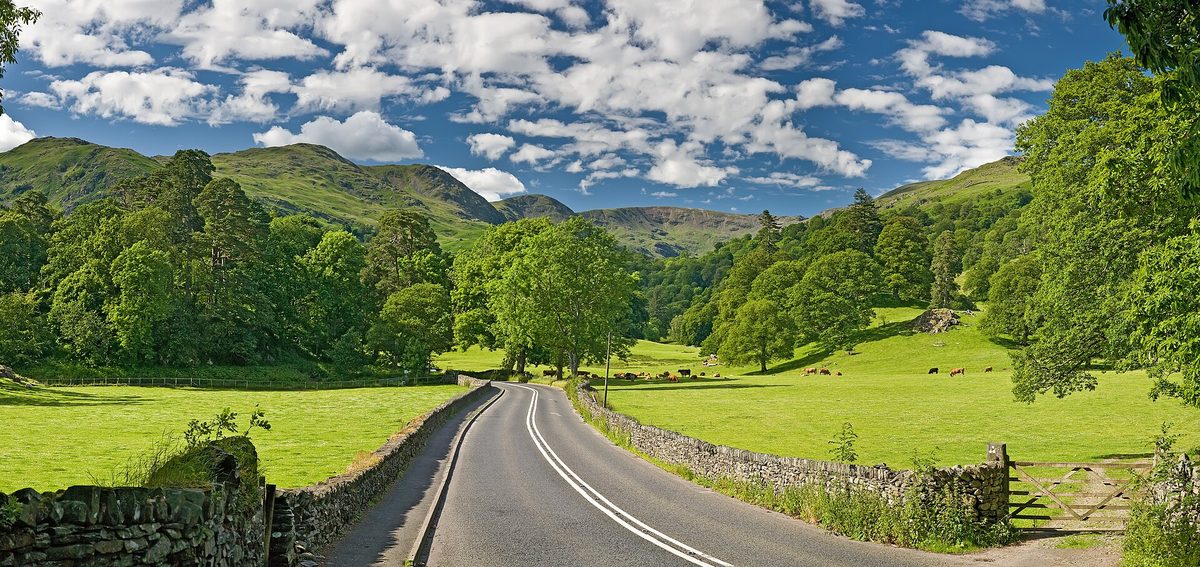
If you are car-free, check transport carefully before booking a romantic remote stay. A room can be wonderful and still leave you dependent on taxis, infrequent buses, or wet walks along roads with luggage. If you are driving, check parking and avoid making every day a cross-park journey. The full Lake District guide goes deeper into planning the region.
Where To Stay In Cornwall And Devon
Cornwall and Devon are too large and varied for one generic accommodation answer.
Cornwall is often best when you choose one coast or one part of the county and stay long enough to settle. St Ives is the classic art-and-harbor base, with strong rail potential and beautiful coastal walking. Penzance and Marazion work well for St Michael’s Mount, west Cornwall, rail links, and a slightly more practical feel. Falmouth is good for food, ferries, gardens, maritime energy, and a broader south-coast base. Padstow is popular for food and north-coast charm. Newquay is stronger for surf, families, and air/rail access than for quiet romance. Fowey, Looe, Bude, and Port Isaac-style villages can be lovely, but they each create a very specific trip.
Devon offers more variety in shorter distances. Exeter is a useful city base with rail links, cathedral atmosphere, and access toward Dartmoor, the coast, and onward routes. Dartmouth and Salcombe are beautiful south Devon bases but need careful parking and seasonal planning. Totnes is useful for rail, food, and a slightly independent feel. Torquay and Brixham work for the English Riviera and family seaside energy. Plymouth is practical for maritime history and wider southwest travel. Dartmoor and Exmoor stays are better when walking, scenery, pubs, and quiet evenings are the point.
The mistake is booking one southwest base and assuming it covers everything. St Ives to north Devon is not a casual daily outing. Dartmouth to Padstow is not a neat little hop. Cornwall and Devon reward fewer bases, longer stays, and honest drive times. Use the full South West guide before you choose the room.
Best Seaside Towns To Stay In England
There is a difference between visiting the sea and staying by the sea.
A seaside day trip gives you the pier, harbor, fish and chips, cliff walk, beach, or promenade. A seaside stay gives you the evening: the light after day visitors leave, the morning swim, the empty harbor, the rainy cafe, the walk back to your room without checking train times.
Brighton and Hove are best for easy rail access, food, nightlife, independent shops, the Royal Pavilion, and a lively seaside city rather than a quiet beach holiday.
Whitby is one of England’s strongest coastal bases if you want harbor atmosphere, abbey ruins, fish and chips, literary associations, and access to the North York Moors.
St Ives is the classic Cornwall art-and-sea base, beautiful but very busy in peak season.
Falmouth is a strong Cornwall alternative with food, maritime history, ferries, beaches, gardens nearby, and better practical range.
Dartmouth and Salcombe are beautiful south Devon choices, especially for estuary scenery, boats, food, and summer energy, though parking and price can be challenging.
Lyme Regis and Weymouth are good Dorset/Jurassic Coast bases, with Lyme leaning fossil-town and scenic charm, Weymouth leaning family beach, harbor, and transport practicality.
Southwold and Aldeburgh work for Suffolk coast atmosphere, slower stays, big skies, and independent shops, but a car helps.
Bamburgh and Seahouses are excellent Northumberland coast bases for castles, beaches, boat trips, and a wilder northern feel.
Tynemouth is a strong choice near Newcastle if you want coast with Metro access, restaurants, beaches, and an easy city connection.

The planned best seaside towns to stay in England guide should eventually go town by town. For now, decide whether you want easy train access, beach holiday, harbor atmosphere, walking, food, surf, family facilities, or quiet coast.
Historic City Bases Worth Considering
Historic cities are often the easiest compromise between charm and logistics.
Bath gives you Roman Baths, Georgian streets, good restaurants, green hills, and strong access to Stonehenge, Bristol, and the Cotswolds.
York gives you walls, medieval streets, York Minster, rail links, museums, and access to Yorkshire and the north.
Oxford and Cambridge give you colleges, museums, rivers, gardens, and easy rail-based short stays.
Canterbury gives cathedral history, medieval lanes, and access to Kent, Dover, Whitstable, and the coast.
Durham gives one of England’s most beautiful cathedral-city settings, with rail links to York, Newcastle, and Scotland routes.
Winchester gives cathedral history, good food, walks, and a calmer southern base.
Lincoln gives cathedral drama, castle history, steep streets, and a different eastern England feel.
Salisbury is useful for the cathedral, Stonehenge access, and southern heritage routes.
These bases work especially well if you want atmosphere without sacrificing rail, restaurants, and wet-weather options. They also pair naturally with England castles and historic sites if heritage is a major theme.
Hotels, B&Bs, Inns, Cottages And Apartments: Which Accommodation Type Fits?
England has a wide accommodation mix, and each type changes the trip.
Hotels are the easiest choice for city bases, station access, predictable check-in, luggage storage, lifts, breakfast options, and short stays. Large hotels are not always charming, but they can be exactly right when arrival time, transport, air conditioning, accessibility, or family room setup matters.
B&Bs and guesthouses can be excellent in smaller towns, coast, countryside, and historic cities. They often feel more personal than hotels and may include breakfast. The tradeoff is that check-in times, stairs, parking, bathroom setup, and cancellation terms can be less flexible.
Pubs with rooms and coaching inns are one of England’s great pleasures when chosen well. They work best when you want food, atmosphere, walking, a village setting, and a stay that feels local. They work less well if noise bothers you, if stairs are difficult, if you need late check-in, or if you are relying on public transport in a tiny village.
Country-house hotels are good for slower trips, special occasions, gardens, spa time, and countryside without self-catering. They can also isolate you from towns and add taxi or driving needs, so check whether you will want to leave for meals.
Vacation rentals and holiday cottages are strongest for families, longer stays, kitchens, laundry, rural weeks, multi-generational trips, and people who want to settle. They are weaker for one-night stops, uncertain arrival times, and trips where you need staff, luggage storage, or daily service.
Serviced apartments can work very well in London, Manchester, Liverpool, Bristol, Bath, York, and longer city stays. They are useful for families and travelers who want laundry or simple meals.
Hostels, university rooms, bunkhouses, campsites, cabins, and glamping sites all have their place, especially for budget, walking, cycling, and national-park trips. Check seasonality, transport, bedding, cooking facilities, and arrival rules carefully.
| Accommodation Type | Best For | Check Before Booking |
|---|---|---|
| City hotel | Short stays, station access, predictable logistics | Room size, air conditioning, lift, location, breakfast |
| B&B / guesthouse | Personal stays, coast, countryside, historic towns | Check-in, stairs, parking, bathroom, cancellation |
| Pub with rooms | Food, atmosphere, village stays, walkers | Noise, dinner days, stairs, parking, late arrival |
| Country-house hotel | Slow countryside, special occasions, gardens | Transport, dinner costs, isolation, spa/facilities |
| Cottage / vacation rental | Families, longer stays, kitchens, laundry | Minimum stay, parking, groceries, heating, stairs |
| Serviced apartment | Longer city stays, families, work trips | Cleaning schedule, reception, luggage storage |
| Hostel / bunkhouse | Budget, walkers, solo travelers | Location, bedding, lockers, curfew, transport |
| Glamping / camping | Outdoor trips, summer, families | Weather, facilities, driving, bedding, season |
Pubs With Rooms: Lovely, But Check The Details
A pub with rooms can be the most English accommodation choice in the best way: low beams, a fire, a pint downstairs, a good dinner, village lanes, breakfast in a quiet room, and no need to drive after eating.
It can also be noisy, stair-heavy, closed for food on the one night you arrive, awkward for luggage, limited for parking, or too remote without a car.
Before booking a pub inn, check:
- Does the pub serve dinner every night of your stay?
- Do you need to reserve a table as well as a room?
- Is breakfast included or available?
- Is the room above the bar, kitchen, road, or beer garden?
- Is there guaranteed parking?
- Are there stairs only?
- What time is check-in if you arrive late?
- Is there anything else open nearby?
For road trips, pub inns can be ideal because dinner and lodging sit together. For no-car trips, they are best in towns or villages with reliable transport. A gorgeous isolated inn can become a problem if the only taxi in the area is booked, the bus has stopped, and the weather has turned.
Vacation Rentals And Holiday Cottages
Vacation rentals make sense when England is not just a route but a stay.
They are especially useful in Cornwall, Devon, the Cotswolds, the Lake District, Dorset, Norfolk, Suffolk, Yorkshire, Northumberland, and family trips where a kitchen and laundry change the mood of the holiday. A cottage can let you shop locally, cook simple breakfasts, unpack properly, and feel part of a village or landscape for a few days.
But rentals are not automatically better than hotels. They often have minimum stays, stricter arrival windows, cleaning fees, security deposits, house rules, self-check-in details, recycling instructions, heating quirks, stairs, narrow lanes, and parking questions. They may not provide daily cleaning, luggage storage, reception help, breakfast, or easy cancellation.
For a two-night city stop, I usually prefer a hotel or serviced apartment. For a week in Cornwall or the Cotswolds, a cottage may be perfect. For a family trip with children, a rental can save sanity, but only if the location does not create daily transport problems.
Read the listing as logistics, not romance. Where is the nearest shop? Can you park? Can you walk to food? Are the bedrooms suitable? Is there a washing machine? Are linens included? Are stairs steep? Is heating clear? Are pets allowed, and does that matter to allergies? What happens if you arrive after dark?
The planned England vacation rentals guide should cover this in more detail.
Family-Friendly Accommodation In England
“Family friendly” is a useful label, but it is not enough.
Families need to know whether the room actually sleeps everyone comfortably, whether the sofa bed blocks the room, whether there is space for luggage, whether breakfast is easy, whether there is a bath or only a shower, whether the hotel has lifts, whether the restaurant serves early enough, whether parking is painless, and whether there is something nearby for a child who has had enough of adult sightseeing.
In London, families often do well near South Kensington for museums, South Bank for river walks and major sights, Bloomsbury for calmer central access, Paddington/Bayswater for transport and value pockets, or apartment-style stays when space matters.
Outside London, York, Bath, Devon, Dorset, the Lake District, the Cotswolds with a car, and seaside towns can work very well. The key is not to create a trip where every day depends on a long transfer, a formal restaurant, a late dinner, and a room too small for people to decompress.
For younger children, self-catering can be worth more than a stylish lobby. For teenagers, location and independence may matter more: walkable food, shops, trains, beaches, activities, and Wi-Fi that actually works.
The planned family-friendly hotels in England guide should go deeper, and the England family guide pillar connects accommodation with itinerary pacing.
Budget: Is It Cheaper To Stay Outside London?
Sometimes. Not always.
It is easy to look at London hotel rates and assume the answer is to stay far outside the center. That can work if the rail link is simple, the fare is reasonable, and your plans align with that location. It can fail if you spend the savings on trains, taxis, late-night fares, luggage storage, and time.
A cheaper hotel is not cheaper if it makes every day harder.
In London, look for value near useful transport rather than chasing the lowest nightly rate. Bloomsbury, King’s Cross, Paddington/Bayswater, Earl’s Court, Southwark, Stratford, and some Docklands or outer-zone areas can work depending on plans, but the details matter.
Outside London, northern and Midlands cities can offer better value than the most famous southern tourist bases. York can be expensive at weekends and festivals, but Manchester, Liverpool, Sheffield, Newcastle, Leeds, Nottingham, Birmingham, and Bristol may give better value for certain routes. University vacation rooms can sometimes be useful in some cities. Chain hotels near stations can be boring and brilliant at the same time.
In countryside areas, the cheapest stay may be cheap because it is remote, car-dependent, dated, or dinner-poor. Add parking, fuel, taxis, meals, and daily travel before deciding.
Use the England budget and costs guide for detailed trip costs. For accommodation, the guiding rule is this: compare total daily cost, not room rate.
Accessibility And Mobility Checks Before Booking
England has many historic buildings, and historic buildings can be awkward.
That does not mean accessible travel is impossible. It means you should verify directly and in detail. Do not rely only on a filter icon.
Check whether there is a lift, whether it reaches your floor, whether there are steps before the lift, whether the accessible entrance is the same as the main entrance, whether the bathroom has the setup you need, whether the shower is level-entry, whether corridors are wide enough, whether parking is close, whether the route from station to hotel is manageable, and whether nearby streets have cobbles, steep slopes, gravel, or narrow pavements.
In villages and inns, ask about stairs, uneven floors, low beams, narrow doorways, and bathroom access. In seaside towns, check hills between station, hotel, beach, and restaurants. In Bath, York, Durham, Whitby, Lincoln, and many old towns, slopes, steps, and cobbles can matter. In the Lake District and Cornwall, a view can come with a steep lane.
For official and current access information, use the property website, local destination access pages, National Rail station information, attraction access pages, and direct email or phone confirmation when it matters. The accessible travel England guide brings these checks together.
Booking Workflow: How I Would Choose Accommodation
I would not start with a hotel search box.
First, choose the base area. For example: Bloomsbury, Bath, Stow-on-the-Wold, Ambleside, St Ives, York, Whitby, or Dartmouth.
Second, mark the things you actually plan to do over the next two days. If the base sits awkwardly between them, reconsider.
Third, choose your transport logic. If using trains, check station distance with luggage and late-arrival options. If driving, check parking before price.
Fourth, check dinner. This sounds small until you arrive tired in a village where the pub is fully booked or closed.
Fifth, read recent reviews for patterns, not drama. One angry review may not matter. Repeated mentions of noise, tiny rooms, poor heating, difficult parking, steep stairs, weak Wi-Fi, or unreliable check-in do matter.
Sixth, check cancellation terms and seasonality. England’s popular stays can book early for summer, bank holidays, school holidays, festivals, Christmas markets, university events, race meetings, walking weekends, and major concerts. Use best time to visit England if your accommodation choice depends on weather, crowds, daylight, coast, gardens, or Christmas timing.
Seventh, book fewer places than your ambitious self wants. A good base is not wasted time. It is what lets the trip feel like travel rather than logistics.
Official Checks Worth Making
Accommodation pages and booking platforms are useful, but official sources are better for the boring details that can ruin a stay if you miss them.
Use VisitEngland quality schemes to understand what official accommodation ratings and assessment language mean. A star rating is not the same thing as personal taste, but it can help you read listings with more context.
For regional planning, use official destination sites before you fall too far into hotel filters. The Cotswolds official accommodation pages are useful for village and market-town stays. The Lake District National Park visitor information is useful for base, parking, access, and responsible visitor planning. Visit Cornwall and Visit Devon are better starting points than a generic map if you are still deciding which coast, harbor, moor, or town fits the trip.
For London, Visit London can help with neighborhood orientation, but I would still cross-check the exact Tube, rail, and walking logistics against your own plans. “London” is too large for the neighborhood name alone to solve the stay.
If accessibility matters, use official station and attraction access pages as well as the property website. A hotel can be technically close to a station but still awkward with steps, cobbles, road crossings, hills, luggage, or late-night arrivals.
For safety and compliance, property owners have responsibilities that tourists do not need to audit in detail, but it is reasonable to be alert. GOV.UK publishes fire safety guidance for sleeping accommodation. As a guest, your practical version is simpler: book legitimate accommodation, read recent reviews, check exits when you arrive, and ask direct questions if anything about access, heating, locks, alarms, or sleeping arrangements seems unclear.
Common Mistakes When Choosing Where To Stay In England
The first mistake is staying in London for everything. London is powerful, but it is not a substitute for sleeping in Bath, York, the Cotswolds, the Lake District, Cornwall, Devon, or the north.
The second mistake is leaving London too quickly. If you have never been, give it enough nights to settle in before rushing away to prove you saw the countryside.
The third mistake is changing hotels every night. England is dense, but your energy is not infinite.
The fourth mistake is booking a rural stay without checking dinner. A beautiful village is less charming when every meal requires a dark-lane drive.
The fifth mistake is assuming “near” means easy. A hotel can be near the Cotswolds, near the Lake District, near the coast, or near a station in a way that still does not help your actual days.
The sixth mistake is choosing a remote bargain without pricing transport.
The seventh mistake is booking a large rental car for tiny village parking.
The eighth mistake is ignoring stairs. Historic inns, B&Bs, cottages, and small hotels may not have lifts.
The ninth mistake is treating a famous village as a base when it would be better as a stop.
The tenth mistake is skipping the boring checks: parking, check-in, breakfast, cancellation, restaurant days, luggage storage, heating, air conditioning, and station distance.
Where To Stay In England FAQ
Where should I stay in England for the first time?
For a first trip, stay in London for the opening part of the trip, then add one or two bases such as Bath, York, the Cotswolds, Oxford, the Lake District, or Cornwall/Devon depending on your trip length. With five nights or fewer, London plus one second base is usually enough. With ten nights, three bases often works well.
Is it better to stay in London or outside London?
Stay in London for London sightseeing and easy day trips. Stay outside London when you want countryside, coast, historic cities after dark, national parks, or less commuting. Bath, York, the Cotswolds, Lake District, Cornwall, Devon, Yorkshire, and Northumberland are better with overnight bases than repeated London day trips.
How many bases do you need for 10 days in England?
For 10 days in England, three bases is usually a good target. A classic version is London, Bath or the Cotswolds, and York. Another version is London, Devon, and Cornwall. A northern version is London, York, and Northumberland or the Lake District.
Can you visit England without a car?
Yes, you can visit England without a car if you choose rail-friendly bases. London, Bath, York, Oxford, Cambridge, Brighton, Canterbury, Durham, Winchester, Liverpool, Manchester, Bristol, and Newcastle can all work well without driving. Rural areas need more planning, tours, taxis, buses, or careful base choice.
What are the best places to stay in England without a car?
The best no-car bases are usually London, Bath, York, Oxford, Cambridge, Brighton, Canterbury, Durham, Winchester, Bristol, Liverpool, Manchester, and Newcastle. For scenic regions, Windermere/Bowness, Ambleside, Moreton-in-Marsh, Exeter, St Ives, Falmouth, and some seaside towns can work if you accept transport limits.
What are the best towns to stay in the Cotswolds?
For many first-time visitors, Moreton-in-Marsh, Stow-on-the-Wold, Broadway, Chipping Campden, Bourton-on-the-Water, Cirencester, Cheltenham, and Bath’s edge are practical choices. Moreton-in-Marsh is useful by train. Stow, Broadway, and Chipping Campden feel more atmospheric with a car or driver.
Where should I stay in the Lake District?
Windermere/Bowness is practical for first arrivals and lake access. Ambleside is central and lively. Keswick is excellent for walking and the northern Lakes. Grasmere is smaller and atmospheric. Ullswater, Coniston, Kendal, and Cartmel work for more specific trips.
What is the best seaside town to stay in England?
It depends on the trip. Brighton is easiest from London. Whitby is excellent for harbor atmosphere and the North York Moors. St Ives and Falmouth are strong Cornwall bases. Dartmouth and Salcombe are beautiful south Devon choices. Lyme Regis and Weymouth work well for Dorset. Southwold, Aldeburgh, Bamburgh, Seahouses, and Tynemouth suit different coastal styles.
Are pubs with rooms good places to stay in England?
Yes, pubs with rooms can be excellent if you want food, atmosphere, and a village or market-town stay. Check dinner service days, table reservations, noise, stairs, parking, late check-in, and transport before booking. They are often best when you have a car or when the pub is in a walkable town.
Are vacation rentals better than hotels in England?
Vacation rentals are often better for families, longer stays, kitchens, laundry, cottages, and countryside weeks. Hotels are usually better for short stays, city arrivals, luggage storage, flexible check-in, lifts, daily service, and station access. The right choice depends on trip length and logistics.
Is it cheaper to stay outside London?
It can be cheaper to stay outside London, but not always once you include train fares, taxis, time, meals, and luggage. If your plans are mostly in London, a well-located London stay may be better value than a distant cheaper hotel. If your plans are mostly outside London, moving bases can save time and improve the trip.
What should I do next?
Start by choosing your route, then your bases, then the accommodation. If you are still deciding where to go, use where to go in England. If you know your trip length, use the England route planner. If transport is the hard part, use how to travel around England and driving routes around England. For regional detail, move next to London, the Cotswolds, the Lake District, England national parks and hiking, Cornwall and Devon, and England castles and historic sites.
Final Advice
The best place to stay in England is the place that makes the next morning feel simple.
That may be a central London hotel because you want museums and theatre. It may be a Bath townhouse because you want the city after the day-trippers leave. It may be a Cotswolds inn because dinner downstairs matters more than ticking off six villages. It may be a Lake District B&B because you can walk from the door. It may be a Cornwall cottage because the whole point is unpacking for a week. It may be a boring chain hotel beside a station because the train at 9:00 is more important than exposed beams.
Good accommodation planning is not unromantic. It protects the romance from logistics.
Choose fewer bases than the map tempts you to choose. Stay long enough for at least one ordinary morning. Check parking before falling in love with the room. Check dinner before booking the village. Check the train before assuming a no-car trip works. Check the stairs before assuming a historic inn is easy. Then book the place that supports the trip you actually want, not the one that only looks good in a saved list.
Research note: This guide was planned against current SERP patterns and checked against official and reputable sources including VisitEngland, VisitBritain, VisitEngland quality-scheme information, GOV.UK fire-safety guidance for sleeping accommodation, Cotswolds official tourism, Lake District National Park, Visit Cornwall, Visit Devon, Visit York, Visit Bath, Visit Brighton, major accommodation and destination competitors, forum planning pain points, and Wikimedia Commons licensing. Images are sourced from Wikimedia Commons under their respective open licenses, with attribution in the Photo Credits section.
Photo Credits
- A quiet London street with traditional townhouses and leafy pavements — Photo: Diliff / CC BY-SA 3.0 via Wikimedia Commons. Source
- Honey-colored cottages on a quiet Cotswolds village street — Photo: w_lemay / CC BY-SA 2.0 via Wikimedia Commons. Source
- A Lake District road curving past green hills and stone walls — Photo: Diliff / CC BY-SA 3.0 via Wikimedia Commons. Source
- A harbor town on the English coast with boats and seaside houses — Photo: Mutney / CC BY-SA 4.0 via Wikimedia Commons. Source