Sheet 67 · Bath, Stonehenge, Oxford and Cambridge · 17 min read
Oxford Travel Guide
An honest Oxford travel guide: which colleges to visit, the Bodleian, the Ashmolean, punting, pubs and how to spend a day or two in the city of dreaming
 Sheet 67
Contents 9 sections
The first time I walked out of Oxford’s train station and up toward the city centre, I almost missed it. The approach is unremarkable — a retail park, a busy road, a few chain hotels. And then you turn a corner near the castle, the modern buildings fall away, and suddenly you’re standing in a medieval lane between honey-coloured stone walls with a spire poking over a rooftop and a bell tolling somewhere out of sight. That’s the trick of the place. Oxford doesn’t announce itself. It ambushes you.
This Oxford travel guide is the in-city one: which colleges you can actually get inside, how to see the Bodleian and the Radcliffe Camera, where the Ashmolean hides its treasures, the best tower to climb, where to go punting, and the two pubs every visitor ends up in. I’ve wandered these lanes a fair bit, and I’ll tell you what’s worth your time and what you can skip.
Quick Answer: How to Use This Oxford travel guide
This Oxford travel guide focuses on sightseeing inside the city itself. You can comfortably see the headline sights — a college or two, the Bodleian, the Radcliffe Camera, the Ashmolean, a tower climb and a punt — in one full day, or spread them gently over two. Most colleges charge a few pounds; the big museums are free.
If you’re weighing Oxford against its rival, I’ve put the head-to-head in a separate piece on Oxford vs Cambridge so I can keep this one about Oxford alone. And the fiddly mechanics of college visiting — exact opening windows for tourists, guided tours, group bookings — live in my dedicated guide to Oxford and Cambridge college tours. Here, I’ll keep it to what you’ll actually want to see and do.
Oxford at a Glance: Key Sights, Prices and Time Needed
Here’s the shape of a visit. Prices are rough and “around … as of 2026” — colleges in particular tweak their charges and opening windows often, so always check the official site on the day.
| Sight | Rough price (2026) | Time to allow | Why go |
|---|---|---|---|
| Christ Church | Around £22–25 adult | 1–1.5 hrs | The grandest college; Great Hall inspired Hogwarts |
| Magdalen College | Around £10 adult | 1–1.5 hrs | Deer park, riverside walks, the prettiest grounds |
| New College | Around £8 adult | 45–60 min | Cloisters, ancient walls, Harry Potter courtyard |
| Bodleian Library (Divinity School) | Around £3 self-guided; tours from £12.50 | 30–90 min | Medieval ceiling, the world’s most beautiful reading room |
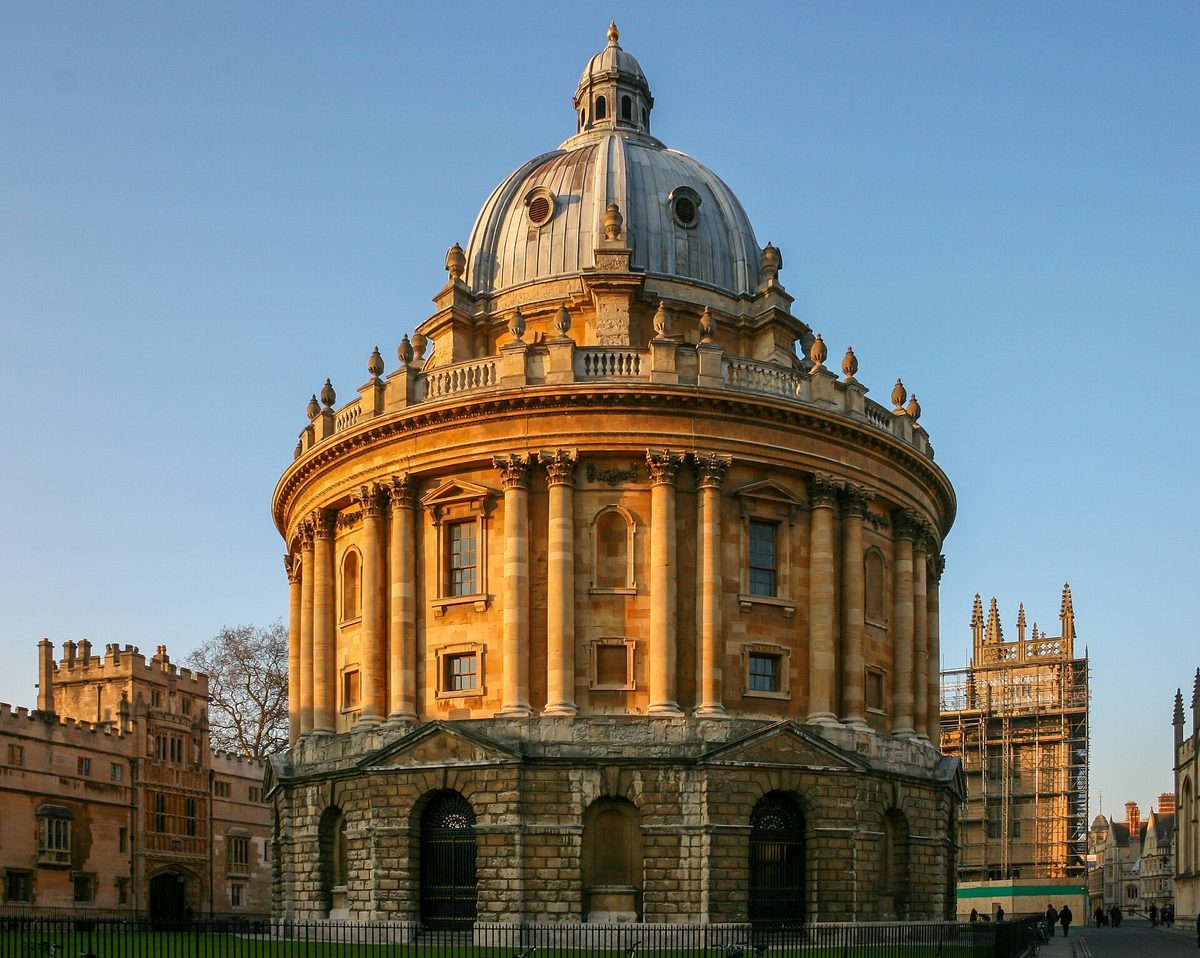
| Radcliffe Camera | Exterior free; interior by tour only | 15 min outside | Oxford’s most photographed building |
| Ashmolean Museum | Free | 1.5–2 hrs | Britain’s oldest public museum; vast and brilliant |
| University Church tower | Around £6 adult | 30–45 min | The classic dreaming-spires view |
| Carfax Tower | Around £4 adult | 20–30 min | Central, quick, fewer crowds |
| Punting (self-hire) | Around £20–35 per punt/hr | 1–2 hrs | Oxford’s signature messing-about-on-the-river |
| Covered Market | Free to wander | 30–45 min | Old-school stalls, lunch, people-watching |
Now let me walk you through it properly.
Oxford Colleges to Visit: Start Here
Oxford isn’t one campus. It’s a federation of around 39 colleges scattered through the city, each a self-contained world of quadrangles, chapels, dining halls and gardens behind its own gatehouse. You can’t see them all, and you wouldn’t want to — pick two or three good ones and savour them.
A word on access before you get your hopes up: colleges are working communities, not theme parks. They close to visitors during exams (roughly April to June), for events, and sometimes at a porter’s whim. Opening windows shift by season. I cover the booking-and-timing details in the college tours guide — here I’ll just tell you which ones are worth the entrance fee.
Christ Church: the grand one
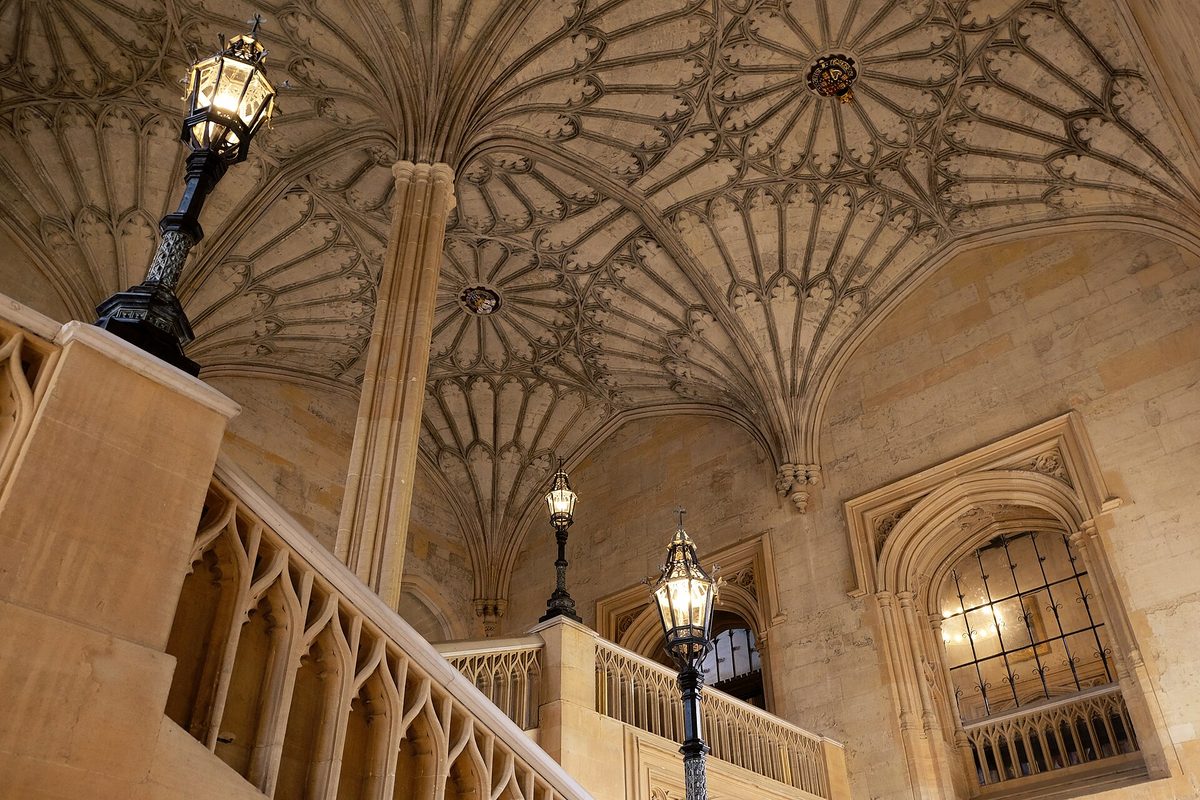
If you only do one college, this is the one most people choose, and I understand why. Christ Church is Oxford’s largest and most theatrical college, founded by Cardinal Wolsey and refounded by Henry VIII. The Great Hall — all dark panelling, portraits and hammerbeam roof — was the model that inspired the Hogwarts dining hall in the Harry Potter films, and the grand staircase beneath Bodley Tower appears on screen too. It’s also unique in being a cathedral as well as a college, so your ticket gets you into a genuine 12th-century cathedral with some glorious stained glass.
Entry runs at around £22–25 for an adult as of 2026, which makes it the priciest college visit by a margin, and it’s popular enough that you’ll generally want a timed ticket booked ahead. The official details are at chch.ox.ac.uk. Is it worth it? If you’ve never seen an Oxford college and want the full cinematic hit — yes. Go early, before the tour groups thicken.
Magdalen: the beautiful one
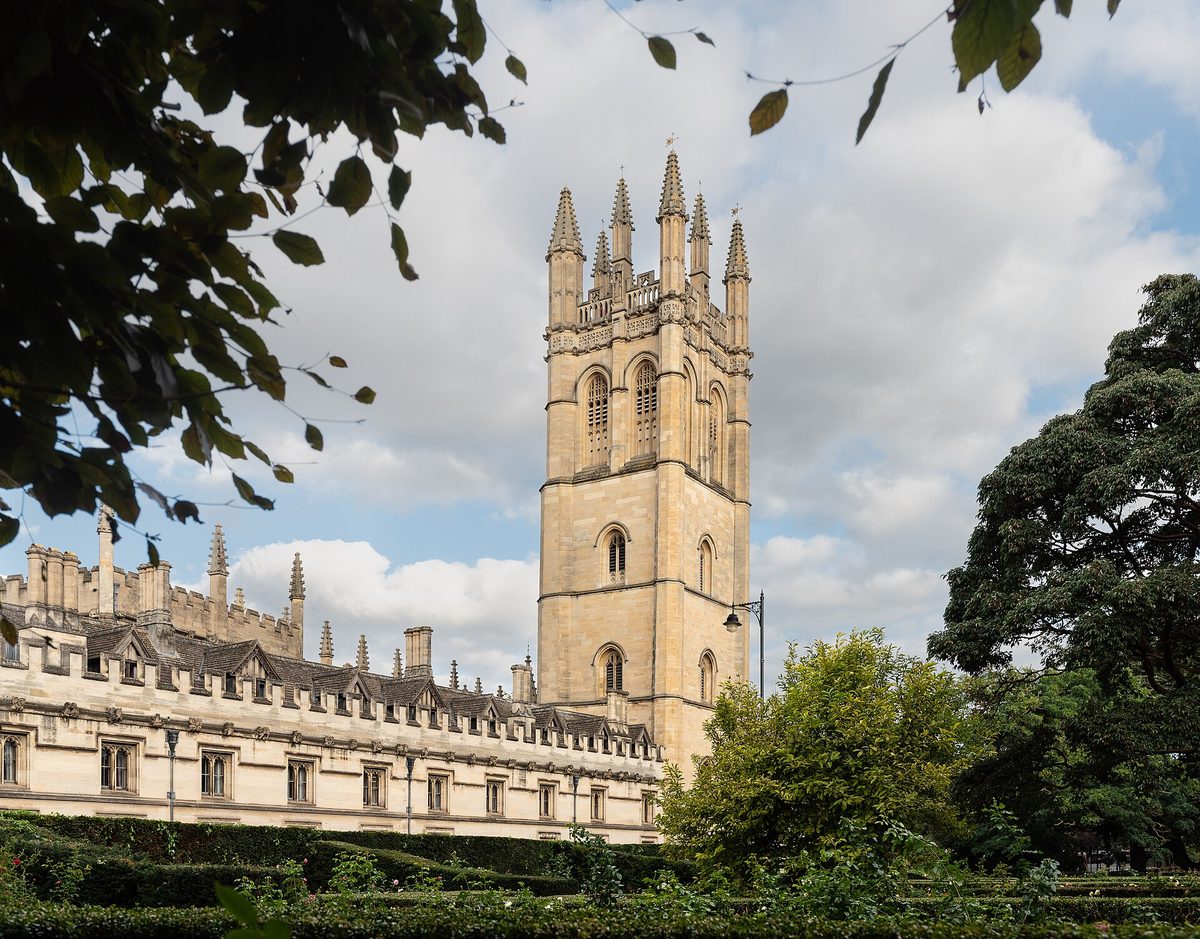
Magdalen (say it “maudlin” — locals will wince otherwise) is my personal favourite, and it’s the one I’d steer you to if you care more about atmosphere than grandeur. It sits at the eastern edge of the centre by the river, and behind its bell tower lie the things that make it special: the medieval cloisters with their grotesque stone figures, a riverside circuit called Addison’s Walk, and a genuine deer park you can peer into. In autumn the whole place glows.
Admission is around £10 for an adult as of 2026, with reductions for seniors, students and children, and family tickets available. Allow a good hour or more — the grounds are the point, so don’t rush them. Magdalen Bridge, right outside, is also where the punts launch (more on that below).
New College: the misnamed one
New College is one of Oxford’s oldest, despite the name — it dates to the 1370s and was “new” only relative to the colleges that came before it. It’s a quietly stunning visit: a great cloister, the longest stretch of the original medieval city wall still standing, and a chapel worth a look. Harry Potter fans will recognise the courtyard where Malfoy gets turned into a ferret. Entry is modest, around £8 for an adult as of 2026, and the crowds are thinner than at Christ Church.
If you have time for only two colleges, I’d pick Magdalen plus either Christ Church (for the spectacle) or New College (for the quiet). Several smaller colleges — Exeter, with its lovely chapel, or Trinity — are free or nearly free to enter and make pleasant additions if a gate happens to be open as you pass.
Libraries and Museums: the Bodleian, the Radcliffe Camera and the Ashmolean
This is the cluster of sights at the very heart of Oxford, all within a two-minute walk of each other, and for me it’s the most concentrated dose of what makes the city extraordinary.
The Bodleian Library
The Bodleian is one of the oldest libraries in Europe and one of the few in the world entitled to a copy of every book published in the UK. You can’t just wander into the working reading rooms — these are for readers — but you can get inside the spectacular older parts.
The unmissable bit is the Divinity School, a 15th-century examination hall with a fan-vaulted ceiling so intricate it looks like frozen lace. It served as the Hogwarts infirmary on film, and even if that means nothing to you, stand under that ceiling for a minute and you’ll understand why it took decades to build. Self-guided entry to the Divinity School is around £3 as of 2026.
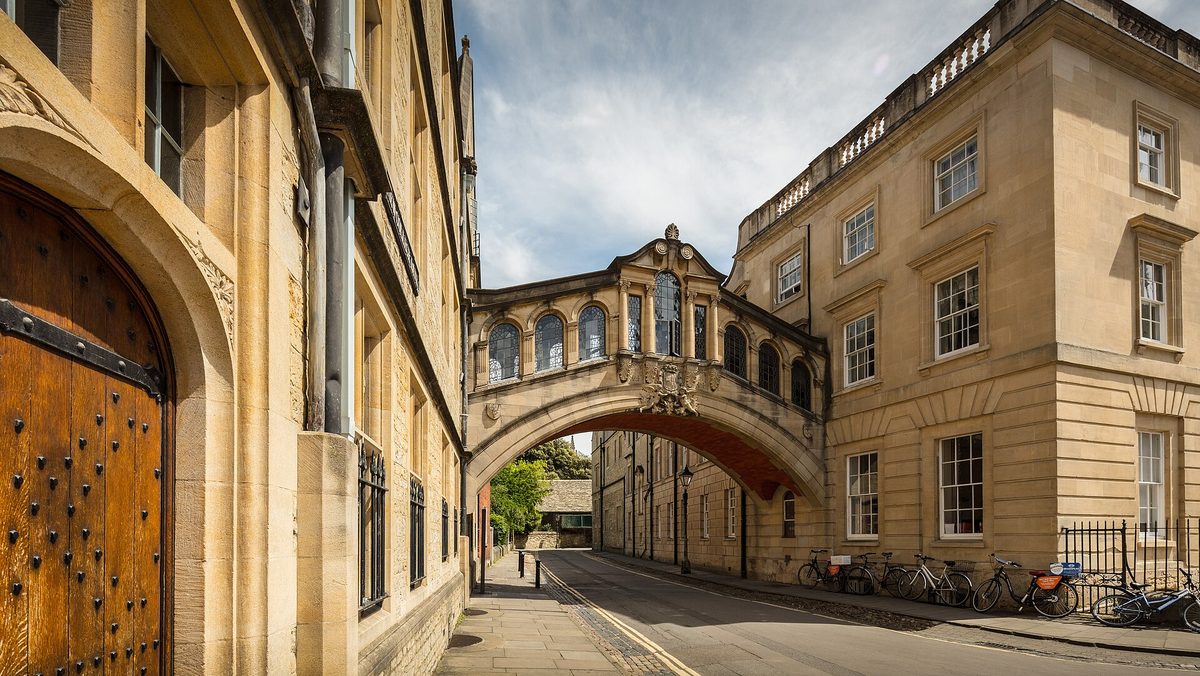
To see more — the medieval Duke Humfrey’s Library, the reading room that doubled as Hogwarts’ library — you’ll need a guided tour. These start at around £12.50 and run up to longer 90-minute versions that include the Radcliffe Camera interior; check times and book at bodleian.ox.ac.uk. Tour tickets often sell in person on the day from the Weston Library information desk, with some released online a month ahead, so plan if you’ve set your heart on a specific slot. While you’re in the courtyard, look up at the Tower of the Five Orders and don’t miss the Bridge of Sighs a few steps away on New College Lane — a 1914 copy of the Venetian original that’s become one of Oxford’s signature photos.
The Radcliffe Camera
Right beside the Bodleian stands the Radcliffe Camera — that perfect circular, domed building you’ve seen on every Oxford postcard. “Camera” just means “room” in Latin; it’s a reading room, part of the Bodleian now, and you can only get inside on certain library tours. But honestly, the magic is from the outside. Walk into Radcliffe Square, look up at the dome with the spire of the University Church on one side and the screen of All Souls College on the other, and you’ve found the single most photogenic spot in the city. Come early morning or near dusk when the stone turns gold and the square empties out.
The Ashmolean Museum
The Ashmolean is Britain’s oldest public museum, founded in 1683, and it’s a genuine world-class collection that happens to be free. Four floors take you from ancient Egyptian mummies and Greek sculpture up through Renaissance paintings, Islamic art, and a famous gallery of European masters. Highlights include Guy Fawkes’ lantern, the Alfred Jewel, and a fine spread of Pre-Raphaelites.
General admission is free, no booking needed, and it’s open daily, typically 10am to 5pm (last entry around 4.45pm) as of 2026 — some temporary exhibitions charge. Full details are at ashmolean.org. It’s the perfect rainy-day refuge, and the rooftop café is a nice spot for lunch with a view over the rooftops. If you have museum-loving company, the free Pitt Rivers Museum (a gloriously cluttered ethnographic collection, shrunken heads and all) and the Natural History Museum next door are both worth an hour too.
Walking the City: Towers, Lanes and Christ Church Meadow
Oxford rewards aimless wandering more than almost any English city its size. The whole historic core is walkable in twenty minutes end to end, and the joy is in the side lanes.
Climb a tower
You want at least one view from above, because Oxford’s skyline of spires and domes is the whole “dreaming spires” thing made literal. There are two main options.
The University Church of St Mary the Virgin tower, right on Radcliffe Square, gives you the classic view — you’re looking straight down onto the Radcliffe Camera and across the rooftops. It’s a 127-step medieval spiral staircase, steep and worn in places, and admission to the tower runs around £6 for an adult as of 2026 (the church itself is free to enter). Last admission is usually around 4.30pm. This is the view to get if you only climb one tower.
Carfax Tower, at the central crossroads (the name comes from the French carrefour), is the older, lower option — 99 steps, around £4 as of 2026, and a bit quicker and less crowded. The view is good but not quite as iconic. If the queue at St Mary’s is long, Carfax is a fine plan B.
Christ Church Meadow
For greenery, walk down to Christ Church Meadow, a wedge of grazing land between the colleges and the rivers where cattle still graze a few minutes from the city centre. The Broad Walk and the tree-lined paths down to the Thames (locals call this stretch the Isis) make a lovely, free half-hour stroll, and you’ll pass college boathouses where rowers launch. It’s the quickest way to feel like you’ve left the city without actually leaving it.
The lanes
Don’t overlook the little stuff. Wander New College Lane and Queen’s Lane — a curving, walled medieval canyon that’s almost traffic-free. Find the tiny Turf Tavern hidden down an alley (more on that next). Poke into Blackwell’s bookshop on Broad Street, whose underground Norrington Room is one of the largest single rooms of books in the world. This kind of unhurried mooching is, for me, the real Oxford experience — better than ticking off any single attraction.
Punting on the Cherwell
If the weather’s kind, go punting. It is the quintessentially Oxford thing to do — propelling a flat-bottomed boat along the river with a long pole — and it’s enormous fun precisely because most first-timers are hilariously bad at it. You will zigzag. You may lose the pole. This is part of the deal.
The most central place to hire is Magdalen Bridge Boathouse, right by Magdalen College, where you can rent a traditional punt holding up to five people for around £35 per hour as of 2026; a chauffeured ride (someone else does the poling while you sit back) runs around £50 per 30 minutes. From here you head up the Cherwell past the Botanic Garden and the meadows. The other option, a little out of the centre to the north, is the Cherwell Boathouse, which tends to be cheaper at around £20 per punt per hour and gives onto a quieter, prettier stretch of river — I slightly prefer it if you don’t mind the walk out.
A few honest tips: it’s harder than it looks, the river is shallow but you will get wet sleeves, and a sunny weekend afternoon means queues and river traffic jams. Late morning on a weekday is bliss. Bring a picnic and a bottle of something and make an afternoon of it.
Food and Pubs: the Covered Market, the Eagle and Child, the Turf Tavern
Oxford eats well, and you don’t need to spend much.
The Covered Market
Start at the Covered Market, a warren of stalls trading since the 1770s tucked between the High Street and Market Street. It’s not a foodie theme park — it’s a real, slightly scruffy working market with butchers and cobblers alongside the cafés. Grab a sandwich, a pie, or a famously oversized cookie from one of the bakeries, and there are sit-down spots for a proper lunch. It’s the easiest, cheapest, most characterful place to eat in the centre, and it’s free to wander even if you don’t buy anything.
The pubs
Two pubs draw every literary-minded visitor, and both are worth a pint.
The Eagle and Child on St Giles’ is where the Inklings — J.R.R. Tolkien, C.S. Lewis and their circle — met to read each other their work-in-progress, including early Middle-earth and Narnia. It’s a narrow, atmospheric old place steeped in that history. Do check before you trek over, as it has had spells of closure and refurbishment in recent years; its status can change, so a quick search on the day saves disappointment.
The Turf Tavern is my favourite, and the one I’d send you to without hesitation. It’s a low-beamed 13th-century pub hidden down a tiny alley off New College Lane, so well concealed that finding it feels like a small victory. It bills itself as “an education in intoxication,” has a couple of cosy courtyards, and counts a young Bill Clinton among its former regulars. On a cold evening, with the braziers lit and a good ale in hand, it’s hard to beat.
Beyond the famous names, Oxford has plenty of good eating — Jericho, the neighbourhood northwest of the centre, is where I’d head for dinner, with a strip of independent restaurants along Walton Street and a more local feel than the tourist core.
Practicalities: Getting There, Getting Around and Planning Your Visit
Getting to Oxford
From London, the train is easiest. Great Western Railway runs direct from London Paddington to Oxford in around 50–60 minutes, with departures roughly every half hour as of 2026. There’s also the slower, cheaper Oxford Tube coach that runs around the clock from London. If you’re coming for the day, I’ve written a full London to Oxford day trip guide with timings and a suggested plan, and Oxford features in my round-up of the best day trips from London by train. For wider rail planning across the country, see my England train travel guide.
The station sits about a 10-minute walk west of the centre. Driving in is a bad idea — the city centre is congested, parking is scarce and pricey, and there’s a low-emission zone. If you must drive, use one of the Park & Ride sites on the ring road and bus in.
Getting around Oxford
Walk. The historic centre is small and flat, and almost everything in this guide is within fifteen minutes on foot of Carfax. Buses are useful only for the Park & Rides or for reaching outer areas. Cycling is huge here, and you can hire bikes, but for a short visit your feet will do fine.
How long to stay
One full day is enough for the highlights — a college, the Bodleian and Radcliffe Square, the Ashmolean or a tower, lunch in the Covered Market, and a pint. Oxford in a day works because the sights cluster so tightly. But two days lets you slow down, add a second college, go punting, and explore Jericho or the meadows without rushing — and an overnight means you get the magical early-morning and late-evening hours in the empty lanes, which are the best of all. If you stay over, see my notes on where to stay in England for picking a base.
Oxford also pairs beautifully with the surrounding region. It’s the gateway to the Cotswolds — those golden-stone villages are a short drive or bus ride west — and it sits within the classic touring loop I describe in the parent guide to Bath, Stonehenge, Oxford and Cambridge. If you’re trying to decide which historic university city to prioritise, my Oxford vs Cambridge comparison lays out the case for each, and there’s a companion Cambridge travel guide if you’re doing both. Oxford ranks high on my lists of the best cities to visit in England and the most historic towns in England, for what it’s worth.
When to go
Late spring and early autumn are loveliest — long days, manageable crowds, the gardens at their best. Summer is busiest and warmest but the colleges may have restricted access around graduation. Winter is quiet and atmospheric, with shorter tower-opening hours, and the city looks wonderful under low golden light. Avoid timing a college-heavy visit during the main exam term (roughly late April to mid-June) when many gates close to the public — the college tours guide has the detail.
Final Thoughts
What stays with me about Oxford isn’t any single building — it’s the layering. You step from a workaday street into a 600-year-old quad, from a free museum holding a Saxon jewel into a market selling pork pies, from a hidden alley pub into a square that stops you mid-sentence. It’s a working city that just happens to be built around one of the oldest universities on earth, and that mix of the ordinary and the sublime is the whole charm.
Don’t over-plan it. Book your one or two paid colleges, know where the Ashmolean and the Bodleian are, and then leave room to get lost in the lanes between them. Climb a tower at golden hour. Mess about on the river. Find the Turf Tavern. That’s the Oxford I’d send anyone to — and the one I keep going back for.
Research and Source Notes
I cross-checked prices, opening hours and access details against official and authoritative sources while writing this, current as of 2026 and hedged throughout because colleges and attractions change them frequently:
- Christ Church — entry and visiting information via chch.ox.ac.uk.
- Bodleian Libraries — Divinity School entry, tour options and the Radcliffe Camera, via bodleian.ox.ac.uk.
- Ashmolean Museum — free admission and opening hours, via ashmolean.org.
- University of Oxford visitor pages and Experience Oxfordshire (experienceoxfordshire.org) for college access, the University Church and Carfax towers, and general orientation.
- Punting prices via Magdalen Bridge Boathouse and Cherwell Boathouse listings; train times via Great Western Railway.
Always confirm current prices, opening windows and college access on the official site on the day you visit — exam-term and event closures are common, and this is the single thing most likely to change between writing and your trip.
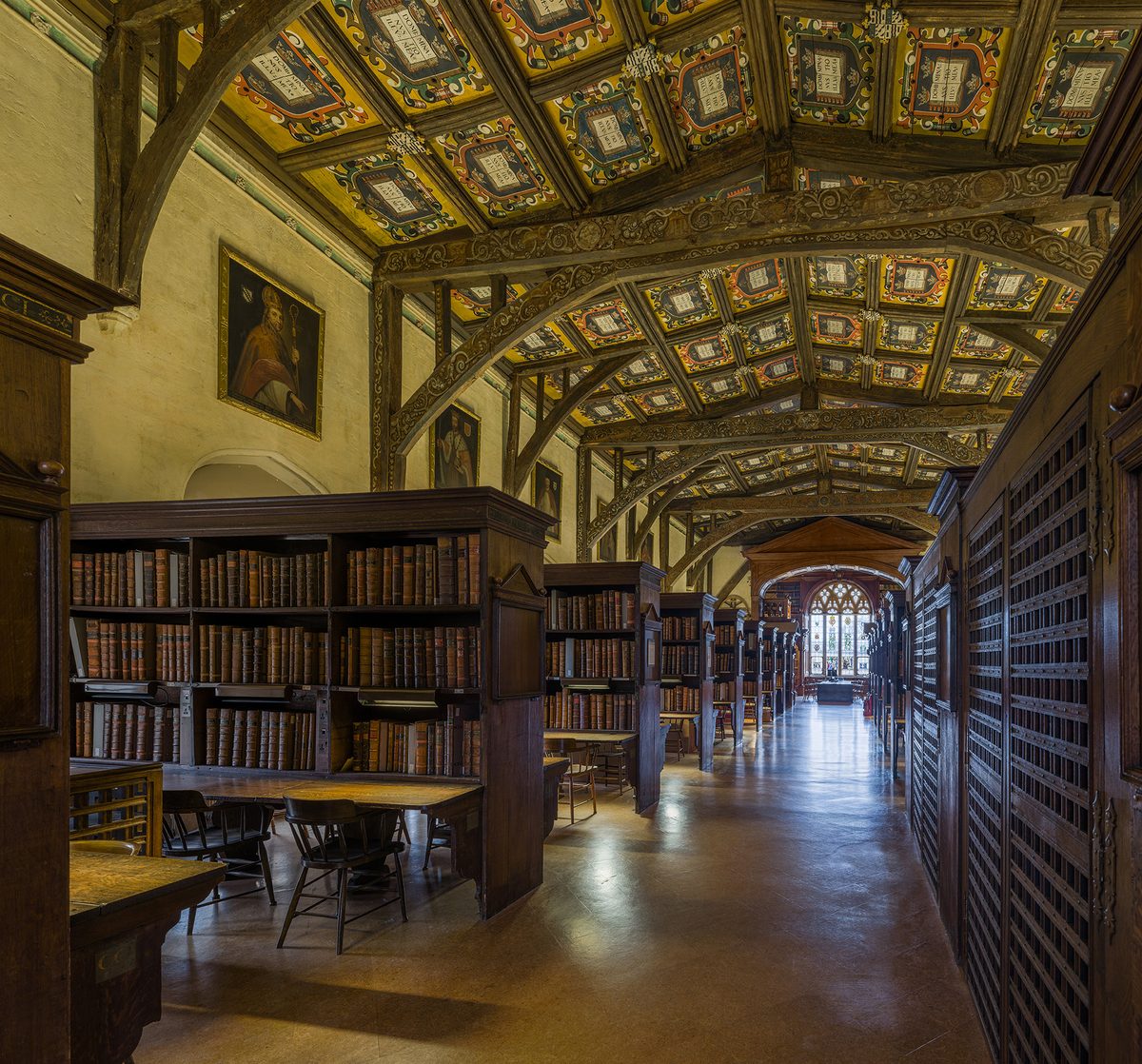
Photo Credits
- The Radcliffe Camera at the heart of an Oxford travel guide itinerary — Photo: Mike Peel / CC BY-SA 4.0 via Wikimedia Commons. Source
- Tom Quad at Christ Church, a top Oxford college to visit — Photo: Jonas Magnus Lystad (CC0) via Wikimedia Commons. Source
- The Bridge of Sighs on New College Lane in Oxford — Photo: Michael D Beckwith (CC0) via Wikimedia Commons. Source
- Magdalen College tower seen from the river in Oxford — Photo: Julian Herzog (Website) / CC BY 4.0 via Wikimedia Commons. Source
- The Divinity School ceiling inside the Bodleian Library in Oxford — Photo: Diliff / CC BY-SA 3.0 via Wikimedia Commons. Source
Frequently asked questions
Is one day enough to see Oxford?
Yes, for the highlights. In a single full day you can tour one college, see the Bodleian's Divinity School and Radcliffe Square, visit the free Ashmolean or climb a tower, lunch in the Covered Market and finish with a pint. The sights cluster tightly, so Oxford in a day works well — though two days lets you punt and slow down.
Which Oxford college should I visit?
If you want one, most people pick Christ Church for its grandeur and Harry Potter connections, at around £22–25 as of 2026. For atmosphere over spectacle, I'd choose Magdalen with its deer park and riverside walks (around £10), or quieter New College (around £8). Two colleges is plenty; check opening times first, as exam-term closures are common.
Is the Ashmolean Museum free?
Yes. General admission to the Ashmolean is free and no booking is required, with the museum open daily roughly 10am to 5pm as of 2026. Only some temporary exhibitions charge. It's Britain's oldest public museum and easily fills two hours — making it the ideal rainy-day option in Oxford. The nearby Pitt Rivers and Natural History museums are also free.
Can you go inside the Radcliffe Camera and Bodleian Library?
You can enter the Bodleian's Divinity School on a self-guided ticket (around £3 as of 2026), and see Duke Humfrey's Library and the Radcliffe Camera interior only on guided tours, which start at around £12.50. The Radcliffe Camera isn't open for general walk-in visits, but photographing it from Radcliffe Square is free and unforgettable.
How much does punting in Oxford cost?
Self-hire punts cost around £20 to £35 per punt per hour as of 2026, holding up to five people — cheaper at the Cherwell Boathouse, a bit more at central Magdalen Bridge. A chauffeured ride, where someone poles for you, runs around £50 per 30 minutes at Magdalen Bridge. Go on a weekday morning to avoid the weekend river traffic.
How do I get from London to Oxford?
The fastest way is the direct Great Western Railway train from London Paddington, taking around 50 to 60 minutes with departures roughly every half hour as of 2026. The Oxford Tube coach is cheaper and runs around the clock but is slower. Oxford station is a 10-minute walk from the centre, so you won't need onward transport.