Sheet 79 · Bath, Stonehenge, Oxford and Cambridge · 16 min read
Stonehenge Visitor Guide
A first-hand Stonehenge visitor guide: timed tickets, inner-circle access, the shuttle, and how to get there from London, Salisbury and Bath in 2026.
 Sheet 79
Contents 8 sections
The first time I rode the little shuttle out across the grass towards the stones, I’ll admit I was braced for disappointment — and settling that worry is exactly why I wrote this Stonehenge visitor guide. You hear the same warning everywhere: it’s smaller than you think, there’s a busy road right there, you can’t even touch it. And then the bus crests a low rise, the circle swings into view against an enormous Wiltshire sky, and none of that matters. Five thousand years of someone hauling these impossible slabs into place, just standing there, quietly. I went quiet too.
So let me be the friend who tells you the truth before you go. This Stonehenge visitor guide is everything I’ve learned across several visits — the good, the slightly underwhelming, and the genuinely magical — so you arrive knowing exactly what you’ve bought, how to get there, and how to make the most of a couple of hours at one of the most famous places on Earth.
What I won’t do is oversell it or pretend the setup is something it isn’t. You’ll see real prices and times (all hedged as “around” and “as of 2026” — always confirm on the day), an honest take on the visitor-centre-and-shuttle arrangement, and the one upgrade that, in my opinion, changes the whole experience.
Quick Answer: How to Use This Stonehenge Visitor Guide
The short version of this Stonehenge visitor guide: Stonehenge uses timed, advance-booked tickets through English Heritage (around £27–£32 for an adult as of 2026; free for members). You view the circle from a path, not up close. Get there via Salisbury (train from London Waterloo, then the Stonehenge Tour bus). Allow about two hours. For inside access, book the separate Stone Circle Experience.
That’s the framework. The rest of this guide fills in the detail — booking, transport from three different cities, what you actually see, the inner-circle visits, and the practical stuff that makes or breaks the day.
If you’re weaving Stonehenge into a bigger swing through southern England, it sits naturally inside our Bath, Stonehenge, Oxford and Cambridge tour, which is worth a read for the wider plan.
At a Glance: Tickets and Getting There
Here’s the whole visit boiled down to the decisions that actually matter. Prices and times are hedged as around / as of 2026 — English Heritage adjusts both, so sanity-check before you commit.
| What | Rough cost (2026) | Rough time | Notes |
|---|---|---|---|
| Adult ticket (advance, online) | ~£27–£28 | Timed slot | ~15% cheaper than the gate; book ahead |
| Adult ticket (walk-up / gate) | ~£32 | If available | Limited; can sell out in peak season |
| Child ticket (5–17) | ~£16–£18 | Timed slot | Under-5s free |
| English Heritage members | Free | Timed slot | Still pre-book your slot |
| Stone Circle Experience (inner circle) | ~£70 adult / ~£40 child | ~1 hr, early/late | Separate booking, outside normal hours |
| Train: London Waterloo → Salisbury | ~£25–£45 return | ~1 hr 30 | Book ahead for cheaper advances |
| Bus: Salisbury → Stonehenge (Tour bus) | ~£17 bus-only return | ~30 min | Or ~£34 combined with entry |
| Drive from Bath | Fuel + parking | ~50–60 min | ~33–35 miles via the A36 |
Keep that table handy. Everything below is just me explaining the why behind each row.
Stonehenge Tickets and Advance Booking
Here’s the single most important thing in this whole Stonehenge visitor guide: tickets are timed and you should book them in advance. Stonehenge is not a turn-up-and-stroll-in attraction. You choose a 30-minute arrival window when you book, and that’s your slot.
Book through the official channel — english-heritage.org.uk. As of 2026, an adult advance ticket runs around £27–£28, versus roughly £32 at the gate; English Heritage gives you about 15% off for booking online, so there’s a real reason to do it beyond just securing your time. Children aged 5–17 are around £16–£18, and under-5s go free.
There are a limited number of walk-up tickets sold on the day from the admissions tills, but I genuinely wouldn’t rely on them in summer or on a weekend — slots fill, and you can end up waiting around or, worse, missing your transport connection back. Advance booking opens well ahead, and you can usually book online up to about three hours before you arrive if you’re being spontaneous.
A few booking details that trip people up:
- English Heritage members go free, but you should still reserve a timed slot online — your membership covers entry, not your place in the timetable. Members of partner bodies like Cadw and Historic Scotland get free entry too.
- You’ll get an email confirmation — bring it on your phone or printed, with the booking reference, to show at the tills.
- General admission includes the stone circle viewing area, the visitor centre and exhibition, and the audio guide. You don’t need to buy “extras” to get the core experience.
- The general ticket does not include inside-the-circle access — that’s the separate Stone Circle Experience, covered further down.
One honest note: the price has crept up over the years, and some first-timers feel a flicker of sticker shock for “looking at some rocks from a path.” I’ll make the case for value later — but go in clear-eyed about what general admission is and isn’t.
How to Get to Stonehenge
Stonehenge sits on Salisbury Plain in Wiltshire, near Amesbury, and the honest truth is it’s a little awkward to reach without a car — there’s no train station at the stones and no direct public bus from the motorway. The hub for car-free visitors is Salisbury, about 10 miles south. Let me walk through the three approaches most readers use.
Getting to Stonehenge from London
This is the classic day trip, and the cleanest car-free route is: train from London Waterloo to Salisbury (around 1 hour 30, roughly half-hourly), then the Stonehenge Tour bus from right outside Salisbury station out to the stones (about 30 minutes). Book a train advance fare ahead of time and the return can land somewhere around £25–£45 depending on the day; turn-up-and-go peak fares cost more.
The Stonehenge Tour bus (run by Salisbury Reds; details at thestonehengetour.info and salisburyreds.co.uk) is a hop-on, hop-off service that runs roughly hourly, every day except Christmas Day. As of 2026, bus-only is around £17 return for an adult, or about £34 for a combined ticket that bundles your Stonehenge entry (and Old Sarum) — which can simplify life, though check it still works out cheaper than booking entry separately online.
If logistics aren’t your idea of fun, an organised coach tour from central London does the door-to-door work for you and often pairs Stonehenge with Bath or Windsor. For the full breakdown of options, timings and tour-vs-DIY trade-offs, I’ve written a dedicated London to Stonehenge day trip guide — start there if London is your base. Our broader day trips from London and best day trips from London by train round-ups put it in context too.
Getting to Stonehenge from Salisbury
If you’re already in or near Salisbury, you’re in the best position of anyone. The Stonehenge Tour bus picks up at the railway station and in the city centre at New Canal (Stop U), and reaches the stones in about half an hour, with a stop at the Iron Age hillfort of Old Sarum along the way — a genuinely worthwhile add-on if you have the time.
There’s also a smaller independent shuttle option (a minibus running from near the station) that some travellers prefer for around £15 return; it must be booked ahead. Either way, Salisbury itself deserves a couple of hours — the cathedral houses one of the surviving 1215 copies of Magna Carta, and it’s a lovely city to bookend the day.
Getting to Stonehenge from Bath
Bath to Stonehenge is an easy drive of around 33–35 miles, roughly 50–60 minutes via the A36 and B390 across rolling Wiltshire countryside. If you’re driving, parking at the visitor centre is included with your timed ticket (and free for members), which makes self-driving from Bath genuinely simple.
No car? You can train Bath → Salisbury and pick up the Stonehenge Tour bus there, though allowing for the change you’re looking at around two hours each way — doable, but a full day. Plenty of half-day coach tours also run from Bath and often add Avebury or a Cotswolds village.
For how Stonehenge and Bath fit together as a single trip, don’t let me reinvent the wheel — see our Bath and Stonehenge itinerary for the combined day plan, and the Bath travel guide for the city itself. And if you’re trying to decide which stone circle to prioritise, our Avebury vs Stonehenge comparison is the place for that debate — I won’t relitigate it here.
What You Actually See, and How Long to Allow
Let me set expectations honestly, because this is where people either fall in love or feel a bit flat.
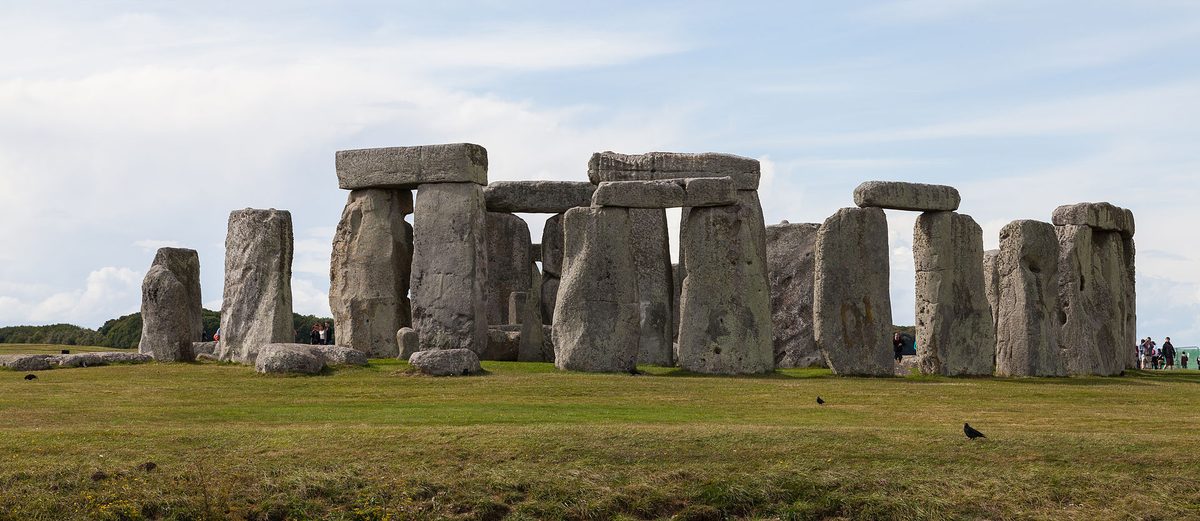
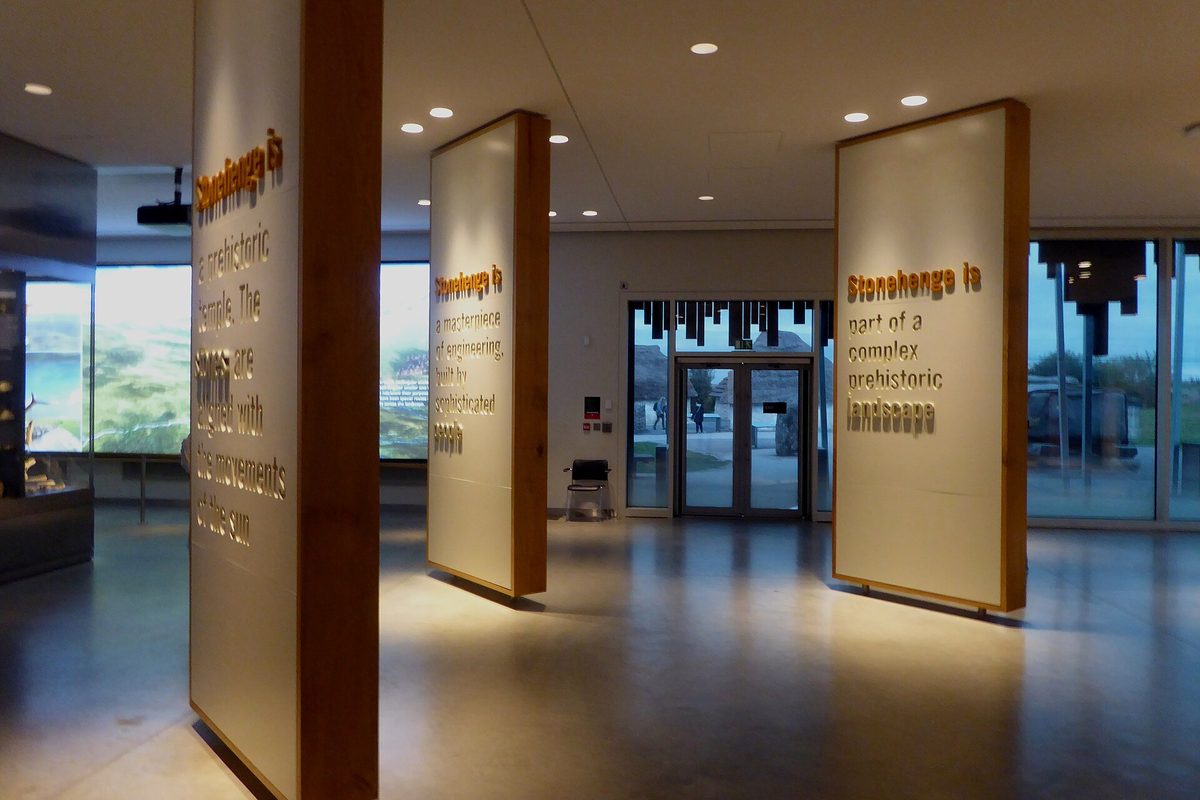
You arrive at a modern visitor centre that sits about 1.5 miles from the stones themselves — a deliberate distance, to keep the monument’s landscape uncluttered. The centre has a genuinely good exhibition (including the striking reconstructed face of a Neolithic man whose remains were found nearby), a circle of reconstructed Neolithic houses you can poke around in, a café and a shop. It’s worth 30–45 minutes either side of your stone-circle time.
To reach the stones you either walk (a 20–30 minute amble across the plain, which I love for the slow reveal) or hop the free shuttle bus that runs every few minutes. The shuttle also stops partway at Fargo Plantation, so you can ride out and walk part of the way back if you fancy it.
And here’s the bit to be straight about: on a standard ticket you walk a roped path that loops around the circle, not through it. You get within maybe 10 metres or so at the closest point — close enough to feel the scale, read the lintels, see the lichen — but you cannot walk up and touch the stones. If that’s a dealbreaker for you, skip ahead to the Stone Circle Experience.
For timing, I’d allow about two hours total for a relaxed visit: roughly 30–45 minutes at the visitor centre, the shuttle or walk out, and 30–40 minutes circling the stones (longer if the light’s good and you’re photographing). English Heritage’s own “two hours at Stonehenge” itinerary lines up with that. Could you do it in 75 minutes? Yes. Would I? No — you’ve come a long way; let it breathe.
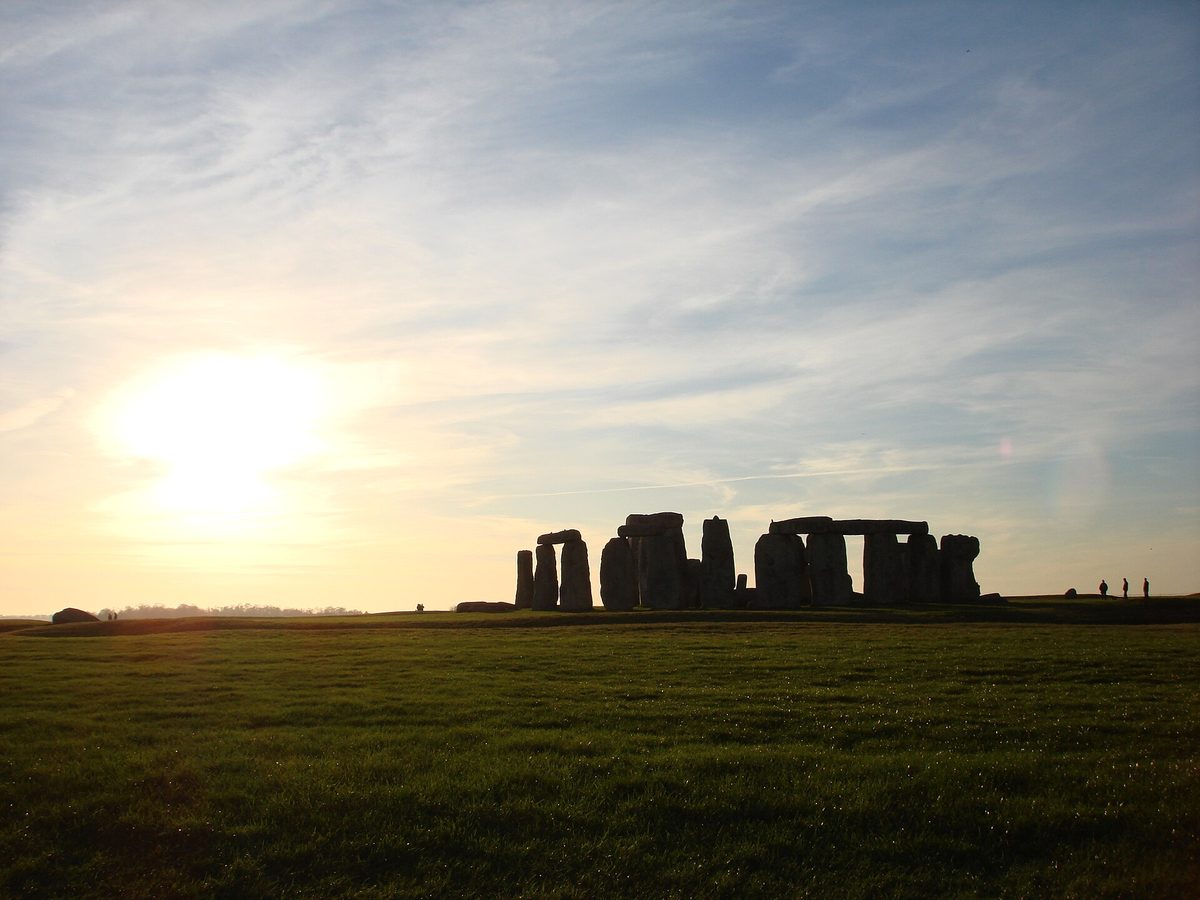
A quiet tip: the first slot of the morning or the last of the afternoon tends to be calmer and, frankly, more atmospheric, with softer light and thinner crowds. Midday in July is the busy, coach-heavy end of things, when the car park fills and you’re sharing the path with several tour groups at once.
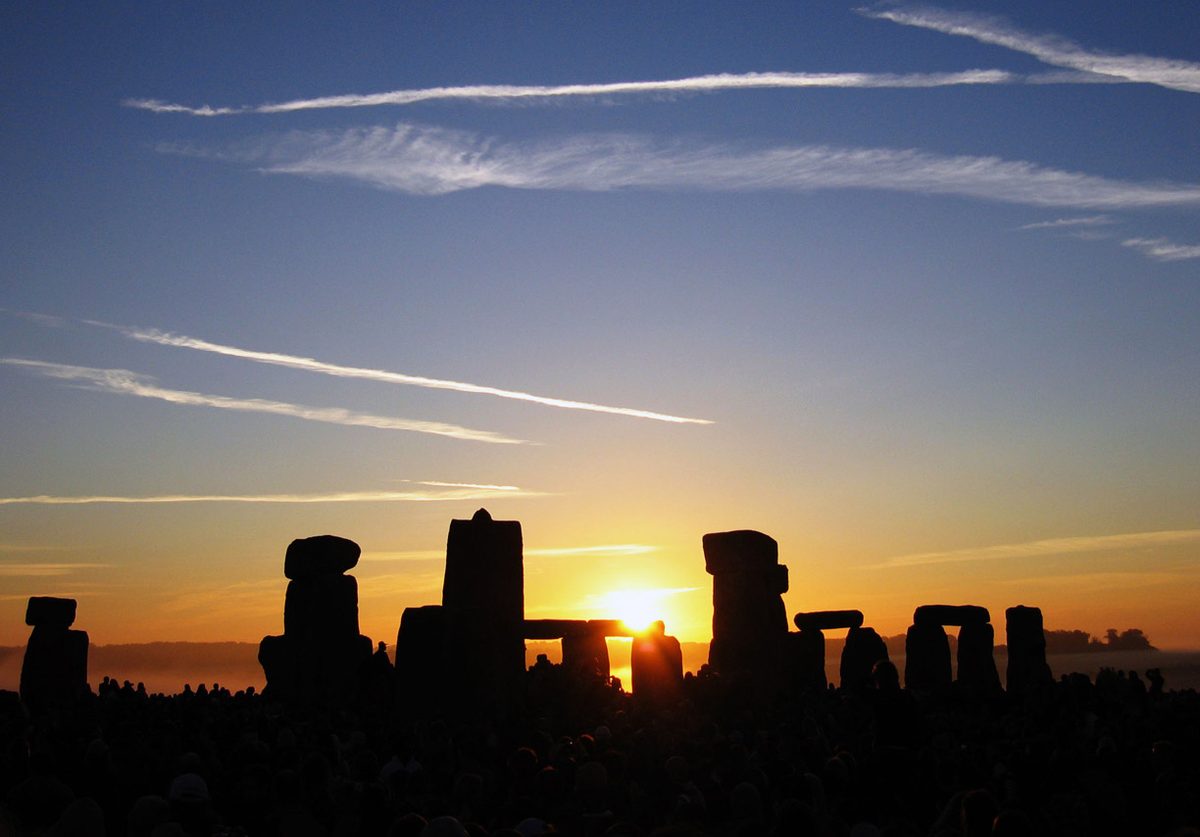
It’s also worth knowing what you’re looking at, because that’s half the magic. The big outer ring is built from sarsen stones — the giant ones, hauled from the Marlborough Downs about 20 miles north — capped by horizontal lintels shaped with prehistoric joinery. Inside sit the smaller bluestones, which somehow travelled all the way from the Preseli Hills in west Wales, around 150 miles away. The whole thing is aligned to the solstices: at midsummer the sun rises over the Heel Stone, and at midwinter it sets through the great central trilithon. Once you’ve clocked that alignment, the circle stops looking like a random ruin and starts looking like the deliberate, astonishing instrument it is.
One date-related caveat: opening times shift on the summer and winter solstices, when English Heritage runs special open-access events and normal timed tickets don’t apply — if your trip lands around 21 June or 21 December, check the website for the arrangements rather than assuming a standard visit.
The Stone Circle Experience: Inner-Circle Access
If you only remember one upgrade from this whole guide, make it this one. The Stone Circle Experience is the only way, outside of the solstice, that ordinary visitors can walk inside the ring and stand among the sarsens — and it transformed Stonehenge for me from “impressive” to “unforgettable.”
These visits run before the site opens in the morning or after it closes in the evening, outside normal hours, so you’re there in golden light with almost nobody else around. Sessions last about an hour, are capped at a small number of people (around 52, split into two groups at the stones), and include a guided walk inside the circle plus the surrounding features like the Heel Stone and the Slaughter Stone.
The practicalities, as of 2026:
- It’s a separate booking from general admission, made via English Heritage’s Stone Circle Experience page. You don’t add it to a normal ticket — you book the slot directly.
- Pricing is around £70 per adult and £40 per child (5–17), with under-5s free. Yes, it’s a step up in cost; in my opinion it’s worth every penny.
- It sells out far ahead — often months in advance, with dates released periodically. Check the timetable first so your requested time matches an available slot, then book the moment you can.
- Visits go ahead rain or shine, and you’re outdoors among the stones, so dress for Salisbury Plain weather (read: a windproof layer, always).
Even on a standard ticket, you can still book one of these and a general visit on a different occasion — but if you can only do one thing and you want to feel the place rather than just see it, this is the one I’d save up for.
Practical Tips and Accessibility
A scattering of things I wish someone had told me, plus the accessibility picture, which English Heritage handles well.
Weather and what to wear. Stonehenge is on an exposed plain with essentially no shelter once you’re out at the stones. It’s reliably windier and colder than wherever you started the day. Bring a proper layer and decent shoes — the paths are mostly firm but grass-edged, and it can get muddy.
Food and facilities. There’s a café and shop at the visitor centre, plus toilets there — but nothing out at the stones, so use the facilities before you ride out. The café is fine rather than thrilling; if you’re particular about lunch, eat in Salisbury.
The audio tour. The free audio guide is one of the best things about a standard visit, and lots of people miss it. You download it to your own phone (Apple App Store or Google Play) and bring your own headphones — there’s no kit handed out, so sort this before you arrive, ideally while you’ve got good signal. It genuinely adds depth to the loop around the stones.
Accessibility. The car parks, visitor centre and the stone-circle path are accessible by wheelchair via tarmac and grass paths (weather permitting), and the shuttle buses are step-free and accessible, fitting wheelchairs and Class 2 mobility scooters within size limits. The wider landscape walk is not suitable for standard wheelchairs. Audio items and tills at the centre have induction loops, exhibition films have subtitles and BSL, and there are accessible toilets and changing facilities. A carer or companion goes free — just flag it on arrival or book their free place online. For specific needs, English Heritage asks you to call ahead (around 0370 333 1181) to talk it through.
Photography. You can photograph freely on a standard visit; tripods and drones are another matter (drones are a firm no over the monument). For that classic “stones glowing at low sun” shot, aim for the first or last slot of the day.
Best time of year. Honestly, Stonehenge works in any season, but my favourite visits have been in late spring and early autumn — long enough days for golden light, but before or after the thick of the summer coaches. Winter has a stark, moody beauty all of its own, and the crowds thin right out; just dress seriously, because that plain in January is bitter. Whatever the season, a clear sky at the edges of the day is what you’re really hoping for.
Is it worth buying English Heritage membership? If Stonehenge is a one-off, no — just buy the timed ticket. But if your trip takes in several historic sites (and England is wall-to-wall with them), an annual membership can pay for itself fast: it covers entry to Stonehenge and hundreds of other properties, plus free parking and free entry for accompanying children. Run the numbers against your itinerary before you book individual tickets.
Combine it with Salisbury. Because most car-free visitors route through Salisbury anyway, I’d build in a couple of hours for the city. Salisbury Cathedral has Britain’s tallest spire and an original 1215 Magna Carta in its Chapter House, and the medieval streets and water meadows make a gentle counterpoint to the windswept plain. The Stonehenge Tour bus also stops at Old Sarum, the dramatic Iron Age and Norman hillfort just outside town — an easy, rewarding add-on if your bus ticket includes it.
Where it sits in the bigger picture. Stonehenge is part of a UNESCO World Heritage Site (jointly with Avebury), and it pairs naturally with England’s other ancient and medieval landmarks — if you’re building a history-led trip, our England castles and historic sites guide is a good companion. For getting around the country generally, see our England transport overview.
Final Thoughts
I’ll be honest with you one last time: if you arrive at Stonehenge expecting to wander dreamily among the stones with a hand on cold rock, a standard ticket will leave you slightly wanting. The road is there. The path keeps you back. The visitor centre is a mile and a half away and the whole thing is, undeniably, well organised to the point of feeling a touch processed.
And yet. I’ve stood on that path on a grey Tuesday and still felt the back of my neck prickle. Whoever raised these stones did it without the wheel, without metal tools, dragging bluestones from Wales and sarsens across the plain for reasons we still don’t fully understand. That mystery survives the gift shop and the shuttle. It really does.
So my advice: book your timed ticket in advance, give it a proper two hours, download that audio guide, and — if you possibly can — save up for the Stone Circle Experience and go at dawn. That early, with the light low and the crowds gone, is when Stonehenge stops being a thing you visited and becomes a thing you’ll keep thinking about. I do, all the time.
Research and Source Notes
This guide draws on official sources, checked in 2026, with all prices and times hedged as approximate because English Heritage updates them. Key references: English Heritage’s Stonehenge book-tickets and ticket-options pages for the timed, advance-booked model, advance discount and members-free entry; the Stone Circle Experience page for inner-circle pricing (~£70/£40), session length and the separate booking form; and English Heritage’s access and opening-times pages for shuttle accessibility, audio-tour download details and 2026 opening hours. Transport figures come from The Stonehenge Tour and Salisbury Reds for the Salisbury–Stonehenge bus, plus standard London Waterloo–Salisbury rail timings. Always confirm l
Photo Credits
- Stonehenge stone circle on a clear day, the highlight of any Stonehenge visitor guide in Wiltshire, England — Photo: Unknown / CC BY-SA 2.0 via Wikimedia Commons. Source
- Stonehenge monument under a wide Wiltshire sky, a key stop in any Stonehenge visitor guide in England — Photo: Diego Delso / CC BY-SA 4.0 via Wikimedia Commons. Source
- Stonehenge at sunset, the atmosphere many readers of a Stonehenge visitor guide hope to catch in England — Photo: Bkamprath (CC0) via Wikimedia Commons. Source
- Stonehenge visitor centre and shuttle, a practical part of any Stonehenge visitor guide in England — Photo: Ethan Doyle White / CC BY-SA 4.0 via Wikimedia Commons. Source
- Salisbury Cathedral near Stonehenge, an easy add-on for readers of this Stonehenge visitor guide in England — Photo: Diliff / CC BY-SA 3.0 via Wikimedia Commons. Source
Frequently asked questions
Can you walk up to the stones at Stonehenge?
Not on a standard ticket. General admission follows a roped path around the circle, getting you within roughly 10 metres at the closest point but no closer — you can't touch the stones. The only way to walk inside the ring is the separately booked Stone Circle Experience, held outside normal hours, or attending the open-access solstice.
Do you need to book Stonehenge tickets in advance?
Yes, strongly. Stonehenge uses timed entry, so you pick a 30-minute arrival window when you book. Advance online tickets are around 15% cheaper than the gate too. There's a limited supply of walk-up tickets on the day, but they can sell out in peak season — I wouldn't rely on them, especially in summer or at weekends.
How long do you need at Stonehenge?
Allow around two hours for a relaxed visit: roughly 30–45 minutes at the visitor centre and Neolithic houses, the walk or free shuttle out to the stones, and 30–40 minutes circling the monument. You can rush it in about 75 minutes, but given how far most people travel to get there, I'd give it the full couple of hours.
How do you get to Stonehenge from London without a car?
Take a train from London Waterloo to Salisbury (around 1 hour 30), then the Stonehenge Tour bus from outside Salisbury station to the stones (about 30 minutes, roughly hourly). Alternatively, an organised coach tour from central London handles the whole trip door-to-door and often combines Stonehenge with Bath or Windsor.
Is the Stone Circle Experience worth it?
In my opinion, yes — it's the highlight upgrade. For around £70 an adult you get about an hour inside the circle, before opening or after closing, in low light with hardly anyone else around. It's the difference between seeing Stonehenge and standing among it. The catch is it sells out months ahead, so book the moment dates open.
What's included in a Stonehenge ticket?
A standard ticket covers the stone-circle viewing area, the free shuttle out to the stones, the visitor centre and exhibition, the reconstructed Neolithic houses, and the audio guide (download it to your own phone and bring headphones). It does not include inside-the-circle access — that's the separate Stone Circle Experience.


1 note
Notes are closed on this sheet.