Sheet 14 · Bath, Stonehenge, Oxford and Cambridge · 19 min read
Avebury vs Stonehenge
Avebury vs Stonehenge, compared by someone who has stood in both circles: cost, crowds, atmosphere, getting there and whether to do one or both in a day.
 Sheet 14
Contents 10 sections
I’ve stood inside both of Wiltshire’s great stone circles, and the moment that stays with me isn’t the famous one. It’s leaning against a four-thousand-year-old sarsen at Avebury, late afternoon, a sheep cropping the grass a few feet away and absolutely nobody telling me to keep off. I put my palm flat on the cold stone and felt, genuinely, a little shiver. You can’t do that at Stonehenge. And that single fact is the heart of the whole debate.
So let’s settle it properly. This is Avebury vs Stonehenge from someone who’s done both, more than once, in different weather and different moods — not a glossy listicle, but the honest, opinionated rundown I’d give a friend over a pint in the Red Lion.
Quick Answer: Avebury vs Stonehenge in One Paragraph
Here’s the Avebury vs Stonehenge verdict in plain terms. Stonehenge is the icon: ticketed, roped off, viewed from a path, with a slick visitor centre run by English Heritage. Avebury is the world’s largest stone circle — free to walk among, you can touch the stones, with a village and pub inside the henge, cared for by the National Trust. Stonehenge wows; Avebury moves you. Many travellers, me included, quietly prefer Avebury.
That’s the short answer. But “which is better” genuinely depends on what you want from a day among ancient stones, so let me unpack every part of it — the experience, the cost, the crowds, the atmosphere, what’s nearby, how you get to each, and whether you can sensibly do both.
One thing worth saying up front: this isn’t an either/or born of rivalry. Both sites are part of the same UNESCO World Heritage Site, co-listed in 1986 as “Stonehenge, Avebury and Associated Sites,” and they sit only around 25 miles apart. They’re two halves of one extraordinary Neolithic landscape. If you’ve got the time, the real answer might be “both” — more on that later.
At a Glance: Avebury vs Stonehenge Head-to-Head
Before the detail, here’s the whole comparison boiled down to the decisions that actually matter on the day. Prices and times are hedged as around / as of 2026 — both bodies adjust them, so confirm before you go.
| Category | Avebury | Stonehenge |
|---|---|---|
| Managed by | National Trust | English Heritage |
| Entry to the stones | Free to walk among them | Timed ticket required |
| Can you touch the stones? | Yes | No (viewed from a path) |
| Cost | ~£7 car park (free for NT members) | ~£27–£32 adult; free for EH members |
| Size | World’s largest stone circle (~420m bank) | Smaller, but with iconic lintels |
| Crowds | Far quieter (~half a million a year) | Very busy (~1.5 million a year) |
| Atmosphere | Open, hands-on, lived-in | Dramatic but managed and roped |
| Visitor centre | Modest café, shop, small museum | Large purpose-built centre and shuttle |
| A pub inside? | Yes — the Red Lion, in the henge | No |
| Nearest train | None (Swindon ~12 miles; bus 49) | Salisbury, then the Tour bus |
| Time to allow | Half a day, easily | About 2 hours |
| Best for | Atmosphere, families, photographers | Ticking the bucket-list icon |
Keep that handy. Everything below is just me explaining the why behind each row — and where the table doesn’t tell the full story.
The Experience at Each: Roped Off vs Hands-On
This is the difference that nobody can talk you out of once you’ve felt it, so let’s start here.
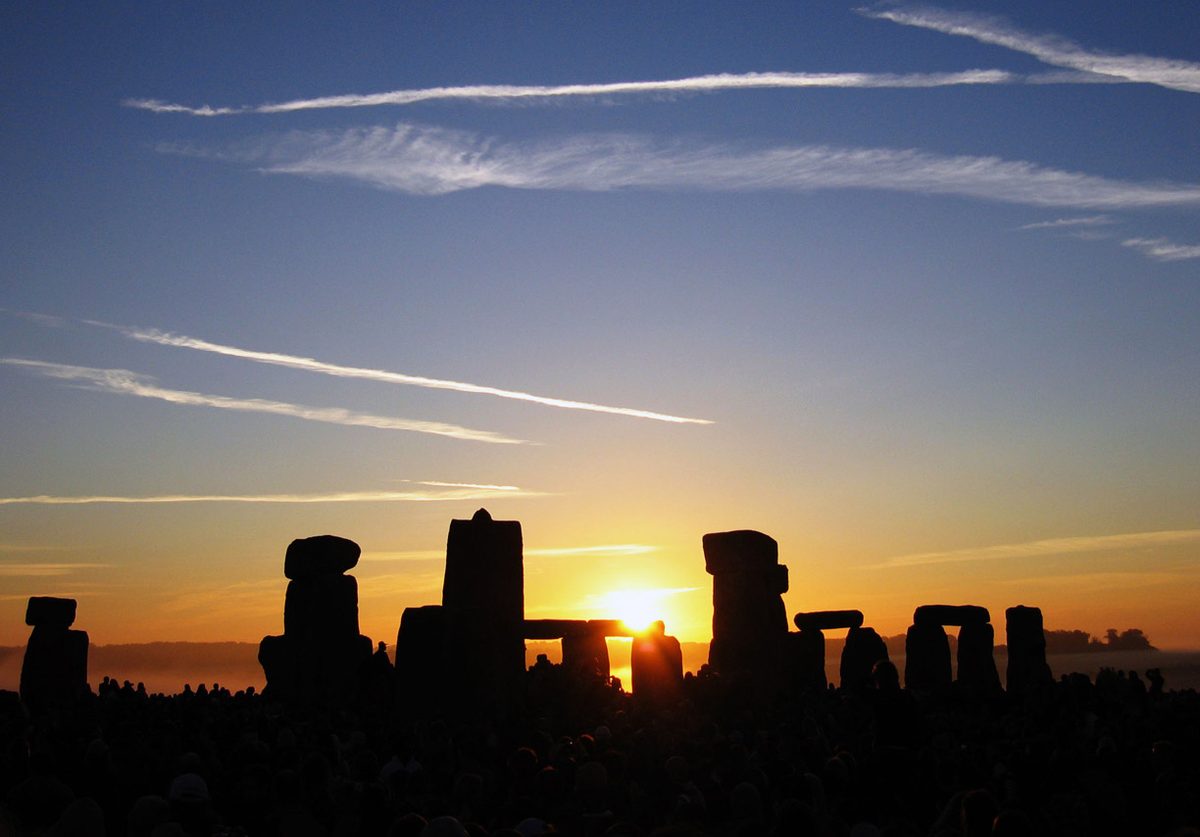
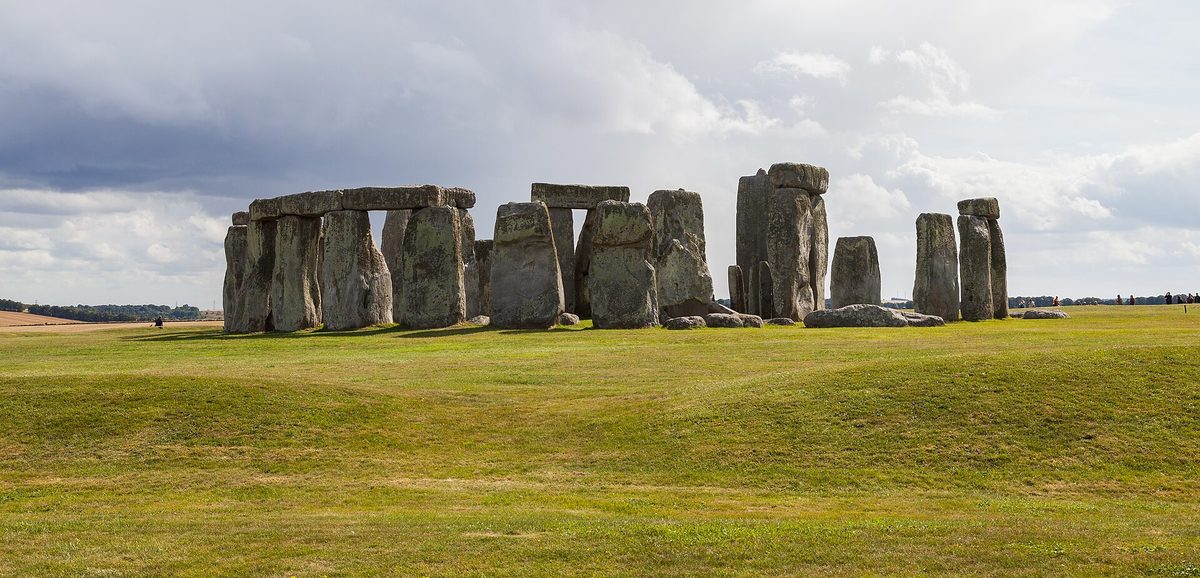
At Stonehenge, you arrive at a big modern visitor centre about a mile and a half from the stones, then ride a little shuttle (or walk) out across Salisbury Plain. The circle reveals itself against an enormous sky, and that first glimpse is genuinely thrilling — those lintelled trilithons are unlike anything else on Earth, the only stone circle built with horizontal capstones locked into place with woodworking-style joints. But you experience it from a low rope barrier on a path that loops around the monument. You’re kept a respectful distance back. It’s a view. A spectacular, humbling view, but a view.
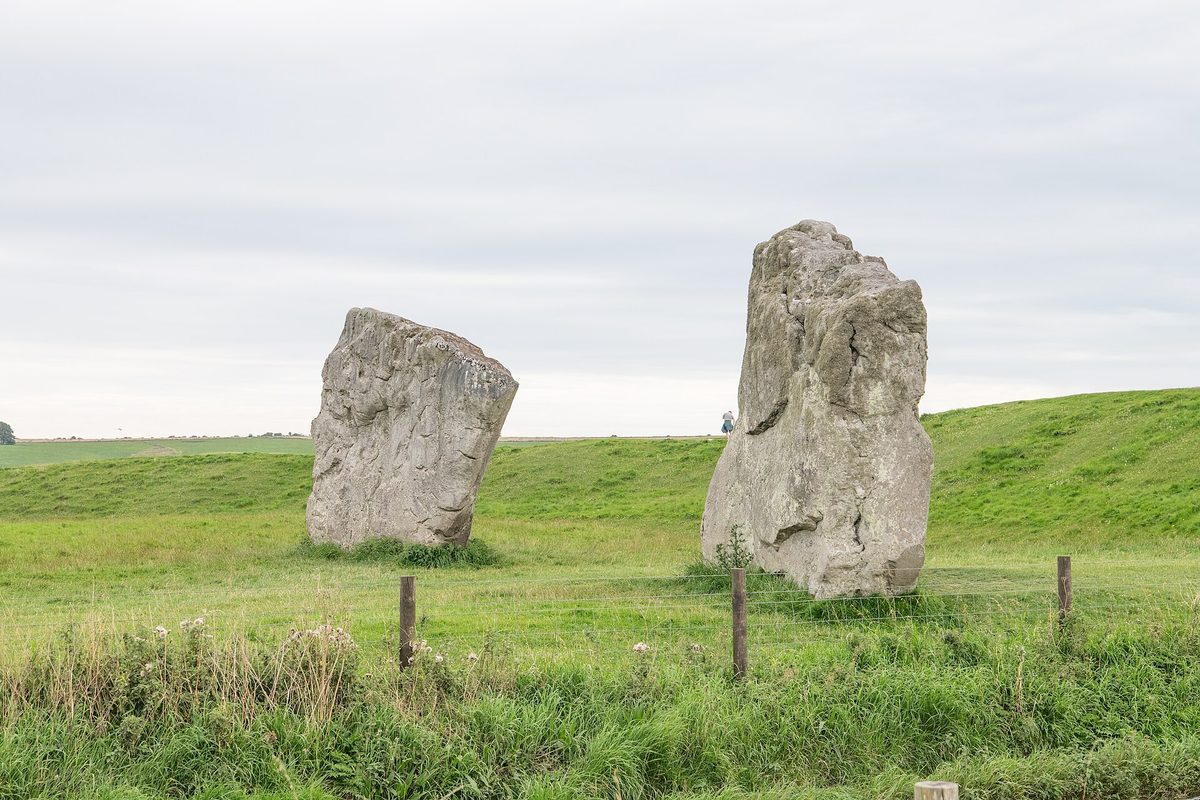
At Avebury, there’s no rope, no path, no admission desk for the stones. You park, you walk into the village, and suddenly you’re inside a prehistoric monument so vast it took me a moment to realise I was standing in it. You wander between the great sarsens, sit on the grass beside them, photograph them from any angle you like, and yes — put your hand on five thousand years of weathered stone. A footpath runs straight through the circle. Sheep graze between the megaliths. The whole thing is alive in a way Stonehenge, for all its grandeur, simply isn’t allowed to be.
I won’t pretend Avebury has the visual punch of Stonehenge. It doesn’t. Its stones stand alone — no lintels — and the village roads and a couple of cottages sit right in the middle of it, which can feel slightly surreal until you lean into it. But what Avebury offers is intimacy and scale at the same time, and that’s a rare combination. You don’t observe Avebury. You’re in it.
For the full mechanics of the Stonehenge side — exactly how the timed tickets, the shuttle, and the inner-circle access work — I’ve put all of that in the dedicated Stonehenge visitor guide, so I won’t rehash it here. This page is about the choice.
What Avebury actually looks like
A quick orientation, because “largest stone circle in the world” undersells how strange and brilliant Avebury is. The whole monument is ringed by a huge circular bank and ditch about 420 metres across — the ditch was originally something like nine metres deep, all dug with antler picks around 4,500 years ago. Inside that great henge sits the outer stone circle (originally somewhere around 100 standing stones), and within that are two smaller inner circles.
The southern inner circle once centred on the Obelisk, the tallest stone here at around 6.4 metres, now marked by a concrete post where it stood until the 1700s. The northern inner circle holds the Cove — two enormous surviving sarsens, among the heaviest stones on the site. Many stones were toppled or broken up over the centuries; the archaeologist Alexander Keiller re-erected a number of them in the 1930s, and concrete markers show where others once stood. Knowing that as you walk makes the place read like a vast open-air diagram of deep time.
Cost and Access: Free Stones vs a Timed Ticket
If budget is part of your decision, this one’s lopsided, and it’s a big point in Avebury’s favour.
Avebury is, for the stones themselves, free. The National Trust cares for the henge and the surrounding land, and walking among the circle costs nothing, all year round. What you pay for is parking: the main National Trust car park runs around £7 for the day as of 2026 (cheaper, roughly £4, if you arrive after 3pm), and it’s free for National Trust members. If you want extras, the small Alexander Keiller Museum and Avebury Manor have their own admission (free for members), but the headline experience — the circle — is open and free.
Stonehenge is ticketed, and it isn’t cheap. As of 2026 an adult advance ticket is around £27–£28 online (a bit more, roughly £32, at the gate), with children around £16–£18 and under-5s free. English Heritage members go free but still need to reserve a timed slot. It’s a genuinely good visitor experience for the money — the centre, exhibition and audio guide are all included — but for a family of four it adds up fast, where Avebury costs you a single car-park ticket.
So if you’re travelling on a budget, or with kids, or you’re already a National Trust member, the maths makes Avebury very hard to argue with. If you’re an English Heritage member, the reverse applies — Stonehenge becomes “free” and you’ll want to use that membership.
A small but real point: because Avebury has no ticket and no timed entry, it’s also gloriously spontaneous. You can decide at breakfast to go, turn up whenever, and stay as long as you like, into the golden hour if you fancy. Stonehenge requires you to book a slot in advance, especially in summer when it sells out. That flexibility is part of Avebury’s charm.
Atmosphere and Crowds: Where You’ll Actually Feel Something
Here’s where my own bias shows, so I’ll be honest about it.
The numbers tell the story before I even start. In a typical pre-pandemic year, Stonehenge drew around 1.5 million visitors; Avebury, roughly half a million. And Avebury is a much bigger site spread across a whole village and the open downs. Do that arithmetic and you understand instantly why the two feel so different.
Stonehenge can feel busy. You’re often moving in a slow, polite river of people around the path, lifting your phone over shoulders for a clear shot, sharing the moment with a few hundred others and a line of coaches in the car park. It’s beautifully managed — English Heritage does a genuinely good job — but management is the operative word. The atmosphere is more “world-famous attraction” than “ancient sacred place.” That’s not a criticism so much as a reality of being one of the most visited monuments on the planet.
Avebury breathes. Even on a decent summer day I’ve found whole stretches of the circle where it was just me, the stones and the wind. You hear birdsong and the occasional clink of a glass from the pub garden rather than a tannoy. There’s a reason Avebury has long drawn people seeking something quieter and more spiritual — solstice gatherings, yes, but also just walkers and dreamers and families letting kids clamber on the grass. It has, for want of a less wishy-washy word, a vibe. Stonehenge has spectacle; Avebury has soul.
If atmosphere and the chance to actually be alone with the past is what you’re chasing — if you want to imagine 2500 BC rather than queue to glimpse it — Avebury wins this category outright. If you want the unmistakable, photograph-it-and-prove-you-were-there silhouette, only Stonehenge will do.
Time of day matters at both. Stonehenge is calmest at the very first or very last slot. Avebury rewards early mornings and late afternoons most of all — partly for the light, partly because the day-trip coaches that do swing through tend to come and go around the middle of the day.
What’s Nearby: The Avebury Landscape You’ll Miss at Stonehenge
This is the part most “which is better” debates skip, and it’s the single biggest reason I keep going back to Avebury. The site isn’t just the circle — it’s the anchor of an entire Neolithic landscape you can walk between on foot, for free.
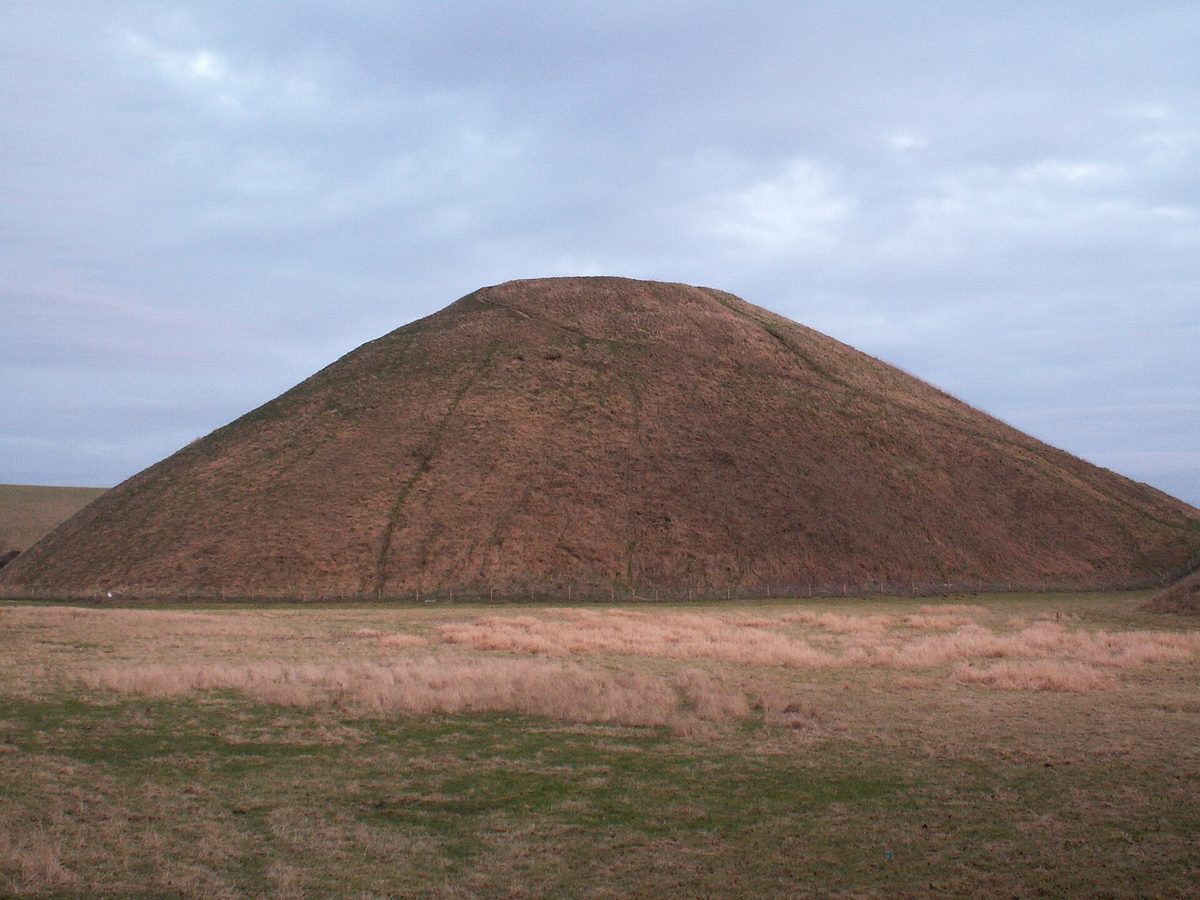
Silbury Hill sits about a mile south, just off the A4. It’s the largest artificial prehistoric mound in Europe — a vast, grassy, man-made pyramid of chalk, around 4,400 years old, and nobody fully knows why it was built. You can’t climb it (to protect it), but standing at its foot is one of those quietly staggering moments. It’s astonishing it isn’t more famous.
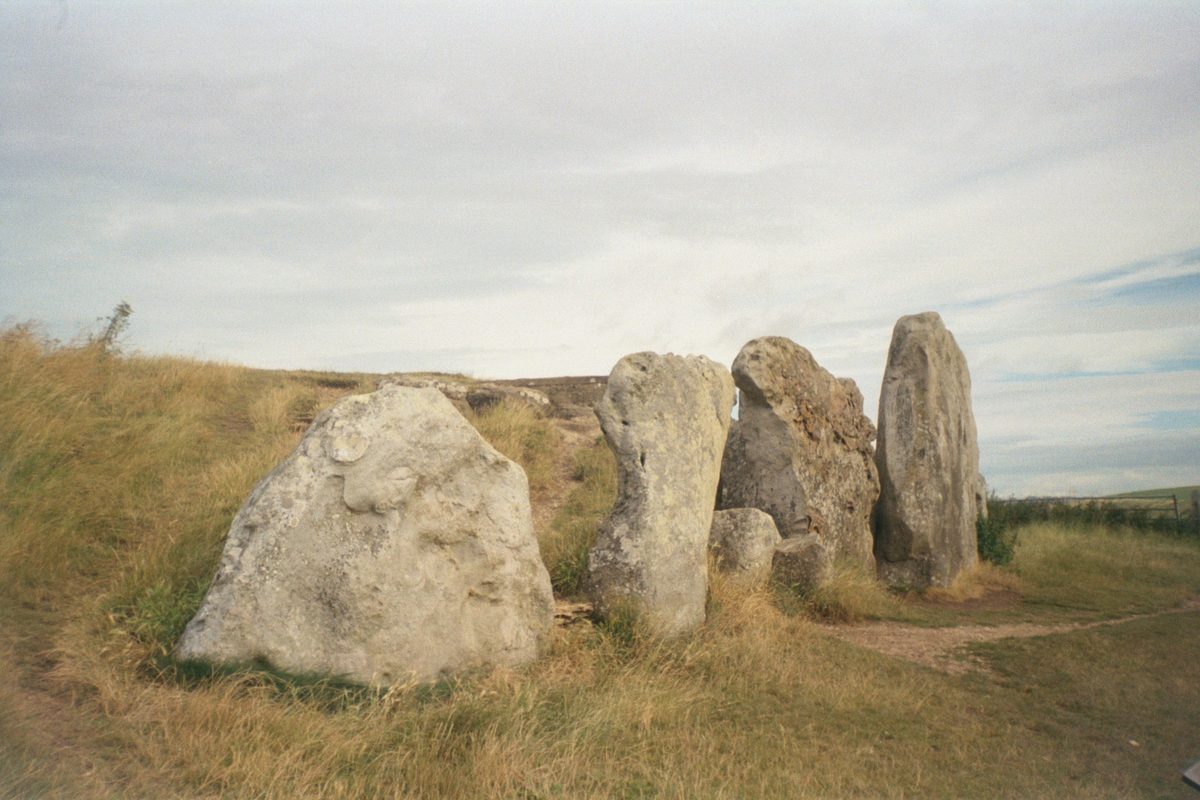
West Kennet Long Barrow is a short, gorgeous walk on from Silbury — a Neolithic burial tomb, older than the stone circle itself, that you can actually walk inside. Ducking into its cool stone chambers, with light slanting through the entrance, is the kind of hands-on encounter with the deep past you simply cannot get anywhere at Stonehenge. From Avebury henge it’s roughly a 20–30 minute walk each way, mostly across fields (muddy after rain — boots help).
Link them up and you’ve got the classic Avebury–Silbury Hill–West Kennet circular walk, around 5 miles, taking in the stone avenue too, an easy half-day on foot for most reasonable fitness levels. Add the Alexander Keiller Museum (a genuinely good little prehistory collection, 30–60 minutes) and the Tudor Avebury Manor, and Avebury isn’t a 90-minute stop — it’s a proper day out.
Stonehenge has its own wider landscape of barrows and the Cursus, and the visitor centre exhibition is excellent, but you experience most of it through glass and from paths rather than by wandering through it. Avebury hands you the whole prehistoric world and lets you walk straight in. It’s no contest on this score.
And then there’s the village itself — and that pub.
The Red Lion: a pint inside a stone circle
I have to give the Red Lion its own moment, because it’s one of my favourite quirks in all of England. It is, as far as anyone can tell, the only pub in Britain that sits within a prehistoric stone circle. You can sip a pint of something local with four-thousand-year-old megaliths visible through the window — standing stones quite literally in the beer garden’s eyeline.
The thatched, partly timber-framed building dates back to the 1600s (it was a farmhouse before it became a coaching inn), and there’s a deep old well in the floor, now glassed over so you can peer down into it, with the obligatory haunting legend attached. Is the food destination-dining? No — it’s a country pub doing country-pub things. But eating lunch inside a Neolithic henge, surrounded by stones older than the pyramids of Giza, is an experience Stonehenge can’t offer at any price. There’s no pub in the rope line at Stonehenge.
Getting There: How to Reach Avebury and Stonehenge
Access is genuinely different for the two, and it can swing your decision depending on whether you’re driving.
Getting to Stonehenge
Stonehenge is the easier of the two by public transport. The standard route is the train from London Waterloo to Salisbury (around 1 hour 30), then the Stonehenge Tour bus out to the site. Lots of organised day trips also run direct from London, Bath and Salisbury. By car it’s just off the A303, with the visitor-centre car park included in your ticket. For the full transport breakdown — trains, buses, the shuttle, and driving from London, Salisbury and Bath — see my practical guide to Stonehenge, and for the classic capital-city day out there’s our London to Stonehenge day trip guide.
Getting to Avebury (this is the catch)
Here’s Avebury’s one real drawback: there is no train station, and no station especially close. If you’re not driving, it takes a little planning.
The nearest mainline station is Swindon, about 12 miles north, on the fast line from London Paddington. From Swindon, the Stagecoach 49 bus runs roughly hourly (Monday–Friday; reduced at weekends) and drops you right outside the Red Lion in the heart of the village — about a 30-minute ride. You can also reach Avebury by bus from Marlborough and Calne (the 42), and Marlborough itself is a lovely market town worth pairing with the trip. Always check current bus timetables before you set out, as rural services change and weekend frequencies thin out.
By car it’s straightforward — Avebury sits just off the A4 between Marlborough and Calne, with the National Trust car park signposted. Honestly, Avebury rewards having a car more than almost anywhere in this comparison, precisely because a car unlocks Silbury Hill, West Kennet and the wider landscape with ease.
If you’re working out the logistics of moving around this part of England generally — trains, buses, car hire — our England transport guide lays out the options.
Avebury and Stonehenge the Same Day: Can You Do Both?
Short answer: yes, comfortably — if you have a car or take a tour. The two sites are only around 25 miles apart (roughly a 40-minute drive), and plenty of organised day trips from London deliberately pair them, often with West Kennet thrown in.
My honest recommendation for Avebury and Stonehenge the same day: give Stonehenge about two hours (it’s a tighter, more contained visit) and give Avebury the bigger chunk of your day, because there’s simply more to wander through — the circle, the village, the pub, and ideally Silbury Hill and West Kennet if energy allows. A natural rhythm is Stonehenge first thing on an early timed slot while it’s calmest, then drive north to Avebury for a long, unhurried afternoon and a late lunch at the Red Lion.
Doing both back-to-back is also the fairest way to judge them, and it’s genuinely illuminating: you go from the roped, reverent hush of Stonehenge to the open, hands-on sprawl of Avebury and feel the contrast in your bones. Most people I’ve sent to do both come back saying the same thing — Stonehenge was the one they had to see, and Avebury was the one they didn’t want to leave.
Two caveats. Without a car, doing both in a day independently is fiddly (different bus networks, no direct link), so a guided tour or your own wheels is the way. And if you’re trying to fold Stonehenge into a wider southern-England loop with Bath, I’d point you to the dedicated Bath and Stonehenge itinerary rather than cramming everything into one breathless day — that plan paces it properly.
Who Should Pick Which: An Honest Verdict
Time for me to stop sitting on the fence. Here’s how I’d actually advise you.
Pick Avebury if…
- You want to touch the stones and walk freely among them, not view from a rope.
- You’re travelling with kids, or on a budget — the stones are free; you only pay to park.
- Atmosphere matters more to you than the famous silhouette; you want quiet and space.
- You’re already a National Trust member (parking’s free).
- You love the idea of a half-day with a stone circle, a 5,000-year-old burial tomb you can enter, Europe’s biggest prehistoric mound, and a pint in a pub inside the henge.
- You have a car, which unlocks the whole landscape.
Pick Stonehenge if…
- Seeing the world-famous, lintelled icon in person is a genuine bucket-list moment for you.
- You’re short on time and want one tight, well-organised, two-hour visit.
- You’re relying on public transport from London or Salisbury — it’s far easier to reach.
- You’re an English Heritage member (free entry).
- You want the polished experience: a strong exhibition, audio guide and visitor centre.
Pick both if… you have a full day and ideally a car. They’re two faces of the same ancient world, and seeing them together is, for my money, one of the best days out in England — a point we make in our roundup of England’s UNESCO World Heritage Sites, which these two anchor.
If I could only send you to one, and you twisted my arm? Avebury. Not because Stonehenge isn’t magnificent — it is — but because Avebury gives you more: more space, more freedom, more to do, more of that hand-on-the-stone shiver, and far fewer people to share it with. It’s the one that feels like a discovery rather than a queue.
Final Thoughts
If you’ve read this far you can probably guess where I land, but let me say it cleanly. Stonehenge is the one you have to see; Avebury is the one you’ll fall for.
Stonehenge earns its fame. That first sight of the trilithons against a wide Wiltshire sky genuinely silenced me, and I’d never tell anyone to skip it. But it’s an attraction you observe — beautifully presented, undeniably moving, and held politely at arm’s length.
Avebury is something rarer. It lets you in. You walk among stones older than the pyramids, lay your hand on them, sit in the grass beside a 5,000-year-old monument with a pint from a pub that’s been pouring them for four centuries, and wander out to a burial tomb you can step inside. It costs you a car-park ticket and a bit of planning to reach. And it gives you the past not as a spectacle but as a place — one you can be alone in.
So my verdict on Avebury vs Stonehenge: see Stonehenge for the icon, but give Avebury your afternoon, your curiosity and, if you can, the better half of your day. If you only do one, make it Avebury — and stay until the light goes gold and the coaches have gone. That’s when the stones are yours. For more landscapes that reward that kind of slow, hands-on travel, our guide to England’s most beautiful landscapes is full of them, and if you’re based in the capital, both circles feature in our day trips from London roundup. Lovers of old stone and older history should also browse our castles and historic sites guide — but honestly, start with a hand on a sarsen at Avebury. Few things in England beat it.
This whole comparison sits within a wider southern-England loop, by the way: if you’re combining the stones with Georgian Bath and the university cities, our Bath, Stonehenge, Oxford and Cambridge tour is the wider route that ties it all together, and the Bath travel guide is your base for the western end of it.
Research and Source Notes
The prices, distances and times above are hedged as around / as of 2026 and reflect official guidance at the time of writing — always confirm on the day, as both bodies adjust details seasonally. Key facts were checked against the National Trust page for Avebury (nationaltrust.org.uk/visit/wiltshire/avebury), which covers the free access to the stones, the roughly £7 day parking and member benefits, and English Heritage (english-heritage.org.uk) for Stonehenge admission and for the description of the Avebury henge and stone circles, including the ~420m bank, the inner circles, the Obelisk and the Cove.
Both sites’ shared UNESCO World Heritage status (“Stonehenge, Avebury and Associated Sites”) and the ~25-mile gap between them are drawn from the joint World Heritage Site information. Visitor-number comparisons (~1.5 million at Stonehenge versus ~0.5 million at Avebury in a typical recent year) reflect widely reported attendance figures. Transport details — the lack of a station at Avebury, Swindon as the nearest railhead, and the Stagecoach 49 and 42 bus routes — were confirmed via the National Trust’s sustainable-travel guidance and public-transport sources. The Red Lion’s claim as the only pub within a prehistoric stone circle, and the Silbury Hill and West Kennet Long Barrow details and walking distances, were cross-checked across National Trust, English Heritage and established walking-route sources. For the live mechanics of Stonehenge tickets and timed entry, I defer throughout to our dedicated Stonehenge visitor guide.
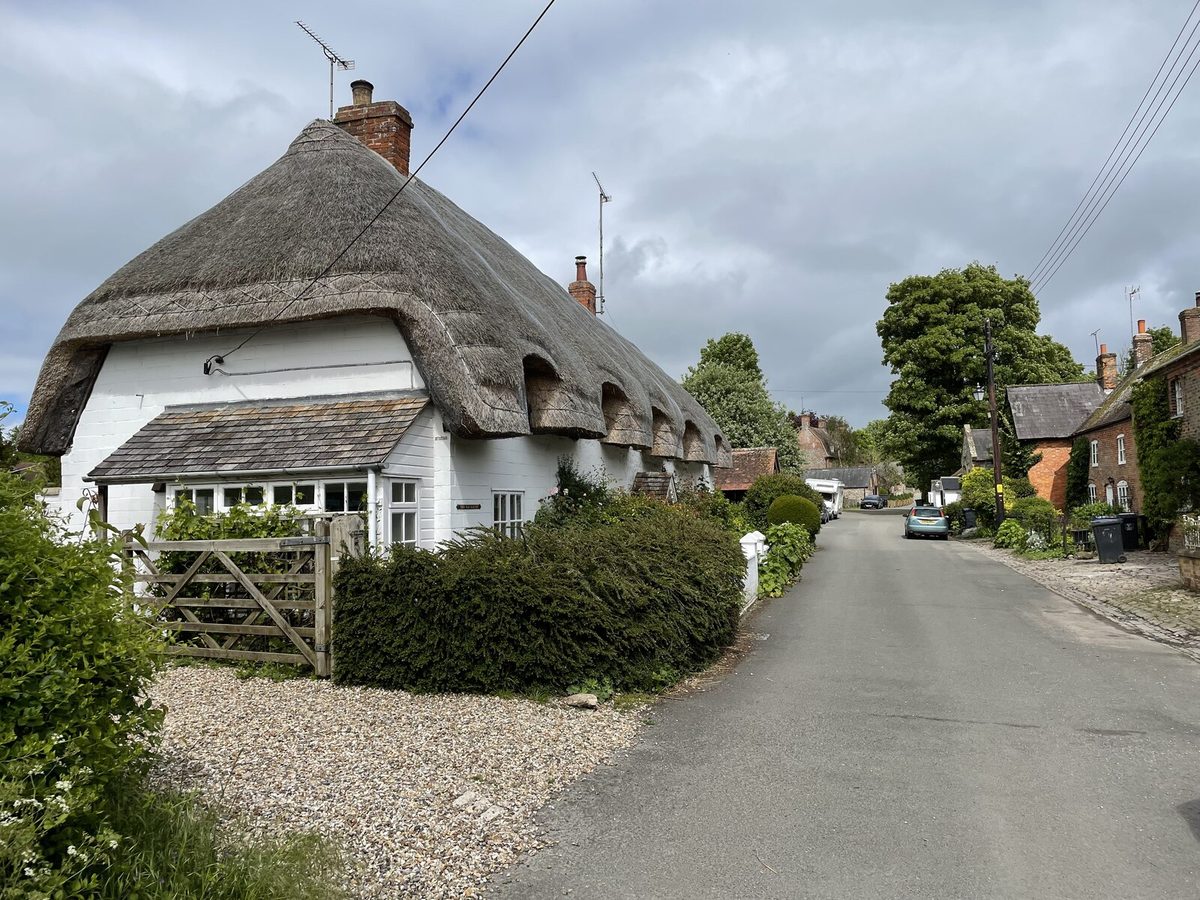
Photo Credits
- Avebury stone circle, the world’s largest, with sheep grazing among the sarsens in Wiltshire, England — Photo: Tilman2007 / CC BY-SA 4.0 via Wikimedia Commons. Source
- Stonehenge stone circle viewed from the visitor path against a wide Wiltshire sky, England — Photo: Diego Delso / CC BY-SA 4.0 via Wikimedia Commons. Source
- Silbury Hill, the largest prehistoric mound in Europe, near Avebury in Wiltshire, England — Photo: Dickbauch (CC0) via Wikimedia Commons. Source
- West Kennet Long Barrow, a Neolithic tomb you can walk inside, near Avebury, England — Photo: Simon Burchell / CC BY-SA 4.0 via Wikimedia Commons. Source
- Avebury village among the standing stones of the henge, Wiltshire, England — Photo: Nigel Thompson / CC BY-SA 2.0 via Wikimedia Commons. Source
Frequently asked questions
Is Avebury better than Stonehenge?
It depends on what you want. Avebury is bigger, free to walk among, far less crowded, and you can touch the stones — many travellers find it more atmospheric and rewarding. Stonehenge is more iconic and architecturally striking but ticketed and roped off. For hands-on intimacy, Avebury wins; for the famous silhouette, Stonehenge does.
Can you visit Avebury and Stonehenge in the same day?
Yes, easily with a car or on a guided tour. The two sites are only around 25 miles apart, roughly a 40-minute drive. Allow about two hours at Stonehenge and the bigger part of your day at Avebury, since there's far more to explore there, including Silbury Hill, West Kennet Long Barrow and the village.
Is Avebury stone circle free to visit?
Yes — walking among the stones at Avebury is free all year, as it's cared for by the National Trust. You only pay for parking, around £7 for the day as of 2026 (free for National Trust members). The Alexander Keiller Museum and Avebury Manor have separate admission, but the stone circle itself costs nothing.
How do you get to Avebury without a car?
Avebury has no train station. The nearest is Swindon, about 12 miles away on the line from London Paddington, then the hourly Stagecoach 49 bus into the village (around 30 minutes), which stops outside the Red Lion. Buses also run from Marlborough and Calne. Always check current timetables, as weekend services are reduced.
Which is bigger, Avebury or Stonehenge?
Avebury is far bigger — it's the largest prehistoric stone circle in the world, with a surrounding bank and ditch around 420 metres across, enclosing an outer circle of roughly 100 stones plus two inner circles and an entire village. Stonehenge is much more compact, but unique for its lintelled trilithons, which Avebury doesn't have.
Is there a pub at Avebury?
Yes — the Red Lion, a thatched 17th-century inn that sits right inside the henge, making it the only pub in Britain within a prehistoric stone circle. You can have a drink or lunch with standing stones visible nearby, and there's a centuries-old well, now glassed over, in the floor. There's no equivalent at Stonehenge.