Sheet 44 · Where to Stay in England · 17 min read
Best Towns to Stay in the Cotswolds
Discover the best towns to stay in Cotswolds: nine towns compared for transport, budget, crowds, and vibe so you can choose the perfect base.
 Sheet 44
Contents 11 sections
I’ve slept in a lot of Cotswolds beds. Narrow rooms above pubs, grand four-posters in manor hotels, self-catering cottages where the ceiling beams were genuinely a hazard. And every time someone asks me where they should actually base themselves, I realise how much the answer depends on who’s asking.
The best towns to stay in Cotswolds are not the same for everyone — and that’s the whole point of this guide. Whether you’re arriving by train, have two children in the back of the car, are travelling on £80 a night or £250, want honey-stone perfection or a proper town with a butcher and a wine bar — there is a right answer for you. Let me walk you through nine towns, town by town, and help you find it.
For the fuller picture of the region itself — what to see, how to plan your days, and how the whole area hangs together — head to the Cotswolds travel guide. This article is purely about where to sleep and why.
Quick Answer: Best Towns to Stay in the Cotswolds
The single best towns to stay in Cotswolds for most visitors are Stow-on-the-Wold (central, great base, car useful), Moreton-in-Marsh (the only major town with a proper train service from London), and Chipping Campden (loveliest streets, quieter than most). If you want buzzy and photogenic, Bourton-on-the-Water delivers. If you want peace and independence, Cirencester or Burford will suit you better than anywhere.
At-a-Glance Comparison
| Town | Best for | Rough nightly cost (B&B/hotel, 2026) | Train station? | Car needed? |
|---|---|---|---|---|
| Stow-on-the-Wold | All-round base, antiques, central location | £100–£200 | No (Moreton, 4 mi) | Helpful but not essential |
| Moreton-in-Marsh | Car-free travellers, rail access | £90–£160 | Yes (GWR to Paddington) | No |
| Chipping Campden | Prettiest streets, romance, first visit | £120–£220 | No (Moreton, 9 mi) | Yes |
| Bourton-on-the-Water | Families, photogenic, day-trippers | £95–£180 | No (Kingham, ~7 mi) | Helpful |
| Broadway | Heritage feel, walkers, foodies | £130–£250 | No (Evesham, 6 mi) | Yes |
| Burford | Gateway town, independent shops | £110–£190 | No (Charlbury, 8 mi) | Yes |
| Tetbury | Prince Charles country, less crowded | £100–£180 | No (Kemble, 5 mi) | Yes |
| Painswick | Hidden gem, walkers, peace | £90–£160 | No (Stroud, 4 mi) | Yes |
| Cirencester | Roman history, local life, budget | £80–£150 | No (Kemble, 4 mi) | Helpful |
The Best All-Round Bases in the Cotswolds
Stow-on-the-Wold: The Central Hub
If someone gave me one night in the Cotswolds and said “pick anywhere,” I’d probably land in Stow-on-the-Wold. It sits almost exactly in the middle of the region, which means from a room here you can drive to Chipping Campden in the north, Burford in the south, and Bourton-on-the-Water is just four miles away. That central position is the whole argument.
The town itself is handsome without being precious. The market square is broad, flanked by antique shops and independent cafés, and the surrounding lanes have that compressed, honey-stone quality that people picture when they imagine the Cotswolds. It’s busy in summer — very busy — but it doesn’t feel as overwhelmed as some of the more photographed spots because it’s a proper town, not just a village that got famous. There are enough pubs, restaurants, and accommodation options that you’re not just fighting over two B&Bs.
Accommodation runs around £100 to £200 per night as of 2026 for a decent B&B or small hotel room. There’s no train station, but Moreton-in-Marsh is only four miles north and has regular GWR services from London Paddington (more on that below). If you have a car and want one place to call home for three or four nights of exploring, Stow is the obvious answer.
For more on where to sleep in the broader region, the where to stay in the Cotswolds guide covers accommodation types and area breakdowns in detail — this article is the companion piece focused on which town specifically.
Chipping Campden: The First-Timer’s Favourite
If you’ve never been to the Cotswolds before and you want that single street that makes you put your phone down and just stand there, it’s the High Street in Chipping Campden. I’m not exaggerating. It curves gently, the stone changes colour almost house by house from pale cream to deep amber, and the whole thing has survived largely intact since the wool-trade days of the 15th and 16th centuries. It’s a genuinely remarkable piece of English townscape.
Beyond the looks, Chipping Campden earns its place as a base because it has enough to do. The Eight Bells is a proper old pub with food that won’t disappoint. There are deli-style shops and a covered market hall that has stood since 1627. The Cotswold Way long-distance footpath starts here, so walkers are well placed. And the town is far enough off the main tourist circuit that even in July and August it feels less frantic than Bourton-on-the-Water or Broadway.
The weakness is transport. The nearest train station is Moreton-in-Marsh, nine miles south, and bus services are limited. You really do want a car to get here and to use it as a base. Hotels and B&Bs run roughly £120–£220 per night as of 2026.
The Prettiest Cotswolds Towns to Stay In
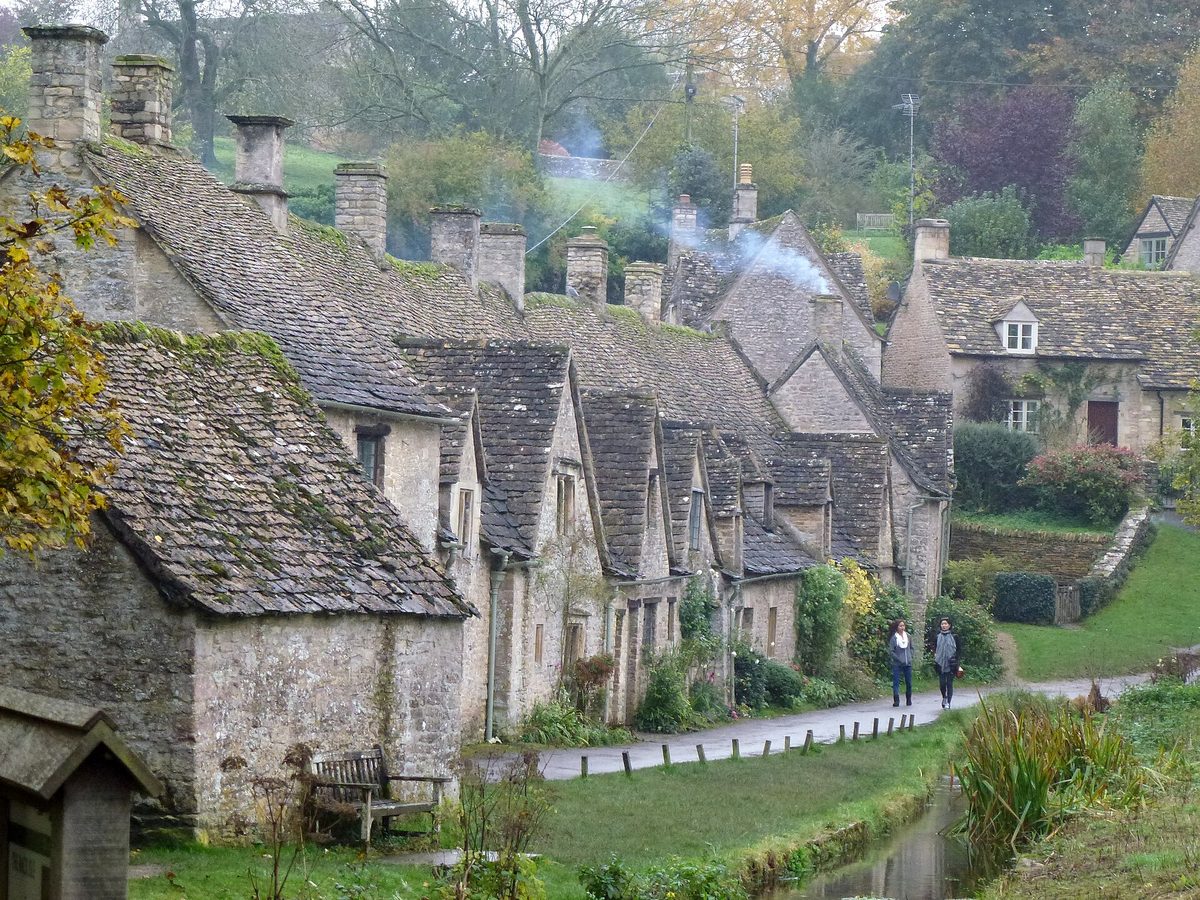
Broadway: The Grand Stage Set
Broadway is the Cotswolds turned up. The High Street is wider and more theatrical than most — lined with horse chestnut trees, Georgian and Elizabethan frontages, and upmarket restaurants that reflect the town’s long history of pulling in well-heeled travellers (Turner painted here). The Lygon Arms, one of the great English coaching inns, has been hosting guests since the 16th century and still does, at prices that reflect it (expect £200+ per night for a classic room).
There’s real beauty here, no question. But Broadway can feel a little like a film set rather than a lived-in place. The ratio of antique dealers to ordinary shops is very high. If that’s your thing — heritage, quality, walking up to Broadway Tower on the hill — you’ll love it. If you want something that feels more like an actual community, Chipping Campden, four miles north, might suit you better.
No train station — the closest is Evesham, about six miles away. You need a car, or you need to commit to taxis and the occasional bus.
Bourton-on-the-Water: Photogenic and Busy
Bourton-on-the-Water is the town every Cotswolds photograph uses — the low stone bridges over the clear, shallow River Windrush, ducks in the water, honey-stone cottages behind. It deserves that reputation. On a weekday morning in April, with mist still on the water meadows, it’s genuinely wonderful.
On a Saturday afternoon in August, it’s a different conversation. The car parks fill up, the riverside path becomes a corridor of selfie sticks, and the ice cream queue at the bakery stretches around the corner. I say this not to put you off but to help you plan: if you want to experience Bourton at its best, arrive early and leave by midday.
As a base it works well for families because the town has a good spread of child-friendly attractions — the Cotswold Motoring Museum, Birdland Park, a miniature model village — and enough cafés and restaurants that even fussy eaters find something. Accommodation runs around £95–£180 per night as of 2026. The nearest train station is Kingham, about seven miles away on the Cotswold Line, which gives you a possible car-free route if you’re willing to taxi or cycle from the station.
Best Cotswolds Town Without a Car
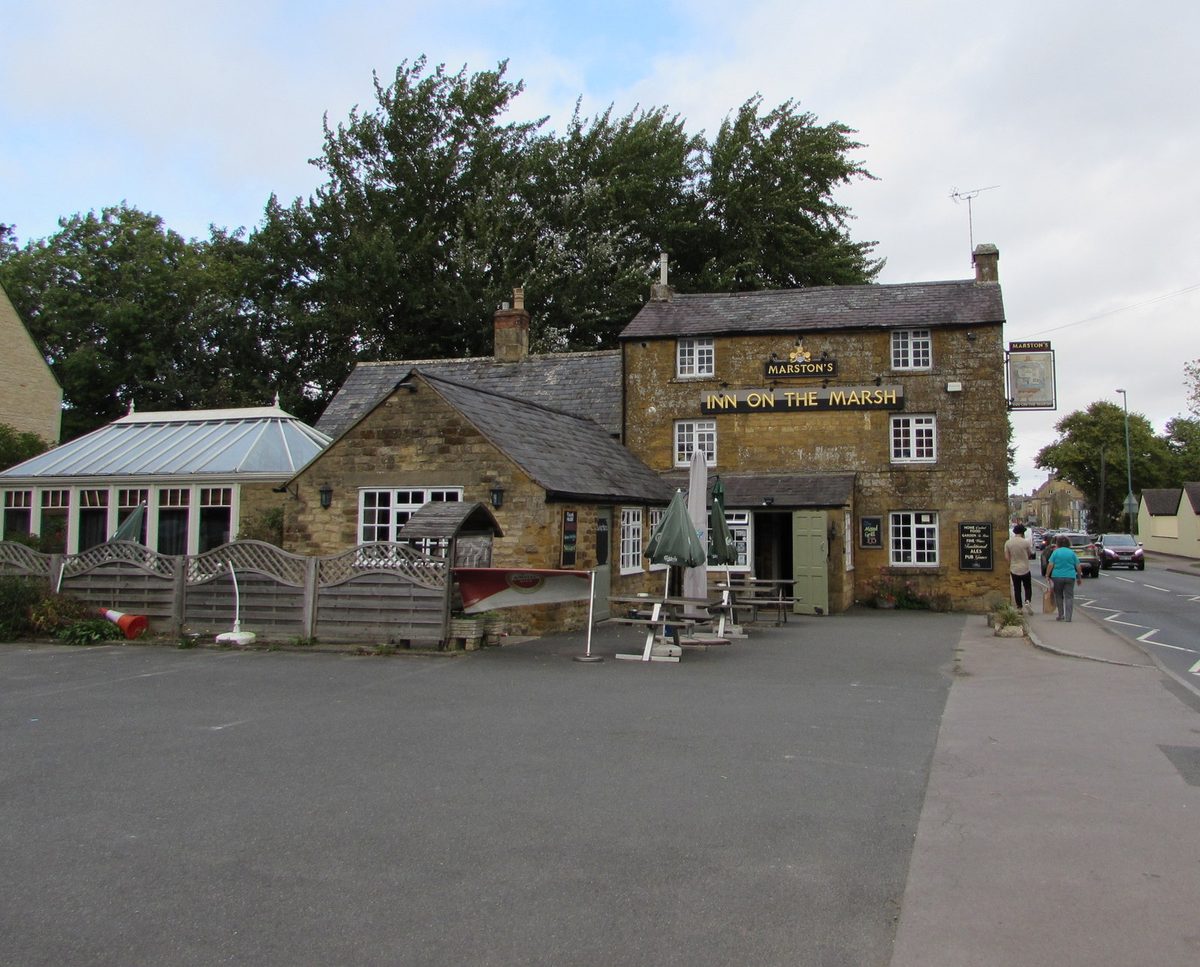
Moreton-in-Marsh: The Rail-Accessible Base
This is the one I always recommend to visitors asking about the Cotswolds without a car. Moreton-in-Marsh has a proper functioning train station on the Cotswold Line, with Great Western Railway running direct services to London Paddington — fastest trains around 1 hour 30 minutes, more typical journeys around 1 hour 40 minutes. That makes it the most practical car-free entry point in the Cotswolds by some distance.
Moreton itself is a market town rather than a picture-postcard village, and that distinction matters. The High Street is working and functional — a butcher, a hardware shop, a pharmacy alongside the pubs and cafés. The famous Tuesday street market has been running here for centuries. It doesn’t have the romance of Chipping Campden or the riverside drama of Bourton, but that’s also why accommodation is slightly more affordable, running around £90–£160 per night as of 2026.
From Moreton you can reach Stow-on-the-Wold by bus (the Pulhams Bus route runs several times a day), and organised day-trip coaches depart from here to various villages during the tourist season. Kingham station, about eight miles south-west, is the next stop on the same rail line and gives access to a slightly different cluster of villages including Bourton-on-the-Water by taxi.
If you’re visiting from London without a car, base yourself in Moreton, do day walks into the surrounding countryside, and join a guided minibus tour for the villages that buses don’t reach. It’s genuinely workable, and several good B&Bs and small hotels cluster around the high street. For more on navigating the region without a vehicle, see the dedicated Cotswolds without a car guide.
Best Cotswolds Towns for Food and Pubs
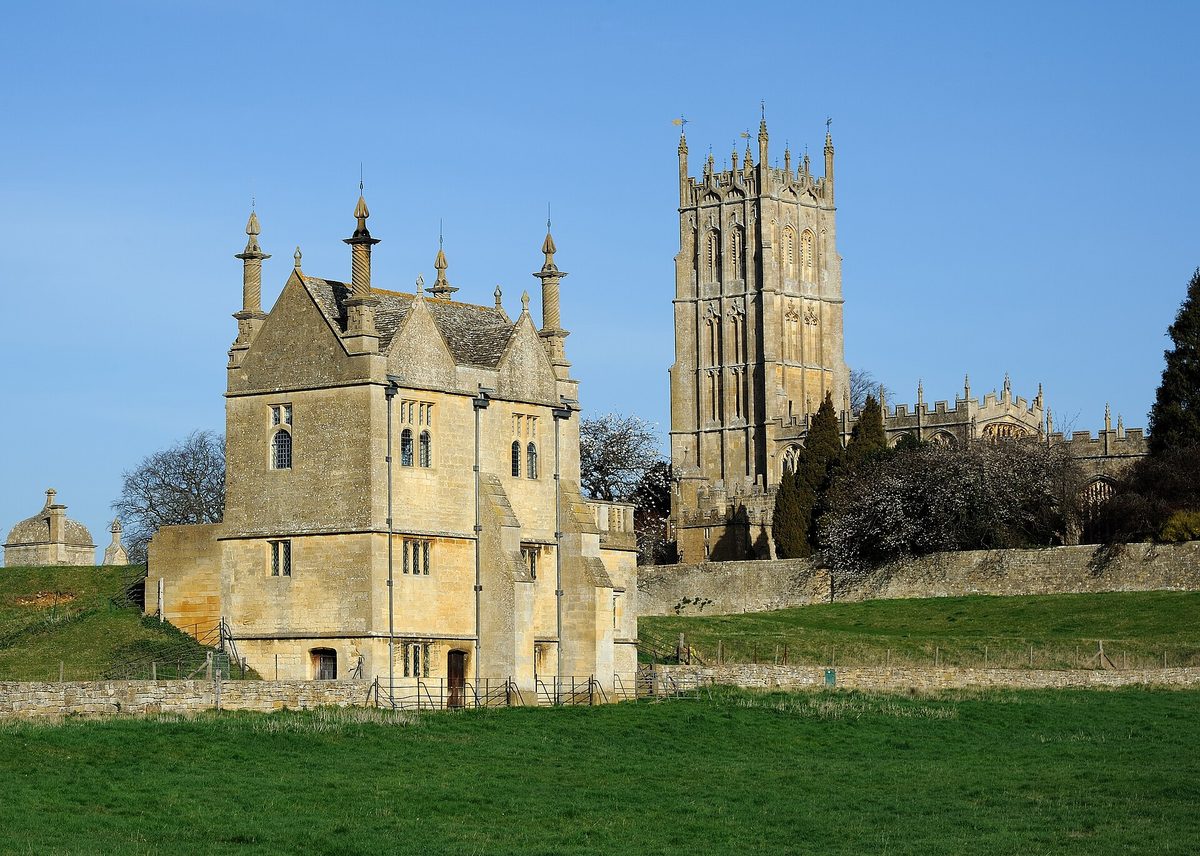
Burford: The Gateway Town with Great Eating
Burford sits at the southern edge of the Cotswolds proper, where the road drops steeply down the high street to cross the River Windrush. It’s been a stopping point for travellers for centuries and the food culture reflects that — there are more good restaurants per metre of high street than almost anywhere else in the region.
The Lamb Inn is one of those pubs I find myself recommending constantly. 15th-century building, flagstone floors, a garden, and consistently decent food. The Bay Tree Hotel’s restaurant punches well above the average. There are proper coffee shops (not just cafés heating up frozen scones) and a decent deli. If eating well is close to the top of your priority list, Burford earns a serious look.
It’s busy — the high street is on the main tourist route — but the town has enough size and substance that you’re not just standing in line with everyone else. Accommodation runs around £110–£190 per night as of 2026. No train station; you’ll need a car or a taxi from Charlbury on the Cotswold Line, about eight miles east.
Broadway and Stow-on-the-Wold (Honourable Mentions)
Both have strong food scenes for their size. Broadway’s Kennel Club and Horse and Hound are solid pub options; Stow has the Old Stocks Inn which takes its Sunday roast seriously. If you’re staying in either of these towns, you won’t go hungry or find yourself in a bad pub. For a deeper look at the Cotswolds pubs and tea rooms, that guide covers the standout options by area.
Best Cotswolds Towns for Families
Families with children need two things the prettiest villages often can’t provide: space to run, and something for children to actually do when the honey-stone beauty has worn off (this takes roughly forty-five minutes for a seven-year-old in my experience).
Bourton-on-the-Water is the strongest family base for the reasons mentioned above — the attractions roster is genuinely child-focused and the riverside is safe and fun. Accommodation options include holiday cottages that suit families better than squeaky B&B twin rooms; check out England vacation rentals for self-catering options across the region.
Cirencester is underrated for families. It has a proper town centre with a leisure centre, a large park (Cirencester Park has one of the longest drives in England — a great space for children to stretch), and a Roman museum that does a better job than most at engaging younger visitors. It doesn’t feel like a tourist trap. Accommodation is slightly more affordable than the honey-stone hotspots, and there’s a supermarket, which matters when you’re feeding a family.
For more tailored family planning, the Cotswolds with kids guide covers activities, accommodation and practicalities in detail.
The Quieter Cotswolds: Tetbury and Painswick
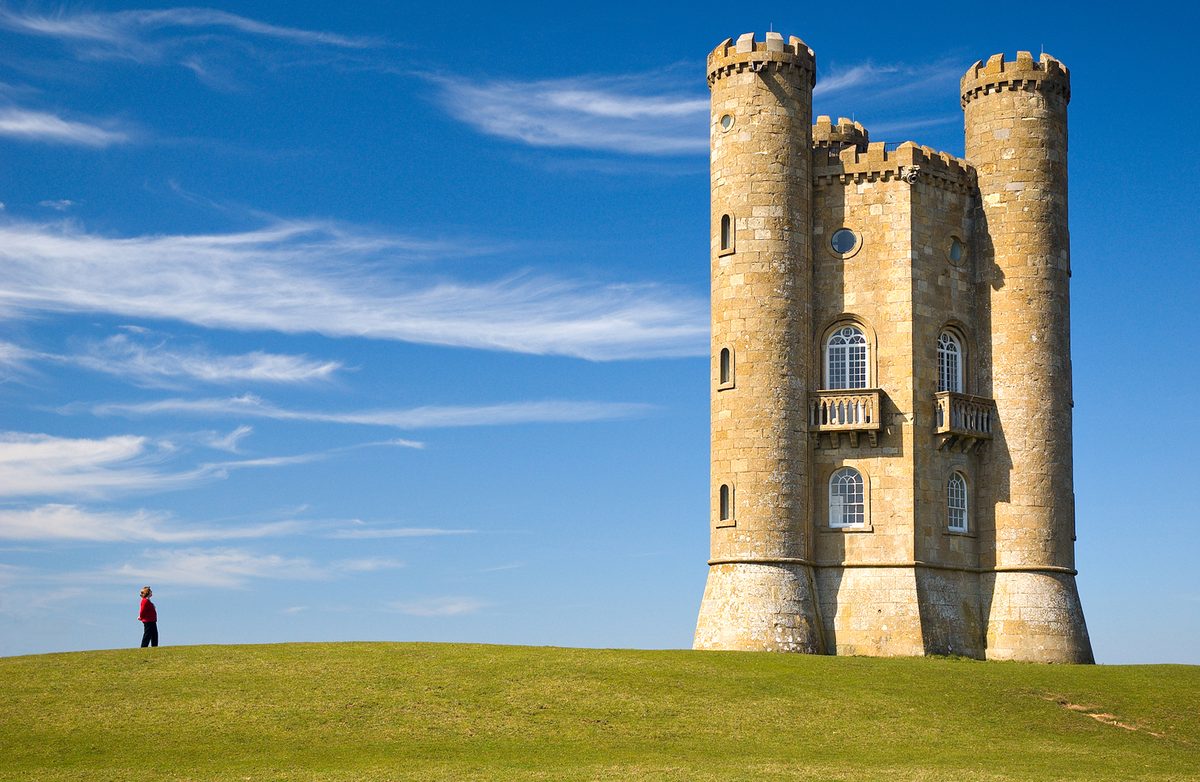
Tetbury: Royal Connections, Smaller Crowds
Tetbury is where you go when you’ve been to the popular towns and want something the coach tours haven’t quite found yet. The connection to the Royal Family — Highgrove House, King Charles’s private estate, is just outside town — gives it a certain cachet without making it feel overwhelmed. There’s a good antiques market, a handsome market house on pillars in the middle of the street, and a handful of proper independent shops.
The food and pub scene is reliable rather than exceptional. The Ormond at Tetbury and the Crown Inn both do decent food. Accommodation runs around £100–£180 per night as of 2026. Nearest train is Kemble, five miles away, on the Great Western Main Line — though services to Kemble from London Paddington are limited and you’d typically need to connect via Swindon. In practice, Tetbury is a car destination.
Painswick: The Secret Valley
If I had to name one Cotswolds town that most British travellers haven’t been to but almost certainly should, it’s Painswick. It sits in a fold of the hills south of Cheltenham, a short drive from Stroud. The village churchyard is famous for its 99 yew trees (legend holds that a hundredth will never grow — the Devil won’t allow it), the streets are narrow and genuinely ancient, and the Rococo Garden on the edge of town is one of the more unusual garden experiences in the country.
Painswick feels undiscovered in the best possible way. Fewer tour buses. Fewer souvenir shops. The Royal William pub is good. Accommodation options are more limited than the larger towns — there are some excellent B&Bs and small hotels — and prices run around £90–£160 per night as of 2026. Stroud is four miles away and has a rail station (services to London Paddington via Swindon), though Painswick itself requires a car or a willingness to walk/taxi.
Best Cotswolds Town on a Budget
Budget travel in the Cotswolds is relative — this is not a cheap region. But there’s a real range, and choosing your base wisely makes a difference.
Cirencester is consistently the most affordable of the notable towns. As the largest town in the Cotswolds proper (often called the capital of the Cotswolds), it has the broadest range of accommodation from budget guesthouses to chain hotels, with rooms available from around £80 per night as of 2026. The restaurant options include non-tourist-priced menus. It doesn’t have the same fairy-tale quality as Stow or Chipping Campden, but it has Roman walls, a magnificent church, and a genuine market town atmosphere that many visitors find more interesting precisely because it’s not performing for tourists.
Moreton-in-Marsh is the second best-value option among the well-known towns. The Tuesday market, the working high street, and the practical rather than picturesque character all keep prices slightly lower than the more photographed spots.
Painswick can also offer value, though the limited accommodation supply can push prices up at peak times.
For broader accommodation planning, the where to stay in England guide has context on regional price differences and what to expect from English B&Bs, inns, and hotels.
How to Choose Your Cotswolds Base: The Quick Decision Guide
The right town depends on three things: transport, what you want to see, and what kind of stay you want.
If you don’t have a car: Moreton-in-Marsh, full stop. It’s the only major Cotswolds town with a direct, frequent rail connection from London. Kingham is an alternative entry point (same Cotswold Line, slightly different cluster of villages accessible).
If it’s your first time: Chipping Campden or Stow-on-the-Wold. Both give you the defining Cotswolds visual, enough to do independently, and good access to surrounding villages with a car.
If you have children: Bourton-on-the-Water for the activities, or Cirencester for space and practicality.
If you want peace and beauty with fewer crowds: Painswick, Tetbury, or Burford (the latter is busier by day but quieter after the day-trippers leave).
If food and drink is the priority: Burford, with Broadway as a close second.
If you’re on a tight budget: Cirencester or Moreton-in-Marsh.
The two-day Cotswolds itinerary suggests routing your stay through two different bases if you have a car — one in the north (Chipping Campden area) and one in the south (Burford or Cirencester area) — which lets you cover the breadth of the region without spending half each day driving.
For day visitors from London thinking about whether a day trip is enough, the London to Cotswolds day trip guide is worth reading before you book.
Final Thoughts: My Personal Pick
If someone tells me they have four nights and a hire car, I always say the same thing: two nights in Chipping Campden and two nights in Burford. The northern towns (Campden, Broadway, Stow, Moreton) feel different in character from the southern ones (Burford, Tetbury, Cirencester, Painswick), and splitting your stay between both halves is the best way to understand what makes the region so varied.
If I had to pick one town and one town only — which is the more realistic question for most travellers — I’d choose Chipping Campden. The High Street is the most beautiful street I’ve seen in England that isn’t famous enough to be ruined by its own fame. The pubs are good. The walking is exceptional. And you can day-trip Stow, Bourton, and Moreton in a single efficient driving day without any of them feeling rushed.
For first-timers without a car, Moreton-in-Marsh is the non-negotiable answer. For families wanting activities, Bourton. For quiet and budget, Cirencester. The Cotswolds is one of those rare regions where almost every town is a good answer — the skill is just matching the right one to who you are.
If you’re still building your broader England trip and need help with the bigger picture — where the Cotswolds fits relative to London, Bath, and Oxford — the best areas to stay in England guide sets out the regional logic clearly. And for where to sleep once you’ve picked your Cotswolds town, the pub inns in England guide is genuinely useful — the Cotswolds has some of the finest inn accommodation in the country.
Research and Source Notes
Train information: Great Western Railway (GWR) runs direct services on the Cotswold Line from London Paddington to Moreton-in-Marsh (approximately 1 hour 30–40 minutes), Kingham, and Charlbury. Kemble is accessible from Paddington via Swindon. National Rail journey planners and Trainline are the best sources for up-to-date timetables; always check before travel as services vary by season. Moreton-in-Marsh confirmed as the primary Cotswolds rail hub for car-free visitors.
Accommodation prices: All nightly rates quoted in this article are approximate and hedged as of 2026. Prices vary significantly by season (peak summer June–August commands a premium), by day of week (weekends typically 20–30% higher), and by booking lead time. Rates sourced from a survey of booking platforms and tourism sites including VisitCotswolds, cotswolds.com, and third-party travel guides. Always verify current rates directly with properties or via aggregator sites.
Crowd and character assessments: Based on a synthesis of multiple travel guides, forum discussions (including TripAdvisor Cotswolds forum and Rick Steves’ Travel Forum), and tourism board information from VisitGloucestershire and VisitTheCotswolds. Crowd-level characterisations reflect typical summer season conditions.
Internal context: For more on the Cotswolds as a destination, see the Cotswolds travel guide. For the most beautiful villages in the wider region (not just the towns covered here), see most beautiful villages in England. For best Cotswolds villages specifically, that guide covers smaller settlements not covered as bases here. For trip cost planning, England trip cost has useful benchmark figures. For self-catering options across the region, see England vacation rentals. For family-friendly hotels in England including Cotswolds options, that guide has curated recommendations. For best places to stay in the Lake District and best seaside towns to stay in England if you’re planning a wider England itinerary, both guides follow the same town-by-town format.
Photo Credits
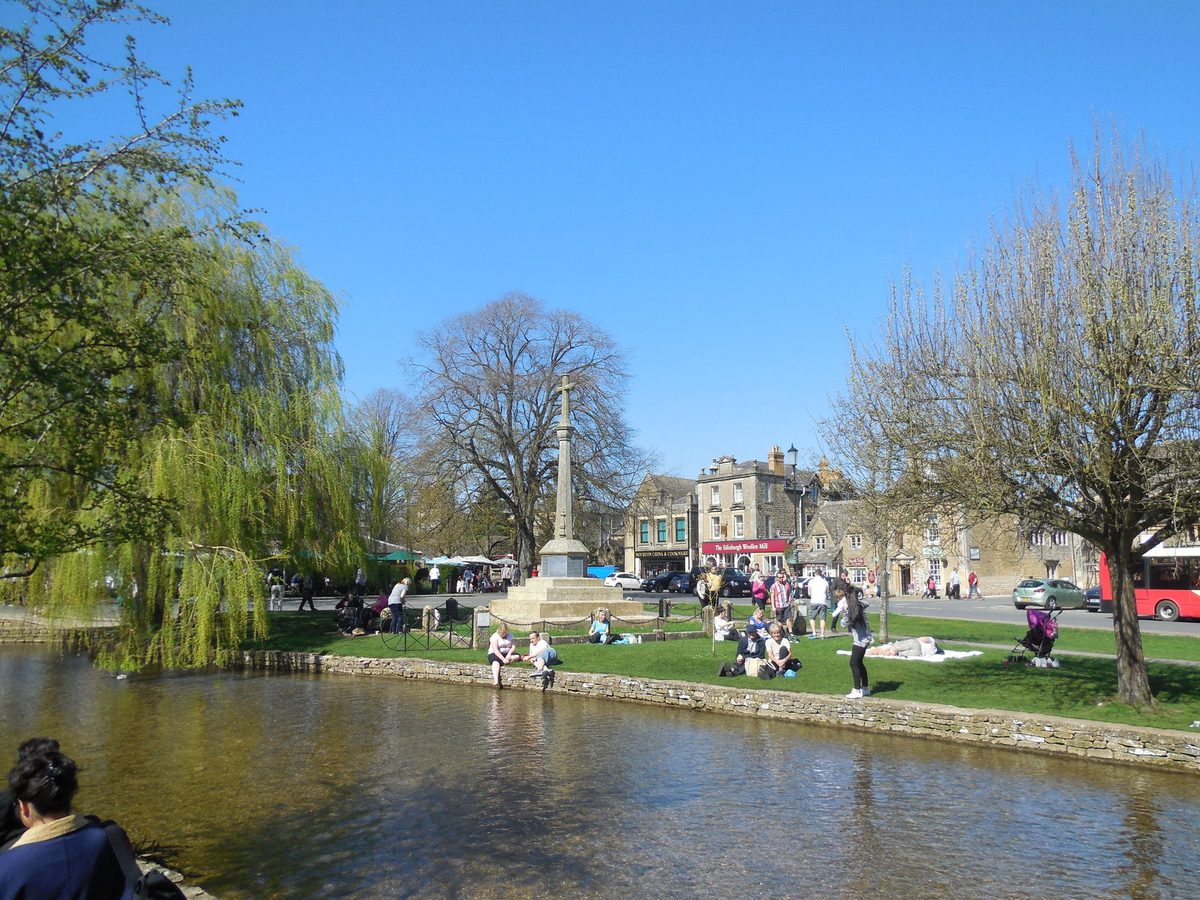
- The best towns to stay in Cotswolds include Bourton-on-the-Water, whose shallow River Windrush flows under low stone bridges right through the village centre — Photo: Paul Gillett / CC BY-SA 2.0 via Wikimedia Commons. Source
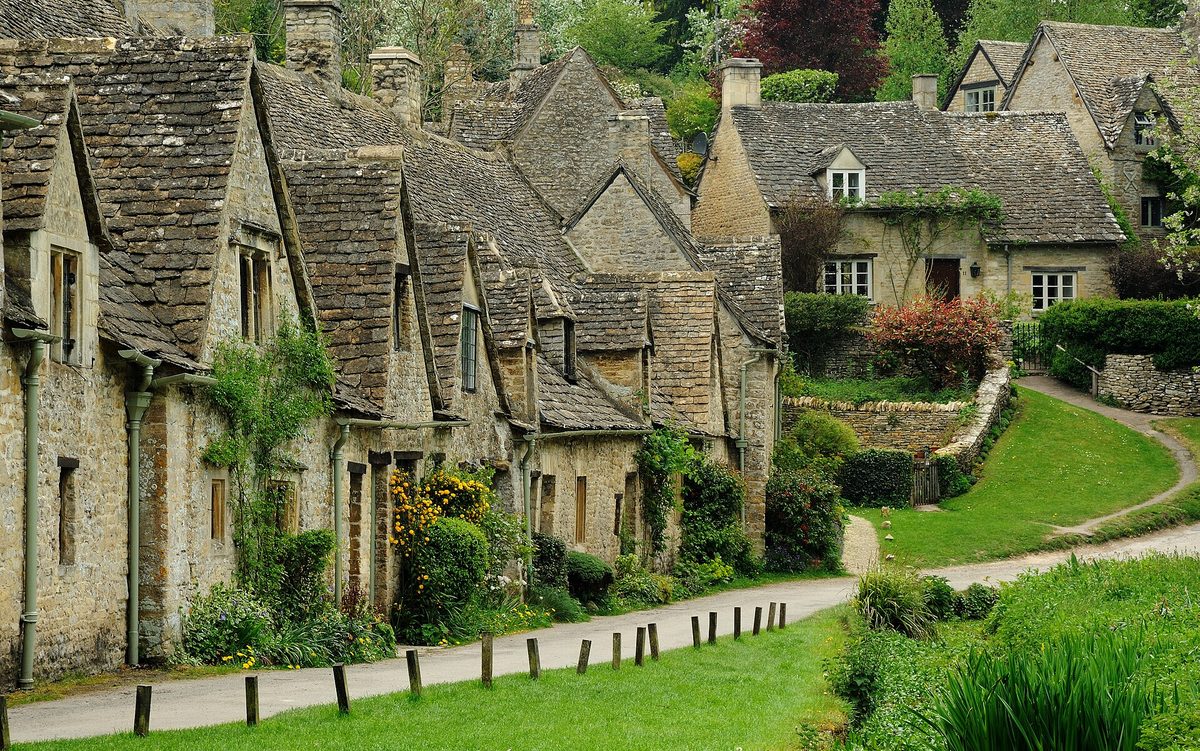
- Arlington Row in Bibury, one of the most photographed scenes near the best towns to stay in Cotswolds — Photo: John H Darch / CC BY-SA 2.0 via Wikimedia Commons. Source
- Moreton-in-Marsh high street and market, the best Cotswolds town to stay in without a car thanks to its direct rail link — Photo: Jaggery / CC BY-SA 2.0 via Wikimedia Commons. Source
- The medieval High Street of Chipping Campden lined with Cotswold stone buildings and independent shops — Photo: Saffron Blaze / CC BY-SA 3.0 via Wikimedia Commons. Source
- The wide, tree-lined high street of Broadway in the northern Cotswolds, one of the most handsome bases in the region — Photo: Newton2 Edit by: Arad / CC BY 2.5 via Wikimedia Commons. Source
Frequently asked questions
What is the best town to stay in the Cotswolds for a first visit?
Chipping Campden is my top pick for a first visit because the High Street delivers the Cotswolds exactly as you imagined it — intact medieval townscape, no chain shops, proper pubs — without the overwhelming crowds of Bourton-on-the-Water. If you need a train, substitute Moreton-in-Marsh and day-trip to Chipping Campden. Stow-on-the-Wold is also excellent as a central base if you plan to explore several villages.
Can you visit the Cotswolds without a car?
Yes, but you need to be strategic about where you stay. Moreton-in-Marsh is the clear standout — it has direct GWR trains from London Paddington (around 1 hour 30–40 minutes) and local bus connections to Stow-on-the-Wold and Bourton-on-the-Water. Kingham station is also on the Cotswold Line and useful for the central villages. Outside those access points, public transport in the Cotswolds is genuinely sparse, and many of the prettiest villages are only reachable by car, taxi, or guided tour.
What is the prettiest town in the Cotswolds to stay in?
Chipping Campden and Bourton-on-the-Water are consistently cited as the most photogenic. Chipping Campden wins on architectural coherence — the whole High Street is intact in a way few English streets are. Bourton wins on romantic water scenery. Painswick is the insider's pick: genuinely beautiful, with fewer tour buses and a churchyard that is quietly extraordinary.
Which Cotswolds town has the best pubs and restaurants?
Burford consistently impresses for food, with The Lamb Inn and The Bay Tree both worth a detour. Broadway has a strong restaurant offer concentrated on the High Street. Stow-on-the-Wold has the most options by volume given its central position and visitor numbers. For a deep dive into where to eat and drink, the Cotswolds pubs and tea rooms guide covers the best options region-wide.
Is the Cotswolds too crowded in summer?
Some parts are. Bourton-on-the-Water and Bibury (a village rather than a base) are notably busy from June through August, particularly on weekends. The key is choosing a base that's slightly off the main bus-tour circuit — Chipping Campden, Painswick, Tetbury, and Cirencester all offer the Cotswolds experience with substantially fewer crowds than the pinch-point villages. Arriving at popular spots early in the morning makes an enormous difference.
How do I get from London to the Cotswolds by train?
The main rail route is from London Paddington on Great Western Railway's Cotswold Line, stopping at Charlbury, Kingham, and Moreton-in-Marsh. Journey time from Paddington to Moreton-in-Marsh is around 1 hour 30–40 minutes. Kemble (near Cirencester) is also reachable from Paddington via Swindon. Oxford, which is on the same line, makes a good gateway — you can visit Oxford and then continue west. The Oxford travel guide and Bath travel guide both cover rail access if you're planning a wider England trip combining multiple cities.