Sheet 50 · Where to Stay in England · 18 min read
Best Places to Stay in the Lake District
Choosing the best places to stay in Lake District? Compare Windermere, Keswick, Ambleside, Grasmere & more — by budget, transport and traveller type.
 Sheet 50
Contents 9 sections
The best places to stay in Lake District really do depend on what kind of trip you are planning — and getting that choice wrong can cost you hours of unnecessary travel every day. Here is the short version: Windermere/Bowness for first-timers and families, Ambleside for serious walkers, Keswick for no-car travellers who want a real town, Grasmere for quiet scenery, Coniston or Hawkshead for something away from the crowds, and Glenridding or Pooley Bridge on Ullswater if you want the north-east lakes without the noise.
The rest of this guide breaks each base down honestly — bus links, what is actually on the doorstep, who each town suits, and rough prices as of 2026. If you want the full overview of accommodation types across the region, head to the where to stay in Lake District guide. This article is the base-by-base comparison: which town should you actually sleep in?
Quick Answer: Best Places to Stay in the Lake District
Choosing between the best places to stay in Lake District comes down to three questions: do you have a car, how hard do you want to walk, and how much do you mind crowds? The table below gives you the headline facts, then the sections that follow explain the nuance — because “Windermere” covers an awful lot of ground and “Keswick is good for everyone” is not useful advice.
At-a-Glance Comparison Table
| Base | Best for | Rough nightly cost (as of 2026) | Rail/bus access | Car needed? |
|---|---|---|---|---|
| Windermere & Bowness | First-timers, families, boat trips | £80–£180 (mid); £40–£70 (budget B&B) | Train to Windermere (only Lakes station); bus 599 to Bowness | No |
| Ambleside | Walkers, flexible explorers, solo travellers | £70–£150 (mid); YHA from £25pp | Bus 555/599 from Windermere (20 min) | No (but handy) |
| Grasmere | Scenery lovers, couples, quiet escape | £90–£200 (mid); limited budget options | Bus 555 from Keswick or Windermere | No (but tricky) |
| Keswick | No-car visitors, north Lakes, all-round base | £70–£140 (mid); YHA/hostels from £22pp | Bus 555 from Windermere (75 min) | No |
| Coniston | Budget, walkers (Old Man), off-the-beaten-path | £60–£120 (mid); camping from £15pp | Bus 505 from Windermere or Ambleside | Handy but possible without |
| Glenridding / Pooley Bridge | Ullswater scenery, walkers, couples | £70–£160 (mid) | Ullswater Hopper bus; Ullswater Steamers | Handy; possible seasonally |
| Hawkshead | Families with children, quiet village feel, cyclists | £70–£140 (mid) | Bus 505 from Windermere (35 min) | No; village is car-free |
Best for First-Timers: Windermere and Bowness-on-Windermere
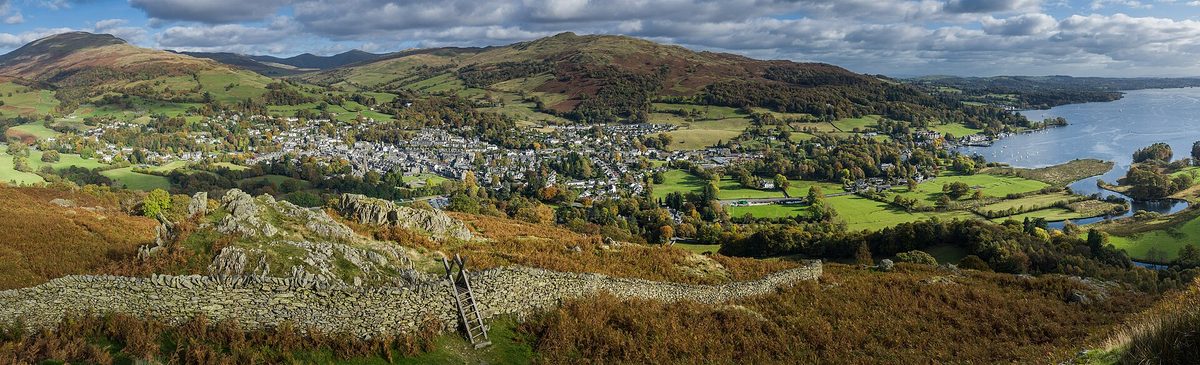
If this is your first time in the Lakes and you are not sure exactly what you want from the trip, Windermere town and its lakeshore neighbour Bowness-on-Windermere are the obvious starting point — and for good reason.
Windermere is the only town in the entire Lake District with a railway station. That single fact shapes everything. Trains run from London Euston via Oxenholme (around 2 hours 45 minutes to 3 hours 20 minutes to Oxenholme, then about 20 minutes on the branch line) and from Manchester in around 2 hours. You can arrive with zero plans and still be standing on the shore of England’s largest lake within an hour of your train pulling in.
Bowness-on-Windermere sits about a mile and a half downhill from the station — the two settlements blur together but they have different characters. Windermere town is quieter, more residential; Bowness is where the tourists congregate, and it shows. The waterfront is busy, there are gift shops you will walk past twice, and the lake is ringed with hire boats and steamer jetties. I am not going to pretend it is undiscovered. But for sheer convenience — boat trips on the lake, the World of Beatrix Potter, the Windermere Ferry crossing to the western shore, waterfront restaurants, a huge range of accommodation — it is hard to beat.
First-timers will appreciate that you can get almost everywhere else from here. The bus 599 runs from Windermere station down through Bowness to Ambleside. The bus 555 (Lakeslink) runs up through Ambleside and Grasmere all the way to Keswick. The Windermere Ferry (cross-lake ferry, around every 20 minutes, pedestrians and cyclists welcome) takes you to the quieter western shore for the Grizedale Forest and Hawkshead.
Accommodation ranges from large Victorian hotels on the hill (around £100–£180 per night mid-range) down to B&Bs on the side streets (around £40–£70). In peak July and August, book well ahead — this area fills faster than anywhere else in the Lakes.
The one honest downside: Bowness can feel very touristy. If you are looking for the “real” Lakes atmosphere, you might find Ambleside more authentic. But for a first trip, especially with children, Windermere and Bowness deliver.
For more detail on what to do once you arrive, the windermere travel guide covers the waterfront, boat hire and the main attractions. For a wider England comparison, see best areas to stay in England.
Best for Serious Walkers: Ambleside
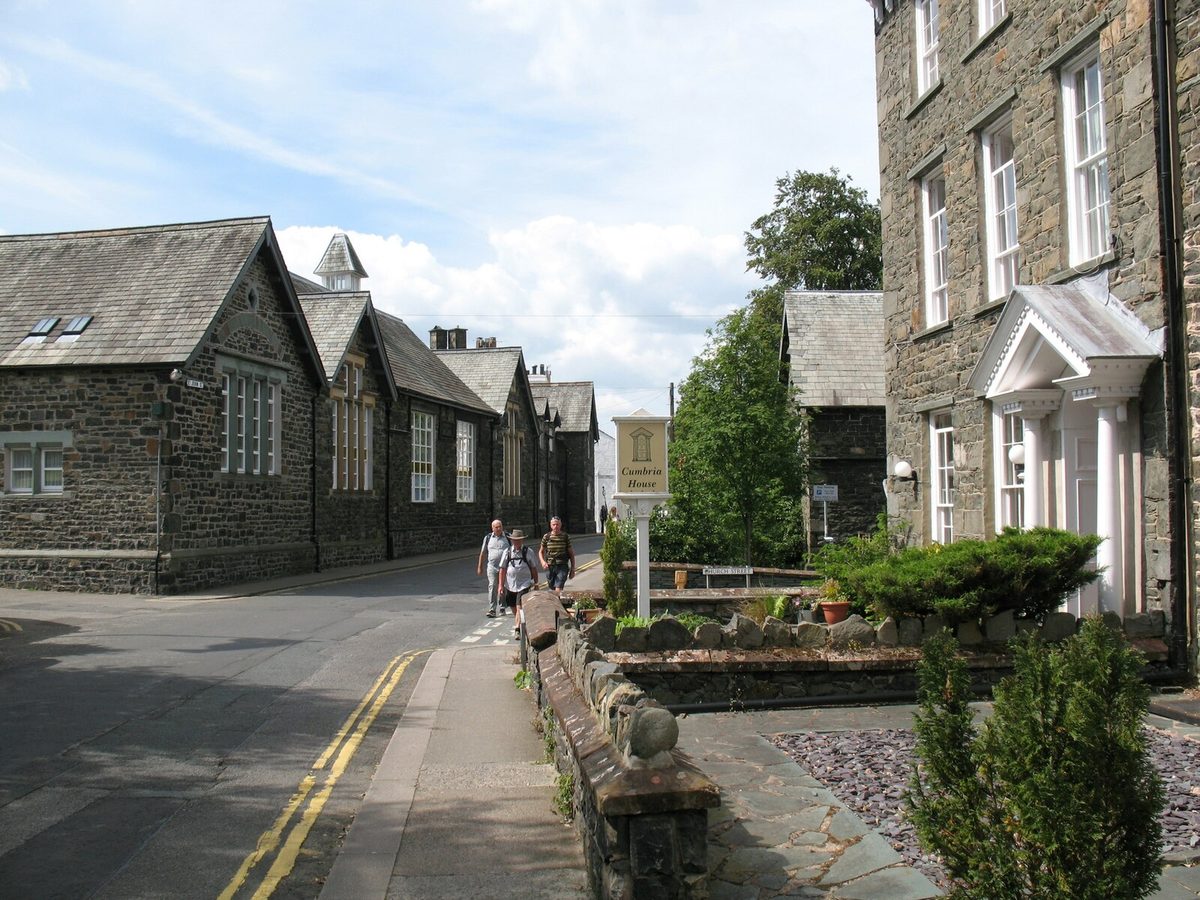
Ambleside is where I would stay if walking is the main event. It sits at the northern end of Windermere, about four miles from Bowness but with a completely different feel — less lakefront tourist trap, more proper Lakeland town with gear shops, good pubs, and people who have actually come to walk.
From Ambleside, Langdale is a 20-minute bus ride on the 516. The classic Langdale Pikes — one of the finest ridge days in England — start right there. Helvellyn via Striding Edge, arguably the most famous walk in the Lakes, is accessible by the 555 bus to Thirlspot or a longer walk north. Red Screes, looming directly above the town, is a 2–3 hour round trip that starts from the market square. You do not need a car to access serious mountains from Ambleside; you need comfortable boots and a bus timetable.
The town itself is compact and useful. There are half a dozen outdoor gear shops (Gaynor Sports is particularly good), a handful of decent pubs, the Stock Ghyll waterfall a five-minute walk from the centre, and a weekly market on Wednesdays. It is not as chocolate-box pretty as Grasmere, but it functions well as a working base — somewhere you can pick up hiking food, dry your kit, and eat properly in the evening.
Accommodation is varied. The YHA Ambleside sits in a prime lakeside position and offers private rooms as well as dorms, from around £25–£40 per person — excellent value if you are going to be out on the fells all day and just need somewhere warm to sleep. Mid-range hotels and B&Bs run around £70–£150 per night. Self-catering cottages are popular; check the england vacation rentals guide for how to approach the rental market.
The slight catch with Ambleside: it is not on the rail line. You take the train to Windermere and the 599 bus for 20 minutes. That is genuinely fine — the bus is frequent and the journey is easy. Just factor it in. The easy Lake District walks guide pairs well with Ambleside as a base if you want to plan your routes ahead.
Best Without a Car: Keswick
If you are travelling car-free and you want a single base that gives you the most flexibility, Keswick is the answer. I have done the Lakes without a car several times, and Keswick is the only town that feels genuinely self-sufficient without feeling hemmed in.
Why Keswick specifically? Three reasons.
First, it sits at the northern end of the 555 bus route — which means the whole central corridor (Grasmere, Ambleside, Windermere) is accessible in one straight line. The bus runs roughly every hour in each direction year-round, more frequently in summer. A day trip south and back is easy.
Second, Keswick has excellent local bus connections to places the 555 does not reach. The Honister Rambler bus (77/77A, seasonal) loops through Borrowdale, Honister Pass, Buttermere and back. The Borrowdale bus (78) runs south to Seatoller, giving walkers access to Great Gable and Scafell Pike approaches. These routes make serious walking achievable without a hire car.
Third — and this matters on rainy days — Keswick is a genuinely good town. It has a proper high street, a covered market (Saturdays are best), the Derwentwater Launch boat service running hourly around the lake in summer, the Theatre by the Lake, the Pencil Museum (odd but strangely brilliant with children), and a range of cafes and pubs that do not feel like they exist solely for day-trippers. The keswick travel guide goes into much more detail on what to actually do there.
Derwentwater is on the doorstep — a short walk from the market square to the jetties. Cat Bells, one of the great family-friendly fells in the Lakes, is reached by ferry across to Hawse End and then a short walk. Blencathra, Skiddaw, Whinlatter Forest, Castlerigg Stone Circle — all within easy reach by bus or on foot.
Mid-range hotels and guesthouses start around £70–£140 per night. The YHA Keswick is in the town centre (around £22–£35 per person). Budget B&Bs are slightly cheaper than Windermere equivalents.
The one honest note: Keswick is further from the southern Lakes. If you want to visit Coniston, Hawkshead or the Furness Fells, a day trip from Keswick involves changes and takes time. But for the central and northern Lakes without a car, nothing else comes close. The lake district without a car guide is essential reading before you book.
Best for Families: Windermere, Ambleside or Hawkshead?
Families have three realistic options depending on what age the children are and how much walking you want to do.
Windermere/Bowness for Younger Children
Bowness is the obvious choice for younger children. The lake is right there, the Windermere Jetty Museum is genuinely excellent (boats, history, and a great lakeside cafe), the World of Beatrix Potter appeals to a specific age group, and you can hire rowing boats and paddleboards without advance booking in the warmer months. The lake district rainy day activities guide covers what to do when the weather turns, which it will.
Ambleside for Active Families
For families with older children who can handle a proper walk, Ambleside gives you more flexibility. Stock Ghyll Force waterfall is a free, easy 30-minute stroll from the market square. Tilberthwaite Gill (accessible by bus 505 toward Coniston) has scrambling and waterfalls that older kids love. The Langdale bus opens up more ambitious days out.
Hawkshead for a Different Kind of Family Stay
Hawkshead is a genuine surprise for families. The village centre is car-free — genuinely, not just technically — with cobbled lanes, whitewashed cottages, and almost no traffic noise. Younger children can run around the lanes safely. Beatrix Potter’s Hill Top farm (a National Trust property at Near Sawrey, accessible by the Cross-Lakes ferry from Bowness or a short drive) is a few miles away. Grizedale Forest, with its famous Go Ape tree-top adventure and miles of traffic-free cycling, is right on the edge of the village.
Hawkshead is served by the 505 bus from Windermere (around 35 minutes) and the Windermere Ferry crossing. It is not the easiest car-free base — accommodation is more limited — but families who find it tend to come back. Prices are slightly lower than Bowness, roughly £70–£140 per night mid-range.
For a broader look at travelling England with children, the family-friendly hotels in England guide is a good companion read.
Quietest and Most Scenic: Grasmere and Ullswater
Grasmere
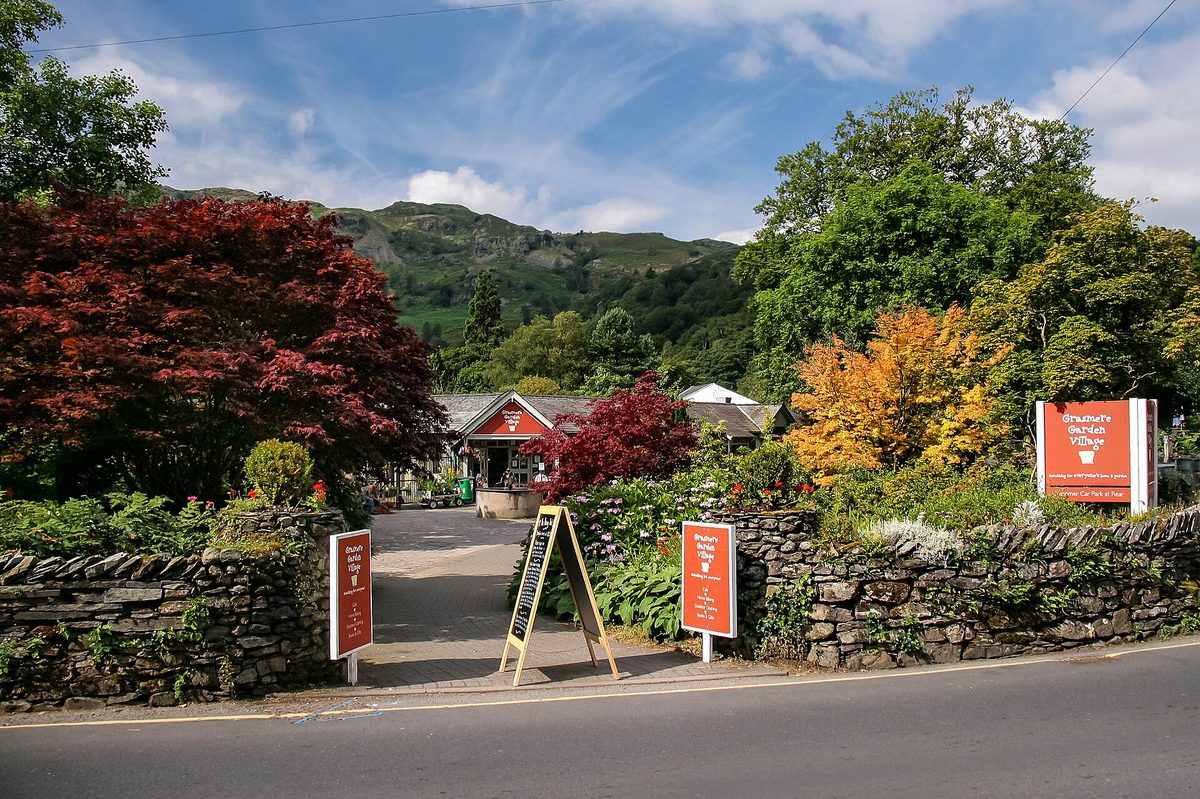
Grasmere is, by a reasonable margin, the prettiest village in the Lake District. Even the most experienced Lakes visitor tends to go quiet when they first round the corner and see the church, the river, the surrounding fells reflected in the small lake. It is compact, genuinely lovely, and — if you stay here rather than day-tripping from Windermere — it feels different.
The village is small. There is one proper main street with a handful of cafes, two or three hotels, a farm shop, and the Grasmere Gingerbread Shop (the queue on a summer Saturday can seem absurd, but the product justifies it). Dove Cottage, where Wordsworth lived and wrote, is a short walk from the centre.
The walking from Grasmere is superb: Helm Crag (“The Lion and The Lamb”) directly above the village takes around 2–3 hours and gives views that justify every step. The Grasmere Round covers several summits in a half-day loop. Silver Howe above the lake is a gentler option. Couples in particular tend to love Grasmere — it is romantic in a way that Windermere’s busier waterfront simply is not.
The bus 555 runs through (stop in the village centre), which means you are connected to Keswick north and Ambleside/Windermere south. But Grasmere is not a great base if you want to roam widely without a car — the connections work, but the village itself has limited evening dining and nightlife beyond a couple of hotel restaurants and pubs.
Mid-range accommodation starts around £90–£200 per night; budget options are thin on the ground here. If the Grasmere prices feel steep, Ambleside (8 minutes by bus) gives you similar access to the same walks at lower nightly rates.
Ullswater: Glenridding and Pooley Bridge
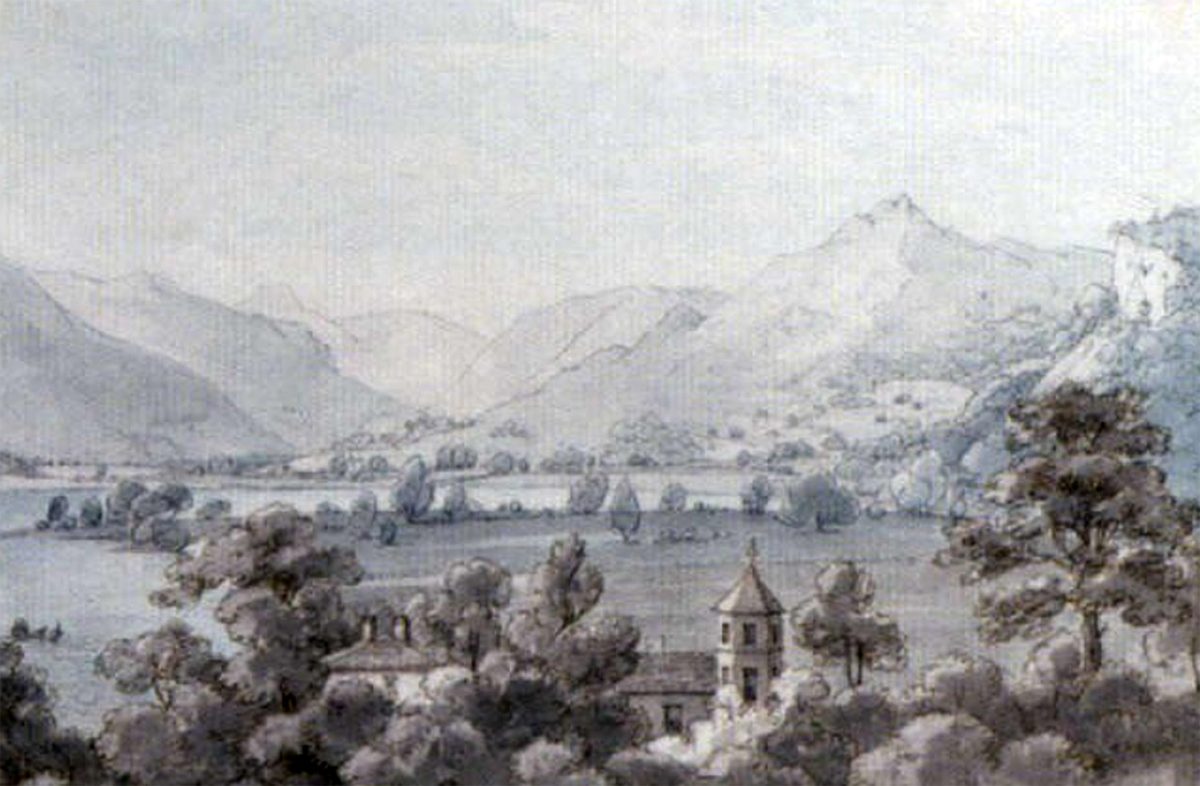
Ullswater is the Lake District’s second-largest lake and, in my opinion, one of its most beautiful. But it sits in the north-east corner of the national park, off the main tourist corridor, and that means most people visit it as a day trip rather than basing themselves there. That is their loss.
Glenridding is at the southern end of the lake — a small village with a handful of hotels, guesthouses, and a YHA, sitting directly below Helvellyn. If climbing Helvellyn via Striding Edge or Swirral Edge is on your list, Glenridding is the obvious overnight base. You wake up, step out of your accommodation, and start walking uphill immediately.
Pooley Bridge is at the northern end — a slightly larger village, rather pretty in itself, with a handful of pubs and cafes. It is better if you are more interested in the lake atmosphere than the big fell summits.
The Ullswater Steamers connect Glenridding, Howtown and Pooley Bridge by water — a genuinely lovely way to move between parts of the valley, and a proper Lake District experience rather than a tourist gimmick. Fares run around £10–£15 for a single crossing as of 2026. The Ullswater Hopper bus (UB1/UB2) operates from late March to early November at weekends and Bank Holidays, with daily services through the main summer months.
The catch: Ullswater has no train access and is genuinely awkward without a car out of season. In summer, the Hopper bus plus Steamers make it workable. Outside those months, either hire a car or accept limited movement. Accommodation is mid-range, roughly £70–£160 per night; there are fewer budget options here than in Keswick.
Best on a Budget: Coniston and the Youth Hostels
Budget travel in the Lakes is not as hard as the Windermere hotel prices might suggest, but it does require choosing your base deliberately.
Coniston is the best budget base in the southern Lakes. It is a proper Lakeland village — working, not manicured — with a handful of pubs, a small supermarket, and a good information centre. The Old Man of Coniston rises directly behind the village and offers one of the best ridge walks in the southern Lakes with views over the sea on clear days. The Coniston Launch runs boat trips on Coniston Water in summer. John Ruskin’s Brantwood house is on the opposite shore, accessible by launch.
Coniston is served by the 505 bus from Windermere (around 50 minutes) and Ambleside (around 30 minutes) — workable but less frequent than the 555 corridor. In summer there are additional services; in winter, check the Stagecoach Cumbria timetable carefully.
B&Bs and guesthouses in Coniston start around £60–£120 per night, noticeably cheaper than Windermere. The Coppermines YHA is a converted mine building up in the hills above the village — one of the most atmospheric hostels in England, from around £20–£30 per person.
For the very best budget options across the region: the YHA runs hostels in Windermere, Ambleside (lakeside position, excellent), Keswick, Coniston, Grasmere, Elterwater and Hawkshead. None require you to be under 30 or a member (though membership gives a discount). Private rooms are available at most. If you are on a serious budget, the YHA network is how you access the Lakes — the england trip cost guide covers the realistic numbers.
Camping is another option — Coniston, Keswick and the Langdale valley all have well-run sites from around £15–£25 per pitch per night as of 2026.
Thematic Summary: Matching the Base to the Traveller
Walkers (Serious Fells)
Ambleside is the top pick — central, with bus access to Langdale, Helvellyn approaches and the southern fells. Keswick for the northern fells (Skiddaw, Blencathra, Great Gable). Glenridding specifically for Helvellyn.
Families
Bowness/Windermere for convenience and lake activities with younger children. Hawkshead for a calmer, car-free village feel with forest access. Ambleside for active families who want proper walking alongside waterfall and gorge exploration.
No-Car Travellers
Keswick is the definitive answer — best bus network, most self-sufficient town, Derwentwater on the doorstep. Ambleside is a strong second for the central Lakes. Avoid Ullswater and Coniston as primary car-free bases unless you are visiting in summer.
Couples / Scenery
Grasmere for the most romantic village feel and the best all-round scenery. Ullswater (Glenridding/Pooley Bridge) for something away from the tour buses with beautiful water and fell views. Coniston for quiet with character.
Budget Travellers
Coniston for cheapest self-catering and B&Bs. Keswick YHA or Ambleside YHA for the best-value hostel experience. Camping at Langdale or Coniston for rock-bottom budgets.
First-Timers
Windermere/Bowness — easiest arrival, most variety, good transport hub. Then use day trips to understand what the Lakes actually is before deciding where to base yourself on a return visit.
For a broader look at where the Lakes fits within England, the lake district travel guide is the parent resource, and england national parks hiking gives useful comparison with other walking destinations. The lake district itinerary 3 days guide is worth reading alongside this one if you are planning a short trip from a single base.
Final Thoughts: My Personal Pick
If someone gave me one week in the Lakes and asked where to base myself, I would probably split it: three nights in Ambleside to cover the central and southern fells properly, then three nights in Keswick for the northern lakes. That is not a cop-out — those two bases genuinely divide the park between them, and the 555 bus makes the transfer painless.
For a single base, I would choose Ambleside. It sits close enough to Windermere to access the touristy bits if I want them, has better walking on the doorstep than Windermere itself, is reachable by bus from the train station without a hire car, and has enough good pubs and restaurants to feel like a proper place in the evenings. It is not as scenically placed as Grasmere, not as transport-convenient as Keswick, but it threads the needle between all the things I actually need from a Lake District base.
That said: if this is your first trip, start with Windermere. The Lakes is a big, complicated place to navigate and Windermere’s transport hub status means you can orient yourself, do a few easy days, and work out what kind of Lakes visitor you actually are — before committing your next trip to somewhere more specific.
For the wider context on where the Lake District sits in a longer England trip, the where to stay in England guide is essential, and best seaside towns to stay in England and best towns to stay in Cotswolds are worth bookmarking for the rest of your itinerary.
Research and Source Notes
Transport information: National Rail (nationalrail.co.uk) — Windermere branch line from Oxenholme. Stagecoach Cumbria & North Lancashire (stagecoachbus.com) — Bus 555 Lakeslink; Bus 505 Coniston Rambler; Bus 516 Langdale. Ullswater Steamers (ullswater-steamers.co.uk) — Ullswater Hopper bus and steamer timetables and fares (2026 season). Lake District National Park (lakedistrict.gov.uk) — walking routes, Hawkshead village information, families and children activities.
Accommodation price ranges are approximate guide prices as of 2026 based on published rates via Expedia, Booking.com, Kayak and Tripadvisor for standard double rooms or dorm beds (YHA) in mid-season (May–September). Prices will vary significantly in peak summer (July–August), on Bank Holiday weekends, and between accommodation types. Always verify current pricing directly. YHA membership discounts apply to hostel prices where quoted.
The lake district rainy day activities guide covers what to do when the weather turns — and it will. The best things to do in lake district article covers the wider activity landscape if you are still planning your itinerary. If you are comparing the Lakes to other English regions for accommodation style, the pub inns in England guide is relevant — the Lakes has an excellent tradition of inn stays that sits between a hotel and a B&B.
Photo Credits
- Aerial view of Windermere town and lake — the best places to stay in Lake District start here for first-timers — Photo: mattbuck (category) / CC BY-SA 3.0 via Wikimedia Commons. Source
- Hikers and walkers on the streets of Ambleside, one of the best bases for fell walking in the Lake District — Photo: Diliff / CC BY-SA 3.0 via Wikimedia Commons. Source
- Derwentwater viewed from the Keswick jetty in early morning light — one of the best car-free bases in the Lake District — Photo: Adrian Taylor / CC BY-SA 2.0 via Wikimedia Commons. Source
- Dawn light on Ullswater from the eastern shore near Glenridding, one of the quietest and most scenic bases in the Lake District — Photo: Thomas Sunderland (CC0) via Wikimedia Commons. Source
- The village of Grasmere reflected in the still water on a calm morning — one of the quietest and most scenic bases for a Lake District stay — Photo: Jorge Franganillo / CC BY 2.0 via Wikimedia Commons. Source
Frequently asked questions
What is the best base in the Lake District for a first visit?
Windermere or Bowness-on-Windermere. It is the only town with a train station, has the widest range of accommodation at various budgets, and gives you easy bus and boat access to the rest of the park. It is busier and more touristy than other Lakes towns, but for a first trip that convenience matters more than you might expect.
Can you stay in the Lake District without a car?
Yes, and more comfortably than you might expect — if you choose the right base. Keswick is the best car-free base overall: the 555 bus connects it to Ambleside, Grasmere and Windermere, and local Borrowdale and Honister Rambler buses open up the western fells. Ambleside is the best car-free base for walkers. Windermere works for the southern Lakes. See the full lake district without a car guide for route planning.
Is Windermere or Keswick better to stay in?
It depends entirely on what you want. Windermere is better for families with younger children, first-timers, and anyone arriving by train. Keswick is better for serious walkers targeting the northern fells, car-free travellers, and anyone who wants a proper market town atmosphere. Keswick is less touristy in feel; Windermere is more accessible. Many visitors prefer to spend two or three nights at each if time allows.
What is the quietest place to stay in the Lake District?
Grasmere (village atmosphere, good walks, minimal nightlife), Ullswater — particularly Pooley Bridge at the northern end — and the western approach via Buttermere all offer quieter experiences than the central 555 corridor. For the very quietest Lake District stay, the western lakes (Ennerdale, Loweswater) barely feature on most visitors' radars but require a car to access.
Which Lake District town has the best bus links?
Keswick and Ambleside are the two best-connected towns for bus travel. Both sit on the 555 Lakeslink route (Keswick–Grasmere–Ambleside–Windermere) which operates year-round. Keswick additionally has the seasonal Borrowdale bus (78) and Honister Rambler (77/77A). Windermere has the train station but slightly fewer onward bus choices once you leave the town.
Is Grasmere worth staying in, or better as a day trip?
Grasmere is genuinely worth a night or two rather than a day trip. Arriving in the evening after the day visitors have left, and waking up to the village when it is quiet, is a qualitatively different experience. The fell walks above the village — Helm Crag, Silver Howe, the Grasmere Round — take on a different character when you are not racing back to catch the last 555 bus. Budget is the main constraint: Grasmere accommodation is pricier than Ambleside for what you get.