Sheet 56 · England by Train and Transport · 20 min read
Renting a Car in England
An honest guide to renting a car in England: when it pays off, where to pick up, automatic vs manual, real costs, and the insurance upsell to skip.
 Sheet 56
Contents 15 sections
Here’s the short version: renting a car in England is brilliant for the countryside and a waste of money in cities. If your trip is the Cotswolds, the Lake District, Cornwall, or the Yorkshire Dales, a car unlocks places trains simply don’t reach. If your trip is London, or a string of big cities, skip the car entirely and take the train. That single decision saves most travelers the most money and stress.
I’ve rented cars all over England, and I’ve also stood at more than one rental desk being talked into insurance I didn’t need. This guide is the one I wish someone had handed me: when a hire car genuinely earns its keep, where to actually pick it up (hint: not Heathrow), the automatic-versus-manual trap, what the price really adds up to, and how to dodge the desk upsell without driving uninsured. I’ll leave the act of driving itself — the left side, the roundabouts, the congestion charges — to a separate guide, and link you there.
Quick Answer: Is renting a car in England worth it?
Renting a car in England is worth it when you’re exploring rural regions where public transport is thin: the Cotswolds, Lake District, Cornwall and Devon, Northumberland, the Yorkshire Dales, the Peak District. It’s a mistake for London or single-city trips, where trains, buses, and the Tube do everything faster and cheaper. The smartest play for many visitors is a hybrid: train out of London to a regional hub like Bath, Oxford, Exeter, Penzance, York, or Windermere, and pick up the car there.
That hybrid approach deserves its own heading later, because it’s the single biggest money-and-headache saver in this whole article. But first, the decision itself.
Should you rent at all? An at-a-glance table
Before you book anything, find your trip in this table. The honest answer for a lot of people is “don’t rent,” and there’s no shame in that — it’s the cheaper, calmer choice.
| Your trip | Rent a car? | Where to pick up |
|---|---|---|
| London only | No. Full stop. | N/A — use the Tube, buses, trains |
| London + one other city (York, Bath) | No | Trains link cities fast; rent only for day-trips beyond |
| The Cotswolds | Yes | Train to Moreton-in-Marsh, Kemble, or Oxford; pick up there |
| Lake District | Yes | Train to Oxenholme or Windermere; pick up nearby |
| Cornwall & Devon | Yes | Train to Exeter, Truro, or Penzance; pick up there |
| Yorkshire Dales / Peak District | Yes | Train to York, Skipton, or a Peak edge town; pick up there |
| Northumberland coast & countryside | Yes | Train to Newcastle; pick up there |
| Multi-region road trip | Yes | A regional hub, not a London airport |
| City-hopping (Manchester, Liverpool, Leeds) | Usually no | Trains beat the car between cities |
If you remember only one thing from this table, make it this: rent for the countryside, not for the cities. England’s intercity rail network is genuinely good, and a car in a city center is a parking-and-charges liability you’ll resent.
When renting a car genuinely pays off
There are parts of England where not having a car means missing the whole point. The bus to that hidden cove runs twice a day, if at all. The hilltop village isn’t on any rail line. You want to stop at a roadside farm shop, a viewpoint, a pub with no postcode you’d ever find by coach. That’s car country.
The Cotswolds are the classic example. The honey-stone villages — Bibury, Snowshill, the Slaughters — are stitched together by lanes, not railways. You can base yourself in a town like Moreton-in-Marsh and bus around a little, but you’ll spend half your trip waiting. A car turns the Cotswolds into the rolling, stop-where-you-like idyll it’s meant to be. More on basing yourself there in the Cotswolds travel guide.
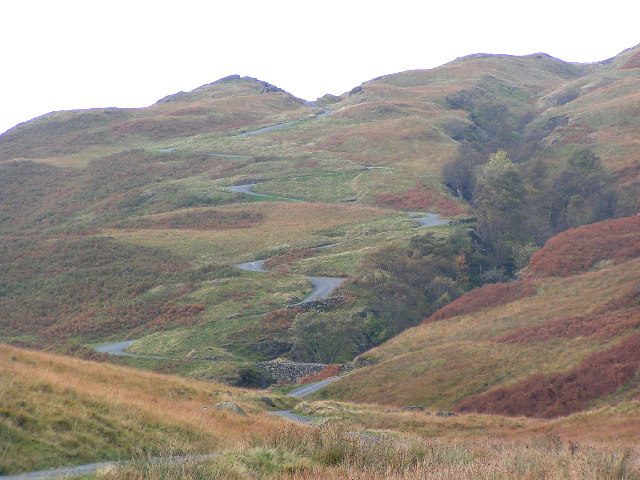
The Lake District is the same story with bigger scenery. Yes, there are lake “cruises,” the odd bus, and the Windermere branch line. But the high passes — Honister, Wrynose, Hardknott — and the quiet western valleys reward a car enormously. Just know those passes are narrow and steep; pick a small car. The Lake District travel guide goes deeper on where to stay.
Cornwall and Devon practically demand a car for the coast. The South West is long, the beaches are scattered down tiny lanes, and summer rail and bus services get crowded. A hire car from Exeter or Penzance opens up the whole peninsula. See the Cornwall and Devon travel guide for the lay of the land.
Northumberland, the Yorkshire Dales, and the Peak District round out the list — wild, gorgeous, and under-served by public transport once you leave the main towns. If your itinerary lives in these regions, a car isn’t a luxury, it’s the tool for the job.
For the actual routes through this scenery — which drives are worth the detour, where to stop — that’s the England road trips pillar, not this article. Here I’m strictly on the booking-and-budget side.
When renting a car is a mistake
Let me be blunt, because the rental industry won’t be: don’t rent a car for London. Full stop. London has a congestion charge, an ultra-low-emission zone, brutal parking costs, and traffic that will age you. The Underground, buses, and a dense rail network get you everywhere far faster and cheaper. Renting a car to “see London” is like buying a boat to cross the street.
The same logic applies to most single-city trips. If you’re spending your days in York, Bath, Liverpool, or Manchester, the city is walkable and the trains between cities are quick. A car just sits in an expensive car park.
And here’s the bit people underestimate: trains often beat the car even for inter-city travel. London to York, London to Bath, Manchester to Liverpool — the train is faster, you can read or nap, and there’s no parking faff at the other end. If your whole trip is city-to-city, you may not need a car at all. The travel around England without a car guide makes the full case, and the England train travel guide covers fares and rail passes.
So the real question isn’t “should I rent a car for England?” It’s “which parts of my trip need one?” Often the answer is “just the rural middle bit” — which leads us to the smartest strategy of all.
The smart move: train out, then pick up at a regional hub
If you take nothing else tactical from this guide, take this: don’t rent your car at Heathrow or in central London. Take the train out to wherever your countryside adventure actually begins, and collect the car there.
Why this wins on every front:
- You skip the worst driving. Your first hours behind the wheel — jet-lagged, on the “wrong” side, in an unfamiliar car — should not be on the M25 or through London traffic. Starting from a calm market town is infinitely kinder.
- You skip the airport surcharge. Picking up at an airport can cost noticeably more than a town-center or rail-station branch — often on the order of 20–30% more once “concession fees” are baked in. A regional pickup sidesteps that.
- You pay for fewer rental days. Every day the car sits at your London hotel doing nothing is a day you’re paying for, plus parking. Collect it the morning you actually drive into the hills.
- The train was going to be better anyway. London-to-hub trains are fast and frequent.
The hubs to aim for, by region:
- Cotswolds: Oxford, Kemble, or Moreton-in-Marsh by train, then pick up.
- Bath & the West: Bath Spa station; rental branches sit nearby.
- Cornwall & Devon: Exeter (St Davids), Truro, or Penzance.
- Lake District: Oxenholme or Windermere (the branch line); pick up around Kendal/Windermere.
- Yorkshire Dales: York or Skipton.
- Northumberland: Newcastle.
One caveat: regional branches keep shorter hours and smaller fleets than airports. Book ahead, confirm the opening times for your pickup and drop-off day (Sundays especially), and reserve early if you need an automatic. The England airport transfers and England travel passes guides help you sort the train leg, and the broader England transport hub ties all your options together.
Automatic vs manual: book the automatic early (and pay for it)
Here’s the thing North American visitors trip over most. In the UK, most hire cars are manual — stick shift. Automatics exist, but they’re a minority of the fleet, often estimated at around one in ten cars, and they get snapped up fast.
So if you can’t, or would rather not, drive a manual on the left while learning roundabouts, your rule is simple: book an automatic car rental in England as early as you possibly can. Don’t roll up at the desk hoping. The automatics go to whoever reserved first.
Two more honest points:
- Automatics cost more. Expect to pay a meaningful premium over the equivalent manual — they’re newer, scarcer, and in demand. Treat it as the price of a calmer trip, not a rip-off.
- A licence to drive automatics only means automatics only. If your home licence restricts you to automatics, you legally can’t take a manual hire car. A full manual licence lets you drive either.
My take? For most visitors not used to a stick on the left, the automatic premium is money very well spent. You’ve got enough new things to manage — give your left hand a break. (The actual mechanics of left-side driving and roundabouts live in the driving on the left guide; read it before you collect the keys.)
What it really costs: the price is never just the price
Quoted daily rates for car rental in England can look tempting — sometimes startlingly low in off-peak months. Then the extras pile on. Here’s how the real cost is built, so nothing ambushes you. All figures are rough, “around,” as of 2026 — confirm live prices when you book, because they swing hard with season, location, and demand.
Base rate. The headline daily price. Lowest in winter, highest in July–August and around bank holidays. A small manual in the off-season can be cheap; a summer automatic, much less so. Don’t anchor on the lowest ad you see.
Automatic premium. As above — a real add-on if you need an auto.
Airport surcharge. Pick up at an airport and expect a “concession” or “location” fee, frequently in the region of 20–30% more than a town branch. Another reason to collect at a regional hub.
One-way fee. Drop the car somewhere different from where you collected it and you’ll pay a one-way fee — anywhere from around £80 to £240 or more, and steeper for long-distance drop-offs. Sometimes worth it for a logical route; often cheaper to loop back and return where you started. Do the math both ways.
Additional driver. Adding a second named driver usually carries a daily charge. If two of you will share the wheel — sensible on a long trip — budget for it, and never let an unlisted person drive (you’ll void the insurance).
Young- and senior-driver surcharges. Covered in their own section below — they can be significant.
Fuel policy. Most reputable firms use “full-to-full”: collect it full, return it full. Easy and fair. Avoid “full-to-empty” deals where you prepay a tank at a marked-up rate and get nothing back for what you don’t burn.
Excess / insurance. The big one, and the one the industry makes money on. Its own section is next.
For a fuller picture of what a trip costs beyond the car, the England budget costs and England trip cost guides break down the whole holiday.

Insurance demystified: the excess, and the desk upsell to refuse
This is where calm travelers get fleeced, so slow down and read.
Your hire car comes with Collision Damage Waiver (CDW) and theft cover built in — in the UK that’s effectively standard, and you couldn’t legally drive off without basic cover. But CDW doesn’t mean “you pay nothing if something happens.” It comes with an excess: the chunk you’re liable for if the car is damaged or stolen, often £1,000 to £1,500 or more. Scrape a wing on a narrow Cornish lane, and that excess is on you.
So the genuine question is how to cover that excess. You have three routes:
-
Buy the desk’s excess waiver (“top-up,” “super CDW,” “zero excess”). This works — but it’s the expensive way. Sold at the counter under time pressure, it can run up to around £40+ a day, easily doubling your rental cost. The staff are trained to push it. You do not have to say yes.
-
Buy a standalone excess insurance policy before you travel. This is the move consumer experts in the UK — including Martin Lewis’s MoneySavingExpert — bang the drum about. A standalone annual or single-trip excess policy can cost as little as a couple of pounds a day, a fraction of the desk price, and often covers things the basic policy doesn’t, like wheels and windscreens. How it works: if there’s damage, you pay the hire firm the excess up front, then reclaim it from your standalone insurer. Sort this out before you fly.
-
Rely on a credit card that includes rental cover. Some cards — particularly certain US and Canadian ones — include CDW-type protection. It can be real money saved, but read the fine print: there are often caps, exclusions (theft, certain vehicle types), a rental-length limit (commonly 30 days), and you may have to pay the firm first and claim back. Confirm your specific card’s terms in writing before relying on it.
My honest advice: arrange a standalone excess policy before the trip, and walk up to the desk able to say “no thank you” to the upsell with a clear conscience. You’re still fully covered — just not paying the counter’s markup. If you’d rather not bother with a standalone policy, a card with solid rental cover is the next best thing. The one option I’d avoid is buying the pricey waiver at the desk on the spot, panicked.
If you remember only one thing about insurance, make it this: the cover the desk pushes for £40 a day is the same job a £2-a-day standalone policy does — so buy the policy before you go and decline the upsell.
The security deposit (and why your card matters)
Separate from insurance, the rental company will place a hold on your credit card as a security deposit when you collect the car. This isn’t a charge — it’s ring-fenced funds they can draw on for damage, fuel, or fines, released a week or two after you return the car clean and full.
Two things to know:
- It must usually be a credit card in the main driver’s name, not a debit card or prepaid card, and it needs enough available headroom to cover the hold (which can be several hundred pounds). Turn up with the wrong card and you can be refused the car — a genuinely trip-ruining mistake.
- Standalone excess policies expect you to front the excess, so that credit-card headroom matters even more if something goes wrong. Make sure your limit can absorb the hold plus a potential excess claim.
Driver age rules: under 25 and over 70
Age is the surcharge people forget to budget for, and it can sting.
Younger drivers (typically 21–24). Most firms hire to drivers from 21, but add a young-driver surcharge, commonly in the region of £30–£40 per day, frequently capped at around 10 days. Over a one- or two-week rental that’s real money, so factor it in. A few firms set a minimum age of 23 or 25 for certain vehicle classes, and premium cars are often off-limits to under-25s entirely. If you’re under 21, hiring gets much harder.
Older drivers (around 70+). There’s no single rule. Some firms apply a senior surcharge of roughly £10–£25 per day above a certain age; others waive it. Many set an upper age limit somewhere between 70 and 75, beyond which they won’t rent at all, or require extra documentation like a medical declaration. If you’re over 70, call ahead and confirm the specific branch’s policy rather than assuming — it varies by company and even location.
For everyone in the comfortable middle (25–69), these surcharges don’t apply, but it’s worth checking your booking quote line by line regardless — the mandatory fees are usually shown up front.
What documents you actually need
Bring more than you think you’ll need; the desk can be fussy.
- Your home driving licence (the physical card). Visitors can generally drive in Great Britain on a valid foreign licence for up to 12 months from entry.
- A passport, for ID at the counter.
- A credit card in the main driver’s name, for the deposit (see above).
- Your booking confirmation.
- An International Driving Permit (IDP) — here’s the nuance. UK law does not require an IDP for visitors who hold a valid licence written in English (so US, Canadian, Irish, Australian licences are typically fine on their own). But if your licence is not in English or uses a non-Latin script, get an IDP — it translates your licence and saves hassle. And because rental companies can set stricter rules than the law, confirm your specific firm’s document requirements when you book. Some ask for an IDP even when the law doesn’t.
A note for UK licence holders, since people ask: the DVLA “share code” (the online check code that lets a hire firm view your driving record) is a domestic-licence thing — it doesn’t apply to overseas visitors using a foreign licence. If that’s you, ignore it.
The official word on driving here as a visitor lives on GOV.UK’s “driving in Great Britain on a non-GB licence” pages — worth a two-minute read before you go.
Choosing the right car: smaller than you think
The instinct is to size up for comfort. Resist it. England’s rural roads are narrow — genuinely, hedge-scraping, single-track-with-passing-places narrow in places like Cornwall, Devon, and the Lake District. A big SUV is a liability on a Cotswold lane and a nightmare to park in a medieval town.
For two people with normal luggage, a small hatchback (think the “economy” or “compact” class) is usually the sweet spot: cheaper to rent, cheaper on fuel, easier to thread down lanes, and far easier to park. Size up only if you genuinely have the people or bags to justify it. Your future self, reversing into a passing place to let a tractor by, will thank you.

Fuel: petrol, diesel, and the EV question
A few practical fuel notes:
- Fuel is sold by the litre, and it’s pricier than what North Americans are used to. Budget for it on long cross-country drives, and lean fuel-efficient.
- Don’t misfuel. Putting petrol in a diesel car (or vice versa) is an expensive, trip-stopping mistake. Check which fuel your car takes — it’s usually labelled inside the fuel flap — and read the pump nozzle. When in doubt, ask.
- Full-to-full is your friend. Return the car with a full tank to avoid inflated refuelling charges. Top up at a station near the drop-off and keep the receipt.
- EVs are increasingly available to hire. They’re great for the right trip, but only take one if you’re comfortable planning around charging stops — public charging in rural England is improving but still patchier than petrol stations. If you’re not sure, a petrol car is the lower-stress choice for a first England road trip.
Booking tips that save real money
A handful of habits that consistently pay off:
- Book early, especially for automatics and for summer/bank-holiday travel. Late bookings cost more and leave you with whatever’s left.
- Compare across a broker and direct, but read the terms, not just the price. The cheapest line often has the nastiest fuel policy or excess.
- Sort excess insurance before you travel (standalone policy), so you can decline the desk upsell calmly.
- Pick up at a regional hub, not a London airport, to dodge the surcharge and the worst driving.
- Choose full-to-full fuel and the smallest sensible car.
- Photograph the car thoroughly at pickup — every existing scratch, the fuel gauge, the mileage — and again at drop-off. This is your defence against bogus damage claims, and it takes two minutes.
- Confirm branch opening hours for both your pickup and drop-off days. Sunday and evening closures catch people out.
- Read your booking line by line for the mandatory fees, so the total is the total.
For weaving all this into a sensible route, see the England itinerary and the gentler slow travel England itinerary. For the bigger trip-planning picture, the England travel guide and England travel tips are your starting points.
Final Thoughts
Renting a car in England comes down to one honest distinction: it’s a gift in the countryside and a burden in the city. Get that right and everything else falls into place. Rent for the Cotswolds, the Lakes, Cornwall, the Dales — and lean on trains for London and the inter-city legs.
Then play it smart: train out to a regional hub and pick up there, book the automatic early if you need one, choose the smallest sensible car, sort a standalone excess policy before you go, and walk past the desk upsell with a smile. Do that, and the car becomes what it should be — the key to England’s quiet, gorgeous, off-the-rail corners — rather than a line of unexpected charges.
When you’re ready for the wheel itself, read the left-side driving guide for the left side, roundabouts, and city charges, and the England road trips pillar for the routes worth driving. Safe travels, and enjoy the lanes.
Research and Source Notes
This guide draws on official UK government guidance and reputable consumer and travel sources, current as of 2026. Prices are given as ranges and approximations and should be confirmed at the time of booking, as they vary by season, location, company, and demand.
- GOV.UK — Driving in Great Britain on a non-GB licence / International driving permits: used for visitor licence validity (up to 12 months) and the fact that an IDP is not legally required for English-language licences. (gov.uk/driving-abroad and gov.uk guidance on non-GB licences)
- MoneySavingExpert (Martin Lewis) — Cheap car hire & excess insurance: used for the standalone-excess-insurance advice, the typical desk-upsell cost (up to ~£40/day), and standalone policy pricing (from a couple of pounds a day). (moneysavingexpert.com/travel/cheap-car-hire)
- Major rental brands’ published terms (Avis, Budget, Enterprise, Europcar, Sixt, Hertz): used for automatic availability and pricing context, one-way fees, additional-driver charges, fuel policies, deposit/credit-card rules, and age surcharges (young-driver ~£30–£40/day with ~10-day caps; senior surcharges ~£10–£25/day and upper age limits ~70–75).
- Auto Europe, Skyscanner, and UK travel-planning guides: used for cost-component context, airport-surcharge ranges (~20–30%), and the regional-pickup strategy.
- General consumer reporting on CDW and excess: used to explain that CDW is standard in the UK while the excess (often £1,000–£1,500+) remains the driver’s liability, and how credit-card rental cover typically works (caps, exclusions, 30-day limits, pay-then-claim).
Where sources differ on exact figures, I’ve used conservative ranges and flagged them as approximate. Always read your specific booking’s terms and your insurer’s or card’s fine print before you travel.
Photo Credits
- Renting a car in England pays off most on rural roads like this Cotswolds lane between drystone walls — Photo: David Howard / CC BY-SA 2.0 via Wikimedia Commons. Source
- A small hire car is the right call for tight Lake District passes like Honister — Photo: Norrie Adamson / CC BY-SA 2.0 via Wikimedia Commons. Source
- Motorway tolls are rare in England, but fuel is sold by the litre and pricier than in the US — Photo: Kevin Waterhouse / CC BY-SA 2.0 via Wikimedia Commons. Source
- England’s narrow lanes — like this Cornwall hedge-lined road — are an argument for the smallest car you can manage — Photo: Lewis Clarke / CC BY-SA 2.0 via Wikimedia Commons. Source
- The payoff for sorting the logistics — open coastal roads like this Cornwall route — Photo: Robert Linsdell from St. Andrews, Canada / CC BY 2.0 via Wikimedia Commons. Source
Frequently asked questions
Do I need an International Driving Permit to rent a car in England?
Usually not. Visitors with a valid licence written in English — US, Canadian, Irish, Australian — can generally drive in Great Britain for up to 12 months without an IDP. If your licence isn’t in English or uses a non-Latin script, get one. Either way, confirm your rental company’s specific requirements, as some ask for an IDP regardless.
Is it cheaper to rent a car at the airport or in town?
In town, almost always. Airport pickups carry “concession” or location fees that can add roughly 20–30% to the cost. Taking the train to a regional hub like Bath, Exeter, or York and picking up there usually beats a Heathrow rate — and spares you driving while jet-lagged on the motorway.
Can I get an automatic car rental in England?
Yes, but automatics are a minority of UK fleets — often estimated around one in ten cars — and they cost more than manuals. The fix is simple: book your automatic as early as possible. Don’t gamble on availability at the desk. For most visitors uneasy about a stick shift on the left, the automatic premium is well worth paying.
Should I buy the insurance the rental desk offers?
Generally, no. The desk’s excess waiver can run up to around £40 a day. A standalone excess policy bought before your trip costs a fraction of that — sometimes a couple of pounds a day — and often covers more. Arrange that in advance, and decline the counter upsell. A credit card with rental cover is another route; check its fine print.
Do I need a car for London?
No — don’t rent a car for London. The congestion charge, low-emission zone, parking costs, and traffic make a car a liability. The Tube, buses, and trains get you everywhere faster and cheaper. Rent only if you’re heading out to the countryside, and even then, collect the car outside the city.
How old do I have to be to rent a car in England?
Most firms rent from age 21, but drivers aged 21–24 pay a young-driver surcharge of roughly £30–£40 a day, often capped around 10 days, with some car classes off-limits. Older drivers (around 70+) may face a smaller surcharge or an upper age limit between 70 and 75 — call ahead to confirm.