Sheet 89 · England Road Trips · 14 min read
Cotswolds Road Trip
Plan a Cotswolds road trip with a real drivable village-hopping loop, honest parking advice, lane etiquette, and the best pubs and viewpoints en route.
 Sheet 89
Contents 10 sections
The first time I drove the Cotswolds I made every classic mistake. I trusted the sat-nav down a single-track lane the width of a wheelbarrow, met a tractor coming the other way, and spent ten sweaty minutes reversing uphill into a hedge while a farmer watched with the patience of a man who has watched this exact thing a thousand times. I’ve since driven these lanes in every season, and I want to save you that hedge.
A Cotswolds road trip is, at its heart, a village-hopping loop: a routed circuit of honey-coloured villages strung along narrow back lanes between Gloucestershire and Oxfordshire. Drive a sensible figure-of-eight from a central base over two to three days and you can link Bibury, Bourton-on-the-Water, the Slaughters, Stow-on-the-Wold, Broadway, Chipping Campden, Burford and more — without ever feeling rushed.
The trick isn’t the route. Honestly, the route is easy. The trick is knowing where you can actually park, which villages clog solid by 11am in July, and how to behave on a lane that’s barely a car wide. That’s what this guide is really about.
Quick Answer: How to Plan a Cotswolds Road Trip
A Cotswolds road trip works best as a two- or three-day driving loop based in the central north Cotswolds. Stay in or near Stow-on-the-Wold or Bourton-on-the-Water, then circuit out to Bibury, Burford, Broadway, Chipping Campden and the Slaughters on quiet B-roads. Most villages sit 10 to 25 minutes apart, so the driving is gentle and the days are unhurried.
At a Glance: The Loop Stops
Here’s the shape of the trip I’d actually drive. Times are rough door-to-door estimates on normal roads (add a chunk in peak summer), and I’ve noted why each stop earns its place.
| Loop stop | Village or town | Drive time (from previous) | Why stop |
|---|---|---|---|
| Base | Stow-on-the-Wold | — | Central, walkable, great pubs and antiques |
| 1 | Lower & Upper Slaughter | ~10 min | The quietest classic villages; no through-traffic |
| 2 | Bourton-on-the-Water | ~8 min | “Venice of the Cotswolds”; busy but charming |
| 3 | Bibury | ~25 min | Arlington Row, the postcard shot |
| 4 | Burford | ~20 min | Sloping High Street, antiques, gateway town |
| 5 | Broadway | ~40 min | Wide elegant street, Broadway Tower above |
| 6 | Chipping Campden | ~10 min | Finest curved High Street; the wool-town jewel |
| 7 | Castle Combe (optional south) | ~1 hr 15 | “Prettiest village in England,” tiny and remote |
| Return | Back to base | varies | Sunset pint, plan tomorrow |
You don’t have to do all of this in one go. Split it: north loop one day (Slaughters, Bourton, Broadway, Chipping Campden), south loop the next (Bibury, Burford, Northleach), and treat Castle Combe as a longer day-trip only if you’re truly committed, because it’s a fair way south of everything else.
Where to Base Yourself (and Why It Matters)
The single biggest decision on a Cotswolds road trip isn’t the car — it’s the base. Get this right and every day is a short, scenic hop. Get it wrong and you’ll burn an hour each morning just reaching the good stuff.
I keep coming back to Stow-on-the-Wold. It sits high on the wolds at the meeting point of several old roads, which is exactly why it became a wool-trading town in the first place. From Stow you can reach the Slaughters, Bourton, Broadway and Chipping Campden inside 20 minutes, and it has proper pubs — The Porch House claims roots back to 947 AD and pours a decent pint by the fire. It’s walkable, the Market Square is genuinely handsome, and the antique shops are a rabbit hole.
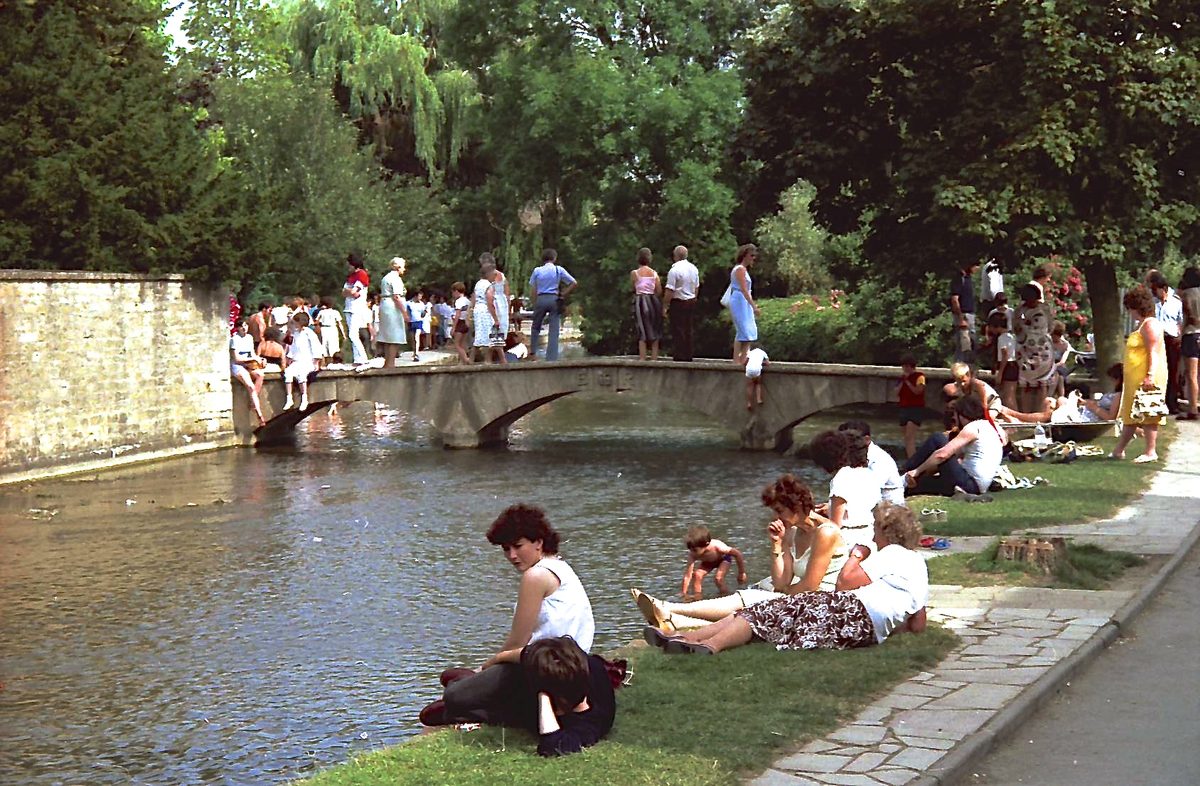
Bourton-on-the-Water is the other sensible central base. It’s more touristy — far more — but the River Windrush running through the green is undeniably lovely first thing, and the location is bang in the middle. If you stay over, you get the magic hour after the day-trippers leave, when the low stone bridges empty out and the village exhales.
If you want quieter and don’t mind a slightly longer reach, Burford anchors the southeastern corner beautifully, and Chipping Campden the north. For the full rundown of neighbourhoods, inns and farm stays, see my guide on where to stay in the Cotswolds. And if you’re weighing the broader picture of which villages to prioritise, the best Cotswolds villages breakdown pairs nicely with this driving plan.
One thing I’d avoid: basing yourself outside the AONB to save money and commuting in. The whole point of a Cotswolds road trip is the early mornings and late evenings, and you only get those if you sleep inside the loop.
Day One: The North Loop (Slaughters, Bourton, Broadway, Chipping Campden)
This is the day that sells people on the Cotswolds. I’d run it roughly clockwise.
Start early at the Slaughters
Set an alarm. I mean it. Be at Lower Slaughter by 8:30 and you’ll have one of England’s prettiest villages almost to yourself — the River Eye sliding past stone cottages, the old mill with its waterwheel, ducks and not much else. The catch is parking: there is no car park here. None. There’s a thin ribbon of free roadside spaces opposite the Manor House and that’s it, and it fills fast.
My move: park in Bourton-on-the-Water’s big pay-and-display, then walk the Warden’s Way up to Lower Slaughter. It’s about 1.5 miles of flat, traffic-free path along an old route, maybe 30 to 35 minutes, and it’s lovely. You can carry on to Upper Slaughter, which is even quieter and barely changed in a century. Doing it on foot also means you’re not adding a car to a village that simply can’t hold them. (If you’d rather walk more of the region than drive it, my Cotswolds walks guide maps out the best loops.)
Mid-morning: Bourton-on-the-Water
Back at the car, Bourton itself deserves an hour. Yes, it’s the busiest village in the Cotswolds and by midday in summer the green is shoulder to shoulder. But the low bridges over the Windrush are genuinely charming, the model village is a quiet bit of fun, and a coffee by the water before the coach parties arrive is a small pleasure. The big car park makes it the easiest village to drive into — which is precisely why everyone does.
Lunch onward to Broadway
From Bourton, point the car northwest toward Broadway, around 30 to 40 minutes through proper rolling countryside. Broadway is different in character: a broad, elegant green-flanked High Street rather than a huddle of cottages, with smart shops and good lunch options. Park on or near the High Street (pay-and-display) and stroll.
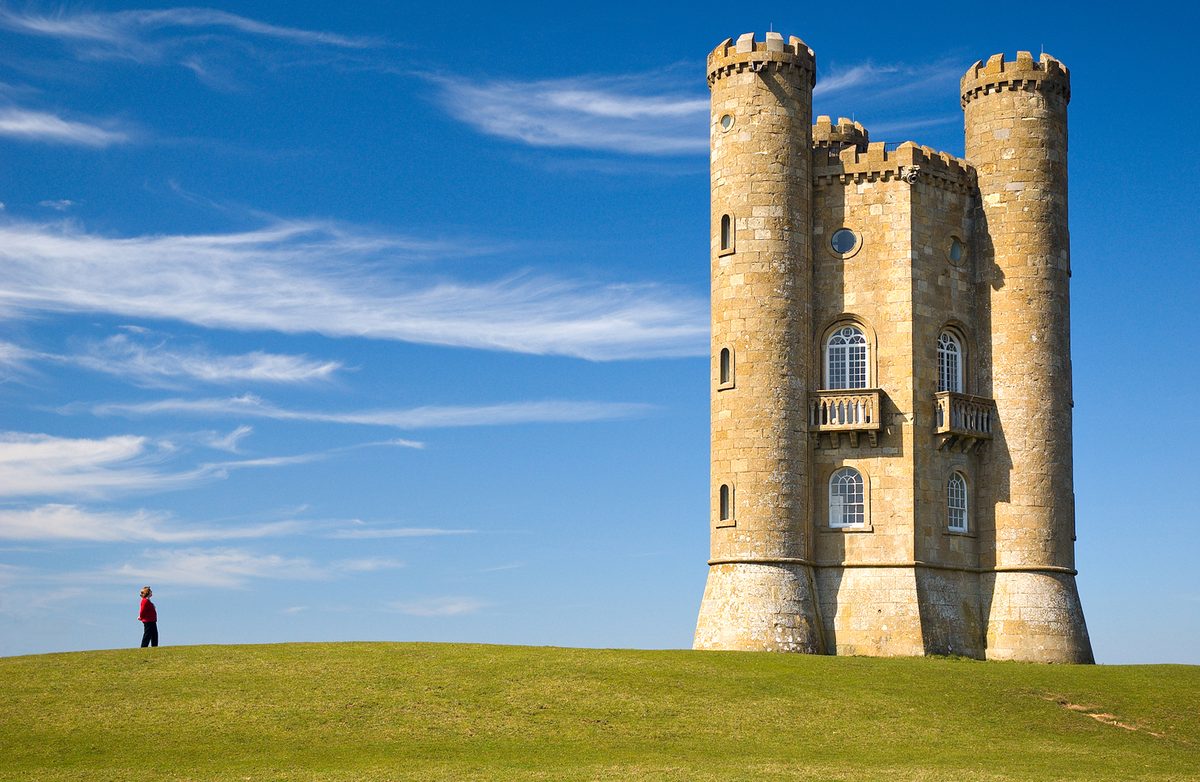
Then climb to Broadway Tower, less than ten minutes up the hill. It’s the second-highest point in the Cotswolds, and on a clear day the view reportedly stretches across more than a dozen counties. Around 10 to 12 pounds to go up the tower as of 2026, but you can enjoy the hilltop and the views for free, and there’s a café. This is the big-sky moment of the trip.
Late afternoon: Chipping Campden
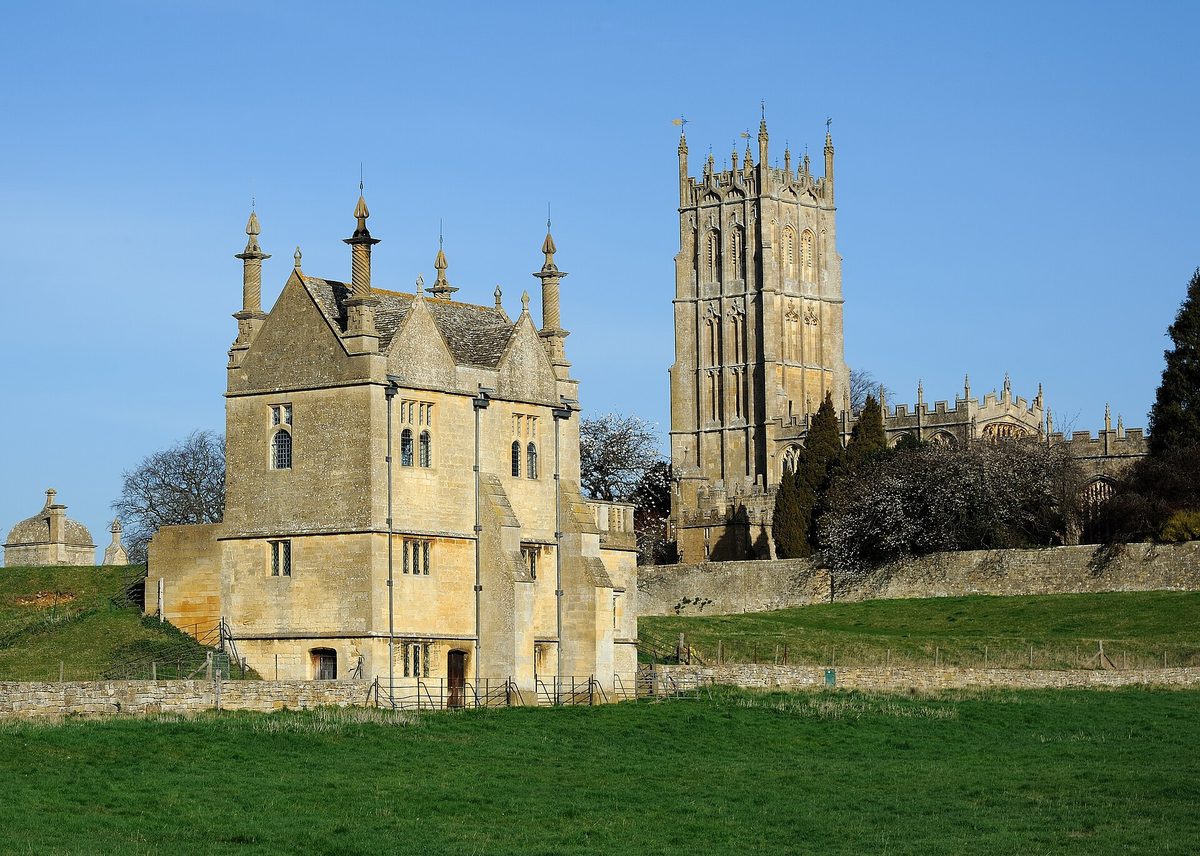
Ten minutes from Broadway sits Chipping Campden, and for my money it has the finest street in the whole region — a long, gently curving High Street of mellow stone, anchored by the 17th-century Market Hall. It was a wealthy wool town and it still feels confident and complete. Parking is on the High Street and side streets; it’s usually more manageable than Bibury or Castle Combe. End the day here with a wander, then drive back to base for dinner.
Day Two: The South Loop (Bibury, Burford, Northleach)
The southern villages have a slightly softer, more wooded feel, and the driving between them is some of the best of the trip.
Beat the crowds at Bibury
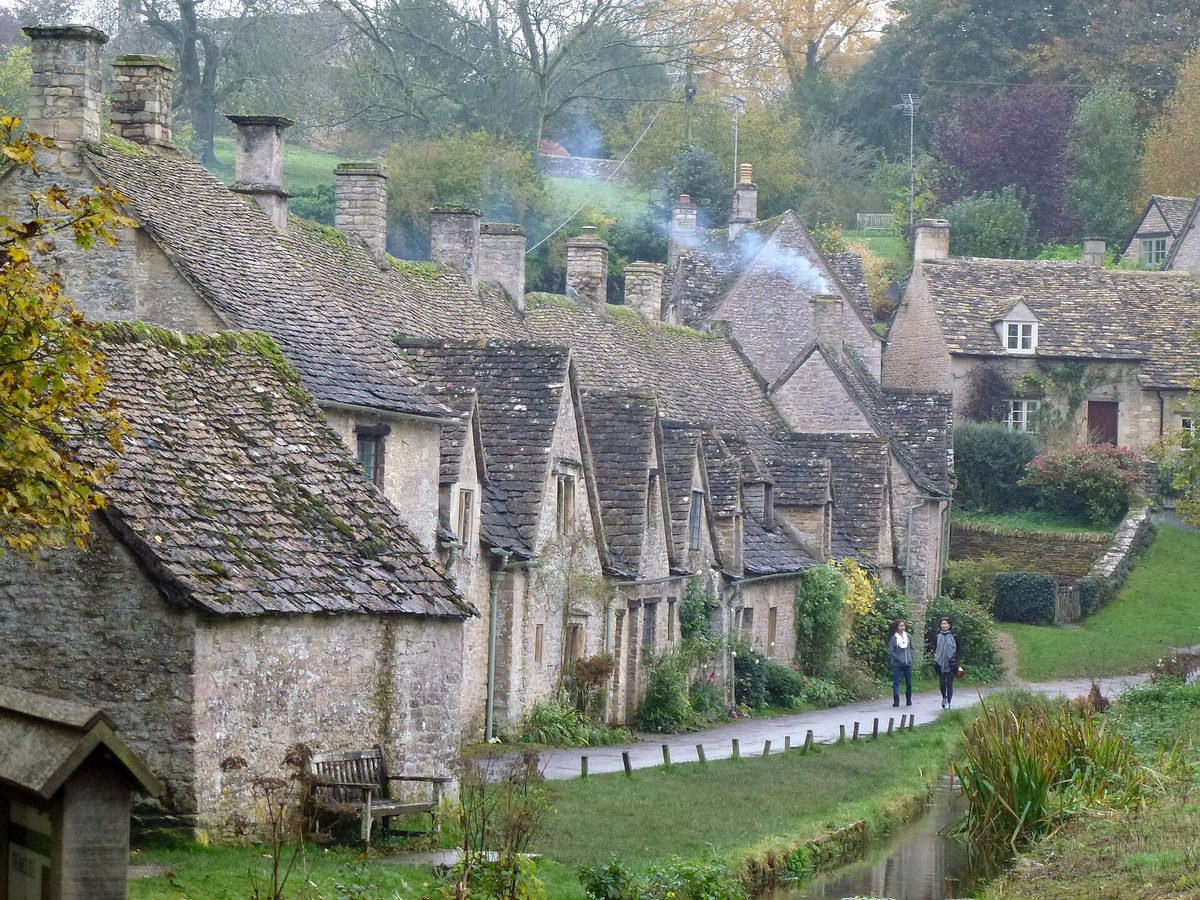
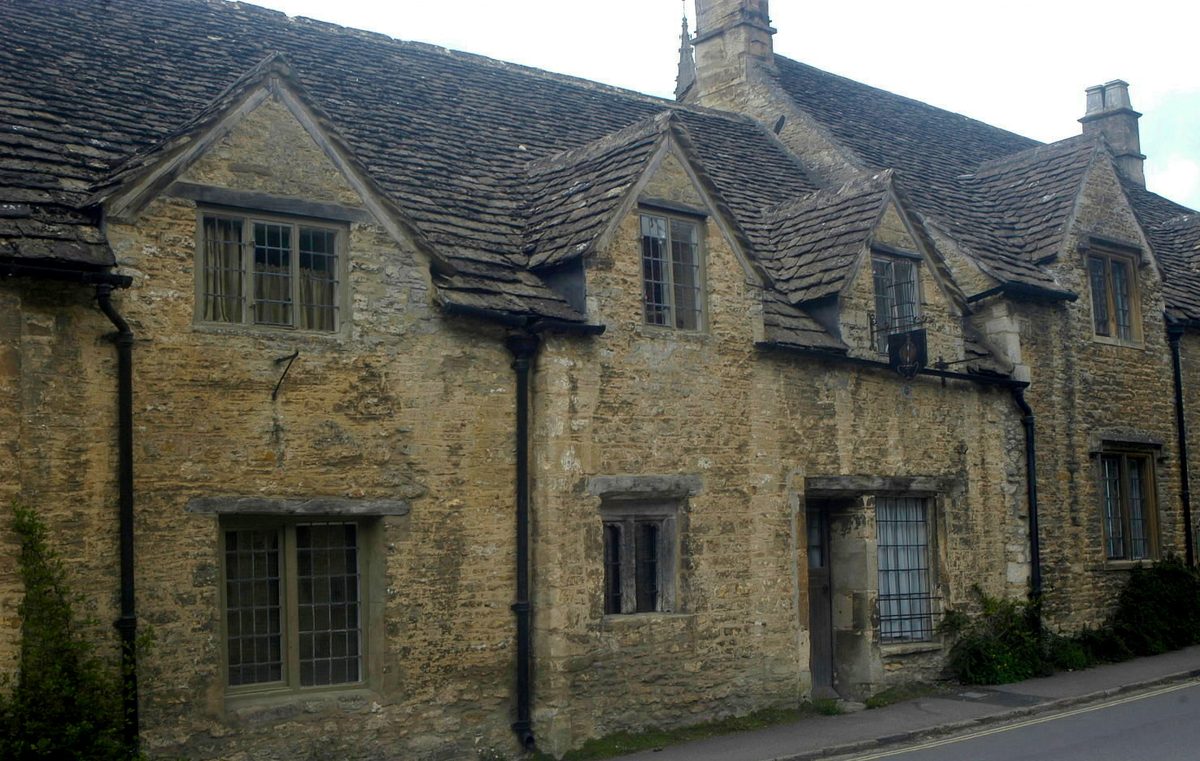
Bibury is the photograph you’ve already seen: Arlington Row, a line of 14th-century weavers’ cottages that has launched a million postcards. It is also, frankly, a victim of its own beauty. On a sunny summer weekend the village of a few hundred people can reportedly see numbers in the thousands, and tour buses crawl through.
The fix is simple and non-negotiable: go early or go late. Be there before 9:30 or after 4:30 and you’ll get Arlington Row in soft light and breathing space. Parking is the pinch point — there’s free roadside parking along the River Coln and a small area near the Trout Farm, but on a peak afternoon you may genuinely sit and wait for a space. The Swan, an ivy-clad old inn by the water, is the spot for a coffee or a long lunch. For more on Bibury’s lanes and the area’s history, the Cotswolds travel guide goes deeper than I can here.
Burford and the sloping High Street
From Bibury it’s around 20 minutes to Burford, the “gateway to the Cotswolds.” Its broad High Street tips down toward a medieval bridge over the Windrush, lined with antique shops, tea rooms and pubs. It’s a working market town as much as a tourist stop, which gives it a slightly more grounded feel. There’s parking down by the river and on the High Street. This is a good lunch town.
Northleach, the underrated one
On the way back, detour to Northleach, a small market town with a magnificent “wool church” — St Peter and St Paul, paid for by medieval wool wealth and far grander than the village’s size suggests. Hardly anyone stops, which is exactly the point. It’s a five-minute pause that reminds you these were once some of the richest places in England.
For the cosy end of the day, my round-up of Cotswolds pubs and tea rooms covers where to land for a Sunday roast or a proper cream tea after a day of driving.
The Optional Southern Add-On: Castle Combe
I’ll be honest with you about Castle Combe, because a lot of guides aren’t. It is ravishing — a tiny, almost untouched cluster of stone cottages around a medieval market cross and a little bridge, regularly crowned the prettiest village in England. It’s also a long way south of the main Cotswolds cluster, more than an hour from Stow, and it has roughly fifty residents and almost no parking.
The pay-and-display is on Dunns Lane at the top of the village, a ten-minute walk down to the famous scene; you cannot drive into the heart of the village and park. If you go, treat it as a dedicated half-day rather than a casual hop, and absolutely go early. Pair it with Bath if you’re heading that way — my Bath travel guide picks up the thread, and the wider sweep south is covered properly in the south England road trip itinerary rather than here.
Driving the Lanes: What Nobody Tells You
This is the section I wish I’d read before my hedge incident. The Cotswolds is not hard to drive, but it rewards the right attitude and punishes the wrong car.
Hire small. The villages were built for carts, not SUVs. A compact car with parking sensors is worth far more here than a big comfortable cruiser. You’ll thank yourself squeezing past a stone wall with two inches to spare. If you’re sorting wheels for the trip, renting a car in England walks through the practicalities.
The single-track lanes are real. Plenty of the prettiest routes are one car wide, hemmed by high hedgerows that kill your sight lines around bends. The etiquette: drive slowly, look ahead for the next passing place (a little widened bay, sometimes marked), and pull into it — or reverse to one — when you meet oncoming traffic. A raised hand of thanks is standard. Whoever is nearest a passing place gives way. Nobody is in a hurry; if they seem to be, let them past.
Don’t blindly trust the sat-nav. This is the big one. GPS loves the shortest route, which out here often means an unsuitable farm track. When in doubt, stick to the A and B roads and the signposted tourist routes. If a lane starts feeling wrong — grass growing up the middle is a clue — it probably is.
Watch for livestock and wildlife. Sheep, the odd cow and pheasants wander onto roads, especially around dawn and dusk. Where you see livestock warning signs, ease off.
Park with courtesy. Use the pay-and-display car parks; they’re cheap and they exist for a reason. Don’t block driveways, field gates or passing places, don’t park on private land, and “stagger” your parking on narrow roads so two cars aren’t opposite each other choking the lane. Locals notice, and a village that already drowns in summer traffic deserves the consideration.
For a fuller sense of how the region connects to the rest of the country — and how short these hops really are compared to British distances generally — see driving distances in England.
When to Go (and When Not To)
Timing changes this trip more than almost anything.
Late spring (May, June) is my favourite: long days, hedgerows in bloom, gardens at their best, and the crowds not yet at full summer pitch.
Summer (July, August) is the peak, and you’ll feel it. The scenery is lush, but roads are busy, parking is a genuine sport, the honeypot villages — Bibury, Bourton, Castle Combe — are heaving, and pubs need booking. If you come in summer, lean hard on early starts and late finishes, and you’ll still have a wonderful time.
Autumn (September, October) is the quiet sweet spot. The colour comes in, prices ease, and you can often get a pub table without a reservation. If I could only go once, I might go in late September.
Winter is moody and lovely and empty, with log fires in every pub — just expect shorter days and the odd seasonal closure. For the full seasonal breakdown across the country, my guide to the best time to visit England puts the Cotswolds in context.
How This Fits a Bigger Trip
A Cotswolds road trip slots neatly into wider plans. Coming from the capital with limited time? A focused London to Cotswolds day trip hits the highlights, though you’ll be rushing. With more days, the region is a natural leg of a broader England road trips loop, and it threads beautifully into a full 10-day England road trip itinerary.
Short on time but still want the essence? My 2-day Cotswolds itinerary is the condensed version of everything above. And if you find yourself nearby, Oxford makes a brilliant bookend to the eastern Cotswolds. The Cotswolds also features heavily in any honest list of the most beautiful villages in England, which tells you something about why the lanes get so busy.
Final Thoughts
I’ve driven the Cotswolds enough times now to have a few stubborn opinions, and here they are. Sleep inside the loop. Set your alarm so you’re at Bibury or the Slaughters before the world wakes up. Hire the smallest car your dignity allows. And when you meet a tractor in a lane, just smile, reverse, and remember you’re a guest in a working landscape that’s been quietly beautiful for six hundred years.
The villages are wonderful, but the real joy of a Cotswolds road trip is the in-between — cresting a hill into a valley full of stone and sheep, the radio low, no particular hurry. That’s the bit the day-trippers never get. With your own car and a couple of unhurried days, it’s all yours.
Now go. Mind the hedges.
Research and Source Notes
Route logic, village selection and the broader regional picture draw on the official destination resource Cotswolds National Landscape / cotswolds.com, which covers the AONB’s villages, lanes and visitor guidance. Property and access details for sites such as Broadway Tower’s surroundings and protected landscapes were cross-checked against nationaltrust.org.uk. General trip-planning context, seasonality and getting-around advice were informed by visitbritain.com. Parking realities, crowd levels and lane etiquette reflect current on-the-ground reportin
Photo Credits
- Honey-stone cottages of Arlington Row in Bibury, a classic stop on a Cotswolds road trip — Photo: John H Darch / CC BY-SA 2.0 via Wikimedia Commons. Source
- Low stone bridges over the River Windrush in Bourton-on-the-Water, a central Cotswolds village hopping stop — Photo: Anthony O’Neil / CC BY-SA 2.0 via Wikimedia Commons. Source
- The medieval stone bridge and cottages of Castle Combe, often called the prettiest village in England — Photo: Ray Bird / CC BY-SA 2.0 via Wikimedia Commons. Source
- Broadway Tower on its hilltop above the village, a high point of any Cotswolds driving route — Photo: Newton2 Edit by: Arad / CC BY 2.5 via Wikimedia Commons. Source
- The curved honey-coloured High Street and Market Hall of Chipping Campden on a Cotswolds road trip — Photo: Saffron Blaze / CC BY-SA 3.0 via Wikimedia Commons. Source
Frequently asked questions
How many days do you need for a Cotswolds road trip?
Two to three days is the sweet spot. Two lets you do a focused north-and-south loop without rushing; three gives you breathing room to linger over lunches, add walks, and reach further-flung spots like Castle Combe. You can technically "do" the Cotswolds in a day, but it would be a frantic blur — the whole point here is to slow down.
What's the best base for a Cotswolds driving route?
Stow-on-the-Wold and Bourton-on-the-Water are the two best central bases, putting most villages within a 20-minute drive. Stow is my pick for its pubs, antiques and slightly calmer feel; Bourton wins on river-side charm if you can handle the daytime crowds. Burford suits the southeastern corner and Chipping Campden the north.
Is it difficult to drive in the Cotswolds?
Not really, but it demands the right approach. Lanes are narrow, often single-track, with blind bends behind high hedges. Hire a small car, drive slowly, use passing places, give way generously, and don't blindly follow a sat-nav down a farm track. Get those habits right and the driving becomes one of the best parts of the trip.
Where is parking hardest in the Cotswolds?
Bibury, Castle Combe and the Slaughters are the worst pinch points. The Slaughters have essentially no parking — walk in from Bourton instead. Bibury relies on limited roadside spaces that fill on sunny weekends. Castle Combe has one small car park a ten-minute walk above the village. Bourton, Broadway and Chipping Campden have proper car parks and are far easier.
What is the prettiest village on a Cotswolds road trip?
It's a genuine fight between Bibury (Arlington Row), Castle Combe and Lower Slaughter, and your answer depends on the light and the crowds. Chipping Campden has the finest High Street, while the Slaughters offer the most untouched, traffic-free calm. Visit any of them early in the morning and they'll feel like the prettiest place you've ever seen.
When should I avoid the Cotswolds?
Avoid peak summer weekends and bank holidays if you can, especially midday, when honeypot villages and their roads are at their most clogged. If summer is your only option, go on weekdays and stick to early-morning and late-afternoon village visits. Late September and October offer the best balance of good weather, autumn colour, and breathing space.