Sheet 10 · England Budget and Costs · 18 min read
How to Find Cheap Train Tickets in England
Find cheap train tickets England-wide with Advance fares, split ticketing and railcards. My booking system for paying less on UK rail, with real examples.
 Sheet 10
Contents 13 sections
I book trains in England constantly, and the gap between what I pay and what the person next to me paid for the same seat is often three or four times over. They walked up. I planned. That’s basically the whole game.
Here’s the thing nobody tells you: the train operators in England don’t really want one price for one journey. They want a dozen prices, and they bury the cheap ones. Scoring cheap train tickets England-wide comes down to three habits — booking Advance fares early, dodging peak hours, and stacking a railcard or split tickets on top. Do those and a £170 walk-up becomes a £20 booking. Genuinely.
This guide is the fares deep dive. I’m not going to re-explain how to read a departure board or which platform Paddington uses — my England train travel guide covers the how-rail-works basics, and if you’re costing out a whole trip, start with how much does a trip to England cost. This page is about one thing only: paying less for the train.
Quick Answer: Cheap Train Tickets England, Explained
The cheapest UK rail fares are Advance tickets, released around 12 weeks ahead (as of 2026) and tied to one specific train. Book the moment they drop, travel off-peak, and add a railcard for around a third off. Can’t book ahead? Use split ticketing and Off-Peak fares instead of paying the Anytime walk-up rate.
That’s the headline. Now the detail — because the difference between knowing this and actually saving money is in the timing and the tools.
At a Glance: Which Ticket Saves You Most
Before we go deep, here’s the whole landscape on one screen. Prices are illustrative and hedged — fares move constantly (as of 2026).
| Ticket type | When it’s cheapest | Flexibility | Rough saving vs walk-up |
|---|---|---|---|
| Advance | Booked early, off-peak train | None — one named train only | Up to ~70% off |
| Off-Peak / Super Off-Peak | Any off-peak train, booked anytime | High — any off-peak service | ~40–60% off |
| Anytime | Never “cheap” — it’s the full fare | Total — any train, any time | The baseline (0%) |
| Split tickets | When through-fare is overpriced | Same as underlying tickets | ~25–50% off typical |
| + Railcard | Stacks on most of the above | N/A — a discount layer | ~1/3 off (as of 2026) |
| Season / Flexi | Repeated same-route travel | Date-flexible commuting | ~20%+ vs daily tickets |
Notice the trade-off running down that table: you save money by giving up flexibility. The cheapest ticket locks you to a single train; the most flexible one costs the most. Most of saving on UK rail is just deciding how much freedom you actually need.
How UK Rail Pricing Actually Works (the Short Version)
You don’t need a degree in this, but you do need the mental model, because it explains every tactic below.
England’s railway runs on yield management — the same airline-style system where the price of a seat changes based on how full the train is and how soon you’re travelling. A handful of cheap Advance seats go on sale first. As they sell, the next price tier opens, then the next. By the day of travel, only the expensive flexible fares are left.
There are four ticket families, and almost everything is a variation of these:
- Advance — cheapest, fixed to one train, limited stock.
- Off-Peak and Super Off-Peak — mid-priced, valid on quieter trains.
- Anytime — the full-flex, full-price walk-up fare.
- Season / Flexi — for people doing the same journey over and over.
One more thing worth knowing: fares in England are a mix of regulated (capped by government, including most Off-Peak returns and season tickets) and unregulated (set by the operator, including most Advance and Anytime fares). The regulated ones rose around 4.6% in 2025 (as of 2026), so the “old prices” you remember are gone. Plan around today’s numbers.
That’s the mental model. Now let’s get to the money.
Advance Tickets and Timing: This Is Where the Real Money Is
If you only change one habit, change this one. Advance tickets are the single biggest lever on the price of a long-distance journey in England.
When Advance tickets release
Most operators release Advance fares around 12 weeks (about 84 days) ahead of the travel date (as of 2026), per National Rail. But there are big exceptions worth knowing:
- LNER — the East Coast operator running London King’s Cross to York, Newcastle, and Edinburgh — releases up to around 24 weeks ahead (as of 2026).
- Hull Trains goes even earlier, up to around 26 weeks.
So if you’re planning King’s Cross to York for a date four months out, the cheap LNER fares may already exist while a Paddington-to-Bath fare for the same date hasn’t opened yet. Check the operator, not just the calendar.
The cheap seats sell out — fast
Here’s the catch nobody warns first-timers about. The cheapest Advance seats are a small allocation. On a popular route like London to Manchester or King’s Cross to Edinburgh, the lowest fares can vanish within hours of release on busy travel days. What’s left is still called “Advance,” but at a higher price tier.
My system:
- Know your date as early as you can. Even a rough date helps.
- Set a fare alert. National Rail, LNER, and Trainline all offer “ticket alert” or “early bird” emails that ping you the moment Advance fares for your route open. I lean on these constantly.
- Book the day they release, first thing, for the rock-bottom tier.
- Be flexible by an hour or two. The 09:48 might be £18 while the 08:03 (peak) is £55. Shift your plan to the cheap train, not the other way around.
The Advance trade-off
Advance tickets are non-flexible. Miss your booked train and the ticket is, in most cases, dead — you’ll buy a new full-price one. (You can usually change to a different train before departure for a fee plus any fare difference, but you can’t just hop on the next service.) So Advance is brilliant when your plans are firm and a false economy when they’re not. Know which you are.
Off-Peak vs Anytime: The Tactic for When You Can’t Book Ahead
Sometimes you genuinely can’t plan. You’re already in England, plans shifting day to day, and Advance tickets for tomorrow are gone or pricey. This is where Off-Peak fares save your wallet.
Anytime tickets let you travel on any train at any time — total freedom — and you pay dearly for it. King’s Cross to York on an Anytime fare can run around £170 each way (as of 2026). The same journey on a quieter train with an Off-Peak ticket is dramatically less.
Off-Peak and Super Off-Peak tickets are valid on trains outside the busiest commuter periods. You don’t book a specific train — you turn up and take any valid service. That’s a lovely middle ground: cheaper than Anytime, more flexible than Advance.
What counts as “off-peak”?
This genuinely varies by route, which trips people up. As a rough guide (as of 2026, per National Rail):
- Off-Peak hours generally start around 09:30 Monday–Friday in cities and large towns, and around 09:00 elsewhere.
- Weekends and bank holidays are usually off-peak all day.
- Some routes out of major London terminals push the morning restriction to 10:00 or later.
- There’s often an evening peak too — typically trains departing roughly 16:30–18:00 on weekdays.
Super Off-Peak is cheaper still but with a tighter window — it may exclude an extra midday period or have a stricter evening cut-off. Always read the restrictions shown at the point of sale.
A real warning from experience: if you board a peak train on an Off-Peak ticket, you’ll be charged the difference, and sometimes a penalty fare on top. The savings are real, but the restrictions bite if you ignore them. When in doubt, ask staff before you board.
Split Ticketing: The “How Is This Legal” Trick
This one feels like a glitch the first time it works. Split ticketing is buying two or more tickets that, added together, cost less than the single “through” ticket for the exact same journey on the exact same train.
You don’t change trains. You don’t get off. The train just has to stop at the station where your tickets split. That’s the only rule.
Why it works
Remember yield management? Different segments of a route get priced independently. Sometimes the operator has loaded cheap Advance stock on Birmingham–Manchester and on London–Birmingham separately, but the direct London–Manchester fare is sitting on an expensive tier. Buy the two halves and you ride the same train for less. It’s completely legal — National Rail itself explains and permits split ticketing.
Tools that do it for you
You could find splits manually, but it’s tedious. Let software do it:
- National Rail’s own site flags split-ticket savings.
- Trainline’s SplitSave feature splits automatically when it’s cheaper.
- Dedicated specialists — TrainSplit, Split My Fare, TrainPal, and FairSplits — exist purely to hunt combinations. Several charge no booking fee or take only a small cut of what they save you.
Savings of around 25–50% are common on longer intercity and peak journeys (as of 2026), and the apps report a meaningful majority of searches find some saving. I always run a split search on any long, expensive walk-up fare — it takes thirty seconds and frequently pays for my coffee and then some.
One caveat: keep all the split tickets handy (digital or paper) in case a conductor checks, and double-check your train actually stops at every split point. It almost always does, but verify.
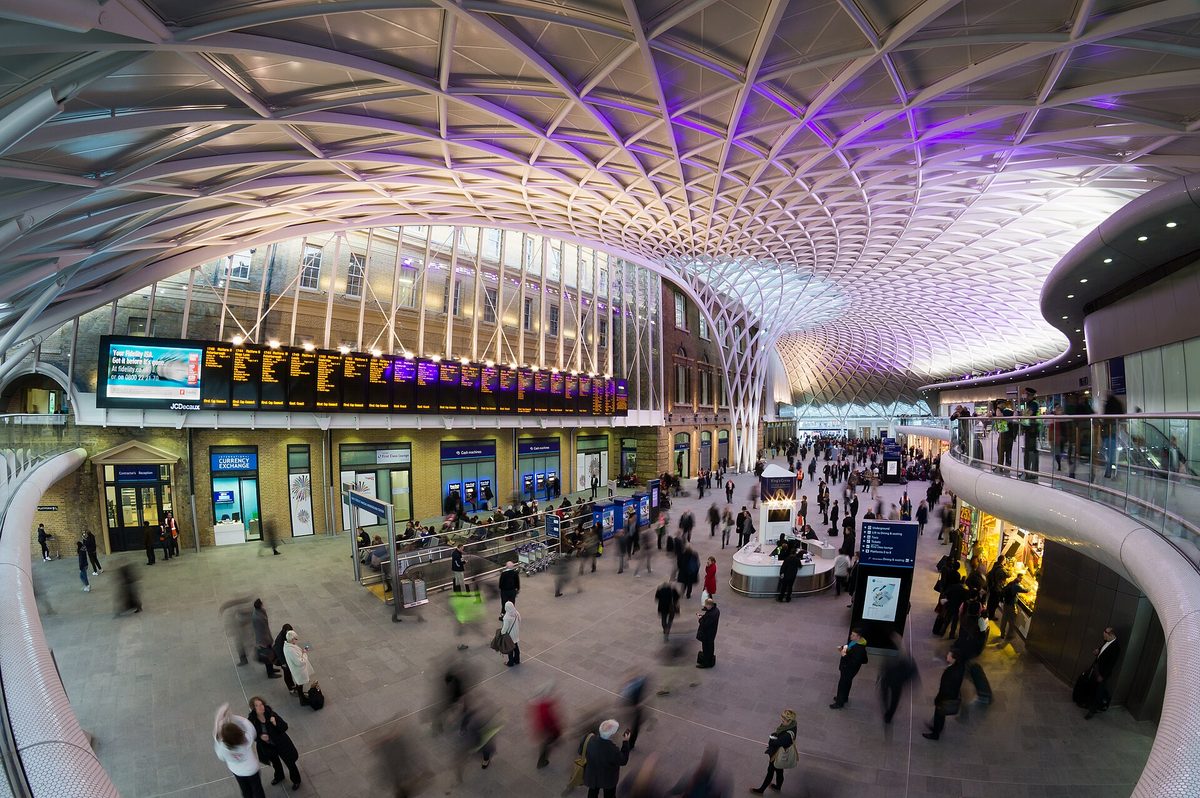
Railcards: A Third Off, Pretty Much Forever
If you’re in England for more than a couple of train journeys, a railcard is often the easiest money you’ll ever save. Most give you around a third (1/3) off most fares (as of 2026), and the cost is roughly £30 a year — actually around £35 for one year for most cards since the 2025 increase (as of 2026), or around £80 for a three-year version on several types (as of 2026). At roughly £1 = $1.27, that’s about $44 a year (hedged).
The maths is brutally simple: a railcard costs around £35; it knocks roughly a third off. So once your discounted savings total around £35 — usually just two or three intercity journeys — the card has paid for itself and everything after is profit.
The main railcards (UK railcards, as of 2026)
| Railcard | Who it’s for | Discount |
|---|---|---|
| 16–25 Railcard | Anyone aged 16–25 (and mature students) | ~1/3 off |
| Two Together | Two named adults travelling together | ~1/3 off for both |
| Family & Friends | 1–4 adults + 1–4 children travelling together | ~1/3 off adults, ~60% off kids |
| Senior Railcard | Anyone aged 60+ | ~1/3 off |
| Network Railcard | Adults in London & the South East | ~1/3 off (with conditions) |
A few notes from using these:
- The 16–25 Railcard has a quirk: on weekday peak journeys (roughly 04:30–10:00) there’s a minimum fare of around £12 (as of 2026) — meaning the discount only kicks in once the discounted fare would exceed that. No minimum fare at weekends, on public holidays, or in July and August. Off-peak it’s just a clean third off.
- Two Together is the unsung hero for couples and travel buddies — if you nearly always move as a pair, it’s a third off for both of you on one card.
- Family & Friends is a no-brainer if you’ve got kids; the ~60% off child fares alone usually justifies it on day one.
- The Network Railcard is gold for day trips around London and the South East — think excursions out to Brighton, Canterbury, or the Cotswolds fringe.
You buy railcards at Railcard.co.uk (or the named sites like 16-25railcard.co.uk and senior-railcard.co.uk), and they live digitally on your phone. Add the railcard to your booking before you pay so the discount applies. Quick honesty check: railcard discounts generally don’t stack on already-rock-bottom fares like Flexi Season tickets, but they do apply to most Advance, Off-Peak, and Anytime fares.
For travellers weighing a railcard against a rail pass, I compare the whole landscape in England travel passes and break down the BritRail pass vs train tickets question specifically — worth a read before you commit either way.
Season and Flexi Tickets: For Longer Stays and Repeat Routes
If you’re settling somewhere in England for weeks, or you’ll ride the same line repeatedly, stop buying singles.
Season tickets (weekly, monthly, annual) give unlimited travel on a fixed route and become cheaper per journey the longer the period. A monthly season can undercut daily returns dramatically if you’re commuting five days a week.
Flexi Season tickets are the modern, part-time-friendly option: you get eight days of travel within a 28-day window, and you don’t pre-pick the days. You just activate a day before you board (tap in at the gate or validator). They offer at least around a 20% discount versus an equivalent monthly season (as of 2026) and suit anyone travelling, say, two or three days a week — increasingly common for hybrid workers and longer-stay visitors basing themselves outside a city and dipping in.
Carnet tickets, where offered, are a book of single tickets for one journey, sold at a small discount versus buying them individually on the day — handy for occasional-but-repeat trips.
The honest catch: most railcard and group discounts don’t apply on Flexi Season tickets, because they’re already discounted. So it’s one saving or the other, not both. Do the sum for your specific pattern.
If your whole trip is route-based — hopping between cities on a fixed itinerary — how you sequence it directly affects which ticket type wins, and a season or flexi product can quietly beat a stack of singles.
Best Booking Sites and How to Dodge Booking Fees
Where you buy matters, because some sellers tack on a fee and others don’t. The tickets themselves are identical — same trains, same seats, same prices set centrally — so a booking fee is pure dead weight.
Here’s how I think about the main options:
- National Rail — the official planner. It shows every fare and doesn’t charge booking fees, routing you to operators to buy. Great for research and a fee-free buy.
- Train operator websites — LNER, GWR, Northern, CrossCountry, East Midlands Railway, Greater Anglia, and others mostly sell with no booking fee. LNER even markets “no booking fees” outright. If your journey is on one operator, buy direct.
- Trainline — slick app, brilliant split-ticketing and alert tools, but it typically charges a booking fee on UK journeys (often around 60p to a couple of pounds, as of 2026), waived only when you book on the app on the day of travel. I happily use it to find deals — especially splits — then sometimes buy the same fare fee-free direct from the operator.
- Split specialists (TrainSplit, Split My Fare, TrainPal) — for split fares, the small fee or commission is usually dwarfed by what they save.
My honest routine: research on National Rail or a split tool, then buy fee-free on the relevant operator’s site whenever I can. On a single ticket the fee is small; across a multi-leg trip it adds up. For more general money-saving habits across your whole visit — not just rail — see England on a budget.
When the Coach (or a Different Mode) Beats the Train
Loyalty to trains can cost you. Sometimes the smart-money move is not the train at all.
Coaches — National Express, Megabus, FlixBus — are frequently the cheapest way to cover a long distance in England. London to Manchester coach fares can start from around £8–£12 (as of 2026), versus a walk-up train fare many times that. Coaches don’t use peak/off-peak pricing, so fares stay relatively stable and predictable even at busy times.
The trade-off is time. London to Manchester is roughly 2 hours by train but 4–5 hours by coach. So coaches win when:
- You’re on a tight budget and time-rich.
- You missed the cheap Advance train window and walk-up rail is brutal.
- You’re travelling at an awkward hour or last-minute, when train fares spike but coach fares don’t.
I treat the coach as a genuine option on every long, expensive route and book it when the train can’t compete. My full England coach travel guide covers routes and operators if you want to go deeper.
Within cities — especially London — separate the intercity question from getting around. A travelcard, contactless cap, or Oyster usually beats single train tickets for local hops; that’s all in London public transport for tourists.
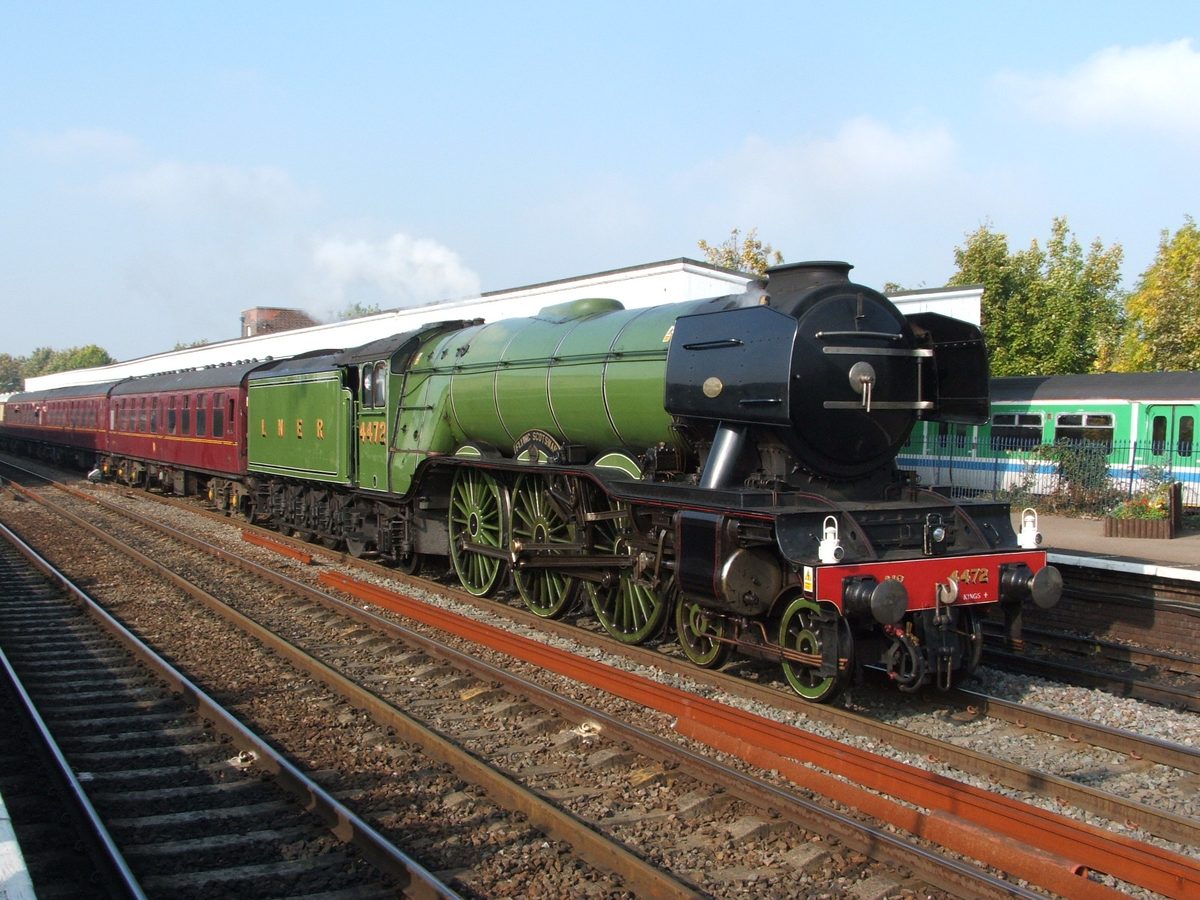
Group Savings: Travelling Two or More
Don’t overlook group discounts — they’re free money for friends and families moving together.
- GroupSave lets groups (often 3–9 people) travel together for a discount, frequently around a third off, on participating Off-Peak fares (as of 2026). It’s usually applied automatically when you book a group on eligible routes.
- Two Together and Family & Friends railcards (above) are the standing-discount versions for pairs and families.
- For a one-off group day out, also compare a split-ticket search with a group fare — occasionally one beats the other.
The rule of thumb: if you’re two or more, never each buy individual full-price singles without checking a group fare or a couples/family railcard first.
Sample Real Journeys: Cheap vs Walk-Up
Numbers make this concrete. These are illustrative ranges and move constantly (as of 2026), but they show the scale of what planning saves.
London King’s Cross to York (LNER, East Coast)
– Cheap Advance, booked early, off-peak train: from around £18–£30 (~$23–$38).
– Off-Peak walk-up: roughly £70+ one way.
– Anytime walk-up: around £170 each way.
– Takeaway: booking ahead here can be a near-90% saving versus turning up and buying Anytime.
London Paddington to Bath Spa (GWR, Great Western)
– Cheap Advance, off-peak: often in the £20s–£30s (~$25–$45).
– Walk-up off-peak: meaningfully higher; peak-time walk-up, higher still.
– Takeaway: a classic route where a railcard plus a mid-morning off-peak train stacks two savings at once.
London to Manchester (Avanti West Coast / others)
– Cheap Advance: commonly the £20s–£40s when booked early (~$25–$50).
– Walk-up Anytime: can be eye-watering, well over £150.
– Coach alternative: from around £8–£12 if time-rich.
– Takeaway: the route where I most often check coach vs train, because the price spread is huge.
The pattern is the same everywhere: early + off-peak + railcard is the cheap lane; last-minute + peak + Anytime is the expensive one. You usually choose which lane you’re in months before you travel.
For where rail sits inside your overall holiday spending — alongside budget accommodation in England and food — the parent England budget and costs hub ties it all together. And if you’d rather skip paid transport entirely for a day, free things to do in England is full of ideas.
Final Thoughts
After years of booking trains in England, my honest summary is that there’s no secret discount code — there’s just a system, and the system is mostly about timing. Decide your dates early, set fare alerts, grab Advance tickets the day they drop, lean on Off-Peak fares when life won’t let you plan, run a split-ticket search on anything pricey, and carry a railcard if you’re here more than a couple of journeys. Each habit saves a bit; together they routinely cut a fare by half or more.
And stay un-loyal. Some days the coach wins, some days a pass wins, some days the cheap train wins. Compare, then book the smart one.
If you want the wider context, loop back to the train guide for the fundamentals and the budget hub for the full money picture. A little planning here funds a lot of fun everywhere else — see England travel tips for more of that.
Research and Source Notes
This guide was researched against the live UK rail landscape in 2026. All prices are illustrative and hedged with “around” because fares change constantly; verify exact figures at the point of sale.
- National Rail (nationalrail.co.uk) — ticket types (Advance, Off-Peak, Super Off-Peak, Anytime), Advance booking dates (~12 weeks / 84 days ahead), off-peak time bands, split-ticketing guidance, Flexi Season ticket rules.
- Railcard.co.uk and the named retailers (16-25railcard.co.uk, senior-railcard.co.uk, twotogether-railcard.co.uk) — railcard types, ~£35 annual cost (post-2025 increase), ~1/3 discount, the 16-25 Railcard ~£12 weekday minimum fare.
- Trainline (thetrainline.com) — SplitSave split-ticketing, Ticket Alert, booking-fee policy (fee on UK journeys, waived on same-day app bookings), Flexi ticket info.
- LNER (lner.co.uk) — Advance release up to ~24 weeks ahead, “no booking fees” direct sales, early-bird alerts, illustrative King’s Cross–York fares.
- Split-ticketing specialists — TrainSplit, Split My Fare, TrainPal, FairSplits — for split-fare savings ranges (~25–50% typical).
- Coach operators — National Express, Megabus, FlixBus — for illustrative London–Manchester fares (from ~£8–£12) and journey-time comparisons.
- Regulated fare rise of ~4.6% (2025) and railcard price increase (+£5) per industry reporting and MoneySavingExpert coverage.
Currency conversions use a rough rate of about £1 = $1.27 (hedged) and are indicative only. Always confirm current fares, railcard prices, and restrictions directly with National Rail, the train operator, or the booking site before you buy.
Photo Credits
- Cheap train tickets England guide featuring the grand red-brick frontage of St Pancras railway station in London — Photo: mattbuck (category) / CC BY-SA 3.0 via Wikimedia Commons. Source
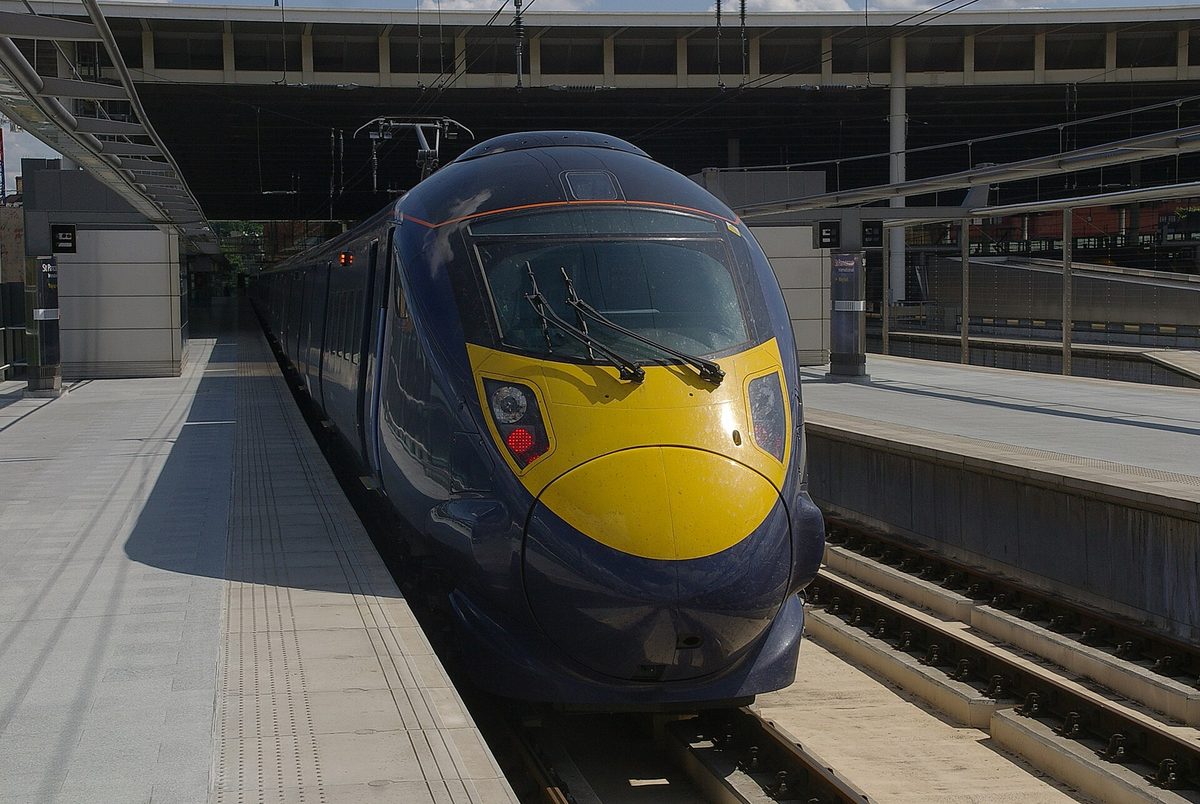
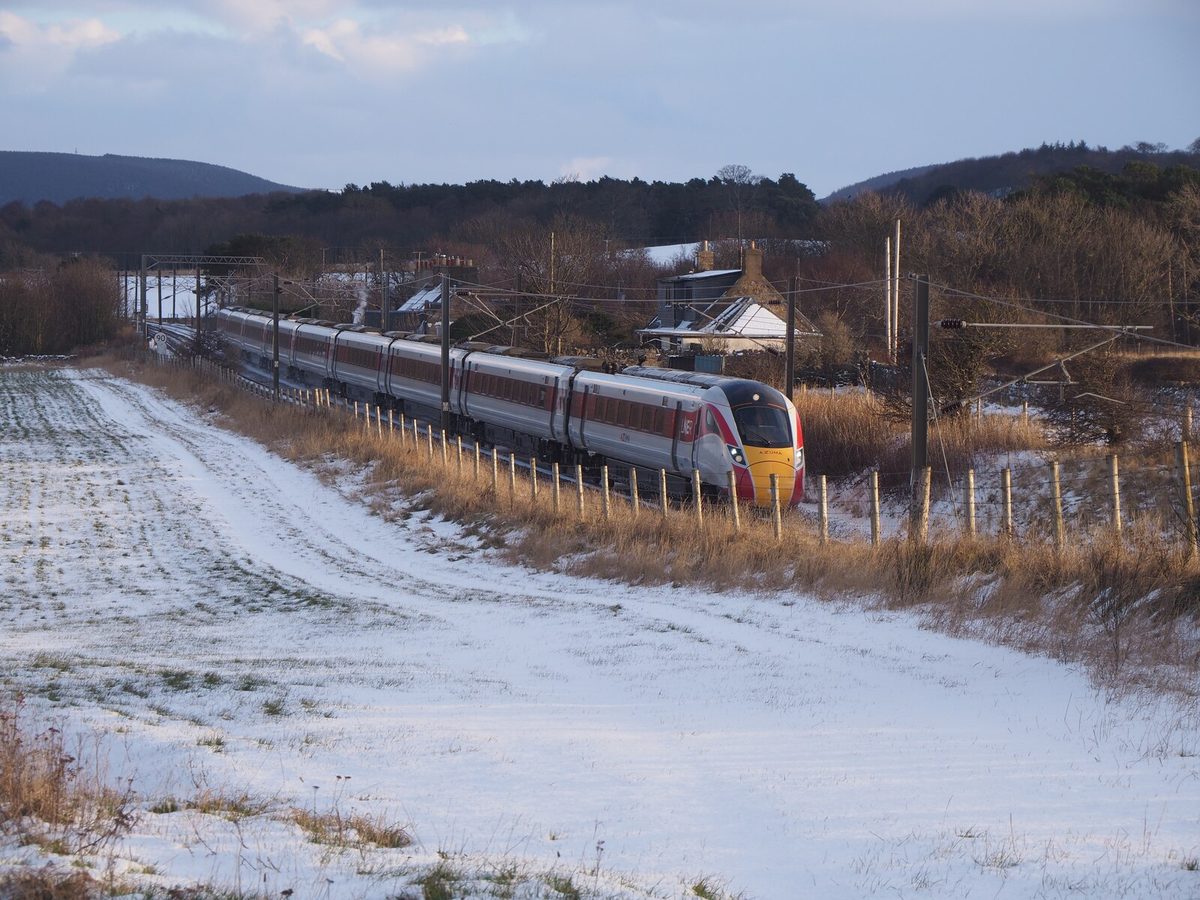
- Sleek LNER Azuma train at the platform, the kind of service where booking advance train tickets early saves the most money — Photo: Jennifer Petrie / CC BY-SA 2.0 via Wikimedia Commons. Source
- Travellers under the sweeping roof of London Kings Cross station, a major hub for split ticketing and advance fares — Photo: Colin / CC BY-SA 3.0 via Wikimedia Commons. Source
- The iconic Flying Scotsman steam locomotive, a reminder of England’s rail heritage and the East Coast routes where advance fares shine — Photo: Mjirlam at English Wikipedia (CC0) via Wikimedia Commons. Source
- The historic train shed of London Paddington station, departure point for cheap Great Western advance fares to Bath and the West — Photo: mattbuck (category) / CC BY-SA 3.0 via Wikimedia Commons. Source
Frequently asked questions
What is the cheapest way to buy train tickets in England?
Book Advance tickets as early as possible — usually around 12 weeks ahead (as of 2026) — for a specific off-peak train, then add a railcard for roughly a third off. If you can't book ahead, use split ticketing tools and Off-Peak fares instead of paying the full Anytime walk-up price. Buying fee-free on the operator's site saves a little more.
How far in advance should I book UK train tickets?
Most operators release Advance fares around 12 weeks (84 days) before travel (as of 2026), and a few — like LNER — go up to around 24 weeks. The cheapest seats are limited and can sell out within hours on busy routes, so set a fare alert with National Rail or Trainline and book the day they're released for the lowest tier.
Is split ticketing legal in the UK?
Yes, completely. Split ticketing is buying two or more tickets that together cost less than the single through-fare, and National Rail itself explains and permits it. The only rule is that your train must stop at the station where the tickets split — you don't change trains or leave your seat. Keep all the tickets to hand for inspection.
Is a railcard worth it for a short trip to England?
Often yes. UK railcards cost around £35 a year (as of 2026) and give roughly a third off most fares, so they typically pay for themselves in just two or three intercity journeys. If you're taking even a couple of longer trains — say London to York and back — a 16-25, Senior, Two Together, or Family & Friends card usually saves more than it costs.
When is off-peak on English trains?
It varies by route, but Off-Peak generally starts around 09:30 on weekdays in cities (sometimes 10:00 from major London stations), with weekends and bank holidays usually off-peak all day (as of 2026). There's often an evening peak too, roughly 16:30–18:00. Always check the restrictions shown when you buy, as boarding a peak train on an off-peak ticket can trigger extra charges.
Is the coach cheaper than the train in England?
Frequently, yes. National Express, Megabus, and FlixBus fares can start from around £8–£12 on routes like London to Manchester (as of 2026), often far below walk-up rail. The trade-off is journey time — a coach can take roughly twice as long as the train. Coaches don't use peak pricing, so they're especially good value last-minute or at busy times.