Sheet 22 · England Budget and Costs · 19 min read
England Food Costs and Supermarkets
England food costs explained: real prices for meals, pubs, coffee and pints, plus the supermarket meal-deal hack and where to eat well for less in 2026.
 Sheet 22
Contents 11 sections
On my first long trip around England I kept a little notebook of what I paid to eat, partly out of nerves and partly because I’m the sort of person who finds spreadsheets relaxing. The thing that surprised me wasn’t how expensive eating could be. It was how wildly the same lunch could swing in price depending on whether I bought it from a supermarket, a chain café, or the restaurant fifty metres from a famous attraction. Eating in England is a game of choices, and once you learn the moves it gets a lot cheaper.
Quick Answer: England Food Costs at a Glance
Here’s the honest summary of England food costs (as of 2026): a careful eater can get by on around £20 to £30 a day (around $25 to $38) by leaning on supermarket breakfasts and the famous meal-deal lunch, a comfortable middle ground runs around £40 to £60 a day with pub meals and the odd café stop, and a foodie spending freely on restaurant dinners and pints will pass £80 to £100 a day with ease.
That spread is the whole story. The difference between the budget number and the splurge number isn’t luck or location, it’s habit. Eat one supermarket lunch instead of one tourist-trap café and you’ve often saved more than your morning coffee cost.
A quick word on the numbers before we go further. Everything below is hedged with “around” or “roughly” and reflects 2026 prices, because food costs drift fast and vary by region. I’ve converted pounds to dollars at roughly £1 = $1.27, but treat the dollar figures as ballpark only. And this guide stays in its lane: it’s about what eating actually costs and how to spend less on it. For the full trip budget I’ll point you to how much a trip to England costs, and for broad money-saving strategy across your whole trip there’s my guide to doing England on a budget. This page is purely the food spend.
At a Glance: What Things Cost and the Cheaper Move
Before the detail, here’s the cheat sheet I wish I’d had. Prices are typical mid-2026 figures and hedged as “around”; they run higher in central London and tourist hotspots.
| Meal or item | Rough price (as of 2026) | Cheaper alternative |
|---|---|---|
| Supermarket meal-deal lunch | ~£3.50–£5 (~$4.50–$6.50) | Buy ingredients and self-cater |
| Café sandwich + coffee | ~£8–£12 (~$10–$15) | Supermarket meal-deal instead |
| Greggs sausage roll | ~£1.30–£1.50 (~$1.70–$1.90) | Same — already the budget hero |
| Greggs hot drink | ~£1.50–£3.70 (~$1.90–$4.70) | Refill a flask; tap water is free |
| Pub main course | ~£14–£18 (~$18–$23) | Lunch menus; share sides |
| Sunday roast in a pub | ~£18–£28 (~$23–$36) | Worth it once — skip starters |
| Casual restaurant dinner | ~£25–£40 pp (~$32–$51) | Set/pre-theatre menus |
| Fish and chips (takeaway) | ~£9–£13 (~$11–$17) | Share a portion; eat outside |
| Pint of beer | ~£5–£7 (~$6.50–$9) | Supermarket cans; Wetherspoon |
| Flat white / latte (chain) | ~£3.50–£4.50 (~$4.50–$5.70) | Greggs or bakery coffee |
| Bottled soft drink (café) | ~£2–£3 (~$2.50–$3.80) | Free tap water; buy from a shop |
The pattern jumps out immediately. The biggest savings come from swapping where you buy, not eating less. A supermarket lunch instead of a sit-down café lunch saves you roughly a fiver every single day, and that adds up faster than almost any other food habit on a trip.
Your Daily Food Budget: Three Honest Tiers
Let me put real daily numbers to those three eaters from the quick answer, because “it depends” is a useless thing to read when you’re trying to plan.
The shoestring day (~£20–£25 / ~$25–$32)
This is the trip I took with that little notebook, and it’s genuinely doable without feeling deprived. Breakfast from a supermarket or your accommodation, a meal-deal or bakery lunch, and a simple dinner — a takeaway, a supermarket meal you heat up, or a cheap chain. You’ll drink tap water (free, more on that below), make your own coffee, and treat a pub pint as an occasional event rather than a daily ritual.
The honest catch: this tier means cooking or assembling some of your own food, so it works best if your accommodation has a kitchen or at least a kettle and a fridge. It’s a brilliant fit for budget accommodation in England like hostels and self-catering flats.
The comfortable middle (~£40–£60 / ~$51–$76)
This is where most travellers I know actually land, and where I land now. A proper café breakfast a couple of mornings, a relaxed lunch out, and a pub dinner most nights with a drink. You’re not counting pennies, but you’re also not eating in restaurants with white tablecloths every evening. A pub main and a pint, which is the backbone of this tier, comes to around £20 to £25 (around $25 to $32) per person.
The food-lover’s day (~£80–£100+ / ~$100–$127+)
If eating well is the point of your trip — and England’s restaurant scene is far better than its old reputation suggests — you’ll spend freely here. Sit-down lunches, restaurant dinners at around £25 to £40 a head (around $32 to $51) before drinks, decent wine, good coffee, the lot. Add London or a celebrated foodie city and this climbs fast. There’s nothing wrong with this tier; just go in knowing food alone can become your single biggest daily cost.
Mix and match across days, by the way. My favourite rhythm is shoestring breakfasts and lunches so I can splurge on one really good dinner. You eat better that way than spreading the same money thinly across three mediocre meals.
Eating Out: The Four Tiers and What They Cost
“Eating out” in England isn’t one thing. It’s at least four, and they sit at very different price points. Knowing which is which is half the battle.
Takeaways and street food (cheapest sit-down-free option)
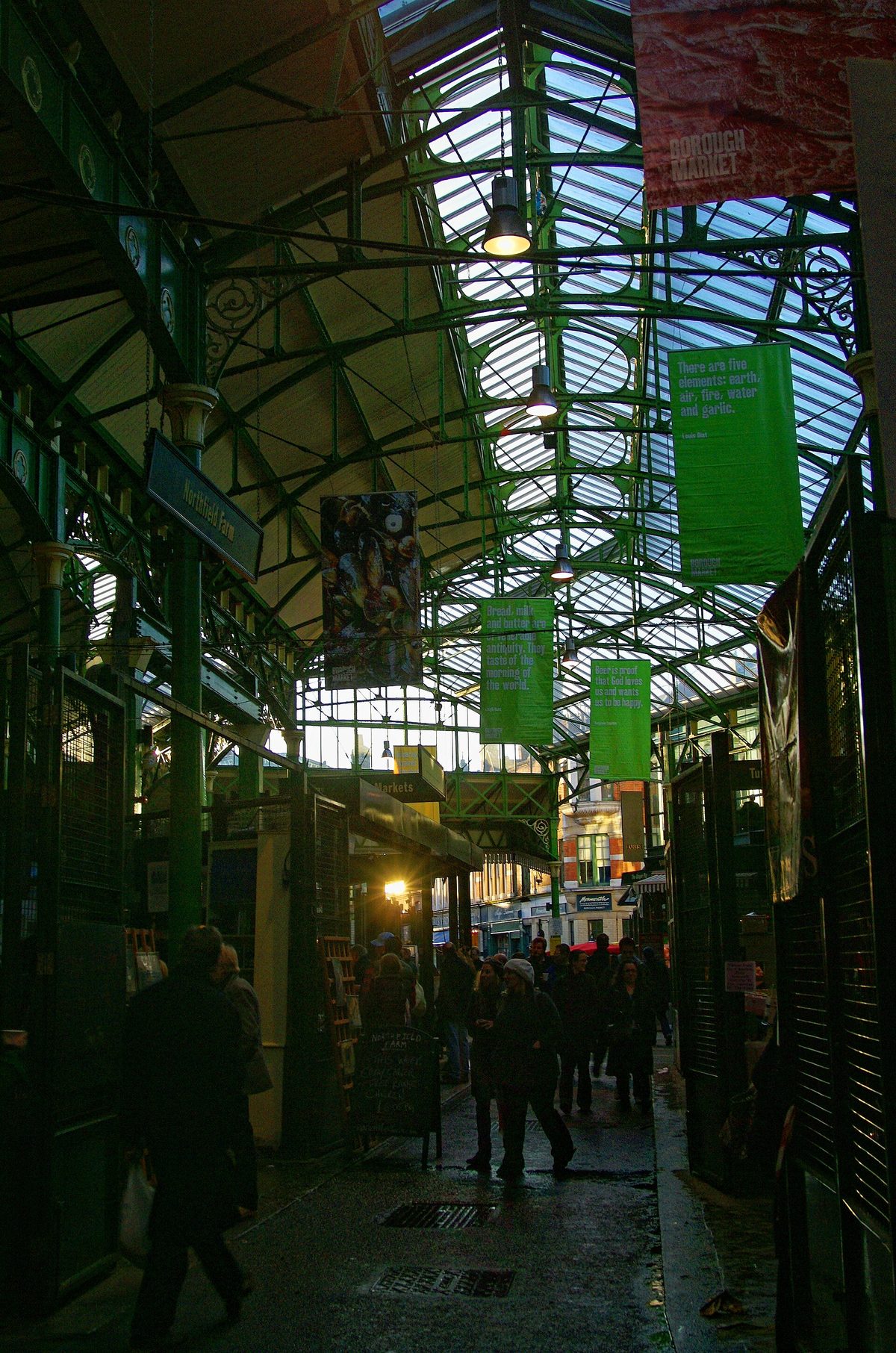
Fish and chips from a chippy runs around £9 to £13 (around $11 to $17) for a generous portion, and honestly one portion of chips can feed two if you order a side dish to share. Kebabs, curries, Chinese takeaways and the like sit in a similar band. Street-food markets — Borough Market in London is the famous one, but most cities have something — offer hot, interesting food for around £7 to £14 (around $9 to $18) a plate. Markets are a treat and a great way to eat regionally, though the famous London ones are not the cheapest option going; they’re priced for the crowds.
The pub (the sweet spot)
The pub is, for my money, the single best-value sit-down meal in England, and it’s woven into the culture in a way that makes eating in one part of the experience. A main course runs around £14 to £18 (around $18 to $23) in most of the country, a bit more in London and tourist towns. A Sunday roast — and you should have at least one — is typically around £18 to £28 (around $23 to $36) and is usually enormous.
Two tips that save real money. First, many pubs run cheaper lunch menus or weekday deals, so an early meal can cost noticeably less than the same dish at dinner. Second, pub portions are large; sharing a side or skipping the starter is no hardship. For the culture and ceremony of pub dining — and where to find the great ones — I’ve sent that to my guide to England’s pubs and afternoon tea and my round-up of the best pub inns in England. Here I’m just talking pounds.
Casual restaurants and chains (the reliable middle)
England has a huge stock of mid-range chains — think Wagamama, Nando’s, Pizza Express, Bill’s and their cousins — where a main lands around £12 to £18 (around $15 to $23). They’re consistent, family-friendly, and almost always cheaper than an independent restaurant in the same postcode. A full casual restaurant dinner with a drink and maybe a shared starter comes to around £25 to £35 a head (around $32 to $44).
Proper restaurants (the splurge)
Independent and higher-end restaurants start around £30 to £40 per person (around $38 to $51) for a couple of courses before drinks, and climb steeply from there in London and destination dining towns. The big money-saver here is the set menu: lunch menus and pre-theatre or early-evening deals can knock a third or more off the à la carte price for very nearly the same food. If you want one memorable restaurant meal, book it at lunch.
The Supermarket Landscape and Its Price Tiers
Here’s where I save the most money in England, and where most visitors never think to look. The supermarkets are excellent, ubiquitous, and tiered by price in a way that’s genuinely useful to understand. Walk into the right one and you’ll eat for a fraction of café prices.
Think of them in three bands.
Value (cheapest): Aldi and Lidl. These German discounters are reliably the cheapest in the country — independent price tracking by Which? has crowned Aldi or Lidl the cheapest supermarket month after month, often running well below the bigger chains on a comparable shop. Smaller ranges, fewer brands, but the quality is good and the prices are unbeatable. If you’re self-catering for more than a day or two, find one.
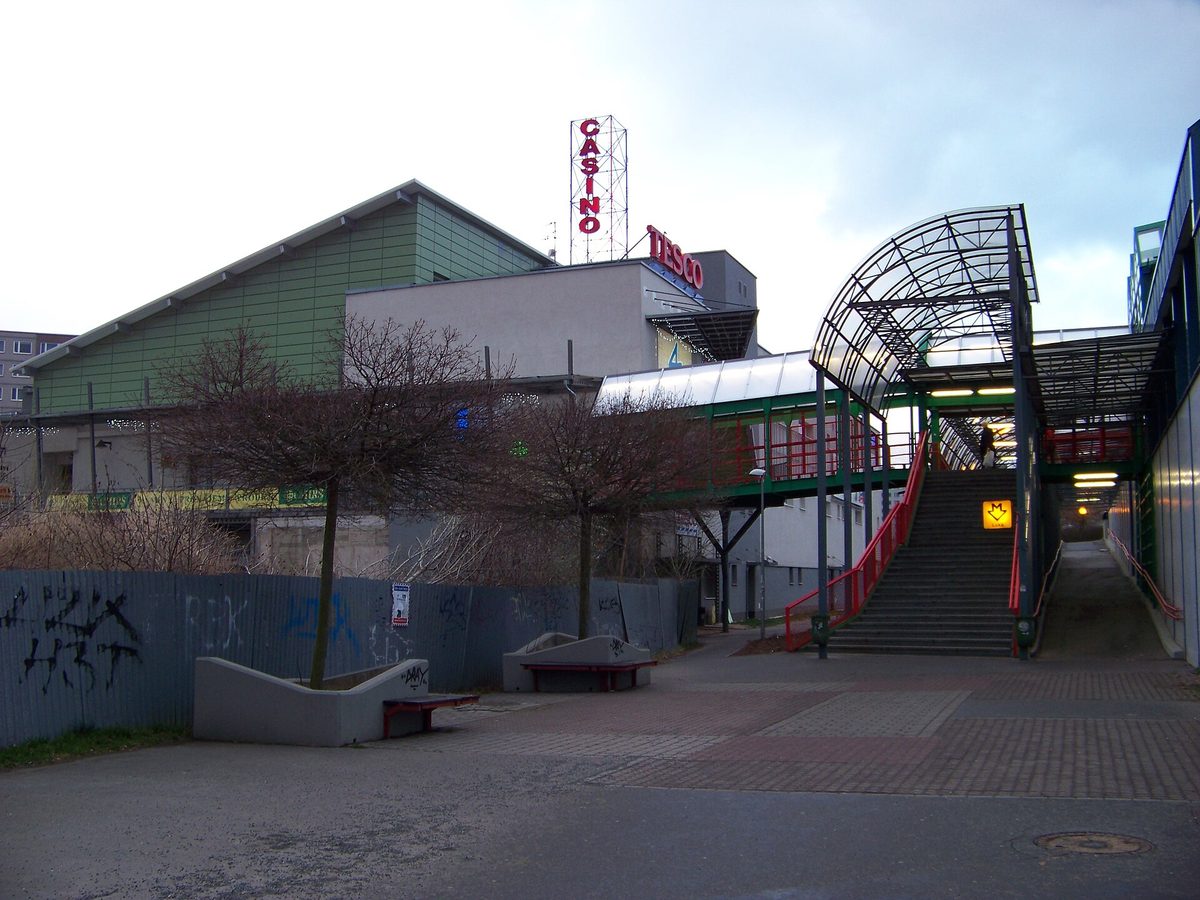
Mainstream (the Big Four-ish): Tesco, Asda, Sainsbury’s and Morrisons. These are the big national chains you’ll see everywhere. Asda tends to be the cheapest of this group; Tesco and Sainsbury’s are competitive but lean hard on their loyalty cards (Clubcard and Nectar), where members get noticeably lower prices on many items. Tesco is the most omnipresent — there’s usually one nearby, in full-size, “Express” or “Metro” format.
Premium: Waitrose and Marks & Spencer. Lovely food, higher prices. Which? price comparisons routinely put Waitrose at the top of the cost table, often substantially above the discounters for an equivalent basket. M&S Food is similar — superb prepared meals and sandwiches, premium pricing. Worth it for a treat or a really good picnic, not for your everyday shop.
Convenience: Co-op, plus the small-format versions of the big chains, and Greggs. The Co-op and the little “local” or “express” stores are everywhere and handy, but convenience-format prices run a touch higher than the full-size supermarkets. Greggs deserves its own mention — it’s a bakery chain, not a supermarket, but it’s a budget eater’s best friend (more below).
The practical takeaway: for a quick grab-and-go, any of them works. For a proper self-catering shop where the savings matter, seek out Aldi or Lidl, or shop the loyalty-card prices at Tesco or Sainsbury’s.
The Meal-Deal and Other Supermarket Wins
If you remember one thing from this whole guide, make it this. The UK supermarket meal deal is the single best food hack in the country, and almost every visitor I’ve travelled with has been delighted to discover it.
Here’s how it works: most major chains and pharmacies sell a “meal deal” that bundles a main (a sandwich, wrap, salad or sushi), a snack (crisps, fruit, a chocolate bar) and a drink (water, juice, even a coffee) for one low fixed price. As of 2026 that price sits at around £3.50 to £5 (around $4.50 to $6.50) depending on where you buy it.
The going rates I’ve seen lately: Tesco is around £3.85 with a Clubcard (around £4.25 without), Sainsbury’s around £3.95 for everyone, Boots around £3.60 to £4 with their Advantage card, and Asda has run promotions around £3.74. Boots, worth knowing, charges more in central London — closer to £5. Even at the top of that range, you’re getting a full lunch for roughly half what a café would charge for the sandwich alone.
A few meal-deal pointers from the road:
- Get the loyalty card where it’s free and instant. Tesco Clubcard and Boots Advantage are quick to sign up for in-app and unlock the lower meal-deal price immediately.
- The drink is where the value hides. A bottled smoothie or a branded drink that’d cost £2-plus on its own is included, so picking a pricier drink genuinely maximises the deal.
- Pharmacies count too. Boots and Superdrug do meal deals, which is handy because they’re often right where you are.
Beyond the meal-deal, supermarkets have other budget wins. Yellow-sticker reductions — discounted stickers slapped on food near its sell-by date, usually in the evening — can be brilliant if your timing’s lucky. Own-brand ranges are dramatically cheaper than big brands and usually perfectly good. And a supermarket picnic — bread, cheese, fruit, a regional pork pie — is one of the great cheap pleasures of an English trip, eaten in a park or on a coast path.
Self-Catering and the Breakfast Strategy
The fastest way to crater your daily food spend is to stop buying breakfast.
Breakfast out is where tourists quietly haemorrhage money. A café “full English” can run around £10 to £15 (around $13 to $19), and a coffee-and-pastry stop is around £5 to £8 (around $6.50 to $10) before you’ve really eaten anything. Do that every morning and it’s the most expensive meal of your day by accident.
The fix is simple. If your accommodation includes breakfast — many B&Bs and guesthouses do, and a real cooked breakfast at a good B&B is both delicious and genuinely filling — eat it properly and you may not need much lunch. If you’re self-catering, a box of cereal, some yoghurt and fruit, or a loaf and some eggs from a supermarket costs a few pounds for several mornings. I’ve started many an England day with supermarket pastries and a flask of coffee made in the room, and I’ve never once regretted the £8 I didn’t spend.
Self-catering more broadly is the budget eater’s secret weapon, especially on longer stays. If you’ve booked a place with a kitchen — and there are loads of great-value England vacation rentals — cooking even a few dinners transforms your food budget. You don’t need to cook every night to win; alternating cooked-in and eaten-out meals keeps the trip fun and the spend sane. Supermarkets like Tesco, Sainsbury’s and Ocado will even deliver groceries to your accommodation, which is a quiet luxury on a longer trip.
This matters even more if you’re feeding a family. Three or four restaurant meals a day for a household adds up frighteningly fast, and self-catering plus picnics is often what makes a trip affordable at all — something I get into in my guide to visiting England with kids.
Drinks: Coffee, Pints and the Free Tap-Water Trick
Drinks are where small daily habits quietly reshape your budget, so they’re worth their own section.
Coffee. A flat white or latte from a chain like Costa, Caffè Nero or Pret runs around £3.50 to £4.50 (around $4.50 to $5.70). That’s two or three coffees a day for many travellers, which is real money over a fortnight. My budget move is Greggs: their coffee is around £1.50 to £3.70 depending on size and runs dramatically cheaper than the big chains for a perfectly good cup. Independent bakeries and many B&B kettles are even cheaper. None of this means you can’t enjoy a proper café coffee — just know that the daily latte habit is a line item.
Pints. A pint of beer averages around £5 to £7 (around $6.50 to $9) across most of the country, with London the priciest — central London pints commonly run around £6 to £7 and sometimes more. Wetherspoon pubs (the “Spoons” chain) are reliably cheaper for both drinks and food if you’re watching the budget. And if you really want to economise, supermarket cans and bottles cost a fraction of pub prices, though obviously you lose the pub itself, which for many of us is the point.
Soft drinks and water. A bottled soft drink in a café is around £2 to £3 (around $2.50 to $3.80) — buy them from a supermarket or shop instead and pay far less. Which brings me to the single best free thing in English hospitality.
Tap water is free, by law. Any licensed premises in England — meaning anywhere that serves alcohol, so essentially every pub, restaurant, café and bar — is legally required to give you free drinking water on request. The tap water is excellent and safe. So carry a refillable bottle, ask for tap water with your meal rather than ordering bottled, and refill as you go. It’s a tiny habit that saves a surprising amount over a trip and is completely unremarkable to ask for; nobody will bat an eye.
London and Tourist-Trap Premiums
Two pricing realities deserve a flag, because they catch visitors out constantly.
London is its own price band. Eating in the capital costs noticeably more than the rest of England — meal-deals are sometimes pricier, pints are the country’s most expensive, and restaurants charge a London premium across the board. None of this means you can’t eat well or cheaply in London; the meal-deal still works, the markets are superb, and the chain restaurants are the same prices nationwide. It just means your London food days will run higher than your days elsewhere, and you should budget accordingly. If you’re weighing where to base yourself, my piece on whether to stay in London or outside London gets into this.
The tourist-trap premium is real and avoidable. The restaurant or café directly facing a famous attraction — the ones with photos of the food in the window and a host beckoning you in — typically charges well above an equivalent place a few streets back, sometimes 30 to 50 percent more for noticeably worse food. The fix costs you nothing: walk two or three minutes away from the big sight before you eat. The side streets behind the famous square are almost always cheaper, better, and full of locals. This is one of the most common and most expensive mistakes I see, and I cover more of these in my guide to England travel mistakes and broader England travel tips.
One more small thing on the bill: many sit-down restaurants add a service charge of around 10 to 12.5 percent, especially in London. By law it’s now passed to staff, and it’s almost always optional — you can ask for it to be removed if service was poor, and you generally don’t tip on top of it. I keep the full breakdown to my guide on tipping in England; just know to check your bill for a service line before adding anything.
Eating Well Cheaply by Region
Food costs aren’t uniform across England, and a little regional awareness helps both your budget and your taste buds.
London is the priciest, as covered — but also the most varied, with the cheapest end (meal-deals, markets, chains) sitting right alongside the most expensive. The South East and the famous tourist towns — think the honeypot villages of the Cotswolds — tend toward higher prices, especially in the pretty tea rooms and gastropubs that draw visitors; I get into the lovely-but-not-cheap end of that in my notes on Cotswolds pubs and tea rooms. Eat where the locals do, a street back from the chocolate-box centre, and you’ll pay less.
The North — Manchester, Liverpool, Yorkshire, the Lake District towns — generally offers better value, with pub meals and restaurants running cheaper than the South for comparable quality. Yorkshire in particular is a budget eater’s friend, with hearty portions and famously fair pricing.
Coastal and rural areas are a mixed bag: fish and chips by the sea is a deserved classic and usually fair value, but isolated villages with one pub can charge what they like simply because there’s no competition. In remote spots, stocking up at a supermarket before you head out is the smart move.
The golden rule everywhere: the more a place depends on passing tourists, the more you’ll pay; the more it serves locals, the better the value. Walk a little, eat where the workers and residents eat, and England feeds you very well for not much money.
Final Thoughts
The single biggest thing I’ve learned eating my way around England is that the price of feeding yourself is almost entirely within your control. The same day’s food can cost £20 or £80, and the difference isn’t deprivation — it’s a handful of small habits. Lean on the meal-deal for lunch, eat breakfast in rather than out, drink the free tap water, walk away from the attraction before you sit down, and treat the pub as your reliable mid-budget friend.
Do that and you free up money for the meals that are worth splurging on: a proper Sunday roast, a celebrated restaurant booked at lunch, a regional dish in the place that does it best. That’s the trade I’d always make — spend nothing on the forgettable meals so you can spend well on the memorable ones.
For the wider picture, this page is one piece of the puzzle. Slot your food number into the full England budget and costs guide to see how it fits alongside beds, transport and attractions, and pair it with the free things to do in England, the tricks for cheap train tickets in England, and a clear head on whether the London Pass is worth it to keep your whole trip affordable. Eat well, spend smart, and save your splurges for the meals you’ll actually remember.
Research and Source Notes
Prices in this guide are typical mid-2026 figures, hedged as “around” because food costs vary by region, venue and season; they run higher in central London and tourist hotspots. Pounds are converted to US dollars at roughly £1 = $1.27, with dollar figures treated as ballpark only.
- Meal-deal pricing (Tesco around £3.85 with Clubcard / £4.25 without; Sainsbury’s around £3.95; Boots around £3.60–£4, higher in London; Asda promotions around £3.74): drawn from 2026 reporting by the Scottish Daily Express, Yahoo News UK, Student Beans and Meal Dealer, verified in spring 2026.
- Cheapest-supermarket ranking (Aldi and Lidl lowest; Asda cheapest of the larger chains; Waitrose the priciest): based on Which? monthly supermarket price comparisons and 2026 tracking from Pocketwise and related consumer sources.
- Pub and restaurant prices (pub mains around £14–£18; Sunday roast around £18–£28; casual restaurant dinner around £25–£40 pp; fish and chips around £9–£13): compiled from Capital on Tap, Moving to the UK, London-focused price guides and travel-forum reports (Rick Steves, Tripadvisor) for 2026.
- Pint pricing (UK average around £5–£7; London around £6–£7): based on 2025–2026 data from The Morning Advertiser, Finder and Time Out.
- Greggs pricing (coffee around £1.50–£3.70; breakfast deals from around £2.85): from Greggs menu-price trackers updated through 2026.
- Free tap water and service charges: free drinking water at licensed premises is required under English licensing law (per Freeths, Money Saving Expert and Acas); service charges of around 10–12.5% are optional, and under the Employment (Allocation of Tips) Act 2023 must be passed to staff.
- Daily food budgets and tourist-trap premiums (budget around £20–£30/day; tourist-area restaurants 30–50% pricier): synthesised from Budget Your Trip, The Savvy Backpacker, Radical Storage and other 2026 cost guides.
Photo Credits
- Food stalls and crowds at Borough Market in London, where England food costs run high for tourists — Photo: Txllxt TxllxT / CC BY-SA 4.0 via Wikimedia Commons. Source
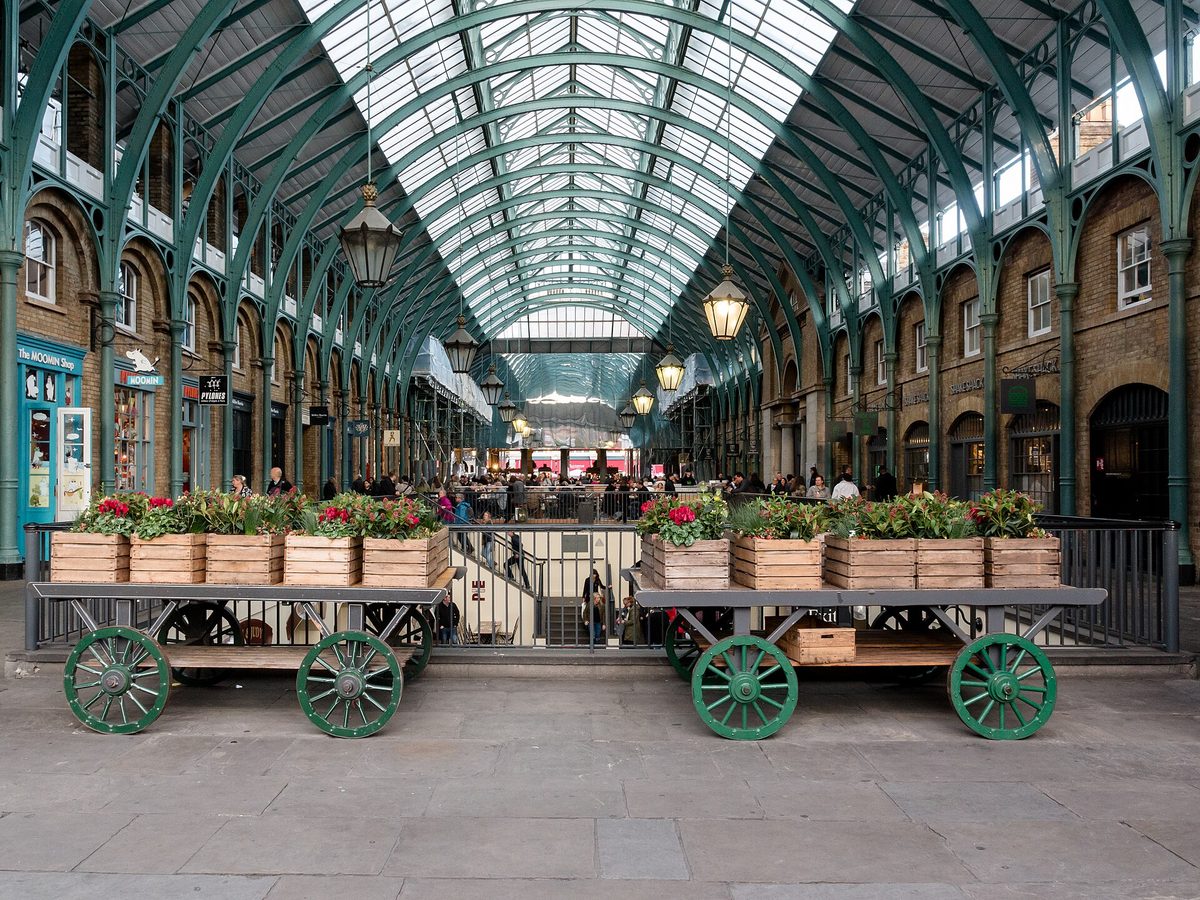
- The covered market hall at Covent Garden in London, surrounded by cafés and restaurants — Photo: Dietmar Rabich / CC BY-SA 4.0 via Wikimedia Commons. Source
- A Tesco supermarket storefront, one of the most common supermarket chains across England — Photo: ŠJů / CC BY-SA 3.0 via Wikimedia Commons. Source
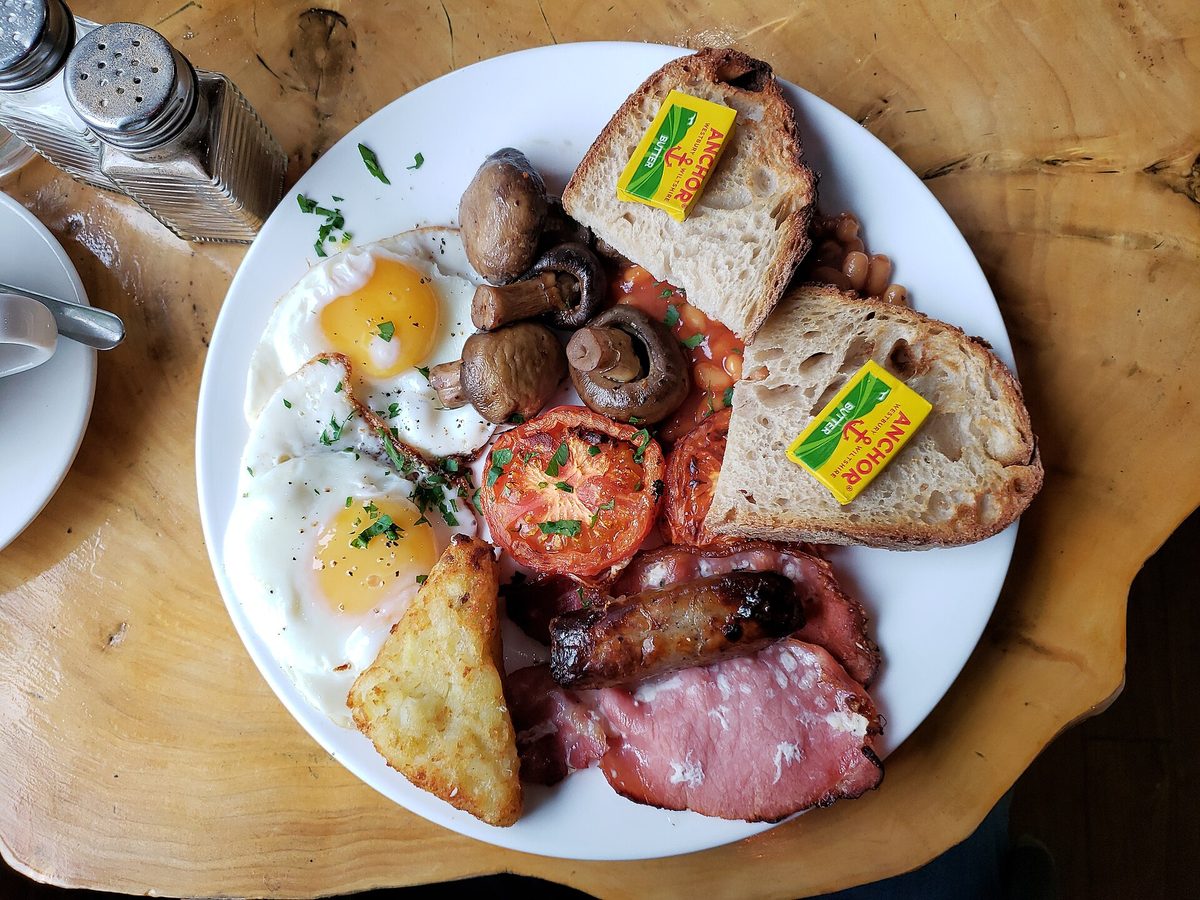
- A full English breakfast with eggs, bacon, beans and toast, a hearty and filling start to the day — Photo: Andy Li (CC0) via Wikimedia Commons. Source
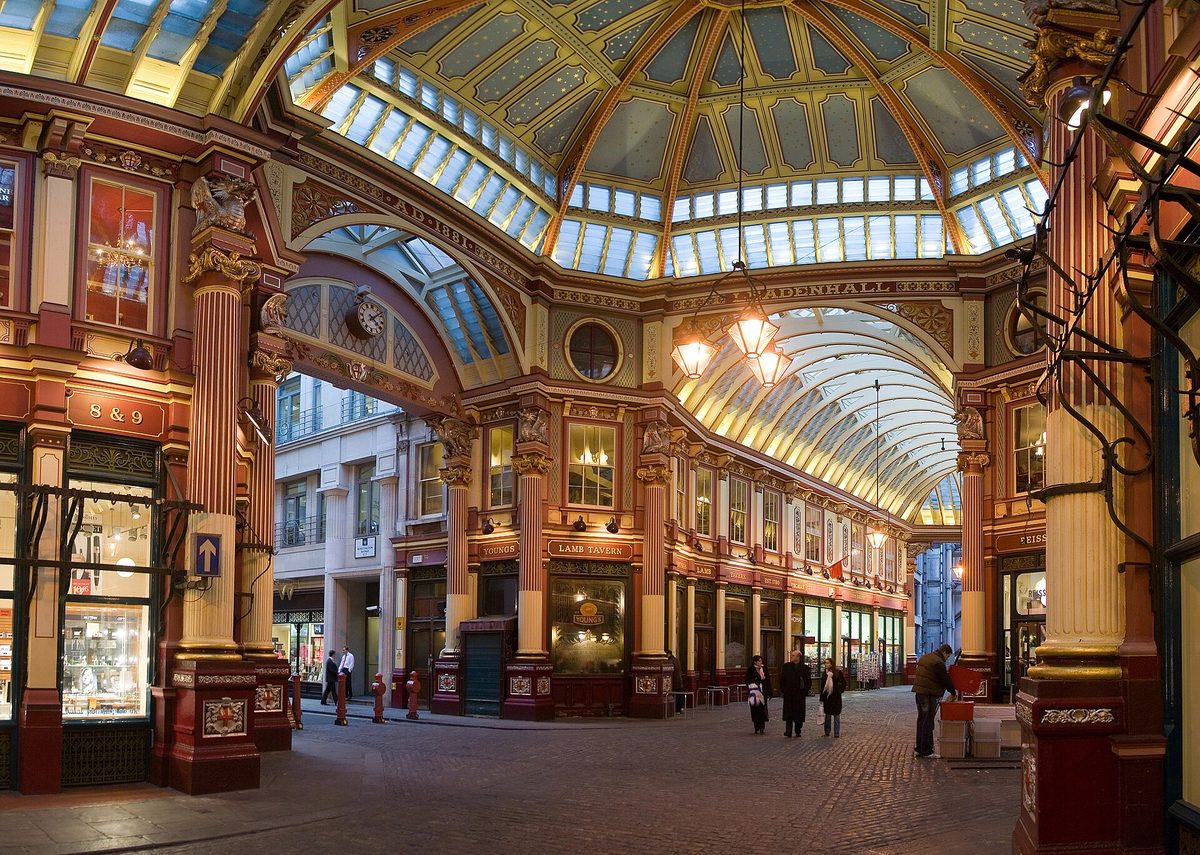
- Leadenhall Market in London, a covered market lined with pubs and food stalls where eating out ranges from cheap to splurge — Photo: Diliff / CC BY 2.5 via Wikimedia Commons. Source
Frequently asked questions
How much should I budget for food per day in England?
A careful traveller can eat for around £20 to £30 a day (around $25 to $38) using supermarket meals and the meal-deal, a comfortable middle with pub meals runs around £40 to £60, and dining out freely passes £80 to £100 (as of 2026). London and tourist hotspots push every tier higher, so budget more for days in the capital.
What is a UK supermarket meal deal and is it worth it?
A meal deal bundles a main (sandwich, wrap or salad), a snack and a drink for one fixed price — around £3.50 to £5 as of 2026, depending on the shop. Tesco, Sainsbury's, Asda, Boots and others all offer one. It's absolutely worth it: you get a full lunch for roughly half what a café charges for the sandwich alone, and loyalty cards drop the price further.
Is tap water free in England restaurants?
Yes. Any licensed premises in England — essentially every pub, café, bar and restaurant that serves alcohol — must by law provide free drinking water on request. The tap water is safe and good. Carry a refillable bottle, ask for tap water with meals instead of bottled, and you'll trim a quiet but real cost over a trip.
Why are restaurants near tourist attractions so expensive?
Because they can be — they rely on a steady stream of visitors who won't return, so there's little pressure to compete on price or quality. Restaurants facing major attractions often charge 30 to 50 percent more than equivalent places nearby. Walk two or three minutes onto a side street and you'll usually find cheaper, better food full of locals.
Which is the cheapest supermarket in England?
Aldi and Lidl are reliably the cheapest, repeatedly named the lowest-priced chains in independent Which? comparisons and running well below the bigger names on an equivalent shop. Among the larger chains, Asda tends to be the cheapest, while Tesco and Sainsbury's reward loyalty-card members. Waitrose and M&S are the premium end — lovely food, higher prices.
How much does a pub meal cost in England?
A pub main course runs around £14 to £18 (around $18 to $23) in most of the country, a little more in London and tourist towns. A Sunday roast is typically around £18 to £28 (around $23 to $36) and usually generous. Pub lunch menus and weekday deals are often cheaper, making the pub one of the best-value sit-down meals in England.