Sheet 14 · England Coast and Beaches · 20 min read
Jurassic Coast Itinerary
A first-hand Jurassic Coast itinerary with 2-day and 3-day routes, stops in order, drive times, fossil beaches, the best walks and parking tips.
 Sheet 14
Contents 10 sections
The first time I drove the Jurassic Coast I tried to do the whole thing in a day, got stuck behind a tractor outside Bridport, and reached Durdle Door an hour before sunset with the car park already turning people away. I’ve since done the route properly more times than I can count, and I’ve learned where the time actually goes. This is the trip I wish someone had handed me back then.
This Jurassic Coast itinerary runs the full ~95-mile World Heritage coast from Exmouth in East Devon to Studland Bay in Dorset. Below you’ll find a tight 2-day version, a more relaxed 3-day version, and how to stretch it into a week. Real stops in order, rough drive times, the fossil beaches worth your morning, and where to sleep so you’re not always backtracking. For the geology and the big-picture overview, I’ll point you to the deeper guide.
If you want the wider context first — what this coast is, why it matters, the headline sights explained — read the Jurassic Coast travel guide. This article is the route. It’s one leg of England’s broader coast and beaches guide, and it pairs naturally with a wider South of England road trip if you’ve got more time.
Quick Answer: Your Jurassic Coast Itinerary at a Glance
Drive the Jurassic Coast itinerary west to east, Devon to Dorset, so the most photographed stops (Durdle Door, Old Harry Rocks) land at the end when the light is best. Two days covers the highlights if you’re efficient; three days lets you walk and slow down. Base yourself in Lyme Regis for the west and Weymouth or Swanage for the east. Hire a car — public transport works but eats your day.
Here’s the shape of it. I’ll explain every line further down.
| Day | Route (towns) | Key stops | Driving time | Walk highlight |
|---|---|---|---|---|
| Day 1 | Exmouth → Sidmouth → Beer → Lyme Regis | Orcombe Point marker, Sidmouth seafront, Beer beach, the Cobb | ~1 hr 30 min total | Cobb harbour wall, Lyme Regis |
| Day 2 | Charmouth → Golden Cap → West Bay → Chesil & the Fleet | Charmouth fossil beach, Golden Cap summit, West Bay cliffs, Chesil Beach Centre | ~1 hr 15 min total | Golden Cap, highest cliff on the south coast |
| Day 3 | Portland → Lulworth Cove → Durdle Door → Kimmeridge → Old Harry Rocks → Swanage | Portland Bill, Lulworth Cove, Durdle Door, Old Harry Rocks | ~2 hr total | Lulworth Cove to Durdle Door clifftop |
Short on time? The honest 2-day cut is Day 1 plus a merged Day 2/3 that skips Sidmouth, Beer and Portland and goes straight for fossils, Lulworth, Durdle Door and Old Harry. More on that below.
Before You Go: How Long You Need
People ask me constantly how many days the Jurassic Coast takes, and the truthful answer is “more than you think, fewer than you’d like.” The coast is only about 95 miles end to end as the gull flies, but the roads don’t follow the cliffs. You’re forever cutting inland and back down again, through Bridport, around Weymouth, over to Purbeck. The driving is slower than the distance suggests.
For context, the whole thing is England’s only natural UNESCO World Heritage Site, inscribed in 2001 for 185 million years of rock history packed into one drive. That’s the reason you keep stopping — every headland is a different geological chapter, and you feel it.
One day is a teaser. You’ll see two or three places properly and spend the rest in the car. I’d only do a single day if I were already nearby and just wanted the greatest hits in the east — Lulworth, Durdle Door, Old Harry.
Two days is the sweet spot for a long weekend. You get the west (Lyme Regis, fossils) and the east (Lulworth, Durdle Door, Old Harry) with one overnight in the middle. It’s brisk but satisfying.
Three days is what I now recommend to almost everyone. The extra day buys you the bits people skip — Golden Cap, Chesil Beach and the Fleet, Portland, Kimmeridge — and crucially it buys you walking time. The Jurassic Coast rewards the people who get out of the car.
Five to seven days, or a proper hike of the South West Coast Path, and you’re into a different kind of trip. I’ll cover how to stretch it at the end.
A note on direction. I drive west to east, Exmouth to Studland, for two reasons. First, the scenery escalates — Devon’s red cliffs are lovely, but you want to be hitting Durdle Door and Old Harry as the grand finale, not the opening act. Second, the eastern stops get the worst crowds, so arriving there later in your trip means you’ve already learned the rhythm of parking early and walking far. If you’re coming from London or the Midlands it’s tempting to start in Dorset and run it backwards — that works too, but I think the west-to-east build is the better story.
Day 1: Exmouth to Lyme Regis (the Devon Opening)
This is your warm-up day, and it’s gentler than what follows. Genteel seaside Devon, red sandstone, and the first proper fossil town at the end.
Start: Exmouth (Orcombe Point). The official western gateway of the World Heritage Site is the Geoneedle marker at Orcombe Point, just east of Exmouth seafront. It’s a short, flat walk from the car park along the front. Honestly, it’s a marker stone, not a jaw-dropper — but it’s the start line, and the red Triassic cliffs here are the oldest rocks on the whole coast, around 250 million years. Touch the beginning, then go.
Drive to Sidmouth: ~25 minutes (~13 miles). Sidmouth is a beautifully preserved Regency resort, all painted villas and a long esplanade backed by red cliffs. I’d give it 45 minutes to an hour: walk the front, get a coffee, maybe climb a little of Salcombe Hill for the view back over the town. It’s the most “proper English seaside” stop of the day. If you’re tight on time, Sidmouth is the first thing I’d trim.
Drive to Beer: ~20 minutes (~9 miles). Beer is a small fishing village in a chalk cove — a genuine surprise after the sandstone, because the geology flips to white here. Fishing boats still get winched up the shingle. It’s tiny and easy to love. Grab a crab sandwich, look at the boats, don’t linger more than 30-40 minutes. (Neighbouring Branscombe is gorgeous too if you have a spare half hour.)
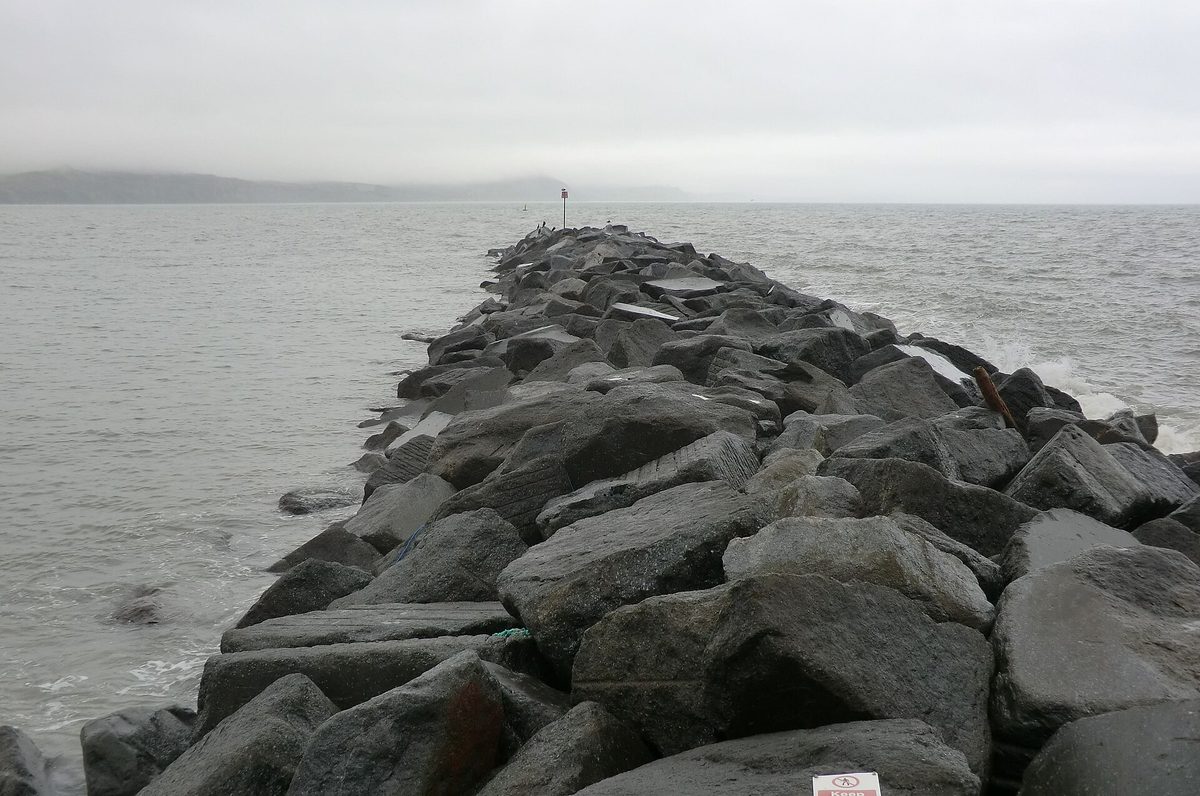
Drive to Lyme Regis: ~25 minutes (~12 miles). Your overnight, and the best base for the west. Lyme is the soul of the coast — the town where Mary Anning hunted fossils in the early 1800s and effectively founded modern palaeontology from the cliffs below. Walk out along the Cobb, the curving stone harbour wall that’s been here in some form since the 1300s and shows up in everything from Jane Austen to The French Lieutenant’s Woman. Wander the steep little streets, eat well (the seafood is excellent), and if the museum’s open, the Lyme Regis Museum tells Anning’s story on the spot where she lived.
End Day 1 here. You’ve eased in. Tomorrow the cliffs get serious. This is one of the loveliest stretches on the south coast — for more in that vein, the best seaside towns in England guide has Lyme’s neighbours.
Day 2: Charmouth to Chesil Beach (Fossils and the Big Cliff)
Today is the heart of the trip for me: the best fossil beach, the highest cliff on the south coast, and one of the strangest landforms in Britain.
Start the day on the tide, not the clock. This is the one morning where you should check tide times the night before (more on that in the fossil section). If low tide is early, do Charmouth first thing. If it’s late morning, flip the order and do Golden Cap first.
Charmouth: ~15 minutes from Lyme Regis (~5 miles). Charmouth Beach is, in my opinion, the single best place on the whole coast to actually find a fossil. Start at the Charmouth Heritage Coast Centre right by the beach — entry is free, the wardens know exactly where the latest rockfalls have dropped fossils, and they run guided walks worth booking ahead. Then comb the shingle (not the cliff base — see safety below). Ammonites and belemnites turn up loose in the pebbles with patience. Give it a couple of hours; this is a do-it-properly stop, not a photo stop.
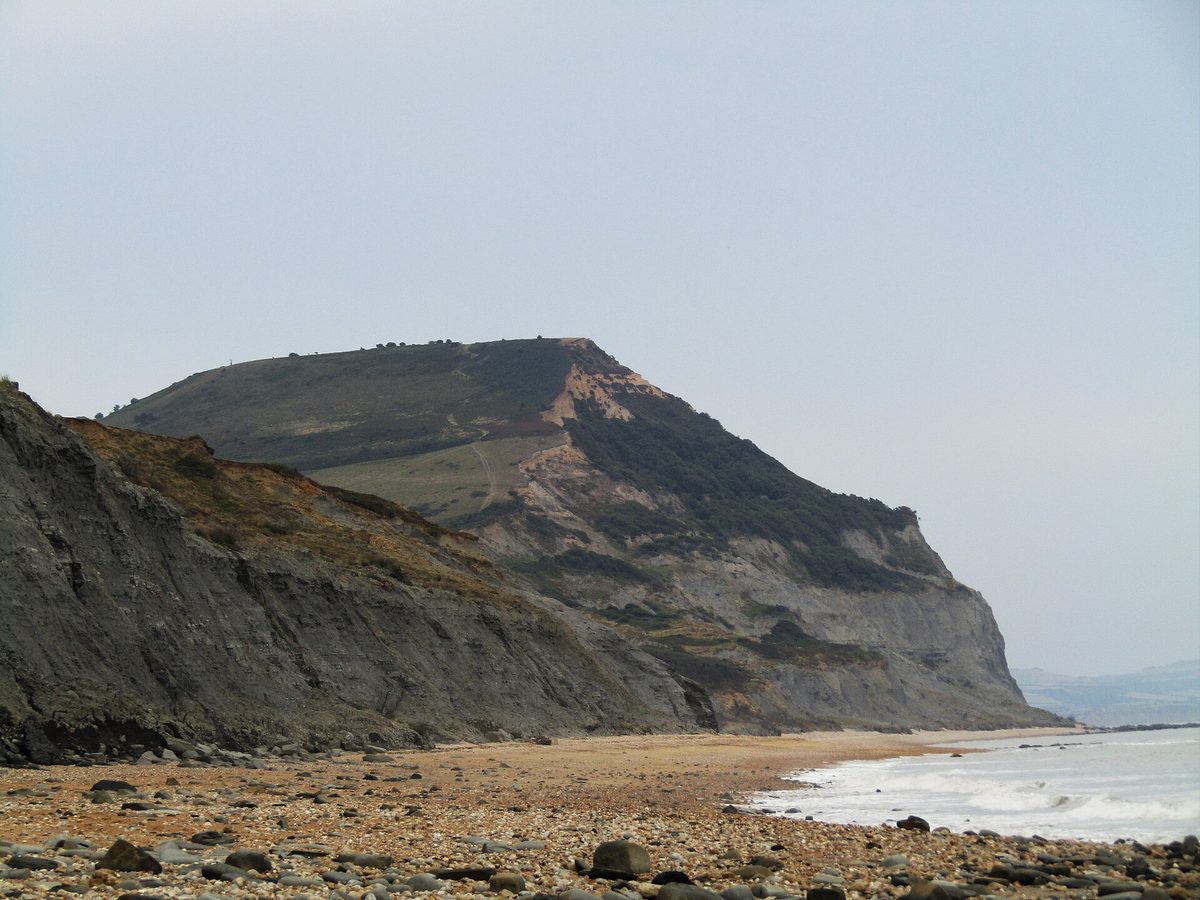
Drive to Golden Cap: ~10 minutes to Seatown (~4 miles). Golden Cap is the highest point on England’s south coast, at around 191 metres, and the walk up from Seatown beach is the best leg-stretcher on the western half. It’s a steady climb of roughly 45 minutes to an hour to the top, where the view back over Lyme Bay to the west and Chesil Beach to the east is enormous. Bring water; there’s no shade. If the weather’s grim, skip the summit — the view is the entire point.
Drive to West Bay: ~15 minutes (~6 miles). You might recognise West Bay even if you’ve never been — those sheer, golden, almost vertical sandstone cliffs are the Broadchurch cliffs. The little harbour town is a good lunch stop: fish and chips on the quay is the move. Walk a few minutes east along the front for the classic cliff view. Forty-five minutes to an hour does it.
Drive to Chesil Beach & the Fleet: ~35 minutes to the Chesil Beach Centre (~17 miles). This is one of the great oddities of the coast. Chesil is an 18-mile shingle barrier beach — a near-perfect bank of pebbles, graded so consistently by size that fishermen once claimed they could tell where they’d landed in fog just by the stone. Behind it lies the Fleet, the largest tidal lagoon in Britain, a protected haven for birdlife. Stop at the Fine Foundation Chesil Beach Centre near Ferrybridge for the displays and the view down the bank toward Portland. Don’t try to swim here — the shelf drops away steeply and the undertow is dangerous.
End Day 2 in or near Weymouth, which is your obvious eastern base: a big sandy bay, a proper Georgian seafront, and plenty of places to eat and sleep. From here Portland, Lulworth and Durdle Door are all in easy reach for the morning.
Day 3: Portland to Old Harry Rocks (the Grand Finale)
The showstopper day. Save it for good weather if you possibly can, because the eastern cliffs in sunshine are why people fall in love with this coast.
Optional early start: Portland. If you based in Weymouth, Portland is a 15-minute drive out along the causeway and worth an hour before the crowds build elsewhere. Drive down to Portland Bill at the southern tip — the red-and-white lighthouse, the churning tidal race offshore, and a raw, end-of-the-world feel. It’s a detour, not on the main line, so if you’re short on time this is the easiest of today’s stops to drop.
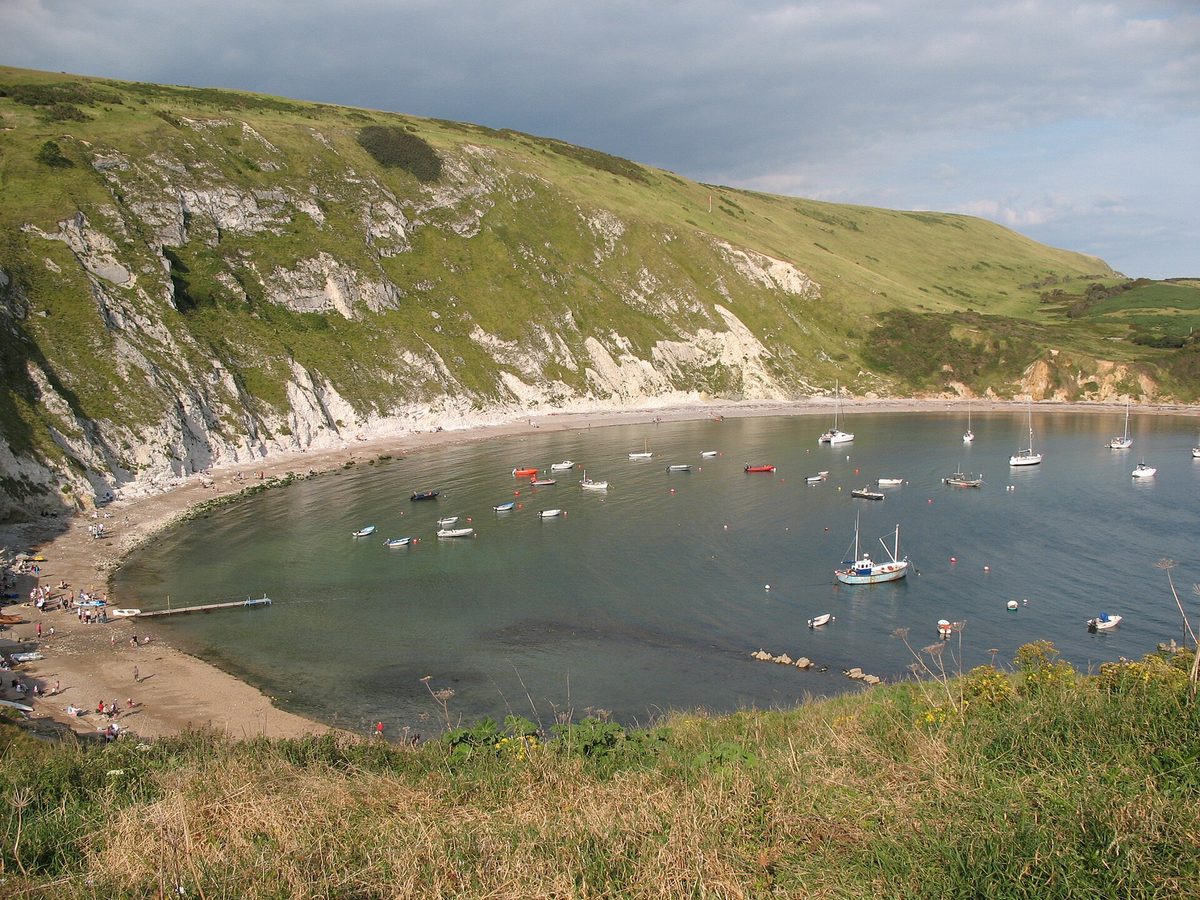
Drive to Lulworth Cove: ~45-50 minutes from Weymouth (~20 miles). Lulworth Cove is an almost perfectly circular bay carved where the sea broke through a hard outer band of rock into softer stuff behind — a textbook of coastal geology you can take in at a glance. Park in the Lulworth Estate car park at the village. As of 2026, the Estate charges roughly £3.10 for up to an hour, around £12.40 for up to four hours, and about £20 all day for a car — and the clever bit is that the time is cumulative across the Lulworth Cove, Durdle Door and Lulworth Castle car parks, so you pay once at the end. Always check current rates on the Lulworth Estate site, as prices creep up.
The Lulworth Cove to Durdle Door walk. Here’s my strongest opinion of the whole trip: walk from Lulworth Cove to Durdle Door, don’t just drive to the Durdle Door car park. It’s about 1.25 miles each way over the headland, roughly 30 minutes, with a stiff climb out of Lulworth that thins the crowds dramatically — and the moment Durdle Door appears below you, framed by the cliffs, is the best reveal on the coast. The car-park route exists (it’s a 900-metre walk down a long wooden staircase from the Durdle Door Holiday Park), but you trade the views for convenience and you still have to climb back up. The footpath is worth the sweat.
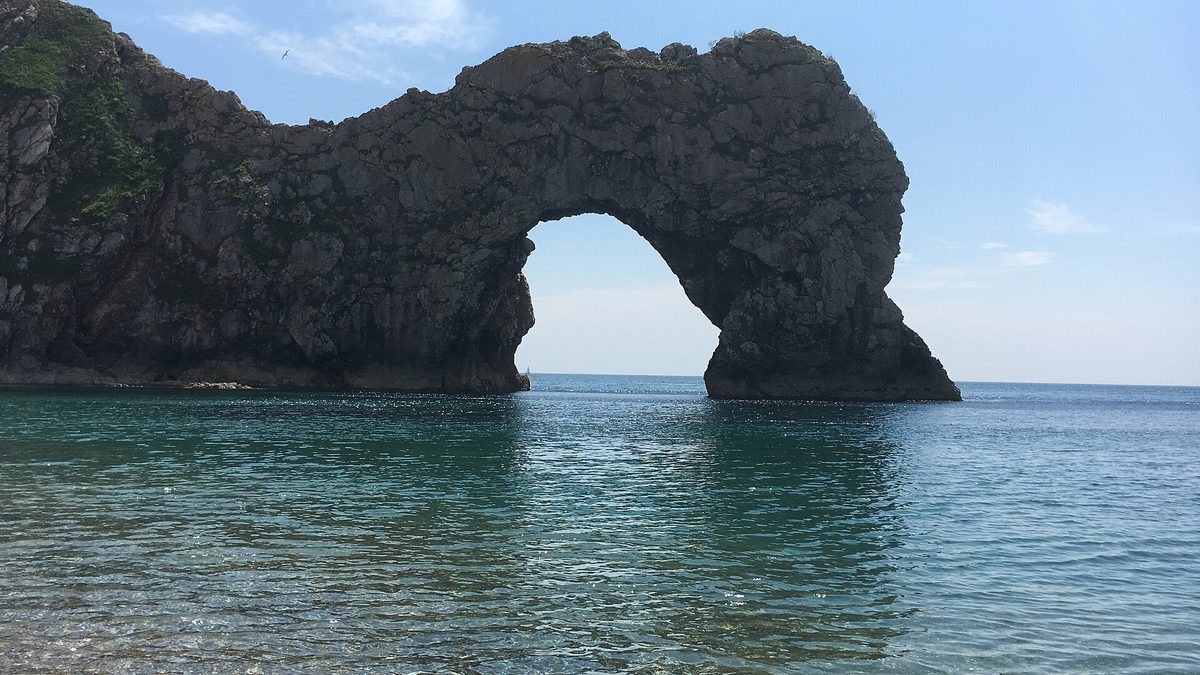
Durdle Door itself — the limestone arch — needs no introduction. It’s the most photographed thing on the coast for good reason. Get there before 10am or after 4pm in summer if you want it without a crowd. A note on the car park if you do drive: the Durdle Door car park runs roughly 8am-9pm March-October and 8am-5pm November-February, and on busy days it fills and turns cars away by mid-morning. Lulworth Cove’s car park is open 24 hours, which is another reason I park there and walk.
Drive to Kimmeridge: ~30-35 minutes (~13 miles). Kimmeridge Bay is the quiet one, and I love it for that. Dark, flat ledges of rock run out into the sea, there are rock pools at low tide, and a small marine centre. After the Durdle Door circus it feels like exhaling. Note that part of the road in passes through the Lulworth Ranges (an active military firing area) — check it’s open before you commit, as access closes during firing. Give it 45 minutes.
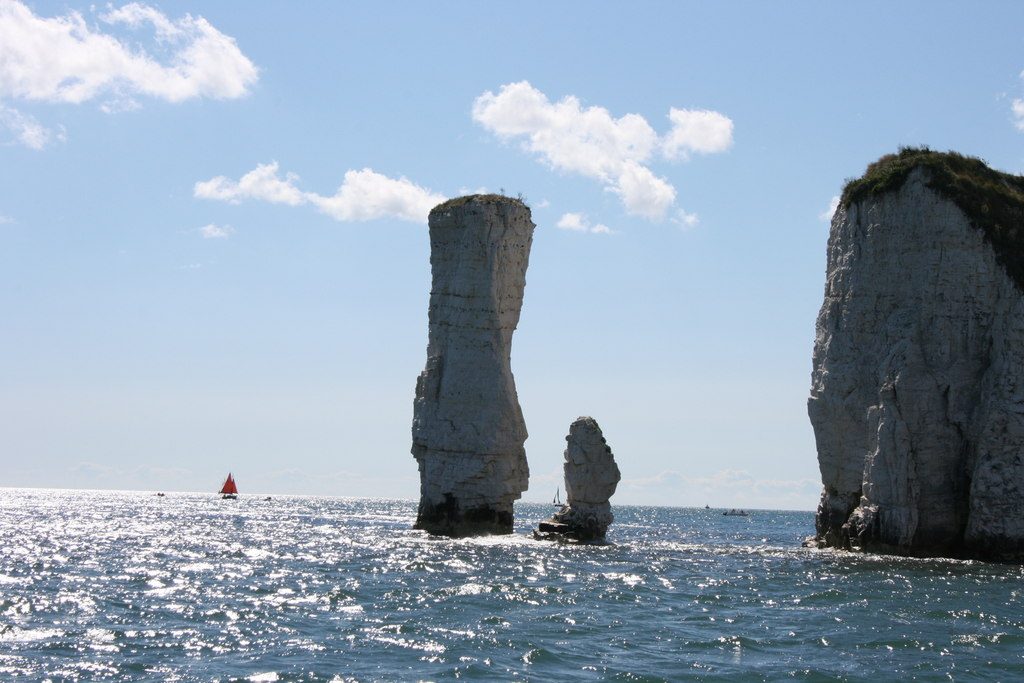
Drive to Old Harry Rocks (Studland): ~45 minutes (~18 miles). The eastern full stop of the World Heritage Site. Park near the Bankes Arms in Studland and walk the easy, flat, ~3.5-mile round trip out to the headland. Old Harry is a set of brilliant-white chalk stacks standing off the cliffs, with views across to the Isle of Wight on a clear day. It’s gentle, it’s spectacular, and it’s the perfect place to end the drive — the same chalk you’ll have seen way back at Beer, now standing alone in the sea. If you want more of this kind of chalk drama afterwards, the Seven Sisters cliffs guide covers the East Sussex equivalent.
Finish in Swanage, a cheerful old-fashioned resort with a steam railway, a sandy bay and good fish and chips — a relaxed place to end the trip. From here you’re well placed for the drive home or to keep exploring Purbeck.
Best Stops for Fossil Hunting
You can find fossils in several places along this coast, but two towns do the heavy lifting, and the difference between a good fossil day and a wasted one is almost entirely about timing.
Charmouth is where I’d send a first-timer. The beach genuinely delivers loose ammonites and belemnites in the shingle, and the free Charmouth Heritage Coast Centre by the beach will tell you where the latest cliff falls have dropped material. Their guided fossil walks are the single best-value thing you can do here — book ahead in season.
Lyme Regis is the historic home of it all (Mary Anning’s town), and the beaches east toward Charmouth produce finds too. Several local experts run excellent guided walks from Lyme; I’d take one if it’s your first go.
The non-negotiable rule: hunt on a falling tide. The safe window is roughly from two hours before low tide until about an hour after. That gives you beach to walk on and an outgoing sea, not an incoming one cutting you off. Check the tide tables the night before and plan your morning around them — this is the one part of the trip where the schedule bends to nature.
Two safety points the wardens drummed into me, and which Visit Dorset and the coast centre repeat: never dig in or climb the cliffs, which are unstable and fall without warning — collect from the loose pebbles and rockfall debris on the beach instead. And keep an eye on the sea and your exits; people get cut off here every year. Wear sturdy shoes; the rocks are slippery.
Best season? Autumn and winter, honestly. Storms scour fresh material out of the cliffs, so the richest pickings come after rough weather — though it’s colder and the days are short. Summer is easier and still productive on a good falling tide.
Getting Around (Car, Bus, Train)
Car, every time, if you can. I’ve done this route both ways and it isn’t close. A car lets you arrive at car parks early (the only way to beat the crowds at Lulworth and Durdle Door), reach the quiet stops like Kimmeridge and Portland Bill that buses barely touch, and bend your day to the tide for fossils. The roads are slow and lanes are narrow in places, but the freedom is the whole point of a road trip on this coast. If you’re flying in, picking up a hire car at the airport and looping the Cornwall and Devon coast into the same trip is a brilliant fortnight.
Without a car, it’s doable but slower. The Jurassic Coaster bus (the X53 covers the western half toward Lyme Regis and Weymouth, while Lulworth Cove and Durdle Door are reached by connecting buses such as the X54 — check current timetables) links many of the towns along the coast, and there’s a multi-day ticket — around £27 for seven days of unlimited travel as of 2026 — that pays for itself fast. The catch is frequency and connections: services aren’t quick, some of the best spots (Durdle Door, Kimmeridge, Portland Bill) involve a walk or a gap in the timetable, and you lose the tide flexibility for fossils. Build in patience and check timetables the night before.
By train, you reach the coast rather than travel along it. Useful arrival points: Honiton (then bus to Sidmouth/the western end), Axminster (for Lyme Regis by bus), and Weymouth or Dorchester (good bases for the eastern half, both well connected from London Waterloo). Wareham is the gateway for Purbeck, Corfe Castle and Swanage, with a connecting steam railway down to Swanage in season. My honest take: train in to a base, then use buses or — better — a hire car from there.
If you’re weighing this region against the South West more broadly, Cornwall vs Devon beaches is a useful comparison for where to spend extra days.
Where to Stay Along the Route
You don’t need to move hotels every night. For a 2-day trip, one base in the west and one in the east is plenty; for 3 days I’d still do just two bases and accept a bit of driving. Here’s how I split it.
West end — Lyme Regis (best for Day 1, fossils). Lyme is the most charming base on the coast and puts you on the doorstep of Charmouth and the fossil beaches. It books out in summer, so reserve early. Charmouth and Bridport are quieter, cheaper fallbacks nearby.
Middle — Weymouth (best for Day 2-3 pivot). A bigger town with the widest choice of hotels, B&Bs and places to eat, central to Portland, Chesil, Lulworth and Durdle Door. It’s not the prettiest base, but it’s the most practical, and the long sandy beach is a genuine bonus if you’ve got kids.
East end — Swanage or the Purbeck villages (best for the finale). Swanage is a lovely, slightly retro resort and the natural place to end up near Old Harry. West Lulworth itself has a handful of inns and B&Bs if you want to be steps from the cove for a dawn walk to Durdle Door — which, if you can swing it, is the single best way to see the arch crowd-free.
Camping and self-catering are abundant across Purbeck and West Dorset, and a cottage for a few nights can be cheaper and more relaxed than hotel-hopping. For the wider lowdown on accommodation types and booking timing across the country, see where to stay in England.
Prices swing hard by season — summer weekends and school holidays are dear and book months ahead; spring and autumn are cheaper and, for this coast, arguably better (see the best time to visit England). I’d avoid peak August if you can help it; the car parks are the bottleneck and they fill brutally early.
How to Stretch It Into a Longer Trip
Three days covers the coast well, but it’s easy to make a richer week of it.
Add Purbeck properly. Corfe Castle (the dramatic ruined keep on the railway line), Studland’s sandy beaches and the Swanage steam railway are a full extra day in the east, and a lovely change of pace from clifftop walking.
Walk a stretch of the South West Coast Path. The Jurassic Coast section of England’s longest waymarked trail is glorious on foot, and you don’t have to do it all — a single day-walk like Lulworth to Durdle Door and beyond, or Seatown over Golden Cap, gives you the coast at the pace it deserves. For more in this vein, England’s national parks and hiking has ideas.
Loop in the wider South West. Devon and Cornwall sit right next door, so the Jurassic Coast slots neatly onto the front or back of a bigger South of England road trip. Add a few days for England’s best beaches further west and you’ve got a fortnight.
Detour to Brighton on the way back east. If you’re heading toward London afterward, the south coast keeps delivering — the Brighton travel guide makes a fun, very different bookend to all that quiet Dorset coastline.
Whatever length you choose, pack for changeable weather and proper footwear — the England packing list covers it, and the England travel guide has the broader logistics.
Final Thoughts
If you take one thing from all this, make it the walk to Durdle Door from Lulworth Cove, on foot, early in the morning. The day I finally did it properly — parked at the cove at eight, climbed the headland in the cool, and watched that arch appear with almost nobody around — was the day this coast clicked for me. Everything else is gorgeous, but that’s the moment I’d give anyone.
My second piece of advice is to slow down. The temptation is to chase every named stop, but the Jurassic Coast is a coast for walking, for combing a beach on a falling tide, for sitting on Golden Cap with a sandwich and watching the weather come in over Lyme Bay. Pick fewer stops and do them properly. Skip Sidmouth and Portland before you skip the walks.
And don’t fear the shoulder seasons. May and September give you longer light than you’d think, far emptier car parks, and a coast that feels like it’s yours. For the deeper background on everything you’ll be looking at out there, keep the Jurassic Coast travel guide open alongside this route — between the two, you’re set.
Research and Source Notes
This itinerary draws on the official and authoritative sources below, cross-checked against my own repeated trips along the coast. Prices, parking tariffs and bus fares change — I’ve hedged them and dated them to 2026, and I’d urge you to confirm current figures on the official sites before you travel.
- Jurassic Coast Trust — World Heritage status (inscribed 2001), the ~95-mile Exmouth-to-Studland extent, and confirmation it is England’s only natural UNESCO World Heritage Site: jurassiccoast.org and its UNESCO World Heritage pages.
- UNESCO UK — World Heritage designation and Outstanding Universal Value: unesco.org.uk.
- Lulworth Estate — 2026 car park tariffs (cars ~£3.10/1hr, ~£12.40/4hr, ~£20 all day), cumulative charging across Lulworth Cove, Durdle Door and Lulworth Castle, and car park opening hours: lulworth.com parking and the Jurassic Coast page.
- Charmouth Heritage Coast Centre — free entry, guided fossil walks, fossil-hunting advice and the falling-tide safety window: charmouth.org fossil hunting and the centre’s FAQ.
- Visit Dorset — fossil-hunting guidance, tide safety and “collect from the beach, not the cliffs”: visit-dorset.com fossil hunting, plus Chesil Beach and the Fleet: Abbotsbury, Chesil Bank and Fleet Lagoon.
- National Trust — Old Harry Rocks walk from Studland (the eastern end of the World Heritage Site) and the ~3.5-mile route: nationaltrust.org.uk Old Harry Rocks walk.
- South West Coast Path — the Jurassic Coast walking section and Lulworth-to-Durdle-Door distances: southwestcoastpath.org.uk.
- Public transport — Jurassic Coaster bus routes, ~£27 seven-day ticket, and rail access points (Honiton, Axminster, Weymouth, Dorchester, Wareham): greatscenicrailways.co.uk.
Last updated 13 June 2026. Tides, military firing times at the Lulworth Ranges (which can close the Kimmeridge approach), parking fees and bus fares all change — check official sources close to your travel dates.
Photo Credits
- Durdle Door limestone arch on the Jurassic Coast itinerary at golden hour — Photo: Luni22 / CC BY-SA 4.0 via Wikimedia Commons. Source
- The Cobb harbour wall at Lyme Regis at low tide — Photo: Kmtextor / CC BY 4.0 via Wikimedia Commons. Source
- Golden Cap cliff rising above Seatown beach in Dorset — Photo: Partonez / CC BY-SA 4.0 via Wikimedia Commons. Source
- The near-perfect horseshoe bay of Lulworth Cove on the Jurassic Coast — Photo: Paste at English Wikipedia (CC0) via Wikimedia Commons. Source
- Old Harry Rocks chalk stacks at Studland, eastern end of the Jurassic Coast — Photo: Keith Pitchforth / CC BY-SA 2.0 via Wikimedia Commons. Source
Frequently asked questions
How many days do you need for the Jurassic Coast?
Two days covers the highlights at a brisk pace; three is the comfortable sweet spot, adding Golden Cap, Chesil Beach, Portland and real walking time. One day only works for a teaser of the eastern stops (Lulworth, Durdle Door, Old Harry). For walking the coast path or exploring Purbeck too, allow five to seven days.
Can you do the Jurassic Coast without a car?
Yes, but it's slower and less flexible. The Jurassic Coaster bus links the main towns, with a multi-day ticket around £27 as of 2026, and you can train in to Weymouth, Dorchester or Axminster. The catch: timetables are infrequent, some top spots need a walk, and you lose tide flexibility for fossil hunting. A hire car is far easier.
Where do you start the Jurassic Coast?
The official western start is Orcombe Point near Exmouth in East Devon, marked by the Geoneedle; the eastern end is Old Harry Rocks at Studland in Dorset. I drive west to east so the most dramatic stops — Durdle Door and Old Harry — come last. Coming from London, many people start in Dorset and run it in reverse.
Is Durdle Door worth visiting, and is there parking?
Absolutely — it's the most iconic spot on the coast. There's a car park at Durdle Door Holiday Park (a 900-metre walk down stairs to the beach), run by the Lulworth Estate, but it fills early and has limited hours. I prefer to park at Lulworth Cove (open 24 hours) and walk the 1.25-mile clifftop path over; the views are far better.
How much does parking cost at Lulworth Cove and Durdle Door?
As of 2026, the Lulworth Estate charges roughly £3.10 for up to an hour, around £12.40 for up to four hours, and about £20 all day for a car. Time is cumulative across the Lulworth Cove, Durdle Door and Lulworth Castle car parks, so you pay once. Always check the Lulworth Estate website for current rates.
When is the best time to hunt for fossils on the Jurassic Coast?
Go on a falling tide — roughly two hours before low tide to an hour after. Autumn and winter are most productive because storms wash fresh fossils from the cliffs, though summer works on a good tide. Start at the free Charmouth Heritage Coast Centre, collect only from the beach and loose rockfall, and never climb or dig the cliffs.