Sheet 38 · England Coast and Beaches · 18 min read
Brighton Travel Guide
A local-feel Brighton travel guide: trains from London, the Royal Pavilion, the Pier, the Lanes, pebble beach, food, Pride and where to stay by area.
 Sheet 38
Contents 10 sections
I’ve lost count of how many times I’ve made the run down to Brighton. Some trips I went for a single sunlit afternoon; others I stayed a long weekend and barely left a half-mile stretch of seafront. It’s the kind of place that rewards both. You step off the train, walk downhill toward the water, and the whole city tilts you toward the sea.
This Brighton travel guide is the one I wish someone had handed me on my first visit: it’s roughly an hour by train from London, the beach is pebbles (not sand — set your expectations now), the Royal Pavilion is the unmissable sight, and the food, the festivals and the famously open LGBTQ+ scene are reasons enough to come on their own. Below is how to do it well, whether you’ve got six hours or three days.
Quick Answer: Brighton Travel Guide
Brighton (officially Brighton & Hove, in East Sussex) is England’s most beloved seaside city — bohemian, queer-friendly, a little ramshackle, and gloriously fun. From London it’s about an hour by train from Victoria or London Bridge. See the Royal Pavilion, walk the Pier, get lost in the Lanes and North Laine, eat well, and accept that the beach is shingle. A day works; a weekend is better.
It’s an easy trip to combine with the rest of the coast — Brighton anchors a whole stretch of shoreline I’ve mapped out in my England coast and beaches guide, and it’s one of the standout picks among the best seaside towns in England.
Brighton at a Glance: Top Sights
Here’s the shortlist, ranked by how I’d actually spend my time. Prices are hedged and “as of 2026” — always check official sites before you go.
| Sight | What it is | Time needed | Cost (hedged) | Worth it? |
|---|---|---|---|---|
| Royal Pavilion | George IV’s wild Indo-Chinese seaside palace | 1.5–2 hrs | Around £20–25 adult | Yes — the must-see |
| Brighton Palace Pier | Classic Victorian pleasure pier, arcades, rides | 1 hr+ | Free to enter; rides extra | Yes, for the vibe |
| The Lanes | Twisting old alleys: antiques, jewellery, cafes | 1–2 hrs | Free to wander | Yes |
| North Laine | Bohemian quarter, 400+ independent shops | 1–2 hrs | Free to wander | Yes — my favourite |
| Pebble beach & seafront | The shingle, the arches, the people-watching | As long as you like | Free | Yes (bring a towel) |
| Brighton i360 | 162m seafront observation tower | 30–45 mins | Variable; check ahead | Maybe — see notes |
| Brighton Museum | Art, history, fashion, in the Pavilion Gardens | 1 hr | Around £8–10 | Yes if it’s raining |
| West Pier ruin | Skeletal burnt-out Victorian pier | Photo stop | Free (view only) | Yes, to look at |
| Hove lawns & beach huts | Quieter, prettier, candy-coloured huts | 1 hr+ | Free | Yes, for the calm |
Getting to Brighton
This is the part people overthink. Brighton is genuinely easy.
By train from London
The train is how most people arrive, and it’s the way I’d always recommend. Direct services run from London Victoria (Southern and Gatwick Express) and from London Bridge (Thameslink), and the fast trains take around an hour — sometimes a touch over, depending on the service and stops. Thameslink trains also run straight up through central London and on toward Bedford, so depending on where you’re staying in the capital you may not even need to start at a terminus.
Trains are frequent — there are hundreds a day across the operators — so you rarely need to plan around a timetable for a daytime trip. A few honest tips:
- Book ahead if you can. Advance fares are far cheaper than buying an Anytime walk-up ticket on the day. Off-peak returns are your friend.
- Avoid Friday-evening and Sunday-evening crushes if you’re sensitive to crowds, especially in summer and on festival weekends.
- Brighton station sits at the top of the hill. It’s a pleasant 10–15 minute walk downhill to the seafront (and a slightly less pleasant walk back up). Buses and taxis run from right outside if you’d rather not.
For more on getting around the country by rail generally, I’ve put together a separate England train travel guide — worth a read if Brighton is one stop on a bigger trip. And if you’re basing yourself in the capital, Brighton is one of the all-time great day trips from London by train.
By car (and the parking reality)
Driving down is straightforward: from London you take the M23, which becomes the A23 and runs straight into the city and down to the seafront. Outside of traffic it’s roughly an hour and a half, though the A23 and the approaches into town can clog badly on warm weekends and bank holidays.
The catch is parking. Brighton is not a car-friendly city, and central parking is limited and expensive. A few things I’ve learned the hard way:
- Use the NCP and council car parks near the centre (around Church Street, Russell Road and the seafront) rather than circling for an on-street space.
- Seafront kerbside parking is much reduced from how it used to be — don’t count on rolling up and parking by the beach.
- Park-and-ride is the smart move on busy days. You can leave the car at the edge of town (Withdean is the classic option) and take a bus in.
Honestly, unless you’re continuing along the coast afterward, I’d take the train and skip the parking headache entirely. If you’re watching costs across a whole trip, my England on a budget guide has more on when the car is worth it and when it isn’t.
Top Things to Do in Brighton
Plenty of the best things to do in Brighton cost nothing — wandering, beach-sitting, window-shopping. But a couple of paid sights are genuinely worth it. Here’s how I’d prioritise.
The Royal Pavilion (the must-see)
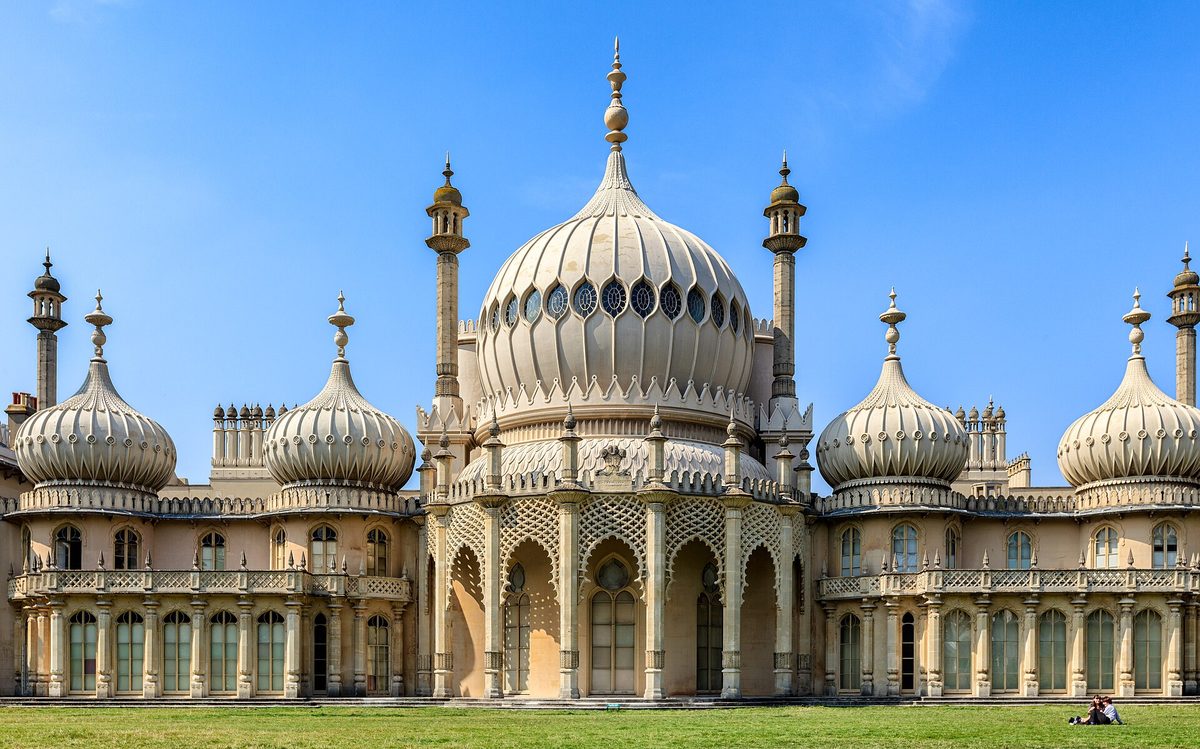
If you do one thing in Brighton, do this. The Royal Pavilion is the former seaside palace of King George IV, transformed between 1815 and 1823 by architect John Nash into something that still looks faintly hallucinatory: Indian-inspired domes and minarets on the outside, lavish Chinese-influenced interiors within. The Banqueting Room, with its colossal chandelier hanging from a carved dragon, is the kind of thing you don’t quite believe until you’re standing under it.
It’s run by Brighton & Hove Museums, and tickets as of 2026 run somewhere around £20–25 for an adult (children under five are free, and local residents get a discount — bring proof of postcode if you qualify). Your ticket usually includes the gardens and an audio guide. Budget about an hour and a half to do it justice; I always end up lingering longer.
Two tips: book online to skip the queue on busy days, and check current opening hours before you go, as they shift seasonally. The Pavilion Gardens around it are free and lovely for a sit-down.
Brighton Palace Pier
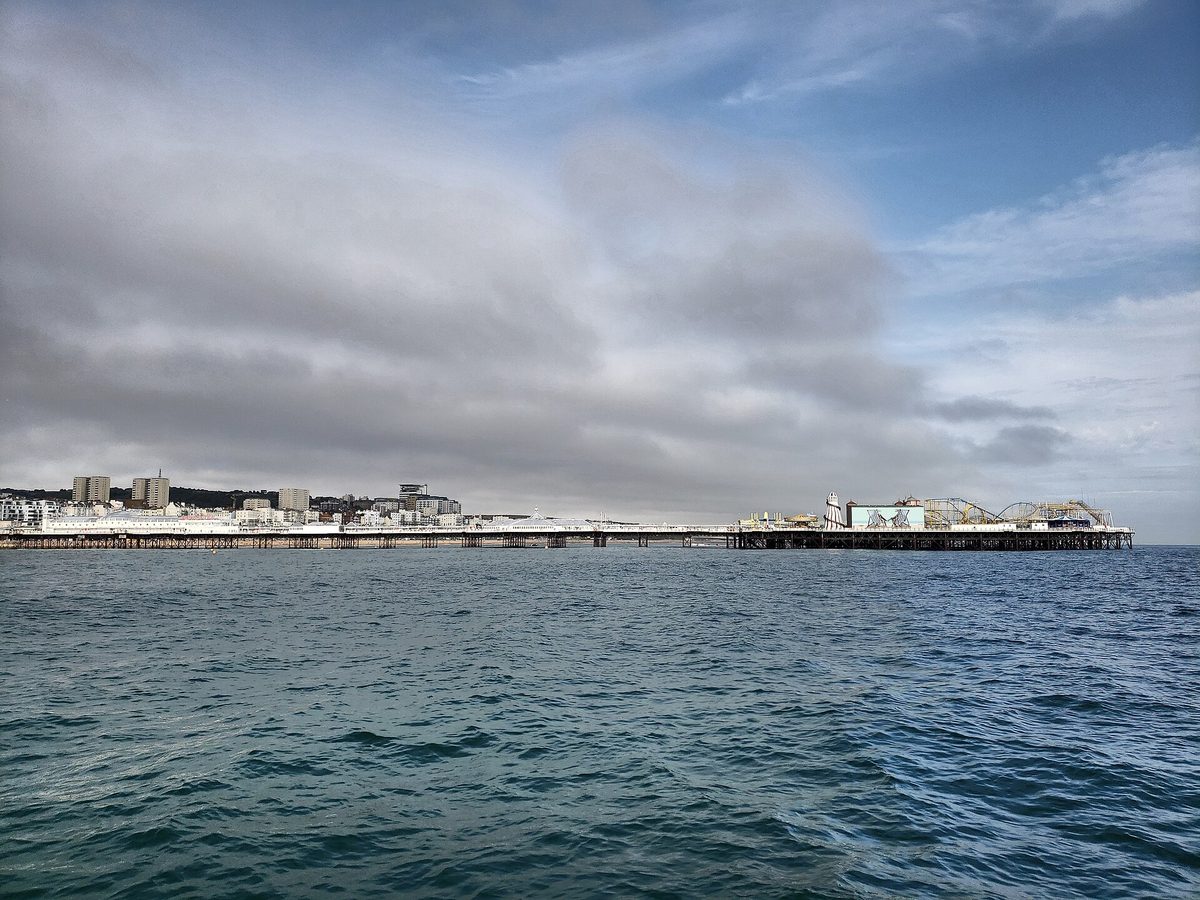
The Brighton Palace Pier is the postcard — a grand Victorian pleasure pier jutting out over the shingle, packed with arcades, fairground rides, fortune-tellers and the smell of doughnuts and chip fat. Entry to the pier is free; you only pay for the rides and the slot machines.
Ride-wise, you can pay per attraction or buy a wristband for unlimited rides, which runs roughly £20 to £32 depending on the season and your height (there are cheaper bands for smaller kids). Whether that’s worth it depends entirely on how much your group loves a rollercoaster.
For me, the pier is more about atmosphere than rides. Walk to the end, look back at the city stacked up the hill, eat something fried, and watch the starlings wheel at dusk. It’s gloriously, unapologetically tacky, and I love it. (Note: in peak summer the pier sometimes charges a small entry fee at the busiest times, so don’t be surprised by a turnstile in August.)
The pebble beach and seafront
Let’s be clear about this so you’re not disappointed: Brighton beach is pebbles, not sand. Shingle, all the way to the water. It’s hard on bare feet and your towel will shift around, but it has its own charm — the sound of the waves dragging the stones back is one of those small, addictive seaside pleasures.
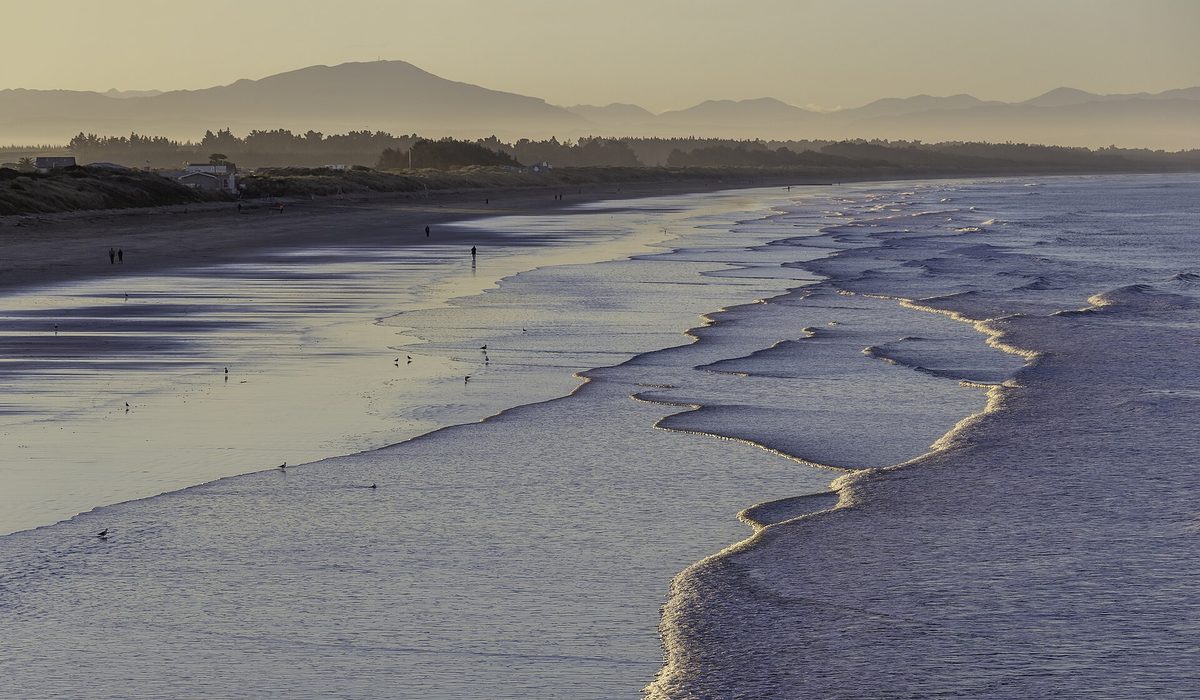
The seafront promenade is the heart of the city in summer. Below the road, the Victorian arches house little bars, cafes, galleries, a small museum and the odd nightclub. There’s a paddling area, basketball courts, an artists’ quarter and plenty of spots to buy an ice cream or a pint and watch the world drift by. Swimming is possible — the water gets busy with bathers on hot days — just go in carefully over the stones, and respect the flags and any signage about currents.
If your heart is set on actual sand, you’ll need to go further along the coast; I round up the genuinely sandy options in my best beaches in England guide.
The Brighton i360
The Brighton i360 is the slender 162-metre observation tower on the seafront, where a glass viewing pod glides smoothly up to about 138 metres for sweeping 360-degree views over the city, the South Downs and the Channel. On a clear day the panorama is genuinely spectacular, and sunset is the moment to go.
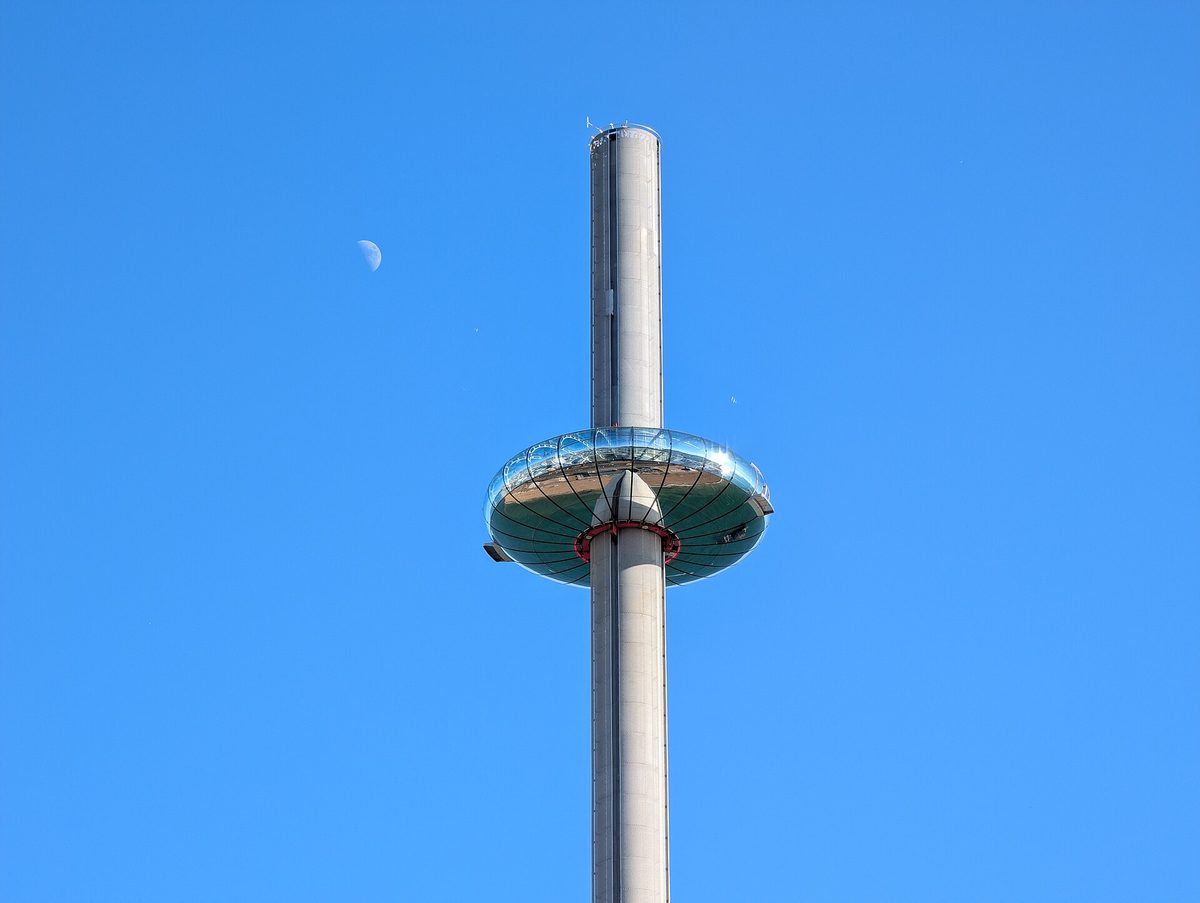
Now, the honest caveat, because this is where a lot of guides are out of date. The i360 has had a famously troubled financial history — it closed suddenly in late 2024 — but it reopened in March 2025 under new ownership (the hospitality group Nightcap, headed by Sarah Willingham of Dragons’ Den), with cheaper tickets and a bar-and-café focus. As of 2026 it is operating again. That said, given its rollercoaster past, I’d treat its status as something to double-check on the official site before you build your day around it, and expect ticket prices and opening hours to vary. Standing at its base is free, and the view from the foot of the tower along the seafront is lovely on its own.
The i360 sits on the very spot where the entrance to the old West Pier once stood — which brings me to the most photographed ruin in town.
The ruined West Pier
A little way along the front you’ll see the West Pier: a blackened, skeletal Victorian structure marooned just offshore. It closed in 1975, partially collapsed, and then burned in 2003, and it’s been left as a haunting silhouette ever since. You can’t go onto it — it’s a ruin, not an attraction — but it’s become an icon in its own right, and it’s one of the most striking things to photograph in Brighton, especially at sunset or wreathed in a murmuration of starlings.
Brighton Museum & Art Gallery
Tucked into the Pavilion Gardens, the Brighton Museum & Art Gallery is a proper rainy-day saviour and worth an hour even when it’s sunny. It’s a likeable, eclectic mix — local history, decorative arts, an excellent fashion and style gallery, and a frank, well-done section on Brighton’s LGBTQ+ history. Admission as of 2026 is modest, around £8–10, and it’s a short walk from the Pavilion if you want to make a culture morning of it.
The Lanes vs North Laine: Know the Difference
This trips up almost every first-timer, so let me settle it. They sound nearly identical, they’re a few minutes apart, and they are not the same place.
The Lanes (with an “e”, singular Lane… ish) are the old fishing-town alleyways down near the seafront, between North Street and the sea. Think tight, twisting cobbled passages, traditional and a bit upmarket: antique shops, jewellers, designer boutiques and smart little restaurants. It’s the historic, polished, slightly touristy side of Brighton shopping. Easy to get pleasantly lost in for an hour.
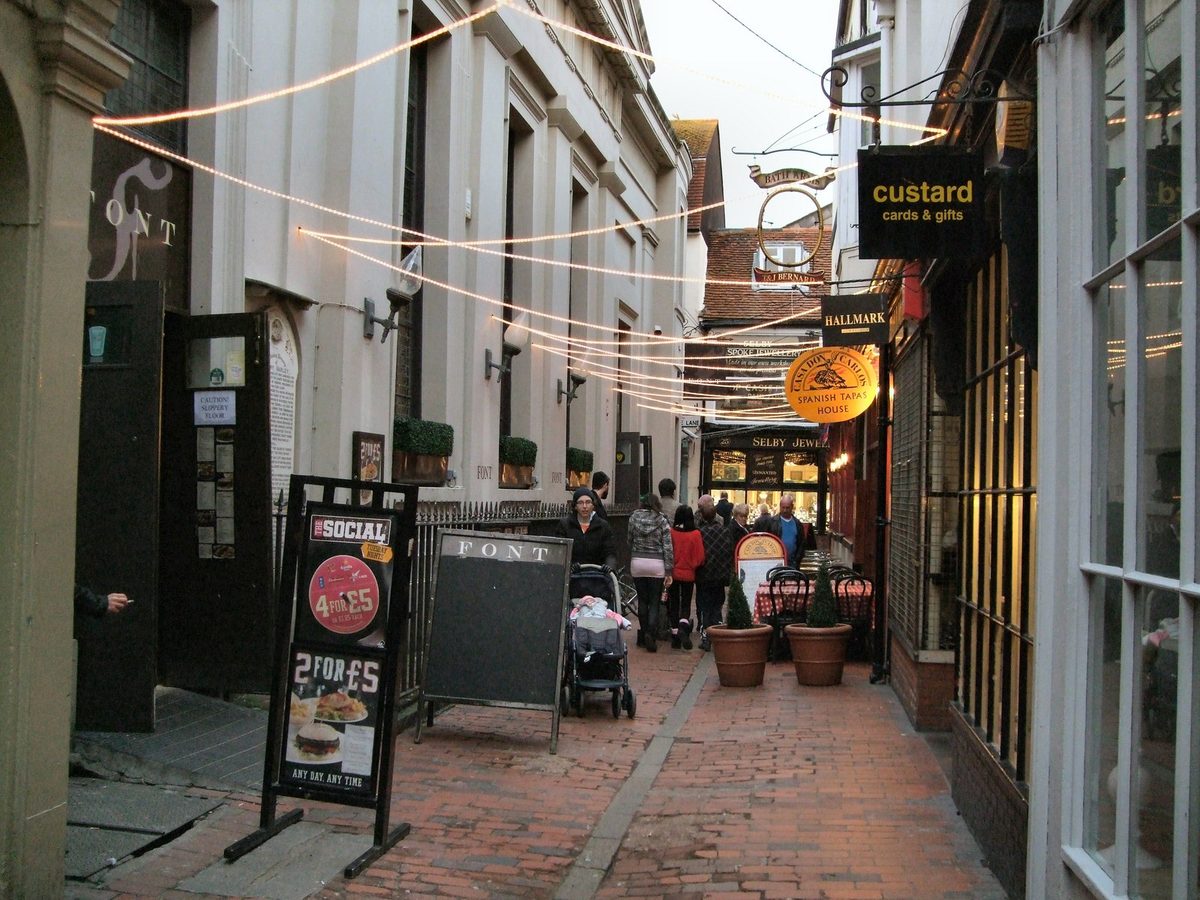
North Laine (with the unusual spelling) is north of the Lanes, between the centre and the train station, and it’s where Brighton’s bohemian heart beats. This is my favourite part of the city: streets like Kensington Gardens and Gardner Street are crammed with hundreds of independent shops — vintage and vinyl, plants and crystals, gloriously weird homeware, zines, comics — plus the city’s best concentration of cafes, vegetarian spots and pubs. It’s scruffier, younger and far more fun than the Lanes.
Quick rule of thumb: the Lanes for jewellery and antiques; North Laine for independent, alternative, anything-goes browsing. Do both. They flow into each other and you can easily walk the lot in an afternoon.
Where to Eat and Drink in Brighton
Brighton punches well above its weight on food, and it’s deservedly famous as one of the best places in the country to eat vegetarian and vegan.
Fish and chips on the front
You can’t visit a seaside city and not have chips by the water. There are good chippies all along the seafront and tucked through the Lanes — grab a paper-wrapped portion, find a spot on the beach, and accept that a seagull will absolutely try to mug you. (Eat with your back to a wall. I’m serious.) For something a bit more sit-down, several long-running seafood spots near the front do proper battered cod and a view to go with it.
The famous veggie and vegan scene
If you’re plant-based, Brighton is close to paradise. The city has been a vegetarian stronghold for decades — Food for Friends in the Lanes has been doing it since 1981 — and Terre à Terre, also in the Lanes, is the one I send everyone to: inventive, generous vegetarian small plates that even committed carnivores rave about. For casual eats, the North Laine is wall-to-wall with vegan cafes, falafel and kebab joints, and brunch spots. There’s even a dedicated vegan fish-and-chip shop on the seafront for the full plant-based seaside experience.
Cafes, coffee and pubs
The Lanes and North Laine are stuffed with independent coffee shops and all-day cafes — perfect for a flat white and a pause between shops. And Brighton has one of the best pub scenes in England: characterful old boozers, craft-beer specialists and seafront bars in the arches. The pubs around Kemptown and the North Laine are where I’d start for a proper evening. For a city break with eating at its heart, Brighton ranks high in my round-up of the best places to visit in England.
Brighton’s Festivals and LGBTQ+ Scene
A huge part of Brighton’s character is how open, creative and queer-friendly it is — this is widely considered the LGBTQ+ capital of the UK, and it wears that proudly.
The hub is Kemptown (often spelled Kemp Town), east of the Pier, where you’ll find the heart of the gay scene: bars, clubs, cafes and an easy, welcoming atmosphere year-round. It’s a genuinely inclusive city in a way that goes well beyond a single neighbourhood.
The festival calendar is the other reason to time your visit:
- Brighton Pride is the headline event — the UK’s biggest Pride, usually held on the first weekend of August (in 2026, it falls on the 1st–3rd). Expect a huge parade through the city, a ticketed park festival with big-name headliners, and an electric, packed-out weekend. If you want to be here for it, book accommodation months ahead — rooms vanish and prices soar.
- Brighton Festival and the enormous Brighton Fringe run through May, turning the whole city into a sprawling arts party of theatre, music, comedy and street performance. May is one of the best — and busiest — times to visit, with several festivals overlapping.
If you’re trying to nail the timing of a wider trip, my best time to visit England guide breaks down the seasons; for Brighton specifically, May and the August Pride weekend are the high-energy peaks, while June and September give you decent weather with a little more breathing room.
Where to Stay in Brighton (by Area)
Where you stay shapes your whole trip here, because Brighton’s neighbourhoods have distinct personalities. Here’s how I’d choose.
Seafront. For first-timers wanting the classic experience, stay on or just off the front. You’re steps from the beach, the Pier and the promenade, and many rooms have sea views. It’s the liveliest (and sometimes noisiest) option — great if you want to be in the thick of it. Expect to pay a premium for a sea view.
The Lanes / city centre. Staying in or near the Lanes puts you in the middle of everything — shops, restaurants, the Pavilion and the seafront all within a short walk. There are some lovely boutique hotels in restored old buildings here. Ideal for a no-car, walk-everywhere weekend.
Kemptown. East of the Pier, Kemptown is the spot for the LGBTQ+ scene, quirky independent shops and a slightly more local, characterful feel. Still walkable to the centre, with some seafront hotels of its own. My pick if you want personality over polish.
Hove. West along the coast, Hove is the calmer, more residential, slightly more refined sibling — handsome Regency squares, the famous candy-coloured beach huts, wide green seafront lawns and a gentler pace. It’s quieter at night, generally a bit cheaper, and a lovely base if you want sea air without the full carnival. The walk along the front from Hove back into Brighton is one of my favourite things to do here.
For a broader look at picking a base around the country, see my where to stay in England guide. Whatever you choose, book early for May (festivals) and the August Pride weekend — those are the two times Brighton genuinely sells out.
Day Trips from Brighton
Brighton makes an excellent base for the surrounding coast and countryside if you’ve got more than a day.
The Seven Sisters. The big one. Just east of the city, the Seven Sisters are a run of dazzling white chalk cliffs above the sea — among the most beautiful coastal walks in England. You can reach the area by bus or car for a half- or full-day out, and the views back along the undulating cliff-tops are unforgettable. I’ve written the whole thing up separately, so for routes, timings and the best viewpoints, see my dedicated Seven Sisters cliffs guide — that’s the place to plan it properly.
The South Downs. Brighton sits right on the edge of the South Downs National Park, so green, rolling chalk hills are basically on your doorstep. Easy options include Devil’s Dyke (a dramatic dry valley reachable by bus from the city, with huge views) and gentle walks straight up from the northern edges of town. Perfect if you want to swap shingle for grass for a few hours.
Further afield. With a car or a train you can fold Brighton into a longer coastal loop — Eastbourne and the lighthouse at Beachy Head lie beyond the Seven Sisters, and the wider East Sussex coast is full of pretty spots. If you’re plotting a bigger seaside journey, both my England coast and beaches guide and the Norfolk coast guide on the other side of the country are good companions.
Final Thoughts
Brighton is the seaside trip I never get tired of recommending. It’s daft and beautiful in equal measure — a king’s fantasy palace a few streets back from a pier full of arcade machines, antique jewellers around the corner from a vegan chippy, a ruined Victorian pier silhouetted against the sunset. It doesn’t take itself too seriously, and that’s exactly why it works.
My honest advice: come with low expectations about the beach (it’s pebbles, embrace it), high expectations about everything else, and don’t try to cram it all in. See the Pavilion, wander the North Laine, eat something good, sit on the shingle with chips as the light goes gold over the West Pier. Then, if you’ve got the time, head out to the Seven Sisters for the cliffs. That’s a near-perfect couple of days, and it’s barely an hour from London.
For the bigger picture, this fits neatly into my wider England travel guide and England’s coast and beaches guide — Brighton is one of its brightest highlights. Travelling with little ones? My England with kids guide has more on the pier, the beach and family-friendly stops nearby. And if London’s your base, don’t miss the rest of my day trips from London and London travel guide.
Research and Source Notes
Researched and written in June 2026. Times, prices and especially opening/operating status change — always confirm with official sources before you travel. Key references:
- Visit Brighton (official tourism site) — for attractions, food and what’s-on listings: visitbrighton.com
- Brighton & Hove Museums — for the Royal Pavilion and Brighton Museum (history, tickets, opening hours): brightonmuseums.org.uk
- National Rail / train operators (Southern, Thameslink, Gatwick Express) — for London–Brighton journey times (~1 hour) and ticketing.
- Brighton Palace Pier (official site) — for entry and ride/wristband pricing.
- Brighton i360 (official site) and Brighton & Hove News / BBC News — for the tower’s 2024 closure and March 2025 reopening under new ownership; status hedged accordingly for 2026.
- Brighton & Hove Pride and Brighton Festival / Brighton Fringe — for festival dates (Pride first weekend of August; Festival and Fringe in May).
Where I’ve quoted prices or times I’ve hedged them (“around”, “as of 2026”) on purpose — treat them as a guide, not a guarantee. The Royal Pavilion ticket price, the i360’s operating status, and all festival dates are the details most worth double-checking close to your trip.
Photo Credits
- Brighton Palace Pier stretching over the pebble beach, the classic image from any Brighton travel guide — Photo: Andy Li (CC0) via Wikimedia Commons. Source
- The domes and minarets of the Royal Pavilion Brighton, George IV’s exotic seaside palace — Photo: Qmin / CC BY-SA 3.0 via Wikimedia Commons. Source
- The shingle pebble beach and seafront at Brighton on a bright day — Photo: Michal Klajban / CC BY-SA 4.0 via Wikimedia Commons. Source
- The slender Brighton i360 observation tower rising above the seafront — Photo: Andy Li (CC0) via Wikimedia Commons. Source
- Narrow cobbled alleyways of the historic Lanes in Brighton lined with shops — Photo: Paul Gillett / CC BY-SA 2.0 via Wikimedia Commons. Source
Frequently asked questions
Is Brighton worth visiting?
Yes — wholeheartedly. Brighton is England's most characterful seaside city: a beautiful royal palace, a classic Victorian pier, brilliant independent shopping, a superb food scene and one of the most open, welcoming atmospheres in the country. The pebble beach divides opinion, but the overall package is hard to beat for an easy coastal break.
How long do you need in Brighton?
You can see the headline sights — the Royal Pavilion, the Pier, the Lanes and North Laine, and the seafront — comfortably in a single full day. But Brighton rewards lingering. A weekend lets you slow down, eat properly, explore Hove and Kemptown, and fit in a day trip to the Seven Sisters or the South Downs.
Is Brighton a good day trip from London?
It's one of the best. Trains take about an hour from London Victoria or London Bridge, run very frequently, and drop you a short downhill walk from the sea. Millions of Londoners do it as a day out every year. Go early, see the Pavilion first, and you'll have a full, satisfying day before heading back.
Does Brighton have a sandy beach?
No — Brighton beach is shingle (pebbles), not sand, right down to the waterline. It's perfectly pleasant for sunbathing and people-watching, but bring a thick towel or a folding chair, and shoes you can walk on stones in. If you want sand, you'll need to travel further along the coast to other resorts.
Is the Brighton i360 open in 2026?
As of 2026, yes — the i360 reopened in March 2025 under new ownership after a period of closure, and is operating again with revised tickets and opening hours. Given its turbulent history, though, I'd check the official website before relying on it for a specific day, and confirm current prices when you book.
When is Brighton Pride?
Brighton Pride — the UK's biggest — is usually held on the first weekend of August (in 2026, the 1st–3rd). It's a massive, joyful event with a city-wide parade and a ticketed festival in Preston Park. If you're coming for it, book accommodation and tickets well in advance, as both sell out and prices climb.