Sheet 91 · England Coast and Beaches · 18 min read
Best Beaches in England
An honest, regional pick of the best beaches in England for families, swimming, dogs and wild walks, with Blue Flag, parking and access notes.
 Sheet 91
Contents 11 sections
I have been wet, sandy and very cold on a lot of English coastline. I have eaten chips in a gale at Cromer, watched my niece refuse to leave a rockpool at Bamburgh until the tide nearly took us both, and walked the long empty miles at Holkham in February with not another soul in sight. England’s coast is wildly varied, and “best” depends entirely on what you actually want from a day by the sea.
So here is the short version. The best beaches in England are not one perfect strip of sand but a handful of very different winners: Holkham and Bamburgh for huge wild space, West Wittering and Woolacombe for families, the Isles of Scilly and Porthcurno for water that looks tropical, and Cromer or St Ives if you want to arrive by train. This guide helps you pick the right one for your trip.
If you want the broader picture of the whole shoreline, start with my England coast and beaches guide, which sits above this article and links out to every region. This page is the decision-maker: which beach should you choose.
Quick Answer: The Best Beaches in England at a Glance
If I had to send one friend to one beach, I would ask three questions: are you bringing kids, do you want to swim, and do you have a car. Those answers point you to very different places.
For sheer scale and wildness, nothing in England beats Holkham in Norfolk or the Northumberland strands at Bamburgh and Embleton. For family days with shallow water and facilities, West Wittering in Sussex and Woolacombe in Devon are hard to fault. For the clearest, most swimmable water, head far southwest to Porthcurno or, if you can spare the days, the Isles of Scilly. And if you are car-free, England has more beaches reachable by train than people assume, Cromer, Whitby and St Ives chief among them.
Below is a quick comparison of the beaches I rate most highly, spread across every coastal region so you can match one to your route. Detailed picks by theme follow underneath.
| Beach | Region | Best for | Sand or shingle | Getting there |
|---|---|---|---|---|
| Holkham | Norfolk | Wild space, walks | Vast sand | Car; bus from Wells |
| Bamburgh | Northumberland | Drama, families | Wide sand | Car; limited bus |
| Embleton Bay | Northumberland | Wild walks, quiet | Sand | Car; short walk |
| West Wittering | West Sussex | Families, swimming | Sand, dunes | Car (pre-book parking) |
| Woolacombe | Devon | Families, surf | Long sand | Car; bus from Barnstaple |
| Durdle Door | Dorset (Jurassic) | Scenery, photos | Shingle | Car; steep walk |
| Cromer | Norfolk | Car-free, classic | Sand and shingle | Direct train |
| Whitby | Yorkshire | Car-free, family | Sand | Train via Esk Valley |
| St Ives (Porthmeor) | Cornwall | Surf, town, train | Sand | Branch train |
| Porthcurno | Cornwall | Swimming, beauty | White sand | Car; bus |
| Great Bay, St Martin’s | Isles of Scilly | Remote, swimming | White sand | Boat/plane + ferry |
| Bournemouth | Dorset | Facilities, warmth | Long sand | Direct train |
A note on awards before we go on: when I mention “Blue Flag”, I mean the international standard administered in this country by Keep Britain Tidy on behalf of the Foundation for Environmental Education. Each year they award Blue Flag status to scores of beaches and marinas across Britain, and the list is refreshed every May before the bathing season. It is a genuinely useful shortcut for water quality and facilities, though plenty of England’s most beautiful beaches are too remote to ever fly one. More on that later.
Best Beaches for Families
A family beach needs three things: room to spread out, water shallow enough that you are not permanently anxious, and somewhere to buy an ice cream and use a loo. Get those right and the day is a success.
West Wittering, West Sussex
This is my first recommendation for families within reach of London or the south. West Wittering is a broad, properly sandy beach with soft dunes behind it and a shallow tidal lagoon behind the dunes that fills and warms in the sun, which is perfect for small children who are not ready for the open sea. It holds a Blue Flag, and the estate that runs it puts RNLI lifeguards on duty through the main bathing season, roughly mid-May to mid-September, between about 10am and 6pm.
The catch is parking. The beach is run by a private estate and parking is limited, so book ahead online in summer or arrive early. Prices change yearly but budget around £10 to £15 for an all-day car space in peak season as of 2026. Dogs are excluded from the marked bathing zone in front of the beach huts from 1 May to mid-September, though they are welcome elsewhere on the sands.
Woolacombe, Devon
Three miles of golden sand backed by dunes, gentle enough at the southern end for paddling and lively enough at the north for surf schools, Woolacombe is the complete family beach. It regularly tops national “best beach” polls and deserves it. RNLI lifeguards patrol daily from around Easter to October, which is a long, reassuring season.
Dogs are restricted at the northern (village) end during the main season, but the southern stretch towards Putsborough stays dog-friendly all year, so families with a dog can have both. There is a bus from Barnstaple if you are train-and-bus travelling, though a car makes the day easier.
Bournemouth, Dorset
If you want the full traditional seaside, Bournemouth is the obvious call. It was voted the UK’s number one beach in Tripadvisor’s Travellers’ Choice awards, and it earns that with seven miles of sand, a long flat promenade ideal for buggies and bikes, a pier, and a microclimate that often makes it one of the warmest spots in the country. It is busy and commercial, which is exactly the point for some families. Trains run direct from London Waterloo to Bournemouth in around two hours, and the beach is a short walk or land-train ride from the station.
If you want to compare full seaside resorts rather than just the sand, my guide to the best seaside towns in England breaks down where to actually base yourself, and there is a companion list of the best seaside towns to stay in England for overnight planning.
Wild and Scenic Beaches
These are the beaches I love most. Big skies, room to feel small, and the kind of empty space that resets your head. None of them are about facilities; they are about the walk.
Holkham, Norfolk
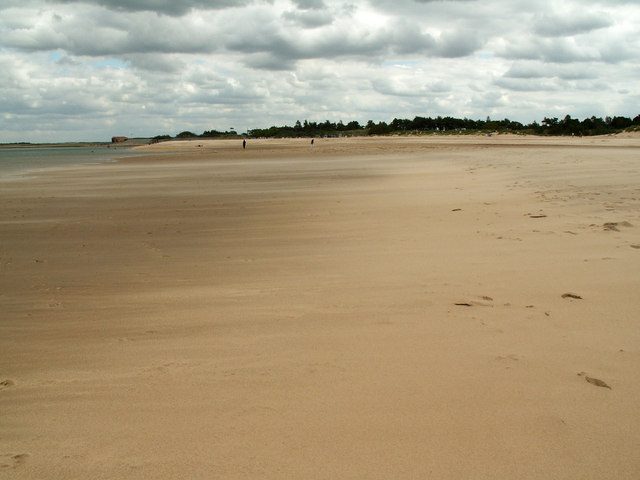
Holkham is my single favourite beach in England. At low tide it is an enormous sweep of pale sand, fringed by pine woods, with the sea so far out you have to commit to the walk to reach it. It featured at the end of Shakespeare in Love and you will understand why the moment you step out of the trees. It is part of one of the largest National Nature Reserves in the country, managed by Natural England in partnership with the Holkham Estate, so do not expect ice cream vans on the sand itself.
Park at Lady Anne’s Drive, which has over 300 spaces and is open year-round; bring a card as it is paid parking. Dogs are welcome all year, though there is an on-lead policy in the most sensitive areas from 1 April to 31 August to protect ground-nesting birds, leaving most of the beach open to off-lead walking under close control.
Bamburgh and Embleton Bay, Northumberland
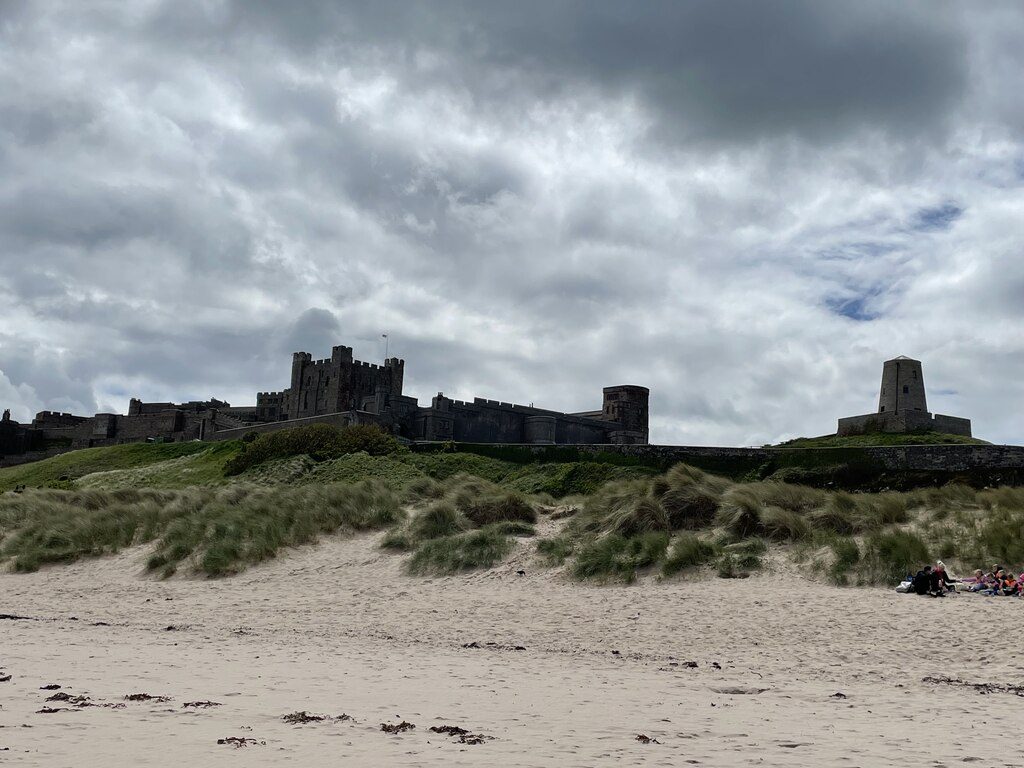
The Northumberland coast is England’s most underrated stretch of sand, and Bamburgh is its showpiece. The beach runs for miles beneath one of the most spectacular castles in the country, and on a clear day you can see the Farne Islands offshore. It rarely feels crowded even in August, partly because there is simply so much of it. Parking is in the village (budget around £6 to £7 for the day as of 2026) or at the castle car park.
A few miles south, Embleton Bay is even quieter, with the ruined silhouette of Dunstanburgh Castle at one end. It was rated the highest English beach in a recent Tripadvisor analysis of top UK beaches, and for a wild walk over a family bucket-and-spade day, I would pick it over almost anywhere. You park at Embleton or Craster and walk in, which keeps the casual crowds away. Northumberland also has some of the cleanest bathing water in England, with the great majority of its beaches in the top water-quality category. My Northumberland coast guide covers the whole sequence of these beaches in detail.
Durdle Door and the Jurassic Coast, Dorset
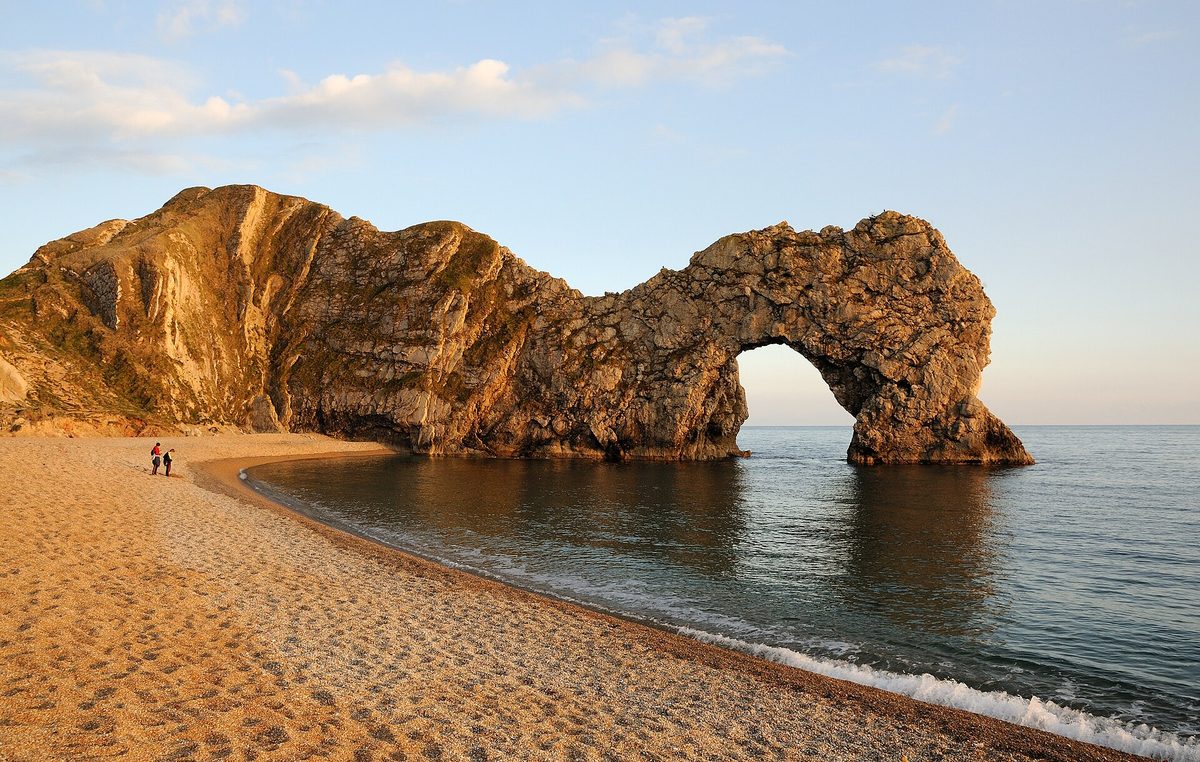
Durdle Door is the most photographed beach in England for good reason, a perfect limestone arch standing in the sea on the World Heritage Jurassic Coast. It is shingle rather than sand, and getting down is a genuine effort: a steep 15-minute path from the clifftop car park at Durdle Door Holiday Park, then around 143 steps to the beach. Wear proper shoes, not flip-flops. Access to the beach is free; you pay only for parking on the Lulworth Estate.
I would treat Durdle Door as a scenery-and-swim stop rather than a lounging-all-day beach. Combine it with the near-perfect circle of Lulworth Cove next door. For a proper plan along this coast, see my Jurassic Coast itinerary. And if cliffs are your thing, the chalk drama of the Seven Sisters cliffs guide covers Sussex’s answer to it.
Best Beaches for Swimming
Swimming in England is a different proposition from a Mediterranean dip. The water is cold most of the year, currents matter, and tides move fast. My first rule, always, is to swim on a beach with RNLI lifeguards on duty and to stay between the red and yellow flags, which mark the patrolled, checked zone. The RNLI lifeguards over 240 beaches around the UK each summer, so on the popular beaches you have cover.
Porthcurno, Cornwall
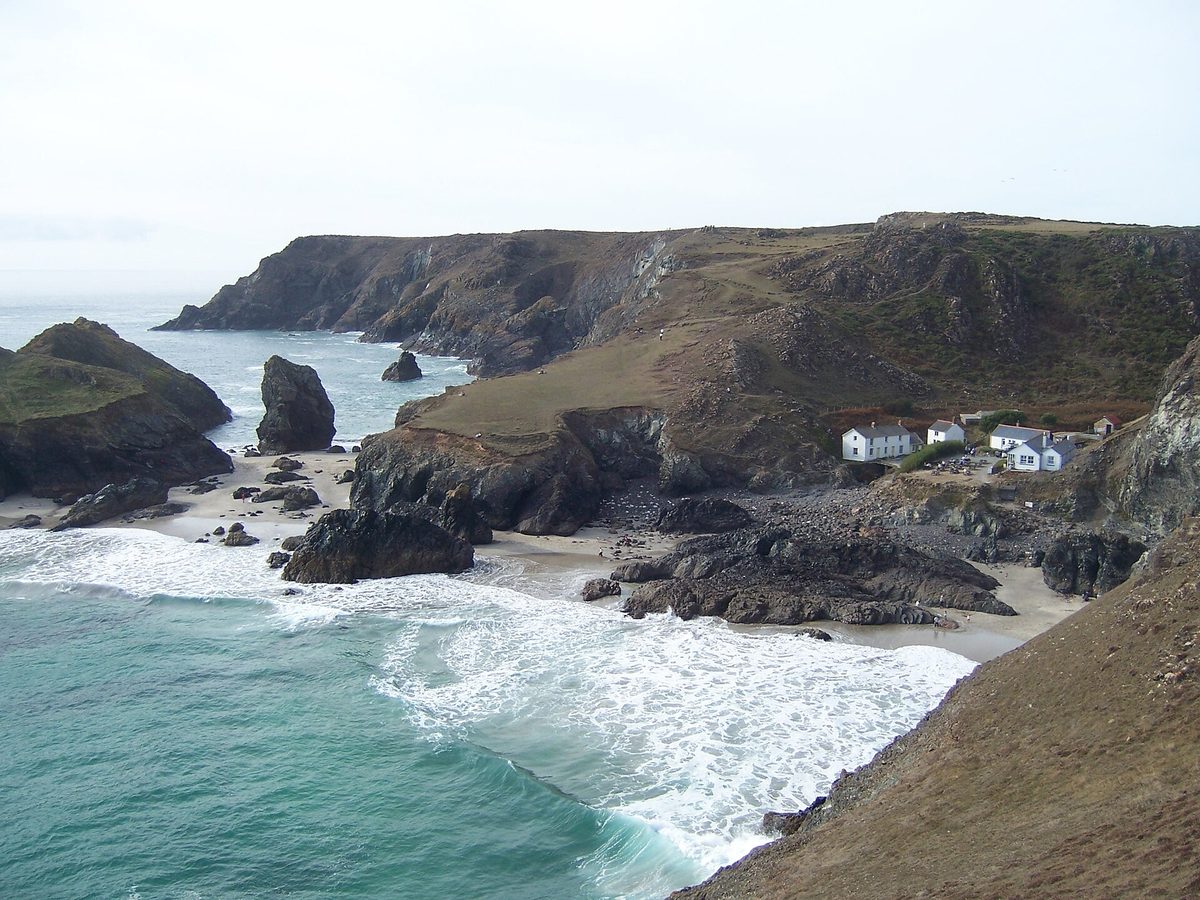
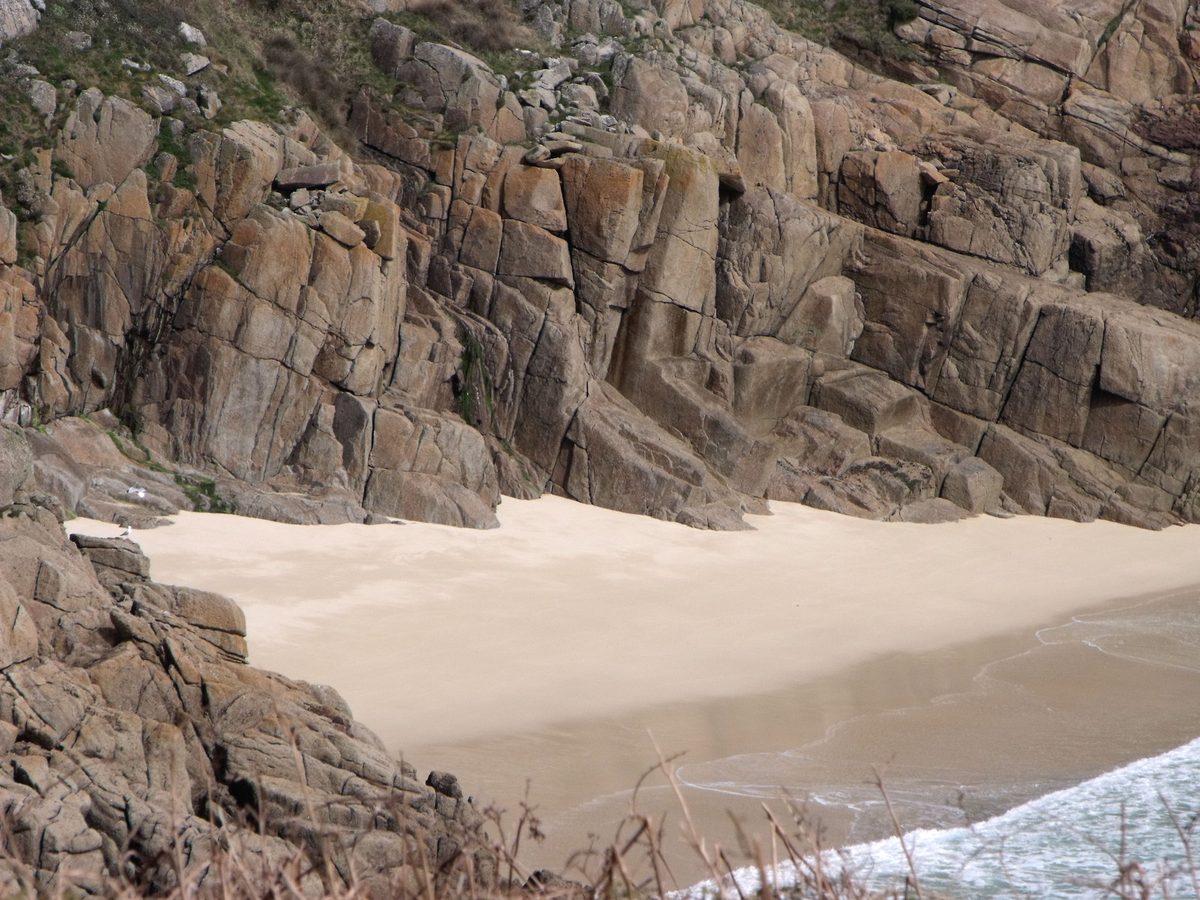
For clear water that genuinely looks Caribbean on a sunny day, Porthcurno in far west Cornwall is the one. White sand, turquoise shallows and dramatic cliffs, with the open-air Minack Theatre carved into the rock above. The water is relatively clean and sheltered, and it is one of the prettiest swims in the country. It gets very busy in August and parking is tight, so go early.
Treyarnon Bay and the north Cornwall coast
Treyarnon, on the north Cornwall coast near Padstow, is a crescent bay with clear water and a natural rock pool that is wonderful for a contained swim at low tide. The wider north Cornwall coast, Fistral, Watergate Bay, Constantine, is where England’s surf and sea-swimming culture really lives. For the full Cornwall picture I defer to my dedicated best beaches in Cornwall guide, which goes far deeper than I can here. And if you are torn between the two great southwest counties, the Cornwall vs Devon beaches comparison settles it.
A swimming-water reality check
Water quality is not uniform, and it pays to check. The Environment Agency monitors hundreds of designated bathing waters in England, and not all pass with flying colours; storm overflows after heavy rain can spoil even good beaches for a day or two. Before a swim trip I check the latest Environment Agency bathing-water classification for the specific beach and avoid swimming for a day after heavy rain. Blue Flag beaches are a safe default because excellent water quality is part of the standard.
Dog-Friendly Beaches
This is the question I get asked most, and the honest answer is: it depends on the date. Many English beaches restrict dogs in the warmer months, typically from 1 May to 30 September, under Public Spaces Protection Orders set by the local council. Breaking a ban can mean a fine, often around £100 on the spot and up to £1,000 if it goes further, so it is worth checking the council website or the beach signage before you set off.
The good news is that England has plenty of beaches that welcome dogs all year, and some of the best wild ones impose only light restrictions.
- Holkham, Norfolk is dog-friendly year-round, with only an on-lead request in the most sensitive zones during the nesting season. For a dog who likes to run, there is nowhere better.
- Woolacombe, Devon restricts dogs at the village end in season but stays open all year at the southern Putsborough end.
- Durdle Door, Dorset has no seasonal dog ban, so dogs are welcome year-round (mind the steep steps).
- Northumberland generally is excellent for dogs, with long, lightly regulated beaches at Embleton, Druridge Bay and beyond.
- Cornwall has the most year-round dog-friendly beaches of any English county, including spots like Sandymouth in the north.
My rule of thumb: in July and August, head to Norfolk, Northumberland or Cornwall if you are travelling with a dog, and avoid the resort beaches with summer bans. For the wider Norfolk picture, including which stretches are best for dogs, see my Norfolk coast guide.
Beaches You Can Reach Without a Car
You do not need to drive to reach the English seaside, and arriving by train is often the more relaxing way to do it. Here are the beaches I would happily reach car-free.
Cromer, Norfolk
Cromer is the easiest classic seaside day by train. It is roughly three hours from London with a change at Norwich, and the station is about a ten-minute walk from the beach and the famous pier. The beach is a mix of sand and shingle, backed by clifftop Victorian gardens, and the town is built for visitors on foot. Cromer crab for lunch is non-negotiable.
Whitby, Yorkshire
Whitby is one of my favourite car-free trips precisely because the journey is part of it. You take a train to Middlesbrough, then the Esk Valley Line, a slow, gorgeous trundle across the North York Moors, into Whitby station beside the harbour. West Cliff beach is a wide sandy stretch under the ruined abbey, with beach huts, donkey rides in season and good rockpools. It is a complete, walkable seaside town.
St Ives, Cornwall
The St Ives branch line is, for my money, the most beautiful short railway journey in England. You change at St Erth onto the branch and ride along the edge of the bay into town, with Porthminster beach below you. From the station, Porthmeor (a Blue Flag surf beach) and Porthminster are both a short walk, and you never need a car in St Ives, where parking is a nightmare anyway. It is the rare place where going car-free is genuinely the smarter choice.
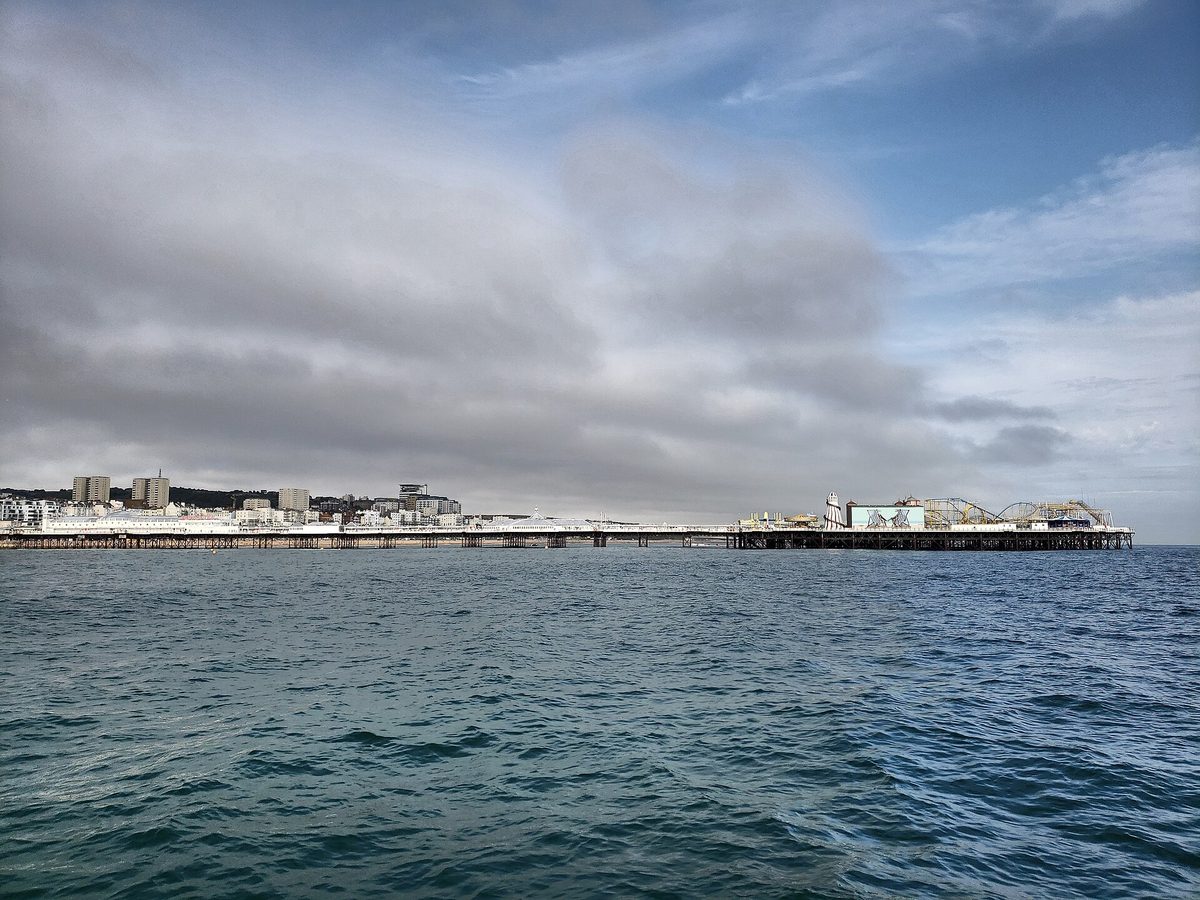
Brighton deserves a mention too: it is a fast direct train from London, and while its beach is pebbles rather than sand, the seafront, pier and lanes make it one of the best car-free coastal days in the south. My Brighton travel guide covers it properly.
Blue Flag and Award-Winning Beaches
If you want a beach where the water quality, safety and facilities have all been independently checked, look for the Blue Flag. As I mentioned, it is administered in this country by Keep Britain Tidy on behalf of the Foundation for Environmental Education, and the awards are refreshed and republished each spring before the season. A separate Seaside Award, also run by Keep Britain Tidy, covers a wider set of well-managed beaches that may not meet every Blue Flag criterion.
Good English Blue Flag beaches for 2026 are spread around the coast. North Norfolk alone had six beaches achieve Blue Flag status this year, including Cromer and Sheringham. The East Riding of Yorkshire flies them at Hornsea and Withernsea. Thanet in Kent achieved four Blue Flags and a dozen Seaside Awards across its bays. West Wittering and Bournemouth’s main stretches are regular holders too.
My honest take: the Blue Flag is a brilliant filter for a family swimming day, because it guarantees clean water, lifeguard cover and facilities. But do not let it limit you. The most beautiful beaches in England, Holkham, Embleton, the Isles of Scilly, are often too wild and undeveloped to ever fly one, and that wildness is exactly why they are special. Use the flag for safety, not as the definition of beauty.
The Showstoppers: Isles of Scilly and Beyond
If you want the single most beautiful beach experience in England and you have the time to reach it, go to the Isles of Scilly, 28 miles off Cornwall. You travel by ferry from Penzance or a small plane, then island-hop by boat. The reward is white sand and water the colour of the tropics: Great Bay on St Martin’s, recently voted among the best beaches in the UK; Pentle Bay and Appletree Bay on Tresco; and The Bar, a spit of pale sand linking St Agnes and Gugh at low tide.
It is not a casual day trip, you need at least a couple of nights, but no English beach matches it for sheer beauty. I think of it as England’s answer to the Maldives, with a fleece on. It belongs on any serious list of the most beautiful places in England.
Best Beaches by Region
A quick orientation if you are planning around where you already are:
- Northeast (Northumberland): Bamburgh, Embleton Bay, Druridge Bay. Wild, vast, superb water quality.
- Yorkshire: Whitby, Scarborough, Robin Hood’s Bay. Classic seaside plus fossils and dramatic cliffs.
- East Anglia (Norfolk): Holkham, Wells-next-the-Sea, Cromer, Sheringham. Big sand, big skies, Blue Flags and easy rail access.
- Southeast (Sussex and Kent): West Wittering, Camber Sands, Brighton, the Thanet bays. Family sands and city seafronts.
- South (Dorset / Jurassic Coast): Bournemouth, Durdle Door, Lulworth Cove, Studland. Warmth, scenery and World Heritage geology.
- Southwest (Devon and Cornwall): Woolacombe, Croyde, Fistral, Porthcurno, St Ives, plus the Isles of Scilly. England’s surf and clear-water heartland.
- Northwest (Lancashire): Blackpool, Formby, St Annes. Traditional resort fun at Blackpool and pine-backed dunes with red squirrels at Formby.
For the wider context of these landscapes, and the national parks behind many of the best coastal walks, see England national parks and hiking.
When to Go
England’s beaches are at their best from late June to early September, when the water has warmed a little (relatively speaking) and lifeguards are on duty. July and August are warmest but busiest; if you can travel in June or September you get most of the warmth with far fewer people. For the detail of what to expect month by month, I lean on my England weather by month breakdown and the broader best time to visit England guide.
If you are specifically planning a sunny coastal trip, England in summer covers the season in depth, and families will want England with kids for the practical side of travelling with children. For where to base yourself across the country, where to stay in England and the full England travel guide tie it all together.
Final Thoughts
If you pushed me for one answer, here it is. For a wild walk that clears your head, I would drive to Holkham or Embleton Bay every time and walk until I could not see anyone. For a family day with shallow water and an ice cream within reach, West Wittering or Woolacombe. For water that makes you gasp at how beautiful England can be, save up the time and get yourself to the Isles of Scilly, or settle for Porthcurno if you cannot.
The thing I have learned is that the best English beach is the one that fits the day you want, and that the weather matters less than you think. Some of my happiest beach memories are grey and windswept, chips in one hand, the dog tearing along an empty tideline. Pack a flask, check the tide, and pick the beach that suits your trip, not the one that tops a list. England’s coast rewards people who show up, whatever the sky is doing.
Research and Source Notes
In researching this guide I checked the following official and primary sources, all consulted in 2026:
- Keep Britain Tidy for Blue Flag and Seaside Award status, which it administers in Britain on behalf of the Foundation for Environmental Education (which publishes its updated award lists each May), plus regional council announcements from North Norfolk District Council, East Riding of Yorkshire Council and Thanet for their 2026 award lists.
- The RNLI for lifeguard patrol coverage and seasons (over 240 lifeguarded beaches across the UK), and its safety guidance on swimming between the red and yellow flags.
- The Environment Agency for designated bathing-water classifications and water-quality monitoring.
- The Holkham Estate and Natural England for Holkham Beach access, parking at Lady Anne’s Drive, and the seasonal on-lead dog policy.
- The Lulworth Estate / Visit Dorset for Durdle Door access, the path and steps, and parking.
- The West Wittering Estate for Blue Flag status, lifeguard season and dog restrictions.
- Visit Northumberland and local council pages for Bamburgh and Embleton Bay parking and access.
- Local council Public Spaces Protection Orders for seasonal dog restrictions (typically 1 May to 30 September) and associated fines.
Prices, parking charges and seasonal dates change year to year and beach to beach. I have hedged figures as “around” and “as of 2026”; always confirm parking costs, lifeguard dates and dog rules on the relevant council or estate website before you travel.
Photo Credits
- The best beaches in England include Bamburgh in Northumberland, with its vast sands beneath the medieval castle — Photo: Andrew Shannon / CC BY-SA 2.0 via Wikimedia Commons. Source
- Wide sands and pine woods at Holkham, one of the best sandy beaches in England for wild walks — Photo: Phil Champion / CC BY-SA 2.0 via Wikimedia Commons. Source
- Turquoise water and white sand at Porthcurno, among the best beaches in England for swimming — Photo: nick macneill / CC BY-SA 2.0 via Wikimedia Commons. Source
- The harbour and sands at St Ives, one of the best beaches in England reachable by train — Photo: Stephen Mills / CC BY-SA 2.0 via Wikimedia Commons. Source
- The limestone arch at Durdle Door on the Jurassic Coast, among the most scenic beaches in England — Photo: Saffron Blaze / CC BY-SA 3.0 via Wikimedia Commons. Source
Frequently asked questions
What is the number one beach in England?
There is no single official answer, as it depends on the criteria. Tripadvisor's Travellers' Choice awards have voted Bournemouth the UK's top beach for its seven miles of sand and warm microclimate. For wild beauty, Embleton Bay in Northumberland rates as the highest English beach in several analyses. My personal pick is Holkham in Norfolk for its sheer scale.
Which English beaches have the cleanest water?
Northumberland consistently has England's cleanest bathing water, with the great majority of its beaches in the top Environment Agency category. Blue Flag beaches, administered by Keep Britain Tidy, also guarantee excellent water quality. Always check the current Environment Agency bathing-water classification for a specific beach, and avoid swimming for about 24 hours after heavy rain.
Are dogs allowed on English beaches?
Many beaches allow dogs year-round, but resort beaches often ban them from 1 May to 30 September under Public Spaces Protection Orders set by local councils. Fines can reach £1,000, with on-the-spot penalties around £100. For year-round freedom, head to Holkham, most of Northumberland, or Cornwall, which has the most dog-friendly beaches of any English county.
Which English beaches have the whitest sand?
The Isles of Scilly, 28 miles off Cornwall, have genuinely white sand and turquoise water at beaches like Great Bay, Pentle Bay and Appletree Bay. On the mainland, Porthcurno in far west Cornwall comes closest, with pale sand and clear shallows. These beaches need more effort to reach, which is part of why they stay so pristine.
Can you reach English beaches by train?
Yes, more than people expect. Cromer in Norfolk is about three hours from London with one change, then a ten-minute walk. Whitby in Yorkshire is reached via the scenic Esk Valley Line. St Ives in Cornwall has a beautiful branch line, and Brighton and Bournemouth both have fast, direct services. Going car-free is often the more relaxing option, especially where parking is difficult.
When is the best time to visit English beaches?
Late June to early September is the sweet spot, with the warmest water and RNLI lifeguards on duty. July and August are warmest but most crowded. June and September give you near-peak warmth with far fewer people, which is when I prefer to go. Always check tide times before you visit, as English tides move fast and far.