Sheet 23 · Cornwall and Devon Travel Guide · 20 min read
Best Beaches in Cornwall
The best beaches in Cornwall, sorted by who you are: families, surfers, scenic coves and dogs. Honest notes on tides, flags, parking and crowds for 2026.
 Sheet 23
Contents 9 sections
I have been swimming, surfing badly, and burning sausages on Cornish beaches for the better part of twenty years, and I still get a little jolt every time I crest the dune at Gwithian and see that three miles of gold open up. When it comes to the best beaches in Cornwall, there is nowhere else in England quite like this stretch of coast.
But “best” is a slippery word here. The beach that makes a four-year-old shriek with joy is not the one a longboarder drives two hours for, and the cove that looks like the Aegean on Instagram might be a tide-trap that gets cut off and has no toilet for a mile. So I have not written you a flat top-ten. I have sorted Cornwall’s coast by who you actually are and what you need.
The honest short version: the best beaches in Cornwall are Gwithian, Polzeath, Daymer Bay and Summerleaze for families; Fistral, Watergate Bay, Constantine and Sennen for surf; Kynance Cove, Porthcurno, Pedn Vounder and Lantic Bay for jaw-dropping scenery; and a long list of dog-friendly sands once you learn the summer ban rules. Below I tell you which get rammed in August, what parking really costs, and how not to get caught out by the tide.
This guide is part of our wider Cornwall and Devon travel guide, and it sticks strictly to beaches. If you want to weave these into a route, see the 5 day Cornwall itinerary; if you want towns, gardens and harbours too, that lives over in best places to visit in Cornwall.
Quick Answer: the best beaches in Cornwall by traveller type
If you only read one paragraph: the best beaches in Cornwall depend entirely on your crew. Families want Gwithian, Polzeath, Daymer Bay and Summerleaze (Bude) for safe, sandy, lifeguarded space. Surfers head to Fistral, Watergate Bay, Constantine Bay and Sennen Cove. For sheer scenery, nothing beats Kynance Cove, Porthcurno, Pedn Vounder and Lantic Bay. Dog owners have huge year-round freedom outside the summer bans. Below, every pick comes with tide, flag, parking and crowd notes.
A quick orientation, because it answers the question everyone asks. The north coast (Newquay, Bude, the Camel estuary, St Ives) faces the Atlantic head-on: big sandy beaches, surf, dunes, drama. The south coast (the Lizard, the Roseland, Falmouth, Looe) is gentler, more sheltered, better for calm swimming and pottering with little ones. You will hear “north for surf, south for swimming” repeated forever. It is roughly true, but I will give you the exceptions.
At a glance: Cornwall’s best beaches compared
| Beach | Coast | Best for | Lifeguarded (summer)? | Dogs? |
|---|---|---|---|---|
| Gwithian Towans | North | Families, dunes, rockpools | Yes | Year-round (some seasonal limits) |
| Polzeath | North | Families, learning to surf | Yes | Summer restrictions 10am–6pm |
| Daymer Bay | North | Toddlers, calm swimming | No | Year-round |
| Summerleaze (Bude) | North | Families, sea pool | Yes | Summer restrictions 10am–6pm |
| Fistral | North | Serious surf | Yes | Summer restrictions |
| Watergate Bay | North | All-level surf, space | Yes | Year-round |
| Constantine Bay | North | Experienced surf | Yes | Summer restrictions |
| Sennen Cove | West | Surf, quieter, beauty | Yes | Summer restrictions |
| Kynance Cove | South (Lizard) | Scenery, photos | No | Year-round (on lead) |
| Porthcurno | West/South | Scenery, swimming | Yes | Summer restrictions |
| Pedn Vounder | South | Scenery, seclusion | No | Year-round |
| Lantic Bay | South | Scenery, solitude | No | Year-round |
| Perranporth | North | Families, vast sand | Yes (long season) | Summer restrictions |
| Gyllyngvase | South | Families, town beach | Yes | Summer restrictions |
| Porthminster (St Ives) | West | Calm family swimming | Yes | Summer restrictions |
Dog rules are summarised; I cover the real detail further down. Always trust the sign at the top of the beach over any guide, including this one.
The best Cornwall beaches for families
When people ask me for the best Cornwall beaches for families, I am really listening for three things: is there forgiving, gently shelving sand; is it lifeguarded; and can you actually park and reach a toilet without a route march. These four nail all three.
Gwithian Towans
This is my desert-island family pick. At low tide Gwithian, Godrevy and the Towans merge into a colossal sweep of firm gold sand under big dunes, with Godrevy lighthouse out on the point (yes, the one that inspired Virginia Woolf). There is endless room to spread out even in August, brilliant rockpools at the Godrevy end, and RNLI lifeguards in season.
The catch is the tide does the heavy lifting here: at high water the beach shrinks dramatically and the soft, dry sand near the dunes is a long way from the sea. Aim for a falling or low tide. Parking is mostly National Trust at the Godrevy end (around £6–8 for the day as of 2026, free for members) plus the Gwithian car parks; both fill by mid-morning on hot days, so arrive before 10am.
Polzeath
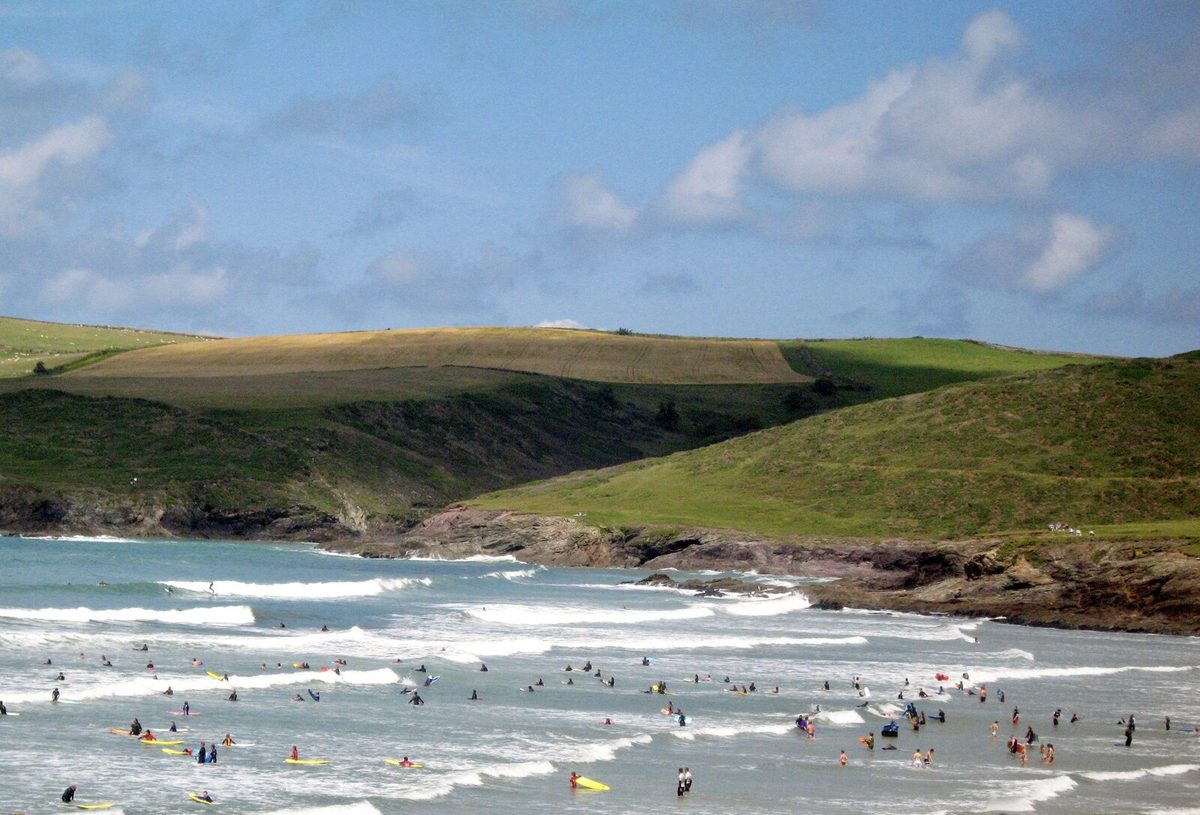
Polzeath is the classic family-with-bodyboards beach, a wide Blue Flag bay near Rock and Wadebridge with gentle, rolling waves that are perfect for first wobbly attempts at standing up. It is lifeguarded in peak season, there are surf schools right on the sand, and cafés and loos are steps away.
It is also no secret. In the school holidays Polzeath gets genuinely busy and the cliff-top and beach car parks (around £8–12 for the day as of 2026) charge accordingly. The sand floods at high tide, so check times; mid-tide is the sweet spot for the kids’ waves.
Daymer Bay
If Polzeath is the party, Daymer Bay around the headland is its calm cousin. Sheltered by Brea Hill inside the Camel estuary, the water is noticeably flatter and warmer-feeling, which makes it superb for toddlers and nervous swimmers. There are rockpools, dunes behind, and the walk to St Enodoc church is a lovely add-on.
Two honest caveats. There are no lifeguards here, and the estuary has currents on the bigger tides, so keep little ones in the shallows and do not treat it like a pool. There is a National Trust car park (around £6–8 as of 2026); facilities are limited, so use the loo before you arrive.
Summerleaze, Bude
For sheer convenience Summerleaze is hard to beat. It sits right at the edge of Bude town, so the large car park, cafés, shops and toilets are a two-minute stroll from the sand. It is lifeguarded in season and has a wide, safe family beach. The trump card is the Bude Sea Pool tucked under the cliff, a semi-natural saltwater pool that gives you guaranteed calm swimming whatever the surf is doing.
It is one of Cornwall’s larger car parks (450-ish spaces) with council pricing, roughly £2–3 the first hour rising to around £10 for 24 hours as of 2026, so even on a hot day you usually find a space. Of all the family beaches here, this is the one I would pick with a buggy, a cool box and grandparents in tow.
A couple of bonus family beaches worth your time: Perranporth on the north coast unfurls into three miles of sand at low tide and has one of the longest RNLI lifeguard seasons in Cornwall; and on the south coast, Gyllyngvase in Falmouth and Porthminster in St Ives are sheltered, calm, town-side beaches that are ideal when the Atlantic is throwing a tantrum up north. If you are travelling with little ones generally, our England with kids guide has more on pacing and rainy-day backups.
The best surfing beaches in Cornwall
Cornwall is where most of Britain learns to surf, and the north and west coasts catch Atlantic swell that the south simply does not get. Here are the surfing beaches Cornwall locals actually use, sorted roughly from beginner-friendly to “know what you’re doing.”
Fistral, Newquay
Fistral is the headline act, the beach that hosts international competitions and produces the most consistent, powerful waves in Cornwall thanks to its exposed, deep-water position. There is a famous reef break (Cribbar) for experts and plenty of beach-break peaks for everyone else, plus a row of surf schools and hire shops behind the sand.
Be realistic about it. Fistral is busy, the waves have real punch, and there are rip currents, so beginners should book a lesson, stick between the red-and-yellow flags, and treat the lifeguards’ advice as gospel. Parking is right behind the beach (around £6–10 a day as of 2026) and goes fast on a good swell.
Watergate Bay
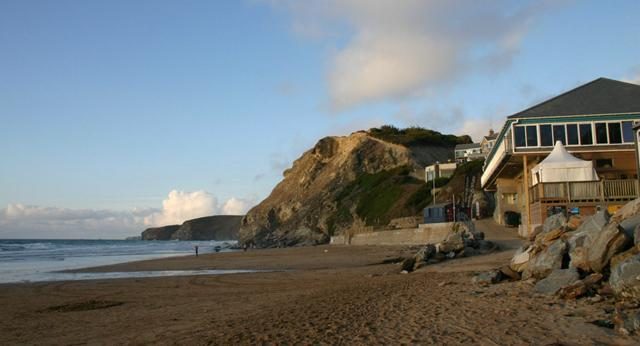
If I am taking a complete beginner surfing, I quietly prefer Watergate Bay just up the coast. Two miles of sand at low tide means the crowd spreads out, the multiple peaks give everyone room, and its geography makes it work in a wide range of conditions. It is lifeguarded in season and well set up with a surf school, hire, and a cluster of cafés and the famous beach restaurant above.
The thing to respect is the tide: at high water that vast beach shrinks to a thin strip under the cliffs, so check times before you commit to a long session. Parking sits above the bay (around £6–10 a day as of 2026).
Constantine Bay
Constantine, near Padstow, is the locals’ pick and a step up in seriousness. It is a beautiful sandy beach that picks up plenty of swell and has more committing, hollower waves than Polzeath next door, which is exactly why experienced surfers love it. It is lifeguarded in peak season.
This is not a beginner beach. There are strong rip currents and the breaks can be heavy, so it rewards people who already read the water. There is no big commercial strip here, which keeps it feeling wilder; parking is limited (around £6–8 as of 2026) and the village asks you not to clog the lanes.
Sennen Cove
Down near Land’s End, Sennen is the most beautiful surf beach on this list and usually quieter than the Newquay crowd. It catches consistent Atlantic swell, has a mix of zones suiting everyone from improvers to experts, and a surf school and hire operate in summer. The white sand and turquoise water on a sunny day genuinely look tropical.
Because it is so far west it can be working when other spots are flat, but that same exposure brings rips and currents, so the lifeguard flags matter. Parking is in the cove (around £5–8 as of 2026) and the approach lane is narrow.
If surfing is the whole point of your trip, you may also want to look at how the beaches link up for a drive in our Cornwall road trip itinerary, and how England compares more broadly in England coast and beaches.
Scenery and secret coves: the most beautiful beaches in Cornwall
Some Cornish beaches you go to for the kids; these you go to for your soul (and, let us be honest, your camera roll). They are less about facilities and more about that gasp when you come over the cliff. They also tend to need more care: steep paths, fewer or no lifeguards, and tides that genuinely matter.
Kynance Cove
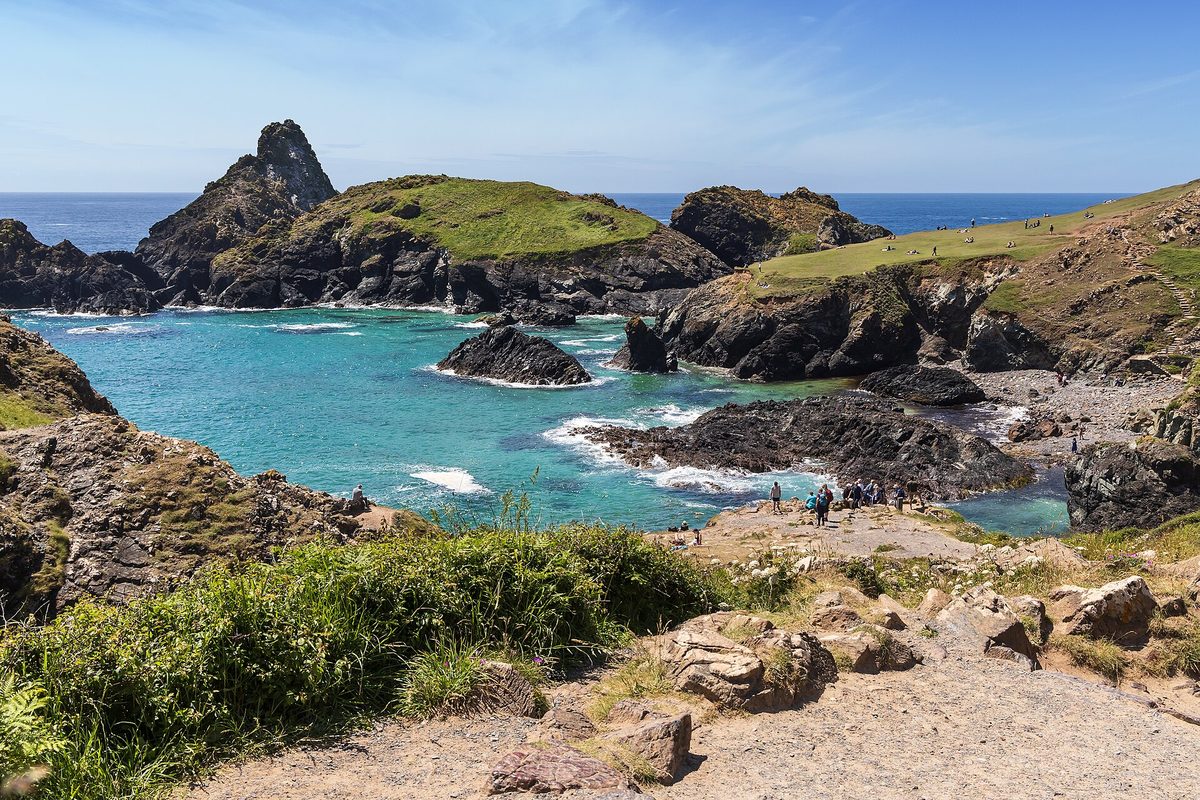
Kynance, on the Lizard, is the one that ends up on postcards: serpentine rock stacks rising out of white sand and impossibly turquoise water. At low tide you can wander between the islands and caves; at high tide the sand all but vanishes, so timing is everything. There is a lovely seasonal café down on the beach.
It is not lifeguarded, the access is a steep walk down (and a puff back up) from the National Trust car park, and dogs must be on a lead. Parking is National Trust and pay-and-display, roughly £5 for four hours rising to around £10 for the day as of 2026 (free for members), and crucially the mobile signal is poor, so download a parking app before you arrive or bring coins. Go at low tide, ideally early or late in the day, and it is sublime.
Porthcurno
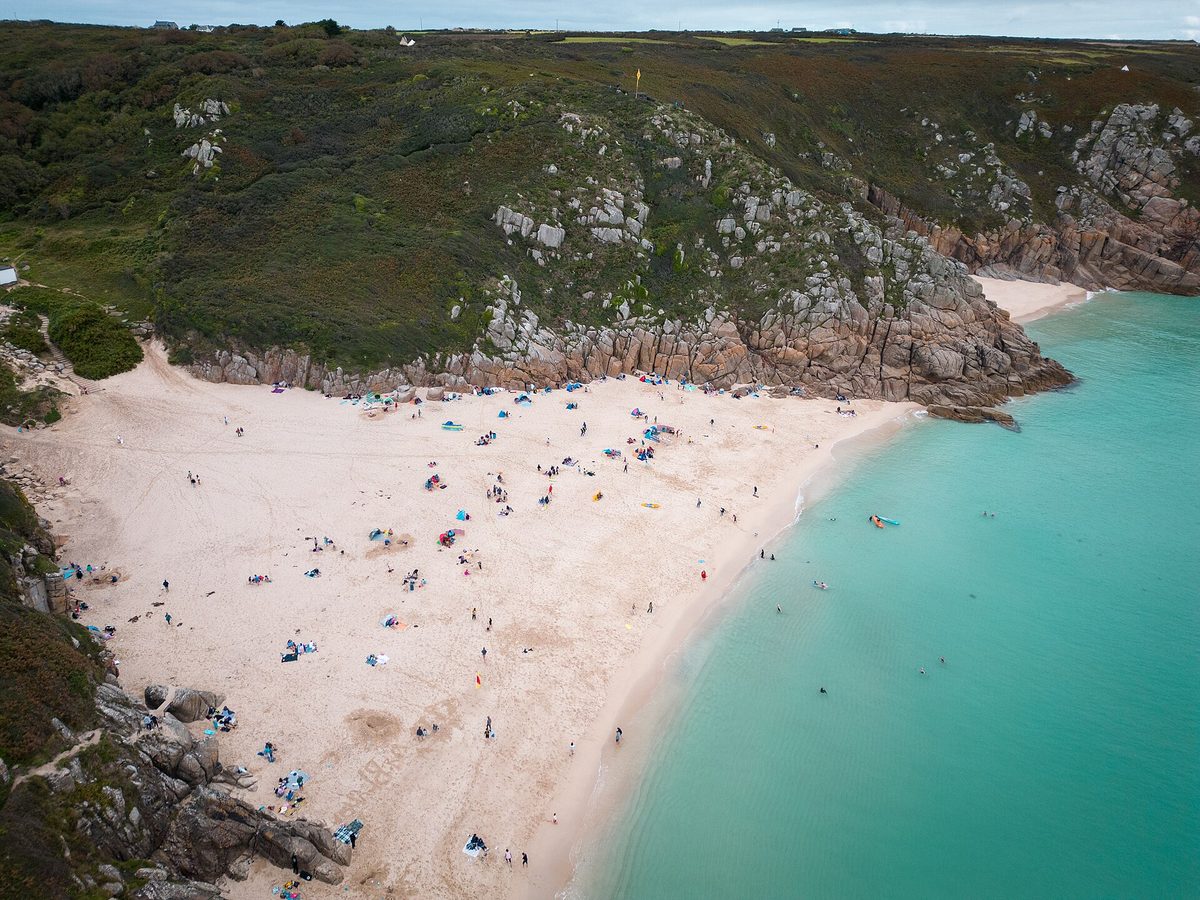
Porthcurno, near Land’s End, pairs soft near-white sand with vivid blue-green water and dramatic cliffs, with the open-air Minack Theatre carved into the rock above. It is, unusually for a scenic beach, lifeguarded in peak season and good for swimming on a calm day, which makes it a rare crowd-pleaser that also stuns. Combine it with a Minack show and it is one of the great Cornish days.
It is popular and the car park (around £5–8 as of 2026) fills early in summer. As ever, the lower beach is bigger at low tide.
Pedn Vounder
Just along from Porthcurno, Pedn Vounder is the wild, sandbar-and-lagoon beach that looks like it was airlifted from the Caribbean. It is breathtaking, and it comes with the strongest health warnings on this page. The descent is a steep, scrambly cliff path that is not for young children, the unsteady, or anyone in flip-flops; and it is heavily tidal, so a rising tide can cut off the sand fast.
There are no lifeguards and no facilities. Go only around low tide, check the times before you set off, watch the water the whole time you are down there, and leave well before the tide turns. It is also a long-standing unofficial naturist spot, so do not be surprised. Treated with respect, it is unforgettable.
Lantic Bay
On the quieter south coast near Fowey, Lantic Bay is my pick for when I want beauty and solitude. A steep path drops from the cliff-top to a curve of pale sand and clear water that on the right day looks Mediterranean, and because the walk down (and back up) puts people off, it never gets the Kynance crowds. It is part of the same gorgeous stretch as the photogenic villages around Polruan.
No lifeguards, limited facilities, and a proper climb back to the National Trust car park at Pencarrow Head (visitor reports put all-day parking around £8 as of 2026). Bring water and decent shoes and you get one of Cornwall’s loveliest beaches more or less to yourself.
For more of this kind of thing across the country, our hidden gems in England and most beautiful villages in England guides are full of cliff-path-and-cove combinations.
Dog-friendly beaches in Cornwall (and the summer ban, explained)
Cornwall is a brilliant place to bring a dog, but the question of where and when needs a clear head, because the summer dog bans trip up a lot of visitors. Here is how it actually works.
For most of the year, the vast majority of Cornish beaches are open to dogs. The complication is the warm months. Many popular beaches operate a seasonal dog ban, and there are roughly two tiers:
- On a lot of beaches the ban runs 1 July to 31 August, typically only between 10am and 6pm.
- On the busiest Blue Flag and award beaches the ban is wider, often around 15 May (or Easter) to roughly 30 September/October, again usually 10am–6pm.
The hedge matters: exact dates vary by parish and beach and do change, so the gospel is the sign at the top of the beach. The practical upshot is wonderful, though: even on a “banned” beach you can usually walk your dog early in the morning or after 6pm in the evening, which in midsummer is the nicest time to be there anyway. Outside July and August, most beaches are wide open.
Some genuinely dog-friendly beaches Cornwall owners love year-round:
- Gwithian / Godrevy is huge and welcoming for dogs out of the core ban window, with all that low-tide space to run.
- Daymer Bay is dog-friendly year-round and the calm estuary water is great for paddling pups.
- Lantic Bay and Pedn Vounder, being remote and unlifeguarded, have no ban; just mind the cliff paths.
- Kynance Cove allows dogs year-round but asks for them on a lead.
- Several Lizard and Roseland coves (the likes of Gorran Haven and Kennack Sands) are dog-friendly all year.
A few sensible rules wherever you go: keep dogs on a lead near nesting birds and seals (Cornwall has both), clean up, carry water, and remember the sand gets blistering hot in summer. If you are car-free, a few dog-friendly beaches are reachable by bus or train, which I touch on in Cornwall without a car.
Accessibility, parking and lifeguards: the practical stuff
This is the section the glossy lists skip, and it is the one that makes or breaks a beach day.
Lifeguards. The RNLI patrols a large number of Cornish beaches (around 28 in a normal year, with more opening for the peak from mid-to-late July), generally from late spring through to autumn, roughly 10am to 6pm. Patrolled beaches in any given season include the big hitters: Fistral, Perranporth, Watergate Bay, Sennen, Polzeath, Porthcurno, Gwithian and more. If you only swim at lifeguarded beaches, between the flags, you have removed most of the real risk in one move.
Parking, honestly. Beach parking is where Cornwall quietly empties your wallet. Expect roughly £6–12 for a day at a busy beach in season as of 2026, with National Trust car parks (Kynance, Daymer, Lantic and many more) free to members and typically £5–10 for non-members. Town beaches like Summerleaze run on council tariffs. Two hard-won tips: download the relevant parking app (and a backup) before you go, because signal at cliff-top car parks is often non-existent; and arrive before 10am on any sunny day in July or August or you will be circling. Coins still help at older machines.
Accessibility. It varies enormously. Town beaches such as Summerleaze, Gyllyngvase and Porthminster tend to have closer parking, firmer access and nearby facilities, and some Cornish beaches offer beach wheelchairs in season (worth phoning ahead to book). At the other end, scenic coves like Pedn Vounder and Lantic Bay involve steep, rough cliff paths that are not suitable for wheelchairs, buggies or anyone unsteady on their feet. Access Cornwall and Visit Cornwall list specific facilities beach by beach, and I would check before driving an hour with someone who needs step-free access.
For where to base yourself near the best stretches, see where to stay in Cornwall, and for the wider trip our England travel tips and England packing list cover the rest.
Beach safety in Cornwall: tides, flags and rip currents
I would not be doing my job if I sent you off without this, because Cornwall’s beauty and its danger come from the same Atlantic. Every year the RNLI rescues people here, often strong swimmers caught out by something they did not see.
Read the tide before you go
Tides are the single most underrated hazard in Cornwall. The range is large, beaches that are vast at low water can shrink to nothing at high tide, and a few coves (Pedn Vounder being the obvious one) genuinely cut people off. Always check the tide times for your specific beach, plan to be on a falling or low tide where space matters, and never settle at the base of a cliff on a rising tide. Free tide tables are everywhere online; look up the exact beach, not just “Cornwall.”
Know the flag system
The flags are simple and they save lives:
- Red and yellow flags: the lifeguarded zone. This is the safest place to swim, bodyboard and paddle, and it is the area lifeguards watch most closely. Stay between them.
- Black and white chequered flags: the zone for surfboards and other craft. Keep swimmers out of it.
- Red flag: danger, do not enter the water. The beach or sea is unsafe; take it seriously even if it looks calm.
- No flags: no lifeguard cover, so judge conditions yourself and be extra cautious.
Respect rip currents
Rips are strong, narrow channels of water flowing back out to sea, and they are the most common reason people get into trouble on Cornish surf beaches. You cannot out-swim a strong rip. If you are caught in one, the advice is the same one the RNLI repeats every summer: do not panic and do not fight it. Float on your back with your ears in the water to conserve energy, raise a hand and shout for help, and let the current ease before swimming back in, parallel to the beach, towards the breaking waves. The best defence by far is to swim at a lifeguarded beach, between the red and yellow flags. The RNLI’s mantra if you fall in unexpectedly is Float to Live: lean back, relax, and float until the cold-water gasp passes.
A few more sensible habits: check the weather and read the hazard signs at the top of the beach, never swim alone or after drinking, keep a close eye on children near the water, and be wary of inflatables on windy offshore days, which can carry kids out to sea fast. None of this should put you off; it just keeps a great day great.
Final Thoughts
If you made me choose, my heart belongs to two beaches at opposite ends of the spectrum. For a big, gloriously ordinary family day, Gwithian with the tide out and a barbecue in the dunes is as good as England gets. And for that lump-in-the-throat moment, give me Lantic Bay on a clear September morning with the path to myself and the water glassy below. Both, in their way, are the best beaches in Cornwall.
My real advice, though, is to stop chasing the single “best.” Cornwall’s gift is variety crammed into a small county: surf and serenity, family sand and secret cove, all within an hour’s drive. Pick the beach that suits your day, check the tide and the flags before you go, get there early to park, and you will have the kind of day people drive five hours for.
Then build the rest of the trip around the water. A few of these beaches strung together with a harbour town and a clifftop walk is, genuinely, one of the great holidays in the England travel guide. See you on the sand.
Research and Source Notes
This guide draws on a mix of official safety and tourism bodies plus on-the-ground knowledge, last reviewed June 2026. For beach safety, the flag system and rip-current advice, the definitive source is the RNLI (rnli.org), whose lifeguard listings and “Float to Live” guidance underpin the safety section. For water quality and which beaches earn recognition, see the Marine Conservation Society / Good Beach Guide and the Blue Flag Awards (Keep Britain Tidy), which I would check for the current year before swimming. Visit Cornwall (visitcornwall.com) and Access Cornwall (accesscornwall.org.uk) list beach-by-beach facilities, accessibility and bus links. Parking prices and free member access were cross-checked against National Trust car park information (nationaltrust.org.uk) and local council tariffs; all prices are hedged as approximate and as of 2026. Dog-ban dates are summarised from Cornwall beach and parish information and should always be confirmed against the signage at each beach, as parishes set and revise their own restrictions. Tide times throughout should be checked against a current tide table for the specific beach on the day you visit.
Photo Credits
- Turquoise water and white sand at Kynance Cove, one of the best beaches in Cornwall — Photo: Unukorno / CC BY 4.0 via Wikimedia Commons. Source
- Wide sandy Polzeath beach with families and small surf, one of the best Cornwall beaches for families — Photo: Marika Reinholds / CC BY-SA 2.0 via Wikimedia Commons. Source
- White sand and turquoise water at Porthcurno beach beneath dramatic cliffs in Cornwall — Photo: Tom Page / CC BY-SA 2.0 via Wikimedia Commons. Source
- Surfers and wide sand at Watergate Bay on the north coast of Cornwall — Photo: Jblackmore at English Wikipedia (CC0) via Wikimedia Commons. Source
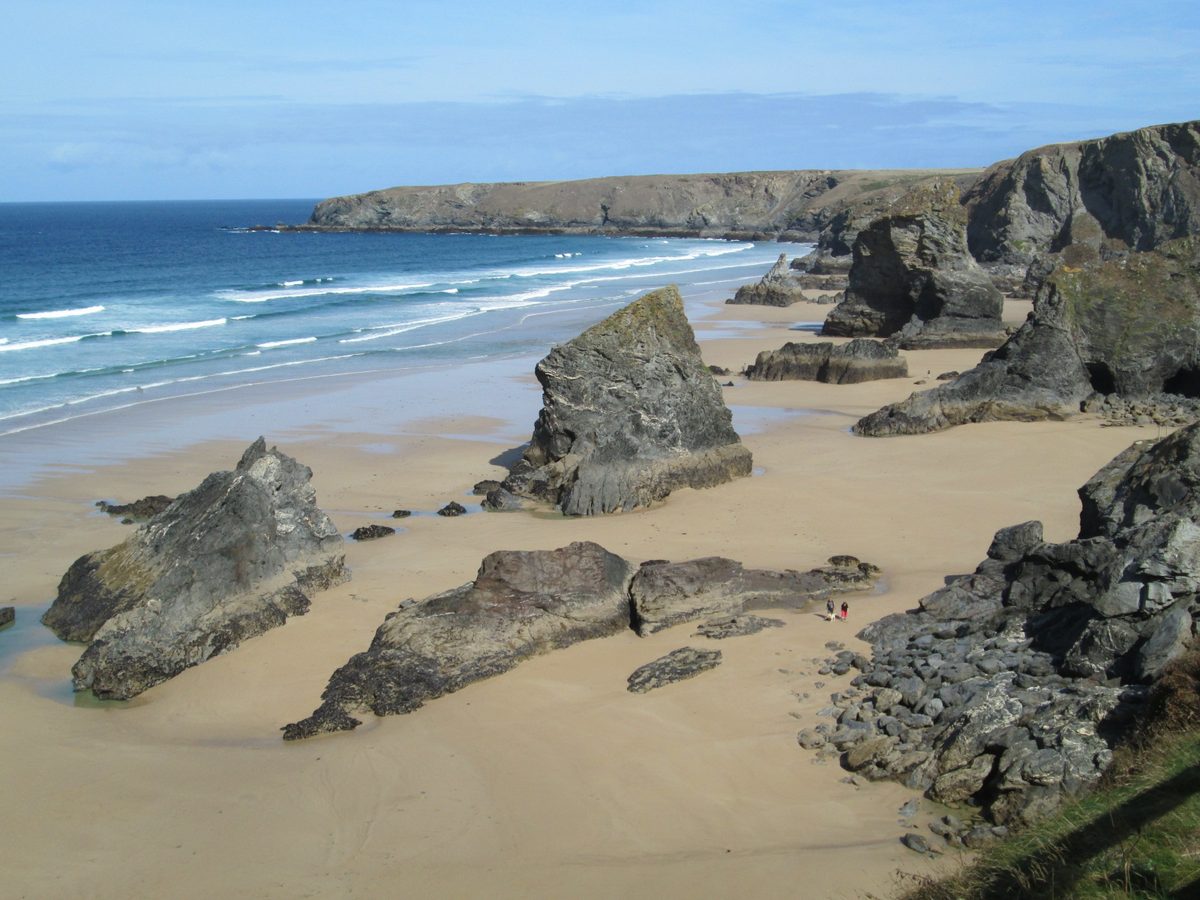
- Dramatic sea stacks and golden sand at Bedruthan Steps on the Cornwall coast — Photo: David Weston / CC BY-SA 2.0 via Wikimedia Commons. Source
Frequently asked questions
Which part of Cornwall has the best beaches?
It depends what you want. The north coast (Newquay, Bude, the Camel estuary, St Ives) has the big, dramatic, surf-friendly sands like Fistral, Gwithian and Perranporth. The south coast and the Lizard are gentler and better for calm swimming, with scenic coves like Kynance, Lantic Bay and the Roseland beaches. For pure scenery, the far west around Porthcurno is hard to beat.
Are Cornwall beaches dog friendly?
Yes, very, for most of the year. The catch is the summer dog ban: many beaches bar dogs roughly 10am–6pm from 1 July to 31 August, and the busiest award beaches extend that from around mid-May to late September. Even then you can usually walk early or after 6pm, and remote beaches like Lantic Bay and Daymer Bay welcome dogs year-round. Always check the sign at the beach.
Can you swim in the sea in Cornwall?
Absolutely, and plenty of people do all summer. Stick to lifeguarded beaches and swim between the red and yellow flags, check the tide and flags first, and be aware the water is bracing rather than warm even in August. Sheltered south-coast and town beaches like Gyllyngvase, Porthminster, Carbis Bay and Daymer Bay are the calmest for a relaxed swim; the Bude Sea Pool is a safe bet whatever the surf is doing.
What are the best sandy beaches in Cornwall?
For vast, golden, low-tide sand it is hard to beat Gwithian Towans, Perranporth and Watergate Bay on the north coast, and Sennen Cove out west. For softer, near-white sand in a scenic setting, Porthcurno and Pedn Vounder are stunning. Daymer Bay and Polzeath give you plenty of family-friendly sand with calmer water and easier access.
When is the best time to visit Cornwall's beaches?
July and August have the warmest sea and the fullest lifeguard cover, but also the biggest crowds, priciest parking and the dog bans in force. I prefer June and September: the water has warmed up, lifeguards are still patrolling the main beaches, dogs are mostly welcome again, and you can actually park. For the bigger picture, see our guide to the best time to visit England.
Are Cornwall's beaches good for surfing beginners?
Yes, Cornwall is where most of Britain learns. Watergate Bay and Polzeath are the friendliest for first-timers thanks to space, gentle peaks and on-the-sand surf schools. Fistral has lessons too but packs more punch. Wherever you start, book a lesson, hire a wetsuit, and stay between the flags; the Atlantic is fun but it does not forgive complacency.
1 note
Notes are closed on this sheet.