Sheet 35 · Cornwall and Devon Travel Guide · 18 min read
Jurassic Coast Travel Guide
A Jurassic Coast travel guide with the best sights, fossil-hunting tips, coast-path walks and base towns, from Durdle Door to Lyme Regis and Old Harry
 Sheet 35
Contents 8 sections
The first time I walked over the lip of the hill above Durdle Door, I actually stopped and laughed out loud. You climb a chalk path with the sea hidden behind a green shoulder of down, and then the whole thing just drops away beneath you: a perfect limestone arch standing in turquoise water, a scoop of pale beach, and 185 million years of rock stacked up on either side like the pages of a very old book. I’ve been back a dozen times since, and this Jurassic Coast travel guide is everything I wish I’d known on that first visit. It still gets me.
This is the Jurassic Coast, and it is, genuinely, one of the great walks-and-drives of England. It’s not Cornwall — it’s the next stretch east, draped along the south coast of Dorset and the easternmost edge of Devon — and that geography matters, because it means fewer crowds in places and a completely different character to the rock under your boots.
This Jurassic Coast travel guide covers the full ~95-mile (155 km) UNESCO World Heritage coastline from Orcombe Point at Exmouth east to Old Harry Rocks at Studland, including Durdle Door, Lulworth Cove, Lyme Regis and the fossil beaches, the best South West Coast Path sections, where to base yourself, and a sane west-to-east route so you actually see the highlights instead of just driving past them.
If you’re folding this into a wider West Country trip, it pairs naturally with our Cornwall and Devon travel guide — though the Jurassic Coast sits firmly to the east of Cornwall, so think of it as its own destination rather than a Cornwall day trip.
Quick Answer: How to Use This Jurassic Coast Travel Guide
The short version of this Jurassic Coast travel guide: the coast runs ~95 miles from Exmouth (Devon) east to Studland (Dorset). Drive or bus it west-to-east, base in Lyme Regis or Weymouth, hunt fossils at Charmouth on a falling tide, and don’t miss Durdle Door, Lulworth Cove and Old Harry Rocks. Give it 3–5 days.
It is England’s only natural UNESCO World Heritage Site, inscribed in 2001, and it records around 185 million years of Earth history across the Triassic, Jurassic and Cretaceous periods — older rock in the west, younger in the east, which is why the route below runs the way it does. For where it sits among the country’s other listings, see our UNESCO World Heritage Sites in England guide.
At a Glance: The Headline Sights
Here’s the coast boiled down to the stops worth planning around. Prices and access are hedged as around / as of 2026 — always sanity-check on the day.
| Sight | Area | Best for | Parking / access |
|---|---|---|---|
| Durdle Door | West Lulworth, Dorset | The iconic arch + beach | Durdle Door Holiday Park car park (paid), then ~15–20 min downhill walk |
| Lulworth Cove & Stair Hole | West Lulworth, Dorset | Perfect cove + geology | Lulworth Cove pay-and-display (~1,200 spaces), flat walk to cove |
| Lyme Regis & The Cobb | West Dorset | Town, harbour wall, fossils | Several paid car parks; busy in summer |
| Charmouth | West Dorset | Family fossil hunting | Charmouth Beach car park; Heritage Coast Centre on the beach |
| Golden Cap | Near Seatown/Chideock | Highest point on the south coast (191 m) | National Trust Langdon Hill / Stonebarrow car parks, then a climb |
| West Bay | Near Bridport | Cliffs, harbour, Broadchurch | Paid harbour car parks |
| Old Harry Rocks | Studland, Dorset | Chalk stacks, the eastern end | South Beach / Studland car parks, ~1 mile clifftop walk |
| Sidmouth | East Devon | Genteel Regency seafront | Town car parks; easy seafront access |
| Budleigh Salterton | East Devon | Quiet pebble beach, red rock | Town car parks near the front |
West-to-East: The Highlights, In Order
The whole point of running this coast from west to east is that you travel forward through geological time — from the oldest, reddest Triassic rocks in Devon to the chalk-white Cretaceous stacks of Old Harry. It also happens to be the most logical driving line. Here’s how I’d string it together.
East Devon: Exmouth, Budleigh Salterton and Sidmouth
The official starting line is Orcombe Point at Exmouth, marked by the Geoneedle — a little sculpted monument built from the actual stones of the coast. It’s a low-key place to begin, and honestly most people blow straight past it, but I like standing here for a minute. From here east, the rocks get progressively younger; this is the deep red, ancient Triassic end of the story.
A short hop along is Budleigh Salterton, where the River Otter slides into the sea past a landmark stack of brick-red rock. The B3178 down through the woods to the seafront is a lovely little drive. It’s a genteel, slightly old-fashioned pebble-beach town — fewer crowds, a couple of good cafés, and the Otter Estuary nature reserve for anyone who likes birds.
Sidmouth is the grandest of the Devon towns: a Regency seafront of painted houses curving along a beach, hemmed in by glowing red cliffs. It’s a proper “sit on the front with an ice cream” sort of place, and it makes a comfortable base for the western end if Lyme feels too busy. Between Sidmouth and the village of Beer, the cliffs dramatically switch from red to white — one of those moments where you can read the geology with your own eyes.
Lyme Regis: Mary Anning Country
If the Jurassic Coast has a capital, it’s Lyme Regis — and it’s my favourite town on the whole stretch. This is where Mary Anning, the self-taught fossil hunter, made world-changing discoveries in the early 1800s, prising ichthyosaur and plesiosaur skeletons out of the cliffs and quietly rewriting what people understood about the ancient world. The town hasn’t forgotten her, and neither should you.
Walk out along The Cobb, the curving stone harbour wall made famous by The French Lieutenant’s Woman and Jane Austen’s Persuasion. It’s slippery when wet and gloriously exposed — give it a go in a stiff sea breeze and you’ll understand why it has a reputation.
The Lyme Regis Museum (built on the site of Anning’s home and shop) runs excellent guided fossil walks throughout the year; as of 2026, tickets are around £18–19 for adults and roughly £12–13 for children, with museum entry included and a small low-season discount in March and November. If your trip is flexible, the Lyme Regis Fossil Festival lands in mid-June — a weekend of walks, talks and very enthusiastic geologists.
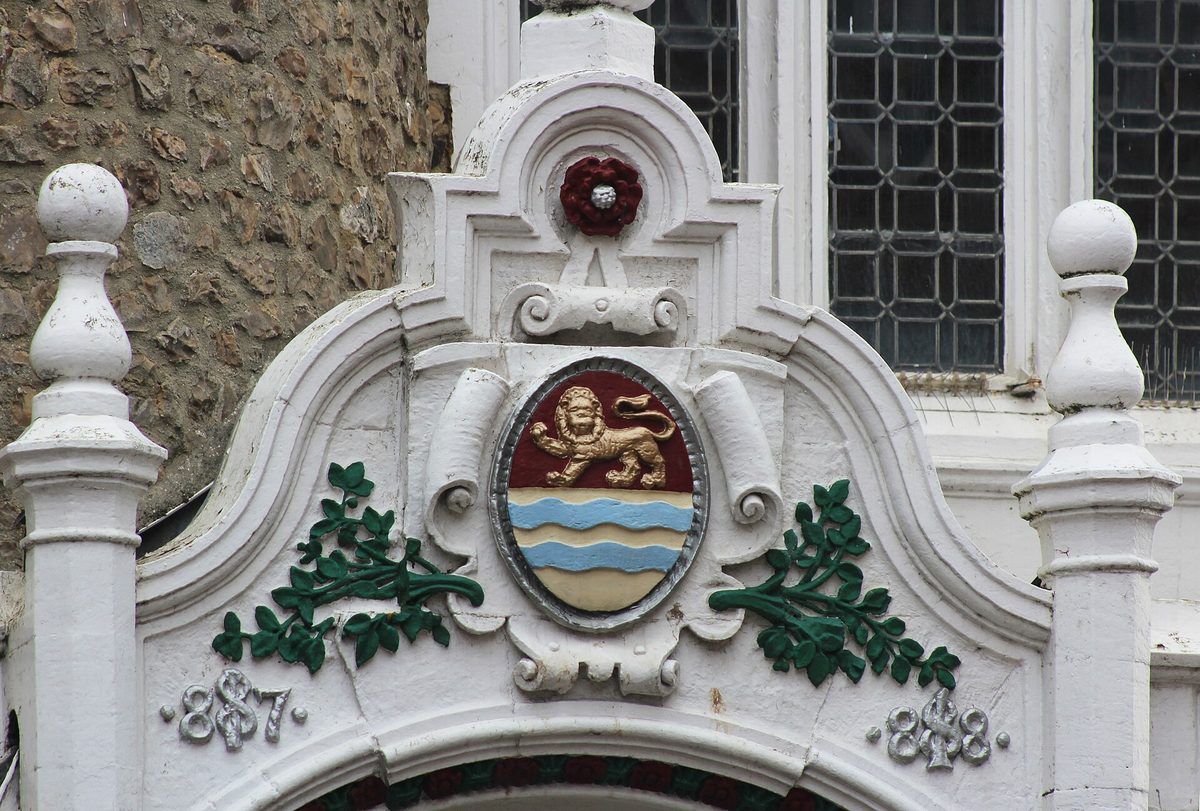
Charmouth: The Best Beach for Fossils
Just east of Lyme, Charmouth is where I’d actually take a family to hunt fossils. The foreshore is broad, accessible and absurdly rich — ammonites, belemnites, the lot, washed clean by the sea and waiting in the shingle. On the beach you’ll find the Charmouth Heritage Coast Centre, which is free to enter (around / as of 2026), staffed by people who genuinely love this stuff, and runs guided fossil-hunting walks most weeks. Book one. A 90-minute walk with someone who knows exactly what a Promicroceras looks like will teach you more than a whole day of squinting on your own. There’s more on tides and technique below.
Golden Cap, Seatown and West Bay
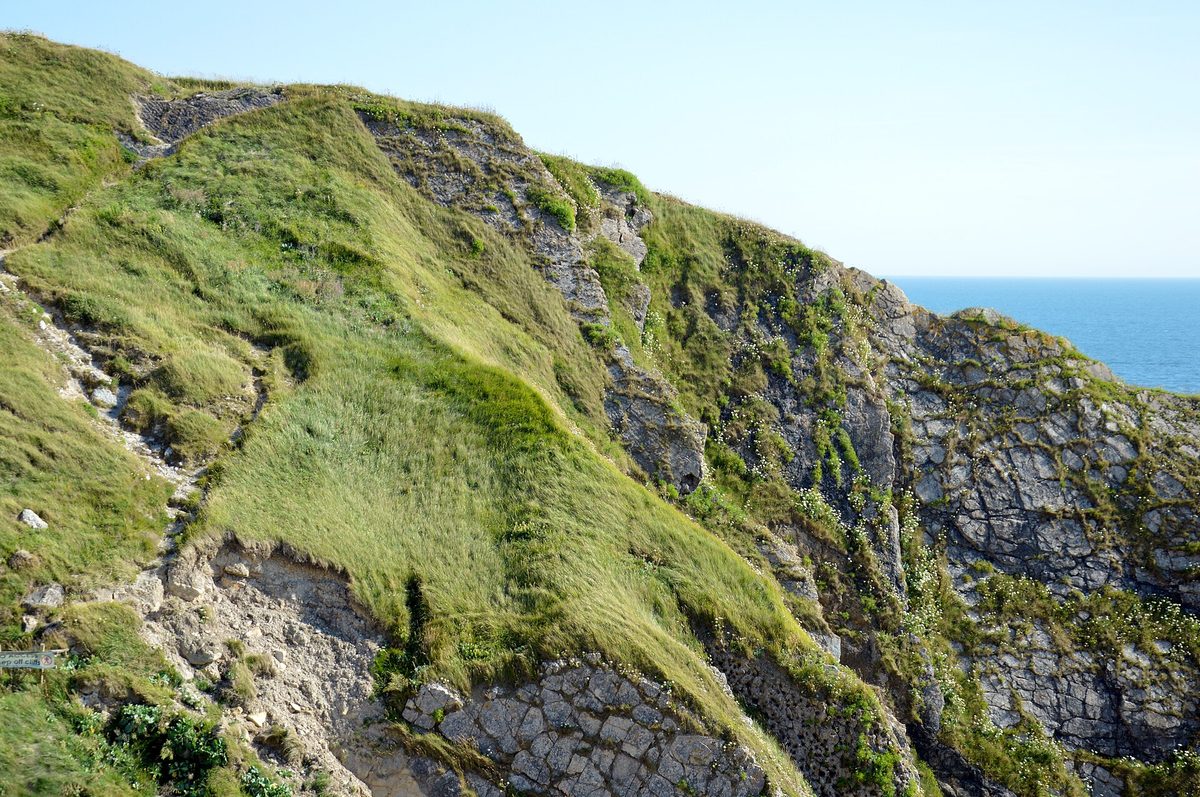
Between Charmouth and Bridport the coast path climbs to Golden Cap, the highest point on the entire south coast of England at 191 metres. The summit — capped, fittingly, with a band of golden sandstone — gives you one of the great views in southern England, sweeping back over Lyme Bay to the west. The pull up from the pretty little hamlet of Seatown is a proper leg-burner, but it’s short, and the pint at the Anchor Inn at the bottom afterwards is well earned.
West Bay, near Bridport, is the harbour town with the towering, almost vertical orange cliffs that fans of the BBC drama Broadchurch will recognise instantly. It’s a working-ish harbour with excellent fish and chips, and the cliffs east towards Burton Bradstock are extraordinary in low evening light.
Chesil Beach and Portland
East of West Bay the coast does something strange and wonderful: it throws out Chesil Beach, an 18-mile shingle barrier that runs dead straight to the Isle of Portland, with a brackish lagoon called The Fleet trapped behind it. Portland itself — a great tilted slab of limestone quarried for St Paul’s Cathedral and half of London — is bleak and brilliant, with a lighthouse at Portland Bill and big skies. It’s a worthwhile detour, even if it feels a world away from the cosy coves.
Lulworth Cove, Stair Hole and Durdle Door
Now for the showstoppers. The Lulworth Estate holds the most photographed mile of the entire coast, and for good reason.
Lulworth Cove is a near-perfect circular bay, scooped out of the rock where the soft clays behind a hard limestone seam gave way. Walk a few minutes west and you reach Stair Hole, a smaller cove-in-the-making where you can see the famously contorted “Lulworth Crumple” — rock folded like a squeezed concertina. It’s a textbook geology lesson you can lean on a railing to enjoy.
And then there’s Durdle Door — the natural limestone arch near West Lulworth that you’ve seen on a thousand postcards. It sits about a mile west of Lulworth Cove. You can reach it from the Durdle Door Holiday Park car park up the hill (then a steepish 15–20 minute walk down), or walk the gorgeous, lung-busting clifftop path over Hambury Tout from Lulworth Cove itself, which takes around 30 minutes one way. Do the walk if you possibly can — arriving on foot, with the arch revealing itself over the brow, is the way to meet it.
Parking on the Lulworth Estate is paid and works on a cumulative ANPR (number-plate) system across Durdle Door, Lulworth Cove and Lulworth Castle, so you pay once for the day across all of them. As of 2026, expect roughly £3 for an hour, around £12 for four hours, and about £20 all day for a car; the Durdle Door car park has seasonal hours (longer in summer, shorter in winter). Lulworth Cove’s pay-and-display has about 1,200 spaces and gets rammed on summer weekends — arrive early or late.
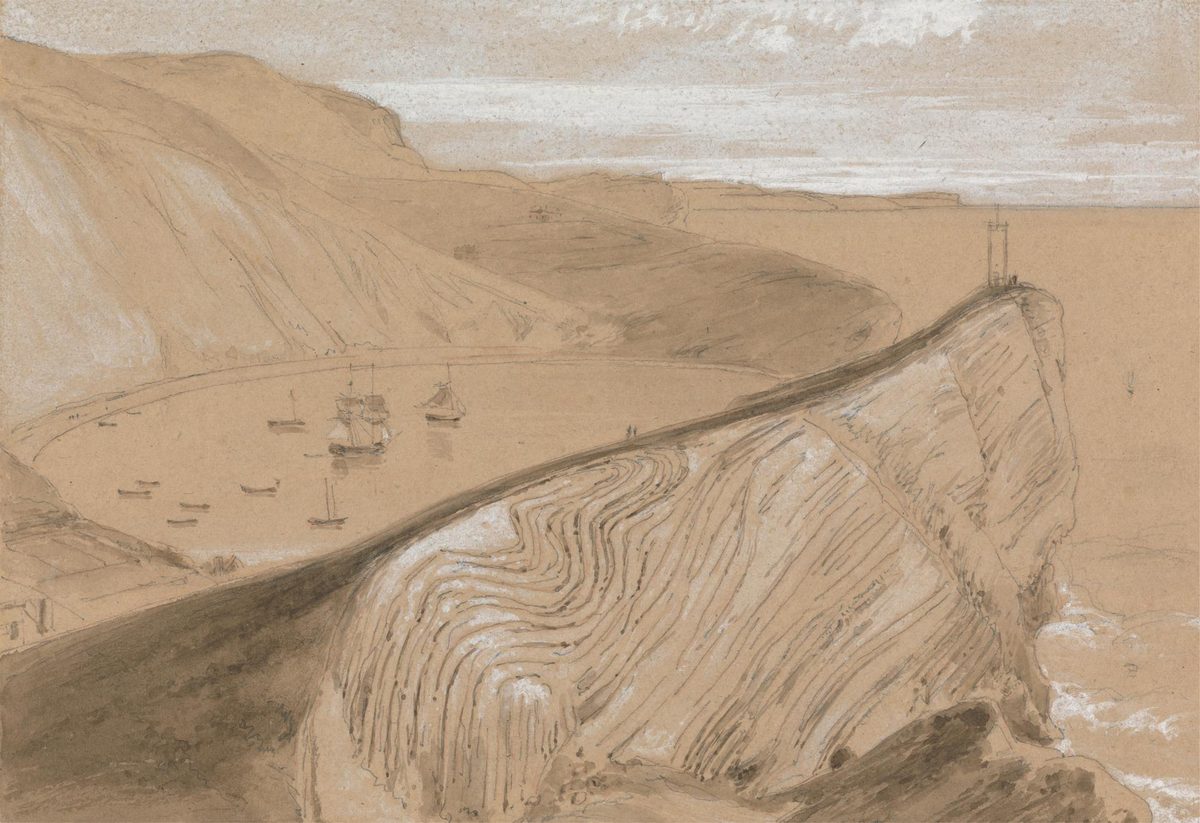
Old Harry Rocks: The Eastern Finish Line
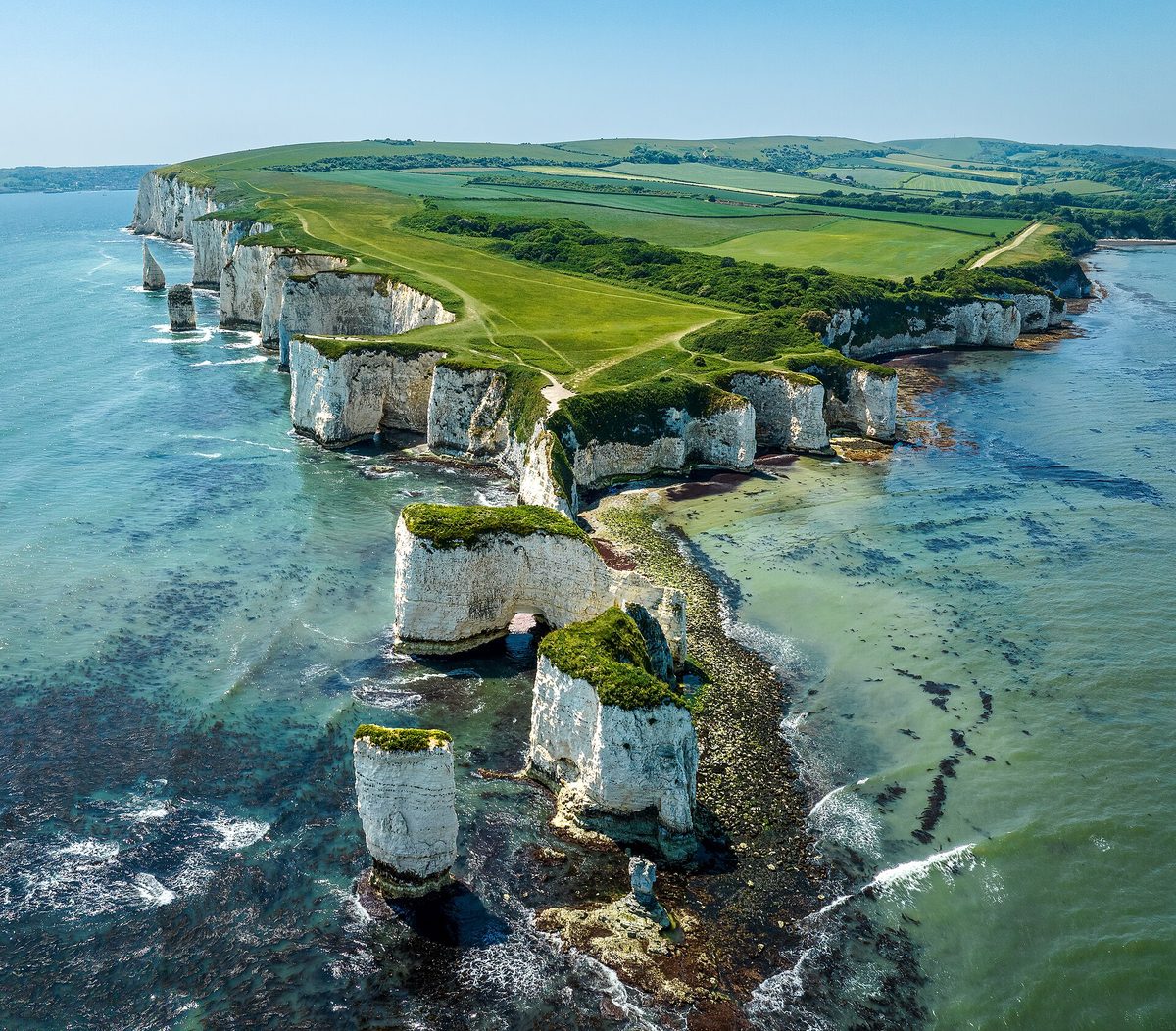
The coast signs off in style at Old Harry Rocks, a cluster of brilliant-white chalk stacks at Handfast Point on the Studland peninsula. These are Cretaceous chalk — the youngest rock on the coast — and they mark the official eastern end of the World Heritage Site. There was once a stack called Old Harry’s Wife beside them, but the sea finished her off in 1896; she’s just a stump now, which tells you everything about how alive this coastline still is.
Getting there is half the pleasure: an easy ~1-mile walk along the clifftop from the car parks at Studland, ideally extended into a circuit up onto Ballard Down for huge views over Studland Bay, Swanage, Sandbanks and Poole Harbour. After the drama of Durdle Door, finishing on these soft white cliffs with the heath behind you feels like the right kind of full stop. While you’re here, you’re a short hop from Corfe Castle and the Swanage steam railway — both excellent add-ons.
Fossil Hunting: Tides, Technique and Staying Safe
Let’s be clear about one thing first: you do not need a hammer. The best fossils on this coast are the ones the sea has already done the work on — washed out of the cliffs, tumbled smooth and lying loose in the shingle. Your most important tool is your eyes, and your second is a decent tide table.
Where to go. The hotspot is the stretch between Lyme Regis and Charmouth — Mary Anning’s old hunting ground, where the dark Blue Lias and shale cliffs are absolutely packed with ammonites and belemnites. Charmouth’s wide foreshore is the gentlest, most family-friendly place to start. At the far western end of Lyme’s Monmouth Beach you can also visit the free, open-air “Ammonite Graveyard” (officially the Ammonite Pavement) — slabs studded with enormous coiled ammonites, only reachable at low tide.
Time it with the tide. This is the single most important rule. Always hunt on a falling tide — head out as the water is going out, never as it’s coming in. Low tide exposes the most foreshore and the freshest finds, and a falling tide means you’re not about to get cut off. Check the local tide times before you set off (the Charmouth Heritage Coast Centre and Lyme museum both post them), and give yourself a generous margin to get back. People genuinely get stranded here every year.
Stay away from the cliffs. The cliffs along this coast are soft, unstable and rockfalls happen without warning — sometimes a few stones, sometimes tonnes. Do not dig into them, do not stand at the base of them, and never climb on the mudflows; the soft “mudslides” can trap you fast. The fossils have already fallen down to the beach. Stay out on the open foreshore, keep an eye on the water, wear sturdy footwear and bring a bag. If you find something genuinely significant or unusual, the Heritage Coast Centre can identify it and there’s a voluntary local code for recording important finds.
It’s worth saying that fossil hunting is properly fun — there is a specific, slightly ridiculous joy in turning over a stone and realising you’re holding something that died 190 million years ago. Kids love it. Adults secretly love it more.
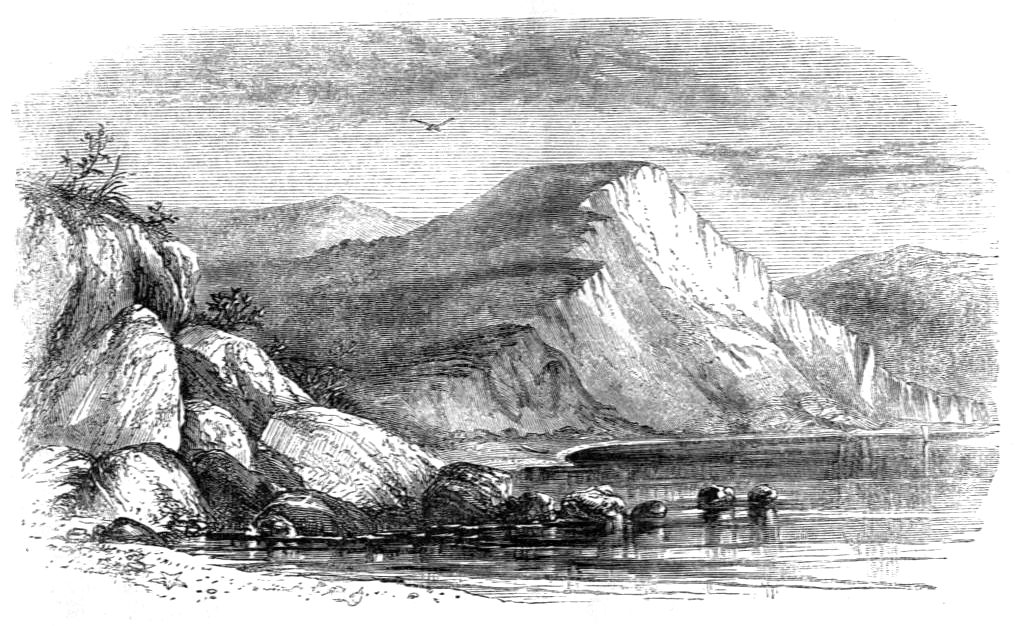
Walking the Coast: The Best South West Coast Path Sections
The entire Jurassic Coast is followed by the South West Coast Path, England’s longest National Trail (630 miles in total). You don’t need to walk all of it — and you shouldn’t try to in one trip — but a handful of day-section walks will give you the coast at its absolute best. These are the ones I’d prioritise.
- Lulworth Cove to Durdle Door (and back). The classic. Around 2 miles return over Hambury Tout, steep in places, with the arch as your reward. If you’ve time and energy, push west past Durdle Door towards Bat’s Head for emptier cliffs.
- West Bay to Golden Cap via Seatown. A grand, switchback walk up to the highest point on the south coast. Roughly 6–7 miles if you do it as a longer outing; the climb from Seatown is the steep bit. Massive views.
- Charmouth to Lyme Regis. A gentler stretch (around 3 miles) linking the two great fossil beaches, partly along the undercliff. Tide-dependent in places — check before you go, and consider walking one way and taking the bus back.
- Studland to Old Harry Rocks. The easy, family-friendly walk to the chalk stacks — about a mile each way along the clifftop, extendable up onto Ballard Down for a 4-mile circuit.
- Exmouth to Sidmouth. The opening act of the whole trail through the red Devon cliffs — a fuller day’s walk (around 12–13 miles) for those who want the western end in earnest.
A few practical notes. The path is well waymarked with the acorn symbol, but it is genuinely hilly — every cove means a descent and a climb back out, so distances feel longer than they read. Wear proper shoes, carry water and a layer, and treat clifftop edges with respect. If you’re building a wider walking trip, our England national parks and hiking guide has more on long-distance trails.
Where to Base Yourself
You can technically “do” the coast as a long day’s drive, but you’ll be exhausted and you’ll have skimmed it. I’d give it three to five days and pick a base — or two. Here’s how I’d choose.
Lyme Regis is my top pick for the western half. It’s a real town with character, walkable, full of decent places to eat, right on the best fossil beaches, and an easy reach to Golden Cap and West Bay. Book ahead in summer — it fills up.
Weymouth is the most convenient hub for the eastern half — the Lulworth coves, Durdle Door, Chesil Beach and Portland are all close, and it’s a proper resort town with plenty of accommodation and a good train connection from London. Great for families.
Swanage sits at the far eastern end, ideal if Old Harry Rocks, Corfe Castle and the Isle of Purbeck are your priority, with a charming Victorian-seaside feel and the steam railway on the doorstep.
Sidmouth or Budleigh Salterton suit anyone focused on the quieter Devon end, or wanting a more genteel, less crowded stay.
For a longer trip, I’d honestly do two nights west (Lyme) and two nights east (Weymouth or Swanage) to cut the driving in half. For broader options across the country, see our where to stay in England guide.
Getting Around Without a Car
You can do a surprising amount of this coast by bus, which is a gift given how tight the lanes and car parks get. The Jurassic Coaster services (the X51/X52/X53/X54 family, run by First Bus) stitch the coast together: broadly, the X53 links Lyme Regis, Charmouth, West Bay, Bridport and Weymouth, while the X54 connects Weymouth with Osmington, Lulworth Cove, Wareham and Poole. The coastal X51/X52 run the scenic B3157 past Chesil Beach. Walkers love these because you can walk a one-way section and catch the bus back. Trains reach Weymouth, Dorchester, Wareham and Axminster from London Waterloo. If car-free travel is your thing, our England travel tips and the Cornwall without a car guide both lean into bus-and-train logistics for the West Country.
When to Go
Late spring (May–June) and early autumn (September) are the sweet spot — long days, kinder crowds, and the cliffs at their greenest or most golden. July and August are gorgeous but busy, with car parks at Lulworth and Lyme filling by mid-morning; go early or go late. Winter is wild and atmospheric, and storms churn up fresh fossils onto the beaches (one reason serious hunters love the off-season) — but expect short days, slippery paths and some seasonal closures. For the full seasonal breakdown, our best time to visit England guide goes deeper.
Final Thoughts
I’ve walked a lot of England’s coastline, and the Jurassic Coast still feels special to me in a way that’s hard to fully explain until you’re standing on it. It’s the combination: the sheer beauty of Durdle Door and Lulworth, yes, but also the strange thrill of picking a 190-million-year-old ammonite out of the shingle at Charmouth, the burn in your legs hauling up to Golden Cap, the white cliffs of Old Harry catching the evening light. It’s a landscape you read as much as look at.
My honest advice: don’t try to swallow it whole. Pick a base, walk at least one proper coast-path section, time a fossil hunt with a falling tide, and leave the car behind for at least a day on the Jurassic Coaster. Go in late spring or September if you can. And when you reach Durdle Door, take the long way in over the hill — you only get to meet it for the first time once.
For ideas on pairing this with the wider region, dip into our Cornwall and Devon travel guide, our England coast and beaches round-up, and our England road trips collection. For the bigger picture, the England travel guide ties it all together.
Research and Source Notes
This guide draws on a mix of first-hand walking and current official and authoritative sources, cross-checked as of June 2026. For planning your own trip, I’d go straight to:
- Jurassic Coast Trust (jurassiccoast.org) — the definitive source on the World Heritage Site, its geology, the ~95-mile extent, and official fossil-hunting safety guidance.
- Lulworth Estate (lulworth.com) — current parking tariffs, opening hours and access for Durdle Door, Lulworth Cove and Stair Hole.
- Charmouth Heritage Coast Centre (charmouth.org) — guided fossil walks, tide information and free identification of finds.
- Lyme Regis Museum (lymeregismuseum.co.uk) — Mary Anning history, fossil-walk schedules and 2026 ticket prices.
- South West Coast Path (southwestcoastpath.org.uk) — route details, distances and difficulty for every section.
- National Trust (nationaltrust.org.uk) — Old Harry Rocks, Studland, Golden Cap and Ballard Down access and parking.
- Visit Dorset (visit-dorset.com) and Visit Devon (visitdevon.co.uk) — town information, transport and what’s on.
- UNESCO World Heritage Centre (whc.unesco.org) — the official inscription (Dorset and East Devon Coast, 2001).
All prices, opening hours and bus routes are hedged as “around / as of 2026” and can change seasonally — please confirm with the official sources above before you travel.
Photo Credits
- Durdle Door limestone arch on the Jurassic Coast travel guide route in Dorset, England — Photo: DimiTalen (CC0) via Wikimedia Commons. Source
- The Cobb harbour wall and seafront at Lyme Regis, Dorset — Photo: Martinvl (CC0) via Wikimedia Commons. Source
- Aerial view of Lulworth Cove, a near-circular bay on the Dorset coast — Photo: William Daniell (CC0) via Wikimedia Commons. Source
- Golden Cap, the highest cliff on England’s south coast, near Charmouth, Dorset — Photo: {Thomas Sulman (c.1834 – 1900) (CC0) via Wikimedia Commons. Source
- Old Harry Rocks chalk stacks at Studland, the eastern end of the Jurassic Coast — Photo: Simaron / CC BY-SA 2.0 via Wikimedia Commons. Source
Frequently asked questions
Where is the best place to start the Jurassic Coast?
Geologically, the coast begins at Orcombe Point in Exmouth (east Devon) and runs east to Old Harry Rocks at Studland. I'd start in the west and travel east, so you move forward through geological time. But if you want the most dramatic first impression, base near Lyme Regis or Lulworth — those are the headline acts.
Can you find fossils on the Jurassic Coast?
Yes, and easily. The beaches between Lyme Regis and Charmouth are among the best fossil-hunting spots in Britain — ammonites and belemnites wash out of the cliffs and lie loose in the shingle. Hunt on a falling tide, stay away from the unstable cliffs, and consider a guided walk from the Charmouth Heritage Coast Centre or Lyme Regis Museum.
How long does it take to drive the Jurassic Coast?
You can drive the ~95-mile coast in a single long day, but that means barely stopping. To actually see Durdle Door, Lulworth Cove, Lyme Regis, Golden Cap and Old Harry Rocks properly — with walks and fossil time — give it three to five days and base yourself in one or two towns rather than racing end to end.
Is Durdle Door free?
Yes — there's no entrance fee for the Durdle Door arch or the beach; access is free. What you pay for is parking. The Lulworth Estate car parks (covering Durdle Door, Lulworth Cove and Lulworth Castle) charge on a cumulative number-plate system — roughly £3 for an hour up to around £20 all day as of 2026. Walking in from Lulworth Cove avoids the Durdle Door car park entirely.
What is the difference between Lulworth Cove and Durdle Door?
They're about a mile apart on the same Lulworth Estate. Lulworth Cove is a near-perfect circular bay you can walk straight down to from the village, with Stair Hole's folded "Lulworth Crumple" rock alongside it. Durdle Door is the famous freestanding limestone arch over the sea, reached by a steepish clifftop or downhill walk. Most people do both in one visit.
Is the Jurassic Coast a UNESCO World Heritage Site?
Yes — it's England's only natural UNESCO World Heritage Site, inscribed in 2001 as the "Dorset and East Devon Coast." It was recognised for recording around 185 million years of Earth history across the Triassic, Jurassic and Cretaceous periods in one continuous, walkable section of coastline. See our UNESCO World Heritage Sites in England guide for the full list.