Sheet 44 · England Coast and Beaches · 16 min read
Cornwall vs Devon Beaches
Cornwall vs Devon beaches, compared by someone who's surfed both: scenery, sand, surf, families, crowds and a clear verdict to help you choose your trip.
 Sheet 44
Contents 10 sections
I have stood on the cliff path above Kynance Cove at the wrong moment of the tide, watching the turquoise vanish under the incoming sea, and I have walked the full three miles of Woolacombe at dead low water with the sand stretched out flat and silver in every direction. Both made me stop and just look. So when friends ask me which county to point their beach trip at, I never have a one-word answer ready. I have a longer one, and it depends entirely on the kind of beach day they’re after.
This guide settles the Cornwall vs Devon beaches question the way I’d settle it over a pint: not by declaring one county the loser, but by matching each to the traveller. Cornwall wins on raw wow-factor and surf pedigree; Devon wins on long golden sand, two contrasting coasts in one county, gentler family water and a shorter drive. Pick Cornwall for jaw-drop coves and serious waves; pick Devon for space, surf lessons and value. That’s the short version. Here’s the rest.
Quick Answer: Cornwall vs Devon Beaches
If you want the most cinematic, photograph-it-forever beaches in England, go to Cornwall. Its coves are smaller and harder to reach but the looks are unmatched. If you want broad, sandy, family-friendly beaches with a gentler learning curve, fewer crowds and an easier journey, go to Devon, which also gives you two distinct coasts to play with. Neither is wrong.
The honest truth is that the Cornwall vs Devon beaches comparison is less “good versus bad” and more “drama versus ease.” I’ll explain exactly what I mean across every axis that matters below, then give you a decision framework and a real verdict at the end.
A note before we dive in: this is strictly the beach comparison. The wider county-vs-county question, covering towns, moors, food and the overall feel of a trip, lives in my Devon vs Cornwall head-to-head and the longer Cornwall and Devon travel guide. If you’re weighing up more than just the sand, start with those. And if you’re building a broader coastal trip, my England’s coast and beaches guide is the parent pillar that ties all of this together.
At a Glance: Cornwall vs Devon Beaches
Here’s the whole argument compressed into one table. I’ll defend every row in the sections that follow.
| What matters | Cornwall | Devon |
|---|---|---|
| Scenery / wow-factor | Best in England. Coves, granite cliffs, sea stacks, near-tropical colour | Excellent and varied, but fewer “gasp” moments per mile |
| Sand | Stunning small coves; some shingle; big surf beaches too | Vast golden expanses (Woolacombe, Saunton); some shingle in the south |
| Surf | The UK’s surf capital (Fistral, Newquay). Best waves, best scene | Genuinely excellent (Croyde, Woolacombe, Saunton). Brilliant for learning |
| Families & swimming | Great, but coves get tidal and busy | Slight edge. Long flat beaches; gentle south-coast water |
| Two coasts | North (wild) + south/Roseland (soft) | North (wild surf) + south (sheltered, estuarine) |
| Crowds | Busier and pricier, especially August | Generally less crammed; better value |
| Getting there | Further. Roughly 4.5-5+ hrs drive from London | Closer. Roughly 3.5-4 hrs drive from London |
| Best for | Scenery hunters, surfers, photographers | Families, first-time surfers, longer-stay value seekers |
Drive times are rough and traffic-dependent, hedged as of 2026; the A30 and A38 in summer can humble any sat-nav estimate.
The Case for Cornwall’s Beaches
Cornwall is the one that ends up on the postcards, and there’s a reason for that. With over 400 beaches squeezed into a long, thin county where you’re never far from saltwater, the sheer concentration of coastline is extraordinary, and Visit Cornwall doesn’t exaggerate much when it leans on the word “iconic.”
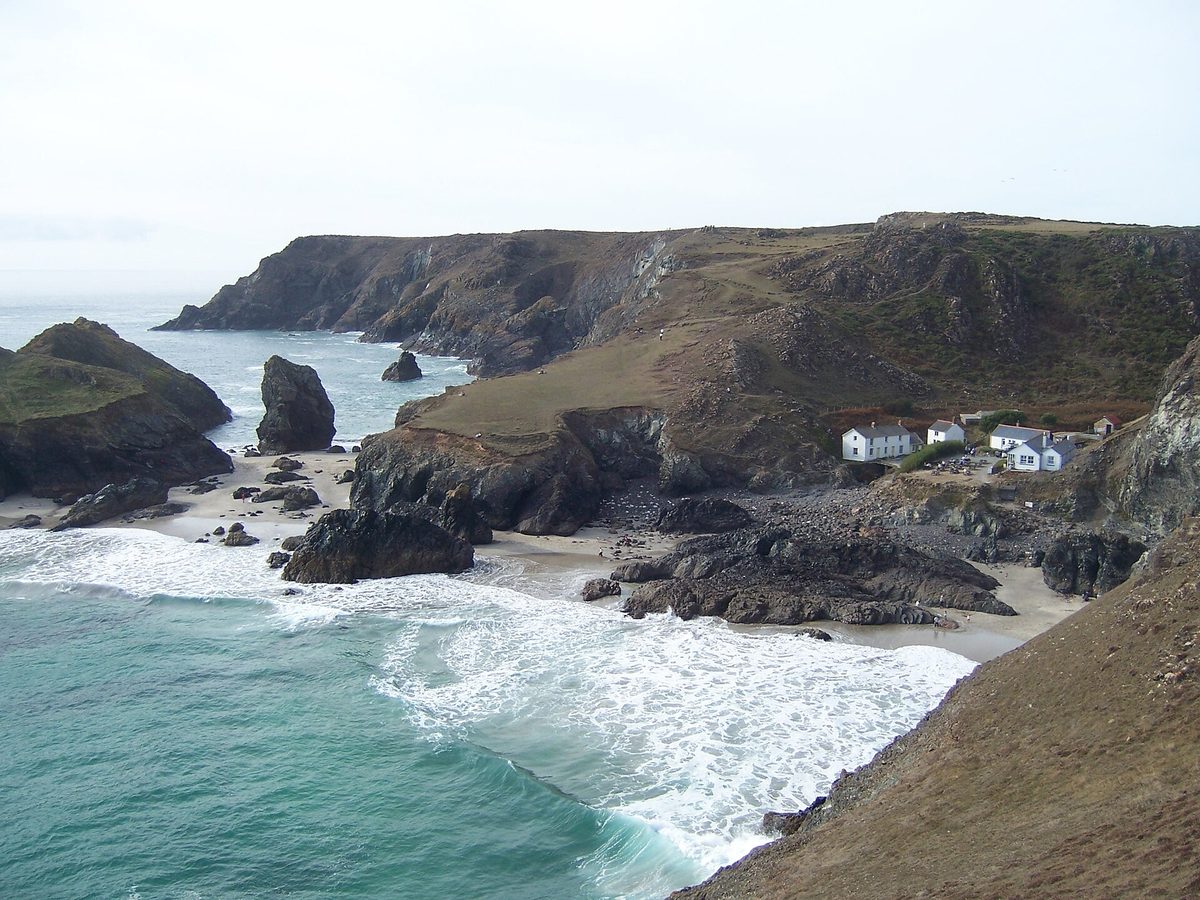
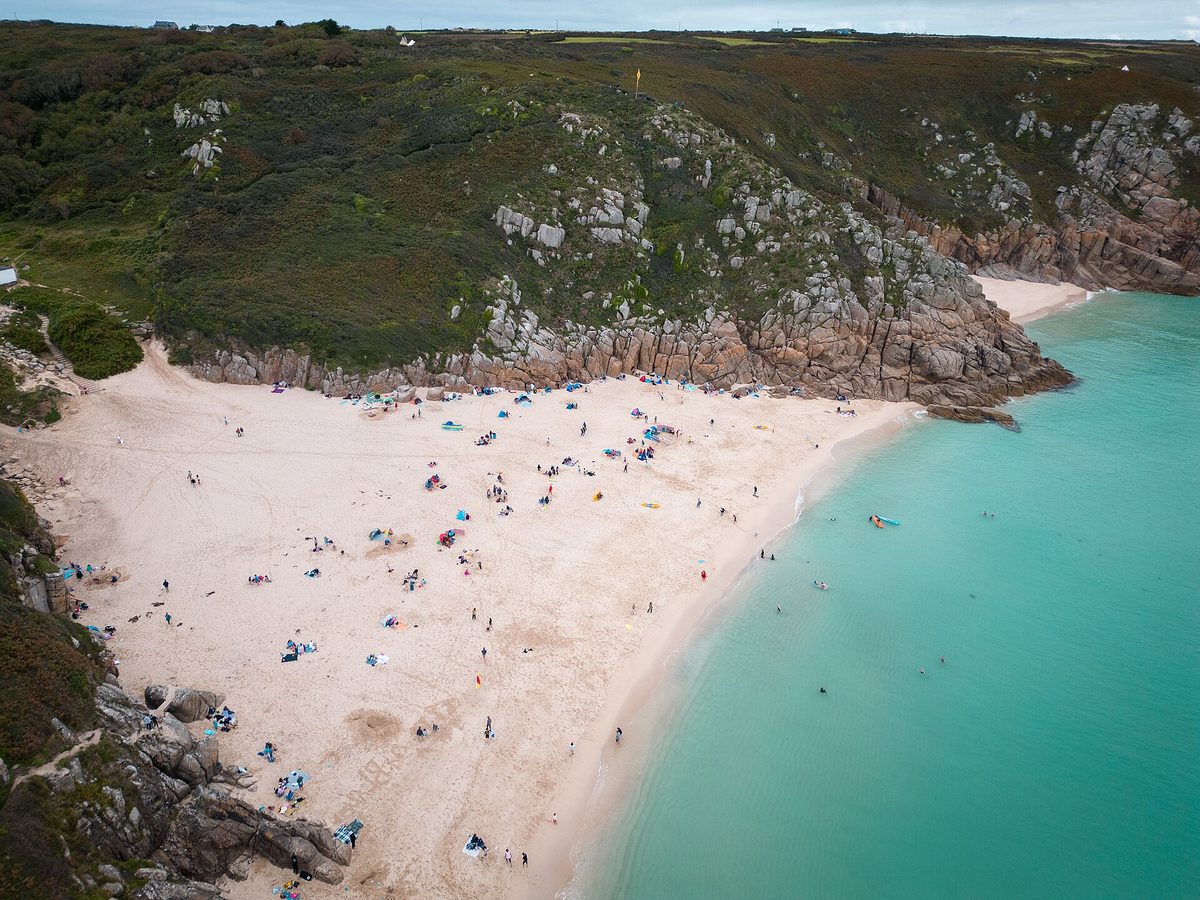
The headline act is the colour. On the right summer day, with the sun out and the tide low, beaches like Porthcurno and Kynance Cove on the Lizard go genuinely turquoise, the kind of water that makes people in your group accuse you of editing the photo. Kynance, in a National Trust-managed stretch of the Lizard, is the one I’d put forward if forced to name England’s single most beautiful beach: white shell-sand, weird dark serpentine rock stacks, an island you can walk to at low water. It is small, it is tidal, and it can be a faff to time, but it is unforgettable.
The north coast: wild and Atlantic-facing
Cornwall’s north coast is where the swell rolls in. Fistral in Newquay is the most famous surf beach in the country, a wide Atlantic bowl that hosts international competitions and, off the headland, the legendary big-wave reef known as the Cribbar. Just north you’ve got Watergate Bay, a vast golden sweep that’s brilliant for learners thanks to its gentle slope, and Polzeath round the estuary, a family-and-surf favourite with long, forgiving breaks.
Then there’s Bedruthan Steps, between Newquay and Padstow, where giant sea stacks march out across the sand like stepping stones. One honest heads-up as of 2026: the cliff staircase down to the beach has been closed for some time after rock falls, so check the National Trust’s status before you plan to get onto the sand itself. The view from the clifftop, though, is free and astonishing.
The south coast and the Roseland: softer Cornwall
People forget Cornwall has a gentler side. The south coast and the Roseland Peninsula give you sheltered, sun-trap coves with calmer water, and at the far west, Sennen Cove near Land’s End is a glorious arc of pale sand that’s lifeguarded year-round by the RNLI. This is where Cornwall quietly competes with Devon’s south coast for the family crowd.
The trade-off for all this beauty is access. Cornish beaches reward effort. Many of the prettiest are coves reached by a clamber down cliff steps, with small car parks that fill by mid-morning in season. The wow is real, but so is the work.
The Case for Devon’s Beaches
Here’s where I push back against the reflex that Cornwall simply “wins.” Devon’s beaches are superb, and the county has a structural advantage Cornwall can’t match: two genuinely different coasts, north and south, each with its own character, both reachable on the same holiday.
North Devon: long golden sand and proper surf
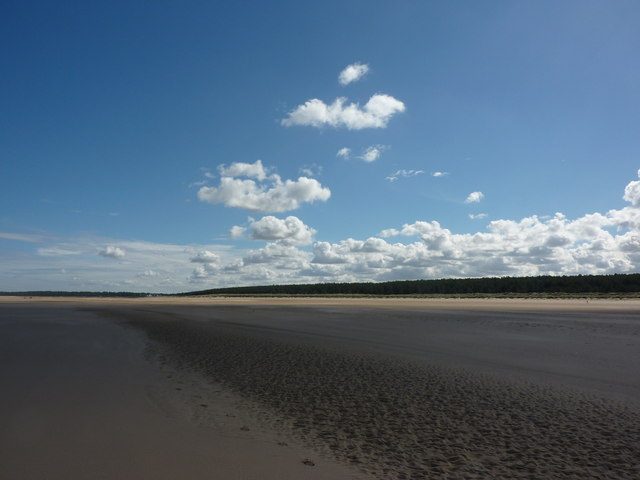
North Devon is, to my mind, the most underrated beach coast in England. The signature is space. Woolacombe is a three-mile run of golden sand that has topped Tripadvisor’s UK beach rankings, and it’s so long you can always walk away from the crowd to find your own patch. It’s lifeguarded, well set up with cafes and parking, and works for families and surfers alike.
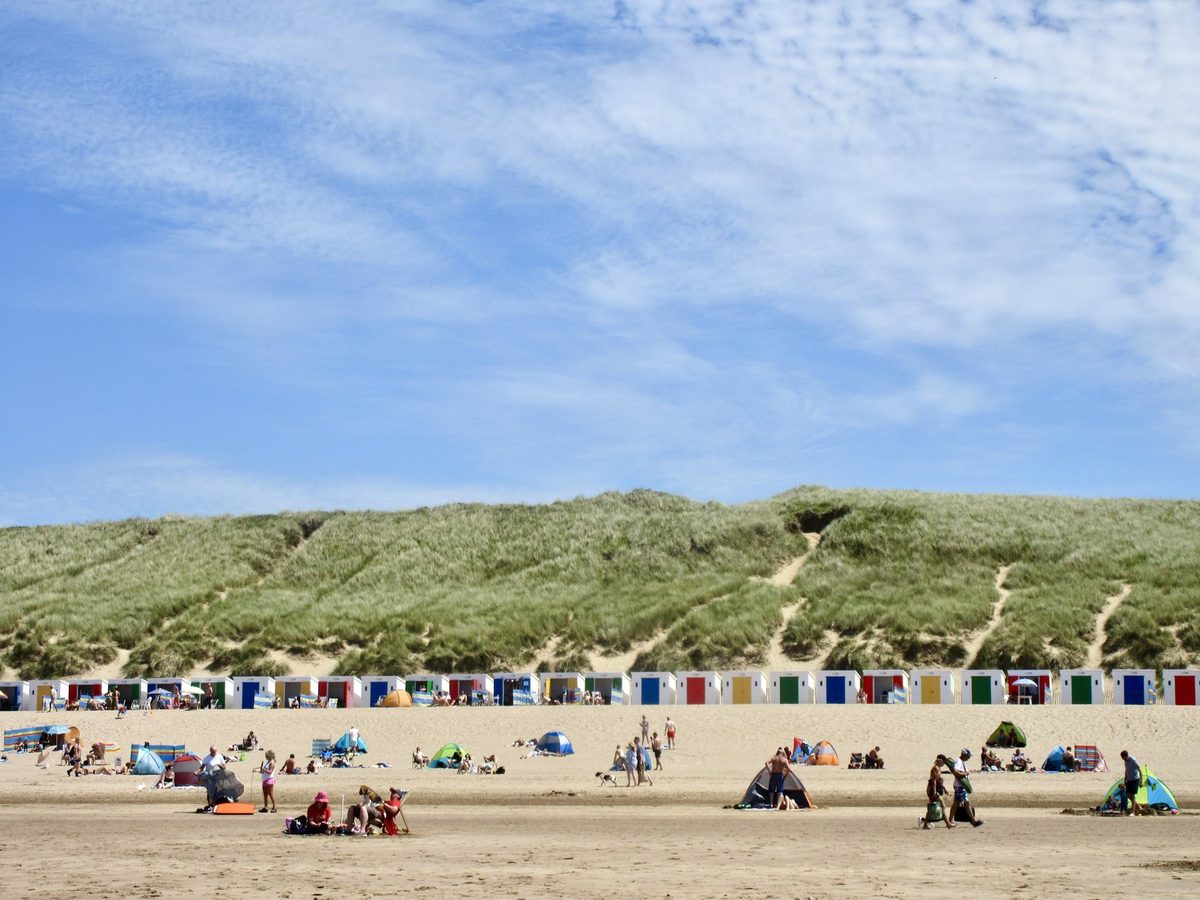
Just south sit two more I’d cross the country for. Croyde is North Devon’s surf hotspot, punchy and rugged, framed by dunes and headlands, and rated among the best beach breaks in the country; it’s often called Devon’s answer to Fistral. Saunton Sands next door is the gentler giant, a flat expanse backed by the Braunton Burrows dune system (a UNESCO Biosphere Reserve), with mellow waves that make it a dream for beginners and longboarders. Round the corner, Putsborough is essentially the quieter southern end of the Woolacombe sands. Together this little cluster, Woolacombe, Croyde, Saunton and Putsborough, is one of the best concentrations of surf-and-sand beaches in England, and it’s all in North Devon.
South Devon: sheltered, estuarine and family-soft
Drive south and the mood changes completely. The south coast is calmer, warmer-feeling and shaped by estuaries. Bantham is the standout, a long sandy beach in an Area of Outstanding Natural Beauty with reliable surf and a famous view across to Burgh Island. Next door, Bigbury-on-Sea is the easygoing family option, gentler water plus the wonderful sea tractor that ferries you out to Burgh Island when the tide covers the causeway. And near Dartmouth, Blackpool Sands is a sheltered, privately run beach of fine shingle with turquoise water and an almost Mediterranean feel, a brilliant swimming spot on a hot day.
This is Devon’s trump card. Caught a wild day on the north coast? Drive ninety minutes or so and the south coast is calm. Cornwall has a gentle south too, but Devon’s two-coast contrast is sharper and the swap is genuinely useful when the weather turns. Visit Devon makes a lot of this, and for once the tourist board is right.
Best for Surfing
If surfing is the whole point of your trip, Cornwall takes it, but more narrowly than its reputation suggests.
Cornwall is the UK’s surf capital and Fistral is the beating heart of it: the most consistent, most famous beach break in the country, the home of the competition scene, surf shops, board hire and that whole salt-and-neoprene culture. If you want to surf where the pros surf and soak up the atmosphere, Newquay is the answer. Fistral also gives you the Cribbar for the genuinely fearless and big.
But Devon is no second-tier substitute. Croyde is a world-class beach break in its own right, and on its day it rivals anything in Cornwall. For learning to surf, I’d actually nudge people towards North Devon: Saunton’s long, mellow rollers and Woolacombe’s room to spread out are kinder to a wobbling beginner than a packed Fistral on a big swell, and surf schools cluster all along that coast.
My rule of thumb: experienced surfers chasing the best waves and the scene lean Cornwall (Fistral, then Croyde). Total beginners and families wanting lessons are arguably better served by North Devon’s Saunton and Woolacombe. Both counties are Atlantic-facing on their north/west coasts, so a wetsuit is non-negotiable most of the year regardless.
Best for Families
This one’s close, and it’s where Devon edges ahead for me.
Families want a few specific things: sand you can build on, water that shelves gently, lifeguards in summer, toilets, a cafe and somewhere to park. Both counties deliver, but Devon’s long flat beaches do it with less stress. Woolacombe and Saunton give you enormous sandy room so a toddler isn’t penned in next to a stranger’s windbreak, and South Devon’s Bigbury and Blackpool Sands offer the calm, shallow, swim-friendly water that makes a day with small children actually relaxing.

Cornwall absolutely has brilliant family beaches: Polzeath for rock pools and bodyboarding, Gyllyngvase in Falmouth as an all-weather standby, Praa Sands on the south coast with its shallow shelving water, and lifeguarded giants like Watergate Bay. The catch is that Cornwall’s loveliest beaches are often the small tidal coves, which means watching the tide carefully and arriving early before the car park fills. With young kids, the easy logistics of a big Devon beach can be worth more than an extra notch of beauty.
For a wider plan around travelling with little ones, my England with kids guide goes well beyond the beach. And if you specifically want Cornwall’s family beaches ranked, see the best beaches in Cornwall.
Verdict on families: a slight win for Devon on ease, with Cornwall a very strong second if you respect the tide times.
Best for Scenery and Wow-Factor
No contest. Cornwall.
I love North Devon’s golden vastness, and a low-tide Woolacombe is genuinely beautiful. But Cornwall has more pure jaw-drop per mile than anywhere else in England. Kynance Cove, Porthcurno glittering below the cliffs near the Minack Theatre, the sea-stack drama of Bedruthan, Sennen’s pale sweep at the very tip of the country, the colour of the water on the Lizard on a sunny day, these are the images that sell the whole South West, and most of them are Cornish.
Devon’s scenery is more about scale and sweep; Cornwall’s is about jewel-box coves and theatrical rock. If your trip is partly a photography mission, or you just want that one beach that stops you dead, Cornwall is where you point the car. For the very best of it, my best places to visit in Cornwall rundown maps out the standouts, and a structured route is laid out in my 5-day Cornwall itinerary.
Crowds, Parking and Getting There
Logistics decide more holidays than scenery does, so let’s be blunt.
Distance. Devon is closer. From London you’re typically looking at roughly 3.5-4 hours’ drive to reach Devon under decent conditions, against roughly 4.5-5 hours or more to get deep into Cornwall, all hedged and very traffic-dependent as of 2026. That extra leg into Cornwall matters if you’re coming for a long weekend rather than a full week; sometimes the better beach is simply the one you’re not exhausted before reaching. My driving distances in England piece has more on the realistic timings, and the A30/A38 in peak summer can blow past any of these.
Crowds and cost. Cornwall is the busier, pricier brand. In August the honeypot beaches and their car parks fill early, and accommodation costs more. Devon generally feels a touch less crammed and offers better value, even if its star beaches (Woolacombe especially) are no secret either. Timing helps enormously in both: my best time to visit England guide covers the shoulder-season sweet spots when both counties are at their best and least mobbed.
Parking. Same advice for both: arrive before 10am in summer or accept a walk. Cornwall’s small coves have small car parks that fill fastest. Some of the loveliest beaches in either county are reached on foot down a cliff path, so factor that in with buggies or limited mobility.
Without a car. Cornwall is genuinely doable carless if you plan around the train and bus network, and I’ve laid out how in Cornwall without a car. St Ives, for instance, is an easy walk from its station, which sidesteps the town’s nightmare parking entirely. North Devon’s big beaches are a little more car-dependent, so weigh that if you’re not driving.
Lifeguards. Both counties are well covered in season by the RNLI, with the busiest beaches (Fistral, Sennen, Porthmeor in Cornwall; Woolacombe, Croyde, Bantham in Devon among them) patrolled across the main season and a handful year-round. On any Atlantic-facing beach, swim between the red-and-yellow flags and take rip currents seriously, whichever county you choose.
The Verdict: How to Choose
After all the head-to-heads, here’s how I’d actually decide. Stop comparing counties and start matching the beach to you.
Choose Cornwall if:
- Scenery is the priority and you want the most beautiful, most photogenic beaches in England.
- You’re an experienced or serious surfer who wants Fistral, the scene and the best waves.
- You’re chasing that near-tropical turquoise water on the Lizard and the far west.
- You don’t mind a longer drive, earlier starts for parking, and a clamber down to a cove.
- You want jewel-box coves over endless flat sand.
Choose Devon if:
- You’re travelling with young children and want easy, spacious, gentle beaches with low stress.
- You’re learning to surf, or surfing with mixed abilities (Saunton and Woolacombe are ideal).
- You want two contrasting coasts on one trip, wild north and sheltered south.
- You want a shorter drive, better value and slightly thinner crowds.
- You prefer vast golden sand to small dramatic coves.
My actual verdict. If you put a gun to my head and told me to pick one county for a first beach trip to the South West, with no other information, I’d say Cornwall, because the scenery is simply the best in England and it’s what most people are dreaming of when they picture a West Country beach. The wow-factor is worth the extra drive and the early parking starts.
But, and I mean this, if you’re travelling with small kids, learning to surf, watching the budget, or only have a long weekend, choose Devon without a second thought. North Devon’s Woolacombe-Croyde-Saunton trio plus South Devon’s sheltered coves give you a more relaxed, better-value, easier-to-reach holiday with beaches that are excellent in their own right, not consolation prizes. Plenty of seasoned beach-goers I respect prefer Devon for exactly these reasons, and they’re not wrong.
So: Cornwall for the romance, Devon for the trip that actually goes smoothly. Honestly, the best answer of all is to do both across two visits, which is precisely why I keep going back to the South West.
Final Thoughts
I’ve spent more sunburnt afternoons and wetsuit-clammy mornings on these two coasts than I can count, and I still don’t have a clean winner, because there isn’t one. There’s only the right match for the trip you’re planning.
What I’d really say is this: don’t agonise. Both counties will give you a brilliant beach holiday, and the differences, while real, are differences of flavour, not quality. Cornwall is the showstopper you’ll photograph forever. Devon is the easy, generous, spacious coast you’ll return to without thinking twice. I love them both, and the only mistake is picking neither.
Whichever way you lean, plan around the tide, arrive early for parking, swim between the flags, and pack a wetsuit. Then go and find your own stretch of sand. For the bigger picture, my England coast and beaches guide and the broader Devon vs Cornwall comparison will round out the rest of your trip.
Research and Source Notes
This guide draws on a mix of my own visits and current public sources, cross-checked in June 2026. Named beaches were verified to their correct county and coast: Woolacombe, Croyde, Saunton Sands and Putsborough as North Devon; Bantham, Bigbury-on-Sea, Burgh Island and Blackpool Sands as South Devon; Fistral (Newquay), Watergate Bay, Bedruthan Steps, Polzeath, Porthcurno, Kynance Cove and Sennen Cove as Cornwall.
- Beaches, surf and county/coast detail: Visit Cornwall, Visit Devon (including its North Devon Woolacombe-vs-Croyde-vs-Saunton comparison), Visit South Devon and the National Trust (Kynance Cove, Bedruthan Steps). The closure of the Bedruthan Steps cliff staircase after rock falls should be re-checked with the National Trust before visiting.
- Blue Flag status: Keep Britain Tidy’s 2025 Blue Flag and Seaside Award announcements (Cornwall’s ten Blue Flag beaches; Devon’s awards including Torbay).
- Lifeguard cover: RNLI south-west patrol information, including beaches patrolled year-round and across the main season.
- Drive times and crowds/value: general travel guidance (Which?, Sykes, Intrepid and others). All drive times are rough and traffic-dependent, and all prices and timings are hedged as of 2026.
Where sources disagreed (for example on exact crowd levels or which single beach is “best”), I’ve given my own judgement and flagged it as opinion. Always confirm lifeguard dates, parking and beach access before you travel.
Photo Credits
- Turquoise water and serpentine rock stacks at Kynance Cove, the headline image in the Cornwall vs Devon beaches debate — Photo: Tommytrouble at English Wikipedia (CC0) via Wikimedia Commons. Source
- Pale sand and clear water at Porthcurno below the granite cliffs of west Cornwall — Photo: Tom Page / CC BY-SA 2.0 via Wikimedia Commons. Source
- The three-mile golden sweep of Woolacombe Beach in North Devon at low tide — Photo: Marika Reinholds / CC BY-SA 2.0 via Wikimedia Commons. Source
- Bantham Beach in South Devon with Burgh Island offshore across the sand — Photo: Mr Ignavy / CC BY-SA 2.0 via Wikimedia Commons. Source
- The Burgh Island sea tractor crossing from Bigbury-on-Sea at high tide in South Devon — Photo: Jolly Janner / CC BY 2.0 via Wikimedia Commons. Source
Frequently asked questions
Are Cornwall or Devon beaches better?
Neither is universally better. Cornwall has the more dramatic, photogenic beaches and the UK's best surf scene, while Devon has long golden sand, two contrasting coasts, gentler family water and a shorter drive. Pick Cornwall for scenery and serious surf; pick Devon for space, value and easy family days.
Which has better beaches for families?
Devon edges it for families, thanks to vast flat beaches like Woolacombe and Saunton and the calm, shallow water of South Devon spots such as Bigbury and Blackpool Sands. Cornwall has superb family beaches too (Polzeath, Gyllyngvase, Praa Sands), but many of its prettiest coves are small and tidal, so logistics are slightly harder.
Is Cornwall or Devon better for surfing?
Cornwall, narrowly. Fistral in Newquay is the UK's surf capital, with the best waves, the competition scene and the most surf culture. But Devon's Croyde is world-class in its own right, and for learning to surf, North Devon's mellow Saunton and roomy Woolacombe are arguably the friendlier choice for beginners.
Which is easier to get to, Cornwall or Devon?
Devon is closer and easier. From London it's roughly 3.5-4 hours' drive to reach Devon versus roughly 4.5-5 hours or more deep into Cornwall, both hedged and very traffic-dependent in summer. If you only have a long weekend, Devon's shorter journey is a real advantage; for a full week, the extra distance to Cornwall matters less.
Does Cornwall or Devon have warmer sea for swimming?
Both face the Atlantic on their wilder coasts, so the sea is bracing rather than warm in either county. South Devon's sheltered, estuarine beaches and Cornwall's south-coast and Roseland coves tend to feel a touch gentler and more swim-friendly than the exposed north-coast surf beaches. A wetsuit extends the season comfortably in both.
Which county has more Blue Flag beaches?
Both perform well in the annual Keep Britain Tidy awards, with around ten Cornish beaches (including Polzeath, Gyllyngvase and Porthmeor in recent years) flying Blue Flags, and Devon strong too, particularly around Torbay where Oddicombe has held the award for decades. Numbers shift year to year, so check the current list before relying on it.