Sheet 97 · England Coast and Beaches · 17 min read
Best Seaside Towns in England
The best seaside towns in England, ranked by vibe and region, from St Ives and Whitby to Southwold and Tynemouth, with what to do in each.
 Sheet 97
Contents 8 sections
I’ve spent more weekends than I can count chasing the smell of vinegar on cold chips, wet sand, and that particular grey-blue light you only get when the North Sea or the Atlantic is deciding what mood it’s in. England does the seaside in a way nowhere else quite manages — a single coastline that swings from candyfloss-and-arcades brashness to cobbled fishing villages that look painted, sometimes within the same county.
The best seaside towns in England fall into a handful of distinct camps: classic bucket-and-spade resorts like Scarborough and Cromer; pretty harbour towns like Whitby, Padstow and Robin Hood’s Bay; foodie and arty spots like St Ives, Margate and Whitstable; and quiet, grown-up boltholes like Southwold, Aldeburgh and Bamburgh. Pick by mood, not just by map.
This guide is about choosing the town — its character, what there is to do once you’ve parked the car, where to eat, whether it’s a day trip or a base. For the sand itself I’ll point you to the best beaches in England, and for where to actually sleep, the dedicated best seaside towns to stay in England guide does the hotel legwork. This whole stretch of coast sits under the broader England’s coast and beaches pillar if you want the full lay of the land. And Brighton — a beast of its own — gets a separate Brighton travel guide, so I’ll keep it brief here.
Quick Answer: The Best Seaside Towns in England
If you want the short version: St Ives is the prettiest all-rounder, Whitby the most atmospheric, Southwold the most genteel, Margate the coolest comeback story, Tynemouth the best-kept secret, and Bamburgh the one with the jaw-dropping castle. For a family week, head to Scarborough, Cromer or Bournemouth. For a romantic two nights, make it Aldeburgh, Salcombe or Whitstable.
Below is the at-a-glance table, then I’ll break it all down by vibe and region.
The Best Seaside Towns in England at a Glance
| Town | Region | Known for | Best for | Nearest station |
|---|---|---|---|---|
| St Ives | Cornwall | Artists, Tate, turquoise bay | Pretty all-rounder | St Ives (own branch line) |
| Padstow | Cornwall | Harbour, Rick Stein, seafood | Foodie day or weekend | Bodmin Parkway (~14 mi) |
| Whitby | North Yorkshire | Abbey, Dracula, fish & chips | Atmosphere & history | Whitby (Esk Valley line) |
| Scarborough | North Yorkshire | Castle, two bays, funiculars | Family week | Scarborough |
| Robin Hood’s Bay | North Yorkshire | Cobbles, smuggling, cliffs | Day trip from Whitby | Whitby (~6 mi) |
| Tynemouth | Tyne & Wear | Priory, surf beach, food | Underrated city break add-on | Tynemouth (Metro) |
| Bamburgh | Northumberland | Castle, vast empty beach | Wild beauty | Berwick / Alnmouth + bus |
| Southwold | Suffolk | Pier, beach huts, Adnams | Genteel weekend | Halesworth / Darsham (~10 mi) |
| Aldeburgh | Suffolk | Music festival, fresh fish | Romantic foodie escape | Saxmundham (~7 mi) |
| Cromer | Norfolk | Pier, crabs, end-of-pier shows | Old-school family seaside | Cromer |
| Margate | Kent | Turner Contemporary, Dreamland | Arty day trip from London | Margate |
| Whitstable | Kent | Oysters, harbour, sunsets | Romantic foodie weekend | Whitstable |
Prices and journey times below are rough and hedged — treat them as “around,” check before you book, and assume everything is busier and pricier in August.
Classic Resort Towns
These are the big, brash, joyful ones — piers, arcades, donkeys (occasionally), illuminations, and the kind of cheerful chaos that’s perfect with kids and slightly surreal without them. If your idea of the seaside is a 99 with a flake and a deckchair, start here.
Scarborough, North Yorkshire
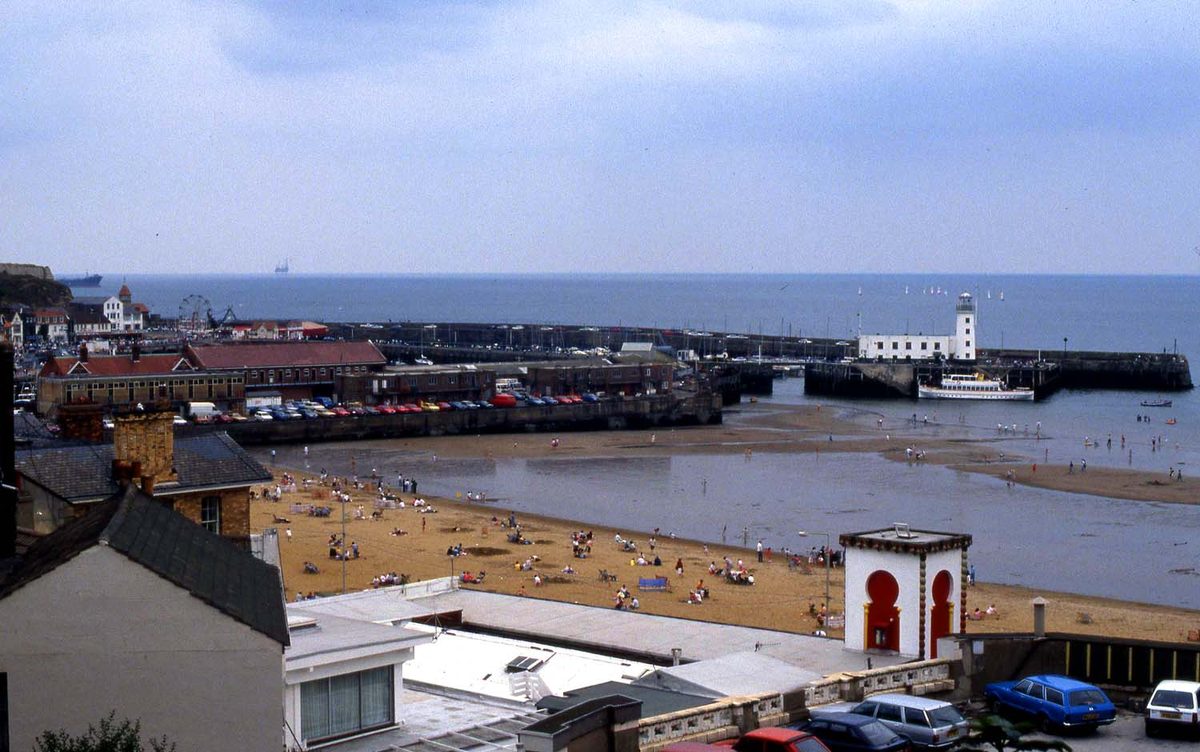
Scarborough basically invented the English seaside resort — people were “taking the waters” here back when a spa town meant something. It has two bays divided by a headland and a genuine medieval castle on top, which gives it more drama than your average resort. South Bay is the busy one: arcades, the harbour, fish-and-chip queues, and a Victorian funicular or two still clanking up the cliff. North Bay is quieter and family-friendly, with the excellent Rotunda Museum nearby (Britain’s first purpose-built museum, fact fans).
It’s a proper week sort of place rather than a day trip — big enough to keep children occupied for days, with the North York Moors railway and Whitby within easy reach. Trains run direct from York (around an hour, as of 2026), which makes it one of the more accessible big resorts. Come for old-fashioned fun, stay for the surprisingly handsome Grand Hotel skyline.
Cromer, Norfolk
Cromer is the seaside as your grandparents remember it, and I mean that as the highest compliment. The pier still hosts an actual end-of-pier variety show — possibly the last full-season one in the country — and the town is famous for its crabs, which turn up sweet and fresh in half the cafés along the front. The beach is broad and sandy, backed by handsome cliffs and a grand church tower.
It’s unpretentious, gentle, and brilliant for younger families who don’t need a theme park. Cromer has its own railway station (the Bittern Line from Norwich), so you can come car-free, and the whole stretch of the Norfolk coast guide — Sheringham, Wells, Blakeney — is yours to explore from here. For a slow, salty, traditional week, Cromer is hard to beat.
Bournemouth and the Big Southern Resorts
I’ll group these because they do a similar job: Bournemouth, Weymouth, Torquay and Blackpool are the heavy-hitters for a full-on family holiday. Bournemouth has seven miles of genuinely golden sand, an Oceanarium and gardens running down to the front; Weymouth has a gorgeous Georgian curve of beach and a working harbour; Torquay anchors the “English Riviera”; and Blackpool is Blackpool — the Tower, the Pleasure Beach, the Illuminations, gloriously unapologetic. None are quiet or quaint, but for sheer keep-the-kids-busy value in England in summer, they deliver.
Pretty Harbour and Fishing Towns
This is my favourite category — the towns where boats still come in, the streets are too narrow for sense, and the whole place looks like it’s been arranged for a postcard. These reward slow wandering more than a to-do list.
Whitby, North Yorkshire

If I had to pick one town to convert a sceptic, it’d be Whitby. The gothic ruin of Whitby Abbey looms on the East Cliff — the very place that inspired Bram Stoker’s Dracula — and you reach it by climbing the famous 199 Steps up from the old town, past St Mary’s Church. Below, the harbour is a tangle of fishing boats, jet shops (Whitby jet, the black gemstone, is a local thing), and some of the best fish and chips in England. The Magpie Café gets the headlines and the queues; plenty of smaller places are just as good.
Whitby leans into its strangeness — the twice-yearly Goth Weekend is a sight to behold — and there’s real history too, with the Captain Cook Memorial Museum in the house where the explorer once lodged. Getting here is part of the charm: the Esk Valley line from Middlesbrough is slow and scenic, but trains are few, so check times. Atmospheric, slightly spooky, utterly memorable.
Padstow, Cornwall
Padstow is small, gorgeous, and these days more or less synonymous with Rick Stein, whose seafood restaurant, fish-and-chip shop, café and cookery school have earned the place the nickname “Padstein.” That’s done wonders for the food and the prices alike — this is not a budget town in season. But the working harbour, the pastel houses, and the estuary views are the real draw, and a Stein fish supper eaten on the harbour wall is one of those classic Cornish moments.
It’s the natural base for the Camel Trail (a flat, family-friendly cycle path to Wadebridge) and a short ferry hop to the beaches at Rock. There’s no railway — Bodmin Parkway is the nearest station, around 14 miles away, with a bus connection via Wadebridge — so most people drive. Compare it with St Ives on the other coast in my Cornwall vs Devon beaches guide if you’re torn over where to base a trip.
Robin Hood’s Bay, North Yorkshire
A few miles south of Whitby, Robin Hood’s Bay tumbles down a ravine to the sea in a jumble of red-roofed cottages and lanes so steep and narrow that cars are banned from the lower village. It has a wonderfully shady past — smuggling was once the main industry, with contraband supposedly passed cottage-to-cottage without ever touching the street. At low tide the rocky shore is a fossil-hunter’s and rock-pooler’s dream.
It’s tiny, so I’d treat it as a half-day from Whitby rather than a full base, though staying overnight after the day-trippers leave is magical. There’s no station — the nearest is Whitby, with a regular bus — and the walk along the Cleveland Way clifftop between the two is one of the best short coast walks in the country.
St Mawes, Mousehole, Staithes and the Tiny Ones
For the truly small and storybook, England delivers in spades. St Mawes (Cornwall) has been called the loveliest seaside village in Britain and sits across the water from Falmouth; Mousehole is a cluster of whitewashed cottages around a near-perfect Cornish harbour; Staithes (North Yorkshire) is a steep, artsy former fishing port; and Beer and Clovelly in Devon are about as picturesque as the English coast gets. None has a railway and all are short on parking — but that’s rather the point.
Foodie and Arty Coastal Towns
The towns in this group have reinvented themselves — galleries in old fishermen’s lofts, oyster bars where the amusement arcade used to be, day-trippers down from London for the food as much as the sea.
St Ives, Cornwall
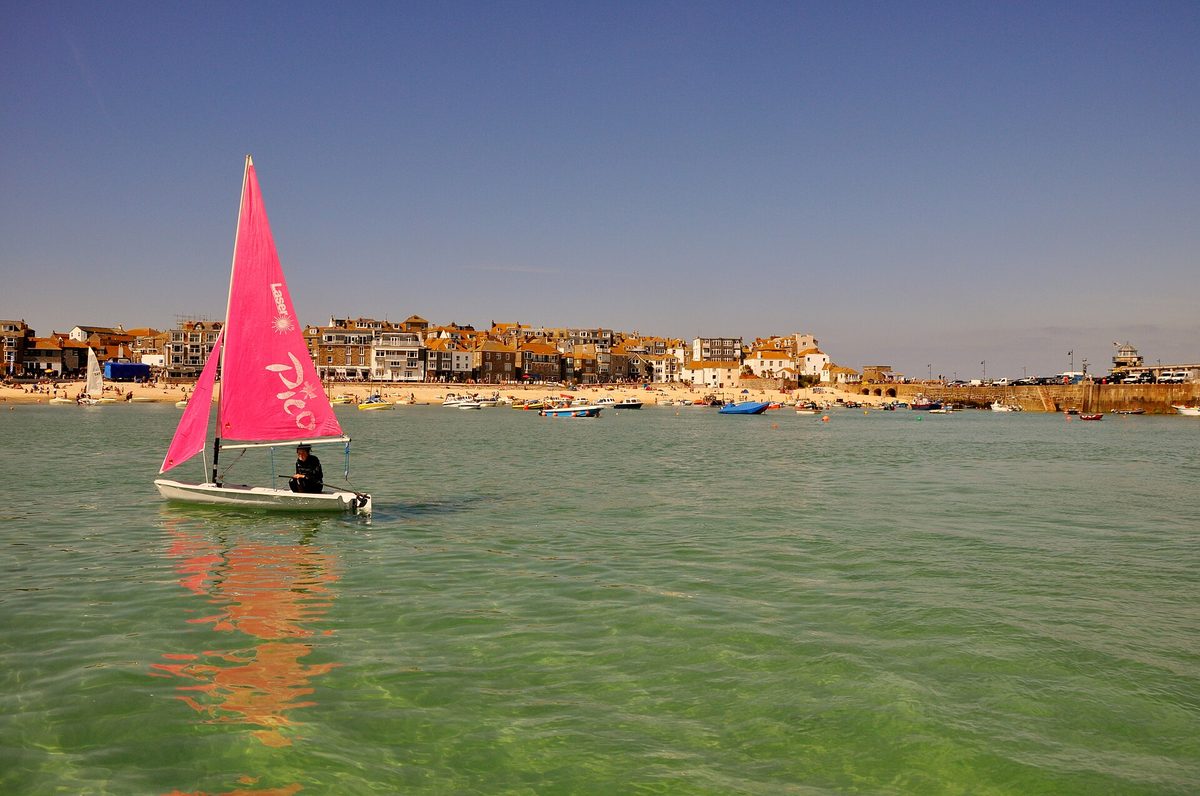
St Ives is the prettiest all-rounder on this list and arguably the best-known of England’s coastal towns. The light here drew artists for over a century, and that legacy lives on at Tate St Ives, perched above Porthmeor beach, and the wonderful Barbara Hepworth Museum and Sculpture Garden tucked into the old town. Around them: a maze of cobbled lanes, galleries, pasty shops, and four beaches of properly turquoise water that wouldn’t look out of place in the Med.
It’s touristy, yes, and brutal for parking — but it earns the crowds. Crucially for a car-free trip, St Ives has its own branch line, and the short ride from St Erth along the bay past Carbis Bay is one of the most beautiful train journeys in Britain. Equally good as a romantic weekend or a family week; just book accommodation early and walk everywhere.
Margate, Kent
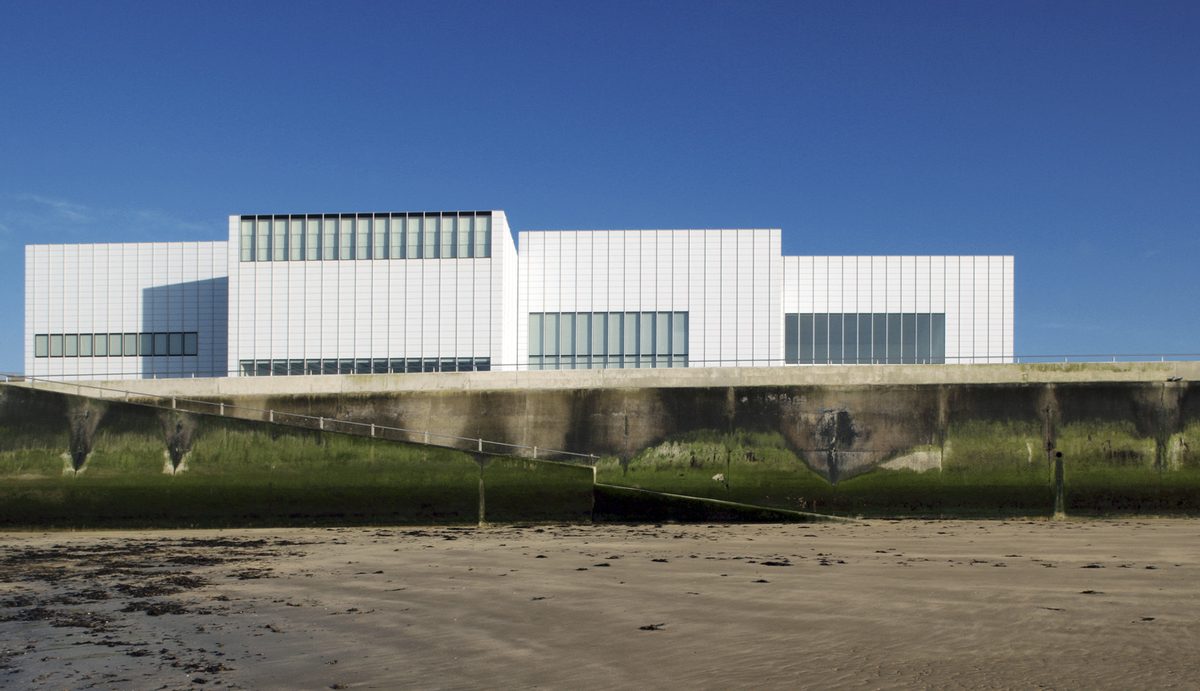
Margate is the great English seaside comeback. A decade or two ago it was faded; now it’s one of the most exciting coastal towns in the country, anchored by the Turner Contemporary gallery on the seafront and the lovingly revived Dreamland amusement park with its vintage rides. The Old Town is full of vinyl shops, small galleries and good restaurants, and the sandy main beach is genuinely lovely at low tide. Don’t miss the Shell Grotto, a mysterious passage entirely lined with shells that nobody can fully explain.
Best of all, it’s about an hour and a half direct from London St Pancras on the high-speed line, making it one of the best day trips from London — though it deserves a weekend. Cool, creative, and still slightly rough around the edges in the best way.
Whitstable, Kent
Margate’s more demure neighbour, Whitstable is all weatherboarded cottages, a working harbour, and oysters — which it has been famous for since Roman times and celebrates with a festival each July. The high street is a parade of independent shops; the beach is shingle, lined with old wooden groynes and beach huts; and the sunsets over the Isle of Sheppey are the stuff of marriage proposals. Eat oysters straight from the harbour shacks, then watch the sky go pink with a glass of something cold.
It’s compact and grown-up — better for couples and food lovers than for kids who want rides. Easy on the train from London, and a lovely pairing with Margate or Broadstairs over a long weekend.
Tynemouth, Tyne and Wear
Here’s my insider pick. Tynemouth, at the mouth of the Tyne, is one of very few English towns to score top marks for both its beaches and its food in national surveys, and it’s still gloriously under the radar with most visitors. There’s a romantic ruined priory and castle on the headland, three golden beaches (Longsands is a proper surf spot), handsome Georgian and Victorian terraces, and a front street packed with good pubs and restaurants. Riley’s Fish Shack, cooking the day’s catch in a couple of shipping containers down on King Edward’s Bay, is worth the trip alone.
The genius of Tynemouth is access: it’s on the Newcastle Metro, so you can be on a city break in Newcastle one minute and dipping your toes in the North Sea twenty-five minutes later. Pair it with the rest of the Northumberland coast guide for one of England’s most rewarding coastal road trips.
Quieter Towns Worth the Trip
Sometimes you want the sea without the slot machines. These are the calm, often more upmarket towns — big skies, good food, early nights, and not a fairground in sight.
Southwold, Suffolk
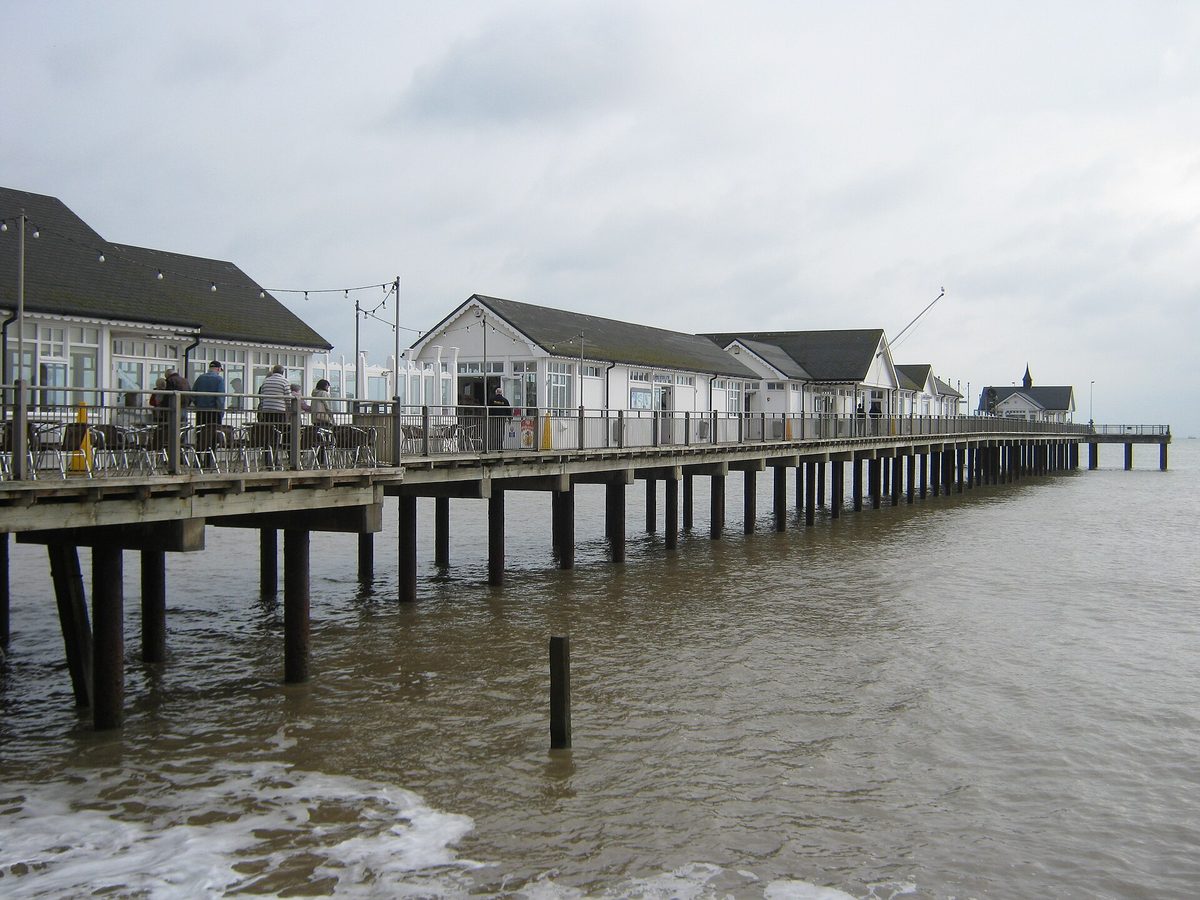
Southwold is the quintessential genteel English seaside town: a lighthouse rising up among the houses, a row of famously colourful beach huts (which change hands for eye-watering sums), and a pier with a brilliantly eccentric arcade of homemade automata by the artist Tim Hunkin. The town is also home to Adnams brewery, so the local pubs pour exceptionally well. It’s tidy, handsome, and a touch posh — and all the more relaxing for it.
There’s no station in town — Halesworth and Darsham, both around ten miles away on the East Suffolk line, are nearest — so most arrive by car. Take the little rowboat ferry across the Blyth to Walberswick, walk the dunes, and have crab sandwiches for lunch. Pure, slow, old-fashioned bliss.
Aldeburgh, Suffolk
A short way down the same coast, Aldeburgh swaps Southwold’s sand for a long shingle beach and adds a serious cultural pedigree: the Aldeburgh Festival, founded by composer Benjamin Britten, fills the nearby Snape Maltings with world-class music each summer. Fishermen still sell the day’s catch from black wooden huts on the beach, and the town’s two chip shops draw queues down the high street. There’s also Maggi Hambling’s striking “Scallop” sculpture on the shingle north of town.
It’s romantic, refined, and one of the best foodie escapes on the east coast — better for a couple’s weekend than a family week. Saxmundham, about seven miles inland, is the nearest station.
Bamburgh, Northumberland
Bamburgh is barely a town — more a village — but it has been crowned the best seaside spot in the UK in survey after survey, and one look explains why. A colossal medieval castle sits on a crag above one of the most magnificent beaches in the country: miles of pale, empty sand looking out to the Farne Islands and Holy Island. There’s not a great deal to do in the brochure sense — a couple of pubs, the Grace Darling museum, the castle itself — and that emptiness is exactly the appeal.
This is wild, big-sky, romantic seaside, not bucket-and-spade territory (the water is bracing). Getting here takes effort — the nearest mainline stations are Berwick-upon-Tweed and Alnmouth, with a bus connection — but it’s worth every mile. For sheer drama, nowhere on this list beats it.
Salcombe and Sidmouth, Devon
Two very different quiet Devon towns. Salcombe, on a glittering estuary in the South Hams, is the smart, sailing-and-seafood set’s favourite — pastel houses, dinghies, and a string of soft sandy coves reached by ferry. Sidmouth, further east, is a beautifully preserved Regency town of cream-and-white villas along an elegant esplanade, gateway to the Jurassic Coast itinerary and host to a famous folk festival each August. Neither has a station; both reward a slower, grown-up kind of holiday.
Lyme Regis, Dorset
Straddling the Devon–Dorset border, Lyme Regis is the “Pearl of Dorset” and the spiritual home of fossil hunting — Mary Anning made her famous finds here, and the crumbling cliffs still give up ammonites to anyone willing to look (and time the tide). The curving stone harbour wall, the Cobb, is its postcard image, immortalised in The French Lieutenant’s Woman. It’s the best base for exploring the Jurassic Coast and a lovely, characterful town in its own right, with good independent shops and a proper sandy-ish beach.
Best Seaside Towns by Region
A quick regional cheat sheet, because where you’re starting from matters:
- Cornwall: St Ives and Padstow lead, with Fowey, Mousehole and St Mawes for the small-and-pretty. The prettiest coves of all are covered in the best beaches in England guide.
- Devon & Dorset: Salcombe and Sidmouth for charm, Lyme Regis and Beer for the Jurassic Coast itinerary, Torquay and Bournemouth for big family resorts.
- Kent & Sussex: Margate, Whitstable, Broadstairs and Folkestone in Kent; Hastings and Rye in Sussex; plus Brighton — see the dedicated Brighton travel guide — and the chalk drama of the Seven Sisters cliffs guide nearby.
- East Anglia: Southwold and Aldeburgh in Suffolk; Cromer, Wells-next-the-Sea and Sheringham along the Norfolk coast guide.
- Yorkshire & the North East: Whitby, Scarborough, Robin Hood’s Bay and Staithes in Yorkshire; Tynemouth, Bamburgh and the Northumberland coast guide further north.
For a wider trip-planning view, the best places to visit England and most beautiful places in England guides put these coastal towns in context, and the where to stay in England overview helps you decide which region to base yourself in.
Final Thoughts
If you press me, my own desert-island three would be Whitby for atmosphere, St Ives for prettiness, and Tynemouth for the sheer surprise of it — a world-class beach and brilliant food twenty-five minutes from a major city, and still half-empty. For a romantic weekend I’d send you to Aldeburgh or Salcombe; for a family week, Scarborough or Cromer; for a foodie day-trip, Padstow or Whitstable; and for a place that’ll genuinely stop you in your tracks, Bamburgh.
The real joy of the English coast is how much it changes in a few hours’ drive. Don’t overthink it — pick a region, pick a vibe, pack a jumper even in July, and let the sea do the rest. Sort out the practicalities with the England train travel guide, watch the pennies with England on a budget, and dig deeper into the wider England travel guide for everything beyond the coast.
Research and Source Notes
Research conducted June 2026 using current travel coverage and official sources. Town locations, counties, signature sights and nearest railway stations were cross-checked against operator and tourism information; journey times and any prices are approximate (“around,” as of 2026) and should be confirmed before booking, as they change seasonally.
- Time Out — UK seaside town rankings and 2026 round-ups
- Which? — best UK seaside towns and best towns for food and drink surveys
- Condé Nast Traveller — England’s most charming seaside towns
- Rough Guides and Love Exploring — prettiest seaside towns and villages features
- The Telegraph and Countryfile — loveliest seaside village and prettiest fishing villages
- Trainline, LNER, GWR, South Western Railway and Tyne & Wear Metro — station and journey information for Whitby, St Ives, Scarborough, Cromer, Margate, Tynemouth, Bamburgh, Southwold and Aldeburgh
- Wikipedia and official town/tourism sites — for Padstow (Bodmin Parkway), Robin Hood’s Bay, Southwold Pier and Whitby Abbey details
Only English seaside towns are included; Welsh and Scottish destinations have been deliberately excluded. Always check tide times, opening hours and transport timetables close to your visit.
Photo Credits
- The best seaside towns in England, with St Ives harbour in Cornwall a perfect example of a pretty Cornish coastal town — Photo: Lewis Clarke / CC BY-SA 2.0 via Wikimedia Commons. Source
- Scarborough harbour and South Bay, a classic Victorian resort town on the North Yorkshire coast — Photo: Steve Daniels / CC BY-SA 2.0 via Wikimedia Commons. Source
- Whitby Abbey ruins on the headland above the harbour, one of the most atmospheric of all English seaside towns — Photo: aude / CC BY-SA 3.0 via Wikimedia Commons. Source
- Turner Contemporary gallery on Margate seafront, the heart of the town’s arty revival on the Kent coast — Photo: Turner Contemporary / CC BY-SA 3.0 via Wikimedia Commons. Source
- Southwold’s candy-coloured beach huts and pier, the most genteel of England’s seaside towns on the Suffolk coast — Photo: peter robinson / CC BY-SA 2.0 via Wikimedia Commons. Source
Frequently asked questions
What is the nicest seaside town in England?
It depends on what you want, but St Ives in Cornwall is the most popular pick for an all-round pretty seaside town, with its turquoise bay, art galleries and cobbled lanes. For wild beauty, Bamburgh in Northumberland is repeatedly voted the UK's best, and Whitby in Yorkshire wins for sheer atmosphere. There's no single winner — match the town to your mood.
Which seaside town is best for families in England?
For a classic family week, Scarborough, Cromer, Bournemouth and Weymouth are hard to beat — sandy beaches, plenty to do in poor weather, and proper resort facilities. St Ives is brilliant if you want somewhere prettier with great beaches, and Margate combines a sandy beach with Dreamland amusement park. Avoid tiny villages like Robin Hood's Bay for longer family stays.
What is the prettiest seaside town in England?
The prettiest seaside towns in England tend to be the small harbour villages: St Ives, Mousehole and St Mawes in Cornwall, Robin Hood's Bay and Staithes in Yorkshire, and Clovelly in Devon. For a slightly larger pretty town with more to do, Whitby, Southwold and Aldeburgh all score highly. Photographers should prioritise Cornwall and the North Yorkshire coast.
Which seaside town has the best food in England?
Tynemouth and Padstow regularly top food rankings — Tynemouth for its beachside fish shacks and Padstow for Rick Stein's seafood empire. Whitstable in Kent is the place for oysters, Aldeburgh in Suffolk for fresh-off-the-boat fish, and Whitby in Yorkshire for award-winning fish and chips. Honestly, you'll eat well at any harbour town with a working fleet.
What is the best seaside town near London?
Margate and Whitstable in Kent are the standouts — both reachable in around 90 minutes by direct train, with Margate offering arty galleries and Whitstable famous for oysters and sunsets. Broadstairs, Folkestone, Brighton and Hastings are also easy day trips. See the day trips from London guide for the full list and timings.
When is the best time to visit English seaside towns?
Late spring (May to June) and early autumn (September) are the sweet spot — warm-ish, far quieter than the school holidays, and accommodation costs less. July and August bring the best chance of swimming weather but also crowds and peak prices. Many smaller towns wind right down in winter. The best time to visit England guide has month-by-month detail.