Sheet 77 · Best Time to Visit England · 20 min read
Rainy Day Activities in England
The best rainy day activities England has, from free museums to Roman baths and cosy pubs. Plan a weather-proof trip with indoor picks by city and ideas
 Sheet 77
Contents 9 sections
I have stood under a dripping umbrella outside York Minster, watched a grey sheet of drizzle roll across Bath’s honey-coloured terraces, and ducked into the British Museum’s Great Court while a downpour hammered the glass roof above me. Here is what years of travelling England in every kind of weather taught me: the rain is not the problem. Treating a wet day as a ruined day is the problem.
The best rainy day activities England offers turn a grey afternoon into a highlight: world-class free museums and galleries, steaming Roman baths, candlelit cathedrals, snug historic pubs, and unhurried afternoon tea. Plan a couple of flexible indoor days into any trip, pack a real waterproof, and a wet forecast stops being a threat and becomes an excuse to slow down.
That is the whole philosophy of this guide. I am not going to tell you which month is driest (the best time to visit England guide handles that, and trust me, no month is bone-dry). My job is the opposite: to make sure you have a brilliant time whenever the clouds open, in spring, summer, autumn or the depths of winter. Consider this your wet-weather playbook.
Quick Answer: Best Rainy Day Activities in England
When it rains in England, head indoors to the things the country does best. The top rainy day activities England offers are its free national museums (British Museum, Natural History Museum, V&A, National Gallery, Tate), the Roman Baths in Bath, historic houses and cathedrals, aquariums, afternoon tea, theatre and cinema, and warming up in a centuries-old pub.
Most of England’s biggest indoor activities are genuinely free to enter, which is the secret weapon of a rainy itinerary. You can spend a whole soggy day inside the British Museum or the National Gallery without paying a penny for admission, then walk to the next one. Below is my at-a-glance shortlist before we dig into the detail.
At a glance: rainy-day options across England
| Category | Example place | City / region | Cost feel (as of 2026) | Good for |
|---|---|---|---|---|
| World-class museum | British Museum | London | Free entry | History lovers, all ages, hours of shelter |
| Art gallery | National Gallery / Tate Modern | London | Free entry | Art, big airy spaces, easy to linger |
| Roman bath house | The Roman Baths | Bath | Paid (around £20+ adult) | Atmosphere, history, half a day indoors |
| Cathedral | York Minster | York | Paid (around £15 adult) | Awe, architecture, quiet |
| Spa / thermal | Thermae Bath Spa | Bath | Paid (around £40+) | Actually getting warm and wet on purpose |
| Aquarium | The Deep / SEA LIFE | Hull / various | Paid (family ticket) | Kids, a guaranteed dry afternoon |
| Afternoon tea | Countless tearooms | Everywhere | Mid to splurge | Cosy treat, killing two rainy hours |
| Cosy pub | Historic inns | Everywhere | Cheap to mid | Warming up, a fire, a long lunch |
| Theatre / cinema | West End / regional | London & beyond | Mid to splurge | Evening rain, a proper night out |
The Best Rainy Day Activities England Offers (Planning Around the Rain)
Before any place names, let’s talk strategy, because this is where most trips go wrong. People plan England like it is the Mediterranean, then feel cheated when day three is a washout.
Assume rain. Always. England’s rain is frequent and spread across the whole year, and it leans heavier in autumn and winter. The west and the hills (Lake District, the South West, Manchester) catch more than the drier east and south-east. None of that should put you off. It just means you build slack into the plan. For the month-by-month breakdown of how wet things actually get, see the England weather by month guide; for the seasonal feel, the autumn and winter guides go deeper, and even summer and spring get their share of showers.
Here is the framework I actually use:
- Plan flexible days, not fixed ones. Pencil in a mix of outdoor and indoor options for each day and decide which to do based on the morning sky, not the itinerary you wrote three months ago. If Tuesday is meant to be a hike and Tuesday is a monsoon, swap it with Thursday’s museum day. Done.
- Bank your indoor anchors. In every city you visit, know one big indoor attraction you can pivot to. In London that is easy (a dozen world-class museums). In smaller places, scout one cathedral, one museum, one good pub in advance.
- Mornings are for outdoors, late afternoons for indoors. English rain often comes in bands rather than all day. I do my walking early, then schedule the museum or the tea for when the grey usually settles in.
- Don’t fight the weather, dress for it. A trip “ruined” by rain is almost always a trip where someone packed a fashion jacket and trainers. Get this right (see my packing section) and you can happily potter around outdoors in light rain too.
- Defer the “when should I go” question. If you are still choosing dates and trying to dodge the wet, that is a different decision. The best month to visit England guide is built for exactly that call, so I will not relitigate it here.
The mental shift is everything. Once you accept that a wet afternoon is normal and you have a plan for it, you stop refreshing the forecast in a panic and start enjoying the country England becomes in the rain: glistening cobbles, near-empty viewpoints, and the warmest pubs you will ever sit in.
World-class indoor attractions (the heavy hitters)
This is England’s trump card on a rainy day. Few countries have this density of brilliant, often-free indoor attractions. Here is how I think about them by category.
Free national museums and galleries
The headline, and I will keep saying it because travellers do not believe me: most of England’s flagship museums are free to enter. As of 2026 you can walk into the British Museum, the Natural History Museum, the V&A, the National Gallery and Tate (both Modern and Britain) without paying for general admission. Special exhibitions are usually ticketed and paid, but the permanent collections, the bit that swallows a whole rainy day, cost nothing.
My personal rainy-day pecking order in London:
- British Museum — two million years of human history under one roof, and that glorious glass-roofed Great Court to shelter in. You could spend a full wet day here and barely scratch it. The Rosetta Stone, the Egyptian mummies, the Parthenon sculptures.
- Natural History Museum — South Kensington’s cathedral to nature. Dinosaurs, the blue whale skeleton, the earthquake room. Magnetic for kids and adults alike.
- National Gallery — Trafalgar Square’s collection of Western European painting, free 361 days a year, with Van Gogh’s Sunflowers and Turner’s storms (apt). Warm, hushed, endless.
- V&A — design and decorative arts, plus one of the loveliest cafés in any museum anywhere. The original museum café, all tiled splendour, is itself a reason to wait out a downpour.
- Tate Modern — the converted power station on the South Bank. The cavernous Turbine Hall alone is worth the walk, and the river views from the top floors are dramatic in foul weather.
A practical heads-up that genuinely matters: free does not always mean walk-straight-in anymore. Several big museums now use timed entry tickets even for the free permanent collections, and on a rainy day they fill up fast because every other tourist had your idea. Book a free timed slot online the night before if you can. It costs nothing and saves you queuing in the wet. For a deeper dive on which to prioritise, the best museums in London guide ranks them, and the free things to do in London and free things to do in England guides round up the no-cost options nationwide.

Cathedrals and historic houses
England’s cathedrals are some of the most moving indoor spaces in the country, and they were quite literally built to keep the weather out. York Minster, Canterbury Cathedral, Durham, Salisbury with its record-breaking spire, Ely rising out of the Fens, Winchester, Wells with its scissor arches. Most charge a modest admission now (often around £12 to £20 as of 2026, sometimes free for worship), and you can easily lose an hour or two in the hush, the stained glass, the crypts. A rainy day actually flatters them; the light through the windows turns silver and the stone feels even more ancient. My best cathedrals in England guide maps out the unmissable ones.
Historic houses are the other great wet-weather move. Stately homes, manor houses and palaces, many run by the National Trust or English Heritage, give you grand rooms, art, libraries and tearooms, all under cover. English Heritage even markets candlelit and atmospheric tours specifically as rainy-day outings, which tells you they understand the assignment. Chatsworth, Blenheim Palace, Hampton Court, Castle Howard near York: each is a half-day indoors and then some.
The Roman Baths and thermal spas
If you do one paid indoor attraction in England, make it the Roman Baths in Bath. It is the rare attraction where rain genuinely does not matter, because you are looking at a 2,000-year-old bathing complex built around a steaming natural hot spring. The audio guide is excellent, the great green pool still steams in the cold, and you finish in the Pump Room. Expect to pay around £20 or more for an adult ticket as of 2026, and budget a good two to three hours. It is the centrepiece of any wet day in the city, and my full Bath travel guide builds a whole rainy itinerary around it.
Then, if you want to be warm and wet on your own terms, book Thermae Bath Spa a few minutes’ walk away. Its rooftop thermal pool, where you float in naturally hot mineral water with the Abbey looming through the steam and the rain falling on your face, is one of my favourite things to do in England in any weather, but it is sublime when it is pouring. Sessions run around £40 and up. There is a particular smugness to being deliberately submerged while everyone else dashes for cover.
Rainy days in London
London is the easiest city in England to enjoy in the rain, full stop. The density of indoor options is absurd, and the Underground means you can hop between them barely getting wet. Beyond the free museums above, here is how I’d fill a wet London day.
Morning: Start at one of the big South Kensington museums (Natural History, Science Museum and V&A are a short, mostly-covered walk apart, so you can do two in a morning). Or go full history at the British Museum.
Lunch: Duck into a covered market. Borough Market near London Bridge is partly roofed and a feast; Seven Dials Market and the food halls around Covent Garden keep you dry while you eat well. Covent Garden’s piazza itself has a covered central market hall where street performers carry on regardless of weather.
Afternoon: This is afternoon tea o’clock (more on that below), or a matinee. The West End is the obvious play, but a smaller move I love on a grey day is sitting in the National Gallery or Tate Modern until the rain eases, then walking the South Bank when it lifts.
Evening: Theatre. A West End musical or play is the quintessential rainy London night, and you walk in dry and walk out dry. If you would rather, an old cinema like the Prince Charles, or simply a long dinner in a warm restaurant.
A few London-specific tips for the wet: the Tube is your friend, but some interchanges are surprisingly long open-air walks, so keep the jacket on. Black cabs are everywhere but pricey when it rains and everyone wants one. And the river boats run rain or shine and give you a dry, dramatic view of the city under cloud. My London travel guide goes deep on neighbourhoods and logistics if London is your main base.

Rainy days beyond London, city by city
London hogs the headlines, but plenty of England’s other cities are arguably better in the rain because their indoor gems are more concentrated and less crowded. Here are my go-to wet-weather plays around the country.
Bath
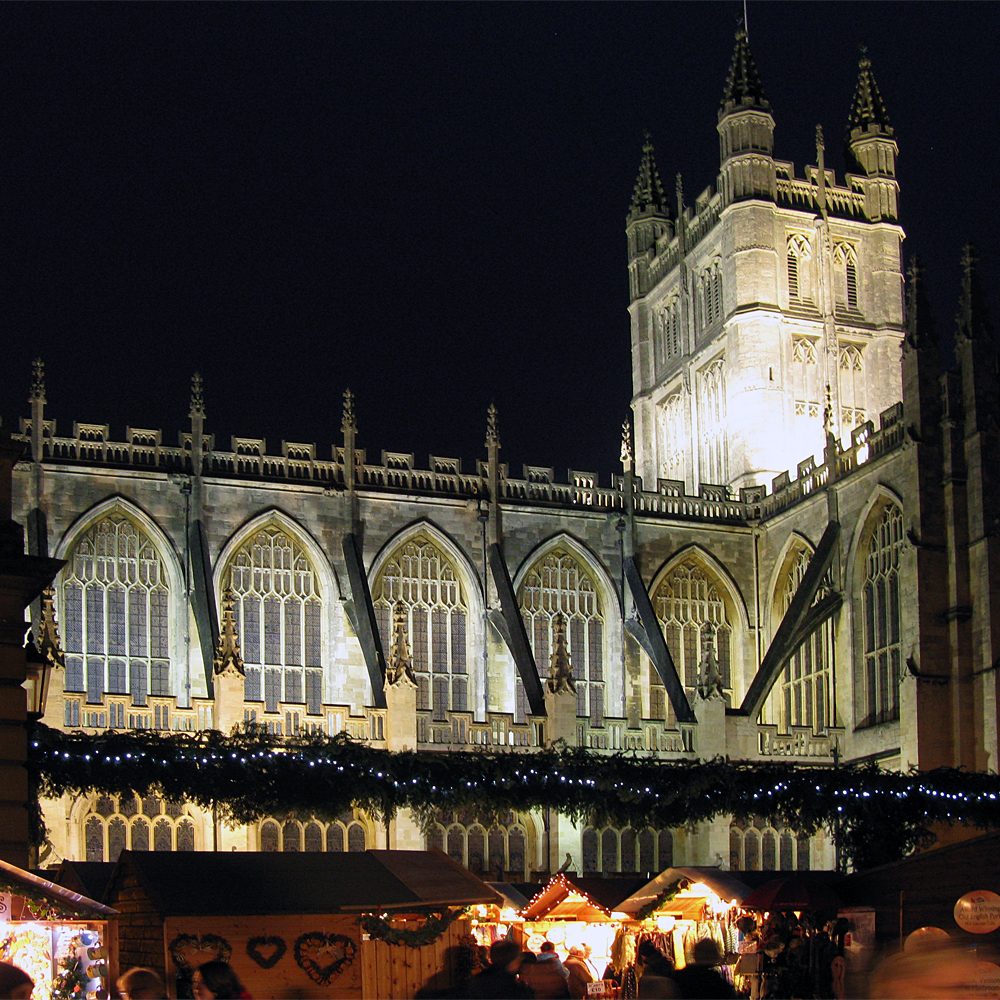
Already half-covered above, and for good reason: Bath might be England’s best rainy-day city. The Roman Baths, Thermae Bath Spa, the Fashion Museum, the Holburne Museum, the Jane Austen Centre, and Bath Abbey are all walkable within a tight, beautiful centre. Add a long afternoon tea in a Georgian tearoom and you have a perfect grey day. See the Bath travel guide for a full wet-weather route.
York
York is made for rain. The walled medieval core is compact, so you are never far from cover. York Minster is the obvious anchor (and worth every minute), but I would also pencil in the JORVIK Viking Centre, the brilliant National Railway Museum (free, enormous, and a guaranteed dry few hours), the York Castle Museum, and the gloriously atmospheric Shambles with its overhanging timber-framed shops. Then a snug pub by a fire. York does cosy better than almost anywhere.
Liverpool
Liverpool’s waterfront is a cluster of indoor culture. The Tate Liverpool, the Museum of Liverpool, the Merseyside Maritime Museum, the International Slavery Museum and The Beatles Story are mostly free or modestly priced and grouped tight around Albert Dock, much of it under cover. A genuinely world-class rainy day for not much money.
Manchester
Rainy Manchester is practically a personality trait, and the city leans into it. The Science and Industry Museum, the Manchester Art Gallery, the People’s History Museum and the National Football Museum are all strong indoor options, and the city’s covered Arndale and Northern Quarter cafés keep you dry between them. Manchester sees a lot of wet days, so it has quietly become very good at them.
Lake District
The Lakes are the wettest corner of England, which is awkward for a region built on walking. But a rainy Lake District day is far from a write-off. There are cosy pubs and tearooms in every village, the World of Beatrix Potter in Bowness, the Windermere Jetty Museum, distillery and brewery tours, and the simple pleasure of a steamy café window over a lake hidden in mist. I have written a dedicated Lake District rainy day activities guide because the region deserves its own playbook, given how often you will need it.
For where these cities sit on a wider trip, the best places to visit England rundown and a sample England itinerary help you string them together.
Rainy days with kids
A wet day with children can be the difference between a great trip and a tearful one, so this gets its own section. The good news: England is loaded with indoor attractions built to absorb a rainy afternoon and a lot of energy.
- Aquariums are the reliable winner. SEA LIFE centres dot the country, and The Deep in Hull is a spectacular one. Dark, dry, full of sharks, and easily two hours.
- Hands-on science and discovery museums. The Science Museum in London, the Science and Industry Museum in Manchester, the National Space Centre in Leicester, the @Bristol / We The Curious-style centres. Buttons to press, things to climb, nobody gets bored.
- The Natural History Museum is a kid magnet: dinosaurs and a blue whale will buy you a peaceful afternoon.
- Soft play and indoor activity centres exist in nearly every town for the youngest ones and the wildest energy. Not glamorous, deeply effective.
- Swimming pools and leisure centres, including the lidos and spas, turn “we want to get wet anyway” into a feature.
- Cinemas for older kids when you simply need to sit down in the warm and dark for two hours.
A few survival notes from doing this myself: pack a full change of clothes in the day bag (puddles are irresistible), bring snacks because rainy-day attractions get busy and queues for the café get long, and book ahead where you can, because every other family within fifty miles is heading to the same aquarium the moment the rain starts. My England with kids guide goes much further on family logistics, but the headline is simple: with a couple of indoor anchors per day, rain barely registers for children.
Cosy and indulgent rainy-day ideas
Some of my fondest English memories are not attractions at all. They are the small, warm, indulgent things you only really do when the weather forces you to slow down. Lean into these.
Afternoon tea
Afternoon tea is the most civilised possible response to a grey sky. Scones, clotted cream and jam (debate the order at your peril), finger sandwiches, little cakes, an endless pot of tea, and a comfortable chair by a rain-streaked window. You can do it grand and pricey at a London hotel like the Ritz or Claridge’s (book well ahead, expect a splurge), or do it just as happily in a village tearoom in the Cotswolds or York for a fraction of the cost. Either way it neatly fills two of the wettest hours of the afternoon. It is less a meal than a deliberate act of cosiness.
Cosy historic pubs
If I had to name the single most English rainy-day pleasure, it is a low-beamed old pub with a real fire, a long lunch, and no plan to be anywhere. England’s historic inns, some of them centuries old, are built for exactly this: thick walls, snugs, a pint of something local, hearty food, and the rain safely on the other side of the glass. I will happily spend three hours in one watching a downpour. The pub inns in England guide is a love letter to the best of them, and on a wet day it doubles as an itinerary.
Spas and getting warm
I covered the thermal spas in Bath above, but the broader point stands: a rainy day is the perfect excuse to book a spa, a hammam or a hotel pool and simply be warm and horizontal for a few hours. There is no better feeling than being deliberately, luxuriously toasty while the weather does its worst outside.
Theatre, cinema and live music
An evening of rain is a gift to anyone who likes a proper night out indoors. The West End is the obvious one, but every sizeable English city has a theatre, an independent cinema, a comedy club or a live-music venue. Buy the tickets, get a nice dinner first, and the forecast becomes irrelevant.

What to pack for rainy weather in England
You can do every museum in the country and still have a miserable trip if you are wet to the skin between them. Packing for rain is not optional in England; it is the price of admission. Here is my non-negotiable list. (The full England packing list has the rest of your luggage covered.)
- A proper waterproof jacket with a hood. Not water-resistant. Waterproof, breathable, with a hood you can actually use. This is the single most important item you will bring. A hood beats an umbrella in wind, and English rain often comes sideways.
- Waterproof or quick-drying shoes, plus a spare pair. Wet feet ruin a day faster than anything. Leather boots with a good sole, or proper walking shoes. Avoid canvas trainers.
- A small umbrella for the city, where the wind is gentler. Useless in the hills, brilliant on a London pavement.
- A packable layer. Rain in England often comes with a sharp drop in temperature, even in summer. A light fleece or jumper you can stuff in a bag covers you.
- A dry bag or waterproof pouch for your phone, camera and documents. A simple ziplock bag works in a pinch.
- Quick-dry trousers, not jeans. Wet denim is cold, heavy and takes forever to dry. Synthetic or travel trousers are far happier in the rain.
A word on transport in the wet: trains and the Tube are your dry friends and run regardless of weather, so a rainy day is a fine day to do a longer rail journey between cities. Buses and taxis get oversubscribed the moment it pours, so build in buffer time. And always carry the jacket even on a clear morning; English weather changes by the hour. For the wider logistics, my England travel tips and the main England travel guide cover transport, timing and the practical stuff in full. If you are watching the budget, the England on a budget guide leans hard on those free museums, and where to stay in England helps you pick a base near the indoor action.
Final Thoughts
Here is the honest truth after all these years: some of my best days in England have been the wet ones. The downpour that pushed me into the British Museum’s Great Court and a three-hour wander I would never have planned. The Bath spa rooftop in the rain. The York pub where I sat by the fire for an entire grey afternoon and watched the Shambles glisten. The empty cathedral, silver-lit, with the storm rattling the windows.
Rain is not a flaw in an England trip. It is part of the texture of the place, and the country has spent a thousand years building the most wonderful things to do when the sky opens. Pack a real jacket, keep a couple of indoor anchors up your sleeve for every day, stop checking the forecast every hour, and you will find that the weather simply stops being able to ruin anything. Plan for it, and a rainy day in England becomes one of the cosiest, richest days of the whole trip.
Research and Source Notes
This guide draws on years of personal travel across England in every season, cross-checked against current tourist-board and attraction information. Key facts to verify before you travel:
- Free museum admission for the British Museum, Natural History Museum, Science Museum, V&A, National Gallery and Tate reflects standard policy as of 2026; special exhibitions are ticketed, and several institutions now use free timed-entry tickets. Confirm on each museum’s official site, as policies and booking requirements change. Sources consulted include Visit London and lastminute.com.
- Prices and opening times (Roman Baths around £20+, cathedrals roughly £12 to £20, Thermae Bath Spa around £40+) are approximate and were accurate around 2026. Always check official sites for current pricing and seasonal hours.
- Rainfall patterns (frequent year-round, wetter in autumn and winter, wetter in the west and uplands) reflect general UK climate norms; see the England weather by month guide for detail.
- Rainy-day attraction ideas were informed by tourist resources including English Heritage, Visit South East England and Secret London.
Treat all prices, times and booking rules as starting
Photo Credits
- The soaring Gothic nave of Westminster Abbey in London, a grand place to shelter and one of the best rainy day activities England has to offer — Photo: Diego Delso / CC BY-SA 4.0 via Wikimedia Commons. Source
- The dome and interior of St Paul’s Cathedral in London, a grand indoor escape and one of the best rainy day activities England offers when the weather turns — Photo: Diliff / CC BY-SA 3.0 via Wikimedia Commons. Source
- The steaming Great Bath at the Roman Baths in Bath, an ideal indoor attraction when it rains in England — Photo: Simon Burchell / CC BY-SA 4.0 via Wikimedia Commons. Source
- The vast nave of York Minster, a magnificent indoor refuge for things to do in England when it rains — Photo: Diliff / CC BY-SA 3.0 via Wikimedia Commons. Source
- The vast Turbine Hall at Tate Modern in London, a dramatic free indoor space for a rainy day in England — Photo: Colin / CC BY-SA 4.0 via Wikimedia Commons. Source
Frequently asked questions
What can you do in England when it rains?
Plenty. Visit free national museums and galleries (British Museum, Natural History Museum, V&A, National Gallery, Tate), explore cathedrals and historic houses, soak at the Roman Baths or a thermal spa in Bath, browse covered markets, catch a West End show or a film, and warm up over afternoon tea or in a cosy historic pub. England's indoor scene is world-class.
Does it rain a lot in England?
Yes, rain is frequent year-round, though it rarely rains all day. Autumn and winter are wettest, and the west and the hills (the Lake District, the South West) catch far more than the drier south-east. Showers are common in every season, including summer. The sensible approach is to expect some rain on any trip and plan flexible days around it rather than hope for none.
What are the best indoor activities in London?
London's free museums lead the list: the British Museum, Natural History Museum, Science Museum, V&A, National Gallery and Tate Modern. Beyond those, try covered markets like Borough, a West End theatre matinee, afternoon tea, an aquarium for the kids, or a river boat for dry city views. You can cross most of London by Tube, barely getting wet between stops.
Are England's museums free?
Many of the biggest ones are. As of 2026, general admission to the British Museum, Natural History Museum, Science Museum, V&A, National Gallery and Tate is free, which makes them perfect rainy-day refuges. Special exhibitions are usually ticketed and paid, and some museums now require a free timed-entry ticket booked in advance, so reserve a slot online before you go.
What should I pack for rainy weather in England?
A proper waterproof jacket with a hood is the essential, plus waterproof or quick-drying shoes (and a spare pair), a packable warm layer, and quick-dry trousers rather than jeans. Add a small umbrella for the city, a dry bag for your phone and documents, and the willingness to carry the jacket even on clear mornings, because the weather turns fast.
When is the best time to visit England to avoid rain?
No month is reliably dry, but late spring and summer tend to be drier and warmer than the wet autumn and winter. Rather than chasing perfect weather, pick dates for the experiences you want and build in indoor days. For the full breakdown, see the best time to visit England and best month to visit England guides.