Sheet 46 · England Castles and Historic Sites · 17 min read
Medieval England Itinerary
My medieval England itinerary: 3 day-by-day routes stringing castles, cathedrals and walled towns together, with bases, drive times and train options.
 Sheet 46
Contents 7 sections
I have lost count of how many times I have driven up to a city wall, parked badly, and walked straight into the Middle Ages. England does this to you. One minute you are on a dual carriageway behind a caravan, the next you are standing under a cathedral that was already old when Columbus set sail.
The hard part of planning a medieval England itinerary is not the sites themselves. It is the stitching. People pick ten brilliant places off a list, then realise they are scattered across four corners of the country and the whole thing collapses into a blur of motorway.
So this is a medieval England itinerary built around geography, not just a wish list. Three tight loops — Northern, Southern, and a Marches/Midlands run — each clustering castles, cathedrals and walled towns close enough that you actually arrive, rather than just transit. Pick one for a long weekend, or chain two for a fortnight.
Quick Answer: What Is the Best Medieval England Itinerary?
The best medieval England itinerary is a regional loop, not a national dash. In the north, run York to Durham to Alnwick and Bamburgh, finishing at Richmond. In the south, link London to Canterbury, Rochester, Dover and Battle. In the middle, base around Warwick and reach Kenilworth, Lincoln and Ludlow. Each loop runs comfortably over four to six days, by car or — with patience — by train.
At a Glance: Three Medieval Routes Compared
Here is how the three loops stack up before we get into the day-by-day. I have driven all three, and the timings below assume normal traffic and a sane pace — not a Top Gear dash.
| Route | Days | Main stops | Best base | Car or train |
|---|---|---|---|---|
| Northern loop | 4-6 | York, Durham, Alnwick, Bamburgh, Richmond | York, then Alnwick | Car ideal; train doable to York/Durham/Alnmouth |
| Southern loop | 3-5 | Canterbury, Rochester, Dover, Battle/Hastings | Canterbury | Train superb to Canterbury/Dover; car for Battle coast |
| Marches/Midlands loop | 4-6 | Warwick, Kenilworth, Lincoln, Ludlow | Warwick, then Ludlow | Car strongly preferred; train reaches Warwick/Lincoln/Ludlow |
If you only have time for one, I send first-timers north. The York-to-Northumberland stretch gives you the walled city, the cathedral, the fairy-tale castle and the empty windswept coast all in one go. But the south is the easiest to do without a car, and the Marches is the one seasoned travellers fall hardest for.
Northern Loop: York, Durham and the Northumberland Coast
This is the headline act. You get the most complete medieval city in the country, a UNESCO cathedral that genuinely stops conversation, and a coastline studded with castles that look like film sets — because half of them have been.
Day 1: York — walk the walls before anything else
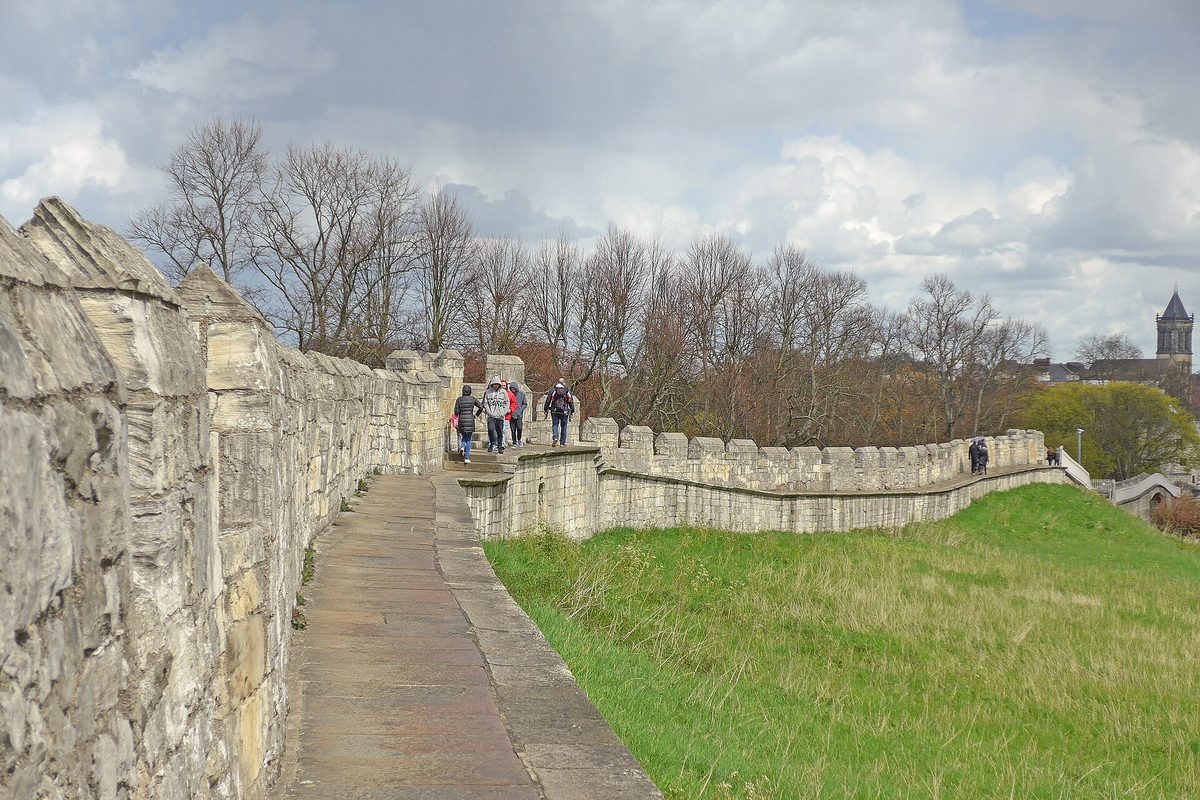
Base yourself in York for two nights. It earns it. Before you do anything fashionable, walk the city walls. They are the longest medieval town walls in England, roughly two miles of them, most dating from the 12th to 14th centuries, and the circuit gives you the whole layout in under two hours. Do it first and the rest of the city makes sense.
Then York Minster, the largest Gothic cathedral in northern Europe, and the Shambles — that lurching, overhanging medieval street everyone photographs. I will not bang on about the Minster here; the great cathedrals of England deserve their own page and the Minster headlines it. York is also a Viking town as much as a medieval one, so the Roman and Norse layers sit right under your feet — there is a whole thread on the Roman sites of England if that is your thing.
Stay central. Park once and walk; York’s old core is hopeless and wonderful for cars in equal measure.
Day 2: Durham — the cathedral that ruins you for other cathedrals
Durham is around an hour north of York up the A1(M), or under 50 minutes on a direct train — and frankly the train is the smarter call here, because Durham’s peninsula is steep, tight and car-hostile. The walk up from the station tells you everything.
Durham Cathedral and Castle have been a UNESCO World Heritage Site since 1986, and the cathedral is over 900 years old. It sits on a rock in a near-loop of the River Wear, and when you come up onto Palace Green and the whole Norman mass of it rises in front of you, you will understand why I keep sending people here. It is, to my eye, the single most moving medieval building in England.
Do Durham as a day from York and roll back for a second York night, or — if you are moving fast — push straight on north afterwards. I prefer the former. Durham deserves an unhurried afternoon and a wander along the riverbanks below the walls.
Day 3: North to Alnwick and Bamburgh
Now the coast. From York it is around two and a half hours’ drive up to Bamburgh; from Durham, closer to ninety minutes. Either way you are heading into Northumberland, which is gloriously, almost eerily empty.
Make Alnwick your base for the next night or two. Alnwick Castle is the big draw — still lived in, vast, and familiar to anyone who has seen Harry Potter or Downton Abbey. The deep detail on each of these lives in the best castles in England round-up, so here I will just tell you how to thread them.
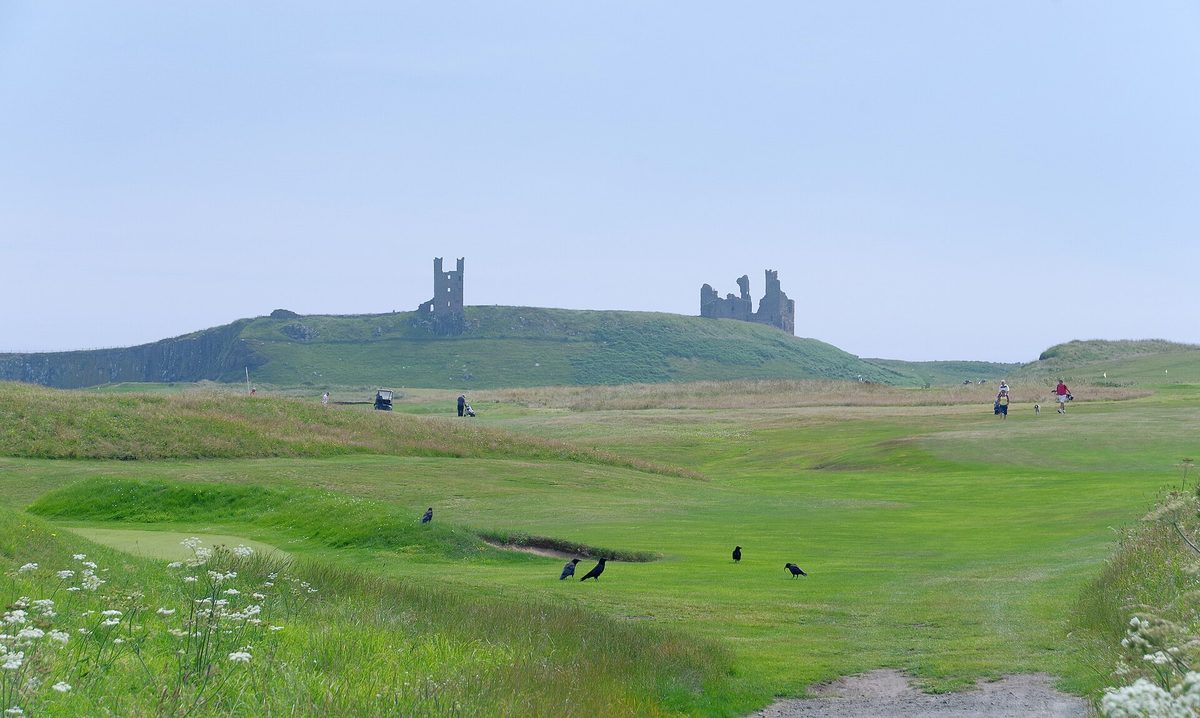
From Alnwick, Bamburgh Castle is about half an hour up the coast, sitting on a basalt crag over a beach so wide and pale it does not look real. Go late in the afternoon when the day-trippers thin out and the light comes in low off the North Sea. Just south, Dunstanburgh Castle is a ruin you can only reach on foot — a roughly mile-and-a-half walk along the shore from Craster, which is half the pleasure. Pack a flask.
If you are doing this by train, it is fiddlier but possible. There are direct trains from York up to Alnmouth (around 90 minutes to two hours) and Berwick-upon-Tweed, then local buses inland. Bamburgh’s own nearest station, Chathill, has almost no useful service, so most rail travellers route via Berwick or Alnmouth and take the coastal bus. With a car it is effortless; without one, build in slack.
Day 4: Richmond and home
On the way back south, peel off to Richmond in North Yorkshire. Its Norman castle keep towers over the River Swale, and the town below — cobbled, Georgian-fronted but medieval-boned, with England’s largest cobbled marketplace — is a lovely, low-key place to end. The nearest station is Darlington, about 12 miles away, with a bus link in. By car it is an easy detour off the A1.
That is a clean four-day northern loop. Stretch it to five or six by adding a second York day, a slow afternoon at Dunstanburgh, or a night actually in Alnwick rather than rushing the coast. Honestly, give it the six if you can.
Southern Loop: Canterbury, the Kent Coast and 1066 Country
This is the loop for people flying into London, and the easiest of the three to run without a car. Everything is close, the trains are quick, and you are tracing two of the foundational stories of medieval England: Becket’s martyrdom and the Norman Conquest.
Day 1: London to Canterbury
Get out of London early. High-speed trains from St Pancras reach Canterbury in under an hour, which is faster and less stressful than fighting the M2. Base here for two nights.
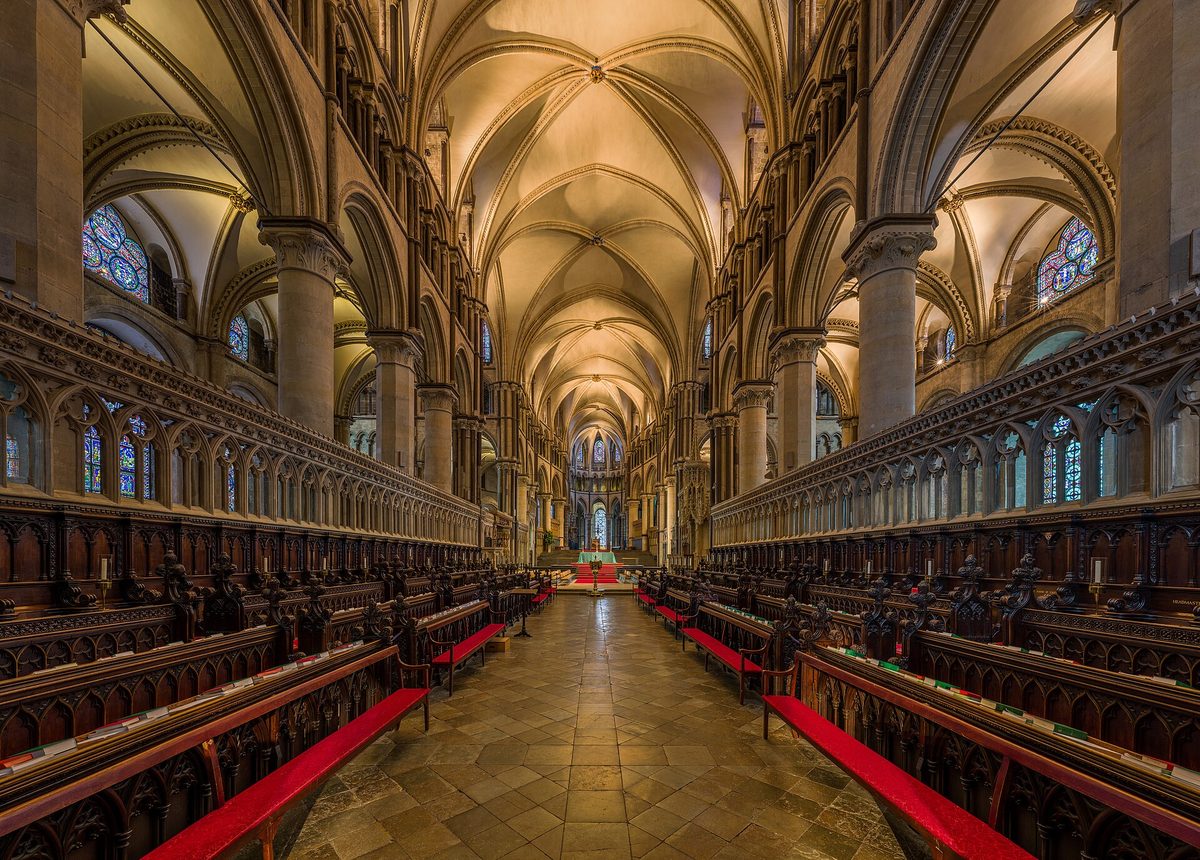
Canterbury Cathedral is the mother church of English Christianity and the spot where Thomas Becket was murdered in 1170 — the pilgrimage destination of Chaucer’s whole Canterbury Tales. The medieval city around it still has its walls, the Westgate towers, and a tangle of old streets that reward aimless walking. Again, the cathedral itself gets the full treatment over on the cathedrals page; here it anchors your route.
Canterbury also happens to be a terrific introduction to how medieval and earlier layers stack in England — there is Roman work beneath the city, which ties neatly into the wider historic towns of England story.
Day 2: Rochester and Dover
Two castles today, in opposite directions, both reachable by train if you do not have a car — though a car makes pairing them in one day far easier.
Rochester sits back towards London, around 45 minutes by road. Its Norman keep is one of the tallest in England, and the small cathedral beside it is the second-oldest in the country. The medieval high street is a pleasant, slightly Dickensian potter — he lived nearby and it shows in the place names.
Dover is the other direction, under an hour from Canterbury. Dover Castle is enormous — a great medieval fortress crowning the white cliffs, with a Roman lighthouse in its grounds and wartime tunnels burrowed beneath. It is one of those sites where the medieval, Roman and modern collapse into a single hill. If you are weighing up which sites your membership covers, the English Heritage versus National Trust breakdown is worth a look, because Dover, Richmond, Dunstanburgh and Kenilworth are all English Heritage.
Realistically, if you are carless, split these across the day with care or pick one. With a car you can do both and still get back for dinner in Canterbury.
Day 3: Battle, Hastings and home
Drive west along the coast to Battle — around an hour and a half from Canterbury, or an hour from Dover. This is where it all turned in 1066: Battle Abbey stands on the very field where Harold fell, the high altar reputedly marking the spot. Walking the battlefield with the abbey ruins above you is one of the most atmospheric hours in English history.
Nearby Hastings gives you a ruined clifftop castle and a working old town. From here you can run back to London in around two hours, or — if you have built the southern loop into something bigger — carry on west.
A note on doing this by train: Canterbury, Dover, Rochester and Hastings all have good stations, so a carless southern loop is genuinely viable. Battle has a station too, on the line between Hastings and London. The only stretch that nags without a car is hopping along the coast between Dover and Battle, where a car saves real time. There is a full England train travel guide if you want to plan the rail version properly.
Marches and Midlands Loop: Warwick, Lincoln and the Welsh Border
This is the connoisseur’s loop. Fewer crowds, more ruins, and the strange, half-forgotten landscape of the Welsh Marches — the borderland where England’s lords built castle after castle to hold the line. You really want a car for this one; the sites are more scattered and the rural rail thins out.
Day 1: Warwick and Kenilworth
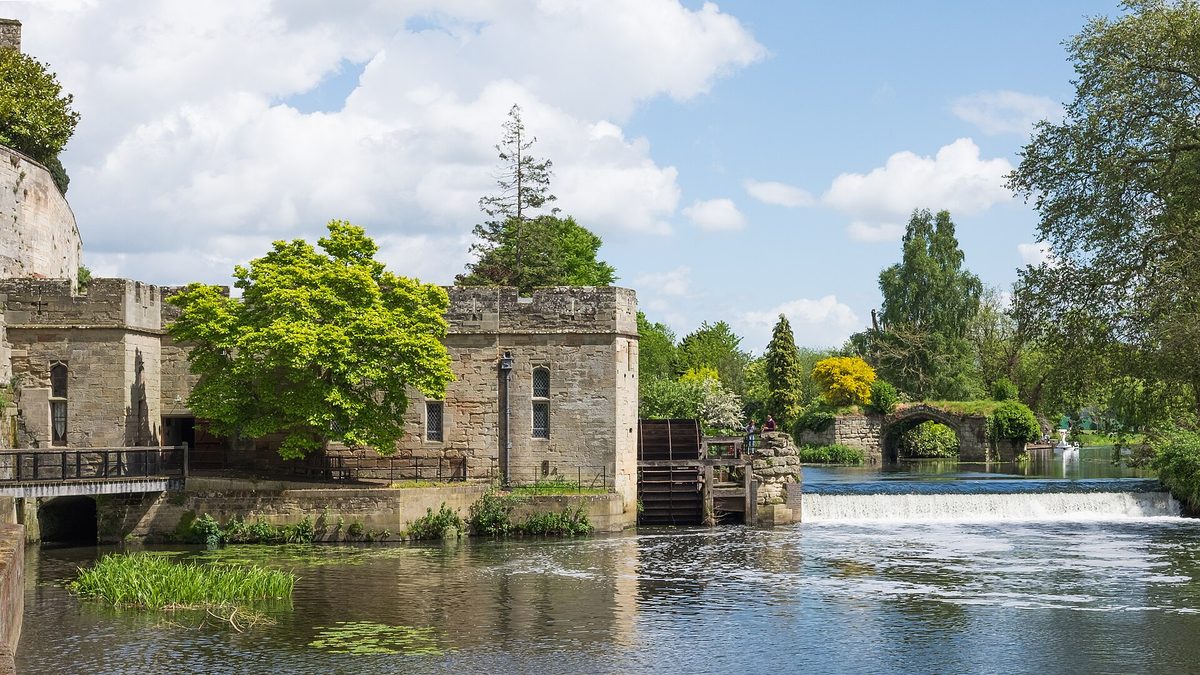
Base in Warwick for the first night or two. Warwick Castle is the showpiece — built originally by William the Conqueror in 1068, rebuilt in stone in the 12th century, and now run as a full-blown attraction. It is touristy and not cheap (expect around £28-£33 a head as of 2026, plus parking), but it is genuinely complete in a way few castles are, and the riverside setting is superb. Whether it is worth it depends on your tolerance for theme-park flourishes; the sober verdict lives in the castles round-up.
Just up the road — around 15 minutes — is Kenilworth Castle, which I actually love more. It was founded in the 1120s and is a magnificent red sandstone ruin, with a recreated Elizabethan garden and the great hall where Robert Dudley once entertained Elizabeth I. That Tudor chapter sits at the heart of the Tudor England travel trail if you want to follow it. Warwick and Kenilworth together make an easy, rich first day.
Day 2: Lincoln
Strike northeast to Lincoln — around two hours from Warwick. It is worth every mile. Lincoln Cathedral rides the top of the hill like a ship, and was for centuries reputedly the tallest building in the world. Below it, Lincoln Castle holds one of the surviving original copies of Magna Carta, and you can walk its medieval walls for a view clear across the county.
The street that links castle and cathedral is literally called Steep Hill, and it is — a gorgeous, knee-testing run of timber-framed and Tudor shopfronts, including some of the oldest domestic buildings in England. Lincoln has its own station with direct trains from several cities, so it slots into a rail itinerary more easily than the rest of this loop. I would give it a full day and a night up in the old quarter, away from the modern town below.
Day 3: Ludlow and the Marches
Now west to the border. Ludlow, in Shropshire, is the one I would retire to. Its castle is a sprawling medieval ruin — an 11th-century border stronghold that became the seat of Richard, Duke of York, and a power base on the Welsh Marches. The town wrapped around it is one of the best-preserved in England: hundreds of listed buildings, a glorious church, and a food scene that punches absurdly above its size.
From Warwick or Lincoln it is a longer haul — budget two to three hours of driving depending on your start — so I treat Ludlow as a destination, not a stop. It sits on the Welsh Marches railway line, about a ten-minute walk from the station, with direct trains from Manchester and Cardiff, so the carless can reach it; you just lose the ability to roam the surrounding border castles easily.
If you have an extra day, the Marches reward it endlessly — Stokesay Castle, a fortified medieval manor, is barely 20 minutes south of Ludlow and one of the most perfect small medieval houses in the country. These quieter sites are also where the free historic sites of England angle pays off, and several grand country houses sit within reach if you want to mix periods.
Getting Around and When to Go
A few hard-won practicalities, because the logistics make or break a medieval England road trip.
Car versus train. For the southern loop, the train is genuinely competitive — Kent’s network is dense and fast. For the northern loop, the train gets you to the anchors (York, Durham, Alnmouth) but the Northumberland coast really wants a car. For the Marches, take the car; the rural rail is too sparse to lean on. If you are torn, the broader England transport overview lays out the trade-offs, and the dedicated train travel guide covers tickets and rail passes.
Driving notes. The A1 and A1(M) are your north-south spine for the northern and Lincoln stretches. Kent runs on the M2/M20 and the A259 coast road. The Marches mean proper country roads — beautiful, but slower than the map suggests, so pad your timings. Parking in the old cores (York, Durham, Lincoln) is the real friction; use park-and-ride or edge-of-centre car parks and walk in.
When to go. Late spring and early autumn are the sweet spot — long daylight, thinner crowds, and the castles look their best with a bit of weather in the sky. Many English Heritage ruins keep shorter winter hours, so check before a cold-season trip. Summer is busiest and brightest; the Northumberland beaches in July are a revelation but the York crowds are not.
Where to base. I am a fan of two-night bases over one-night dashes. Sleep in York, Canterbury, Warwick, Alnwick, Lincoln and Ludlow and you cover the ground without living out of the car. There is a full where to stay in England guide if you want help picking neighbourhoods.
Fitting it into a bigger trip. These loops slot neatly into a wider plan. The northern and southern loops together make a natural fortnight; either one pairs with London for a week. See the England itinerary hub for the master plan, plus the ready-made 7-day, 10-day and 2-week routes — and the broader England travel guide for everything around the edges. The whole subject sits under the wider story of England’s castles and historic sites, which is the place to start if you want the full lay of the land. Several of these stops — Durham, Canterbury — are also UNESCO World Heritage Sites in England, if you collect them.
Final Thoughts
The trick with medieval England is not to be greedy. Pick a region, give it a few unhurried days, and let the walls and the weather do the work. A morning walking Lincoln’s Steep Hill, an afternoon on Bamburgh’s empty beach, an evening in a Ludlow pub older than most countries — these stick with you in a way that a checklist of ten cathedrals in five days never will.
Drive one loop this trip. Come back for the next. The Middle Ages are not going anywhere, and England keeps them better than almost anywhere on earth.
Research and Source Notes
I cross-checked locations, rough drive and train times, and prices against official and reliable sources, and have hedged all figures as approximate and current as of 2026.
- York city walls, Minster, the Shambles: England’s Historic Cities / York tourism and Medieval Britain confirmed the walls as the longest medieval town walls in England (roughly two miles, mostly 12th-14th century) and York Minster as the largest Gothic cathedral in northern Europe.
- Durham Cathedral and Castle: Wanderlust Chloe and UNESCO-cited sources confirmed the World Heritage inscription (1986) and the cathedral’s age (over 900 years); the York-Durham drive and direct train (under an hour) cross-checked against National Rail-style routings.
- Northumberland coast (Alnwick, Bamburgh, Dunstanburgh): Visit Bamburgh’s official “Getting Here” page and Good Journey confirmed that Bamburgh’s nearest station (Chathill) has minimal service and that most rail travellers route via Berwick-upon-Tweed or Alnmouth; York-Bamburgh drive (~2h24) and York-Alnmouth train (90-120 min) per Rome2Rio and the Trainline.
- Richmond, North Yorkshire: Wikipedia and Rome2Rio confirmed the nearest station as Darlington (~12 miles) with a bus link, and Richmond Castle as a Norman keep above the Swale.
- Canterbury, Rochester, Dover, Battle/Hastings: Rick Steves Travel Forum, Wanderlust Chloe and Wanderlog were used to verify that Dover is under an hour from Canterbury, Battle around an hour from Dover, and Canterbury to Hastings roughly 90 minutes; high-speed trains London-Canterbury in under an hour per National Rail-style sources.
- Warwick and Kenilworth: Britain Visitor and Good Journey confirmed Warwick Castle’s Norman origin (1068) and stone rebuild, Kenilworth’s founding in the 1120s, and the short hop between them; the ~£28-£33 entry range cross-checked against Tripadvisor and Rick Steves forum reports (hedged as approximate, 2026).
- Lincoln: Medieval Britain and Medieval Chronicles confirmed the hilltop cathedral, the Magna Carta copy held at Lincoln Castle, Steep Hill, and Lincoln’s direct rail links.
- Ludlow and Stokesay: Ludlow Castle’s official site, Wikipedia and History Hit confirmed the 11th-century border stronghold’s link to Richard, Duke of York, Ludlow station as a ~10-minute walk on the Welsh Marches line with direct Manchester and Cardiff services, and Stokesay nearby as a fortified medieval manor.
- Carless feasibility and route framing: English Heritage’s “Days out without a car,” Finding the Universe and Anywhere We Roam informed the public-transport notes; the headline route ideas were sense-checked against The Geographical Cure’s medieval England road trip itinerary, then re-planned around tighter regional loops.
Sources: The Geographical Cure, Wanderlust Chloe, Medieval Britain, England’s Historic Cities, Visit Bamburgh, Good Journey, Britain Visitor, Ludlow Castle, History Hit, English Heritage.
Photo Credits
- Stone medieval city walls curving past York Minster, the kind of view that opens this medieval England itinerary — Photo: Tim Green from Bradford / CC BY 2.0 via Wikimedia Commons. Source
- The Norman towers of Durham Cathedral rising above the River Wear on a clear day — Photo: Tilman2007 / CC BY-SA 4.0 via Wikimedia Commons. Source
- The lonely ruined silhouette of Dunstanburgh Castle on the Northumberland coast at dusk — Photo: mattbuck (category) / CC BY-SA 4.0 via Wikimedia Commons. Source
- The west front of Canterbury Cathedral framed by the medieval gatehouse, a centrepiece of this castles and cathedrals itinerary — Photo: Diliff / CC BY-SA 3.0 via Wikimedia Commons. Source
- The towers and battlements of Warwick Castle reflected in the River Avon — Photo: DeFacto / CC BY-SA 4.0 via Wikimedia Commons. Source
Frequently asked questions
How many days do you need for a medieval England itinerary?
Plan four to six days per loop. A single regional loop — say York up to Northumberland — works beautifully over four full days, or six if you want to slow down and sleep in two bases. To combine two loops, such as the north and the south, give yourself around two weeks so the long transfers do not eat your sightseeing time.
Can you do a medieval England road trip without a car?
Yes, for the southern loop especially. Canterbury, Dover, Rochester, Hastings and Battle all have train stations with frequent service, so Kent's medieval circuit runs well on rail. The north reaches York, Durham and Alnmouth easily by train, but the Northumberland coast and the Welsh Marches really want a car for the final, scattered miles.
What is the most medieval town in England?
York is the strongest all-rounder — the longest medieval walls in the country, the Shambles, and York Minster, all in a compact, walkable core. But Lincoln and Ludlow are serious rivals, both crammed with timber-framed streets, a hilltop cathedral or castle, and far fewer crowds. Canterbury wins on pilgrimage history. I would not argue with anyone who crowned any of them.
Which is better for medieval sites, northern or southern England?
Both, for different reasons. The north gives you raw drama — Durham's cathedral, Bamburgh on its crag, the empty Northumberland coast. The south gives you density and easy logistics — Canterbury, Dover and 1066 country are close together and brilliantly served by trains. First-timers with a car: go north. First-timers without one: go south.
How much does a medieval England itinerary cost?
Site entry is the main variable. Big paid attractions like Warwick Castle run around £28-£33 a head as of 2026; English Heritage sites such as Dover, Kenilworth and Richmond are cheaper, and a membership pays off fast if you are visiting several. Cathedrals often ask a suggested donation rather than a fixed fee. Add car hire or rail tickets and accommodation on top.
Is English Heritage or National Trust membership worth it for this trip?
Often, yes. Dover, Kenilworth, Richmond, Dunstanburgh and Battle Abbey are English Heritage, so a membership quickly pays for itself across the northern and southern loops. Some sites, like Warwick and Alnwick, are privately run and not covered by either. Check each route against the English Heritage versus National Trust comparison before you buy.