Sheet 80 · Lake District Travel Guide · 17 min read
Windermere Travel Guide
A local Windermere travel guide to the town, Bowness and the lake: getting there by train, the best cruises, walks and attractions, plus how to dodge the
 Sheet 80
Contents 13 sections
The first thing to know about Windermere is that there are, confusingly, three of them. There’s the town, the lakeshore village, and the lake itself, and they are not the same place. Sort that out and the rest falls into line.
This Windermere travel guide untangles the muddle and tells you where to actually go. Windermere town sits up the hill with the railway station; Bowness-on-Windermere is the busy lakeside hub about a mile and a half down; “Lake Windermere” is the long sheet of water they both look at. Get the geography straight and you’ll spend your time on the water instead of in a car park.
Quick Answer: How This Windermere Travel Guide Works
Here’s the short version, because the names trip everyone up. Windermere is the town at the top of the hill — it has the train station, the supermarkets, and the bus stops, but no lakeside. Bowness-on-Windermere (locals just say “Bowness”) is the lakeshore tourist village down the slope, with the piers, the ice cream, the swan-feeding crowds, and most of the boats. Lake Windermere is the 10.5-mile lake itself, the longest in England.
So you arrive by train at Windermere, then make your way down to Bowness for anything to do with the water. The walk between the two is about a mile and a half, mostly downhill on the way to the lake (and a slog back up). There’s a frequent bus if you’d rather not.
This is England’s busiest corner of the Lake District, and I won’t pretend otherwise. But it’s busy for reasons — the lake cruises are genuinely lovely, the Beatrix Potter trail is real, and a 40-minute walk gets you above the whole scrum to a view that changed a man’s life. For the wider region, start with my Lake District travel guide; this page is just about the Windermere–Bowness gateway and the lake.
Windermere at a Glance
Here’s what’s worth your time around Windermere and Bowness, roughly ranked by how often I’d send a first-timer there. Prices are hedged because operators adjust them seasonally — always check the official site before you go.
| What | Time needed | Rough cost (as of 2026) | Best for |
|---|---|---|---|
| Windermere Lake Cruise (Bowness–Ambleside or Lakeside) | 1.5–3.5 hrs | Around £12–18 adult return | Everyone; first-timers |
| Orrest Head walk | 1–1.5 hrs | Free | Views, no effort, families |
| Windermere car/foot ferry to Hill Top | Half day | Foot ~£1.50; car ~£8 | Beatrix Potter pilgrims |
| The World of Beatrix Potter | 1 hr | Around £9–13 adult; family tickets available | Under-7s; rainy mornings |
| Windermere Jetty Museum | 1.5–2 hrs | Around £9–10 adult | Boat nerds, families |
| Brockhole-on-Windermere | Half/full day | Free entry (pay to park/play) | Kids, active days |
| Fell Foot (south lake) | Half day | Free entry; parking ~£6–9 | Quieter lakeside, watersports |
| Bowness promenade pottering | 1 hr | Free | People-watching, ice cream |
Windermere vs Bowness vs the Lake: The Confusion, Solved
I’ll labour this point because it saves real grief. People book a hotel “in Windermere,” step off the train, and discover the lake is nowhere in sight. Then they walk twenty minutes downhill expecting a shoreline and hit more shops.
Windermere the town is largely a Victorian creation. The railway arrived in 1847, the station was built where the gradient stopped being sensible, and a service town grew up around it — butchers, a chemist, outdoor shops, the flagship Lakeland homeware store, and the bus interchange. It’s practical and a bit ordinary. You don’t come here for charm; you come here because it’s where the train, the buses, and the supermarket are.
Bowness-on-Windermere is the older settlement, sat right on the water, and it’s where the tourism actually happens. The piers, the cruise boats, the swan-feeding throng, the fudge shops, the tea rooms with a queue out the door — that’s all Bowness. Walk down from the station and you’ll know you’ve arrived when the crowds thicken and you can smell the doughnuts.
Lake Windermere is the water. It runs roughly north–south for about 10.5 miles, the longest natural lake in England, with Ambleside at the top (north) and Lakeside and Newby Bridge at the bottom (south). The cruise boats stitch those points together, and the little car ferry hops across the narrow waist near Bowness to the quiet western shore.
The honest summary: Bowness is the most crowded spot in the entire national park, and on an August afternoon it can feel like a seaside resort that wandered inland. But the lake is big, and most of it is empty. Get on a boat or over to the west side and the mob evaporates. If you’re weighing up where to base yourself for all this, I’ve broken down the trade-offs in where to stay in the Lake District.
Getting to Windermere
The good news for car-free travellers: Windermere is one of the few Lake District spots you can reach directly by train, and that alone makes it the natural gateway.
By train. From London, take an Avanti West Coast service from Euston up the West Coast Main Line and change at Oxenholme Lake District — the whole London–Oxenholme leg is around three hours. From Oxenholme, a little Northern branch-line train trundles the nine miles to Windermere in about 20 minutes, running roughly hourly (more often in summer). The branch line is the only railway that actually penetrates the central Lakes, and the last stop is Windermere. Trains from Manchester and the Northwest also feed into Oxenholme. It is genuinely easy.
A reminder, because it matters: the station is in Windermere town, not Bowness. It’s about a 15–20 minute walk downhill to the lake at Bowness, or a short hop on the bus that meets the trains. Do not expect to step off and see water.
By car. Most people drive, and the M6 to junction 36 then the A591 is the standard run. Be warned that parking in Bowness in peak season is a competitive sport — arrive before 10am or be prepared to circle. Frankly, the train is less stressful, and once you’re here the boats and buses get you around. For a fuller car-free plan, see my guide to the Lake District without a car.
Getting between the two. The Windermere–Bowness shuttle and the open-top 599 bus run frequently in season and link the station, the town, Bowness pier, and on up to Ambleside. If the weather’s kind, the downhill walk to the lake is pleasant; the uphill return, less so.
On the Water: Windermere Lake Cruises
If you do one thing here, get on the lake. The boats are run by Windermere Lake Cruises, a long-established operator, and they are the heart of a visit — far more than another fudge shop.
The network is colour-coded and easy once you see it:
- Red Cruise — Bowness north to Ambleside (Waterhead). The classic short hop, about 30–40 minutes each way, threading past wooded islands and lakeside mansions. Return fares are around £12–18 adult (as of 2026), depending on source and season.
- Yellow Cruise — Bowness south to Lakeside, where you can connect to the Lakeside & Haverthwaite steam railway and the aquarium. Slightly longer; fares around £12–18 adult return.
- Freedom of the Lake — a 24- or 48-hour hop-on, hop-off pass covering the whole network. Around £25.50 off-peak, rising to £43 in peak summer, for 24 hours (as of 2026). This is the one to buy if you want to spend a day pinballing between Bowness, Ambleside, and Lakeside.
A few honest tips. The big “Steamers” are the comfortable, atmospheric option, but the smaller launches feel more intimate. Sit on the open top deck if the weather allows — the views up to the Langdale Pikes and the high fells are the whole point, and you lose them through a salt-flecked window. And book online ahead in summer; the Bowness pier queues are real.
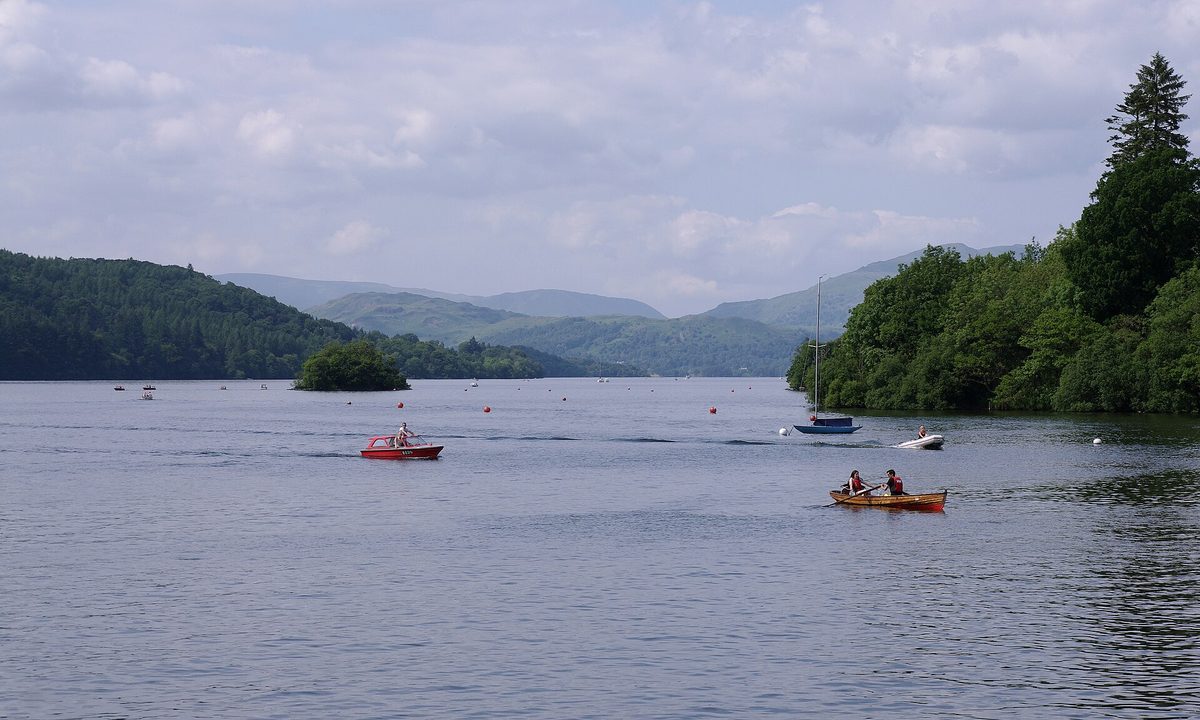
You don’t have to take a scheduled cruise, either. Bowness Bay is lined with hire outfits offering rowing boats, motorboats, and self-drive launches by the hour — a cheap, genuinely fun way to potter offshore with the kids and escape the promenade for an hour.
Things to Do in Windermere and Bowness
Beyond the boats, here’s where the worthwhile things to do in Windermere and Bowness actually are — and where they aren’t.
The World of Beatrix Potter
In the middle of Bowness, this is an indoor walk-through of Potter’s tales — Peter Rabbit, Jemima Puddle-Duck and the rest brought to life in little dioramas, with a tea room and a garden. Tickets run around £9–13 for an adult as of 2026, with family tickets available, and there’s a café and shop.
My honest take: if you’ve got an under-seven who’s obsessed with Peter Rabbit, it’s a charming hour and worth the money. If you don’t, you can comfortably skip it — it’s the most “attraction-y” thing in town, and adults travelling without small children rarely come away thrilled. Note it usually closes for a couple of weeks’ maintenance in January, so check ahead for early-year trips. For more wet-weather backups, see Lake District rainy day activities.
Windermere Jetty Museum
A short walk from Bowness, this Lakeland Arts museum reopened in 2019 in a smart modern building on the shore, and it’s a quiet winner. The collection of historic boats — steam launches, racing motorboats, a Victorian yacht — is beautifully presented, and on many days you can take a short trip on a restored steam launch. Tickets are around £9–10 adult (as of 2026). It’s a proper indoor option that doesn’t feel like a tourist trap, and boat-minded kids love it.
Brockhole-on-Windermere
A few miles up the lakeshore toward Ambleside, Brockhole is the national park’s official visitor centre, set in lovely grounds running down to the water. Entry to the grounds is free; you pay for parking and for the adventure activities — a treetop ropes course, archery, mini-golf, boat hire, a big adventure playground. It’s pitched squarely at families and makes a good half-day if the kids need to run. You can reach it by boat from Bowness, which is half the fun.
Bowness promenade
The lakefront itself is free and worth a slow wander — feed the swans, watch the boats, eat an ice cream. Just calibrate your expectations. The shops are mostly the usual fudge-and-souvenir affair, the cafés get rammed, and the “St Mary’s Lane” tangle behind the front is more about volume than charm. Enjoy it for an hour, then get on the water or up the hill.
Walks From Windermere: Orrest Head
If you only have the energy for one walk, make it Orrest Head, and do it for the reason that it’s the most reward for the least effort anywhere near the lake.
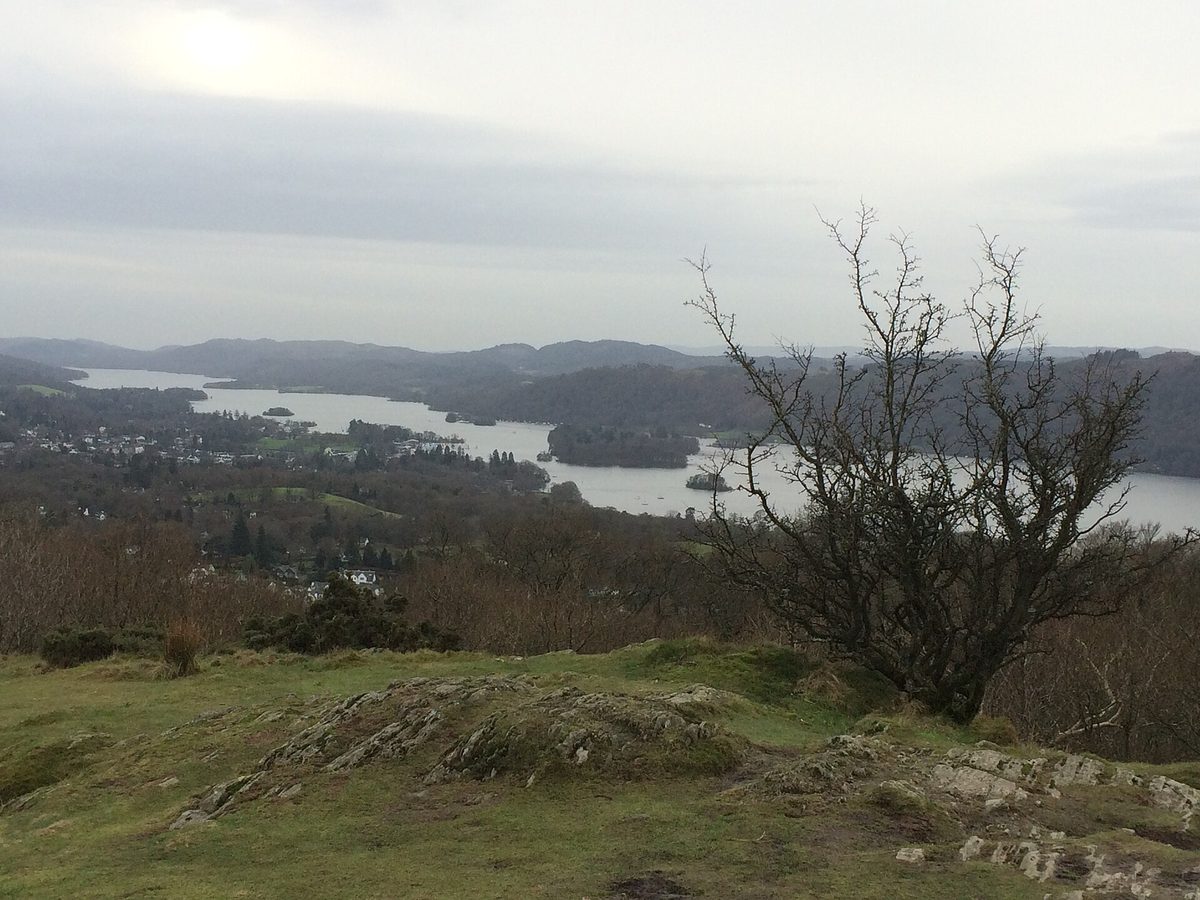
The path starts right by Windermere station, crosses the main road, and climbs gently through Elleray Wood on a well-made, waymarked route — no stiles, no scrambling, just a steady pull through the trees with benches along the way. In about 30–40 minutes you reach the open top at roughly 780 feet, and the whole of Lake Windermere unfurls beneath you, ringed by fells, with the high central peaks stacked up behind. On a clear day you can pick out Scafell Pike and even glimpse the Irish Sea.
There’s a lovely bit of history here too. This is the spot where a young Alfred Wainwright, up from Blackburn on a day trip in 1930, first saw the Lake District — and the view so moved him that it set the course of his life and his celebrated fell-walking guides. Standing there, you understand why.
It’s a there-and-back of about two miles, or a short circular, and it’s family-friendly. For more in this vein across the park, see my round-up of easy Lake District walks. And if you want a serious hill day, that’s a different conversation — the bigger fells live in the best things to do in the Lake District.
Across the Lake: The Windermere Ferry, Sawrey and Hill Top
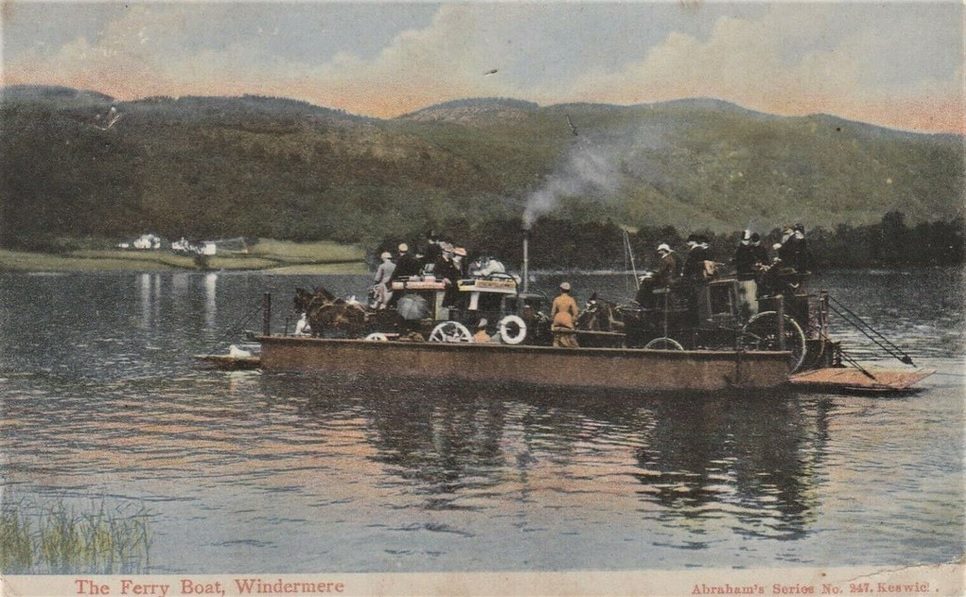
Here’s the move that gets you off the tourist conveyor belt. From Ferry Nab, just south of Bowness, the Windermere Ferry — a small chain-guided car-and-foot ferry — crosses the narrow waist of the lake to Ferry House on the quiet western shore. The crossing takes about ten minutes and costs around £1.50 for foot passengers or £8 for a car (as of 2026), card payment only. It’s run by the council, not the cruise company, and it’s been shuttling across this gap for centuries.
The west side is a different world — wooded, lane-laced, far quieter. The reason most people cross is Hill Top, the 17th-century farmhouse in Near Sawrey that Beatrix Potter bought in 1905 with her Peter Rabbit earnings and kept exactly as her own. It’s owned by the National Trust now, and walking through the small rooms you recognise the very interiors she drew for her books — it’s genuinely atmospheric, not a reconstruction.
A word of warning that the Trust itself stresses: Hill Top is tiny, timed-entry, and immensely popular. Book your slot in advance, and don’t turn up on spec in August expecting to get in. From Ferry House there’s a seasonal shuttle bus (roughly April to October) up to Hill Top and the pretty village of Hawkshead beyond, or you can walk it — the lane is lovely. Potter is a thread through the whole area, and Sawrey and Hawkshead are among the most beautiful villages in England for good reason.
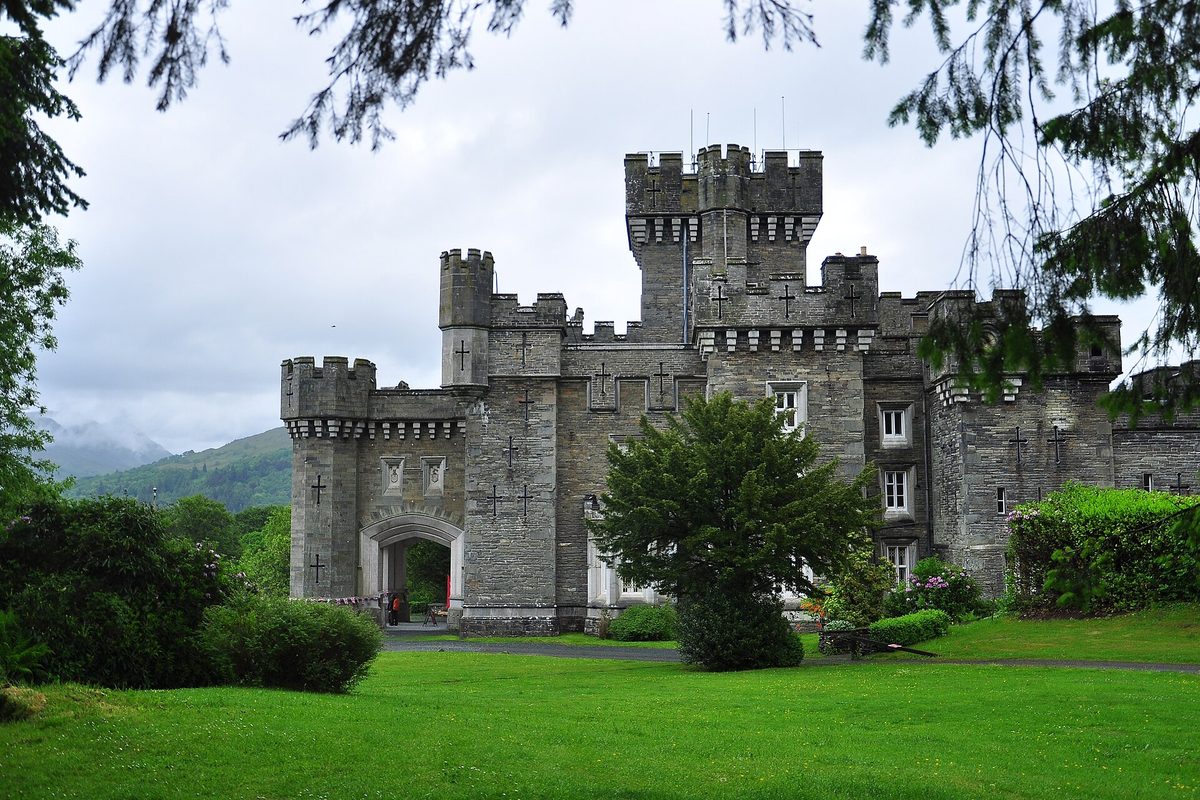
While you’re on the west shore, Wray Castle is another National Trust property worth knowing about — a mock-Gothic Victorian pile with no fancy furniture but huge grounds, hands-on family rooms, and a Beatrix Potter connection (she holidayed here as a teenager). It’s relaxed, child-friendly, and reachable by a separate cruise-boat pier, so you can fold it into a lake day without driving.
The Quieter South: Fell Foot
For a calmer slice of the lakeshore, head to the southern end. Fell Foot, near Newby Bridge, is a National Trust park spread along the water with lawns, restored Gothic boathouses, a café, and easy buggy-friendly walks. Entry is free; parking runs around £6–9 (free for NT members).
It’s an excellent family day. In season you can hire kayaks, canoes, paddleboards and rowing boats, there are orienteering trails, and the southern basin tends to feel gentler and less frantic than Bowness Bay. You can even reach it by the Yellow Cruise from Bowness via Lakeside, which keeps you off the road and on the lake — exactly where you want to be.
Eating in Windermere and Bowness
Don’t expect a foodie pilgrimage — this is tourist country and a lot of it is geared to volume. But you eat well if you steer slightly off the obvious.
In Bowness, the lakefront cafés are fine for a quick lunch but you pay for the view and the queue. Walk a couple of streets back from the water and you’ll find better-value pubs and bistros. There’s a good gelato culture along the front, and on a sunny day an ice cream by the boats is a perfectly nice cliché to indulge.
In Windermere town, away from the lake, the eating is quietly better and cheaper — proper bakeries, a couple of well-regarded restaurants, and the kind of unpretentious pubs that locals actually use. If you’re self-catering, the town has the supermarkets; Bowness does not really.
The standout splurge in the wider area is Holbeck Ghyll, up between Windermere and Ambleside, for a special-occasion lunch with a knockout lake view — book ahead. For everyday meals, my rule is simple: eat in Windermere town or a back street, and treat the Bowness waterfront as a place for an ice cream and a coffee, not a serious dinner.
Visiting Windermere With Kids
This is one of the more kid-friendly corners of England, which is half the reason it’s so busy. The combination of boats, ducks, ice cream, easy walks and rainy-day attractions is hard to beat for families.
The hits: a lake cruise (kids love the big Steamers), hiring a rowing or motorboat in Bowness Bay, Brockhole‘s ropes course and adventure playground, the World of Beatrix Potter for the very young, the Windermere Jetty Museum for slightly older boat fans, and Fell Foot or Wray Castle for a run-around-outside day. The Orrest Head walk is short enough for small legs and pays off with a big view.
It’s a strong base for a family Lakes trip, and I’ve gathered more ideas in England with kids. If you’re planning the trip around little ones, factor in the crowds and aim for mornings on the popular stuff.
Crowds, Seasons and How to Do Windermere Right
Let me be straight: Bowness on a sunny summer weekend is bedlam. It is comfortably the most crowded place in the Lake District, and if peace and quiet is your whole reason for coming to the fells, you may end up frustrated by the gateway and happier deeper in.
But “crowded” isn’t the same as “skip it.” The trick is timing and movement. Come in spring (April–May) or autumn (September–October) and the place is transformed — same lake, half the people, often better light. Visit Bowness early or late in the day. And use the obvious release valves: the lake is enormous and mostly empty, so get on a boat; the western shore is quiet, so take the ferry; Orrest Head is twenty minutes from the station, so climb it. Do those three things and you’ll wonder what everyone was complaining about.
For a sense of when England’s weather and crowds line up best, see the best time to visit England. And if Windermere turns out too hectic for your taste, the Keswick travel guide covers a calmer, more dramatic base in the northern lakes.
Final Thoughts
I send a lot of first-time Lakes visitors to Windermere, and I do it with one piece of advice attached: don’t judge the place by the Bowness waterfront. That stretch is the busy, slightly tatty front-of-house, and if it’s all you see you’ll leave underwhelmed.
The real Windermere is the lake and the edges. It’s the deck of a Steamer with the fells stacking up ahead, the ten-minute ferry to the hushed western shore, and the twenty-minute climb to Orrest Head where a young Wainwright stood and decided how to spend the rest of his life. Do those, time your visit for spring or autumn if you can, treat the ice cream as a bonus rather than the point, and this overrun little corner shows you exactly why people have been coming for nearly two centuries.
For the bigger picture, plug it into a three-day Lake District itinerary, and for the country beyond the fells, my England travel guide, best places to visit in England and where to stay in England will round out the trip.
Research and Source Notes
- Cruise routes and fares cross-checked against Windermere Lake Cruises (windermere-lakecruises.co.uk) and Visit Lake District listings; fares hedged because the operator runs seasonal and source-dependent pricing.
- Attraction details and ticket ranges drawn from The World of Beatrix Potter (worldofbeatrixpotter.com), Lakeland Arts / Windermere Jetty Museum (lakelandarts.org.uk), and the National Trust for Hill Top, Wray Castle and Fell Foot (nationaltrust.org.uk).
- Windermere–Bowness geography and the “station is in the town, not Bowness” point confirmed via Great British Life and Visit Cumbria; rail routing via Trainline and ShowMeTheJourney (Euston–Oxenholme–Windermere).
- Windermere Ferry fares and crossing detail from Westmorland and Furness Council / Visit Lake District; Orrest Head route and Wainwright history from Lakeswalks and Where2Walk.
- All prices stated “around … (as of 2026)” — verify on official sites before travelling, as Lake District operators adjust fares each season.
Photo Credits
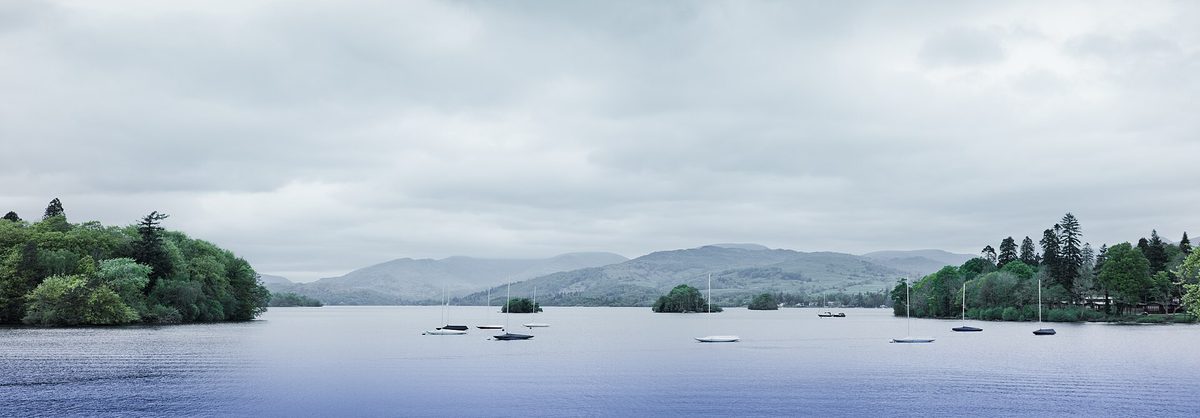
- Lake Windermere stretching south past wooded shores under a soft grey sky, the classic view from the Windermere travel guide — Photo: Michal Klajban / CC BY-SA 4.0 via Wikimedia Commons. Source
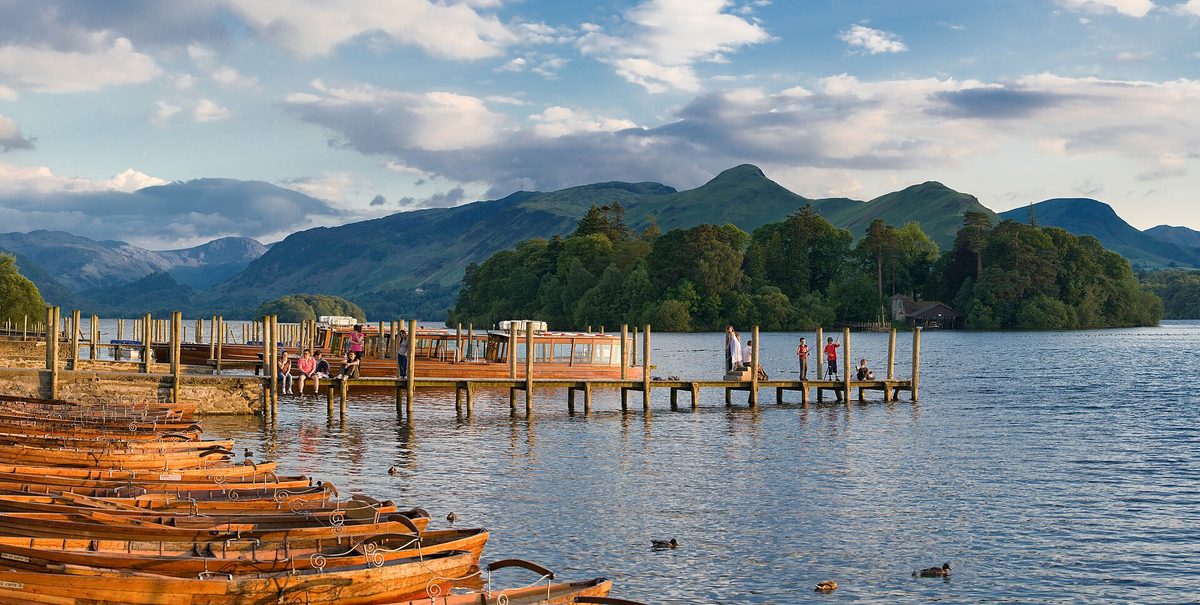
- Boats and a stone jetty at Bowness-on-Windermere with crowds strolling the lakeside promenade — Photo: mattbuck (category) / CC BY-SA 3.0 via Wikimedia Commons. Source
- The summit view from Orrest Head looking down over the full length of Lake Windermere toward distant fells — Photo: John H Darch / CC BY-SA 2.0 via Wikimedia Commons. Source
- The neo-Gothic turrets of Wray Castle rising above trees on the quiet western shore of Lake Windermere — Photo: CellsDeDells / CC BY-SA 3.0 via Wikimedia Commons. Source
- The small Windermere car-and-foot ferry mid-crossing on a calm grey lake, carrying a few vehicles to the western shore — Photo: George P Abraham (1844-1923) (CC0) via Wikimedia Commons. Source
Frequently asked questions
Is Windermere a town or a lake?
Both, which is the source of all the confusion. Lake Windermere is the 10.5-mile lake — the longest natural lake in England. Windermere is also the name of the town up the hill, where the railway station and shops are. The lakeshore tourist village is technically Bowness-on-Windermere, about a mile and a half downhill from the town.
Does Windermere or Bowness have the train station?
Windermere town has the station, not Bowness. The railway was built at the top of the hill in 1847 because the gradient down to the lake was too steep to extend the line. So you arrive by train at Windermere, then walk about 15–20 minutes downhill — or take a short bus — to reach the lake and the boats at Bowness.
How do you get to Windermere by train?
From London, take an Avanti West Coast train from Euston (about three hours) and change at Oxenholme Lake District onto the Northern branch line, which reaches Windermere in roughly 20 minutes. Trains from Manchester and the Northwest also connect at Oxenholme. It's the only railway that runs directly into the central Lakes, ending at Windermere.
How much is a Windermere lake cruise?
Windermere Lake Cruises fares are around £12–18 for an adult return on the popular Bowness–Ambleside or Bowness–Lakeside routes (as of 2026), with children cheaper. A 24-hour Freedom of the Lake hop-on, hop-off pass runs around £25.50 off-peak and £43 in peak summer. Prices shift seasonally, so check the operator's site and book online in summer to skip the pier queues.
How do you get to Beatrix Potter's Hill Top?
Take the small Windermere Ferry from Ferry Nab, just south of Bowness, across to Ferry House (around £1.50 on foot, as of 2026). From there, a seasonal shuttle bus or a short country walk reaches Hill Top in Near Sawrey. Hill Top is National Trust-run, tiny and timed-entry, so book your slot well ahead in peak season.
Is Windermere worth visiting if it's so crowded?
Yes, if you play it right. Bowness is genuinely packed in summer, but the lake itself is vast and mostly empty, and the area's best bits — a cruise, the Orrest Head walk, the quiet western shore via the ferry — get you clear of the throng. Visit in spring or autumn, or early in the day, and the crowds stop being a problem.