Sheet 63 · England National Parks and Hiking · 15 min read
Lake District vs Peak District
Lake District vs Peak District, compared by a traveller who has done both: terrain, hiking, families, cost, crowds and getting there car-free.
 Sheet 63
Contents 12 sections
I have stood on the summit of a Lakeland fell at seven in the morning watching cloud pour off the tops like spilled milk, and I have walked the gritstone lip of Stanage Edge at golden hour with climbers chalking up below me. Both moments live in my head rent-free. So when friends ask me to settle the Lake District vs Peak District question over a pint, I never give the lazy answer of “they’re both lovely.” They are both lovely. But they are lovely in completely different ways, and which one suits your trip depends on a handful of very practical things.
So let me actually help you choose.
Quick Answer: Lake District vs Peak District
Choose the Lake District for big mountain scenery, England’s highest fells, boating on Windermere and ambitious multi-day walking, accepting longer travel and higher prices. Choose the Peak District for easy access from Manchester or Sheffield, gentler dales-and-edges walking, caves, cycling, climbing and family day trips on a smaller budget. The Lakes reward a week; the Peak rewards a weekend.
That is the headline. Now here is the detail, organised by the things that will actually swing your decision.
At a Glance: How the Two Parks Compare
I find a side-by-side does more work than three paragraphs of waffle, so here is the short version. All figures are rough and hedged as of 2026; treat them as planning ballpark, not gospel.
| Factor | Lake District | Peak District |
|---|---|---|
| Where it is | Cumbria, north-west England | Derbyshire, Staffordshire, Cheshire & a slice of Yorkshire (the Midlands/North fringe) |
| Headline landscape | Glacial lakes and high mountain fells | Gritstone edges (Dark Peak) and limestone dales (White Peak) |
| Highest point | Scafell Pike, around 978m (England’s highest) | Kinder Scout, around 636m (a moorland plateau) |
| Rough size | Around 912 sq miles | Around 555 sq miles |
| Best for | Serious hiking, lakes, boating, slow week-long trips | Day trips, families, cycling, climbing, stately homes |
| Driving from London | Around 5 to 5.5 hours | Around 3 hours |
| Car-free access | Train to Oxenholme/Windermere, then buses | Hope Valley line trains drop you at trailheads |
| Crowd pressure | Heavy in honeypots (Windermere, Ambleside, Keswick) | Heavy on famous edges and rail-trails, but easier to escape |
| Typical cost | Pricier beds and food | Generally better value |
| Sweet-spot trip length | 4 to 7+ days | A weekend to 3 days |
Keep that table in mind as we go. Most of what follows is just me explaining the “why” behind each row.
Scenery and Terrain: Mountains and Lakes vs Edges and Dales
This is the heart of it, so I’ll spend a little time here.
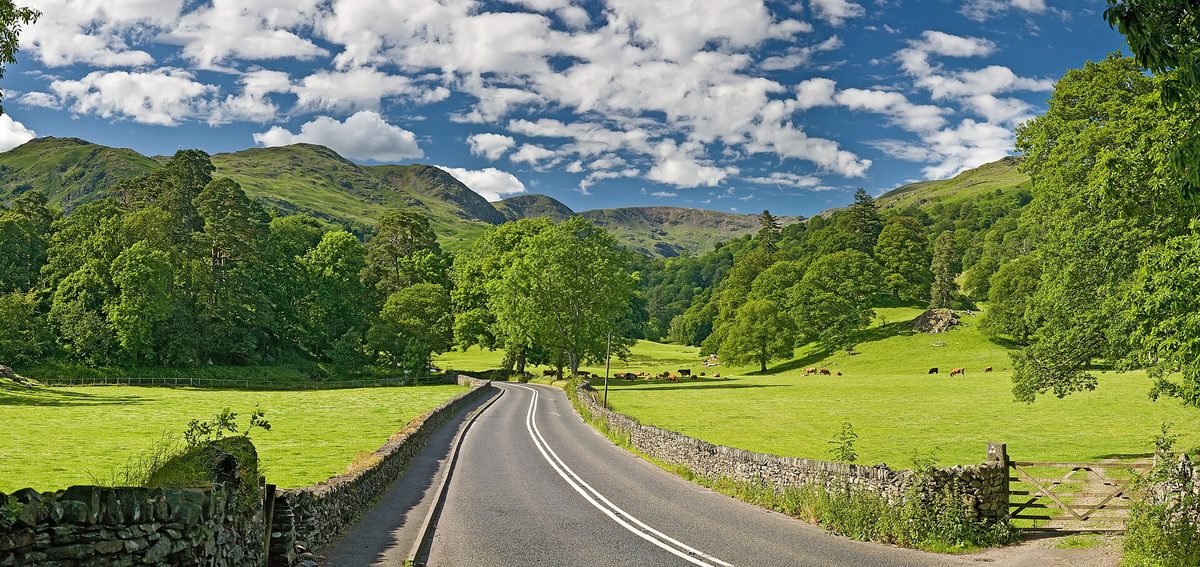
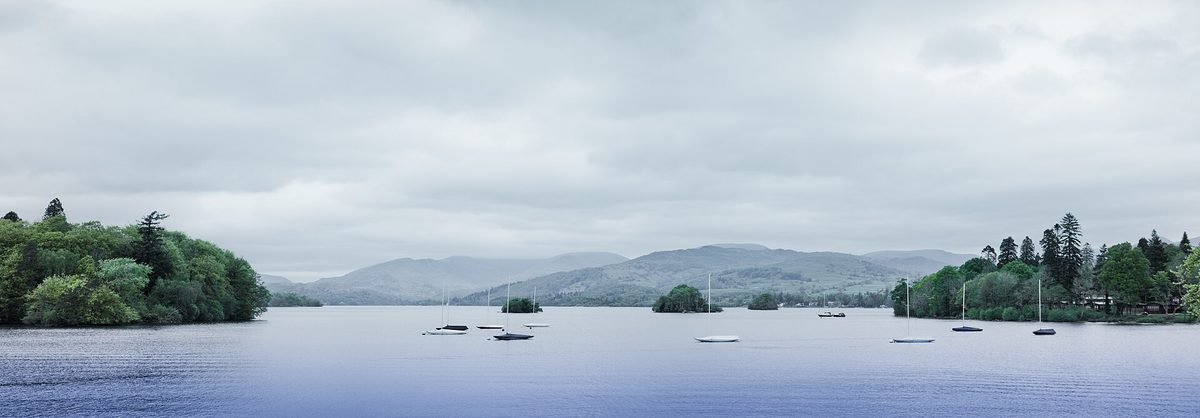
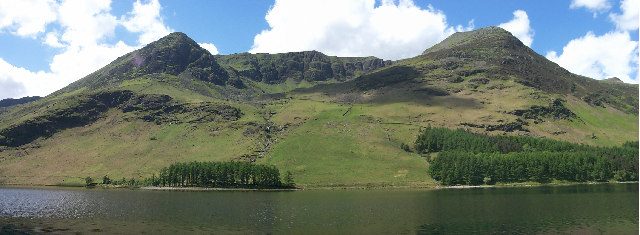
The Lake District is, geologically and emotionally, a mountain landscape. Think of deep glacial valleys, ribbon lakes strung along their floors, and steep volcanic fells crowding the skyline. Scafell Pike, England’s highest mountain at around 978m, lives here, and so does Windermere, England’s largest natural lake. The drama is vertical. You round a bend on the road and a whole wall of crag and scree just appears. When the light is right over Buttermere or Wast Water, it genuinely stops conversation in the car.
The Peak District is two landscapes in one trench coat, and understanding that split is the single most useful thing I can tell you.
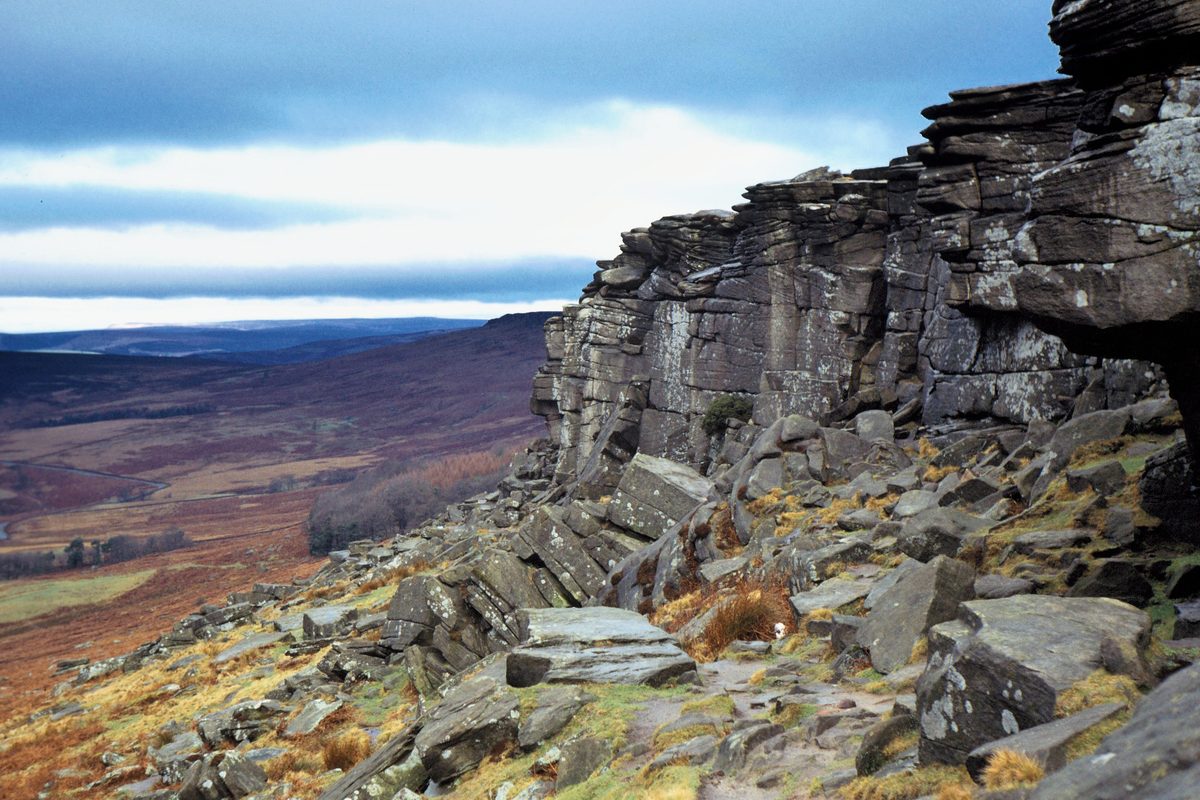
The northern and western part is the Dark Peak: brooding gritstone moorland, peat hags, and those famous millstone-grit “edges” like Stanage that run for miles like a stone wave frozen mid-break. Kinder Scout, the Peak’s high point at around 636m, is a vast peaty plateau up here rather than a pointed summit. It feels wild and Brontë-ish.
The southern and central part is the White Peak: a softer limestone country of green dales, drystone walls, clear rivers and gentle pasture, sitting mostly between roughly 270m and 430m. Dovedale’s stepping stones and the wooded gorge at Monsal Head live here. It feels pastoral and chocolate-box.
So if your mental picture of a “proper” landscape is jagged peaks reflected in deep water, the Lakes win outright. If you love rolling green valleys and stark moorland, and the variety of having both within half an hour, the Peak punches well above its modest height figures.
For the full sweep of England’s protected landscapes and how these two sit among the rest, my guide to England’s national parks and hiking zooms out to the whole picture.
Hiking: Serious Fell-Walking vs Friendly Day Walks
Here is where the Peak District vs Lake District for hiking debate gets real, because the two parks ask different things of your legs and your judgement.
If you want a mountain challenge
The Lake District is the more serious hiking destination, full stop. Routes up Helvellyn via Striding Edge, the Scafell Pike massif, the Fairfield Horseshoe, the high Coniston fells, these are proper mountain days. They involve real ascent, exposed ground in places, rapidly changing weather and navigation that punishes complacency. I have turned back off a Lakeland ridge in summer because the cloud came down and the wind picked up to the point of staggering. That is the trade for the views: it is mountain country, and it should be respected.
If you are an experienced or aspiring hillwalker hungry for summits and ridgelines, the Lakes are England’s premier playground. There is nothing in the Peak that matches a clear day on the high fells.
If you want rewarding walks without the suffering
The Peak District is the friendlier walker’s park, and I mean that as a compliment, not a knock. The classic routes, Mam Tor’s ridge to Lose Hill, the Dovedale stepping stones, the Monsal Trail, Stanage Edge, tend to be shorter, less brutally steep, and easier to bail out of if the weather turns. Navigation is generally more forgiving. It is a brilliant place to build confidence, to walk with a slightly reluctant partner, or to get a genuinely scenic half-day in and still be in a pub garden by three.
That does not mean the Peak is flat or trivial. Kinder Scout in poor visibility is a navigational test that has caught out plenty of people, and the Dark Peak moors are bleak and committing. But on balance, the Peak gives you a higher ratio of view to effort, and the Lakes give you a higher ceiling of ambition.
My rule of thumb: want to be tested, go to the Lakes; want to be charmed, go to the Peak. If your group sits firmly at the gentle end, browse my round-up of easy Lake District walks before you decide, because the Lakes do have plenty of low-level strolls too, they are just outnumbered by the big stuff.
Getting There Without a Car: The Underrated Decider
For a lot of overseas visitors this quietly decides everything, so do not skip it.
The Peak District is the easier park to do car-free, and it is not especially close. The Hope Valley railway line runs right through the heart of the Dark Peak between Manchester and Sheffield, with stations at Edale, Hope, Bamford, Hathersage and Grindleford that drop you more or less at a trailhead. You can step off a train and be walking up toward Mam Tor or Kinder within minutes. Local buses then fill the gaps. For a walker without wheels, that is gold.
The Lake District is doable car-free, but it takes more planning. The usual route is a mainline train to Oxenholme (the Lake District) on the West Coast route, change for the branch “Lakes Line” to Windermere, then lean on the open-top 555 and 599 buses up the spine toward Ambleside, Grasmere and Keswick. It works well along that Windermere–Keswick corridor, and Windermere to Oxenholme is a quick hop of well under half an hour. But reaching the quieter western valleys (Wasdale, Buttermere, Eskdale) without a car is genuinely fiddly and slow.
If you are arriving by rail, my Lake District without a car guide maps the realistic routes, and for the bigger picture of moving around the country by train, see the England train travel guide. The short version: car-free and only got a weekend, lean Peak; car-free but committed to a proper week, the Lakes can still work if you base yourself smartly.
Distance and Travel Time: Where Are You Coming From?
Geography matters more than people expect.
The Peak District sits in the middle of England, wrapped by Manchester, Sheffield and the wider Midlands, with Birmingham not far south. From London it is roughly a 3-hour drive, around 160-ish miles. That central position is exactly why it works so well as a weekend or even a long day trip, and why it is the more sensible add-on if your trip is anchored in Manchester or the Midlands.
The Lake District is up in the far north-west, in Cumbria. From London you are looking at something like 5 to 5.5 hours of driving, close to 300 miles, or a train of broadly 3 hours-plus to Oxenholme. It is further from almost everywhere except Scotland and the North.
One neat fact worth knowing: Manchester sits almost exactly between the two. If you genuinely cannot choose and have the time, you can string both together off a Manchester base, though I would not rush it. For how these distances stack against the rest of the country, my driving distances in England breakdown is handy when you are sketching a route.
Families: Caves and Easy Wins vs Adventure and Water
This is the Lake District vs Peak District for families question, and my honest take depends on the ages of your kids.
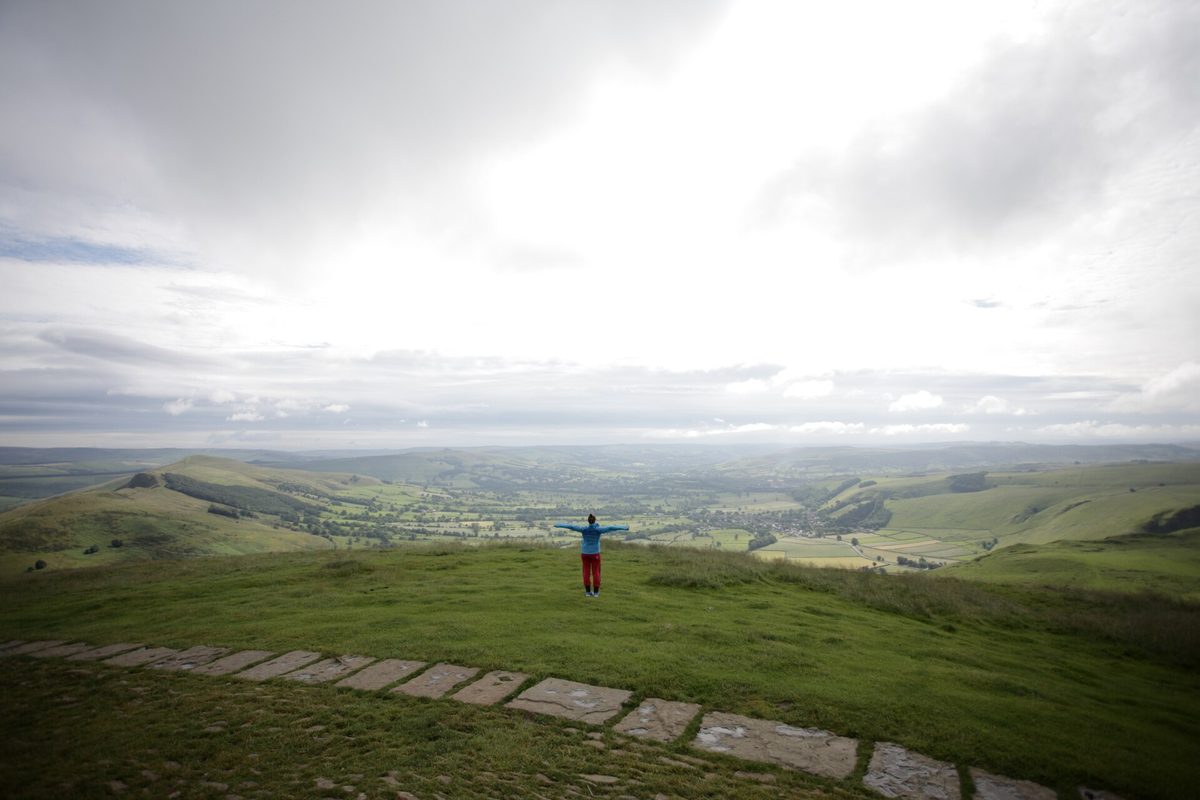
For younger children or a first British outdoors trip, I lean Peak District. The terrain is gentler, so a short walk is genuinely short rather than secretly two hours of clambering. The travel is shorter, the beds are cheaper, and there is a brilliant ace up its sleeve: caves. The show caverns around Castleton, the Blue John Cavern, Speedwell, Peak Cavern, are proper rainy-day winners that turn a grey afternoon into the highlight of the trip. Add traffic-free cycling on the Monsal Trail and you have easy, low-stress days out.
For older kids and teens ready for adventure, the Lake District opens up. This is where you get boat cruises on Windermere and Ullswater, kayaking and canoeing, ghyll scrambling, the via-ferrata at Honister, and the satisfaction of actually summiting a real mountain. It is more effort and more money, but the payoff is bigger. The water-based stuff in particular is something the landlocked Peak simply cannot match.
So: little ones and an easy life, Peak; adventurous older kids and a bigger budget, Lakes. If you are leaning Lakes for a family trip, my best things to do in the Lake District post is full of the family-friendly winners, and where to stay in the Lake District helps you pick a base that keeps drive times sane.
Cost: The Peak Is the Friendlier Park for Your Wallet
No dancing around it: the Lake District is the pricier destination, and the Peak District is generally better value.
Lakeland accommodation runs higher across the board, and in the honeypot triangle of Windermere, Ambleside and Grasmere it spikes hard in school holidays. As a rough sense of scale as of 2026, a family-sized cottage in the Lakes can sit somewhere around the £150 to £300 a night mark in peak season, while a comparable Peak District cottage tends to land nearer £100 to £200. Eating out, parking and activities tilt the same way. Those are ballpark ranges and you can certainly do better or worse, but the direction is consistent year after year.
Why? Demand, mostly. The Lakes are a bucket-list destination with finite beds in scenic valleys, so prices follow. The Peak, being a day-trip park for millions of Midlanders and Northerners, has more competition and more pressure to stay affordable.
If budget is steering the ship, the Peak gets you more park per pound. For squeezing value out of either, my England on a budget guide has the tactics I actually use, from off-peak timing to self-catering.

Crowds: Both Get Busy, But You Escape the Peak More Easily
Both parks are among the most-visited landscapes in the UK, so “quiet” is relative.
The Lake District concentrates its crowds in a few famous spots, and those spots get rammed. Bowness pier on a sunny August Saturday, the Ambleside car parks, the Catbells path, you will not be alone. Because so much of the appeal funnels through the Windermere corridor, the pinch points pinch hard.
The Peak District also gets busy on its greatest hits, Mam Tor’s ridge, Stanage, the Monsal Trail, which alone draws something on the order of a few hundred thousand visitors a year, but it is geographically more diffuse and laced with quieter dales and lesser-known edges. It is easier to walk fifteen minutes off the famous viewpoint and have a hillside to yourself.
The escape strategy is identical for both, and it works: go midweek, start early, and skip the single most photographed spot in favour of the dale or fell next door. A 7am start on a popular summit is a different, lonelier, better experience than the 11am scrum. For timing the whole trip around weather and crowds, my best time to visit England guide goes month by month.
When to Go
Briefly, because the seasonal logic is similar for both.
Summer (roughly June to August) brings the warmest, longest days and the heaviest crowds, plus the tightest, priciest accommodation, especially in the Lakes during school holidays. Spring and autumn are my sweet spots for either park: fewer people, softer light, and in autumn some genuinely glorious colour through the dales and around the lakeshores. Winter is atmospheric and cheap but short on daylight, and the Lakeland fells in winter are a serious mountain proposition you should not take lightly.
If anything, the Peak is the more forgiving year-round choice for casual visitors, simply because its gentler terrain stays accessible when the high fells turn hostile.
So, Which Is Better, Lake District or Peak District?
Here is how I’d answer the which is better Lake District or Peak District question if you cornered me, framed as the trip you are actually planning.
Pick the Lake District if:
- You want England’s biggest, most dramatic mountain scenery and real fell-walking.
- You have at least 4 to 7 days and the appetite for a longer journey.
- Lakes and water activities, boating, swimming, kayaking, are a priority.
- Higher prices are acceptable for once-in-a-lifetime scenery.
Pick the Peak District if:
- You are short on time, based near Manchester, Sheffield or the Midlands, or want a long-weekend.
- You are travelling without a car and want to step off a train onto a trail.
- You have young kids, or want gentler walks, caves, cycling and climbing.
- You care about value, or want to fold in stately homes like Chatsworth.
That last point deserves a flag: the Peak quietly out-punches the Lakes on grand houses, with Chatsworth and Haddon Hall on its doorstep, and on rock climbing, with Stanage Edge a genuine world name. If culture-plus-countryside is your blend, that tips things Peak-ward.
When you have decided, dig into the dedicated planning guides rather than relying on this comparison alone. For the Lakes, start with the full Lake District travel guide and the gateway towns of Windermere and Keswick. I’ve kept this piece deliberately to the head-to-head; the single-park guides are where you build the actual itinerary.
Final Thoughts
If you forced me to pick just one for a first-ever visit to England’s uplands, with no other constraints, I would send most people to the Lake District, because nothing else in England delivers that same gut-punch of mountains and water, and it earns its bucket-list status. But “no other constraints” is a fantasy. In the real world you have a fixed number of days, a budget, maybe no car, maybe small children and a partner who would rather amble than scramble.
And in that real world, I send a surprising number of people to the Peak District and watch them come back delighted, because it gave them edges and dales and caves and a pub lunch without a five-hour drive or a remortgage.
So stop asking which park is objectively better. Ask which one fits the trip in front of you. Then go all-in on it, follow the dedicated guide, and save the other one for next time. Both deserve a proper visit, just rarely the same one.
Research and Source Notes
Geography and facts were checked against the official park authorities: the Lake District National Park Authority (lakedistrict.gov.uk) and the Peak District National Park Authority (peakdistrict.gov.uk), including the Dark Peak/White Peak split, Kinder Scout’s status as the Peak’s highest point at around 636m, and Scafell Pike as England’s highest at around 978m. Rail access details, the Oxenholme and Windermere “Lakes Line” connection and the Hope Valley line stations, were cross-checked with National Rail (nationalrail.co.uk) and Avanti West Coast timetables. Approximate driving distances and times from London reflect typical mapping-service estimates and real traffic varies. All prices are deliberately hedged and described as “around” or “as of 2026” beca
Photo Credits
- Lake District vs Peak District: a still morning on Windermere with fells rising behind the water — Photo: Michael D Beckwith (CC0) via Wikimedia Commons. Source
- Reflections in Buttermere on a calm Lakeland morning — Photo: Steve Tuff / CC BY-SA 2.0 via Wikimedia Commons. Source
- Walkers along the gritstone crest of Stanage Edge in the Peak District — Photo: Vicky van Dal / CC BY-SA 4.0 via Wikimedia Commons. Source
- Families on the broad ridge path at Mam Tor in the Peak District — Photo: Joe Hunt from Derbyshire, England, UK / CC BY 2.0 via Wikimedia Commons. Source
- The riverside market town of Bakewell in the White Peak — Photo: Michael Garlick / CC BY-SA 2.0 via Wikimedia Commons. Source
Frequently asked questions
Is the Lake District or Peak District better for hiking?
For serious mountain hiking, the Lake District wins comfortably, with England's highest fells, ridge scrambles like Striding Edge and proper alpine-feeling days. The Peak District is better for friendlier, shorter, less steep walks and for building confidence, though its Dark Peak moors can still test your navigation in poor weather.
Which is cheaper, the Lake District or the Peak District?
The Peak District is generally cheaper. As of 2026, Peak District cottages often sit roughly in the £100 to £200 a night range in season, while comparable Lake District places tend to run nearer £150 to £300, with food and parking tilting the same way. Treat these as ballpark; off-peak and midweek bring both down.
Can you visit both the Lake District and Peak District in one trip?
Yes, though I would not rush it. Manchester sits almost exactly between the two, so a Manchester base lets you reach the Peak in under an hour and the Lakes in around an hour and a half. Give each park its own multi-day chunk rather than trying to "do both" in a couple of days.
Which is easier to reach without a car, the Lake District or Peak District?
The Peak District is easier car-free. The Hope Valley railway between Manchester and Sheffield drops you at trailhead stations like Edale and Hathersage. The Lake District needs a train to Oxenholme, a change for Windermere, then buses, which works along the Windermere–Keswick corridor but is fiddly for the quieter western valleys.
Is the Lake District or Peak District better for families?
It depends on ages. The Peak District suits younger children and first-time outdoor trips, with gentle walks, show caves around Castleton and traffic-free cycling. The Lake District suits adventurous older kids, with boat cruises, kayaking and real summits. The Peak is the lower-stress, better-value family choice; the Lakes offer bigger adventure.
Which is more crowded, the Lake District or Peak District?
Both get busy, but the Lake District's crowds concentrate hard in honeypots like Windermere, Ambleside and Catbells. The Peak District is also busy on famous edges and rail-trails but is more spread out, so it is easier to find quiet. Going midweek and starting early helps enormously in either park.