Sheet 57 · England National Parks and Hiking · 16 min read
Best National Parks in England
Choosing the best national parks in England? Compare all 10 by scenery, crowds, family appeal and access so you pick the right one for your trip.
 Sheet 57
Contents 9 sections
I’ve walked all ten of them now, some a dozen times, and the question I get asked most isn’t “are they worth it” — it’s “which one?” Because they are not interchangeable. A weekend on Dartmoor and a weekend in the New Forest are about as similar as a thunderstorm and a Sunday nap.
So this is the page I wish I’d had at the start: a straight, opinionated comparison rather than a brochure.
The best national parks in England depend entirely on what you want. For raw drama go to the Lake District; for easy access from a city, the Peak District; for families with small legs, the New Forest or Exmoor; for solitude and stars, Northumberland. Below I rank and group all ten so you can pick the right one in five minutes.
Quick Answer: Which Are the Best National Parks in England?
If you only remember one thing: there is no single “best” — there’s a best for you.
The Lake District is the headline act — highest mountains, biggest lakes, the most postcard-famous scenery England has. The Peak District is the everyman’s park, wedged between Manchester and Sheffield and gloriously easy to reach. The Yorkshire Dales is the quiet connoisseur’s pick: limestone, waterfalls, drystone walls and far fewer queues. For gentle, kid-friendly days, Exmoor and the New Forest win. For wildness and the darkest skies in England, it’s Northumberland. And the South Downs is the one you can do on a day return from London.
England has ten national parks in total: the Lake District, Peak District, Yorkshire Dales, North York Moors, Northumberland, New Forest, South Downs, Exmoor, Dartmoor and the Broads. The Broads is technically managed under its own authority with equivalent status rather than being a “national park” in the strict legal sense, but everyone counts it, and so will I.
A quick note on geography, because it trips people up. These are England’s parks. The UK also has parks in Wales (Snowdonia/Eryri, Brecon Beacons/Bannau Brycheiniog, Pembrokeshire Coast) and Scotland (the Cairngorms, Loch Lomond & the Trossachs). If a friend raves about Snowdon, that’s a Welsh mountain — wonderful, but not on this list.
If you want the full planning hub with route ideas and seasonal advice, start with the parent guide to national parks in England and come back here to choose. This page is the decision tool; the individual guides are where you plan the trip.
At a Glance: England’s 10 National Parks Compared
Here’s the whole field on one screen. Use it to shortlist two or three, then read the sections below.
| Park | Best for | Scenery | Access | Crowds |
|---|---|---|---|---|
| Lake District | Mountains, lakes, classic hikes | Dramatic fells & glacial lakes | Train to Windermere/Penrith; car best inside | Very high (busiest in England) |
| Peak District | Easy city escape, day trips | Moors, gritstone edges, green dales | Excellent — trains from Manchester/Sheffield | High, esp. honeypots |
| Yorkshire Dales | Quiet beauty, caves, waterfalls | Limestone dales & drystone walls | Settle–Carlisle railway; car helps | Moderate |
| North York Moors | Heather moorland, steam trains, coast | Purple moors meeting the sea | Train to coast/edges; car inside | Moderate |
| Northumberland | Solitude, stargazing, Roman history | Empty hills, Hadrian’s Wall | Limited — car strongly advised | Very low |
| New Forest | Families, gentle walks, ponies | Open heath & ancient woodland | Easy — trains to Brockenhurst | Moderate–high in summer |
| South Downs | Day trips from London, gentle ridges | Chalk downs & white sea cliffs | Best of all — frequent London trains | High near honeypots |
| Exmoor | Families, dark skies, red deer | Moorland tumbling to high cliffs | Limited — car advised | Low |
| Dartmoor | Wild camping, rugged moor, freedom | Granite tors & open wilderness | Limited — car advised | Low–moderate |
| The Broads | Boating, flat cycling, birdlife | Reedy wetland & big skies | Trains to Norwich; boat hire local | Moderate |
Prices and times throughout are rough and “as of 2026” — always double-check before you book.
The Dramatic Mountain Parks: Go Here for Scenery
If your mental image of a national park is steep ridges, summits and water glinting below, you want the north.
Lake District — the one everyone means
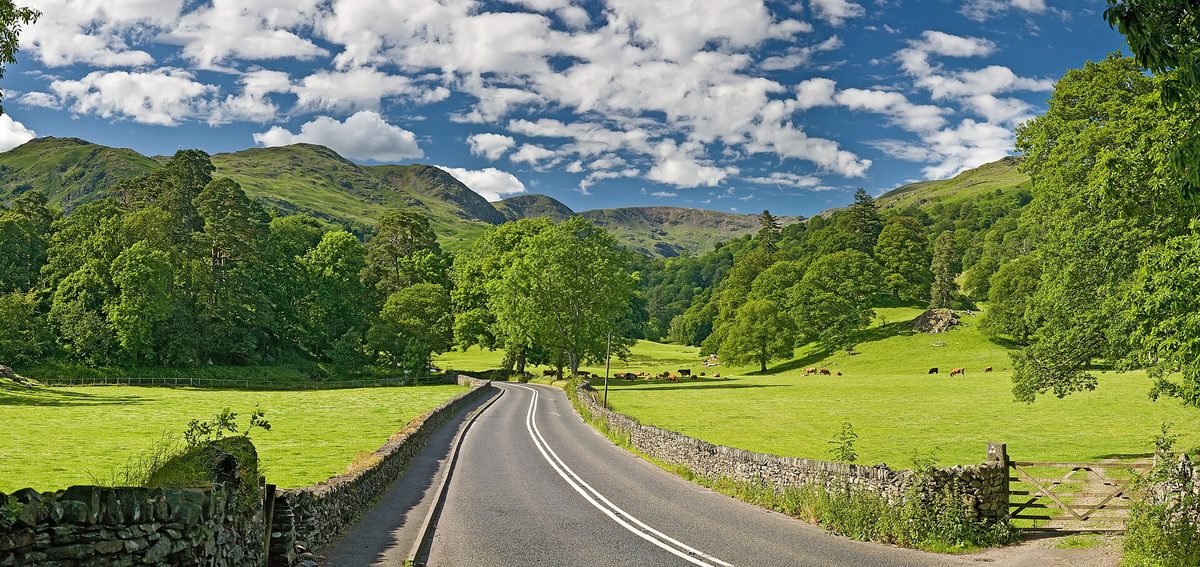
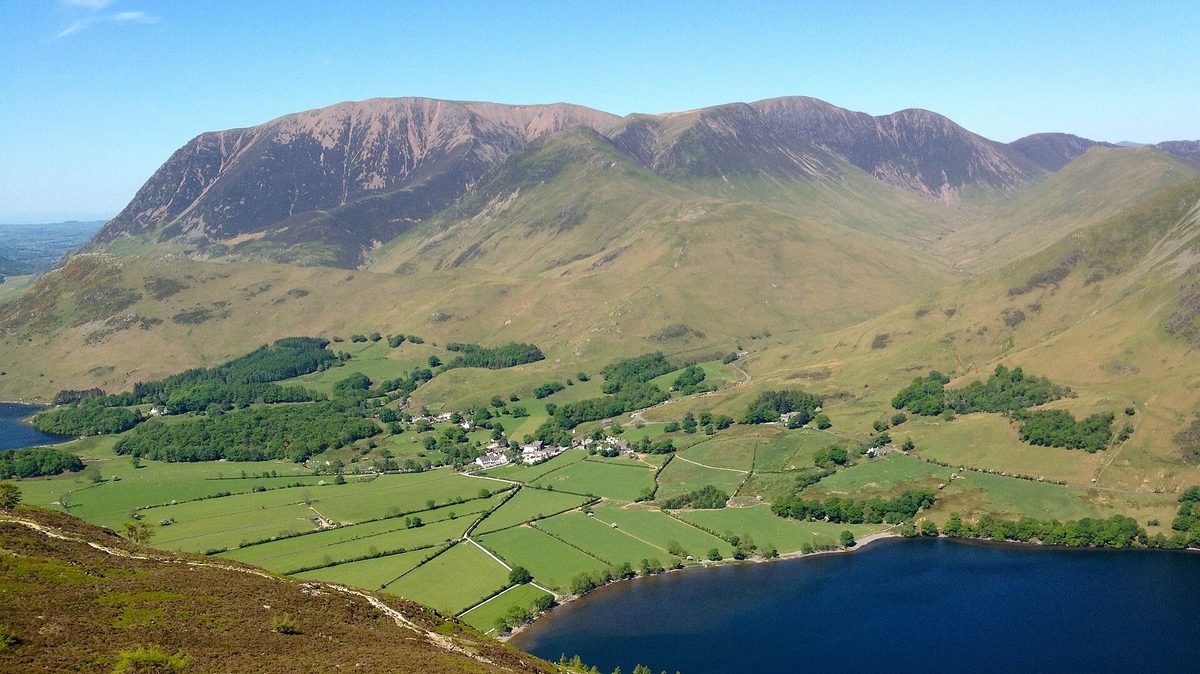
The Lake District is England’s biggest and most-visited national park, and it earns the title. It holds Scafell Pike, the country’s highest mountain at 978m, and Windermere, its largest lake. The combination of high fells and deep water in such a compact area is genuinely rare in Britain — you can be on a summit in the morning and on a steamer in the afternoon.
What I love is the variety within it. Borrowdale and Buttermere in the west feel wilder and wetter; Ambleside and Windermere in the centre are busier and better for first-timers wanting cafés and boat hire; the eastern fells around Ullswater strike a lovely balance. Helvellyn via Striding Edge is the famous scramble, but honestly the views from gentler tops like Catbells or Loughrigg are nearly as good for a fraction of the effort.
The catch is crowds and weather. In August the central villages are heaving and the rain is real — it’s the wettest inhabited place in England for a reason. Come shoulder season (May, late September) if you can. For the full breakdown of bases, lakes and walks, see my Lake District travel guide.
Rough logistics: trains reach Windermere (change at Oxenholme) or Penrith on the west-coast line. You can manage car-free if you base yourself in Windermere or Keswick and lean on the launches and the open-top 555/505 buses, but a car opens up the quiet valleys.
Yorkshire Dales — the quiet one I’d send you to first
If the Lake District is the rock star, the Yorkshire Dales is the brilliant support act half the crowd hasn’t discovered. The scenery is different — less about lakes, more about limestone: white crags, natural pavements, drystone walls running impossibly straight up the hillsides, and some of England’s best waterfalls.
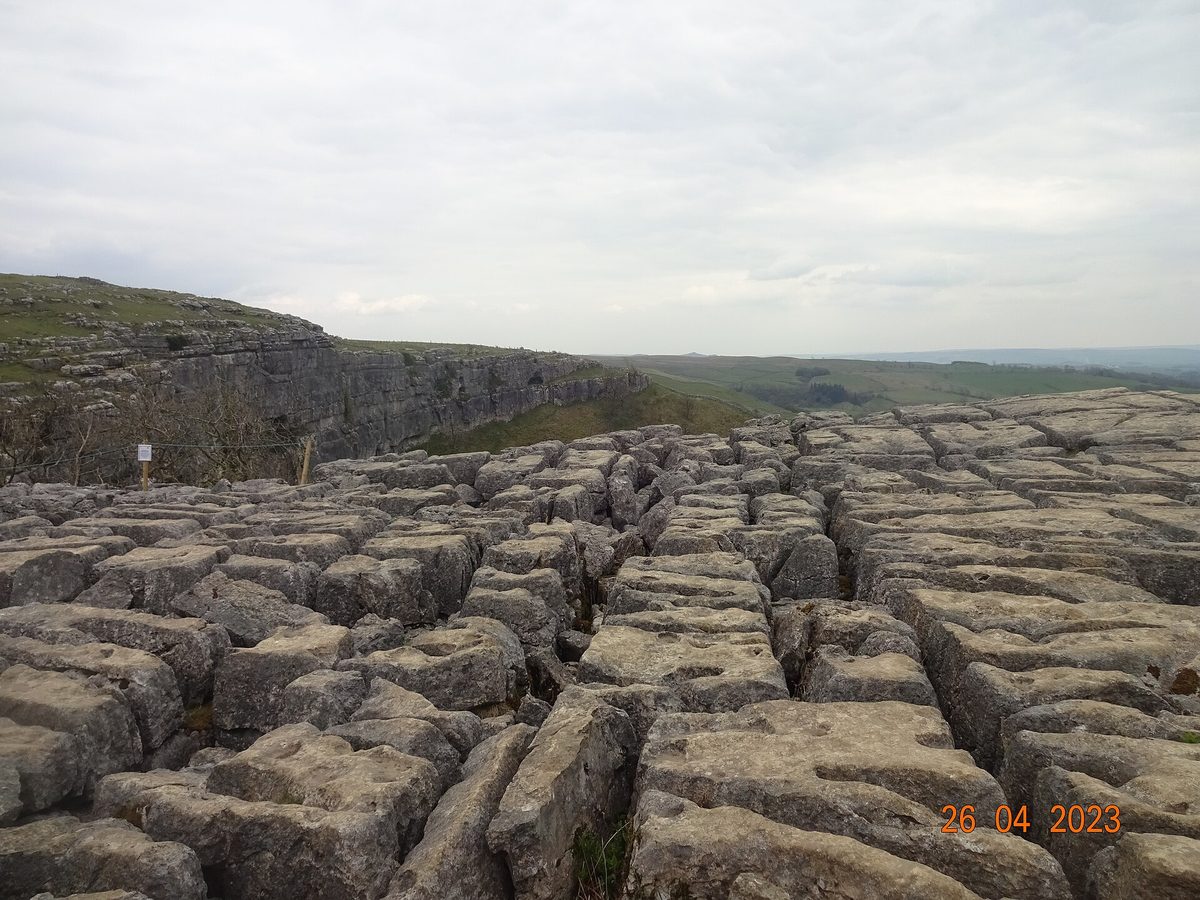
Malham is the showpiece. The walk up to Malham Cove — a vast curved cliff of pale limestone — then across the moonlike pavement on top and round to Gordale Scar and Janet’s Foss is one of my favourite half-days anywhere in England. Add Aysgarth Falls and Ingleton, plus the Three Peaks (Pen-y-ghent, Whernside, Ingleborough) for serious walkers.
It’s quieter than its neighbours and, to my eye, just as beautiful — judge for yourself on the Yorkshire Dales travel guide.
Peak District — the most accessible drama
The Peak District was England’s first national park, designated in 1951, and it remains the most reachable by public transport — it sits squarely between Manchester and Sheffield, with trains threading right through it. That accessibility is its superpower: roughly 20 million people live within an hour or so.
It splits neatly in two. The White Peak in the south is gentler — green limestone dales, rivers, villages like Bakewell, and the famous show caverns near Castleton. The Dark Peak in the north is wilder and tougher — gritstone moorland, the brooding plateau of Kinder Scout, and dramatic edges like Stanage and Mam Tor. Stand on Mam Tor at sunrise with the Hope Valley filling with mist and you’ll forget you’re an hour from a city.
It does get busy at the honeypots (Castleton, Dovedale, Mam Tor car park) on sunny weekends, so go early or midweek. Full detail in the Peak District travel guide. Still torn between the two big northern names? I weigh them up head-to-head in Lake District vs Peak District.
The Gentle & Family-Friendly Parks: Go Here with Kids or Tired Legs
Not every trip wants 800 metres of ascent. Some of England’s best national parks are the flat-ish, forgiving ones — and they’re no less rewarding.
New Forest — the easiest park to love
The New Forest is the one I send families and first-time walkers to without hesitation. Despite “forest” in the name it’s a mosaic of open heath, lawns and ancient woodland, and crucially the terrain is gentle — very little climbing, lots of wide paths, and ponies, donkeys and cattle roaming freely right past the villages. Kids adore the animals; adults adore the pubs.
It’s also remarkably easy to reach: regular trains from London Waterloo stop at Brockenhurst, in the heart of the park, in around 90 minutes. From there you can walk or hire bikes and barely touch a road. There are masses of car parks too, if you drive.
It does fill up on hot summer weekends, and please drive slowly — animal collisions are a genuine problem. My full advice is in the New Forest travel guide.
Exmoor — gentle moor, huge skies, red deer
Exmoor is underrated and I’ll keep saying so. It’s softer than Dartmoor — rolling moorland that runs right to the edge of England and drops in some of the highest sea cliffs in the country, around Lynton and Lynmouth. The walking can be as easy or as airy as you like, the villages are postcard-pretty, and it’s home to wild red deer and the stocky native Exmoor ponies.
Two more selling points: it’s one of England’s true dark-sky havens (more on that below), and it’s blissfully uncrowded. The downside is access — there’s no railway into the park itself, so a car makes life far easier.
South Downs — gentle ridges within reach of London
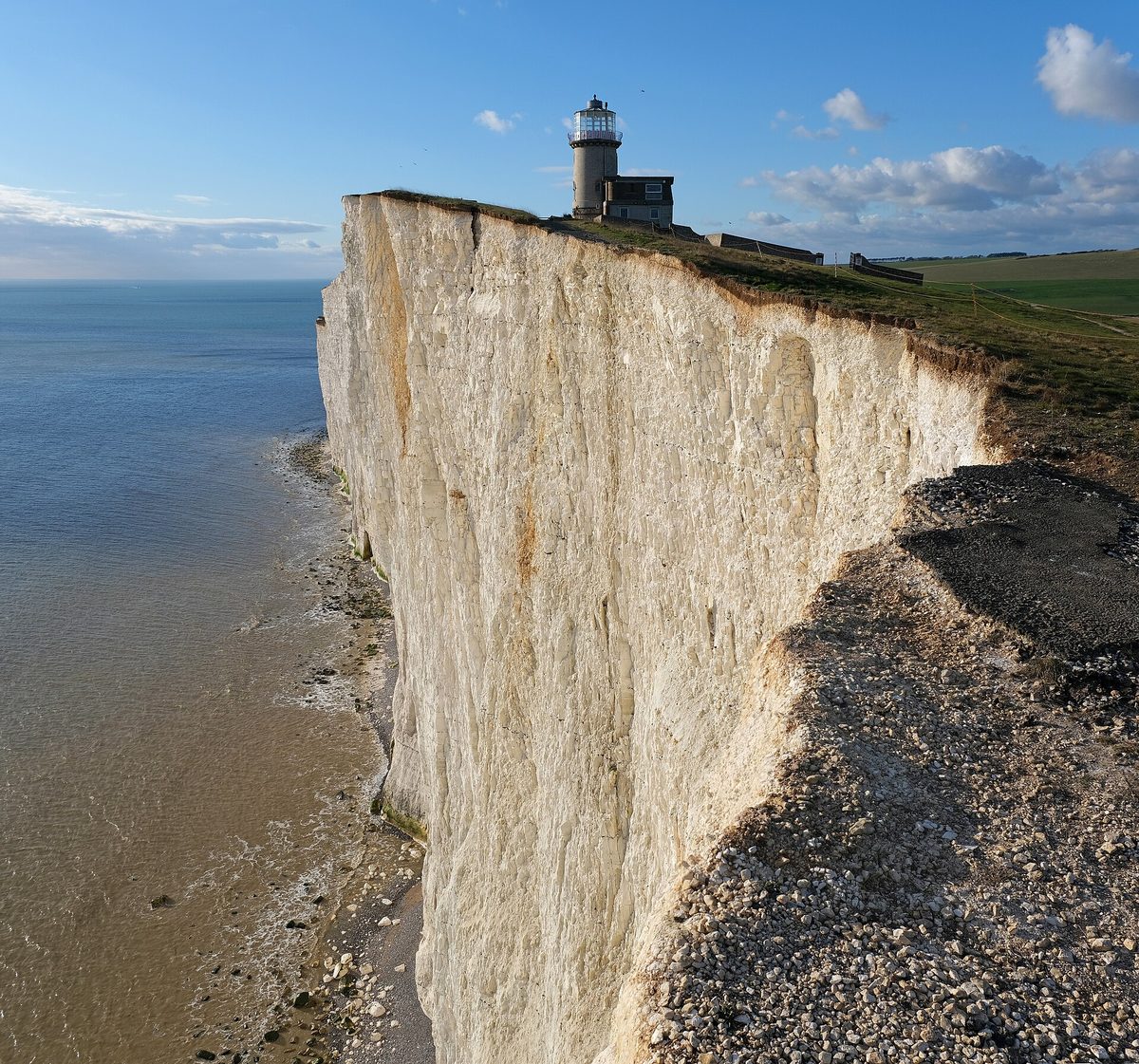
The South Downs is England’s newest national park (designated 2010) and the closest to London, which makes it the default for a day’s walking from the capital. The landscape is rolling chalk downland — soft, grassy ridges with enormous views — running 100 miles from Winchester to Eastbourne, where it ends spectacularly at the white chalk cliffs of the Seven Sisters and Beachy Head.
The walking is forgiving: the South Downs Way ridge is a steady, well-signed national trail rather than a slog. And the access is unbeatable — trains from London Victoria and Waterloo reach the edge of the park in 60–90 minutes, and you can start walks straight from stations like Amberley or Southease. Plan it with the South Downs travel guide, and if those chalk cliffs sell themselves, the dramatic Jurassic Coast travel guide makes a great pairing further west.
For gentle routes across all of these, my round-up of easy walks in England is a good companion, and families should look at England with kids for non-walking ideas too.
The Wild & Quiet Parks: Go Here to Escape People
Some of us go to national parks precisely to get away from everyone. These three deliver emptiness — and with it, the best night skies in England.
Northumberland — the empty one
Northumberland is the least populated national park in England and it feels it. You can walk for hours of rolling, treeless hills — the Cheviots, the Simonside ridges — and meet almost nobody. Running through the south is Hadrian’s Wall, the Roman frontier, with the dramatic central section at Sycamore Gap and Steel Rigg among the most photographed spots in the north.
Its other claim to fame is the sky. Northumberland National Park, together with neighbouring Kielder, forms an International Dark Sky Park — one of the largest areas of protected dark sky in Europe, awarded gold-tier status back in 2013. On a clear, moonless night the Milky Way is startling.
Access is the trade-off: public transport is thin and a car is strongly advised. There’s a seasonal Hadrian’s Wall bus (the AD122) in summer, which helps walkers do a linear stretch of the Wall. To extend the trip toward the spectacular coast and its castles, see the Northumberland coast guide.
Dartmoor — granite, freedom and (legally) wild camping
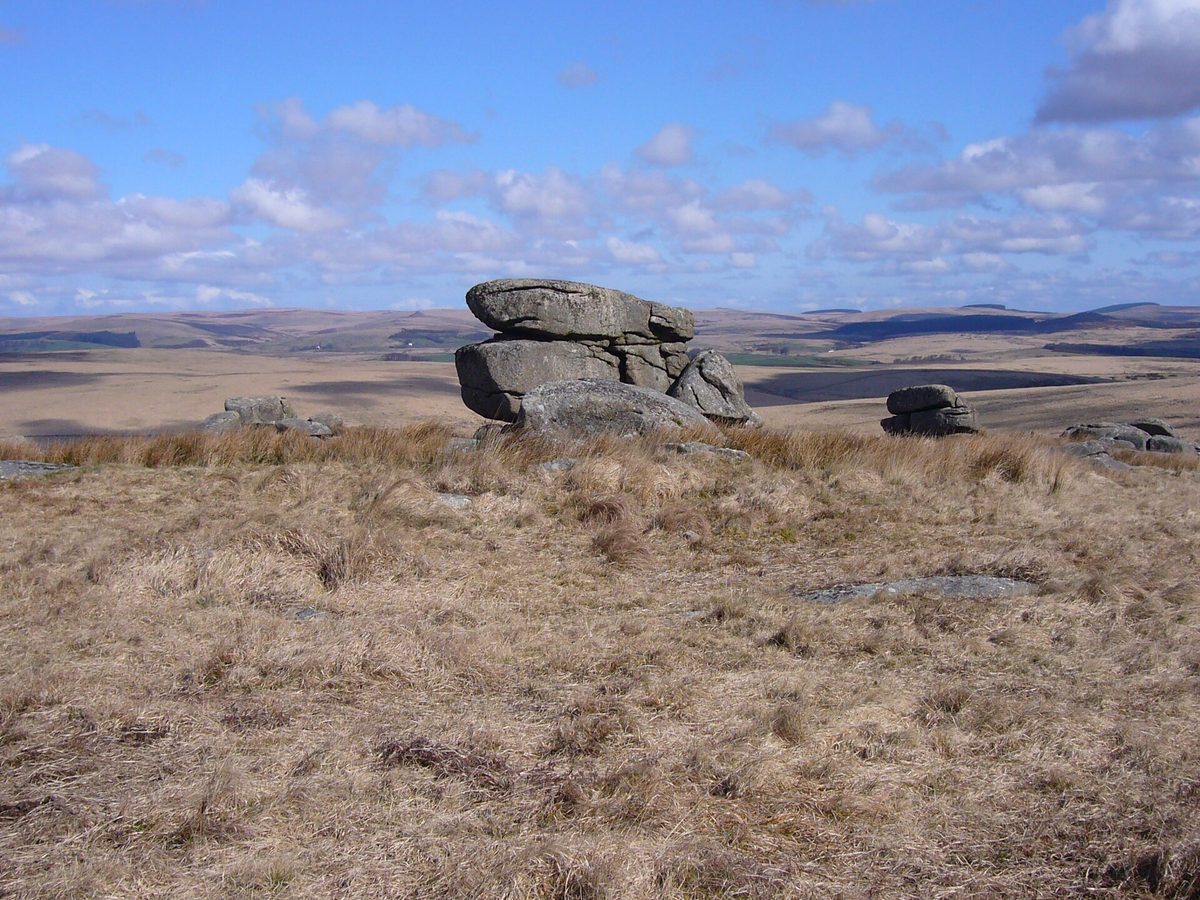
Dartmoor is the wildest-feeling park in the south: a high granite plateau studded with weathered tors — Haytor, Hound Tor, Bellever — open moorland, ancient stone rows and shaggy ponies. It can feel genuinely remote and the weather turns fast, so navigation skills matter here more than almost anywhere else on this list.
Dartmoor has one unique distinction: it’s the only place in England where you have a legal right to wild camp on much of the open moor — a right confirmed by the UK Supreme Court in May 2025. If sleeping out under the stars without a campsite appeals, this is the park for it (do it responsibly, leave no trace, and check the park authority’s maps for where it’s allowed). Access is car-friendly rather than train-friendly; the nearest stations are around the edges.
North York Moors — purple moors meeting the sea
The North York Moors is a glorious combination: England’s largest expanse of heather moorland — which turns a startling purple in August — running right up to a dramatic coastline of cliffs and old fishing villages like Robin Hood’s Bay and Staithes. Add the North Yorkshire Moors Railway (proper steam trains through the valleys) and you’ve got a park that’s quietly one of the most varied in the country.
It’s moderately busy on the coast in summer but the high moors stay empty. A car is easiest, though the coastal towns are reachable by train via the edges.
The Wildlife & Water Park: The Broads
The Broads stands apart from every other park on this list because the star isn’t a mountain or a moor — it’s water. It’s Britain’s largest protected wetland, a network of shallow lakes (the “broads,” actually medieval peat diggings that flooded) linked by lazy rivers across Norfolk and a slice of Suffolk.
The way to experience it is by boat. There’s around 125 miles of lock-free cruising, which makes it forgiving for complete beginners — you can hire a day boat, take a skippered trip, or paddle a canoe through the reeds. It’s flat as a pancake, which also makes it superb for easy cycling and for birdwatching: marsh harriers, bitterns, kingfishers and, if you’re very lucky, an otter.
It’s a completely different rhythm — slow, watery, big-skied — and a brilliant antidote if mountains aren’t your thing. Trains run to Norwich, with boatyards a short hop away. If the coast tempts you afterwards, the wider region is covered in the Norfolk coast guide.
Best National Parks in England by Travel Style
Let me cut to the chase and match parks to the most common trips.
- Best for first-timers wanting “the” English landscape: Lake District, no contest — but expect company.
- Best without a car: Peak District and South Downs are the standouts. See travel around England without a car for the nuts and bolts.
- Best for families with young kids: New Forest first, Exmoor a close second — gentle terrain and animals.
- Best for solitude and stargazing: Northumberland, then Exmoor and Dartmoor.
- Best for a day trip from London: South Downs, easily.
- Best for wildlife and water: the Broads.
- Best value on beauty-per-crowd: Yorkshire Dales — Lake District scenery, half the queues.
- Best for accessible visits: the New Forest and Exmoor have the most level, surfaced trails and infrastructure; check accessible England travel before you go.
If you’d rather build a longer trip around the walking itself, my guide to walking holidays in England stitches several of these into multi-day routes.
When to Go
Briefly, because it shapes which park works. Late spring (May–June) is my favourite window almost everywhere — long days, lambs, lighter crowds, before the school-holiday surge. Summer is warmest and best for the New Forest and the Broads but busiest in the Lakes and Peak. August is the moment for heather on the North York Moors and Dartmoor. Autumn (late September–October) brings golden colour and the year’s best fell-walking light. Winter empties everything out and is when Northumberland and Exmoor skies are darkest — just pack for proper cold and short days. For the fuller seasonal picture across the country, see the best time to visit England.
Final Thoughts
If you forced me to pick a personal favourite, it’d be the Lake District on its best days and the Yorkshire Dales on every other day — the Dales gives you 80% of the drama and 30% of the people, and that trade is usually worth it. But the honest answer is that the “best” national park is the one that matches your trip: the New Forest if you’ve got a five-year-old, Northumberland if you crave silence and stars, the South Downs if you’ve only got a Saturday.
My one piece of advice: don’t try to do three parks in a week. Pick one, stay put, and let it unfold — a single ridge walked slowly beats five viewpoints rushed. Use the park-specific guides linked above to plan the detail, and start broad with the overview of England’s national parks if you’re still sketching the whole trip.
Whichever you choose, go in shoulder season if you can, pack for rain regardless, and walk a little further than the car park crowd. That’s where these places become unforgettable.
Research and Source Notes
I cross-checked the factual claims here against official and authoritative sources, and hedged anything that changes (prices, journey times, opening details) — verify before you travel.
- National Parks UK (nationalparks.uk) — for the count of England’s ten parks, the Broads’ equivalent status, and dark-sky designations.
- Individual park authorities — Lake District, Peak District, Yorkshire Dales, North York Moors, Northumberland, New Forest, South Downs, Exmoor, Dartmoor and Broads authority sites — for scenery, access and visitor guidance.
- Dartmoor wild camping: the UK Supreme Court ruling of May 2025 confirming the legal right to wild camp on much of the open moor, as reported by the British Mountaineering Council and national news outlets. Always check the park authority’s current camping maps.
- Dark skies: DarkSky International and the park authorities for Northumberland (International Dark Sky Park, gold tier, designated 2013 with Kielder) and Exmoor (Europe’s first International Dark Sky Reserve).
- Access and transport: National Rail and the park authorities for station and bus information; the National Trust and VisitBritain for site and access notes. Train times (e.g. ~60–90 minutes to the South Downs, ~90 minutes to Brockenhurst) are approximate and “as of 2026.”
Designations and headline facts (highest peak, largest lake, newest and first parks) reflect the position as of 2026.
Photo Credits
- Mountains and a still lake in the Lake District, among the best national parks in England for dramatic scenery — Photo: Diliff / CC BY-SA 3.0 via Wikimedia Commons. Source
- Walkers below the curved limestone cliff of Malham Cove in the Yorkshire Dales — Photo: lasagna165 / CC BY-SA 4.0 via Wikimedia Commons. Source
- White chalk cliffs of the Seven Sisters at the edge of the South Downs National Park — Photo: kallerna / CC BY-SA 4.0 via Wikimedia Commons. Source
- A granite tor rising from open moorland in Dartmoor National Park — Photo: Own Herby talk thyme / CC BY-SA 4.0 via Wikimedia Commons. Source
- Calm water and surrounding fells at Buttermere in the Lake District — Photo: Peer Lawther from Leeds, United Kingdom / CC BY 2.0 via Wikimedia Commons. Source
Frequently asked questions
Which is the best national park in England?
For most first-time visitors the Lake District is the best national park in England — it has the highest mountains, the biggest lakes and the most iconic scenery. But it's also the busiest. If you want similar beauty with fewer crowds, the Yorkshire Dales is the smarter pick, and the Peak District is the most accessible by public transport.
How many national parks are there in England?
England has ten national parks: the Lake District, Peak District, Yorkshire Dales, North York Moors, Northumberland, New Forest, South Downs, Exmoor, Dartmoor and the Broads. The Broads is run by its own authority with equivalent status rather than the strict legal designation, but it's universally counted as the tenth.
What is the most beautiful national park in England?
It's subjective, but the Lake District regularly tops "most beautiful" polls for its fells-and-lakes combination, and I'd agree it has the single most dramatic scenery. That said, the Yorkshire Dales' limestone country and Northumberland's empty hills are stunning in quieter, very different ways. Beauty here depends on whether you love mountains, moors or coast.
Which national park is closest to London?
The South Downs is the closest national park to London and the easiest to reach. Direct trains from London Victoria and Waterloo reach the edge of the park in around 60–90 minutes (as of 2026), and you can start walks straight from rural stations. It's the obvious choice for a day trip or a quick weekend from the capital.
Which national park is best for families with children?
The New Forest is the most family-friendly, with gentle, mostly flat terrain, free-roaming ponies that delight kids, easy train access to Brockenhurst and bikes for hire. Exmoor is a strong runner-up for its easy moorland walks and red deer. Both avoid the steep climbs and exposure of the mountain parks, which matters with small children.
Can you wild camp in England's national parks?
Generally no — most English national parks require the landowner's permission to camp, unlike Scotland. The one exception is Dartmoor, where a legal right to wild camp on much of the open moor was confirmed by the Supreme Court in May 2025. Elsewhere, stick to campsites or seek permission, and always follow leave-no-trace principles.