Sheet 32 · England Coast and Beaches · 19 min read
Norfolk Coast Guide
A local-feel Norfolk coast guide: Holkham's vast sands, Blakeney seals, Cromer crabs, big skies and where to stay on the North Norfolk coast.
 Sheet 32
Contents 10 sections
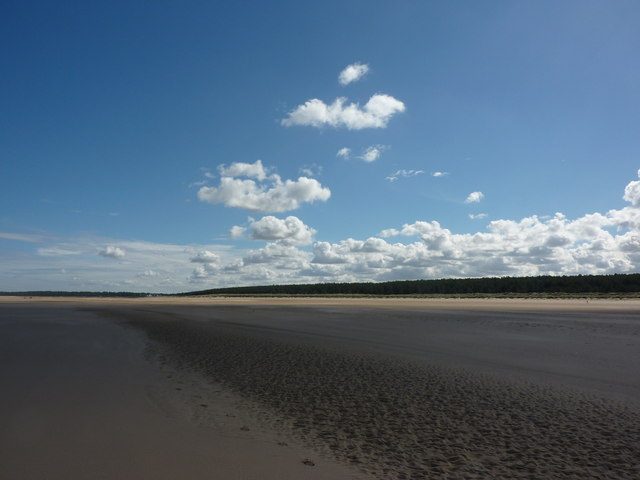
The first time I walked out onto Holkham at low tide, I genuinely lost my bearings. The sea had slid so far back across the flats that the waterline was a silver rumour somewhere in the distance, and the sky did that Norfolk thing where it takes up about three-quarters of everything you can see. I stopped trying to reach the water and just stood there. That, more than any beach hut or crab sandwich, is what this stretch of coast does to you.
This Norfolk coast guide is about exactly that feeling: a coast that isn’t dramatic in the cliff-and-crash way, but enormous, slow, and quietly addictive.
Quick Answer: Norfolk Coast Guide
This Norfolk coast guide covers the North Norfolk Coast National Landscape from Hunstanton round to Cromer: huge wide beaches like Holkham and Wells, seal and bird spotting at Blakeney Point and Cley, and old-fashioned seaside towns with proper crab. Base yourself near Wells or Burnham Market, go at low tide, and don’t rush it.
If you only have a weekend, that one paragraph is most of what you need. The rest of this guide is the detail: which beach beats which, whether the seal boat trips are worth the money, where to eat, and how to get around without a car if you want to.
For the bigger national picture, this sits inside our England’s coast and beaches guide as the East Anglia chapter. Think of Norfolk as one of the best regions in that story rather than the whole thing.
At a glance: the North Norfolk coast
| Place | Known for | Best for | Getting there |
|---|---|---|---|
| Holkham | Vast pine-backed beach, nature reserve | Big-sky beach walks | Lady Anne’s Drive car park (NR23 1RG), off the A149 |
| Wells-next-the-Sea | Colourful beach huts, harbour, pinewoods | Families, classic seaside | Coasthopper/Coastliner bus; ~10 min drive from Holkham |
| Blakeney Point | England’s largest grey seal colony | Seal-spotting boat trips | Boats from Morston Quay, off the A149 |
| Cley-next-the-Sea | Birdwatching, windmill, marshes | Wildlife lovers | A149 coast road, near Holt |
| Brancaster Staithe | Mussels, working harbour, salt marsh | Walks, fresh shellfish | A149 west of Wells |
| Cromer | Pier, lifeboat, Cromer crab | Traditional resort day out | Direct train to Cromer station |
| Sheringham | Steam railway, sand-and-shingle beach | Old-school seaside, walking | Direct train to Sheringham station |
| Hunstanton | Striped cliffs, sunset over the sea | Sunsets, families, amusements | A149; train to King’s Lynn then bus |
| Burnham Market | Boutiques, gastropubs (“Chelsea-on-Sea”) | Foodies, browsing, staying | A149/B-roads, near Brancaster |
A quick word on geography (so the map makes sense)
People say “Norfolk coast” and mean slightly different things, so let me be precise about my lane here.
The headline act is the North Norfolk Coast, a protected National Landscape (what used to be called an AONB) that runs roughly from Hunstanton in the west, along the top of the county through Brancaster, Wells, Blakeney and Cley, to Cromer and Sheringham in the east. The single most useful road in your life will be the A149, the coast road that threads all of these together. Almost everything in this guide is a turn off the A149.
Keep going east past Cromer and the coast bends down towards Great Yarmouth — bigger, brasher, more arcades. And just inland sits the Norfolk Broads, that famous maze of rivers and lakes. The Broads are a brilliant add-on if you’ve got an extra day and fancy a boat (Wroxham is the usual jumping-off point, about 45 minutes’ drive from the coast), but they’re a different world from the beaches, so I’ll keep the focus firmly on the sea.
If your trip is really about sand rather than this specific region, our best beaches in England guide ranks the national contenders — Norfolk shows up there, but here I get to go deep on the local detail.
The Best Beaches
Norfolk does beaches on a scale that’s hard to believe until you’re standing on one. These aren’t coves. They’re landscapes.
Holkham: the famous one, and rightly so
Let’s start with the beach that ends up on every “most beautiful in Britain” list. Holkham is a colossal sweep of pale sand backed by a dark wall of pine trees, part of the Holkham National Nature Reserve and looked after by the Holkham Estate. At low tide the sand seems to go on for a mile before you reach the sea; at high tide there are shallow lagoons among the dunes that small kids adore.
You park at Lady Anne’s Drive — a long sandy avenue off the A149, postcode NR23 1RG, opposite Holkham village and The Victoria pub. It’s pay-and-display and not cheap; as of 2026 expect somewhere around £10 for a full day, with shorter rates for two or four hours, and the car park open roughly 6am to 9pm. There’s a visitor centre and café, The Lookout, at the top of the drive, with an overflow grass field opened on the busiest days. Check current prices on the Holkham Estate site before you go, because they do change.
My honest take: Holkham earns the hype, but it’s a commitment. From the car park you walk through the pines and over the dunes before you even see the beach, and then it’s a proper hike to the waterline. Bring everything you need, because there are no kiosks once you’re out on the sand. Go at low tide, and if you can, go on a weekday — on a hot August Sunday even a beach this enormous fills up near the entrance.
Wells-next-the-Sea: huts, pinewoods and the easy one for families
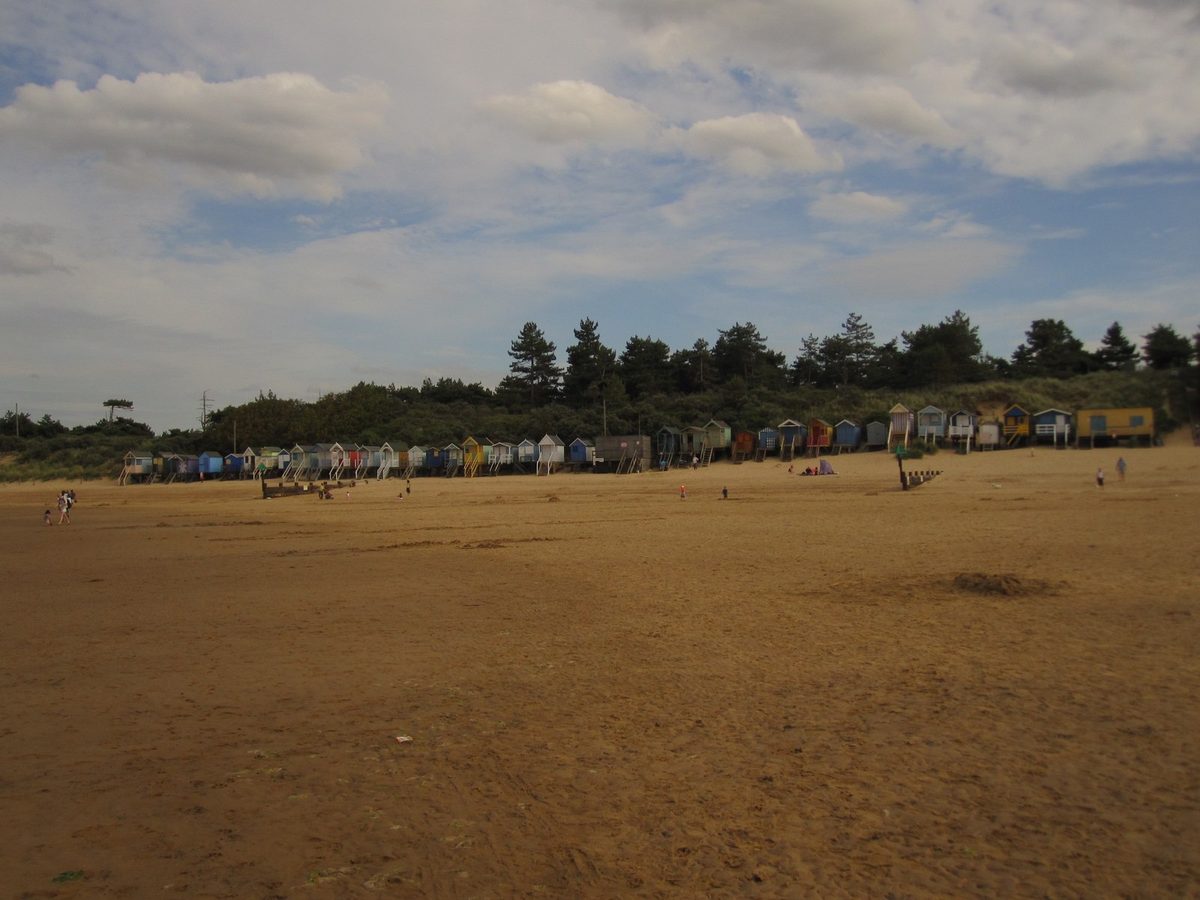
A few minutes east of Holkham (and connected to it along the sand, if you fancy the walk), Wells-next-the-Sea has the more sociable beach. The image you’ve seen is real: a long row of colourful beach huts, many of them raised on stilts, lined up between the sand and the pinewoods. Most are privately owned and passed down like heirlooms, but a limited number can be hired by the day or week through Pinewoods — figure on roughly £65 a day as of 2026, usually with deckchairs and a windbreak thrown in.
The pines themselves are worth a mention: Corsican and Scots pine planted by the Holkham estate between the 1850s and 1890s to pin down the dunes, and now a lovely shady walk on a blazing day.
Two practical notes. First, the beach is a fair stretch from Wells town and harbour — about a mile along Beach Road. The much-loved little Wells Harbour Railway sadly closed in 2021 after 45 years, but a seasonal beach service usually runs in summer to save little legs, so check what’s operating when you visit. Second, watch the tide here especially: the channel fills fast and you don’t want to be caught on the sandbanks.
So, Holkham or Wells? Holkham for the jaw-drop and the solitude; Wells for huts, ice cream, crabbing off the quay and an easier day with children. I’d do both — they’re ten minutes apart.
Brancaster: golden sand and a Roman fort
Head west and Brancaster gives you another huge, flat, golden beach, popular with kite-flyers, dog-walkers and anyone who likes their sand uncomplicated. There’s a wreck visible at low tide and miles of room. Just along the coast at Brancaster Staithe you’ve got a genuinely working harbour — fishing boats still go out for the famous mussels, and you can buy fresh shellfish from stalls. The harbour and much of the coastline here belong to the National Trust. Walk west along the coast path and you reach Branodunum, the site of a Roman fort guarding what was once a Saxon-shore harbour.
Hunstanton: the beach that watches the sunset
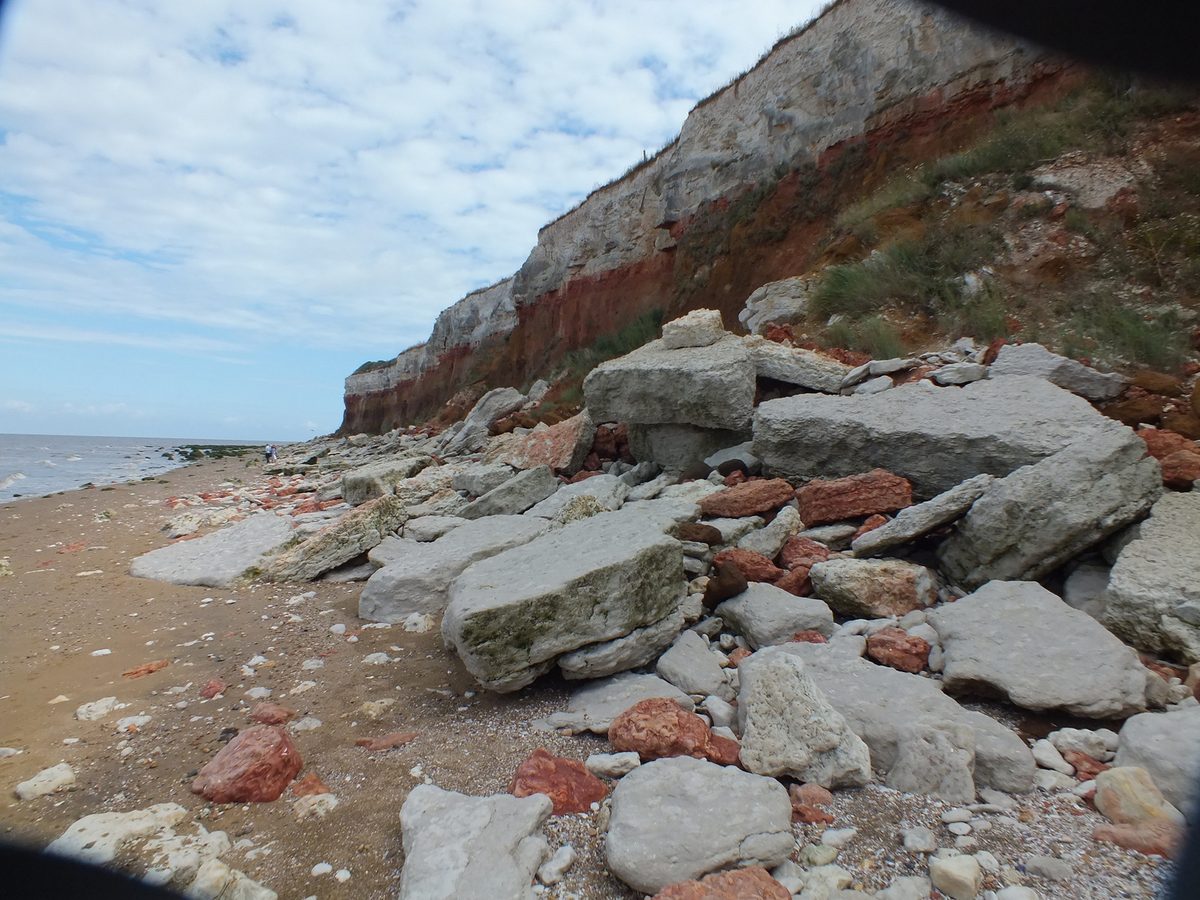
Out on the western corner, where the coast turns to face the Wash, sits Hunstanton — “Sunny Hunny” to locals. Two things make it special. The first is the striped cliffs: dramatic bands of red and white chalk over orange-brown carstone, genuinely unusual and very photogenic at the right light. The second is geographical and lovely: because Hunstanton faces west across the Wash, it’s famously the one resort on England’s east coast where you can watch the sun set over the open sea. Most of the east coast sees the sun rise from the water; here you get golden evenings sinking into it. Pack a flask, find a spot on the prom or up by the cliffs, and wait.
Hunstanton is also the most “traditional resort” of the bunch — amusements, an aquarium, fish and chips — so it’s a good family base if Holkham feels a bit austere for your crew.
Wildlife: Seals and Birds
If the beaches are the headline, the wildlife is the reason a lot of people keep coming back. This coast is one of the best in England for it.
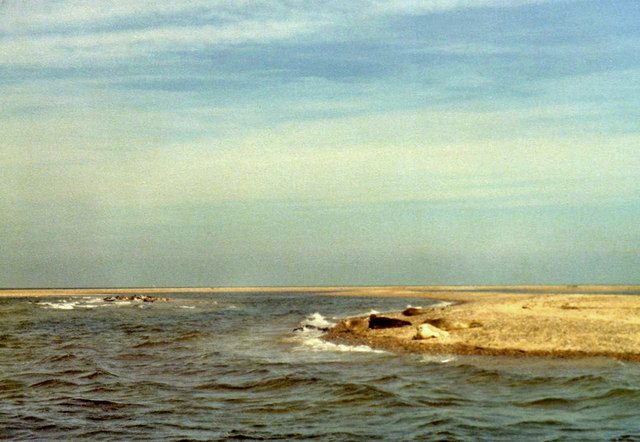
Blakeney Point: the seal trips
Blakeney Point is a long sand-and-shingle spit, owned by the National Trust, that’s home to England’s largest grey seal colony — many thousands of pups are born here each winter, roughly from late October to mid-January. The usual way to see them is a boat trip from Morston Quay (signposted off the A149). Established operators have been running these for decades — names you’ll see include Beans Boats, Bishop’s Boats and the Ptarmigan — and a typical trip lasts about an hour, weaving up through the Morston salt marshes, past the old lifeboat house, and out to where the seals haul out on the sand.
Timing matters more than most people realise. Grey seals pup in winter (roughly November to January) — that’s peak numbers, but cold and weather-dependent. Common (harbour) seals have their young in summer, roughly June to August, which is the easier, sunnier trip and the one most holidaymakers actually take. You’ll usually see seals year-round.
Are the boat trips worth it? Yes, honestly. There’s a version where you skip the boat and walk out along the Point from Cley to see them — it’s free and beautiful, but it’s a long shingle slog and you stay further back. The boat gets you genuinely close while the guides keep a respectful distance, and the marsh scenery on the way out is half the pleasure. Book ahead in the holidays; trip times shift with the tides, so you don’t just turn up. Check the latest with the National Trust or the operators direct.
One thing I’ll flag for completeness: the other famous Norfolk seal spot is Horsey, further east towards Great Yarmouth, where in midwinter you can watch grey seal pups from viewing platforms on the dunes (no boat needed). It’s outside the North Norfolk core but worth knowing about if you’re here in December or January.
Cley Marshes: a birdwatcher’s classic
Just east of Blakeney, Cley-next-the-Sea — pronounced to rhyme with “eye”, not “hay”, if you want to sound like you’ve been before — is one of the most celebrated nature reserves in Britain. Cley Marshes belongs to the Norfolk Wildlife Trust, which bought it back in 1926, making it one of the oldest reserves of its kind in the country. It’s a mosaic of reedbeds, scrapes and saline lagoons, with a clutch of hides reached by boardwalks and a smart, eco-friendly visitor centre up on the A149 with a café and big views over the marsh.
You don’t have to be a hardcore birder to enjoy it. Avocets, marsh harriers and bearded tits breed here, and in autumn and winter the skies fill with wildfowl and waders — including a huge share of the world’s pink-footed geese, whose dawn and dusk flights are a genuine spectacle. Non-members pay a modest reserve fee (around £6 as of 2026); check current rates with the Norfolk Wildlife Trust. Even from the visitor centre with a coffee, you’ll see something.
The pretty white Cley windmill down by the village is the photo everyone takes — and yes, it’s as charming as it looks.
Seaside Towns
Beyond the beaches and the birds, Norfolk has a run of proper seaside towns, each with its own personality.
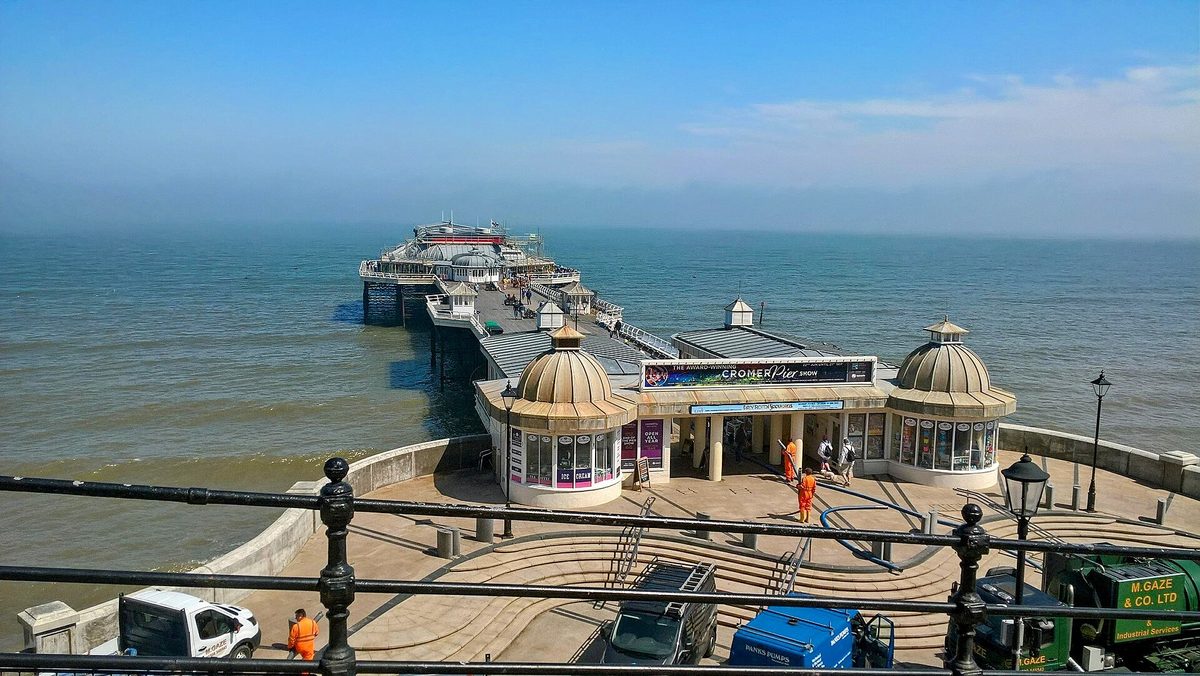
Cromer: pier, lifeboat and the crab
If you want the full Victorian-seaside experience, go to Cromer. The handsome pier strides out over the sea with its end-of-the-pier theatre still putting on shows, and — unusually — the lifeboat station sits right at the pier’s end, the all-weather boat launched straight down a slipway into the waves. The little RNLI museum in town tells the story of Henry Blogg, the most decorated lifeboatman in the institution’s history, who served at Cromer for decades; it’s genuinely moving and free to visit.
And then there’s the Cromer crab. The cold, chalky waters off Cromer produce crabs with a reputation for sweet, full meat, and the town takes them seriously. My verdict on the crab sandwich: get it from a fishmonger or a no-nonsense café rather than anywhere trying too hard, ask for dressed crab on proper bread, and don’t drown it in mayo. At its best it’s one of the great simple British lunches. Crabbing off the pier with a line and a bucket, meanwhile, is a rite of passage for kids (and a few stubborn adults).
Sheringham: steam trains and a quieter beach
A few minutes west, Sheringham is Cromer’s lower-key neighbour: a friendly little town with a sand-and-shingle beach, colourful huts and a working fishing tradition of its own. Its big draw is the North Norfolk Railway, the “Poppy Line”, a heritage steam railway running between Sheringham and Holt — a lovely, nostalgic ride, especially with children or on one of their themed event days. Sheringham is also a good base for walkers: this is where the chalk hills of the Cromer Ridge meet the sea, so the cliff-top paths are some of the most varied on the coast.
Wells and Burnham Market: the harbour and “Chelsea-on-Sea”
I’ve covered Wells beach above, but the town itself deserves a line: a bustling quay where children dangle crab lines, fishing boats come and go, and the smell of chips drifts on the air. It’s the most complete little harbour town on this coast and my favourite base.
Inland a touch sits Burnham Market, nicknamed “Chelsea-on-Sea” for the number of well-heeled Londoners with weekend boltholes here. Around its green you’ll find boutiques, galleries, delis and the famous Hoste Arms, a 17th-century coaching inn turned smart hotel-and-restaurant. It’s polished and pricey and parking is a scrum at weekends — but for a browse, a long lunch or a treat night, it’s the chic end of the Norfolk coast. If you like your seaside with good coffee and nice things to buy, this is your spot; if you came for solitude and sand, it might feel like a different holiday.
For more on the towns I’d actually choose to bed down in, see our wider best seaside towns in England round-up — Norfolk is well represented.
Food: Crabs, Samphire and Pubs
Eating well on the Norfolk coast is easy if you keep it local and seasonal.
Start with the Cromer crab, covered above — the signature dish of the coast. Then there’s samphire, the bright green, salty marsh vegetable that grows in the creeks and gets called “poor man’s asparagus” (unfairly — it’s delicious). It’s at its best in high summer, briefly blanched and tossed in butter, ideally next to a piece of local fish. You’ll see it on menus and for sale at farm shops and stalls all along the A149.
For shellfish, Brancaster Staithe is the place — mussels in season, and oysters and whatever’s fresh from the stalls by the harbour. Across the coast, the food rhythm is: fishmonger stalls and crab shacks for lunch, a proper pub for dinner.
And the pubs are a real strength here. This coast has quietly become one of the best places in England for the smart-but-relaxed country pub with rooms — the kind where you walk in salty from the beach and walk out two hours later very happy. The Burnhams and the villages between Brancaster and Wells are thick with them. You don’t need me to name a specific one; pick a flint-walled pub off the A149 with a chalkboard menu and local ale, and you’ll rarely go far wrong. Book ahead in summer, though — the good ones fill up.
A small confession: half the joy of the Norfolk coast is the bit between the headline attractions. Pull over at a roadside fish stall, buy a tub of brown shrimp or a dressed crab, and eat it looking at the marsh. That’s the trip.
Getting Around the Norfolk Coast
Most people drive, and honestly a car is the easy option here — the A149 links everything and the distances are short (Hunstanton to Cromer is well under an hour and a half with no stops, but you’ll want to stop). Be warned that beach car parks like Lady Anne’s Drive at Holkham fill early on hot days and aren’t cheap.
But you can do this coast car-free, and in summer it’s a pleasure. The star is the seasonal Coasthopper bus, which hops along the coast road stopping at the beaches, villages and harbours — exactly the journey you’d want, with the sea out the window. It’s run these days alongside the Coastliner service: broadly, the Coastliner 36 (operated by Lynx) runs from King’s Lynn to Wells, and the Coasthopper (CH1) (operated by Sanders) continues from Wells through Blakeney and Sheringham to Cromer. Between them they cover almost everything in this guide.
The train doesn’t run along the coast, but it gets you to the ends of it:
- King’s Lynn has direct trains from London King’s Cross/Cambridge and is the gateway to Hunstanton and the western coast (then the Coastliner bus).
- Sheringham and Cromer are both on the Bittern Line from Norwich, dropping you right in those towns, with the Coasthopper waiting nearby.
So a classic car-free plan is: train to Sheringham or Cromer, then Coasthopper west along the coast, hopping off for a beach here and a seal trip there. Check current timetables before you rely on it — these are seasonal and they change year to year. The National Trust’s sustainable travel pages are a useful starting point.
Where to Stay
Where you base yourself shapes the whole trip, so here’s how I’d think about it.
For the best of everything — Wells-next-the-Sea. It’s central on the coast, has the harbour-town buzz, sits right between Holkham and Blakeney, and is on the bus route. My default recommendation.
For families and amusements — Hunstanton. Traditional resort facilities, that west-facing sunset beach, and an easy run to Sandringham (the royal estate is just inland and free to walk in the parkland) on a rainy afternoon.
For walkers and steam-train nostalgia — Sheringham or Cromer. Both have direct trains, real beaches, and the Norfolk Coast Path on the doorstep. Cromer adds the pier and the crab; Sheringham is the quieter pick.
For a treat — the Burnhams and Brancaster. This is where the smart pubs-with-rooms and boutique hotels cluster. Pricier, but you’ll eat and sleep beautifully, and the best beaches are minutes away.
Accommodation runs the full range — National Trust and estate holiday cottages, characterful pubs with rooms, B&Bs, glamping behind the dunes, and a couple of properly smart hotels. Book early for summer and for the autumn/winter seal season, both of which are busier than people expect. For a broader steer on regions and styles, see our where to stay in England guide and the dedicated best seaside towns to stay in England round-up.
How long do you need, and when to go
Two full days lets you do the western half (Hunstanton, Brancaster, Holkham, Wells) one day and the eastern half (Blakeney/Morston seals, Cley, Sheringham, Cromer) the next. Three or four days and you can slow right down, add a Broads boat trip, and actually relax — which is the whole point of Norfolk.
On timing: summer is glorious and busy, with the beaches at their best and the common-seal boat trips running; book everything ahead. Spring and autumn are my favourites — quieter, big skies, and autumn brings the spectacular goose flights to Cley. Winter is cold and bracing but magical if you want the grey seal pups and an empty Holkham to yourself. There’s no truly bad time; there’s only what you’ve packed for. For a season-by-season steer across the whole country, see our best time to visit England guide.
If you’re travelling with little ones, it’s worth a look at our England with kids guide too — Norfolk is one of the most child-friendly coasts in the country, all those safe sandy beaches and crab lines.
Final Thoughts
I’ve walked a lot of British coastline, and the Norfolk coast is the one I find myself missing in the way you miss a person. It isn’t showy. There are no soaring cliffs, no turquoise water. What there is, instead, is space — that vast, level, light-filled space where the sand and the marsh and the sky all run into each other, and an afternoon stretches out as wide as the horizon.
Go at low tide. Eat the crab. Take the boat to the seals even if it feels touristy, because the marsh on the way out is worth it on its own. Find a flint-walled pub and stay too long. And on your last evening, drive out to Hunstanton and watch the sun go down over the sea — the only place on this whole eastern coast where you can. You’ll be planning the next trip before it’s properly dark.
If Norfolk gives you the coastal bug, the wild Northumberland coast up north is its great rival for big-sky beaches and castles, and Brighton is the buzzy, opposite-energy seaside city in the south. And for inspiration further afield, our guides to the most beautiful places in England and the quieter hidden gems in England are good places to fall down a rabbit hole.
Research and Source Notes
This guide draws on official and authoritative sources, checked in June 2026. All prices, timetables and seasonal services are hedged and should be confirmed before travel, as they change.
- Holkham Beach & National Nature Reserve, Lady Anne’s Drive parking, The Lookout — Holkham Estate
- Blakeney Point seal colony, Morston Quay seal trips, sustainable travel — National Trust, Blakeney and National Trust, Norfolk sustainable travel
- Cley Marshes nature reserve, history and visitor info — Norfolk Wildlife Trust
- Wells-next-the-Sea beach, beach huts and pinewoods — Holkham Estate, Wells Beach and Pinewoods, Wells; Wells Harbour Railway closure (2021) per Wikipedia
- Cromer Pier and lifeboat station — Cromer Pier and RNLI Cromer
- Hunstanton striped cliffs and west-facing sunsets — Visit West Norfolk
- Brancaster Staithe harbour and mussels — National Trust, Brancaster Estate
- Coasthopper / Coastliner bus services and rail links — Visit North Norfolk, getting around and Sanders Coaches Coasthopper
- Regional overview, North Norfolk Coast National Landscape — Visit North Norfolk and Countryfile guide to the North Norfolk Coast
Photo Credits
- Vast pine-backed sands and a huge sky at Holkham Beach, the highlight of any Norfolk coast guide — Photo: Peter Barr / CC BY-SA 2.0 via Wikimedia Commons. Source
- A row of colourful raised beach huts in the pinewoods at Wells-next-the-Sea — Photo: Keith Salvesen / CC BY-SA 2.0 via Wikimedia Commons. Source
- Grey seals hauled out on the sand spit at Blakeney Point on the Norfolk coast — Photo: Christine Matthews / CC BY-SA 2.0 via Wikimedia Commons. Source
- Cromer’s Victorian pier reaching out over the sea on the North Norfolk coast — Photo: Marley Sexton (CC0) via Wikimedia Commons. Source
- The famous red-and-white striped chalk cliffs at Hunstanton on the Norfolk coast — Photo: Peter Pearson / CC BY-SA 2.0 via Wikimedia Commons. Source
Frequently asked questions
What is the best part of the Norfolk coast?
For most visitors, the stretch between Hunstanton and Cromer — the North Norfolk Coast National Landscape — is the best part, with the standout beaches (Holkham, Wells) and the wildlife (Blakeney, Cley) all on the A149. If I had to pick one base, I'd choose Wells-next-the-Sea for being central, characterful and beautifully placed.
Where can you see seals in Norfolk?
The classic spot is Blakeney Point, England's largest grey seal colony, reached by boat trips from Morston Quay. Grey seal pups are best in winter (roughly November to January); common seals are easiest to see in summer (June to August). For pups without a boat, head to Horsey further east, where you watch them from the dunes.
Is the Norfolk coast good for families?
Very. The huge, gently shelving sandy beaches at Wells, Holkham and Brancaster are ideal for young children, and there's crabbing off the quays at Wells and Cromer, the Poppy Line steam railway, beach huts to hire, and seal boat trips that kids love. Hunstanton is the most traditional family resort, with amusements and an aquarium. Just always check the tide times.
How many days do you need for the Norfolk coast?
Two days covers the highlights — one for the western half (Holkham, Wells, Hunstanton), one for the east (Blakeney seals, Cley, Cromer). Three or four days lets you slow down, add the Norfolk Broads, and enjoy the long beach walks and pub lunches that make this coast special. It rewards an unhurried pace.
Is Holkham or Wells beach better?
They're different. Holkham is the vast, wild, pine-backed beach for jaw-dropping scenery and big walks — but facilities are minimal and the waterline is a long way out. Wells has the colourful beach huts, easier access, ice cream and crabbing nearby, making it the better family day. They're only about ten minutes apart, so do both.
Do you need a car for the Norfolk coast?
It helps, but no. In summer the seasonal Coasthopper and Coastliner buses link the beaches and villages along the A149, connecting to trains at King's Lynn, Sheringham and Cromer. A car gives you more freedom (especially out of season), but a car-free coast trip is genuinely enjoyable here — just check the seasonal timetables first.