Sheet 53 · Cornwall and Devon Travel Guide · 16 min read
Cornwall Without a Car
How to do Cornwall without a car: the main line, scenic branch lines, the sleeper, key bus routes, real fares and which spots are easy or hard to reach.
 Sheet 53
Contents 8 sections
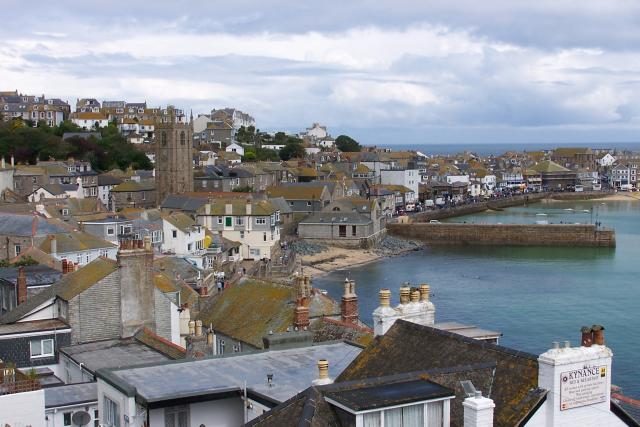
The first time I did Cornwall by train, I half expected to spend the week stranded at bus shelters in the rain, watching everyone else’s hire cars sail past. It did not turn out that way. I arrived into St Ives with the Atlantic out the right-hand window, walked downhill to my room in four minutes, and never once worried about a single-track lane or a sea-front parking ticket.
Here is the honest version of doing Cornwall without a car, because the glossy version helps nobody. Some of Cornwall is genuinely easy car-free. Some of it is a faff. And a few corners are, frankly, a battle you may not want to fight.
You can absolutely do Cornwall without a car. The Great Western Railway main line runs Plymouth–Truro–Penzance, four pretty branch lines peel off to St Ives, Falmouth, Newquay and Looe, and a dense bus network fills the gaps. The catch is timing: Sunday and winter services thin out fast, so you plan around the timetable rather than on a whim. Get that right and it is a joy.
This is the deliberate opposite of the Cornwall road trip itinerary, and a companion to the broader Cornwall and Devon travel guide. I own the logistics here: every line, every key bus, rough fares hedged for 2026, and a straight answer on what is realistic.
Quick Answer: Can You Do Cornwall Without a Car?
Yes — doing Cornwall without a car is realistic and often lovely. Trains reach Truro, Penzance, St Ives, Falmouth, Looe and Newquay; buses cover Marazion (for St Michael’s Mount) and most coastal towns. Base yourself on a rail line, accept slower travel, and check Sunday and winter timetables. The Lizard tip, much of the north coast and Bodmin Moor stay hard car-free.
At a Glance: Which Cornwall Spots Work Car-Free
A rough map of feasibility before we get into the detail. Journey times assume you are already in Cornwall (say, starting from Truro or Penzance), not coming from London.
| Destination | How to reach car-free | Rough journey | Car-free rating |
|---|---|---|---|
| Truro | Main line; every town’s hub | On the line | Excellent |
| St Ives | Train, change at St Erth onto St Ives Bay Line | ~25 min from St Erth | Excellent |
| Penzance | Main line terminus | On the line | Excellent |
| St Michael’s Mount | Train to Penzance, bus to Marazion, walk/ferry | ~25 min bus + walk | Very good |
| Falmouth | Maritime Line from Truro | ~25 min | Very good |
| Looe | Looe Valley Line from Liskeard | ~30 min | Very good |
| Newquay | Atlantic Coast Line from Par | ~50 min | Good |
| Padstow | Bus (A5/Atlantic Coaster) from Newquay or Bodmin | ~1 hr+ | Moderate |
| Land’s End | Land’s End Coaster bus from Penzance/St Ives | ~1 hr+ | Moderate |
| The Lizard tip | Bus 34 from Redruth/Helston, then walk | 1.5 hr+, sparse | Hard |
| Tintagel / north coast | Buses, often slow and infrequent | Half a day | Hard |
| Bodmin Moor villages | Minimal service | Difficult | Very hard |
If your wishlist sits in the top half of that table, car-free is a no-brainer. If it lives in the bottom half, read the honest sections below before you commit.
The Cornish Main Line and the Night Riviera Sleeper
Everything starts with the spine. GWR’s Cornish Main Line runs from Plymouth across the Tamar on Brunel’s Royal Albert Bridge, then through Saltash, Liskeard, Bodmin Parkway, Par, St Austell, Truro, Camborne, Hayle, St Erth and on to Penzance, the western terminus. Long-distance trains come in roughly hourly from London Paddington via Reading, Taunton, Exeter and Plymouth. As of 2026, reckon on around 4 hours 40 minutes London to Truro and roughly 5 hours to Penzance — slower than you’d hope, faster than you’d fear.
CrossCountry trains also run up the spine from the north — Birmingham, Bristol, the Midlands — so you are not solely dependent on Paddington. For the full picture of approaching the county by rail, the England train travel guide and the England transport overview both set the scene.
My strong recommendation if you are coming from London: take the sleeper at least once. The Night Riviera runs six nights a week (Sunday to Friday) from London Paddington to Penzance, calling at Truro and the other main-line stops in the small hours. You board in the late evening, sleep through Devon, and wake somewhere west of Plymouth with the morning light on the estuaries. As of 2026 a berth in a private cabin starts around £80–£90 booked ahead, with a reclining seat far cheaper at roughly £25–£50; book direct with GWR, ideally well in advance, as cabins sell out. Cabin guests get a light breakfast and access to GWR’s first-class lounges (with showers) at Paddington, Truro and Penzance. It is the single most civilised way into Cornwall, full stop — and it saves you a night’s accommodation.
One practical note on the main line: trains are busy in July and August, especially Friday and Saturday changeovers. Reserve a seat on long-distance services. On the branch lines, reservations don’t apply — you just hop on.
The Scenic Branch Lines: Cornwall’s Secret Weapon
This is the part people underestimate. Four little branch lines peel off the main line, and between them they reach most of the honeypots you actually want. They are also, genuinely, some of the prettiest short rides in Britain — the journey is half the point. This is where the England itinerary by train idea really comes alive.
St Ives Bay Line (St Erth–St Ives)
The famous one, and rightly so. You change at St Erth — not Penzance, a mistake first-timers make — onto the short St Ives Bay Line. The train then sweeps along the very edge of the coast above Carbis Bay and Hayle Towans, the turquoise water close enough to feel slightly unreal, before dropping you at St Ives station right above Porthminster Beach. It takes around 25 minutes and runs roughly every half-hour through the day in season. Frequent, reliable, gorgeous.
Smart move in peak summer: park-and-ride mentality even without a car. St Ives gets impossibly busy and the station is small, so the train is far less stressful than any road approach. St Ives is the poster child for car-free Cornwall, and it sits near several of the best beaches in Cornwall.
Maritime Line (Truro–Falmouth)
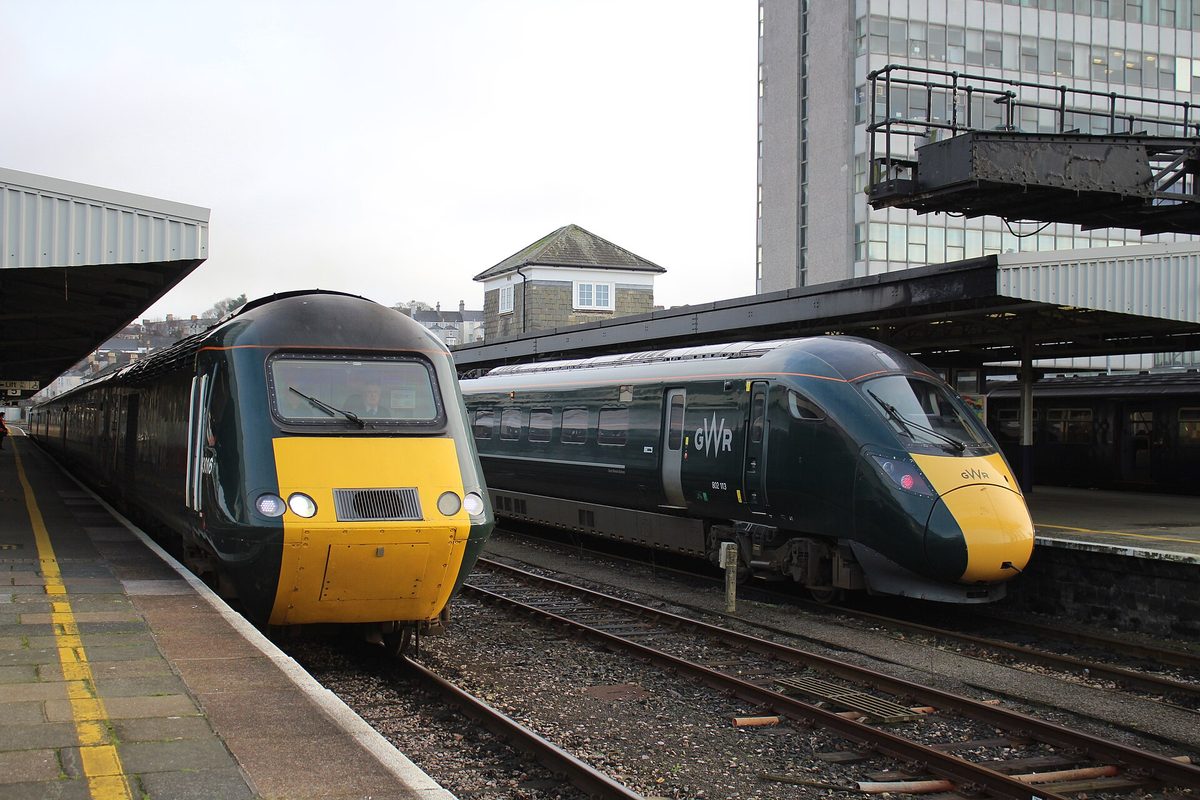
From the cathedral city of Truro — itself a fine, walkable base — the Maritime Line runs down to Falmouth, shadowing the Fal estuary and finishing at Falmouth Docks, with handy stops at Penmere and Falmouth Town. Around 25 minutes, broadly every half-hour for most of the day. Falmouth is one of the easiest car-free towns in the whole county: the National Maritime Museum, the beaches at Gyllyngvase, the gardens and the harbour are all walkable from the stations. From Falmouth you can also pick up the foot-passenger ferries across the Carrick Roads to St Mawes and the Roseland — a lovely car-free day in itself.
Atlantic Coast Line (Par–Newquay)
Newquay sits on the north coast, off the main line, so you change at Par onto the Atlantic Coast Line. It is a slower, wilder ride — across Goss Moor and through the wooded Luxulyan Valley — taking around 50 minutes, and this is the branch where the timetable bites: service is noticeably thinner outside the summer peak, sometimes only a handful of trains a day in deep winter, and Sundays can be sparse. In high season it is fine; in January, check every connection twice. Newquay itself is walkable to Fistral and Towan once you arrive, and it is a sensible car-free base for surf and the best places to visit in Cornwall on the north coast.
Looe Valley Line (Liskeard–Looe)
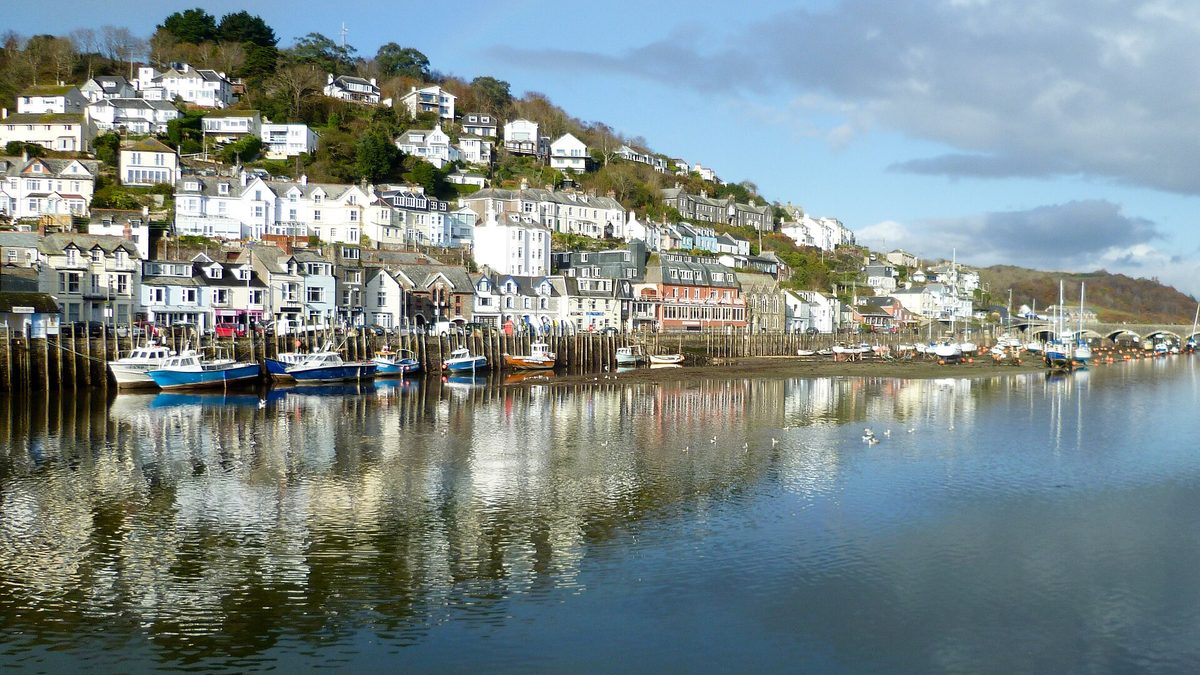
My quiet favourite. You change at Liskeard — there’s a separate little branch platform, slightly hidden, so allow a couple of minutes — and trundle down the Looe Valley Line beside the East Looe River. At low tide the mudflats are full of herons and egrets; the whole thing feels like a model railway someone built for the joy of it. Around 30 minutes to Looe, a proper working fishing town with a beach. Note the Looe line typically has no Sunday service outside the summer months, so a winter Sunday trip is a non-starter — check before you go.
Tamar Valley Line (Plymouth–Gunnislake)
The outlier, mostly used by locals, but worth knowing. The Tamar Valley Line runs from Plymouth up to Gunnislake on the Cornwall–Devon border, crossing the dramatic Calstock viaduct above the river. It is more a scenic add-on than a way to reach the honeypots, but if you are basing yourself around Plymouth and want a half-day in the Tamar Valley, it is a quietly beautiful ride.
The Bus Network: Where the Trains Stop, the Buses Take Over
Trains get you to the towns; buses get you to the coves, the cliffs and the villages off the rails. Cornwall has close to a hundred bus routes, most run by First Bus (trading as First Kernow / “Cornwall by Kernow”) with additional services under the Transport for Cornwall banner. This is the layer that turns a rail trip into a proper holiday, and it slots neatly into the wider travel around England without a car approach.
The workhorses are the inter-town T-routes: the T1, T2 and T3 link the main centres — Penzance, Truro, Camborne, St Austell, Newquay and beyond — at decent frequencies through the day. These are your backbone for journeys the train doesn’t cover, like Truro to Newquay overland.
Then there are the coastal and scenic services, which are half attraction in themselves:
- The Atlantic Coaster (A-series): a family of west-Penwith routes — A1 (Penzance–Land’s End), A2 (Penzance–St Ives), A3 (St Ives–Land’s End), A5 (Newquay–Padstow) and the A17 (St Ives–Pendeen/Madron). The A5 is the practical way to reach Padstow car-free.
- The Land’s End Coaster (route 1 / 1A): one of the great bus rides in Britain. It loops from Penzance out via Newlyn, Mousehole, Porthcurno (for the Minack Theatre and the beach), Sennen Cove and Land’s End, then up the Tin Coast and into St Ives, returning via St Erth station, Marazion and St Michael’s Mount. Open-top in summer. Do this on a clear day and you will not miss your car for a second.
- Route 34: the lifeline to the Lizard — more on that below, because it is the honest limit of easy car-free travel.
A few real-world bus tips. England’s £3 single-fare cap is in place into 2027 as of 2026, so most single bus journeys cost around £3 however far you go — a quietly excellent deal that makes hopping between coves cheap. First Kernow day and weekly tickets exist too (a day ticket is roughly £8–£10 as of 2026), and Transport for Cornwall tickets cover the network more broadly. Download the First Bus app for live times; rural timetables change seasonally and a printed sheet from last year will lie to you.
Destination by Destination: The Honest Feasibility Guide
Here is where I stop being diplomatic. Some places are a dream car-free; others are a slog; a few I would simply skip unless you drive.
Easy and a pleasure
St Ives, Falmouth, Penzance, Truro and Looe are all rail-connected and walkable on arrival — these are no-brainers, and any of them makes a strong car-free base. For where to bed down, see where to stay in Cornwall. Newquay joins them with the caveat that the branch line is seasonal, so a summer trip is easy and a midwinter one needs care.
St Michael’s Mount — easier than people fear
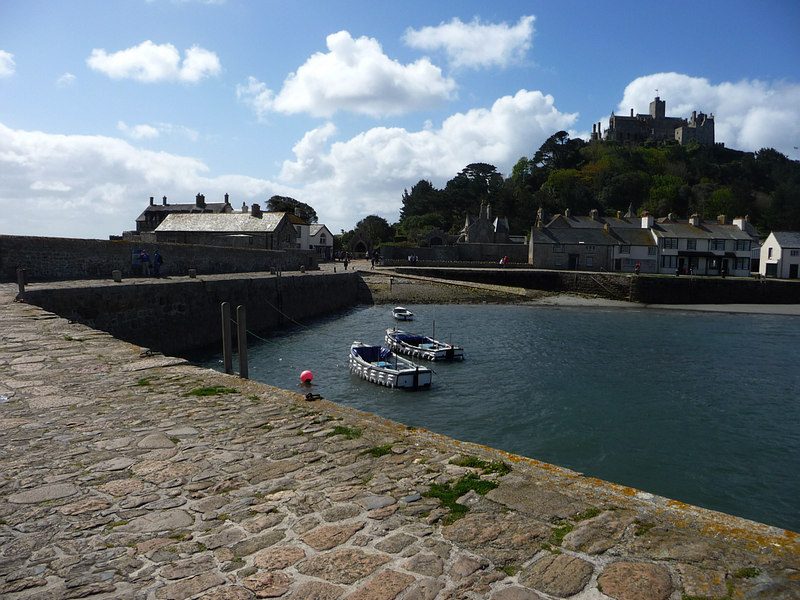
A genuine highlight, and very doable. Take the train to Penzance, then a bus to Marazion — the U4 and route 2 both serve it, and in summer the Land’s End Coaster passes too — about 25 minutes. From the bus stop it’s a short walk to the causeway; at low tide you walk across to the island, at high tide a small ferry runs. Check the tide and the castle’s opening days before you set off, but logistically this is straightforward. One of the best car-free day trips in Cornwall.
Land’s End and the Penwith tip — slow but rewarding
Reachable on the Land’s End Coaster from Penzance or St Ives, but it is a long, winding ride, so treat it as the day’s main event rather than a quick hop. Porthcurno and the Minack, Sennen Cove and Land’s End itself are all on the route. Go early, enjoy the journey, don’t try to cram three west-Penwith sights into one afternoon.
The Lizard — the honest limit
This is where car-free gets hard. The Lizard peninsula is served mainly by route 34 running roughly hourly from Redruth and Helston down to Lizard village, the most southerly in mainland Britain. From the village you then walk to Lizard Point and the coves. It is doable as a deliberate day out, but services are sparse, connections are tight, and side-spots like Kynance Cove involve a proper walk from the bus. If the Lizard is the whole reason for your trip, I would weigh up driving — or accept it as one slow, committed day.
The north coast and Bodmin Moor — genuinely difficult
Tintagel, Boscastle, much of the north coast between Newquay and Bude, and the villages of Bodmin Moor are the real weak spots. Buses exist but are slow and infrequent, connections are awkward, and a single sight can eat a whole day. This is the part of Cornwall the Cornwall road trip itinerary was made for. If your heart is set on Tintagel’s castle or a moorland tor, be realistic: car-free here is a project, not a day trip.
The pattern is clear once you see it. The south coast and the rail-served towns are easy; the further you get from a railway station and the more “edge of the map” the spot, the harder it becomes. The Devon vs Cornwall comparison is worth a glance if flexibility matters to you, and for the wider context of reaching the region, the England coach travel options (National Express runs direct to Truro, Falmouth, Newquay and Penzance) are a useful backup to the train.
Tickets, Passes and Rough Fares for 2026
Buying tickets cleverly is where car-free Cornwall actually beats driving on cost. Here’s how I’d approach it as of 2026; treat every figure as “around,” and confirm live prices before you book.
Point-to-point rail tickets. For getting to Cornwall, book Advance singles with GWR or National Rail well ahead — London to Truro/Penzance can drop to around £35–£55 each way booked early, versus eye-watering walk-up Anytime fares. A Railcard (Two Together, Family & Friends, 16–25, Senior) knocks roughly a third off and pays for itself in one long trip.
Ride Cornwall Day Ranger. The card I reach for on touring days. One ticket covers a day’s unlimited travel on trains across Cornwall (all the branch lines plus the main line east to Plymouth) and most buses too. As of March 2026 it’s around £42 for an adult, about £10.50 for a child, with a family version — and crucially it’s valid on rail after 08:45 on weekdays and all day at weekends. Combine three branch lines and a coastal bus in a day and it’s superb value.
Freedom of Devon and Cornwall Rover. For a longer rail-based trip spanning both counties, this multi-day rover (commonly sold as “3 days in 7” or “8 days in 15”) is excellent. As of 2026 the 3-in-7 sits around £67 and the 8-in-15 around £107, give or take — ideal if you’re combining Cornwall with the Jurassic Coast travel guide territory further east.
PlusBus. Add unlimited local bus travel to your train ticket in a chosen town for around £2.50–£4 a day — handy bolt-on if you’re basing yourself somewhere like Truro or Penzance and zipping about locally.
Bus-only. With the £3 single-fare cap running into 2027 as of 2026, casual bus-hopping is cheap. If you’ll ride a lot in one day, a First Kernow day ticket (roughly £8–£10) or a multi-day pass works out better.
For the bigger budgeting picture, the England budget costs guide and the practical England travel tips are worth a read before you commit. Done right, a car-free Cornwall week often comes in cheaper than hire car plus fuel plus the maddening parking — and you skip the single-track-lane stress entirely.
Final Thoughts
So, who is car-free Cornwall actually for? If you want to base yourself in St Ives, Falmouth, Penzance or Truro, ride those glorious branch lines, ferry-hop the Fal, do St Michael’s Mount and the Land’s End Coaster, and read a book while someone else handles the lanes — you will have a wonderful, low-stress, surprisingly affordable holiday. I’d choose it again tomorrow, and for solo travellers, couples and anyone who finds Cornish driving a chore, it’s the better trip.
But I won’t oversell it. If your dream is Tintagel at dawn, a string of hidden north-coast coves, the Lizard’s full sweep and a moorland tor all in one week, you’ll spend more of that week waiting at bus stops than you’d like. That trip wants a car, and the Cornwall road trip itinerary is built for exactly it.
My honest advice: pick your approach to match your wishlist, not the other way round. Choose the rail-and-bus version, base yourself well — the Cornwall itinerary 5 days plan pairs nicely with it — and accept slower, scenic travel as a feature rather than a bug. Plan around the timetable, especially on Sundays and in winter, and Cornwall opens up beautifully without a steering wheel in sight. For the wider planning frame, the Cornwall and Devon travel guide and the best time to visit England both help you pick your window.
Research and Source Notes
Fares, journey times and service patterns in this guide are hedged as “around / as of 2026” and should be confirmed live before you travel, as timetables and prices change — especially seasonally on the branch lines and rural buses.
Primary sources I cross-checked for this article:
- Great Western Railway (GWR) — the operator of the Cornish Main Line, all four branch lines and the Night Riviera sleeper; the source for sleeper fares, cabin details and Rover/Ranger tickets.
- National Rail — for ticket types, the Ride Cornwall Day Ranger, the Freedom of Devon and Cornwall Rover, PlusBus and live train times.
- Transport for Cornwall — the county-wide brand for bus services, fares and timetables.
- First Bus / First Kernow (“Cornwall by Kernow”) — operator of most Cornish buses including the T-routes, the Atlantic Coaster and the Land’s End Coaster.
- Devon and Cornwall Rail Partnership — for branch-line network maps, line timetables and rover-ticket guidance.
- Traveline South West — for joined-up bus-and-rail journey planning across the region.
- National Express — for direct long-distance coach services into Cornwall’s main towns.
Always check the official GWR, National Rail and Transport for Cornwall sites for the current timetable and the latest fares before locking in your plans — particularly if you’re travelling on a Sunday or outside the summer season, when services are at their thinnest.
Photo Credits
- Cornwall without a car: arriving into St Ives by train above Porthminster Beach — Photo: Dave Eagle / CC BY-SA 2.0 via Wikimedia Commons. Source
- A GWR branch-line train hugging the Cornish coast — Photo: SavageKieran / CC BY-SA 4.0 via Wikimedia Commons. Source
- St Michael’s Mount across the causeway from Marazion — Photo: Chris Gunns / CC BY-SA 2.0 via Wikimedia Commons. Source
- Falmouth harbour, reached car-free on the Maritime Line from Truro — Photo: Christine Matthews / CC BY-SA 2.0 via Wikimedia Commons. Source
- Looe harbour, reached car-free on the scenic Looe Valley branch line — Photo: DeFacto / CC BY-SA 4.0 via Wikimedia Commons. Source
Frequently asked questions
Can you visit Cornwall without a car?
Yes. Cornwall has a rail main line (Plymouth–Truro–Penzance), four scenic branch lines to St Ives, Falmouth, Newquay and Looe, and an extensive bus network. The rail-served towns and the south coast are easy and walkable on arrival. You simply plan around timetables rather than travelling on a whim, and accept that a few remote spots stay difficult.
Is it easy to get around Cornwall by public transport?
Mostly yes for the main towns and south coast, less so for the far edges. Trains and the T-route buses link the principal centres reliably, and the £3 bus fare cap keeps costs low. The catch is frequency: rural and branch-line services thin out on Sundays and in winter, so check timetables in advance and don't leave tight connections to chance.
Can you get to St Ives by train?
Yes, and the arrival is one of Britain's most beautiful. You take a main-line train and change at St Erth — not Penzance — onto the short St Ives Bay Line, which hugs the coast above Carbis Bay before reaching St Ives station above Porthminster Beach. It's about 25 minutes from St Erth and runs roughly every half-hour in season. No car required, and far less stressful than driving in.
How do you get to St Michael's Mount without a car?
Take a train to Penzance, then a local bus to Marazion — the U4 or route 2, about 25 minutes, with the seasonal Land's End Coaster also passing. From the bus stop it's a short walk to the causeway: at low tide you walk across to the island, at high tide a small ferry runs. Check tide times and the castle's opening days, and it's a straightforward, rewarding car-free day.
Should I take the sleeper train to Cornwall?
If you're coming from London, I'd say yes at least once. The GWR Night Riviera runs six nights a week from London Paddington to Penzance, so you sleep through the journey and wake in Cornwall. Cabins start around £80–£90 booked ahead (cheaper reclining seats too) and include breakfast and lounge access. It saves a night's accommodation and is the most civilised way west.
Which parts of Cornwall are hard to reach without a car?
The Lizard peninsula's tip, much of the north coast (Tintagel, Boscastle, the stretch toward Bude) and the villages of Bodmin Moor are the genuine weak spots. Buses exist but are slow and infrequent, and a single sight can consume a whole day. If these are central to your trip, consider driving for those legs or building in plenty of time.