Sheet 68 · Lake District Travel Guide · 17 min read
Best Lake District Walks for Beginners
The 7 best easy Lake District walks for beginners, with distances, times, terrain and parking for Tarn Hows, Buttermere, Catbells and more. Plan a gentle
 Sheet 68
Contents 7 sections
The first time I walked round Tarn Hows I’d left my proper boots at home and done the whole loop in trainers, and it didn’t matter one bit. That’s the thing nobody tells you before your first trip: you don’t need to be a hardened fell-walker to have one of the best days of your life up here. You just need to pick the right route.
This guide is my honest pick of the easy Lake District walks that actually deliver — the gentle lakeside strolls, the soft little loops, and one short summit that’s doable for most reasonably fit beginners. For each one I’ll give you rough distance, time, terrain, where to park, and why it’s worth your morning. No 3,000-foot fells here. Just the good, kind walks.
Quick Answer: the best easy Lake District walks for beginners
If you want the short version, here are the easy Lake District walks I’d send any beginner to first. For a completely flat, anyone-can-do-it stroll, walk to Friar’s Crag on Derwentwater or do the Tarn Hows loop. For a slightly longer gentle circuit, choose Buttermere or Grasmere and Rydal Water. For your first taste of a view from above, climb Orrest Head. And Aira Force is the best waterfall walk going. Want one real (but doable) little mountain? Catbells — with care.
I’ve grouped them below by effort, from flattest to that one easy summit, so you can match the walk to your legs and the weather. If you want the wider picture of the region first, my Lake District travel guide covers bases, transport and timing, and the England national parks hiking guide is where to head for the big fells I’m deliberately leaving out here.
At a glance: the 7 walks
| Walk | Distance | Time | Terrain | Start / parking | Best for |
|---|---|---|---|---|---|
| Friar’s Crag (Derwentwater) | ~0.5 mi each way | 20–30 min | Flat, surfaced | Lakeside car park, Keswick | Wheelchairs, pushchairs, first views |
| Tarn Hows loop | ~1.8 mi | ~1 hr | Gentle, well-graded | NT Tarn Hows car park | Families, all-rounder first walk |
| Aira Force waterfall | 0.5–2 mi options | 30 min–1 hr | Gentle, some steps | NT Aira Force car park, Ullswater | Waterfall lovers, kids |
| Grasmere & Rydal Water | 2.8–5 mi | 1.5–2.5 hr | Mostly gentle, one climb | White Moss car park | Literary types, varied scenery |
| Buttermere circuit | ~4.5 mi | ~2 hr | Mostly flat lakeside | Buttermere village / Gatesgarth | A “proper” walk that’s still easy |
| Orrest Head | ~1.5 mi round | 45 min–1 hr | Steady uphill, then down | Windermere village/station | First summit, car-free day |
| Catbells | ~3.5 mi | 2–3 hr | Steep, short scramble | Hawse End / Gutherscar | Confident beginners, dry days |
A quick word on the route below it: distances and times here are rounded and based on a relaxed pace with photo stops. Your phone’s mapping app and the official Lake District National Park route pages will give you exact figures, and I’ve named my sources at the very bottom.
Flat lakeside walks: the gentlest start
These are the walks I recommend to anyone nervous about whether they’re “fit enough.” You’re not climbing anything. You’re following the edge of water, and the views do all the work.
Friar’s Crag, Derwentwater — the easiest famous view in the Lakes
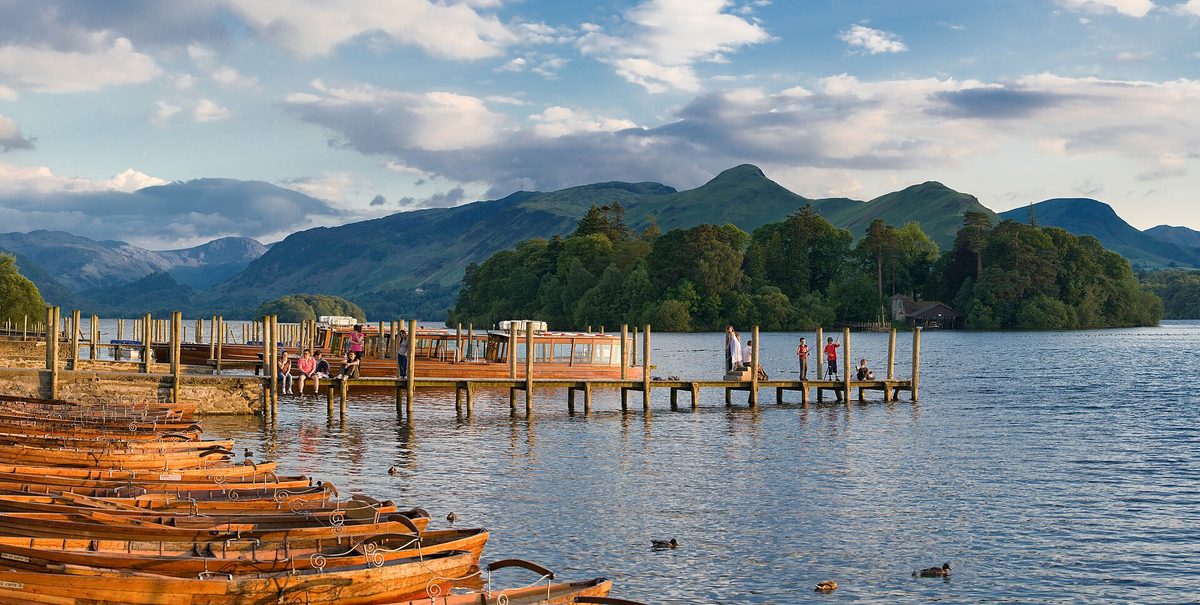
If you only have an hour, or you’ve got a pushchair, a wheelchair, or grandparents in tow, start here. Friar’s Crag is a short, flat, surfaced walk from the lakeside car park in Keswick — roughly half a mile out, ten or fifteen minutes at a gentle pace — and it ends on a little rocky headland with one of the most painted, photographed views in England. Derwentwater stretches out ahead, ringed by Catbells and the Borrowdale fells, and there’s a bench to sit on while you take it in.
The first stretch from town is paved and genuinely accessible; the National Park lists it as one of its “Miles Without Stiles” routes, which is their flag for properly inclusive paths. Beyond the headland the path turns to compact gravel, but you don’t need to go further than the crag itself to get the payoff. Ruskin called this one of the finest views in Europe, and standing there at golden hour, you stop arguing with him.
Why it’s worth it: minimum effort, maximum scenery, ten minutes from coffee and cake. It’s the walk I do on a tired afternoon or a drizzly arrival day. Keswick itself is a brilliant little base, and my Keswick travel guide covers where to eat and stay nearby. If the heavens really open, see the Lake District rainy-day activities for indoor backups.
Tarn Hows loop — the perfect first walk
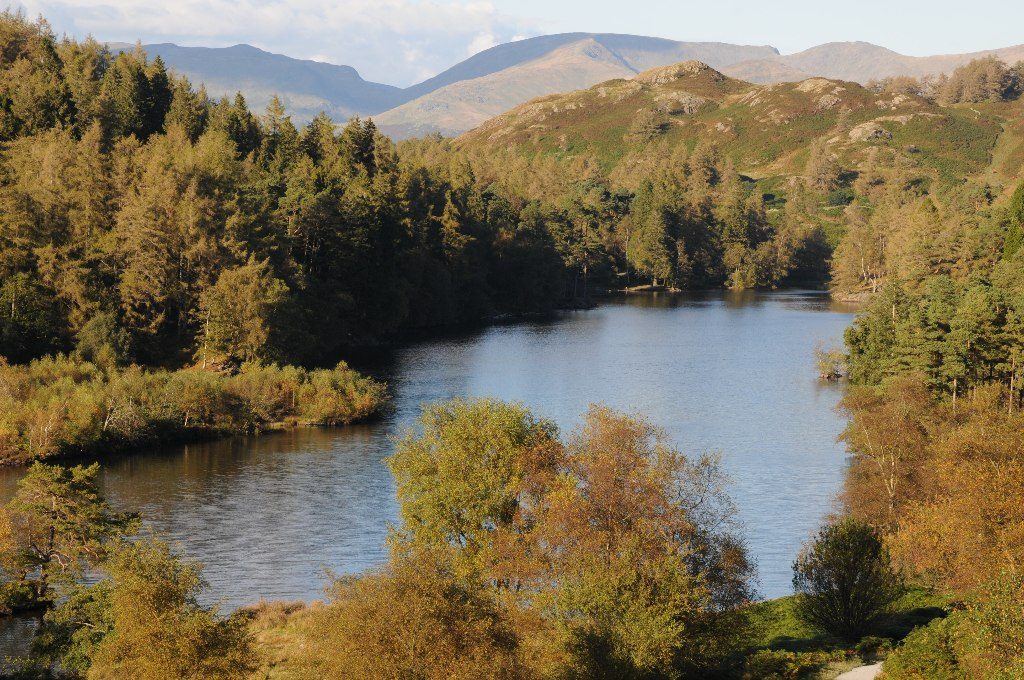
Tarn Hows is the one I’d put top of any beginner’s list, and not just because of my trainers story. It’s a circular walk of about 1.8 miles around a small, impossibly pretty tarn, with views of the Coniston fells and Langdale Pikes beyond. It takes around an hour at a stroll. The path undulates gently — there are a few soft rises — but it’s well-graded and well-surfaced almost the whole way, never steep, and signposted so clearly you can’t get lost.
It’s a National Trust site, and there’s a decent-sized car park right by the start. Expect to pay around £10 for all day (or roughly £7 for two hours) as of 2026 — National Trust members park free if they scan their card at the machine. Here’s my one real tip: get there before 10am. It’s one of the most popular spots in the whole park and the car park fills fast on any half-decent day.
There’s also a shorter, flatter linear section along the near shore — about half a mile — that the Trust has made accessible for wheelchairs and pushchairs, so even if the full loop feels like a stretch, you can still get to the water.
Why it’s worth it: it looks like a postcard, it’s nearly impossible to get wrong, and it gives small legs (and nervous first-timers) a genuine sense of having “done a walk.” For more easy, kid-friendly days out across the region, the family days out in England with kids guide pairs well with this one.
Buttermere circuit — a “proper” walk that stays easy
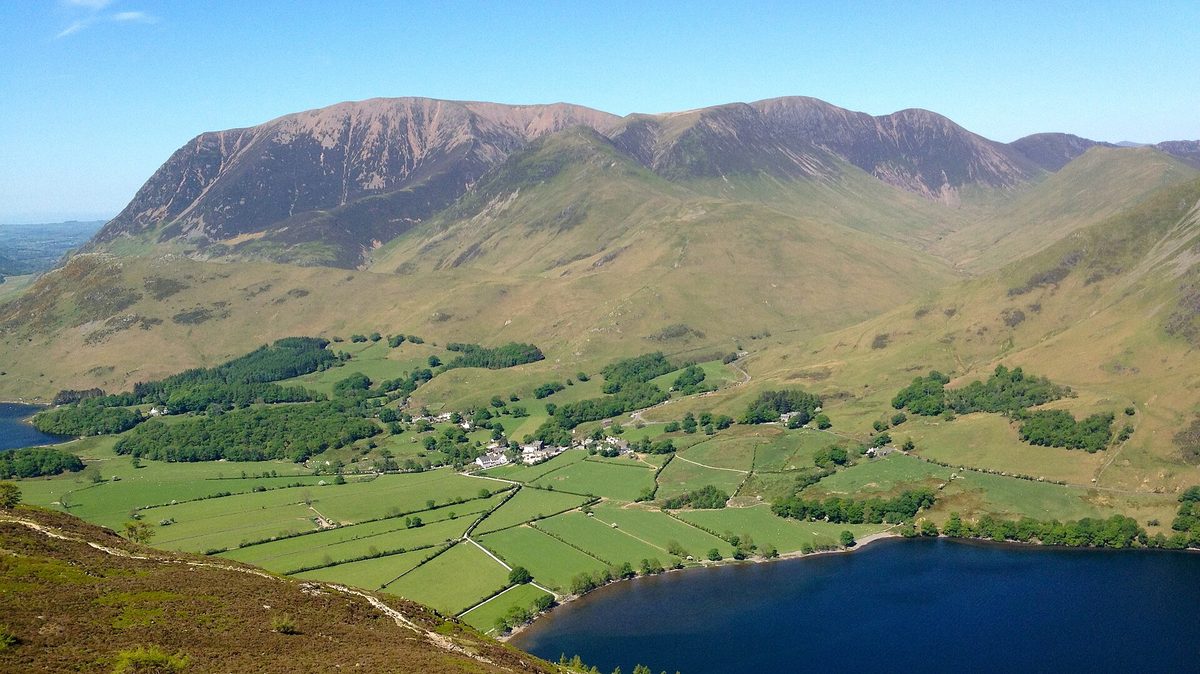
Buttermere is the walk I send people to when they want to feel like they’ve earned their pub dinner without actually suffering for it. The full circuit of the lake is about 4.5 miles and takes a couple of hours, and it’s almost entirely flat — you’re following the shoreline the whole way round, with the dark wall of High Stile and Haystacks rising straight out of the far side. There’s even a short rock tunnel cut through a crag near the north shore, which kids love.
It’s wider and more remote-feeling than Tarn Hows, and honestly one of the most beautiful low-level walks anywhere in the country. A heads-up on the path, though: it’s flat but not perfectly smooth, and there are a couple of small kissing gates near Gatesgarth that a pushchair won’t fit through, plus some rockier, rootier stretches. So I’d call it easy for walkers but not a true buggy route. Dogs love it — just keep them on a lead past the sheep.
Park in Buttermere village (there are a couple of car parks, including a National Trust one, and coins or an app help) or at Gatesgarth at the far end; both get busy, so again, early is your friend. There’s an ice-cream farm and a couple of pubs in the village for afterwards, which feels well deserved.
Why it’s worth it: it’s a “real” lap of a real lake, it’s flat, and the scenery is genuinely jaw-dropping for so little effort. If you’re piecing together a few days, the 3-day Lake District itinerary slots walks like this around the best of the rest.
Gentle loops: a bit more variety underfoot
Step up from pure lakeside and you get walks with a little more shape — a short climb here, a woodland section there, water below you instead of beside you. Still firmly in beginner territory, just more to look at.
Aira Force waterfall — the best easy waterfall walk
Aira Force is a National Trust beauty spot on the western shore of Ullswater, and it’s the waterfall walk I recommend above all others for beginners. From the main car park there’s a network of waymarked paths ranging from about half a mile to two miles, so you can dial the effort up or down. The headline route is a short circular of roughly 2 km that takes you up one side of a wooded gorge to a stone bridge over the 65-foot falls, then back down the other — call it an hour with photo stops.
It’s not flat — there are steps and a gentle climb through the trees — but it’s short, shaded, and never feels like hard work. The falls themselves are properly dramatic after rain, thundering through a mossy ravine, and there’s a café and toilets at the bottom.
Parking is National Trust: around £9 for all day (about £6 for two hours) as of 2026, free for members. Like everywhere good up here, the Aira Force car park tends to fill by late morning in summer, so come early or arrive late afternoon. There are other Trust car parks around Ullswater if it’s full.
Why it’s worth it: a big, satisfying natural spectacle for a short, manageable walk, with the bonus of Ullswater right there. Ullswater is also a glorious place to be without a car, thanks to the steamers — more on that in exploring the Lake District without a car.
Grasmere & Rydal Water — Wordsworth’s back garden
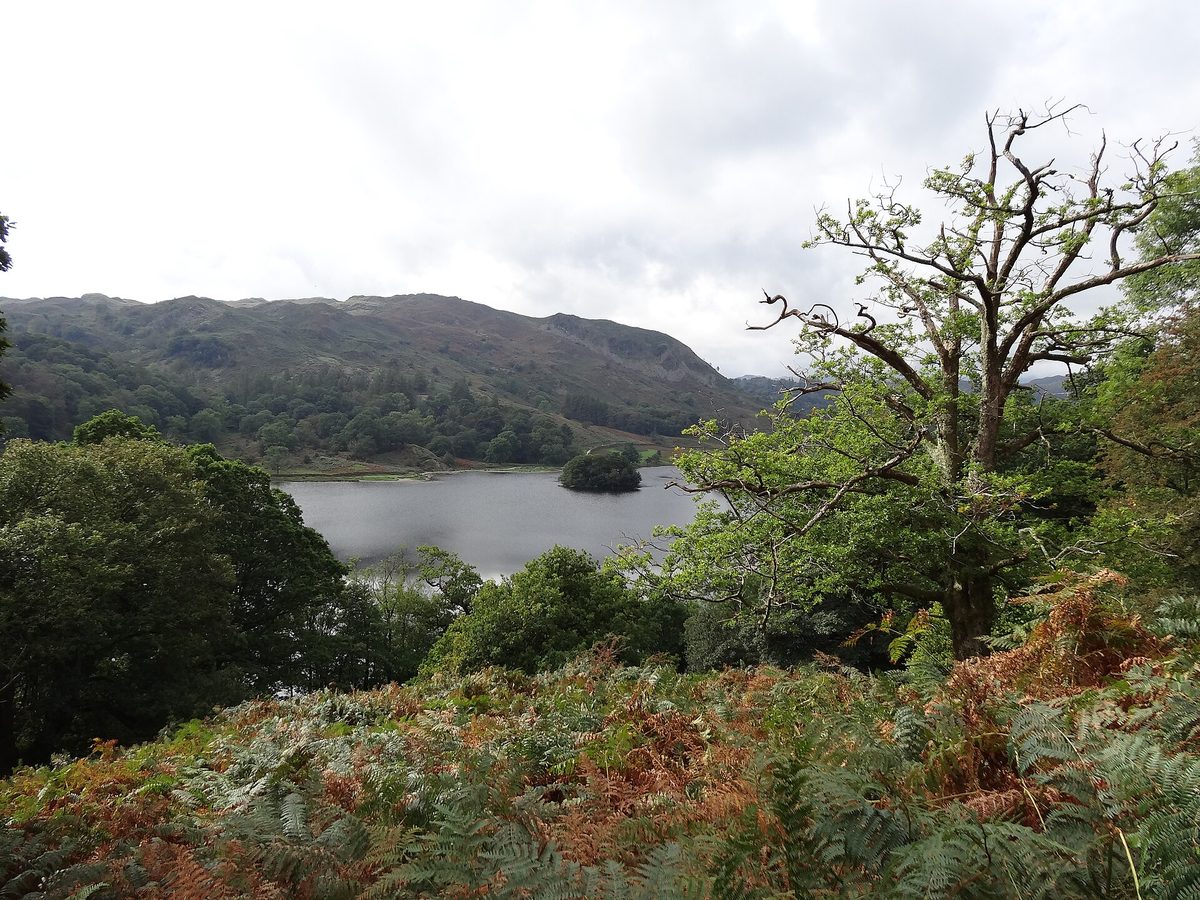
This is the walk for anyone who likes a bit of story with their scenery. Grasmere and Rydal Water are two small, linked lakes in the literary heart of the Lakes — Wordsworth country — and you can do a shorter loop of just one (Rydal Water is about 2.8 miles) or a fuller figure-of-eight taking in both, which runs nearer 5 miles depending on your route.
I love combining the lakeside path on the way out with the old Coffin Route on the way back — a centuries-old track once used to carry coffins from Rydal to the church at Grasmere, which now gives you lovely elevated views down over the water. There’s one steady but short climb up onto it, and if you fancy a detour, the old slate caverns at Rydal (Rydal Caves) are an easy add-on the kids will remember.
Start from the White Moss car park, which sits roughly between the two lakes — it’s pay and display and well placed for either loop. Grasmere village is a five-minute drive away if you want gingerbread and a proper lunch afterwards (you do).
Why it’s worth it: two lakes, woodland, a slice of history, and flexible distance, all from one car park. It’s varied without ever getting tough. For the bigger picture of England’s loveliest corners, this one earns its place in my most beautiful places in England roundup.
One easy summit: your first taste of the top
You don’t have to climb anything to love the Lakes. But if you want that hands-in-the-air, “I can see for miles” feeling, here are two ways to get it — one very gentle, one a genuine little mountain.
Orrest Head — the best easy first viewpoint
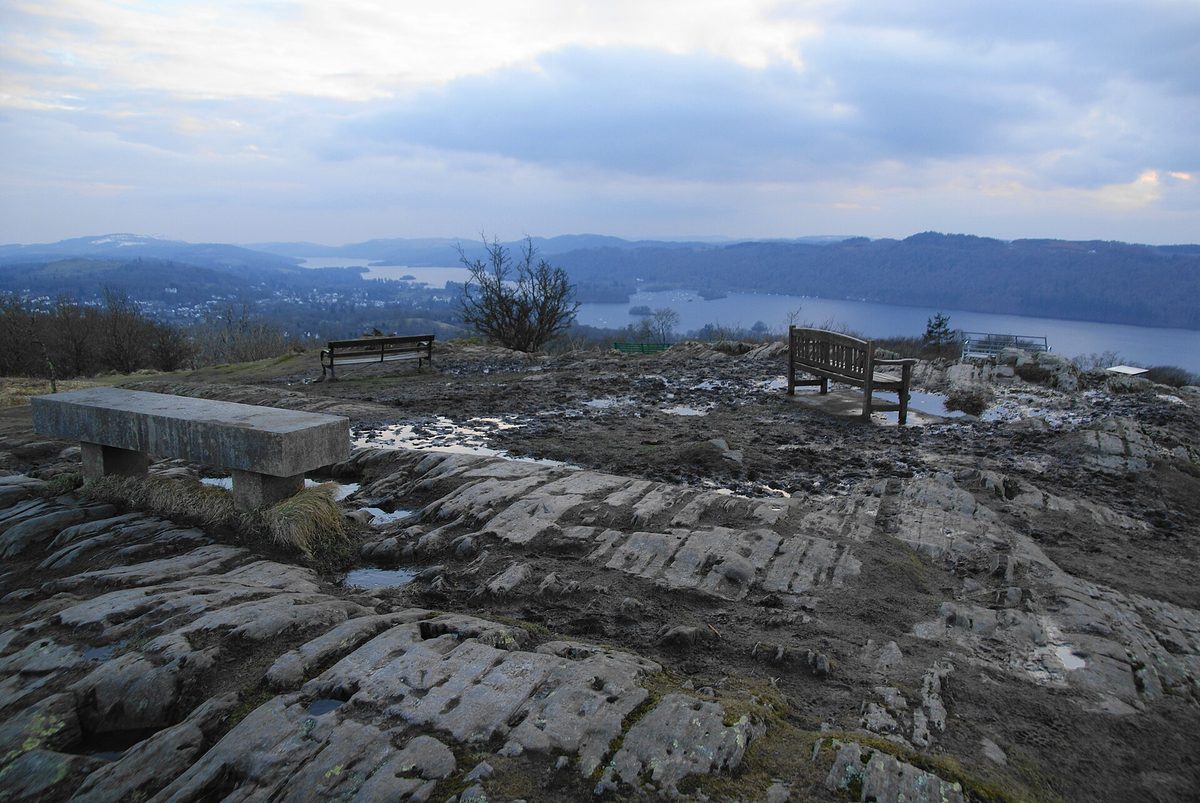
If you climb one thing on your trip, make it Orrest Head. It’s a short, steady walk of around 1.5 miles round-trip starting right in Windermere village, near the train station, and it climbs through woodland to a rocky little top at 239 metres with a panorama that takes your breath away: Windermere laid out below you, and the whole central fells stacked up behind. Allow somewhere between 45 minutes and an hour for the round trip — the signed “20 minutes to the top” is optimistic if you’re stopping to breathe in the view (and you will).
The path is steady uphill rather than steep, on a good track, and it’s the walk where a young Alfred Wainwright stepped off the train in 1930, climbed up here, and fell so hard for the Lakes that he spent the rest of his life mapping them. Standing at the top, you understand exactly why.
The real beauty of Orrest Head for a beginner is the car-free factor: you can do the whole thing straight from Windermere station, no parking stress at all. My Windermere travel guide covers the village, the lake cruises and where to stay; for a deeper look at getting around on trains and buses, see the Lake District without a car.
Why it’s worth it: it’s the most reward-per-effort viewpoint in the park, it’s car-free, and it’s a genuine summit you can be proud of without any real risk.
Catbells — a proper little fell, with a caveat
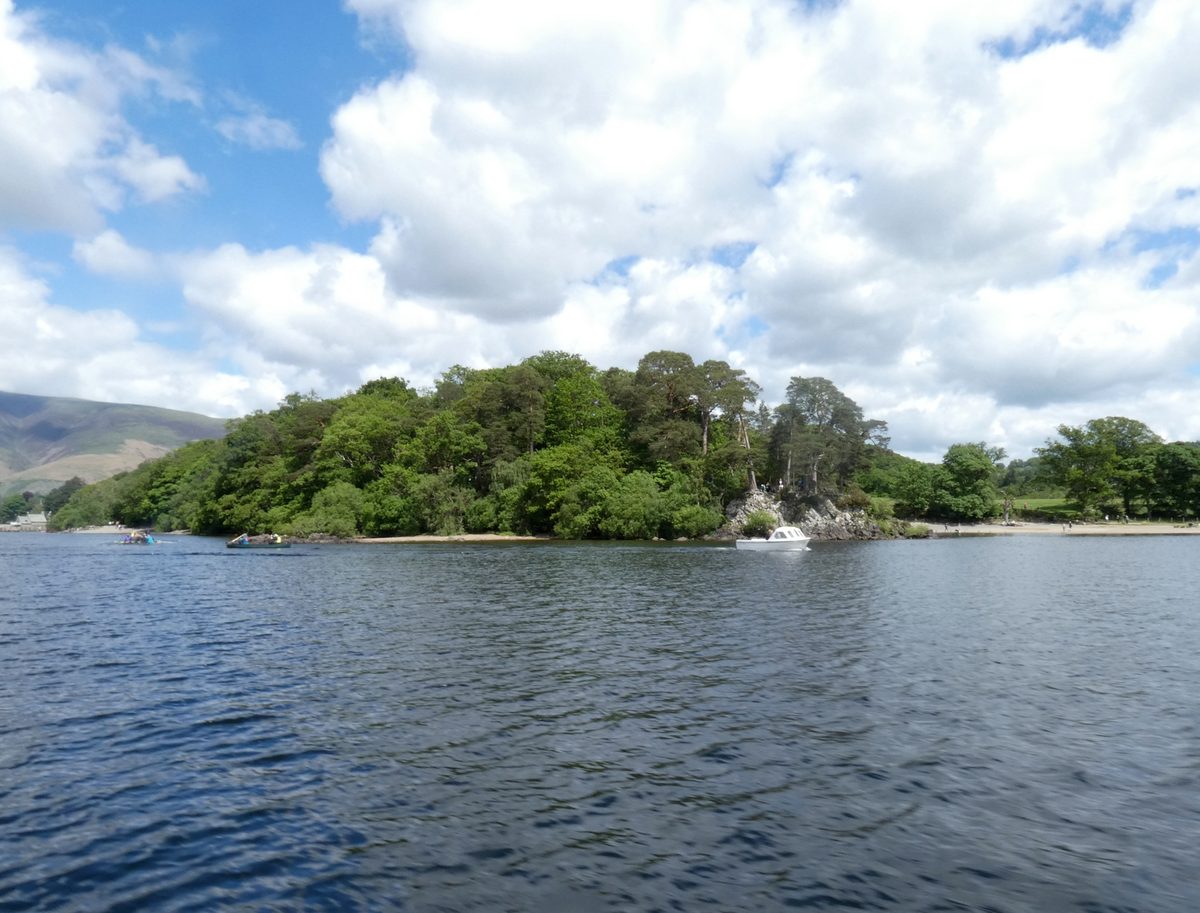
Catbells is the one I include with a deliberate note of caution. It’s the small, shapely fell that rises straight out of Derwentwater opposite Keswick, and it’s often called the best first proper fell in the Lakes — and it is. But it is not a flat stroll, and I want to be honest about that, because plenty of people in flip-flops get a fright up here every summer.
The usual route is about 3.5 miles there and back, taking two to three hours, climbing to 451 metres. The path is steep in places, and just below the summit there’s a short rocky scramble where you’ll need to use your hands. In dry, calm weather, a reasonably fit beginner who takes their time will manage it fine, and the views down over Derwentwater and across to the Newlands Valley are sensational.
My caveat, plainly: this is the walk on this list where weather and footwear genuinely matter. In rain it gets greasy and exposed; in wind that summit ridge is no joke. So check the mountain forecast before you go (the Lake District Weatherline is the one to use), wear shoes or boots with real grip — not trainers, this time — carry a waterproof, and be completely willing to turn back. There’s no shame in it; the fell will still be there. If you’re not feeling confident, do Orrest Head instead and save Catbells for next time.
Where to start: most people park at Hawse End or in the lay-bys along the Newlands road below Gutherscar — both fill early. Better still, take the Keswick Launch across Derwentwater to Hawse End and start from the boat, which is a lovely way to do it and dodges the parking entirely.
Why it’s worth it: it’s a real summit with a real sense of achievement, on a route short enough for a confident beginner. Just treat it as the small mountain it is.
A note on the big fells (and where they live)
You’ll see Scafell Pike and Helvellyn on every “Lake District walks” list, and they’re spectacular — but they are emphatically not beginner walks, and they’re out of scope for this guide. Helvellyn’s Striding Edge in particular is a knife-edge ridge that has caught out far too many underprepared walkers. If you’re working up to the proper mountains, that’s a different kind of day and a different kind of preparation — I cover them, and the rest of England’s serious hill country, in the England national parks hiking guide. Build your confidence on the walks above first. There’s no rush.
Safety & kit: a quick, honest checklist
None of these walks needs mountaineering gear, but a few sensible habits make every one of them better.
- Weather first. Lakeland weather turns fast and a sunny valley can hide a clagged-in top. For the lakeside walks, just dress for rain. For Orrest Head and especially Catbells, check the mountain forecast (the Lake District Weatherline is run for exactly this).
- Footwear. Trainers are genuinely fine for the flat lakeside walks in dry conditions. For Catbells, and for any of these after heavy rain, wear shoes or boots with proper grip — paths get muddy and rock gets slick.
- Layers and basics. A waterproof, water, snacks, and a charged phone cover you for everything here. Add a paper map or downloaded route for Catbells.
- The Catbells caveat, again. It’s the only walk on this list with a scramble and real exposure. In poor weather, swap it for a lakeside loop. Turning back is always the smart call, never the weak one.
- Timing the car parks. The popular National Trust car parks (Tarn Hows, Aira Force) routinely fill by mid-morning in season. Arrive before 10–11am, come late afternoon, or go car-free where you can.
The Lake District is gloriously busy in high summer; if you’d rather have these paths more to yourself, my guide to the best time to visit England makes the case for shoulder season up here.
Final Thoughts
The thing I’d most want a first-timer to know is that the Lake District is generous to easy walkers. You don’t have to conquer anything to be moved by this place — some of my favourite hours up here have been a slow lap of Buttermere or ten quiet minutes on the bench at Friar’s Crag. Start flat, build up to Orrest Head, and only take on Catbells when the forecast and your feet feel right.
Pick one walk, check the weather, get to the car park early, and go. Then plan the next. For everything around the walking — where to base yourself, what else to see, how to do it all without a car — start with my Lake District travel guide, browse the Lake District highlights, sort your beds with where to base yourself in the Lakes, and if the Lakes are one stop on a bigger trip, the England travel guide and England’s coast and beaches will help you join the dots.
Research and Source Notes
- National Trust place pages for Tarn Hows & Coniston and Aira Force & Gowbarrow Park — used for route distances, car-park pricing (hedged as “as of 2026”), member parking, accessible sections and “fills by late morning” guidance.
- Lake District National Park website (lakedistrict.gov.uk), including the “Miles Without Stiles” route listings — used to confirm the accessible status of Friar’s Crag and general route information.
- WalkLakes, Countryfile and other independent walking guides — cross-referenced for Orrest Head (1.5 miles, 239m, Wainwright’s first fell), the Grasmere/Rydal Water and Coffin Route loops, and Buttermere circuit distances and pushchair caveats.
- Catbells difficulty and safety detail drawn from multiple walking-specific sources noting the ~3.5-mile route, ~451m summit, short scramble and weather sensitivity; readers are directed to the Lake District Weatherline mountain forecast.
- Distances and times throughout are rounded for relaxed walking and should be checked against current official sources before you set off, as paths, prices and parking arrangements change.
Photo Credits
- A wide gravel path curving around the shore of Tarn Hows with fells reflected in still water, a classic easy Lake District walk — Photo: Philip Halling / CC BY-SA 2.0 via Wikimedia Commons. Source
- The flat shoreline path along Buttermere with mirror-still water reflecting High Stile and the surrounding fells — Photo: Peer Lawther from Leeds, United Kingdom / CC BY 2.0 via Wikimedia Commons. Source
- Rydal Water seen from the wooded Coffin Route path, a gentle Lake District loop near Grasmere with autumn colour on the fells — Photo: Les Hull / CC BY-SA 2.0 via Wikimedia Commons. Source
- The panoramic view of Windermere and the central fells from the summit viewpoint of Orrest Head — Photo: Bill Boaden / CC BY-SA 2.0 via Wikimedia Commons. Source
- The famous view from Friar’s Crag across Derwentwater towards Borrowdale, an accessible lakeside walk near Keswick — Photo: Gerald England / CC BY-SA 2.0 via Wikimedia Commons. Source
Frequently asked questions
What is the easiest walk in the Lake District?
Friar’s Crag on Derwentwater is about as easy as it gets — a flat, surfaced path of roughly half a mile from the Keswick lakeside car park to one of the most famous views in England. It’s listed as a “Miles Without Stiles” route, so it’s suitable for wheelchairs and pushchairs, and you can be there and back inside half an hour.
Are there flat walks in the Lake District suitable for families?
Yes, plenty. The Tarn Hows loop (about 1.8 miles), the Buttermere lake circuit (about 4.5 miles), and the Friar’s Crag stroll are all gentle, family-friendly and mostly flat. Tarn Hows and Friar’s Crag have accessible, pushchair-friendly sections, while Buttermere has a couple of narrow gates that make it tricky for buggies but great for older kids.
Is Catbells suitable for beginners?
Catbells is doable for confident, reasonably fit beginners in good weather, but it isn’t a flat walk — it’s a genuine small fell with steep sections and a short scramble near the top. Check the mountain forecast, wear footwear with proper grip, and be ready to turn back in wind or rain. Nervous? Do Orrest Head first instead.
Which Lake District walk has the best views for least effort?
Orrest Head, hands down. A steady 45-minute-or-so round-trip climb from Windermere village delivers a sweeping panorama of the lake and the central fells from a 239-metre top — the same view that famously inspired Alfred Wainwright. It’s a proper summit feeling without any of the risk or distance of the big fells, and you can do it straight from the train station.
Do I need walking boots for easy Lake District walks?
For the flat lakeside walks — Friar’s Crag, Tarn Hows, Buttermere, Grasmere and Rydal Water — trainers are fine in dry conditions, though grippier shoes help after rain. For Catbells, and for any of these in wet weather, you’ll want proper walking shoes or boots with good tread, as the paths get muddy and the rock gets slippery.
How much does parking cost at Lake District car parks?
It varies by site and changes over time, so always check on arrival. As a rough guide, the National Trust car parks at Tarn Hows and Aira Force charge around £9–£10 for all-day parking (less for shorter stays) as of 2026, and National Trust members park free by scanning their card. Most fill by mid-morning in season.
2 notes
Notes are closed on this sheet.