Sheet 85 · First-Time England Planning Guide · 21 min read
UK ETA for England Tourists
UK ETA for tourists, explained for 2026: who needs one, the £20 fee, how to apply, validity, and the full border process — clear and current.
 Sheet 85
Contents 12 sections
The first time I flew into Heathrow after the new rules came in, the woman next to me in the queue was pale with worry. She’d heard “the UK needs a visa now” from a friend, panicked, and spent her flight convinced she’d be turned away. She hadn’t needed a visa at all. She needed something smaller, cheaper, and far less dramatic — a UK ETA for tourists. She’d actually already got it weeks earlier and simply forgotten. That mix of fear and confusion is exactly why I wanted to write this.
So let me clear it up straight away. The UK ETA for tourists is the UK Electronic Travel Authorisation — a digital permission you link to your passport before you fly. If you’re from somewhere like the US, Canada, Australia, the EU/EEA, or the Gulf states, you almost certainly need one to visit England now. It costs around £20 as of 2026, you apply online in minutes, and it is not a visa.
That’s the whole thing in a nutshell. The rest of this guide walks through every detail — who’s exempt, exactly how to apply without tripping over the common mistakes, what happens at the border, and what to do in the rare case you’re refused. I’ve applied for one myself and walked through UK passport control more times than I can count, so I’ll tell you what it’s actually like, not just what the rulebook says.
Quick Answer: Do You Need a UK ETA for Tourists?
If you’re a visitor from a country that doesn’t need a visa for short stays — the United States, Canada, Australia, New Zealand, all EU and EEA countries, the Gulf states and many more — then yes, you need a UK ETA for tourists before you travel. It costs around £20, lasts about two years, and you apply online. British and Irish citizens, and anyone who already holds a UK visa or residence, do not need one.
That’s the 40-second version. Now the detail.
At a Glance: Who Needs a UK ETA, and What It Costs
Here’s the quick reference. I’ve kept it to the scenarios travelers ask me about most. Figures and rules are as of 2026 — always reconfirm on the official gov.uk ETA page before you book, because fees and policy can change.
| Your situation | ETA needed? | Cost (approx., 2026) | Validity | Per-visit stay |
|---|---|---|---|---|
| US, Canada, Australia, NZ passport holder (tourist) | Yes | ~£20 | ~2 years or until passport expires | Up to 6 months |
| EU / EEA / Swiss passport holder (tourist) | Yes | ~£20 | ~2 years or until passport expires | Up to 6 months |
| Gulf states (UAE, Saudi, Qatar, etc.) | Yes | ~£20 | ~2 years or until passport expires | Up to 6 months |
| British citizen (incl. dual nationals) | No | — | — | — |
| Irish citizen | No | — | — | — |
| Already hold a UK visa or residence permit | No | — | — | — |
| Hold both your nationality + a British passport | No (travel on British passport) | — | — | — |
| Babies and children (any of the above nationalities) | Yes — each needs their own | ~£20 each | ~2 years or until passport expires | Up to 6 months |
The pattern is simple: if you used to just show up at the UK border with your passport and no visa, you now need an ETA first. If you were already exempt from UK immigration control — British, Irish, or a visa/residence holder — nothing changes for you.
What Exactly Is the UK ETA?
The ETA is the UK’s version of something you may already know. If you’ve travelled to the US, you’ve likely used ESTA. If you’ve been to Canada, you’ve used their eTA. The UK ETA is the same idea: a quick, pre-travel digital authorisation for people who don’t need a full visa.
Here’s the official wording, paraphrased from gov.uk: an electronic travel authorisation lets you travel to the UK — and also Jersey, Guernsey and the Isle of Man — for up to six months. You can get one for tourism, visiting family, business trips, short courses, or medical treatment.
A few things I want to underline, because they’re the bits people misunderstand:
- It’s tied to your passport, not printed on it. There’s no sticker, no stamp, nothing physical. The authorisation is stored digitally and linked to the exact passport you used to apply. The airline and UK Border Force can see it electronically.
- It covers more than just England. The same ETA works for the whole UK plus the Crown Dependencies. So a trip that combines London with Edinburgh, Cardiff, or even Jersey is all covered by one ETA.
- It is not a visa. This matters legally and practically, and I’ll come back to it in detail later. The ETA is for people who don’t need a visa. If your nationality or your purpose requires a visa, the ETA does not replace it.
One more crucial point straight from the official page: an ETA does not guarantee entry to the UK. It’s permission to travel and to board your flight — the final decision still rests with the Border Force officer (or the ePassport gate) when you arrive. Almost everyone with a valid ETA sails through, but it’s worth knowing the ETA is a green light to come, not a guaranteed welcome at the door.
Who Needs a UK ETA for Tourists (and Who Doesn’t)
Let’s get specific, because “non-visa nationals” is jargon that helps nobody.
You need an ETA if you’re a visitor from a visa-exempt country
This is the big group, and it’s around 85 nationalities. It includes:
- North America: United States, Canada
- Oceania: Australia, New Zealand
- Europe: all 27 EU countries, plus EEA countries (Norway, Iceland, Liechtenstein) and Switzerland
- The Gulf and parts of the Middle East: UAE, Saudi Arabia, Qatar, Bahrain, Kuwait, Oman, and others
- Plus many more, including the likes of Japan, South Korea, Singapore, Chile, and dozens beyond
If you hold a passport from one of these places and you’re coming for a holiday, to see family, for a short business trip, or to transit through UK immigration control, you need an ETA. Crucially, this includes EU citizens — the move away from “just show your ID card or passport at the border” caught a lot of European travellers off guard, so spread the word if you have friends visiting from the continent.
You do NOT need an ETA if any of these apply
Straight from gov.uk, you do not need an ETA if you have:
- A British or Irish passport. Irish citizens are covered by the Common Travel Area and aren’t subject to UK immigration control in the usual sense.
- Permission to live, work or study in the UK — for example a residence permit, a settled status, or an existing UK visa.
A particular case worth flagging: dual nationals who hold a British passport. If you’re, say, a US-UK dual citizen, you can’t get an ETA and you don’t need one — you simply travel into the UK on your British passport (or a Certificate of Entitlement). Same logic for Irish dual nationals. Use the British or Irish document and you’re treated as a citizen.
If you already hold a valid UK visa, don’t waste £20 on an ETA you don’t need. The visa is your permission; the ETA is only for people travelling without one.
What about transit and connections?
If you change planes at a UK airport and never pass through UK immigration control — a true airside transit — you may not currently need an ETA. But the Home Office has described this airside transit exemption as temporary and under review, so it could change. If your connection involves clearing passport control (collecting and re-checking bags, for instance), treat it like any other arrival: you’ll need an ETA. When in doubt, check your routing with the airline and read the current guidance on gov.uk.
How to Apply for a UK ETA: Step by Step
The good news is that applying is genuinely quick — most people I know got it done over a coffee. There are exactly two official routes, and you should use one of them and nothing else:
- The official UK ETA app (download from the Apple App Store or Google Play). This is the route I’d recommend — most applicants get an automatic decision in minutes, and the app walks you through the passport scan smoothly.
- The gov.uk website at gov.uk/eta, which works in any browser on your phone, tablet, or computer.
A firm warning, and gov.uk says this too: other websites may charge more and imitate the official service. There are plenty of slick-looking third-party sites that “process” your ETA for an inflated fee. You never need them. The only legitimate price is the official one (around £20 as of 2026), paid directly to the UK government. If a site is charging you £60, £80, or more, close the tab.
Here’s the actual process, step by step:
- Get the app or open gov.uk/eta. Have your passport — the physical one — in hand.
- Photograph your passport. You’ll scan or upload the photo page (the bio-data page with your details and photo).
- Scan your face / take a selfie. If your device has a camera, you’ll do a quick face scan, plus a separate photo of yourself. This is the step people fumble most — more on that below.
- Answer the questions. Basic personal details, contact information, and a short set of suitability questions (about things like criminal convictions). Answer honestly.
- Pay the fee. Around £20, by card. You can pay for other people too, which is handy for families.
- Wait for the decision by email. It often arrives within minutes. The official advice is to allow up to three working days (Monday to Friday) just in case, so don’t apply at the airport gate.
You don’t need to print anything. Once it’s approved, the ETA is linked to your passport electronically. I’d still take a screenshot of the approval email for your own peace of mind, but you won’t be asked to show a document at check-in or the border — the systems talk to each other.
My honest advice: apply at least a few days before you fly, and ideally as soon as you book. It’s almost always instant, but “almost always” is doing some work there. A small number of applications get pulled for extra checks and take longer. Giving yourself a buffer means a slow decision is a non-event rather than a crisis.
Cost, Validity, and How Many Trips You Get
Let’s talk money and timelines, because this is where the value of the ETA really shows.
The cost is around £20 per person as of 2026. It rose from £16 earlier in the year, so if you’re reading older articles quoting £16 or £10, they’re out of date — and again, confirm the live figure on gov.uk. Everyone needs their own, including babies and children, so a family of four is roughly £80. It’s a one-off payment, not a subscription.
The validity is the part that makes it good value. Once approved, your ETA lasts about two years — or until your passport expires, whichever comes first. That’s the catch to remember: it’s tied to that specific passport.
The number of trips is where it gets generous. Within that two-year window, you can travel to the UK as many times as you like. There’s no cap on entries. Each individual visit can last up to six months. So if you’re the kind of traveller who pops over to London a couple of times a year, you pay once and forget about it for two years.
A worked example: I applied for mine, paid the fee, and have used it for three separate trips since — a long weekend, a two-week summer holiday, and a quick business hop — all on the same ETA. I won’t think about reapplying until either it hits the two-year mark or I renew my passport.
That last point is the one that trips people up, so I’ll say it plainly: if you get a new passport, your old ETA stops working, even if its two years aren’t up. The authorisation is bonded to the passport you applied with. Renew your passport, and you must apply for a fresh ETA on the new one before you next travel. Don’t get caught out by an expiry or a renewal you’d forgotten about.
Passport Requirements
Your passport is the centre of this whole system, so a few requirements matter:
- It must be valid for your trip. The UK generally asks that your passport be valid for the duration of your stay (there’s no separate “six months beyond” rule for ETA-eligible visitors as of 2026, but always sanity-check against the current gov.uk guidance and your airline’s rules).
- Apply with the passport you’ll actually travel on. Because the ETA links to a specific passport number, you must apply using the exact passport you’ll carry to the UK. If you hold two passports, pick the one you’ll fly with and use that throughout.
- A biometric passport helps at the border. Most modern passports are biometric (look for the little camera-style chip symbol on the cover). This matters for the ePassport gates, which I’ll come to next.
If your passport is close to expiring, renew it first, then apply for the ETA on the new document. Doing it the other way round means you’ll just have to reapply.
Arriving at the UK Border: ePassport Gates and What to Expect
Here’s where a lot of the anxiety lives, and where I can reassure you most. Having an ETA doesn’t change the documents you show on arrival — it just means you’ve been cleared to travel and there’s a digital record waiting for you. You still go through passport control like always.
For many visitors, “passport control” now means the ePassport gates (the eGates) rather than a desk with an officer. These are the automated barriers where you place your passport on the reader, look at the camera, and walk through. Eligibility depends on your nationality, your passport type, and your age:
- You generally need a biometric passport from an eligible country to use the gates.
- Eligible nationalities have included the UK, EU/EEA, Switzerland, the US, Canada, Australia, New Zealand, Japan, Singapore, South Korea and several others — and the UK has been expanding access. With an ETA in place, eligible travellers can typically use the eGates.
- Age rules apply to children. The minimum age to use the eGates was 10, and from 8 July 2026 the Home Office is lowering it to age 8. Younger children, or anyone the gates can’t process, go to a Border Force officer instead. Children using the gates must be accompanied by an adult.
If you can’t or don’t want to use the eGates, you’ll simply see a Border Force officer at a desk, who may ask a few standard questions about your visit — where you’re staying, how long, the purpose of your trip. Answer plainly and honestly. This is normal and quick for the vast majority of tourists.
The thing to hold onto: the ETA is checked before you even board your flight (the airline verifies it as a condition of carriage). By the time you land, the hard part is done. The border itself feels exactly as it always has.
Once you’re through, the rest of your trip planning kicks in — and that’s where the rest of my guides come in. Sorting out trains and the tube? See my England transport guide and the London public transport for tourists walkthrough. Not sure how long to stay? I cover that in trip length for England.
Common Application Mistakes (and How to Avoid Them)
Most ETA headaches aren’t about eligibility — they’re small, avoidable slips in the application. Here are the ones I see again and again:
- Photo problems. This is number one by a mile. The app rejects photos with glare, reflections, shadows, hats, or glasses, and it wants a recent, clear image. Take the selfie in soft, even light, against a plain background, no glasses, no head covering (unless worn for religious reasons), and look straight at the camera. A blurry photo is the most common cause of a delay.
- Typos in the passport details. People mistype passport numbers, dates of birth, and expiry dates constantly — often confusing “0” with “O” or “1” with “I”. Copy every character straight off your passport’s bio-data page, slowly. One wrong digit can mean the ETA doesn’t match your passport at the border.
- Name-order mix-ups. Enter your name exactly as it appears on the passport, in the order the form asks for (surname/family name where requested). Don’t add nicknames or middle names that aren’t printed on the document.
- Using the wrong passport. If you applied with one passport but travel on another, the ETA won’t be recognised. Apply with — and travel on — the same passport.
- Forgetting children need their own. Every traveller needs an individual ETA, including babies. A common slip is entering a parent’s details on the child’s application. Double-check you’ve entered the child’s passport information. (Good news for parents: the photo rules are relaxed for very young children — babies can have their eyes closed, for instance.)
- Leaving it to the last minute. It’s usually instant, but not always. Apply a few days ahead so a delayed decision doesn’t derail your trip.
- Paying a third-party site. Worth repeating: only the official app and gov.uk are legitimate. Lookalike sites overcharge for a free-to-DIY process.
Take it slowly, double-check the photo and the passport number, and you’ll almost certainly get an instant approval.
What to Do If Your UK ETA Is Refused
First, deep breath — refusals are uncommon for ordinary tourists. They tend to come down to things like a serious immigration history (overstaying, deportation, deception in a past application) or certain criminal convictions. If you’ve got a clean record and a straightforward trip, you’re very unlikely to be affected.
But if your ETA is refused, here’s the honest picture:
- There’s no appeal against an ETA refusal. Unlike some visa decisions, you can’t formally challenge it.
- The route forward is to apply for a Standard Visitor visa instead. A visa application lets UKVI look at your full circumstances in detail — something the quick, automated ETA process doesn’t allow. You can explain your situation, provide documents, and make your case.
- Apply from your country of residence, and allow time. A visa takes longer than an ETA and costs more, so if you’ve been refused, don’t book non-refundable flights until you’ve sorted your visa.
- Consider getting advice if your case is complex. If the refusal relates to a past conviction or immigration issue, an immigration solicitor can help you put together a strong visit-visa application.
The key thing: a refused ETA is not the end of the road, and it’s not a ban. It just means your situation needs the fuller assessment a visa provides. And you cannot fly to the UK without either a valid ETA or a visa, so don’t try to travel and “explain at the border” — you’ll likely be refused boarding.
ETA vs Visa: What’s the Difference?
This is the distinction worth getting clear, because mixing them up causes real stress.
| UK ETA | UK Visa | |
|---|---|---|
| Who it’s for | Visa-exempt nationalities (US, Canada, Australia, EU/EEA, Gulf, etc.) | Nationalities that require a visa, or longer/different stays |
| What it is | A digital pre-travel authorisation linked to your passport | A formal permission to enter, often in your passport |
| Cost | Around £20 (2026) | Considerably more, varies by visa type |
| Processing | Usually minutes; allow up to ~3 working days | Days to weeks |
| Validity | ~2 years, multiple entries, 6 months per stay | Varies widely by visa type |
| Detail of assessment | Light-touch, mostly automated | Full assessment of your circumstances |
| Guarantees entry? | No | No (final decision still at the border) |
The simplest way to think about it: the ETA is the lightweight option for people who don’t need a visa. It’s cheaper, faster, and lasts longer per pound spent — but it’s only available to certain nationalities and for certain purposes (visits up to six months). If you need to work, study long-term, or settle in the UK, that’s visa territory, not ETA territory.
If you’re genuinely unsure which one you need, gov.uk has a “Check if you need a UK visa” tool that asks your nationality and reason for travel and tells you straight. Use that as your starting point.
One more reminder that applies to both: requirements change. The ETA scheme is still relatively young, the fee has already risen once, and policies like the airside transit exemption are explicitly under review. Treat this guide as your orientation, and treat gov.uk/eta as the final word the week you actually book.
Final Thoughts
I’ll be honest: when the ETA scheme was announced, a lot of travellers (myself included) braced for hassle. In practice, it’s turned out to be one of the smoother bits of trip admin. You spend ten minutes on your phone, pay roughly the cost of a couple of pub pints, and you’re cleared to visit England — and the rest of the UK — for the next two years.
The whole thing comes down to a few habits. Apply early through the official app or gov.uk, not a lookalike site. Take care with your photo and passport number. Use the same passport you applied with. And remember it’s an authorisation to travel, not a guaranteed welcome at the border — though for the overwhelming majority of tourists, the border is the easy part.
Sort the ETA the moment you book, then forget about it and get on with the fun: deciding where to go and how long to stay. Once your entry is handled, dive into my full England travel guide to plan the trip itself. From there, best time to visit England helps you pick your dates, first time England itinerary and the wider England itinerary shape your route, and the London travel guide covers where most people land first. For the practical odds and ends, I’d point you to my practical tips guide, the realistic England trip cost breakdown, my England packing list, the mistakes I want you to avoid in what trips people up in England, a reassuring read on is England safe for tourists, and the best England travel apps to keep on your phone — including, of course, the official ETA app.
Get the authorisation done, and the most stressful part of your England trip is already behind you. The good stuff is all ahead.
Research and Source Notes
This guide was researched and written on 3 June 2026 and reflects the position as of 2026. Fees and policy can change, so always confirm the current details on the official UK government page before you travel.
Sources checked:
- GOV.UK — Get an electronic travel authorisation (ETA) to visit the UK (the authoritative source): gov.uk/eta and its sub-pages on who is exempt, what you can and cannot do, and how to apply — confirmed the £20 fee, the six-month visit length, coverage of the UK plus Jersey/Guernsey/Isle of Man, the official app and online routes, and that an ETA does not guarantee entry.
- GOV.UK Home Office media blog — Electronic Travel Authorisation factsheet (2026) — confirmed the fee, validity (around two years or until passport expiry), multiple-entry rules, and enforcement from 25 February 2026.
- GOV.UK — Check if you need a UK visa tool — for the ETA-versus-visa distinction.
- Official UK ETA app listings (Apple App Store and Google Play) — for the application steps and decision timeline.
- U.S. Embassy in the United Kingdom notice on the February 2026 entry-requirement changes — for the traveller-facing summary affecting US citizens.
Where I’ve quoted figures like the fee, I’ve hedged them as “around £20 / as of 2026” on purpose. The scheme is still evolving, the price has already risen once, and some elements (such as the airside transit exemption) are under review. For the final word the week you book, go straight to gov.uk/eta.
Photo Credits
- Travelers arriving at Heathrow Airport Terminal 5 where a UK ETA for tourists is checked before boarding — Photo: Mertbiol (CC0) via Wikimedia Commons. Source
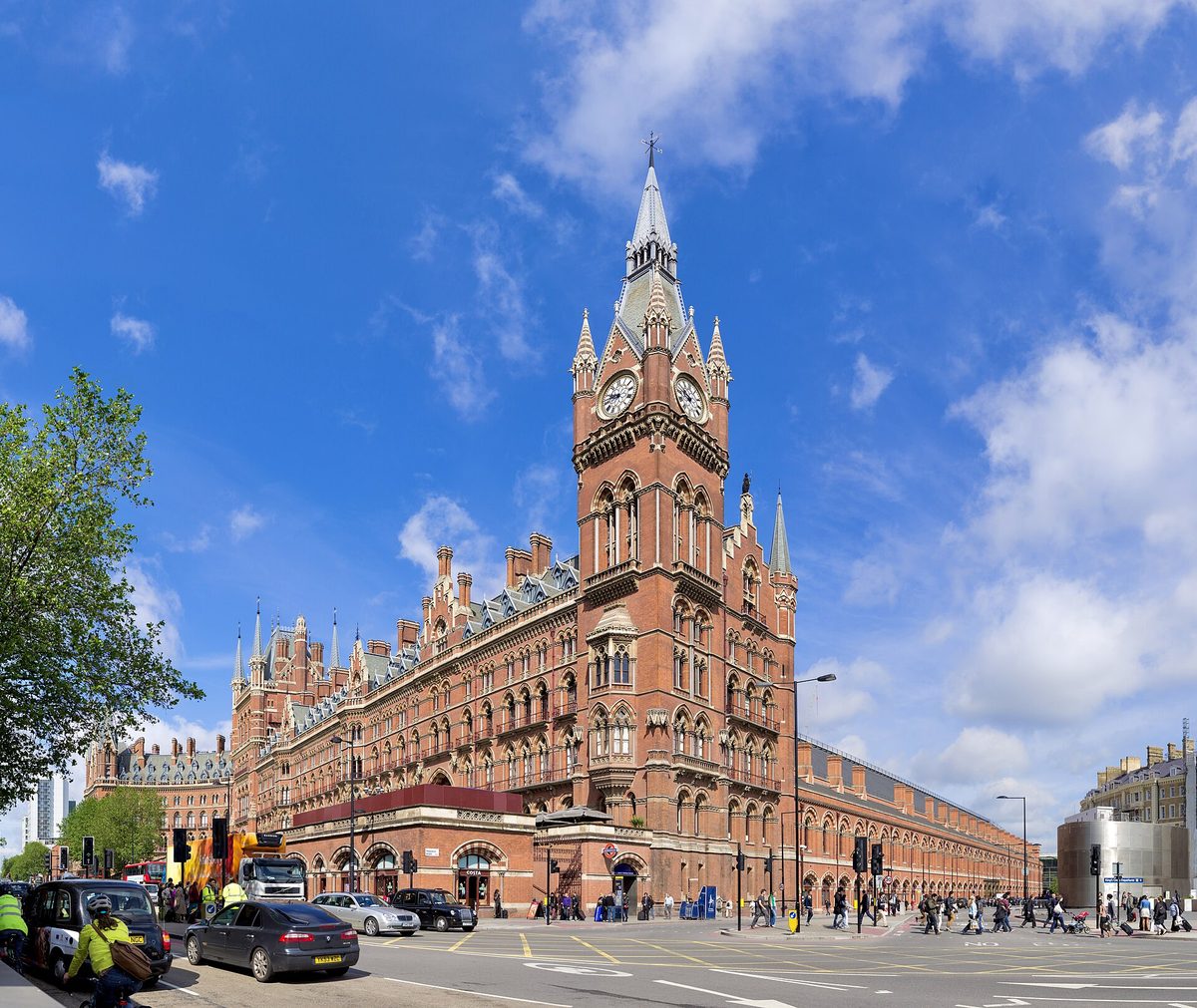
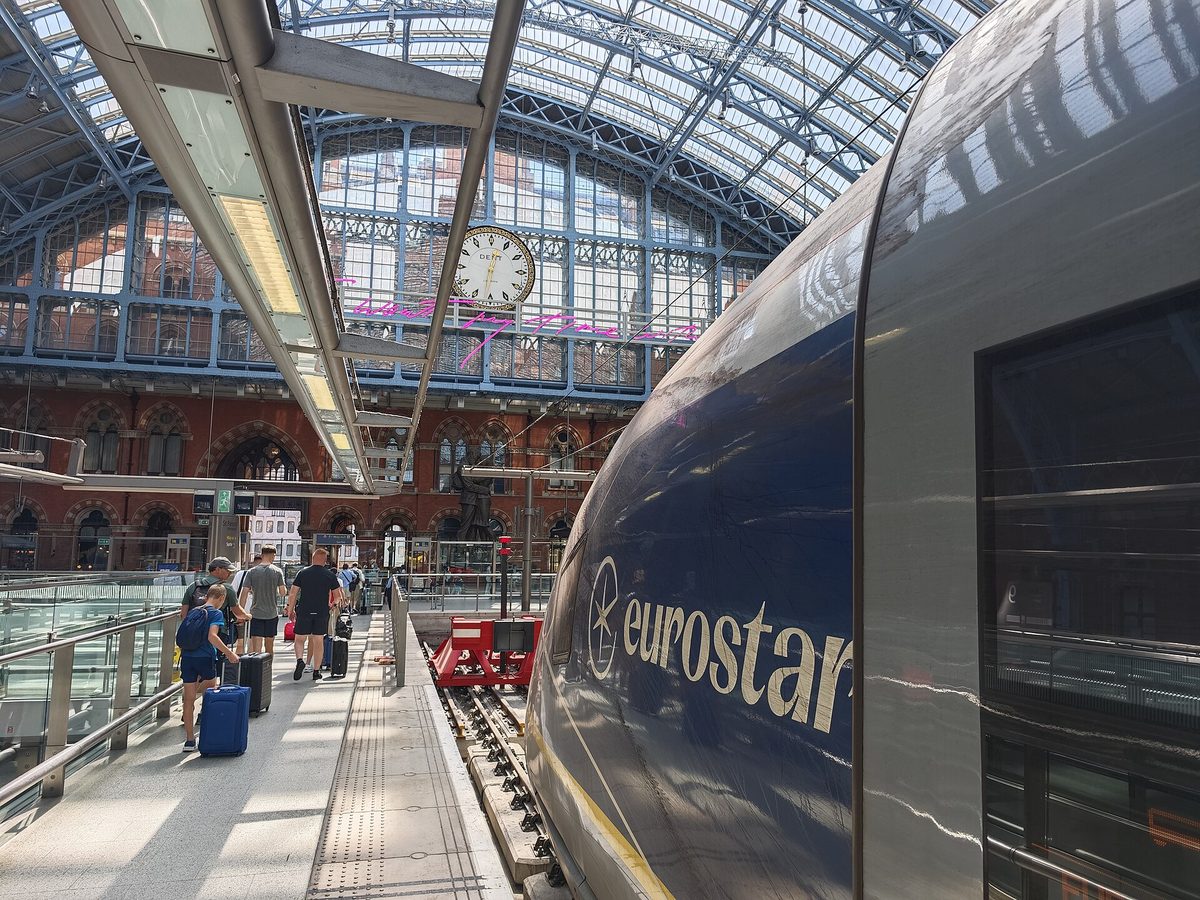
- The Eurostar terminal at St Pancras International, an arrival point where UK entry rules apply — Photo: Colin / CC BY-SA 3.0 via Wikimedia Commons. Source
- The arrivals hall at London Gatwick Airport where travelers pass through UK passport control — Photo: Mike McBey / CC BY 2.0 via Wikimedia Commons. Source
- A Eurostar train at the platform, one of the routes into the UK that requires advance travel authorisation — Photo: FrogsLegs71 / CC BY-SA 3.0 via Wikimedia Commons. Source
- Tower Bridge in London, a classic first stop for visitors who have sorted their UK entry authorisation — Photo: Aleem Yousaf / CC BY-SA 2.0 via Wikimedia Commons. Source
Frequently asked questions
Do US citizens need a UK ETA for tourists?
Yes. As of 2026, US citizens visiting the UK for tourism, family, or short business trips need a UK ETA before they travel. It costs around £20, you apply via the official UK ETA app or gov.uk, and it usually comes through in minutes. The only exceptions are US-UK dual nationals, who travel on their British passport instead.
How much does a UK ETA cost in 2026?
A UK ETA costs around £20 per person as of 2026, having risen from £16 earlier in the year. Everyone needs their own, including babies and children. It’s a one-off fee that covers unlimited trips for about two years. Only pay through the official app or gov.uk — third-party sites charge inflated prices for the same thing.
How long does it take to get a UK ETA approved?
Most applications are approved within minutes, often before you’ve put your phone down. The official advice is to allow up to three working days, just in case yours is pulled for extra checks. Because the vast majority are instant but a few aren’t, apply a few days before you fly rather than at the airport — give yourself a buffer.
Is a UK ETA the same as a visa?
No. A UK ETA is a lightweight digital travel authorisation for people from visa-exempt countries — like the US, Canada, Australia, and the EU. It’s cheaper and faster than a visa and lasts about two years. A visa is a fuller permission for nationalities or purposes that require one. The ETA does not replace a visa for anyone who actually needs one.
How long is a UK ETA valid and how many times can I visit?
A UK ETA is valid for about two years, or until your passport expires — whichever comes first. Within that window there’s no limit on the number of trips, and each visit can last up to six months. If you renew your passport during the two years, the old ETA stops working and you’ll need to apply again on the new passport.
What happens if my UK ETA is refused?
ETA refusals are uncommon for ordinary tourists. If yours is refused, there’s no appeal — instead, you apply for a Standard Visitor visa, which lets UKVI assess your full circumstances and lets you explain your situation. Apply from your home country, allow extra time, and don’t book non-refundable flights until you have a valid visa in hand.