Sheet 74 · England by Train and Transport · 21 min read
Airport Transfers in England
England airport transfers made simple: Heathrow, Gatwick, Stansted, Luton, London City, Manchester & Birmingham — real times, hedged prices, honest picks.
 Sheet 74
Contents 11 sections
You have just landed, you are holding a passport in one hand and a suitcase handle in the other, and the only question that matters is: how do I get out of here and into a bed? That is what this guide answers. England airport transfers come down to a handful of trains, a couple of express services, the Tube, coaches, and taxis — and for each airport there is one option that is genuinely the right call for most people. Below, I go gateway by gateway with realistic times, hedged prices, and an honest “pick this if.”
If you remember only one thing, make it this: the fastest option is almost never the one most tired long-haul travellers actually want. The Express trains shave a few minutes for a lot of money. The everyday trains are cheaper, run more often than you think, and get you there in roughly the same window. I will tell you exactly when the splurge is worth it and when it absolutely is not.
This is a one-stop comparison for arrivals. I am not going to teach you how British train tickets work here — that lives in the England rail guide. I am not going to walk through coach operators in detail — see the England Coach Travel Guide. And once you are in the city, getting around London itself is its own topic — that is the London Public Transport for Tourists guide. Here, the job is narrow and useful: airport to first base, done well.
Quick Answer: How do England airport transfers actually work?
Every major English airport has a rail link, and rail is almost always the smart default — it skips traffic, the times are predictable, and you can pay with a contactless card or phone at the London airports. For England airport transfers the pattern repeats: there is a fast premium train (Heathrow Express, Gatwick Express, Stansted Express, Luton Airport Express), a cheaper everyday train that is only slightly slower, the Tube or DLR at some airports, coaches for the budget-minded, and taxis or pre-booked private transfers for door-to-door comfort. Pick rail unless you are arriving in the dead of night or travelling deep into the suburbs with heavy bags.
Here is the whole country at a glance before I break each one down.
| Airport | Fastest option | Cheapest option | Best all-round |
|---|---|---|---|
| Heathrow (LHR) | Heathrow Express to Paddington (~15 min) | Piccadilly line Tube (~50–60 min) | Elizabeth line (~40–45 min) |
| Gatwick (LGW) | Gatwick Express to Victoria (~30 min) | Thameslink / Southern (~30–45 min) | Thameslink to your nearest station |
| Stansted (STN) | Stansted Express to Liverpool Street (~47–50 min) | National Express coach (~60–90 min) | Stansted Express |
| Luton (LTN) | DART + Thameslink/EMR to St Pancras (~30–40 min) | National Express coach (~60–90 min) | DART + train |
| London City (LCY) | DLR to Bank (~22–25 min) | DLR (same — it is already cheap) | DLR, change for Elizabeth/Jubilee |
| Manchester (MAN) | Train to Manchester Piccadilly (~13–20 min) | Same train, off-peak fare | Train direct from airport station |
| Birmingham (BHX) | Air-Rail Link + train to New Street (~12–15 min) | Air-Rail Link + train (Air-Rail is free) | Air-Rail Link + train |
Now, airport by airport.
Heathrow (LHR): four ways into London, and why I rarely take the fast one
Heathrow is the big one — the busiest gateway in the country and, for most overseas visitors, the front door to England. The good news is it is extremely well connected. The slightly confusing news is that there are four rail-ish options, and they are not interchangeable. Let me lay them out.
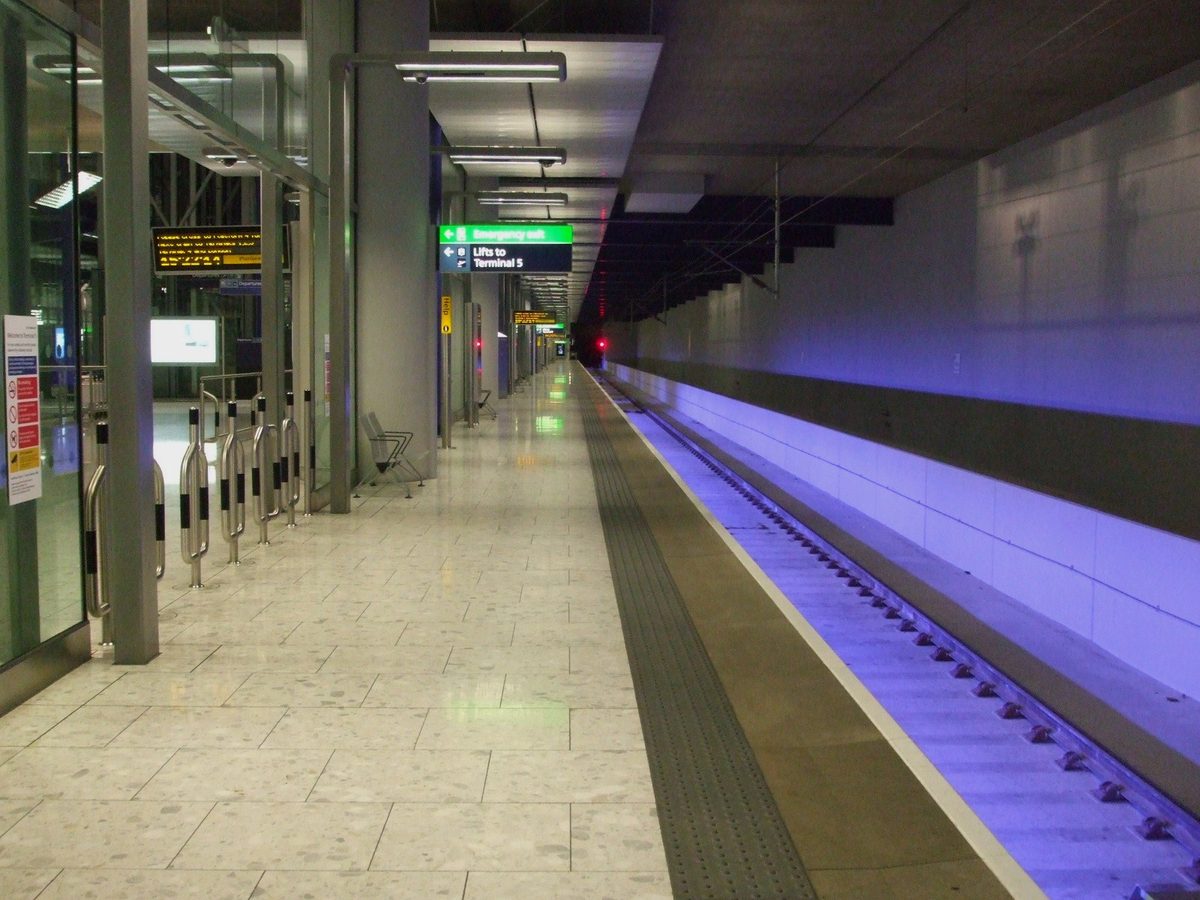
The four Heathrow options
Heathrow Express. Non-stop from the airport (Terminals 2/3 and Terminal 5; Terminal 4 connects via a free transfer) to London Paddington in around 15 minutes, trains roughly every 15 minutes. It is fast and comfortable. It is also the priciest train — figure on something in the region of £25 one-way if you buy on the day, dropping toward £10–15 if you book well in advance online. As of 2026, advance booking is the only way this makes financial sense.
Elizabeth line. The newer, purple line. From Heathrow it runs into central London (Paddington, Bond Street, Tottenham Court Road, Liverpool Street and beyond) in around 40–45 minutes, with trains roughly every 30 minutes from the airport. Expect a fare around £12–14 to central London, and crucially you can just tap in with a contactless card or phone. The trains are roomy, air-conditioned, and have space for luggage.
Piccadilly line (the Tube). The dark-blue Underground line. Slowest of the lot at roughly 50–60 minutes to central London, with stops all the way, but it is the cheapest rail option — around £5–6 with contactless, and it drops you directly into the Tube network (handy if your hotel is near a Piccadilly line stop like South Kensington, Covent Garden, or King’s Cross). Trains run frequently, every 10 minutes or so. The catch: it is a deep Tube with stairs and crowds, which is no fun with two large cases.
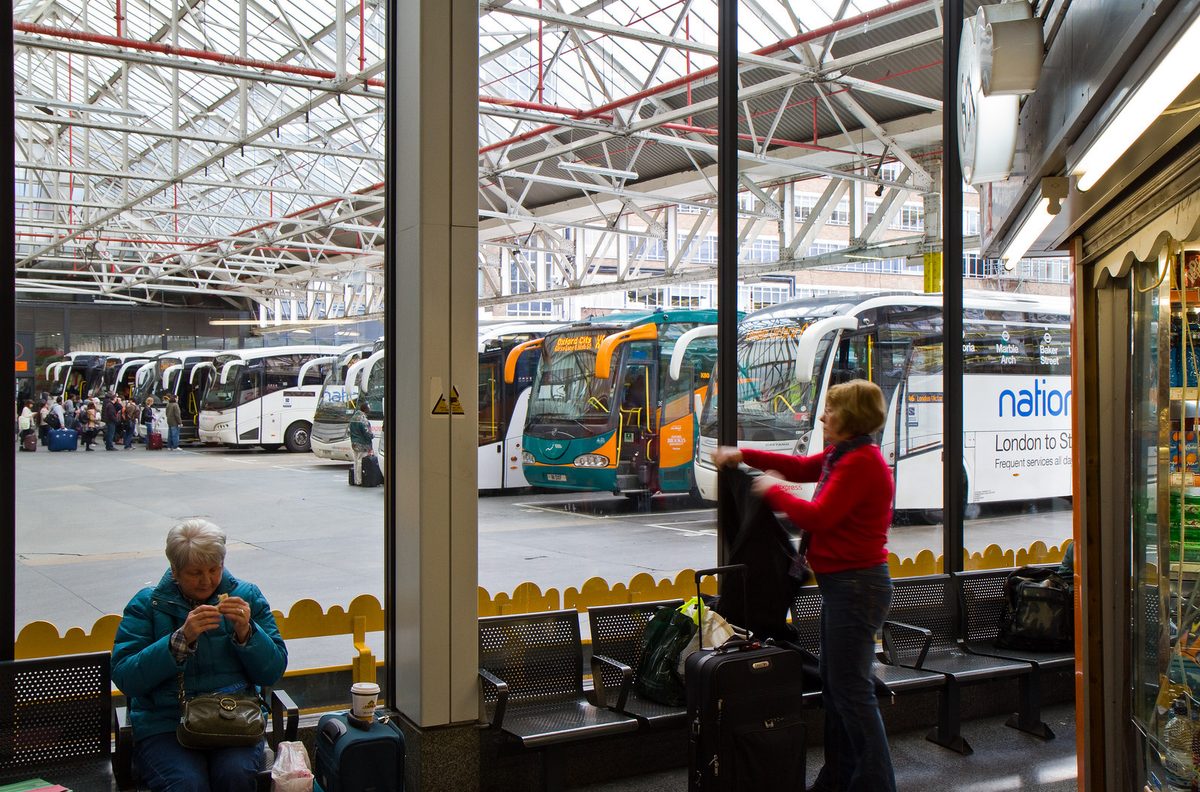
National Express coach. Departs from Heathrow Central bus station to London Victoria Coach Station. Cheap — often around £7–10 if booked ahead — but slow and at the mercy of traffic, typically 45–75 minutes. Good if Victoria is your destination and budget is everything.
Taxi / minicab / private transfer. A black cab from the rank runs roughly £50–95 into central London depending on destination and traffic, and can take an hour or more. A pre-booked private transfer or minicab is often cheaper than a metered black cab and the driver meets you in arrivals — worth it for families, late arrivals, or anyone who simply cannot face the Tube after a long-haul flight.
Heathrow decision table
| You are… | Take this | Rough time | Rough cost |
|---|---|---|---|
| Tired, with bags, after a long-haul | Elizabeth line | ~40–45 min | ~£12–14 |
| In a genuine hurry, booked ahead | Heathrow Express | ~15 min | ~£10–25 |
| On a tight budget, light luggage | Piccadilly line Tube | ~50–60 min | ~£5–6 |
| Heading to Victoria, watching pennies | National Express coach | ~45–75 min | ~£7–10 |
| Two big cases, kids, or 1am landing | Taxi / private transfer | ~45–75 min | ~£50–95 |
My honest pick: Tired, with bags, after a long-haul? Take the Elizabeth line, not the Express — the price gap isn’t worth it. You save maybe 25 minutes on the Express for double or triple the money, and the Elizabeth line trains are arguably nicer to sit on with luggage. The Express earns its keep only if you are catching a tight onward connection at Paddington or someone else is paying.
Beyond London from Heathrow: the West and Wales
Here is a trick a lot of visitors miss. If you are not staying in London at all — say you are headed for Bath, Bristol, Oxford, or Wales — do not battle into the centre and back out. Take the Elizabeth line west to Reading (change at Hayes & Harlington; the whole hop is roughly 40–50 minutes), and from Reading you are on the main Great Western line to the West Country and South Wales. It saves you crossing London with your bags entirely. For the bigger picture of car-free travel like this, the Travel Around England Without a Car guide is your friend.
Gatwick (LGW): the second gateway, and a brilliant north–south hub
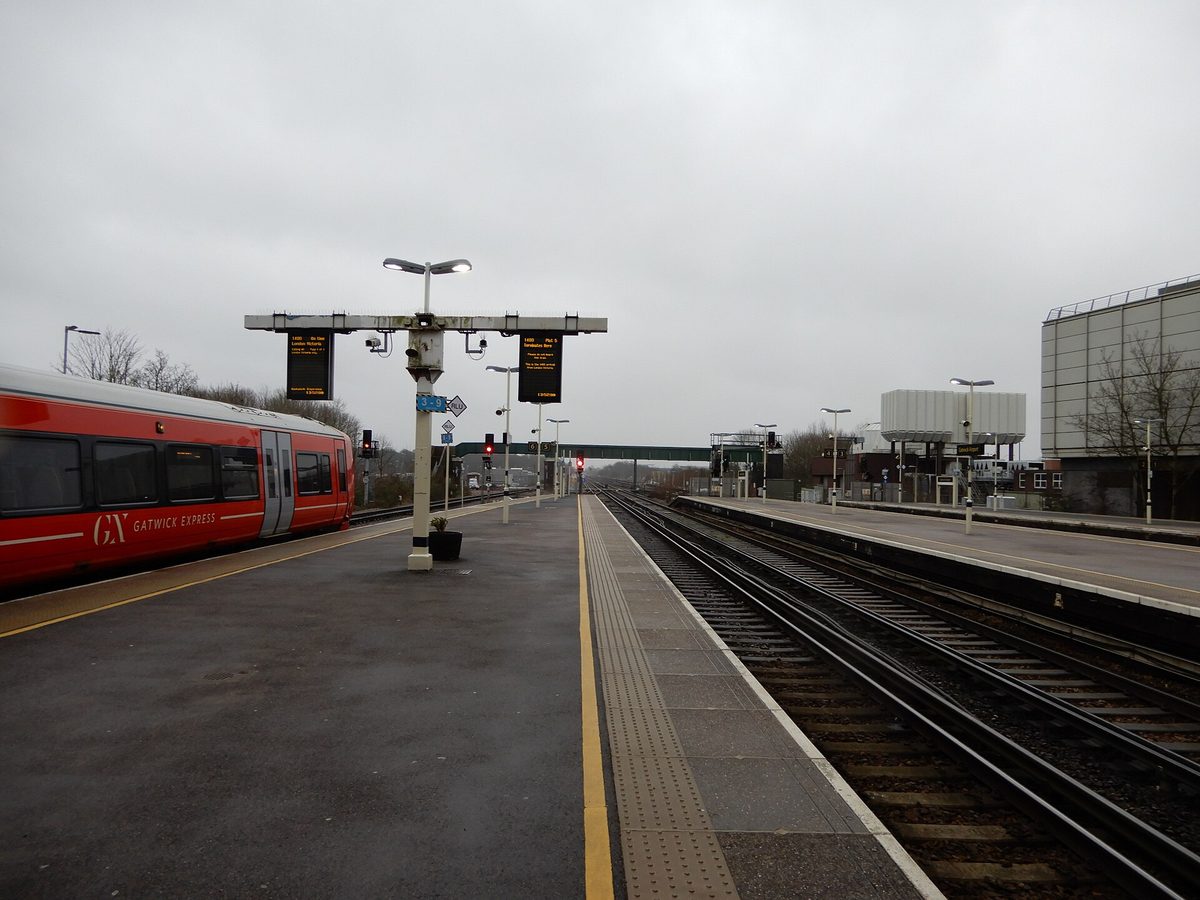
Gatwick is England’s number-two airport and, for my money, one of the easiest to escape. The station sits right under the terminal, and three different train companies serve it — which sounds confusing but actually works in your favour.
The Gatwick options
Gatwick Express. The headline service: non-stop to London Victoria in around 30 minutes, roughly twice an hour. Reckon on something around £20–25 one-way (a little less booked online in advance). It is quick and simple, but — and this matters — it is not always the best value.
Thameslink. Often the smarter choice. Thameslink runs through Gatwick up to central London stations including London Bridge, Blackfriars, City Thameslink, Farringdon, and St Pancras International, in roughly 30–45 minutes depending on the stop. The on-the-day fare tends to sit around £12–15 — meaningfully cheaper than the Express and only a few minutes slower. If your hotel is anywhere near a Thameslink stop, this is the one.
Southern. Also runs Gatwick to Victoria (and Clapham Junction), stopping more, in about 35–45 minutes, at a similar value fare to Thameslink. Useful as a backup when the Express queue is long.
National Express coach. Cheapest at around £8–12 booked ahead, but slow (often 90 minutes-plus) and traffic-dependent. For budget travellers with time to spare.
Taxi / private transfer. Gatwick is further out, so a taxi into central London is pricey — comfortably £80–120 and a slow ride. Pre-booked transfers exist but rail is so good here that I would only taxi for a very late arrival or a large group.
Gatwick decision table
| You are… | Take this | Rough time | Rough cost |
|---|---|---|---|
| Heading to Victoria, want simple | Gatwick Express | ~30 min | ~£20–25 |
| Staying near London Bridge / King’s Cross | Thameslink | ~30–45 min | ~£12–15 |
| Express queue is huge, going to Victoria | Southern | ~35–45 min | ~£12–15 |
| Budget over speed | National Express coach | ~90+ min | ~£8–12 |
| Late night, group, lots of bags | Taxi / private transfer | ~60–90 min | ~£80–120 |
My honest pick: Thameslink unless Victoria is literally where you are sleeping. The Express is fine, but you are paying a premium for non-stop to one station. If your destination is north of the river, Thameslink to St Pancras or Farringdon often gets you closer for less.
Gatwick’s hidden superpower: direct trains north and south
Gatwick is not just a London airport. Because Thameslink runs through it, you can travel direct, north–south, without changing in central London — northbound to Luton, Bedford, and beyond, and southbound straight to Brighton in about half an hour. If you are starting an England trip on the south coast, or want to reach the Midlands without the London shuffle, Gatwick’s through-running is a quiet gift.
Stansted (STN): the budget-airline gateway
Stansted is where a lot of low-cost European flights land, and it is the furthest of the main London airports from the centre — about 40 miles out to the northeast. That distance shapes everything.
The Stansted options
Stansted Express. The main event: from the airport station (right below the terminal) to London Liverpool Street, with a stop at Tottenham Hale (handy for the Victoria line) and Stratford, in around 47–50 minutes. Trains run roughly every 15 minutes. Expect a fare around £20–25 on the day, cheaper booked online in advance. As of 2026, pay-as-you-go contactless is rolling out across these Greater Anglia stations, which makes tapping in simpler than it used to be.
National Express / coach. Stansted is a big coach hub, with frequent services to London Victoria, Liverpool Street, Stratford, and more. Cheap — often around £10–14 — but slow, typically 60–90 minutes depending on the route and traffic. The upside: coaches run through the night, which trains do not.
Taxi / private transfer. Given the distance, expect £100-plus and a long ride into central London. Rarely worth it solo; occasionally sensible for a group landing at an awkward hour.
Stansted decision table
| You are… | Take this | Rough time | Rough cost |
|---|---|---|---|
| Going to Liverpool Street / east London | Stansted Express | ~47–50 min | ~£20–25 |
| On a tight budget, time to spare | National Express coach | ~60–90 min | ~£10–14 |
| Arriving overnight (no trains) | Coach (runs 24h) | ~75–120 min | ~£12–16 |
| Group, lots of bags, awkward hour | Taxi / private transfer | ~75–120 min | ~£100+ |
My honest pick: Stansted Express, every time, unless you are counting every pound or it is 3am. The coach saves a bit of cash but costs you a lot of time and comfort after a flight. The one exception is the red-eye — see the late-night section below.
Luton (LTN): the one with the little shuttle train
Luton sits northwest of London and, for years, had a slightly clunky transfer because the airport and the railway station were not in the same place. That is now solved by a neat people-mover called the DART.
The Luton options
Luton DART + train. This is the modern, sensible route. From the terminal you take the Luton DART — a fully automated shuttle train — to Luton Airport Parkway station in around 4 minutes. The DART costs about £4.90 one-way, and as of 2026 there are discounted through-tickets if you combine it with a rail ticket. From Parkway, Thameslink and East Midlands Railway trains run to London St Pancras International in roughly 25–35 minutes, with Thameslink continuing through central London. A combined DART-plus-train fare to St Pancras tends to land somewhere around £15–20. The DART runs frequently — every few minutes at peak, every 15 or so late on.
Luton Airport Express. This is the fast Thameslink/EMR branding for the quicker St Pancras services — same infrastructure, marketed as the express. Use it the same way: DART to Parkway, then the train.
National Express / coach. Direct coaches run from outside the terminal to London Victoria and other points, around £10–14, typically 60–90 minutes. No DART faff, but slower.
Taxi / private transfer. Roughly £70–110 into central London, traffic permitting.
Luton decision table
| You are… | Take this | Rough time | Rough cost |
|---|---|---|---|
| Heading to St Pancras / King’s Cross | DART + Thameslink/EMR | ~30–40 min | ~£15–20 |
| Want a single fare, no changes | National Express coach | ~60–90 min | ~£10–14 |
| Overnight arrival, no trains | Coach (runs through night) | ~75–120 min | ~£12–16 |
| Group or heavy bags, late | Taxi / private transfer | ~60–90 min | ~£70–110 |
My honest pick: DART plus train to St Pancras. Yes, it is two legs, but each is quick and the DART is genuinely painless. You end up at one of London’s best-connected stations, with the Eurostar, six Tube lines nearby, and trains north all under one roof.
London City (LCY): the business-traveller’s secret
London City is the small, central airport tucked into the Docklands, and it has the shortest transfer of any London gateway. If your flight lands here, you have it easy.
The London City options
DLR (Docklands Light Railway). The London City Airport DLR station is built into the airport. The driverless DLR whisks you to Bank in the City of London in around 22–25 minutes, or to Canary Wharf and Stratford in even less. Tap in with contactless; the fare is a standard London journey, roughly £3–4. From the DLR you can change onto pretty much anything.
DLR + Elizabeth line. Worth knowing: the Elizabeth line passes close to the airport but does not stop there. To use it, ride the DLR a few minutes to Custom House or change at Canning Town / Canary Wharf, then hop on the Elizabeth line to fly across central London (Liverpool Street, Tottenham Court Road, Paddington) fast.
DLR + Jubilee line. DLR to Canning Town, then the Jubilee line, gets you to the West End and London Bridge quickly.
Taxi / private transfer. Because London City is so central, a taxi is actually reasonable — often £30–50 into the West End — and quick outside rush hour.
London City decision table
| You are… | Take this | Rough time | Rough cost |
|---|---|---|---|
| Going to the City (Bank area) | DLR direct | ~22–25 min | ~£3–4 |
| Going to the West End / Paddington | DLR + Elizabeth line | ~30–40 min | ~£5–7 |
| Heading to Canary Wharf | DLR direct | ~10 min | ~£3–4 |
| With bags, going somewhere central | Taxi / private transfer | ~20–40 min | ~£30–50 |
My honest pick: DLR, then change for wherever you need. London City is the one airport where I would not overthink it — the train is right there, it is cheap, and you are central within half an hour.
Manchester (MAN): the North’s front door
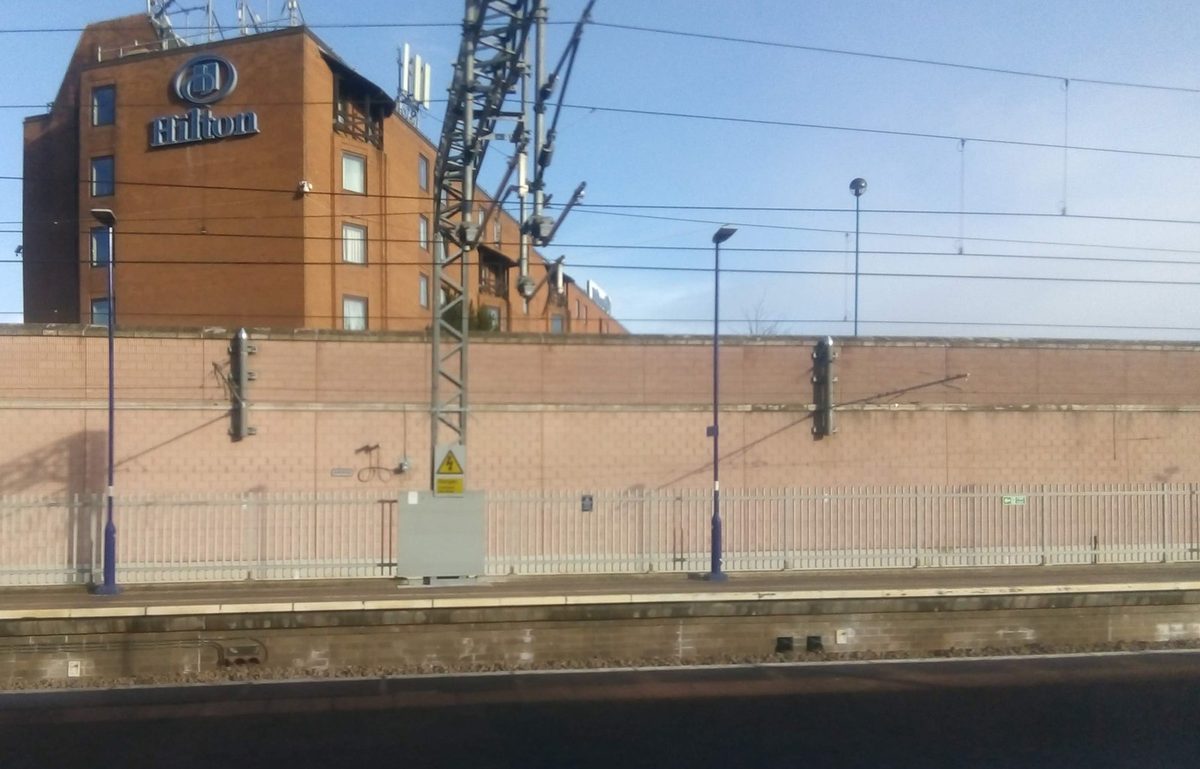
Now we leave London. If you are visiting the North of England — and you should, at least once — flying into Manchester is a brilliant move, because Manchester Airport has its own mainline railway station connected to the terminals by a covered walkway.
The Manchester options
Train to Manchester city centre. Frequent trains run from the airport station to Manchester Piccadilly in around 13–20 minutes. Fares are modest — typically under £6 — and the off-peak ticket is cheaper still. This is the obvious choice for getting into the city.
Metrolink tram. Manchester’s tram network also reaches the airport, running into the city centre. It is slower than the train (closer to an hour) but useful if your destination is on a tram line rather than near Piccadilly.
Taxi / private transfer. Into central Manchester, roughly £20–30 and 20–30 minutes.
Manchester decision table
| You are… | Take this | Rough time | Rough cost |
|---|---|---|---|
| Going to central Manchester | Train to Piccadilly | ~13–20 min | ~£5 |
| Destination is on a tram line | Metrolink tram | ~50–60 min | ~£4–5 |
| With bags, short hop | Taxi / private transfer | ~20–30 min | ~£20–30 |
My honest pick: the direct train to Piccadilly — fast, cheap, and frequent.
Manchester as a gateway to the North
Here is why I rate Manchester so highly as an arrival point: from the airport’s own station you can go direct to the North without ever touching the city centre. There are through trains toward York, the Yorkshire cities, and connections into the Lake District (change for the line up to Windermere). Landing at Manchester and heading straight for the fells is one of the most underrated ways to start a trip — see the Lake District Travel Guide for what waits at the other end. For the broader case, Best Places to Visit in England makes the argument for going north.
Birmingham (BHX): the Midlands gateway with the monorail
Birmingham Airport serves the Midlands and has a charming little quirk: a free monorail.
The Birmingham options
Air-Rail Link + train. The Air-Rail Link is a free, automated people-mover (a monorail) that runs between the airport and Birmingham International railway station in about 90 seconds to two minutes. It operates from very early morning until past midnight. From Birmingham International, frequent trains reach Birmingham New Street in around 10–12 minutes, putting you in the heart of the city. The train fare is small — a few pounds — and because the Air-Rail Link is free, the whole transfer is cheap.
Onward by rail. Birmingham International is on the West Coast Main Line, so you can also travel onward without going into New Street first — direct trains run to London Euston, the Northwest, and beyond.
Taxi / private transfer. Into central Birmingham, roughly £25–35.
Birmingham decision table
| You are… | Take this | Rough time | Rough cost |
|---|---|---|---|
| Going to central Birmingham | Air-Rail Link + train to New Street | ~12–15 min | ~£4–5 |
| Heading onward (London, North) | Air-Rail Link + mainline train | varies | varies |
| With bags, short hop | Taxi / private transfer | ~20–30 min | ~£25–35 |
My honest pick: Air-Rail Link to Birmingham International, then the train. It is quick, the monorail is free, and you are spoiled for onward connections.
The late-night and red-eye arrival strategy
This is the section I wish more guides took seriously, because the worst transfer decisions get made at the worst times — when you are exhausted, jet-lagged, and the last train has gone.
Here is my hard-won advice for landing late or after a long-haul flight.
Do not book a tight, non-refundable Advance train ticket for right after your flight. This is the single most common mistake. Cheap Advance train fares are tied to a specific departure — miss it because immigration was slow or your bags took an hour, and the ticket is dead. After a long-haul flight you have no idea when you will actually clear the airport. Either buy a flexible (Off-Peak or Anytime) ticket for that first leg, or use contactless pay-as-you-go where it is available so you simply tap onto whatever train is there. Save the cheap Advance tickets for your second day, when you control the clock. The full breakdown of ticket types is in the train travel guide.
If you land after roughly 11pm–midnight, check whether trains are even running. Many airport rail services stop overnight. Coaches often run through the night, but they are slow and you will be on them for hours. Honestly? For a genuine red-eye, the smartest move is often not to travel far at all.
Consider an airport hotel for night one. There are hotels at or beside every major airport — Heathrow, Gatwick, Stansted, Luton, Manchester. Landing at 1am, dragging yourself to a bed ten minutes away, sleeping, and starting fresh in the morning is worth every penny versus a midnight cross-country scramble. You will see England properly on day two instead of through a fog of exhaustion.
Pre-book a private transfer if you must reach a specific address late. When you have to get to a particular hotel or home at an awkward hour — especially with kids or a lot of luggage — a pre-booked car where the driver meets you in arrivals removes all the decision-making. You pay more, but you remove the risk of standing on a cold platform working out the night bus.
Build in buffer money, not a buffer plan. Tired travellers overspend on transfers precisely because they did not plan. Knowing in advance that “Heathrow at midnight means airport hotel, not a dash to Cornwall” saves both money and misery. The England tips guide has more on pacing your arrival, and if you are watching the wallet, England Budget Costs helps you weigh the airport-hotel splurge sensibly.
Luggage, paying, and a note on accessibility
A few practical things that apply across all England airport transfers, regardless of which gateway you fly into.
Paying is easier than ever — use contactless. At all the London airports (and increasingly across the South East as of 2026), you can tap a contactless bank card, phone, or smartwatch to pay as you go on trains, the Tube, the DLR, and buses. No paper ticket, no machines, no queue. Daily and weekly fare caps mean you will not be overcharged if you tap on and off a lot. Touch in at the start and out at the end with the same card. For the regional gateways and longer mainline journeys, you will still buy a normal ticket — again, the rail booking guide covers that, and various money-saving options live in the travel passes guide.
Luggage on trains. British trains do not have airline-style checked luggage — you keep your bags with you, on overhead racks, in end-of-carriage luggage stacks, or beside your seat. The airport express services and the Elizabeth line are designed for travellers and have decent luggage space. The deep Tube lines (like the Piccadilly from Heathrow) are the awkward ones: stairs, escalators, and crowds. If you are heavily laden, that alone is a reason to pay for the Elizabeth line over the Tube.
Accessibility and Passenger Assist. If you need help — step-free access, assistance boarding, or someone to meet you — British rail offers a free service called Passenger Assist. You can book it in advance, right up to a couple of hours before you travel, and staff will help you on and off trains and through stations. The major airport stations and London terminals are generally well set up for this. For a fuller picture of step-free travel, the Accessible England Travel guide goes deeper into what to expect and how to arrange help.
One more thing before the FAQ: if you are arriving from outside the UK, make sure your entry paperwork is sorted before you fly — many visitors now need an electronic travel authorisation. The UK ETA for Tourists guide explains who needs one. There is no point optimising your airport transfer if you are stuck at the border.
Final Thoughts
The whole game with England airport transfers is matching the option to your situation rather than chasing the headline “fastest” service. Rested and travelling light? Take the cheap Tube or everyday train. Wiped out after eleven hours in the air with two suitcases? Pay for the Elizabeth line, or pre-book a car, and do not feel guilty about it. Landing at 1am? Sleep at the airport and start fresh.
Across the country the pattern holds: every major gateway has a rail link that beats the traffic, a premium express you usually do not need, and a cheaper everyday alternative that is only marginally slower. Learn that pattern once and you can land anywhere in England and make the right call in thirty seconds. For the bigger trip around it, start with the England Travel Guide and the master England Transport overview, then sketch your route with the England Itinerary ideas. Welcome to England — now go get some sleep.
Research and Source Notes
This guide was compiled in June 2026 using current information from official airport and transport operators. Times and prices are deliberately hedged as “around” and “as of 2026” because fares change frequently and exact costs depend on booking timing, time of day, and how far in advance you buy.
Key sources consulted:
- Heathrow Airport — official “Getting to Central London” guidance for Heathrow Express, Elizabeth line, Piccadilly line, and coach options (heathrow.com).
- Transport for London (TfL) — Elizabeth line, Piccadilly line, DLR routes, and contactless pay-as-you-go fare rules (tfl.gov.uk).
- Heathrow Express — service frequency and journey time to Paddington (heathrowexpress.com).
- Gatwick Airport / Gatwick Express — train transport options and Gatwick Express timetable to London Victoria (gatwickairport.com, gatwickexpress.com).
- National Express — coach services and indicative fares from Heathrow, Stansted, and Luton (nationalexpress.com).
- Luton DART / Luton Airport Express — DART shuttle fares, frequency, and combined ticketing to St Pancras (lutondart.com, lutonairportexpress.co.uk).
- London City Airport — DLR connections and onward interchange to the Elizabeth and Jubilee lines (londoncityairport.com).
- Manchester Airport — airport railway station connections to Manchester Piccadilly and direct services to the North (via National Rail).
- Birmingham Airport — Air-Rail Link monorail to Birmingham International and onward trains to New Street (birminghamairport.co.uk).
- National Rail — Passenger Assist booking, contactless pay-as-you-go expansion across South-East England (2026), and trains-to-airports information (nationalrail.co.uk).
- Rail Delivery Group — announcements on pay-as-you-go contactless reaching additional South-East stations, including airports, in 2026.
Always check the relevant operator’s website for live times and the latest fares before you travel, as services and prices are updated regularly.
Photo Credits
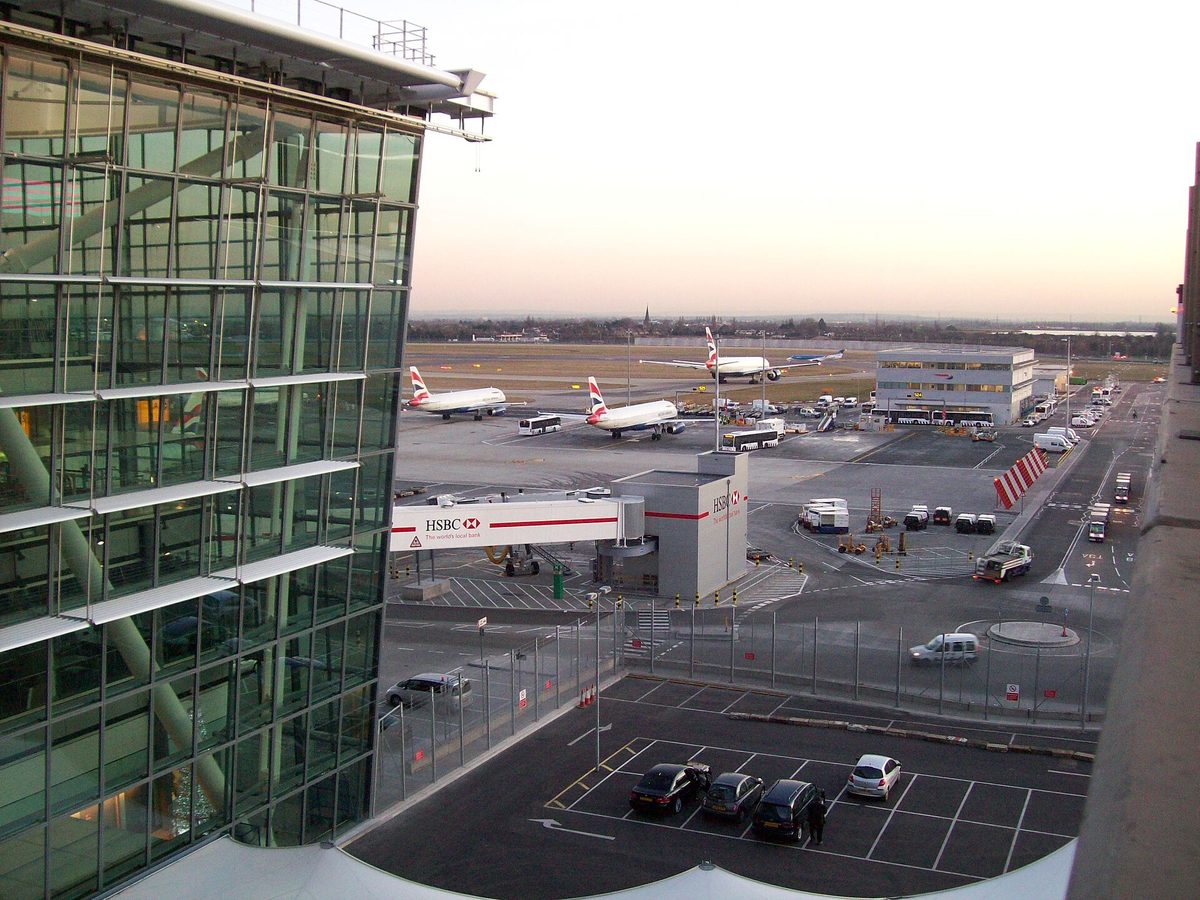
- England airport transfers start at gateways like Heathrow Terminal 5, pictured here — Photo: Dbx54 (CC0) via Wikimedia Commons. Source
- The Heathrow Express runs non-stop to Paddington in around fifteen minutes — Photo: Sunil060902 / CC BY-SA 3.0 via Wikimedia Commons. Source
- Gatwick Airport station sits directly beneath the terminal with frequent trains to London — Photo: Sunil060902 / CC BY-SA 4.0 via Wikimedia Commons. Source
- The Stansted Express links the airport to London Liverpool Street in under an hour — Photo: BWard 1997 / CC BY-SA 4.0 via Wikimedia Commons. Source
- Manchester Airport station puts direct trains to the city and the North right under the terminals — Photo: Christopher Hilton / CC BY-SA 2.0 via Wikimedia Commons. Source
Frequently asked questions
What is the cheapest way from Heathrow to central London?
The Piccadilly line (the Tube) is the cheapest, at roughly £5–6 with contactless, taking around 50–60 minutes with stops all the way in. It is excellent value but involves stairs and crowds, so it suits light-luggage travellers. If you have heavy bags, paying a little more for the Elizabeth line is usually worth it for the comfort and luggage space.
Is the Gatwick Express worth it over Thameslink?
Often not. The Gatwick Express runs non-stop to Victoria in about 30 minutes for around £20–25, while Thameslink reaches several central London stations (London Bridge, Farringdon, St Pancras) in roughly 30–45 minutes for closer to £12–15. Unless Victoria is exactly where you are staying, Thameslink usually gets you nearer your hotel for noticeably less money.
How do I get from Stansted to London quickly?
The Stansted Express is your fastest bet: it runs from the airport station to London Liverpool Street in around 47–50 minutes, calling at Tottenham Hale (for the Victoria line) and Stratford, roughly every 15 minutes. Book online in advance to save. Coaches are cheaper but take 60–90 minutes and are the better choice only overnight, when trains do not run.
What is the Luton DART and do I need it?
The Luton DART is a short automated shuttle train connecting the airport terminal to Luton Airport Parkway railway station in about four minutes, costing around £4.90 (with discounted through-tickets when combined with a rail fare). Yes, you generally need it: from Parkway you catch Thameslink or East Midlands Railway trains to London St Pancras in roughly 25–35 minutes.
Can I use a contactless card for airport transfers in England?
Yes, at all the London airports and increasingly across the South East as of 2026. Tap a contactless bank card, phone, or smartwatch to pay as you go on trains, the Tube, the DLR, and buses — no paper ticket needed. Touch in and out with the same card, and daily and weekly fare caps protect you from overpaying. Regional mainline journeys still need a standard ticket.
Should I book a train ticket before my long-haul flight lands?
Not a cheap, fixed Advance ticket for the very first leg. If immigration or baggage is slow, you will miss that specific train and the non-refundable fare is lost. Use flexible Off-Peak tickets or contactless pay-as-you-go for the airport-to-city hop instead, and save the cheap Advance fares for later days when you control your own schedule.