Sheet 25 · First-Time England Planning Guide · 20 min read
Is England Safe for Tourists?
Is England safe for tourists? Yes, very. An honest 2026 guide to crime, scams, solo and LGBTQ+ travel, emergency numbers, and the threat level.
 Sheet 25
Contents 14 sections
I’ve spent more nights than I can count waiting for the last Tube at Oxford Circus, walked home through Soho at 1am, and handed my niece a Travelcard for her first solo wander around the British Museum. In all that time, the worst thing that ever happened to me was getting talked into a four-pound bottle of water near the London Eye. So when friends ask, slightly nervously, whether they should worry, I tell them the truth.
Is England safe for tourists? Yes — overwhelmingly so. England is one of the safer destinations you can pick, with low violent-crime rates, world-class emergency services, and locals who will walk you to the right bus stop if you look lost. The real risks are petty: pickpockets in crowds and the odd street scam. Stay switched on and you’ll be fine.
That’s the reassuring bottom line. But “very safe” doesn’t mean “switch your brain off,” and I’d rather give you the honest, specific version than a glossy one. So let’s go through it calmly, the way I’d brief a friend over a pint.
Quick Answer: Is England Safe for Tourists?
Yes. England is a very safe country for visitors. Violent crime affecting tourists is rare; the genuine, everyday risk is opportunistic theft — pickpocketing on the busy Tube, phone-snatching on crowded pavements, and a handful of well-worn scams. Keep your valuables close, use licensed transport, and trust your instincts, and the odds are firmly in your favour.
A bit of context helps here. The big international yardsticks — government travel advisories — don’t tell people to stay away from the UK. As of 2026, the US State Department keeps the United Kingdom at “Level 2: Exercise Increased Caution,” the same broad category as France, Spain, Italy, and Germany. That’s a “be sensible,” not a “don’t go.” Plenty of countries you’d happily visit sit at exactly the same level.
The one thing that has moved recently is the national terrorism threat level, which I’ll cover honestly further down — because pretending nothing changed would be the opposite of useful. But hold the headline in your head first: millions of people visit England every year and go home with sore feet and a camera roll full of cathedrals, not a crime report.
At a Glance: Real Risks vs. Perception
Here’s the honest scorecard. I’ve put the things people worry about next to what they should actually expect, plus the one move that defuses each one.
| Concern | Actual risk level for tourists | How to stay safe |
|---|---|---|
| Pickpocketing & bag theft | Moderate (the #1 real risk) | Front pockets, zipped bag worn across the body, stay alert in crowds and on the Tube |
| Phone snatching (mopeds/bikes) | Low–moderate in central London | Don’t stand at the kerb texting; keep your phone away near roads |
| Street scams (petitions, “found” ring, shell games) | Moderate but easy to dodge | Walk on, don’t engage, never play street games |
| Card skimming / dodgy ATMs | Low | Use bank-branch ATMs, cover your PIN, always pay in pounds (GBP) |
| Unlicensed minicabs | Low if you book properly | Use black cabs or licensed apps; never accept a car that pulls up offering a lift |
| Violent crime against tourists | Low | Ordinary night-out sense; stick to well-lit, busy areas late on |
| Terrorism | Statistically very low for any individual | Stay aware, follow signage; check your government’s current advisory |
| Getting ill / injured | Low, and well covered | Emergency NHS care is free; carry travel insurance for everything else |
| Traffic / crossing the road | Underrated! Genuinely catches tourists out | Look right first — traffic comes from the right |
The pattern is clear. The dramatic stuff is rare; the boring stuff — a hand in your bag, a wrong turn at a crossing — is what trips people up. Get the boring stuff right and you’ve handled 95% of it.
Crime & Pickpocketing: The One Real Risk to Manage
If you only remember one safety point from this whole guide, make it this: petty theft is the thing to plan around. Not muggings, not anything dramatic — just quick, opportunistic hands lifting a phone or a wallet from a distracted visitor. The good news is that it’s almost entirely avoidable with a few habits.
The thieves go where the crowds and the cameras-up tourists are. In practice that means:
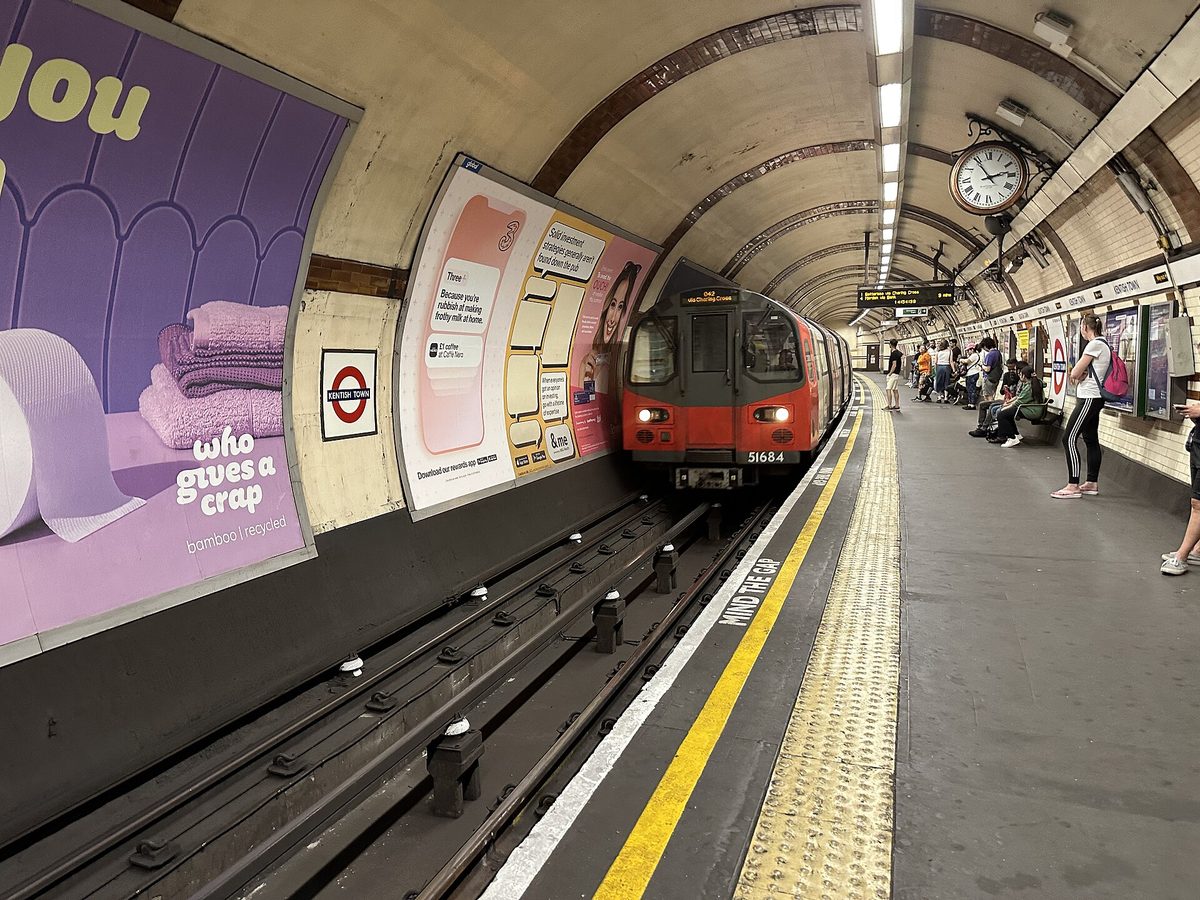
- The London Underground at rush hour — roughly 7:30–9:30am and 5–7pm on weekdays, when carriages are packed and everyone’s pressed together. Crowded platforms and the doors-closing scramble are prime moments.
- Oxford Street, Regent Street and the West End shopping crush — bags open, phones out, attention on the windows.
- Tourist honeypots like Leicester Square, Covent Garden, Camden Market, and the pavements around Buckingham Palace, the Tower of London, and Westminster.
Phone-snatching deserves its own line. In central London, thieves on bikes or mopeds sometimes grab phones straight out of people’s hands, often coming from behind while you’re texting or following a map at the kerb. The fix is almost comically simple: don’t stand at the edge of the pavement with your phone out. Step back from the road, tuck in against a building if you need to check directions, and keep it in your hand only as long as you need it.
My personal kit, refined over years: a cross-body bag with a zip, worn at the front in busy spots; phone and cards in a front trouser pocket, never a back one; and a quiet rule that whenever a stranger suddenly crowds my personal space, my hand goes to my bag. That’s it. I don’t wear a money belt or look over my shoulder all day — I just make myself a slightly harder target than the next person, which is all opportunists need to move on. For more of these small, high-leverage habits, my England tips guide goes deeper, and the classic slip-ups are catalogued in England travel mistakes.
A word on neighbourhoods, because online lists love to scaremonger. Tourist-facing central areas are heavily policed, busy, and well-lit — they’re among the safest places to be, day or night. Some residential outer boroughs have higher background crime stats, but those numbers reflect local life, not tourist experience, and you’re unlikely to find yourself there by accident. Don’t let a clickbait “areas to avoid” list rewrite your whole trip. If you want a calm primer on the capital specifically, the full London guide keeps perception and reality in proportion.
Common Scams (and the One Word That Beats Most of Them)
English scams aren’t sophisticated — they rely on politeness and hesitation. The magic move is almost always the same: a friendly “no thanks” and keep walking. Here are the ones you’ll actually meet.
The clipboard / petition scam. Around Leicester Square, Covent Garden, the South Bank, and outside big museums, someone (often a group) approaches with a clipboard asking you to “sign a petition” for a charity, a deaf-children’s cause, or the environment. While you’re reading, an accomplice may go for your bag — or you’ll be guilt-tripped into a cash “donation.” Real charities don’t ambush you at the kerb. Decline and move on.
The “found ring” / friendship bracelet. Someone “finds” a gold ring near your feet and insists you dropped it, then wants a reward. Or a smiling person ties a bracelet on your wrist as a “gift,” then demands payment. Same answer: don’t take the object, don’t break stride.
Shell games and street gambling. A little crowd around three cups and a ball, or cards on a box, with people apparently winning easily. Every single one is rigged, and the “winners” are in on it. You cannot win. Don’t even watch — the crowd is also where pickpockets work.
Then there are the quiet money scams:
- Dynamic currency conversion. When you pay by card or use an ATM, you may be asked whether to charge you in your home currency (say, US dollars) instead of pounds. It sounds helpful; it isn’t. It bakes in a poor exchange rate, often 3–7% worse. Always choose to be charged in pounds (GBP) and let your own bank do the conversion.
- Dodgy ATMs / card skimming. Rare, but real. Prefer machines inside or attached to a bank branch, give the card slot a gentle wiggle before inserting (skimming overlays are often loose), and cover the keypad with your hand. Avoid stand-alone machines tucked in dim corners.
- Unlicensed minicabs. Never get into a car that simply pulls up and offers you a ride, however friendly the driver. In England a licensed black cab can be hailed in the street; for everything else, pre-book through a licensed minicab firm or a regulated app so there’s a record of your journey. It’s both the safer and usually the cheaper choice. More on getting around without overpaying lives in England transport and getting around London.
None of this should make you wary of English people, who are, on the whole, lovely and quite likely to apologise to you. Scammers are a tiny minority working a numbers game. A calm, unbothered “no thanks” makes you a bad bet.
Solo Travel Safety
England is a genuinely easy place to travel alone. Public transport is extensive and runs late, signage is in English (no decoding required), pubs are sociable and perfectly normal to enter on your own, and locals will help if you ask. I’ve done countless solo trips here and the hardest part was deciding which museum to do first.
The sensible habits are the universal ones: share your rough itinerary with someone back home, keep your phone charged (a small power bank earns its place in your bag), and don’t broadcast that you’re alone and lost — duck into a café to check your map rather than standing exposed on a corner. If you’re sketching out a route, how many days in England and the broader England travel guide will help you build something that flows, with fewer stressful late-night transfers.
Women’s Travel Safety
England ranks among the safer European countries for women travelling alone, and that matches what I hear from female friends and family who’ve explored it solo. Violent crime against visitors is rare. The realistic concerns are the everyday ones women weigh anywhere: unwanted attention in busy nightlife areas, and the late-night journey home.
Practical, not paranoid:
- For nights out, sort your trip home before you go — note the last train, or have a licensed minicab app ready.
- On the Tube or train late at night, choose a busier carriage over an empty one.
- Trust your gut. If a situation feels off, step into a shop, a hotel lobby, or a pub and ask staff for help — they’re used to it and happy to assist.
Pubs and gastropubs are welcoming to solo women, especially earlier in the evening, and staff are generally protective of their regulars and visitors alike. The vibe is friendly, not intimidating.
LGBTQ+ Safety
Good news, and I mean genuinely good news: England is one of the more welcoming places in the world for LGBTQ+ travellers. Same-sex marriage has been legal here since 2014, the law protects against discrimination, and visible queer life is woven into the cities — London’s Soho, Manchester’s Canal Street, Brighton (a long-standing favourite), Birmingham and beyond. Pride season runs through the summer, from Birmingham in late May to Manchester at the end of August.
Same-sex couples can hold hands and book a double room without a second thought across the country, and certainly in any city or tourist area. As anywhere, attitudes can be a touch more conservative in some rural or small-town corners than in the big cities, so a little situational awareness late at night never hurts — but that’s about reading a room, not about your fundamental safety or welcome. England wants you there.
Travelling with Kids
England is a brilliant, low-stress family destination — pavements and parks everywhere, free entry to many world-class museums, and a culture that’s relaxed about children in pubs that serve food. From a safety angle there’s very little extra to flag beyond the obvious.
A few things that smooth it out:
- Agree a simple meeting point in crowded spots (the front steps of a museum, a particular café) in case anyone gets separated.
- Hold hands near roads — see the road-safety note below, because the traffic direction genuinely catches families off guard.
- Pop your phone number in a young child’s pocket, the old-fashioned way.
For itineraries, attractions, and the practical rhythm of a family trip, England with children is your friend. If anyone in your group has mobility needs, England for travellers with disabilities covers step-free routes and access in detail.
Emergencies & Important Numbers
England has excellent, free-to-call emergency services. Save these in your phone before you arrive — it takes thirty seconds and it’s the single most useful thing in this whole article:
- 999 or 112 — emergencies. Police, ambulance, fire, coastguard. Both numbers work and are free from any phone, including a mobile with no credit or no local SIM. Use these when life, safety, or property is at immediate risk.
- 101 — non-emergency police. For reporting a crime that’s already happened, or non-urgent matters (a stolen phone, lost property with a crime element). Don’t tie up 999 for these.
- NHS 111 — non-emergency health advice. Free, 24/7. If you’re unwell but it isn’t an emergency and you’re not sure what to do, call 111 and they’ll point you to the right care.
A couple of extras worth knowing: there’s a free emergencySMS text service to 999 for people who can’t make a voice call, and your country’s embassy or consulate in London can help with lost passports and serious incidents — worth noting their number too.
If something is stolen, report it on 101 (or online) so you have a crime reference for your insurer. Cancel cards immediately. And breathe — losing a phone is a hassle, not a disaster, and English officialdom is generally calm and helpful about it.
Terrorism: The Honest, Calm Picture
I promised honesty, so here it is, with the date attached because this is exactly the kind of thing that changes.
As of 2026, the UK’s national terrorism threat level is “SEVERE,” meaning the authorities assess an attack as “highly likely.” It was raised from “SUBSTANTIAL” in early May 2026 by the Joint Terrorism Analysis Centre, following an attack and a broader assessment of risk. That sounds alarming on paper, so let me put it in proportion the way I’d want a friend to.
First, “threat level” describes the assessed likelihood somewhere in the country over time — it is not a statement about your personal odds on a given day, which remain extremely low. The UK has spent much of the past decade at “SUBSTANTIAL” or “SEVERE”; these levels are a planning tool for police and security services, not a reason for tourists to cancel. Throughout, London and every other English city have carried on hosting millions of visitors safely.
Second, the practical advice doesn’t really change from ordinary good sense: stay aware of your surroundings, note the exits in crowded venues the way you might anywhere, and if you ever see something genuinely suspicious, tell staff or police or call 999. The UK’s “Run, Hide, Tell” guidance is the standard line if the very unlikely ever happens. That’s the whole of it.
Third — and this is the most important thing I can say — check your own government’s current travel advisory before you go, because both the threat level and advisory wording move over time. As of 2026 the US State Department has the UK at “Level 2: Exercise Increased Caution,” the same band as much of Western Europe, and the UK government’s own guidance continues to welcome tourists. Read the live page for your country, not a months-old article, and you’ll have the current picture.
In short: it’s a real topic, handled by serious people, and statistically it should not shape your trip. Far more visitors come to grief over a pickpocketed phone or a misjudged kerb than anything else.
Getting Around Safely at Night
England’s cities are perfectly enjoyable after dark — this is a place where people happily go to the theatre, the pub, and dinner and make their own way home. A few habits keep it that way:
- Stick to busy, well-lit streets late at night, especially after midnight. Lively main roads beat empty short-cuts every time.
- Use licensed transport. Night buses and (in London) the Night Tube on weekends are cheap and busy; for door-to-door, use a black cab or a licensed minicab/ride-hail app. Again: never an unbooked car that offers you a lift.
- Avoid the parks at night. Big city parks technically close after dark, aren’t lit, and aren’t where you want to be — a pleasure by day, a no by night.
- Travel together when you can, and keep enough phone battery to call a ride.
Outside the cities — in the Cotswolds, the Lake District, a Cornish village — the “danger” at night is more likely to be an unlit country lane and a hedge than anything sinister. Drive carefully, use a torch on footpaths, and enjoy the quiet. Planning a rural leg? Where to stay in England and the regional England transport notes will help you avoid awkward late connections.
Health, the NHS & Why Travel Insurance Matters
England’s National Health Service is a genuine reassurance when you’re far from home, but you need to understand exactly what it does and doesn’t cover for visitors.
Emergency treatment is free for everyone. If you have an accident or a medical emergency, NHS Accident & Emergency (A&E) departments treat you regardless of nationality, and calling 999 for an ambulance in an emergency is free. That’s a real safety net.
Most other care is chargeable for many overseas visitors. Non-emergency hospital treatment, follow-up care, and many GP and other services can be billed — and for non-EEA visitors (including US and Canadian travellers) those charges can be significant, often well above the basic tariff. Visitors from the EU with a valid GHIC/EHIC, and travellers from a handful of countries with reciprocal agreements (such as Australia), get broader cover for necessary treatment — but even then it isn’t everything.
So the rule for everyone is the same one the UK government itself gives: take out travel insurance with proper medical cover before you travel. It’s the unglamorous purchase that turns a worst-case scenario — a fall, an illness, a cancelled trip — from a financial gut-punch into a phone call. Make sure it covers medical treatment, repatriation, and your activities (hiking, driving, whatever you’ve got planned). Honestly, it’s the best few pounds you’ll spend on the trip. The cost planner breakdown folds insurance into a sensible budget, and England travel tips explains where it fits in your prep.
If you take regular medication, bring enough for the trip plus a buffer, in its original packaging, with a copy of your prescription.
Road Safety: Look Right First
This is the safety point most likely to genuinely catch you out, and the one glossy guides skip. In England, traffic drives on the left — which means when you step off a kerb, you must look RIGHT first. Decades of looking left on autopilot have sent many a visitor stepping into the path of a car that was never where they expected it.
Help is literally painted on the ground: in central London and other cities you’ll often see “LOOK RIGHT” or “LOOK LEFT” stencilled at crossings — read it. Use marked crossings (zebra crossings, where cars must stop, and pelican/puffin crossings with lights), and remember that pedestrians don’t automatically have right of way everywhere, so don’t assume a car will stop just because you’ve started walking.
A few more road notes:
- On roundabouts and one-way streets the flow can feel back-to-front, so pause and look both ways properly before committing.
- If you’re hiring a car, give yourself time to adjust to driving on the left, and read up first — driving routes around England covers the practicalities of driving here.
- Cyclists and those bike-and-moped riders can come from unexpected angles in cities; look for them too.
Honestly, more visitors are hurt by traffic than by crime in England. One deliberate “look right” habit fixes it.
Final Thoughts
Here’s what I keep coming back to. In all my time crisscrossing England — early trains, late nights, big crowds, quiet villages — the country has felt, overwhelmingly, like a place that’s on your side. The emergency services are excellent and free to call. Strangers help. The cities are watched over and well-lit. The genuine risks are small and, frankly, a little dull: keep your bag zipped, your phone away from the kerb, your wits about you in crowds, and look right before you cross.
I won’t pretend nothing in the world changes — the threat level moved in 2026, advisories get reworded, and you should always glance at your own government’s current page before you fly. But none of that should rewrite your trip. Be a sensible traveller, not a frightened one, and England will reward you with one of the easiest, friendliest journeys you can take.
Now go and enjoy it. Sort the practical bits with the England guide, check whether you need a UK ETA for tourists before you go, pack smart with the England packing list, and the only thing you’ll be reporting home is how good the afternoon tea was.
Research and Source Notes
This article was researched and written on 3 June 2026, and the safety picture reflects the situation as of 2026. Travel-safety conditions, threat levels, and government advisories change — please check the live, official guidance for your own country before you travel.
Sources and advisories consulted:
- US Department of State — United Kingdom Travel Advisory (travel.state.gov), confirming the UK at “Level 2: Exercise Increased Caution” as of 2026, and the US Embassy London security/entry alerts (uk.usembassy.gov).
- MI5 / Joint Terrorism Analysis Centre and GOV.UK on the national terrorism threat level, raised from “Substantial” to “Severe” on 1 May 2026, and the meaning of UK threat levels (mi5.gov.uk, gov.uk).
- GOV.UK Foreign Travel Advice and the NHS guidance on accessing services and charges for overseas visitors, including free emergency A&E care and the advice that all visitors take out travel/health insurance (gov.uk, nhs.uk).
- Metropolitan Police and City of London Police crime-prevention guidance on personal safety, travelling safely, and protecting phones from bike/moped theft (met.police.uk, cityoflondon.police.uk).
- Visit London / Transport for London guidance on black cabs and licensed minicabs, plus widely reported petty-crime and scam patterns (pickpocketing hotspots, clipboard/petition scams, dynamic currency conversion, ATM skimming) from London-focused safety and travel sources.
Always treat any single article — including this one — as a starting point, and confirm time-sensitive details (advisories, threat levels, NHS eligibility) with the official sources above.
Photo Credits
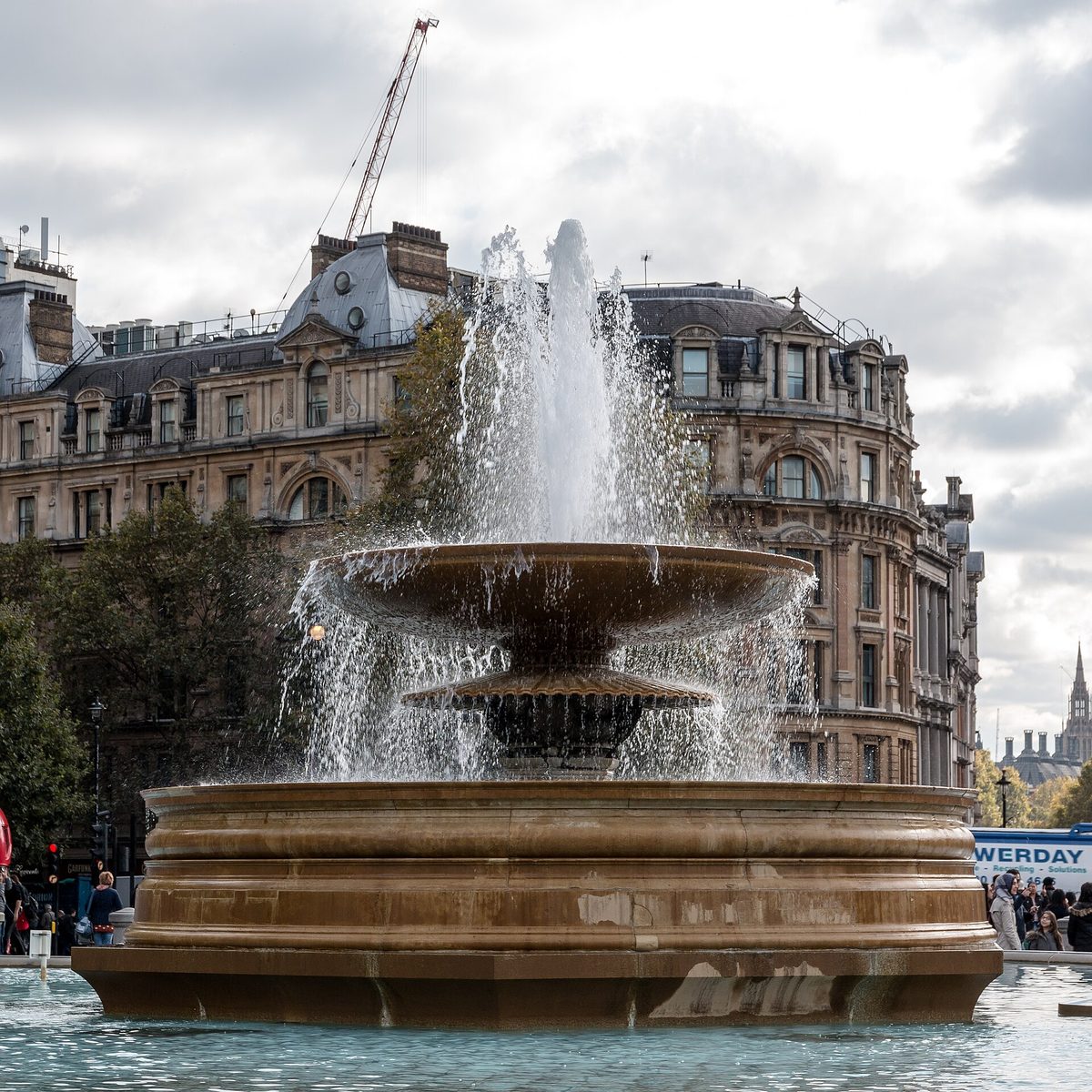
- Tourists relaxing by the fountains in Trafalgar Square, London — a reassuring sign that England is safe for tourists exploring the capital. — Photo: Dietmar Rabich / CC BY-SA 4.0 via Wikimedia Commons. Source
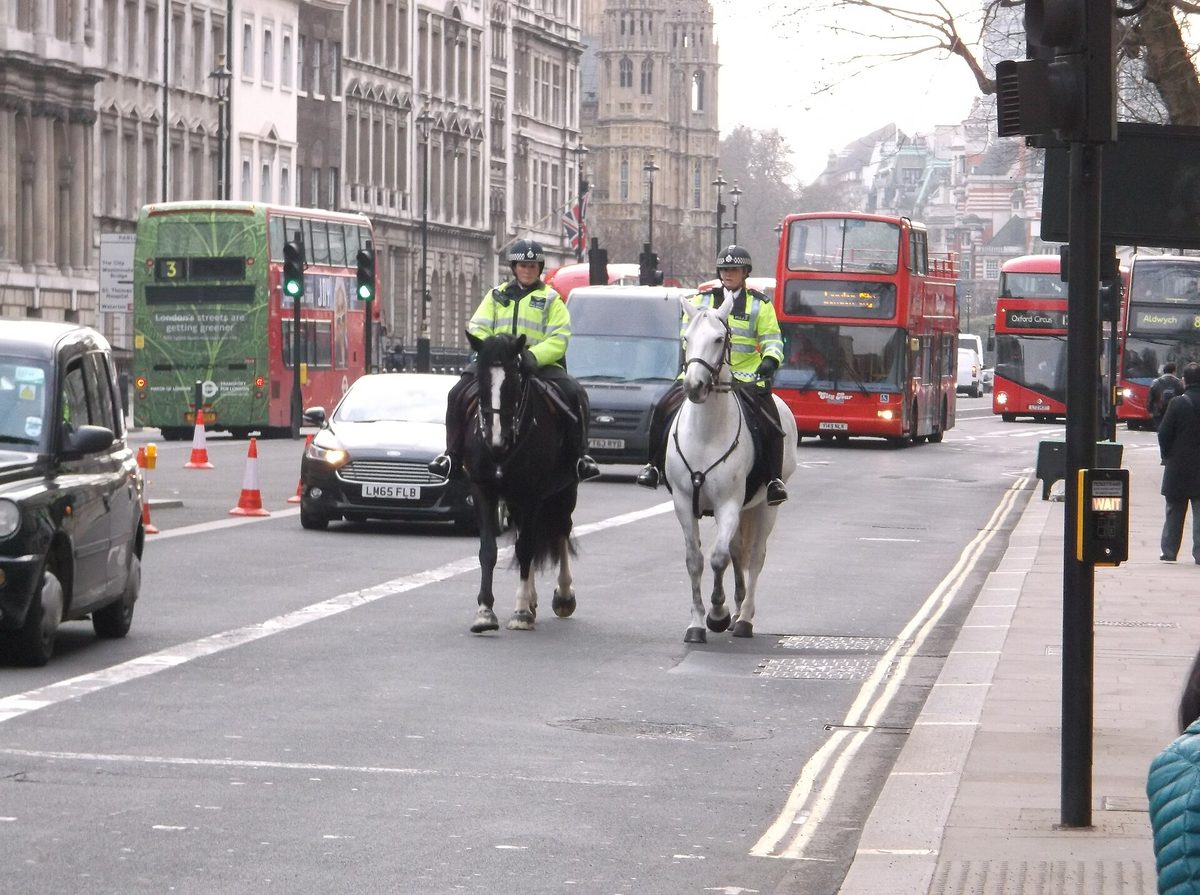
- A Metropolitan Police officer on foot patrol in central London, part of England’s visible and approachable policing. — Photo: Harry Mitchell / CC BY 4.0 via Wikimedia Commons. Source
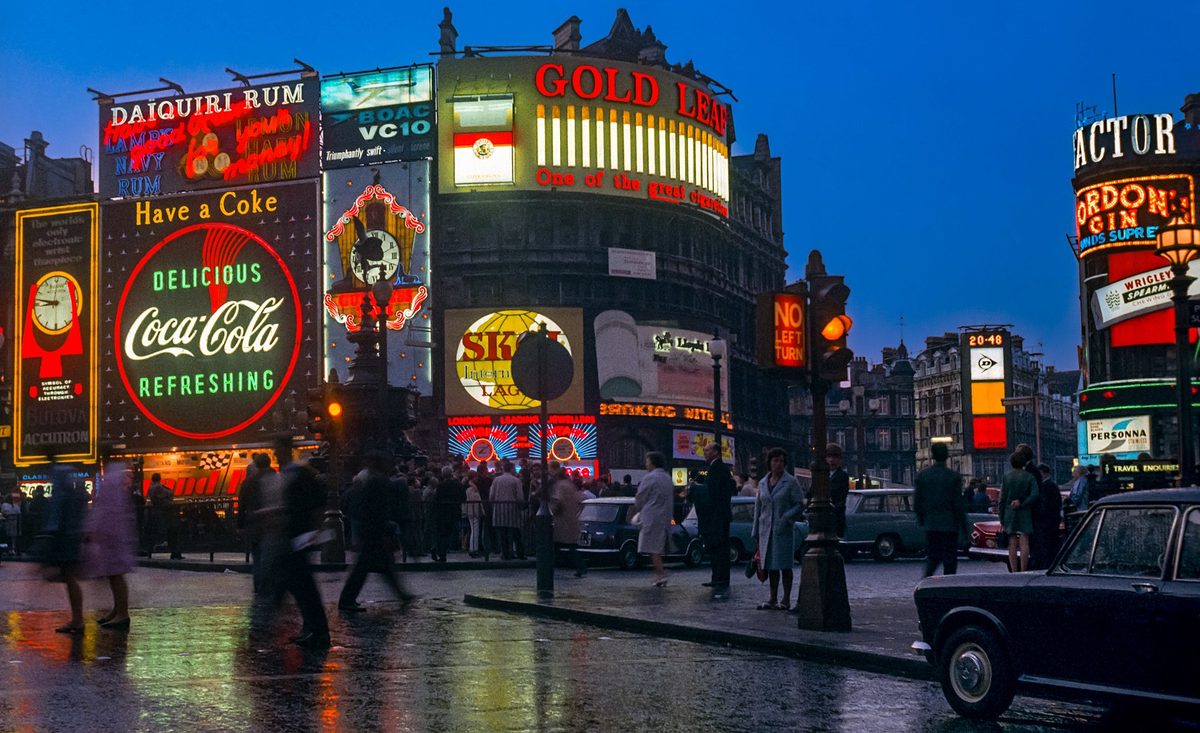
- The bright lights of Piccadilly Circus at dusk — central London stays busy and well-lit well into the evening. — Photo: Friedrich Haag / CC BY-SA 4.0 via Wikimedia Commons. Source
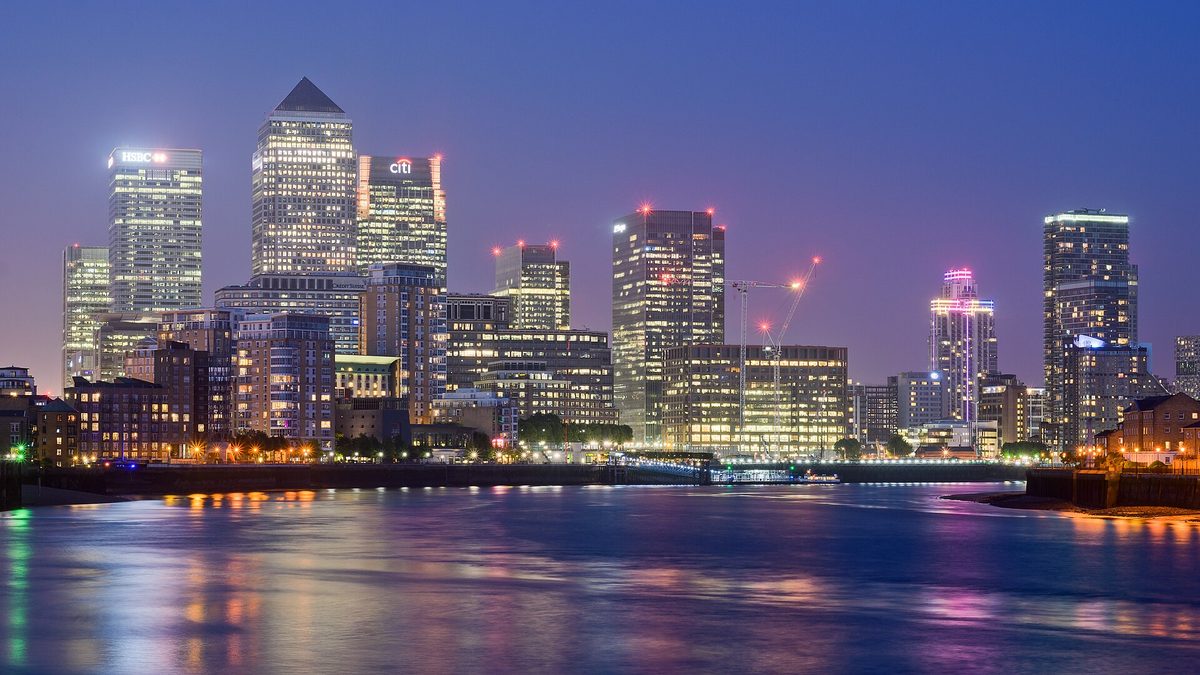
- The London skyline glowing over the Thames at night — the city stays lively and watchful after dark. — Photo: King of Hearts / CC BY-SA 4.0 via Wikimedia Commons. Source
Frequently asked questions
Is England safe for tourists right now in 2026?
Yes. England remains a very safe destination for visitors in 2026. The national terrorism threat level was raised to “severe” in May, but that’s a security-planning measure, not a reason to stay away — your individual risk stays extremely low. As of 2026 the US State Department keeps the UK at “Level 2,” the same as much of Europe. Petty theft is the main everyday concern.
What is the biggest safety risk for tourists in England?
Opportunistic petty theft — pickpocketing and phone-snatching — by a wide margin. It clusters in crowds: the rush-hour Tube, Oxford Street, and major tourist sites. Violent crime against visitors is rare. Wear a zipped cross-body bag, keep valuables in front pockets, and don’t stand at the kerb texting, and you’ve neutralised the main risk.
Is London safe to walk around at night?
Central London is generally safe at night, and stays busy and well-lit. Stick to main roads, avoid empty parks (which close after dark anyway), travel with others when you can, and use licensed transport — a black cab, a booked minicab, or a regulated app — rather than any unbooked car. Trust your instincts and you’ll be fine.
What number do I call in an emergency in England?
Dial 999 (or 112, which also works) for police, ambulance, fire, or coastguard in any emergency — both are free from any phone. For non-urgent police matters, call 101. For non-emergency health advice, call NHS 111, free and available 24/7. Save all three in your phone before you arrive.
Do tourists have to pay for healthcare in England?
Emergency A&E treatment and emergency ambulance calls are free for everyone, regardless of nationality. But most other NHS care can be charged to overseas visitors, and for non-EEA travellers those bills can be high. That’s exactly why comprehensive travel insurance with medical cover is essential — the UK government advises every visitor to have it.
Are taxis and minicabs safe in England?
Yes, when you use them properly. Black cabs are fully licensed and can be hailed in the street. For private hire, pre-book through a licensed minicab firm or a regulated ride-hail app so there’s a record of your trip. The one firm rule: never get into a car that simply pulls up and offers you a ride.