Sheet 17 · Cornwall and Devon Travel Guide · 18 min read
Best Places to Visit in Cornwall
The best places to visit in Cornwall, from St Ives and St Michael's Mount to the Eden Project and Minack Theatre, sorted by region with honest, local tips.
 Sheet 17
Contents 8 sections
I’ve lost count of how many times I’ve driven over the Tamar Bridge into Cornwall, and I still get the same daft little thrill every single time. The light changes. The hedges close in. And then, somewhere past Bodmin, the land starts doing that thing only Cornwall does, folding itself into hidden coves and granite headlands and fishing villages that look like they were designed to break your heart a bit.
The trouble with picking the best places to visit in Cornwall is that there is simply too much of it. People come for a long weekend, try to “do” the whole county, and end up spending the entire trip in the car. So I’ve written this as a proper catalogue, region by region, of the places I’d actually send a friend to.
The best places to visit in Cornwall fall into four loose camps: the rugged north coast (St Ives, Padstow, Tintagel, Port Isaac), the gentler south coast (Fowey, Falmouth, Mevagissey), the wild far west around Penwith (Land’s End, Minack, St Michael’s Mount, Mousehole), and the inland gardens and big-hitter attractions (the Eden Project, Heligan, Lanhydrock). Pick a base in one or two of those, and you’ve cracked it.
If this is your first time down here, it’s worth reading this alongside our wider Cornwall and Devon travel guide, which sets the scene for the whole south-west peninsula. This piece zooms right in on the individual places worth your time.
Quick Answer: the best places to visit in Cornwall
If you only have time to skim, here’s the short version. The best places to visit in Cornwall are St Ives (galleries and golden bays), St Michael’s Mount (the fairytale tidal island), the Eden Project (giant biomes near St Austell), Tintagel Castle (Arthurian clifftop drama), the Minack Theatre and Land’s End in the far west, and the harbour villages of Padstow, Fowey, Port Isaac and Mousehole. Mix one or two towns with a garden and a landmark, and you’ll have seen the best of it.
Below I’ve gone deep on each, with rough prices, who they suit, and the honest caveats nobody puts on the postcards.
At a glance: Cornwall’s best places compared
| Place | Region | Best for | Rough cost (as of 2026) |
|---|---|---|---|
| St Ives | North coast | Art, light, beaches, families | Free to wander |
| Padstow | North coast | Foodies, harbour strolls | Free (meals extra) |
| Tintagel Castle | North coast | Legend, clifftop drama | Around £16 adult |
| Port Isaac | North coast | Postcard fishing village | Free |
| Fowey | South coast | Sailing, genteel charm | Free |
| Falmouth | South coast | Maritime history, students | Free to wander |
| Mevagissey | South coast | Working harbour, quiet pace | Free |
| St Michael’s Mount | Far west | Castle, causeway, romance | Around £18 adult |
| Minack Theatre | Far west | Clifftop performances | Garden ~£10; shows ~£12–36 |
| Land’s End | Far west | The edge of England | Free (parking ~£8) |
| Mousehole | Far west | Tiny harbour, charm | Free |
| Penzance | Far west | Base town, ferries, art | Free to wander |
| Lizard Point | South coast | Mainland’s most southerly tip | Free |
| Eden Project | Inland | Biomes, families, all weather | Around £33–40 adult |
| Lost Gardens of Heligan | Inland | Gardens, kids, romance | Around £20 adult |
| Trebah Garden | South coast | Subtropical valley to a beach | Around £14 adult |
| Lanhydrock | Inland | Grand house, cycling | Around £18 adult |
Prices are indicative and almost always cheaper booked online in advance. More on each below.
The north coast: surf, slate and Arthurian legend
The north coast is Cornwall doing its big, dramatic voice. The cliffs are higher, the surf is louder, and the villages cling to the rock like they’re hanging on for dear life. This is where most first-timers want to be.
St Ives
If I had to send someone to one town, it’d be St Ives. It’s the most visited town in Cornwall for good reason. The light here is genuinely different, soft and clear in a way that pulled artists down in the early twentieth century and never let them go. That legacy is everywhere: Tate St Ives sits right above Porthmeor Beach, and the Barbara Hepworth Museum and Sculpture Garden tucks her bronzes into a subtropical courtyard that feels like a secret.
Beyond the art, it’s just a lovely place to potter. Cobbled lanes, pasty shops, galleries, ice cream, and three or four beaches within a five-minute walk of each other. It gets rammed in August, mind, and parking is a nightmare, so I’d park at the edge and walk in, or arrive by the branch-line train from St Erth, which is one of the prettiest little rail journeys in England.
St Ives suits almost everyone: art lovers, families, couples, solo wanderers. I’ll send you to our best beaches in Cornwall guide for the sand itself, but know that Porthminster and Porthmeor are right on the doorstep.
Padstow
Padstow is the food town. Rick Stein effectively turned this little harbour into a culinary pilgrimage, and you’ll find his name on a fish restaurant, a chippy, a café and a cookery school. But don’t let “Padstein” jokes put you off, because the harbour itself is gorgeous, hemmed by pastel buildings and bobbing boats, with the Camel Estuary opening out beyond.
I love it for a long lunch and a slow wander. Hire a bike and ride the Camel Trail, a flat, traffic-free path along the old railway line to Wadebridge and on to Bodmin, with estuary views most of the way. Take the little foot ferry across to Rock if you fancy the famous beaches on the far shore.
It’s best for foodies and couples. Families do fine here too, though the harbour edges are unguarded, so keep an eye on small ones.
Tintagel Castle
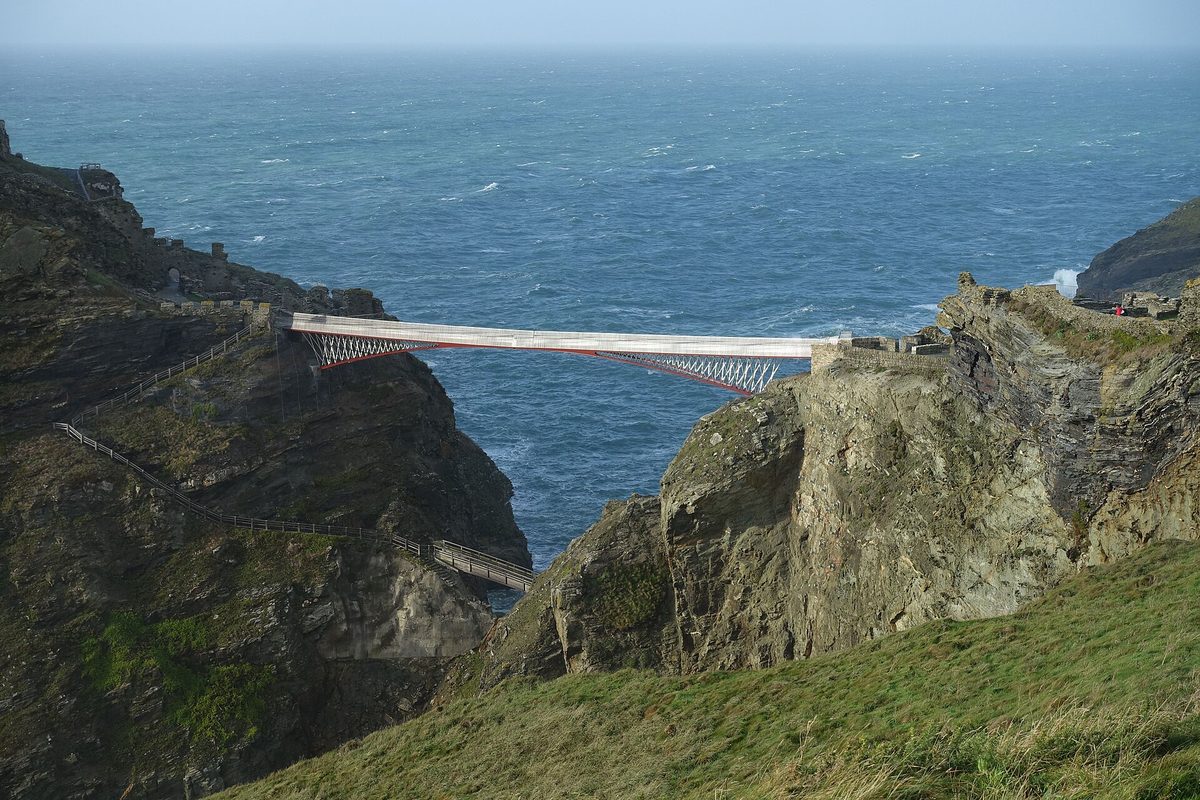
This is the one for legend-lovers. Tintagel clings to a wild headland on the north coast, and it’s been tangled up with the King Arthur myth for centuries, said to be where he was conceived. Whether you buy the legend or not, the setting is sensational: ruined walls scattered across a near-island, crashing surf below, and a slender modern footbridge linking the two halves of the site so you no longer have to do the lung-busting clamber across.
It’s run by English Heritage, with online adult admission around £16 (as of 2026), a little less if you book ahead. There’s a fair bit of walking and a lot of steps, so wear proper shoes and brace for wind. Down at sea level you can scramble to Merlin’s Cave at low tide. Allow a couple of hours, more if you walk the cliffs.
Port Isaac
You’ll recognise Port Isaac before you’ve ever been, because it plays “Portwenn” in the TV series Doc Martin. It is almost absurdly photogenic: a tight tumble of whitewashed cottages funnelling down to a working harbour, with one lane so narrow it’s nicknamed Squeeze-ee-Belly Alley.
Park at the top (you can’t really drive down into the village) and walk in. There’s not a vast amount to “do” beyond soak it up, eat fresh crab, and possibly catch the Fisherman’s Friends singing sea shanties on the platt in season. That’s rather the point. It’s best for a half-day of pottering and photographs.
Newquay and Bedruthan Steps
I’ll be honest: Newquay isn’t my favourite town, but it’s Cornwall’s surf capital and if you want lessons, board hire and a buzzy seaside-resort vibe, this is the place. Fistral Beach is the headline break. Just up the coast, the Bedruthan Steps are unmissable, a row of giant sea stacks marching out from a beach far below dizzying cliffs (the staircase down is seasonal and the beach has strong currents, so it’s one for looking as much as swimming).
The south coast: estuaries, sailing and softer light
Cross over to the south coast and Cornwall exhales. The sea is calmer, the creeks are wooded, and the towns feel more genteel. This is sailing country, and it has a slower, more sheltered charm that I love for a quieter trip.
Fowey
Fowey (say “Foy”) is my pick of the south-coast towns. It stacks up steeply above a deep, busy estuary, all narrow streets, smart little shops, and a constant traffic of yachts and ferries on the water. The novelist Daphne du Maurier lived nearby and set much of her work here, and there’s a literary festival in her name each spring.
It’s a place for messing about: catch the ferry across to Polruan, walk the coast path to Readymoney Cove, or just find a bench by the water with a pasty and watch the boats. Driving and parking in Fowey are genuinely awful, so use the park-and-ride. Best for couples, sailors and anyone who likes their seaside with a side of bookshop.
Falmouth
Falmouth has one of the deepest natural harbours in the world, and a maritime history to match. The National Maritime Museum Cornwall down on the waterfront is excellent, especially with kids, and Pendennis Castle, a Henry VIII coastal fort, guards the headland above town. There’s a proper working-port grittiness here that the prettier villages lack, plus a university, so it has bars, music and a bit of life year-round.
From Falmouth you can take boat trips up the Helford River and the Fal, which is one of the loveliest ways to see this coast. Best for maritime buffs, families and anyone who wants a town that isn’t purely a holiday postcard.
Mevagissey and Charlestown
Mevagissey is, for my money, one of the loveliest working fishing harbours in the county, a double harbour still full of small boats, with narrow lanes climbing away from the water. It’s quieter and less polished than Padstow, and I mean that as a compliment.
A short hop away, Charlestown is a perfectly preserved Georgian harbour, often full of tall ships, that’s been used as a film set so many times you’ll feel like you’ve stepped onto a period drama. Both are best for a gentle wander and a seafood lunch.
Lizard Point and the Lizard Peninsula
The Lizard is the most southerly point of mainland Britain, a properly wild, end-of-the-world headland with a lighthouse, a National Trust café perched on the cliff, and serpentine rock you’ll see turned into souvenirs in the village shops. The whole peninsula rewards slow exploration: the fishing cove of Cadgwith, the dramatic Kynance Cove (a beach so good I’ll point you to the best beaches in Cornwall guide for it), and Lizard village itself.
It’s best for walkers and anyone chasing that “edge of the map” feeling without the crowds of Land’s End. Bring a windproof.
The far west and Penwith: where Cornwall ends
Keep driving west past Penzance and you reach Penwith, the granite toe of England. The landscape changes again here, more ancient and elemental, dotted with standing stones, abandoned tin mines and tiny harbours. For me this is the most magical corner of the whole county.
St Michael’s Mount
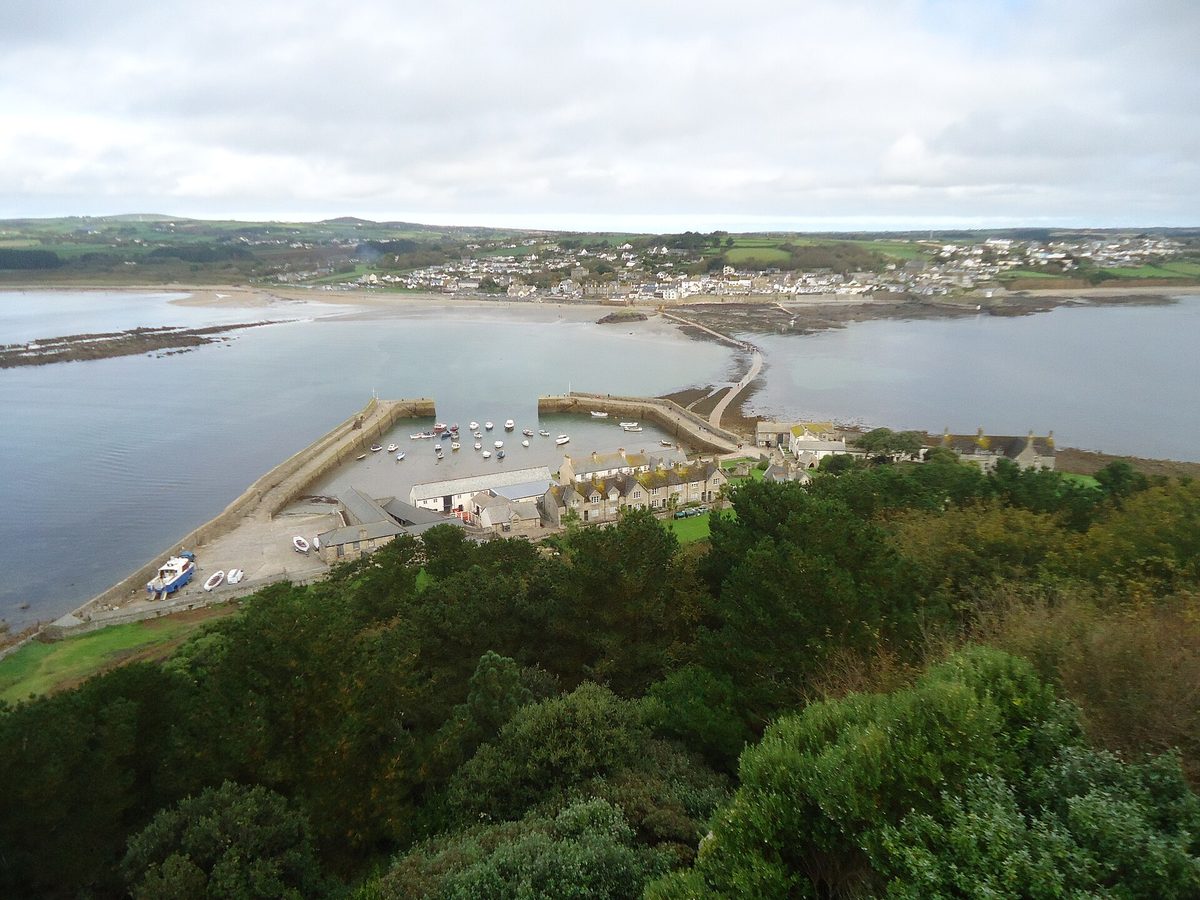
You’ll have seen it on a thousand postcards: a castle-crowned island rising out of Mount’s Bay, joined to the mainland village of Marazion by a cobbled causeway that the sea swallows at high tide. It is every bit as good in real life. Time your visit right and you can walk across the causeway at low water; come at high tide and you take a short boat across instead.
The castle and subtropical gardens are cared for by the St Aubyn family in partnership with the National Trust. Admission is around £18 for an adult (as of 2026), with National Trust members getting free entry to the castle and garden, though everyone pays separately for the boat (roughly £3 each way) and for parking in Marazion. Crucially, you must book a timed slot in advance, even as a member. It’s a steep, cobbled climb up to the castle, so it’s not the most accessible site, but the views from the top are unforgettable. Best for couples, history lovers and anyone who likes a touch of fairytale.
Minack Theatre
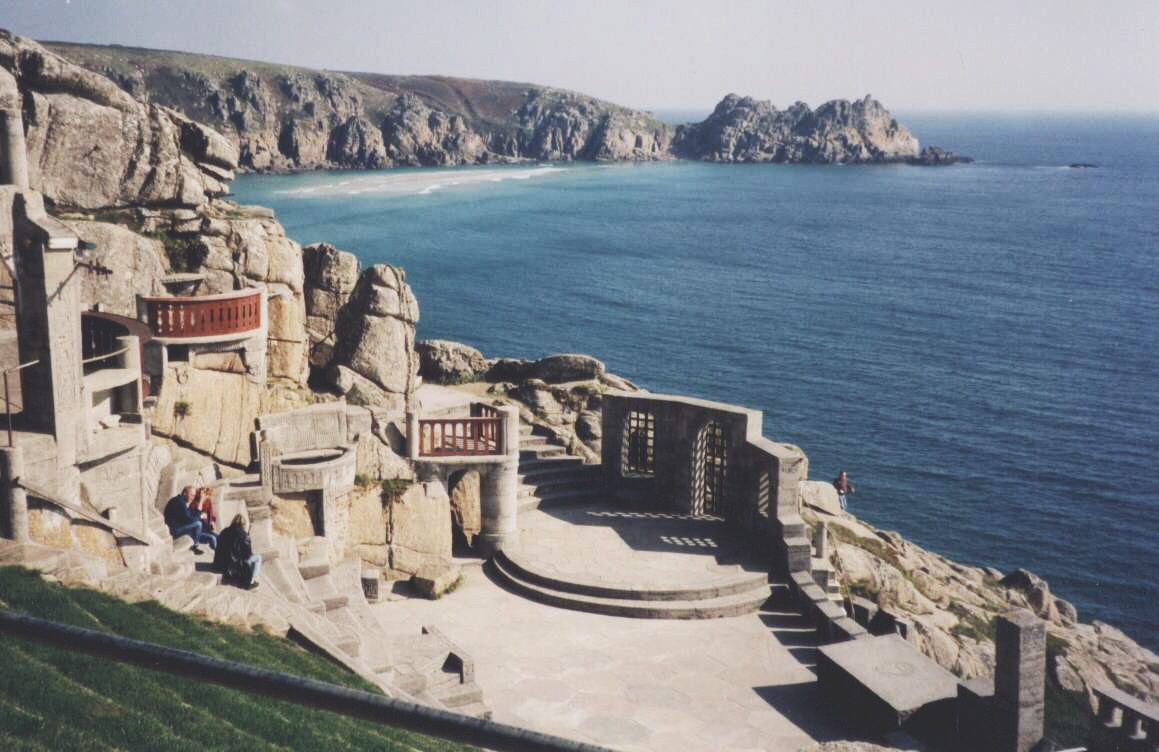
Of all the places in this guide, the Minack is the one I most want you to experience. It’s an open-air theatre carved straight into the cliffs above Porthcurno, with the stage set against a backdrop of turquoise sea. One woman, Rowena Cade, built it largely by hand over decades, and the result is one of the most spectacular venues on earth.
You can visit by day to see the theatre and its exotic clifftop gardens for around £10 to £12 (as of 2026), or, far better, book a performance. The season runs roughly May to September, with tickets typically £12 to £36 depending on the show. Take cushions, layers and a flask: you’re sitting on stone in the open air, and Cornish weather does what it likes. Watching a play as the sun sinks into the Atlantic behind the actors is something I’ll never forget.
Land’s End
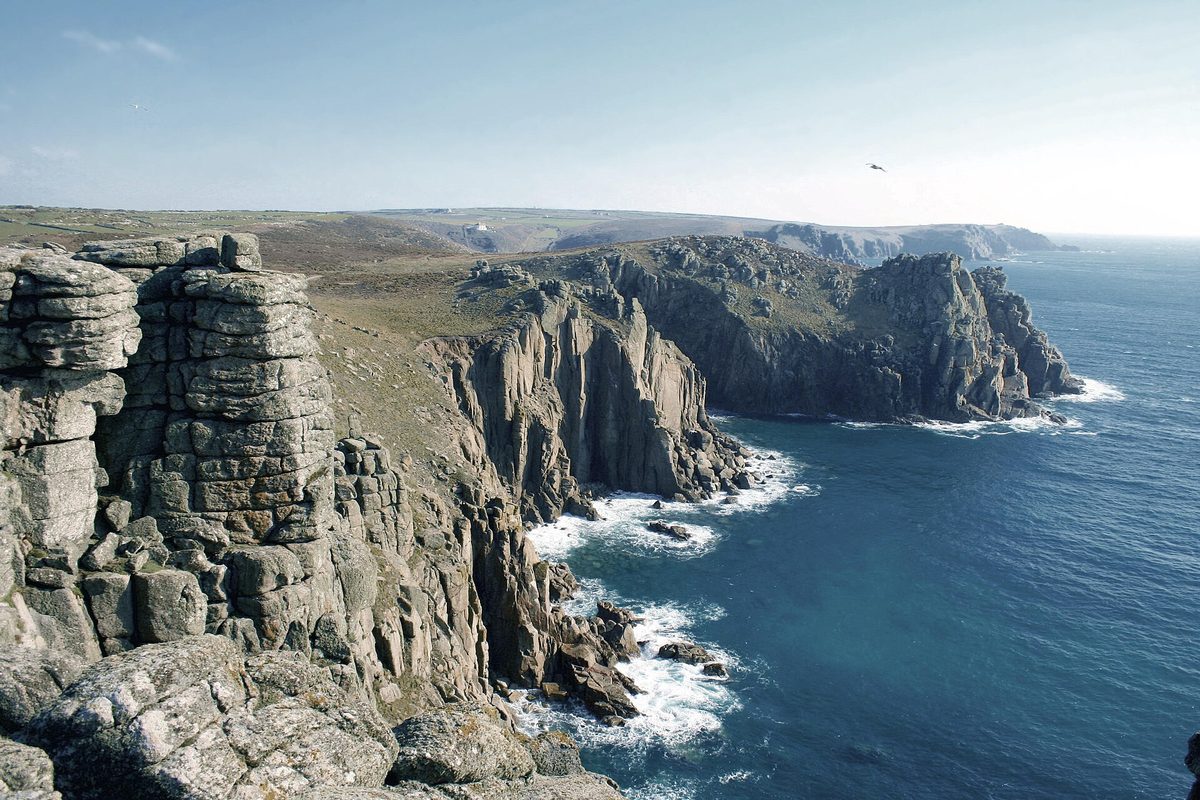
Land’s End is the most westerly point of mainland England, and there’s a real pull to standing at the literal end of the country. The catch is that the famous signpost sits inside a small, slightly dated visitor complex with paid attractions, and it divides people. My advice: skip the gift-shop circus, park up (around £8, as of 2026, which is really all you pay), and walk out along the coast path. Ten minutes either way and you’ve got the raw, magnificent cliffs to yourself. Best for the bragging rights and the walking, not the visitor centre.
Mousehole and Penzance
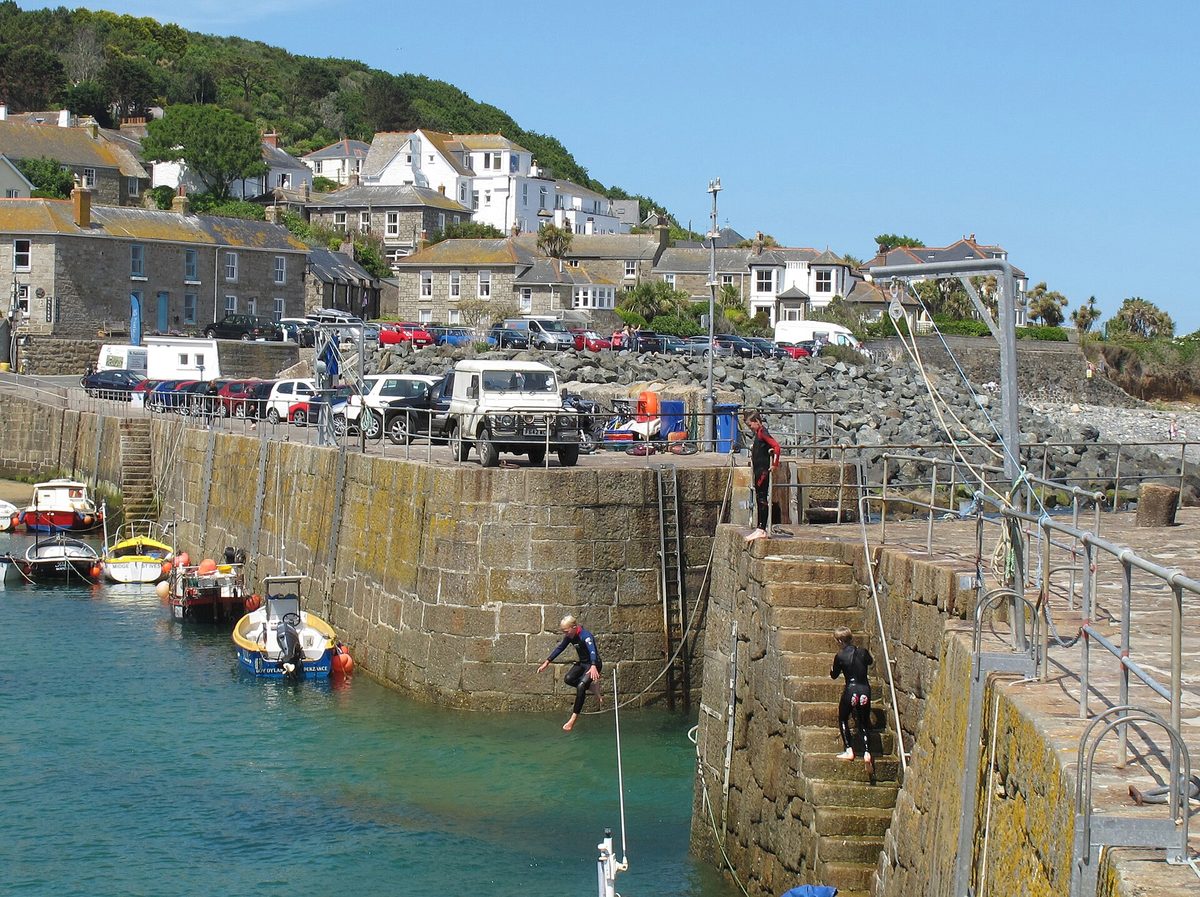
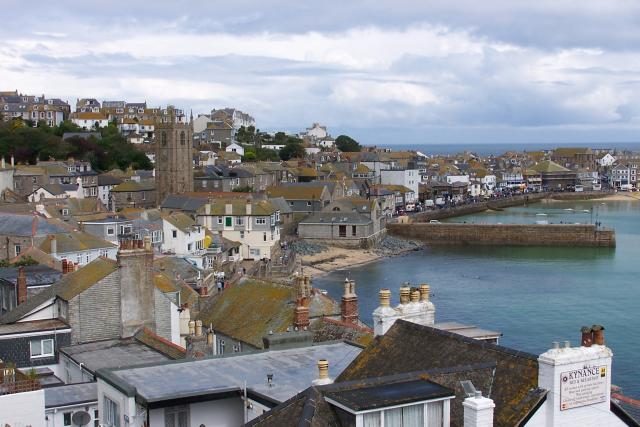
Mousehole (say “Mowzel”) is frequently called the prettiest village in Cornwall, and I won’t argue. It’s a tiny, near-circular granite harbour where you can lose an hour just watching the tide. It’s especially magical around Christmas, when the famous harbour lights go up. Bring patience for the parking; the village is minuscule.
Penzance itself makes a great base for the far west: a real town with shops, restaurants, an art-deco lido (the Jubilee Pool), galleries, and the ferry to the Isles of Scilly. Nearby Newlyn is a serious working fishing port with a fine art gallery of its own. Best for travellers who want a lived-in town rather than a resort.
Gardens and big attractions: inland Cornwall
Not everything worth seeing is on the coast. Cornwall’s mild, damp climate makes it Britain’s great gardening county, and its biggest paid attractions sit inland or in sheltered valleys. These are also your saviours on a rainy day, of which there will be some.
The Eden Project
The Eden Project, in a reclaimed clay pit near St Austell, is Cornwall’s blockbuster. Those giant bubble-wrap biomes house a vast indoor rainforest (genuinely steamy, with a treetop walkway) and a Mediterranean dome, surrounded by outdoor gardens that are lovely in their own right. It’s part botanical garden, part environmental mission, part day out.
Adult admission is roughly £33 to £40 (as of 2026), noticeably cheaper booked online in advance, and your ticket can usually be converted into an annual pass for free, which is worth doing if there’s any chance you’ll return. Give it the best part of a day. It’s brilliant for families, all-weather, and a must if it’s bucketing down. There’s also a winter ice rink and a summer concert series, “Eden Sessions,” in the bowl.
Lost Gardens of Heligan
Heligan is the one that gets under your skin. These were the grand gardens of a Cornish estate, lost to brambles for decades after the First World War took the gardeners who tended them, and rediscovered and restored from the 1990s. The result is wonderfully atmospheric: walled flower and kitchen gardens, a steamy “Jungle” valley with a rope bridge, and famous living sculptures like the moss-covered Mud Maid and the Giant’s Head.
Adult tickets run around £20 (as of 2026). It’s a big site with plenty of walking, and kids love hunting down the sculptures and the wildlife hides. Best for garden lovers, families and romantics. I’d happily spend half a day here.
Trebah and the Helford gardens
Trebah Garden, on the wooded north bank of the Helford River, is a subtropical ravine that tumbles a quarter-mile down to its own private beach on the estuary. Giant rhubarb, tree ferns, hydrangeas by the thousand, and a path that delivers you to the water’s edge: it’s magical, and quieter than the big names. Adult entry is around £14 (as of 2026). Its neighbour Glendurgan, run by the National Trust, has a famous laurel maze and is just as lovely. Best for garden lovers and anyone wanting a peaceful, leafy contrast to the open coast.
Lanhydrock
If you want a grand country house, Lanhydrock near Bodmin is the National Trust’s flagship in Cornwall: a Victorian mansion with a fascinating “below stairs” servants’ wing, sweeping gardens, and a huge wooded estate laced with some of the best off-road cycling trails in the county. Adult admission is around £18 (as of 2026), with the grounds and cycle trails free or much cheaper. Best for families, history fans and cyclists. You can easily fill a day.
How to string it together
You absolutely cannot see all of this in one trip, and trying to will ruin the trip. Cornwall’s roads are slow, narrow and clogged in summer, so distances on the map lie to you. My honest advice: pick one base on the north coast and one in the far west (or south), and explore out from each.
If you’d like that sequenced day by day, our 5-day Cornwall itinerary does exactly that, and our Cornwall road trip itinerary joins the dots for a longer loop. Driving really is the easiest way to do Cornwall, but if you’re carless, our Cornwall without a car guide shows what’s reachable by train and bus (more than you’d think; St Ives, Falmouth, Penzance and the Eden Project are all doable). And once you’ve decided where to anchor, where to stay in Cornwall breaks down the best bases.
Still torn between counties? Our Devon vs Cornwall comparison is worth a read, and if you’re touring the wider region, the Jurassic Coast travel guide covers the spectacular Devon and Dorset shoreline to the east.
Final Thoughts
Cornwall rewards the traveller who slows down. The mistake I see again and again is the dash, three counties in three days, everything ticked, nothing felt. Don’t do that here. Park the car, walk a stretch of coast path, sit on a harbour wall with a pasty and let the place work on you.
If you forced me to choose a perfect first trip, I’d base near Penzance, walk across to St Michael’s Mount on the causeway, watch a play at the Minack as the sun goes down, eat crab in Mousehole, and give one full day to the Eden Project or Heligan if the heavens open. Then I’d come back another year and do the north coast properly. Because you will come back. Almost everyone does.
For the bigger picture beyond this one county, browse our Cornwall and Devon travel guide and our roundup of the best places to visit in England. If villages are your thing, the most beautiful villages in England and hidden gems in England guides both feature Cornish entries, and food-focused travellers should see England food, pubs and afternoon tea for where to eat your weight in pasties and cream teas.
Research and Source Notes
I cross-checked prices, opening arrangements and access details against the official sources below in June 2026. Admission costs and timed-ticket rules change often, especially seasonally, so always confirm on the official site before you travel and book ahead where you can.
- Eden Project (edenproject.com) for biome details, admission pricing and annual-pass conversion.
- National Trust (nationaltrust.org.uk) and St Michael’s Mount (stmichaelsmount.co.uk) for Mount admission, member booking rules, boat fares and causeway tide times; and for Lanhydrock and Glendurgan.
- English Heritage (english-heritage.org.uk) for Tintagel Castle admission and opening times.
- Minack Theatre (minack.com) for garden-visit and performance ticket prices and the season calendar.
- The Lost Gardens of Heligan (heligan.com) and Trebah Garden (trebahgarden.co.uk) for garden admission.
- Visit Cornwall (visitcornwall.com) for general orientation, town information and seasonal events.
Prices throughout are hedged as “around” and “as of 2026” because they are indicative and frequently discounted for advance online booking. Treat them as a guide for budgeting, not a quote.
Photo Credits
- Best places to visit in Cornwall: St Michael’s Mount rising from the sea at Marazion — Photo: Michael Earnshaw / CC BY-SA 2.0 via Wikimedia Commons. Source
- Ruined walls and the footbridge at Tintagel Castle on the north Cornwall coast — Photo: Kmtextor / CC BY-SA 4.0 via Wikimedia Commons. Source
- The Minack Theatre carved into the cliffs above Porthcurno in west Cornwall — Photo: Benutzer:Chef (CC0) via Wikimedia Commons. Source
- The tiny granite harbour of Mousehole village in far west Cornwall — Photo: David Hawgood / CC BY-SA 2.0 via Wikimedia Commons. Source
- The dramatic cliffs at Land’s End, the most westerly point of mainland England — Photo: Keven Law from Los Angeles, USA / CC BY-SA 2.0 via Wikimedia Commons. Source
Frequently asked questions
What is the number one attraction in Cornwall?
It depends how you count. By visitor numbers, St Ives is the most popular town and the Eden Project is the single biggest paid attraction. By sheer iconic pull, most people would name St Michael's Mount, the fairytale tidal island near Marazion. If you have time for only one "wow" sight, make it the Mount; if you want a full day out whatever the weather, make it Eden.
How many days do you need in Cornwall?
I'd say five to seven days to see it properly without rushing. You can hit a few highlights in a long weekend of three days, especially with a car, but Cornwall is large and the roads are slow, so the more time you give it the better. A week lets you base in two areas, the north coast and the far west, and actually relax between sights rather than just driving.
What is the prettiest part of Cornwall?
The far west around Penwith gets my vote for sheer drama, with Mousehole, St Michael's Mount, the Minack and the wild Land's End coast all close together. For softer prettiness, the south coast's wooded estuaries around Fowey and the Helford River are hard to beat. For classic fishing-village postcards, Port Isaac and Mevagissey are about as cute as Cornwall gets.
Is the Eden Project worth visiting?
Yes, with a caveat. It's not cheap at roughly £33 to £40 an adult (as of 2026), but the biomes are genuinely impressive, it's a full day out, and it's indoor-friendly when the weather turns. Book online to save, and ask about converting your ticket into a free annual pass. Families and garden lovers get the most from it; if you only like wild, empty landscapes, your money may be better spent elsewhere.
What's the best base for visiting Cornwall's top places?
For the far west and most of the headline sights, Penzance or St Ives are ideal: you're within easy reach of St Michael's Mount, the Minack, Land's End and Mousehole. For the north coast, Padstow or Newquay work well for Tintagel, Port Isaac and the surf beaches. The south coast suits a Falmouth or Fowey base. Many people split a week between two of these.
When is the best time to visit Cornwall?
Late spring (May and June) and early autumn (September) are the sweet spot: gardens at their best, attractions open, sea reasonably warm, and far fewer crowds than the August scrum. July and August are gloriously busy but you'll queue and crawl in traffic. For more on timing, see our best time to visit England guide.
1 note
Notes are closed on this sheet.