Sheet 18 · Cotswolds Travel Guide · 16 min read
Where to Stay in the Cotswolds
Where to stay in the Cotswolds: I compare the best base towns and inns by location, charm, transport and traveller type, with a clear decision table.
 Sheet 18
Contents 8 sections
The Cotswolds is not one place you “stay in” — it’s a 90-mile stretch of stone villages with no single hub, and the spot you pick decides whether your trip feels effortless or like a series of car-park negotiations. I’ve based myself in five different villages here over the years, got it gloriously right twice and frustratingly wrong once, and the lesson stuck.
Quick Answer: Where to Stay in the Cotswolds
The best place to stay in the Cotswolds depends on how you’re travelling. Without a car, base yourself in Moreton-in-Marsh — it’s the one major village with its own train station. Driving and want classic looks plus walkable dinners? Choose Stow-on-the-Wold. For the prettiest, calmest base, Chipping Campden; for the south, Tetbury or Cirencester.
That’s the headline. But “it depends” is a cop-out unless I tell you what it depends on, so the rest of this guide does exactly that — base by base, then by who you are and what kind of room you want to sleep in. If you’re still deciding whether to come at all, start with my broader Cotswolds travel guide; if you’ve got a base sorted and want to know what to actually do, skip ahead to the best Cotswolds villages.
The thing nobody tells you about choosing a base
Here’s the trap. People research “the prettiest village in the Cotswolds,” fall in love with photos of the Slaughters or Bibury, and try to stay there. Then they discover the prettiest villages are often the smallest — a clutch of cottages, maybe one pub, no shop, no bus to speak of, and a single lane that fills with day-trippers’ cars by 11am. Gorgeous to visit. Maddening to use as a base.
The villages that make the best base towns are slightly bigger and slightly less perfect: they have a butcher, a café open past 4pm, a chemist, a couple of restaurants, and ideally either a train station or a bus that runs more than twice a day. You trade a sliver of postcard charm for a place that actually functions as a home for three or four nights. Make that trade. You’ll thank yourself on the second evening when you can walk to dinner instead of driving down unlit lanes.
The other big variable is north versus south. The northern Cotswolds — Moreton, Stow, Chipping Campden, Bourton, Broadway — is the “greatest hits” cluster: the villages are close together, the bus links are better, and it’s the easiest first trip. The southern Cotswolds around Cirencester, Tetbury and the Stroud valleys is quieter, less obviously chocolate-box, and pairs naturally with Bath. Most first-timers should base north. I’ll flag the exceptions as we go.
At a glance: the best Cotswolds base towns
If you remember only one thing, make it this: pick your base by transport first, charm second. Here’s how the main contenders stack up.
| Base town | Best for | Train station? | Vibe |
|---|---|---|---|
| Moreton-in-Marsh | Car-free travellers, first-timers | Yes (London Paddington line) | Working market town; busy main road, real amenities |
| Stow-on-the-Wold | All-rounders, walkable dinners | No (Moreton ~4 mi) | Classic hilltop square; antiques, pubs, central |
| Chipping Campden | Calm, charm, walkers | No (Moreton ~7 mi) | The prettiest liveable town; gentle, refined |
| Broadway | Couples, a touch of polish | No (Evesham ~5 mi) | Wide elegant high street; smart, slightly upmarket |
| Burford | Oxford-side arrivals, antiques | No (Charlbury ~8 mi) | Sloping medieval high street; gateway feel |
| Bourton-on-the-Water | Families (with caveats) | No (Moreton ~7 mi) | River, attractions, very busy by day |
| Cirencester | South Cotswolds, town life | No (Kemble ~4 mi) | Proper market town; shops, restaurants, practical |
| Tetbury | Quiet south base, antiques | No (Kemble ~7 mi) | Curated, characterful, smaller; near Bath |
Distances are approximate; transport detail (which buses, how often, where the taxis are) lives in my dedicated guide to the Cotswolds without a car so I don’t repeat it all here.
The base towns, ranked and explained
Moreton-in-Marsh — the rail base, and the obvious car-free winner
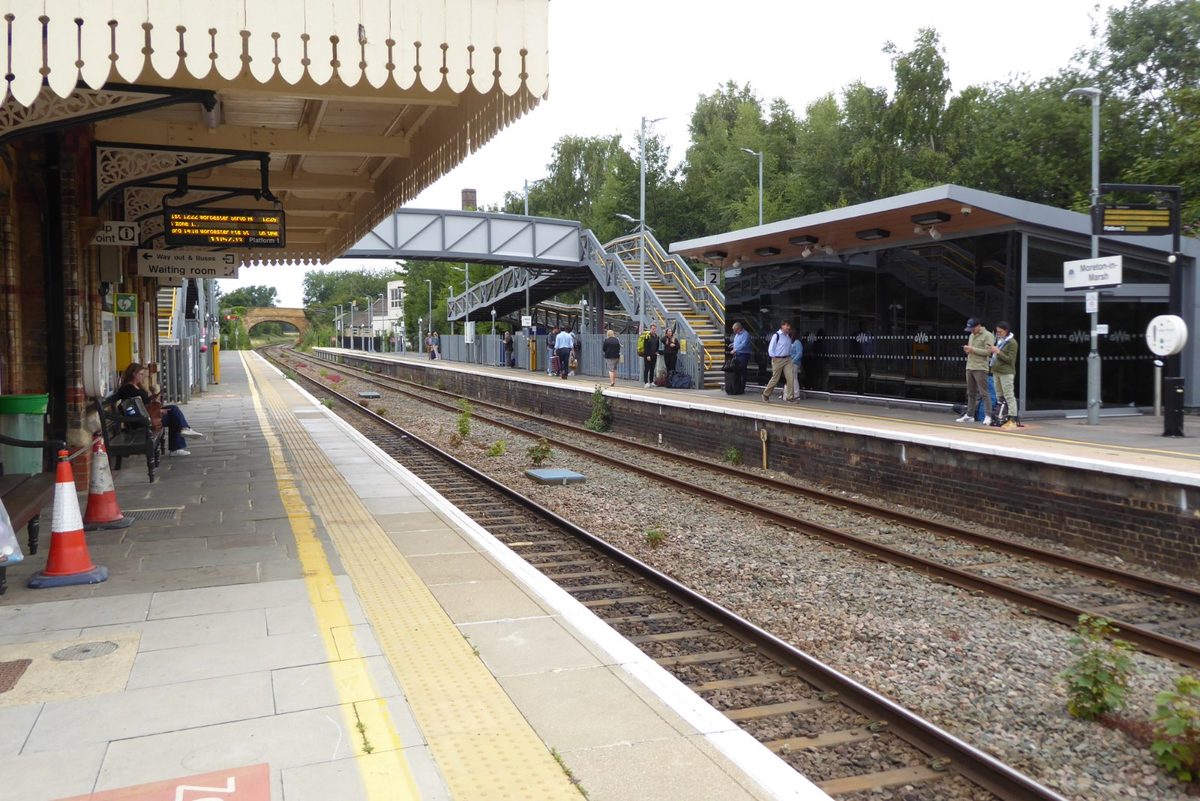
No car? Base yourself in Moreton-in-Marsh. It’s the one major Cotswolds village with its own train station, sitting directly on the London Paddington–Worcester line, and that single fact reshuffles every other consideration. From here you can arrive by train, ditch the idea of driving entirely, and use buses to reach Stow, Bourton, Chipping Campden and Broadway. There’s a Tuesday market, a genuinely useful high street, supermarkets, banks and taxis — the connective tissue a base needs.
Is Moreton the prettiest? Honestly, no. A busy main road (the Fosse Way) runs straight through the middle, so it lacks the hushed, traffic-free charm of Stow or Campden. But you’re not staying for the looks — you’re staying because everything else is reachable without a hire car, and because at the end of a long day of villages you can step off a train and walk to your room. For most car-free travellers and a lot of first-timers, that wins. See the full case in Cotswolds without a car.
Stow-on-the-Wold — the best all-round base if you’re driving
Stow is what most people picture when they imagine the Cotswolds done right: a handsome market square ringed by honey-stone buildings, antique shops, a clutch of good pubs and restaurants, and lanes radiating out to the surrounding villages. Crucially, it sits roughly in the middle of the northern cluster, so your daily drives are short — Bourton, the Slaughters, Stow, Broadway and Chipping Campden are all easy hops.
The thing Stow does better than almost anywhere is walkable evenings. You can leave the car parked, stroll across the square, and have a proper dinner without getting back behind the wheel. It’s busy by day with coach groups, but it empties in the evening and is noticeably calmer than Bourton. If you’re driving, want the classic look, and value being able to walk to dinner, Stow is my default recommendation. It’s also a natural hub for a tight trip — see how I’d spend a focused weekend in my 2-day Cotswolds itinerary.
Chipping Campden — the prettiest base you’d actually want to live in
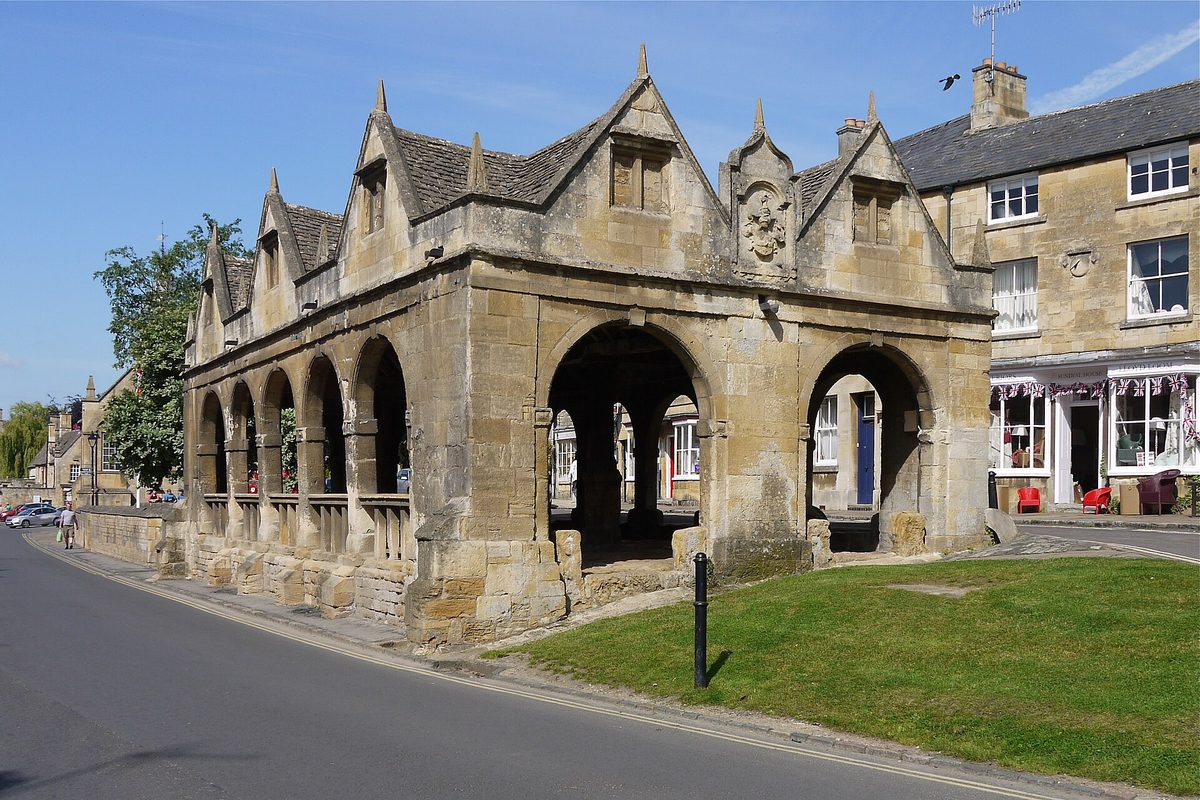
Campden is, to my eye, the most beautiful town in the Cotswolds — not a tiny village you visit, but a complete, working high street of gently curving golden stone, with a famous covered Market Hall and a calm, refined air. It’s less trampled than Stow or Bourton, it has genuinely good places to eat, and it sits at the northern tip of the region (and the start of the Cotswold Way), making it a dream base for walkers.
The trade-off is location: it’s at the edge of the cluster rather than the centre, so reaching the southern villages means longer drives, and it’s a bit further from the Moreton train line. If your priorities are charm, calm and walking — and you don’t mind a few extra miles to the south — Campden is hard to beat. I’d happily spend a week here.
Broadway — polished, elegant, a couples’ favourite
Broadway has one of the widest, most graceful high streets in England, lined with smart galleries, boutiques and a couple of grand old coaching inns. It feels a notch more upmarket and manicured than its neighbours — less rustic, more “long lunch and a good hotel.” It’s a lovely base for a couple after something refined, with the landmark Broadway Tower and Cotswold Way walking on the doorstep.
It’s close to Chipping Campden and Stow, so the northern villages stay within reach, though like Campden it’s toward the edge rather than dead centre. Pricier on average, too. Come here if polish and prettiness matter more to you than being maximally central.
Burford — the eastern gateway, great for Oxford-side arrivals
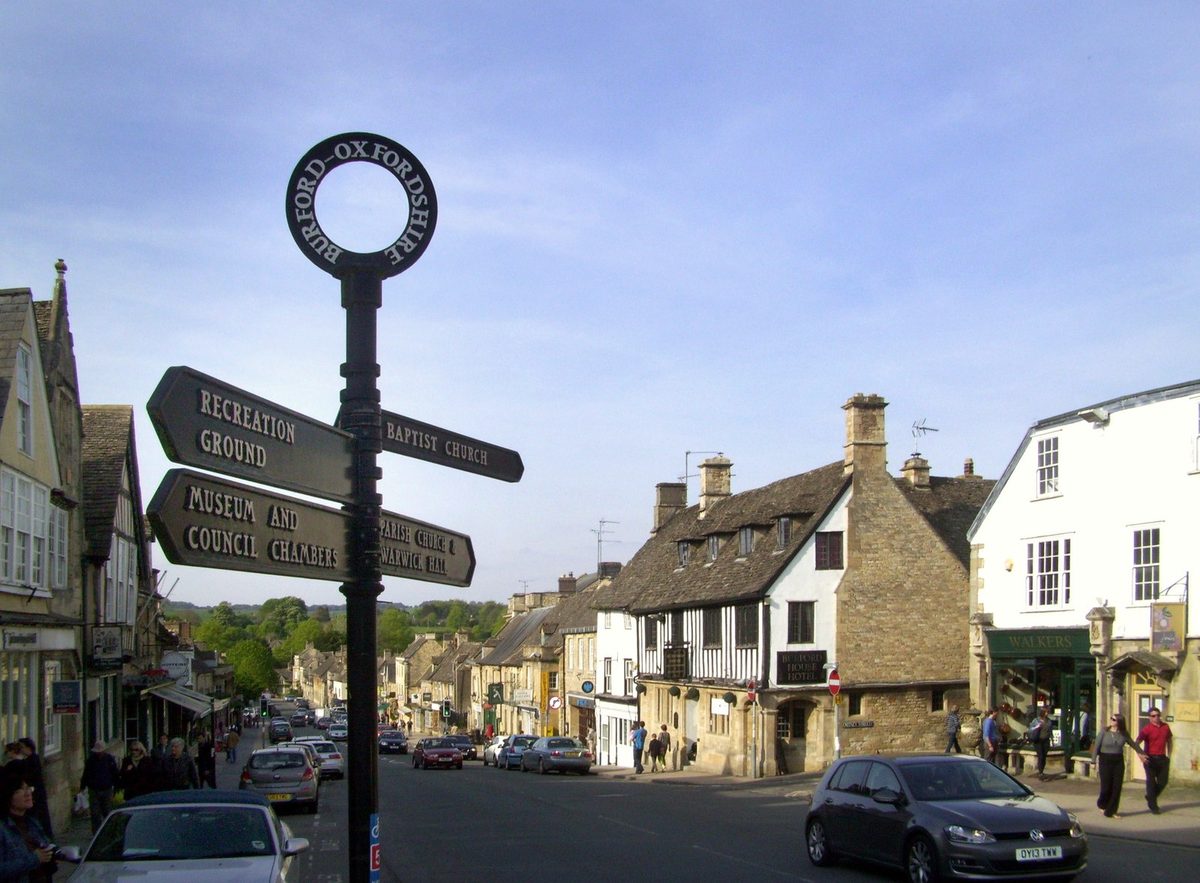
Burford’s steep, medieval high street tumbling down to the river is one of the great Cotswolds entrances, lined with antique dealers, inns and tea rooms. It sits on the eastern edge near the A40, which makes it the natural base if you’re arriving from Oxford or doing the Cotswolds as part of a wider England trip — it’s the “gateway” town.
Because it’s eastern, it’s better positioned for Oxford and Blenheim than for the western and southern villages, so think of it as an Oxford-side base rather than a central one. There’s a clutch of characterful coaching inns here, and it’s an easy, atmospheric place to land for a couple of nights. If a Cotswolds day trip from London is tempting you to stay longer, Burford is a sensible first night.
Bourton-on-the-Water — families love it, but stay overnight and choose carefully
Bourton is the “Venice of the Cotswolds,” with its little River Windrush running through the centre under low stone bridges, plus a cluster of paid attractions — model village, motor museum, bird park — that make it a genuine family favourite. The catch is that it’s the most touristy village in the region: by mid-morning in summer it’s heaving, the central lanes fill, and the magic gets a bit diluted.
Here’s the insider move: it’s actually better as a place to sleep than to day-visit, because the crowds leave by late afternoon and you get the river to yourself in the long summer evenings and early mornings. If you’ve got kids who’ll love the attractions and you’ll be out at the right hours, Bourton works — just go in with eyes open about the daytime crush. For more on travelling here with little ones, see the Cotswolds with kids.
Cirencester — the practical southern base and “capital” of the Cotswolds
Cirencester is a proper market town — the largest in the region, sometimes called the “capital of the Cotswolds” — with real shops, restaurants, a Roman past, and town-like convenience rather than chocolate-box quaintness. It’s the obvious base for the southern Cotswolds, putting Bath and Bristol within easy reach, and it’s well placed if you want amenities and a bit of urban texture rather than a sleepy village.
It’s not as central to the northern “greatest hits,” so if you’re set on hopping between Bourton, Stow and Campden every day, you’ll clock up miles. But for the south, for town life, and for travellers who find tiny villages claustrophobic, Cirencester is a smart, underrated pick.
Tetbury — the quiet, curated southern alternative
Tetbury feels smaller and more curated than Cirencester — a characterful little town known for antiques, with an easily walkable centre and a genuinely “in the Cotswolds” atmosphere rather than orbiting around it. It’s close to Bath and the south Cotswolds attractions, and it’s a calm, grown-up base if you want quiet and character over central convenience.
Like the other southern bases, it’s a longer reach to the northern cluster, so pair it with a south-and-Bath focused trip rather than a northern villages blitz.
Where to stay in the Cotswolds by traveller type
The “best base” genuinely changes depending on who you are. Here’s how I’d steer different travellers.
The car-free traveller
Moreton-in-Marsh, no contest. It’s the only major village with its own station, and from there local buses link the headline villages. Stay central in Moreton so you can walk between the station, the shops and your room. Everything about doing the Cotswolds without driving — buses, timings, which day trips are realistic — is in my dedicated guide to the Cotswolds without a car, and there’s broader national context in travelling around England without a car.
The first-timer
Base north, and pick Stow-on-the-Wold if you’re driving or Moreton-in-Marsh if you’re not. The northern cluster has the shortest distances, the best bus links and the most famous villages, so your first trip feels easy rather than logistical. Don’t try to “see everything” — pick one base and do day loops. My 2-day itinerary shows how.
The luxury traveller
The Cotswolds is awash with high-end stays — country-house hotels with spas, restaurants-with-rooms, and grand old coaching inns done up to a serious standard. Broadway leans most naturally upmarket among the towns, and there are destination manor-house hotels scattered in the countryside between villages (some of the best aren’t in a town at all). If a spa-and-tasting-menu weekend is the goal, prioritise the property over the postcode and drive to villages from there.
The budget traveller
Beds in the prettiest villages command a premium, so budget travellers do best in the bigger, less precious towns. Moreton-in-Marsh and Cirencester have the widest spread of mid-range and value options (including chain hotels on the fringes), and B&Bs almost always beat boutique inns on price. Self-catering for a few nights also drops your per-night cost and cuts restaurant bills. For how this fits a wider trip, see my England budget and costs breakdown and the fuller England trip cost guide.
Families
Bourton-on-the-Water for the on-the-doorstep attractions (with the daytime-crowds caveat above), or Stow for a calmer, walkable base within easy reach of family-friendly spots. Self-catering cottages tend to suit families best — more space, a kitchen, and somewhere for early bedtimes. Practical, kid-tested detail lives in the Cotswolds with kids.
Cotswolds hotels and inns: choosing your type of room
Where you sleep is only half the decision — what you sleep in matters just as much, because the Cotswolds offers four quite different experiences at very different price points. Here’s how I think about the main accommodation types.
The coaching inn
The classic Cotswolds stay. These are centuries-old inns — many 16th- and 17th-century, some older — right on the high streets of towns like Stow, Burford and Broadway, typically with a proper pub and restaurant downstairs and characterful rooms above (think beams, wonky floors, four-posters). You get atmosphere, walkable dinners, and a real sense of place. Rooms range widely, roughly from around £120 a night at the simpler end to well over £250 for the smartest, as of 2026.
Best for: all-rounders, couples, anyone who wants charm plus a great dinner downstairs. The catch: old buildings can mean uneven heating, narrow stairs and some road noise on the high street.
The B&B
The value sweet spot, and often the most charming way to stay. Cotswolds B&Bs run from converted cottages to farmhouses, usually with a handful of rooms and a properly good breakfast included. You’ll typically pay from around £90–£150 a night as of 2026 — less than the inns and hotels, with more local, personal character.
Best for: budget and mid-range travellers, first-timers who want a warm welcome, and anyone who values breakfast and local tips over hotel facilities. The catch: fewer amenities, and the smallest ones aren’t always walkable to dinner.
The manor-house or country-house hotel
The luxury end: grand period houses set in their own grounds, often with spas, fine-dining restaurants and serious service. Many of the best are between villages rather than in a town, so you’ll need a car (or to commit to staying put and relaxing). Expect from around £250 a night into the many hundreds, as of 2026.
Best for: luxury travellers, special occasions, spa-and-restaurant weekends where the hotel is the destination. The catch: you’ll drive to villages, and the price is, well, the price.
Self-catering cottages
The smart play for families, groups and longer stays. A stone cottage with a kitchen and a garden gives you space, flexibility and lower per-night costs if you split it, plus the joy of not eating out every night. Minimum-stay requirements (often a few nights, sometimes a week in peak season) are common.
Best for: families, friend groups, anyone staying four nights or more or watching the budget. The catch: you’ll need a car for most rural cottages, and minimum stays reduce flexibility. When you do eat out, my guide to the best Cotswolds pubs and tea rooms will point you to the good tables.
So, honestly — where should you stay?
Let me be direct, because “it depends” only helps so much:
- No car: Moreton-in-Marsh. The station settles it.
- Driving, first trip, want it easy and classic: Stow-on-the-Wold.
- Prettiest, calmest, you love walking: Chipping Campden.
- Couple after polish and good food: Broadway.
- Families: Bourton-on-the-Water (out at the right hours) or Stow.
- Budget: Moreton or Cirencester, in a B&B or self-catering.
- Luxury: the best country-house hotel you can find — drive to villages from there.
- South Cotswolds or pairing with Bath: Cirencester (town life) or Tetbury (quiet and curated).
Get the base right and the Cotswolds is one of the easiest, most rewarding regions in England to explore. Get it wrong and you’ll spend the trip in the car. Choose for how you travel, not just for the photos.
Final Thoughts
The single biggest mistake I see is people choosing a base from a photo instead of from how they’ll actually move around. Decide your transport first — car or no car, north or south — and the right town more or less picks itself: Moreton if you’re car-free, Stow if you’re driving and want the easy classic, Campden if charm and walking win, the south if you’re pairing with Bath. Then match the room to the trip: a coaching inn for atmosphere, a B&B for value, a country-house hotel for a treat, a cottage for the family. Get those two choices right and everything downstream — the villages, the pubs, the long evening walks — falls into place.
When you’ve got your base sorted, plan the rest with my Cotswolds travel guide, best Cotswolds villages and 2-day itinerary. And if the Cotswolds is one stop on a bigger journey, see where to stay in England, the broader England itinerary and best places to visit in England for the full picture.
Research and Source Notes
This guide draws on a review of page-one search results and People-Also-Ask questions for “where to stay in the Cotswolds” and related queries (“best Cotswolds base town,” “best place to stay Cotswolds”), cross-referenced against traveller-forum consensus (Rick Steves, Tripadvisor, Fodor’s) and regional tourism resources. Key recurring themes — Moreton-in-Marsh as the rail/car-free base, Stow as the central all-rounder, Bourton’s daytime crowds, and the north-versus-south split — were verified across multiple independent sources.
Prices are given as broad bands and were accurate as of 2026; rates vary by season, property and how far ahead you book, so treat them as ballpark guidance rather than quotes. Always confirm current rates and minimum-stay rules directly with each property. Transport specifics (bus routes and frequencies) change seasonally and are covered, with current detail, in the linked Cotswolds without a car and England transport guides. If you plan to drive, renting a car in England and the best time to visit England are worth reading before you book.
Selected sources consulted: Bon Traveler, Anywhere We Roam, Wildside Travellers, Explore the Cotswolds, A Lady in London, Cotswolds.com, The Hotel Guru, Rick Steves Travel Forum and Tripadvisor community threads.
Photo Credits
- Honey-coloured stone houses around the market square in Stow-on-the-Wold, a top choice for where to stay in the Cotswolds — Photo: John Salmon / CC BY-SA 2.0 via Wikimedia Commons. Source
- The wide market street and railway-town feel of Moreton-in-Marsh in the Cotswolds — Photo: Jaggery / CC BY-SA 2.0 via Wikimedia Commons. Source
- The broad, elegant high street of Broadway, a refined base in the Cotswolds — Photo: The author is Newton2 (cropped by Yummifruitbat) / CC BY 2.5 via Wikimedia Commons. Source
- The curving golden-stone High Street of Chipping Campden, a calm base town in the Cotswolds — Photo: Mick / CC BY-SA 2.0 via Wikimedia Commons. Source
- The sloping medieval Burford High Street, the eastern gateway base in the Cotswolds — Photo: Des Blenkinsopp / CC BY-SA 2.0 via Wikimedia Commons. Source
Frequently asked questions
What is the best town to stay in the Cotswolds?
For most people, Stow-on-the-Wold is the best all-round base if you're driving — it's central, classically pretty and you can walk to dinner. If you're travelling without a car, Moreton-in-Marsh is the best choice because it's the one major village with its own train station, on the London Paddington line.
Where should I stay in the Cotswolds without a car?
Moreton-in-Marsh. It's the only major Cotswolds village with a railway station, sitting directly on the London Paddington–Worcester line, with local buses out to Stow, Bourton, Broadway and Chipping Campden. Stay central in Moreton and you can walk between the station, shops and your room. Full transport detail is in my Cotswolds without a car guide.
Is it better to stay in Bourton-on-the-Water or Stow-on-the-Wold?
Stow is calmer and more central, with better walkable dinners — the safer all-round base. Bourton has the river and family attractions but is far busier by day. The trick with Bourton is that it's better to sleep in than to day-visit: the crowds leave by late afternoon, leaving you the river in peace.
Where is the best place to stay in the Cotswolds for families?
Bourton-on-the-Water suits families for its on-the-doorstep attractions (model village, motor museum, bird park), provided you're out exploring during the busy daytime hours. Stow is a calmer, walkable alternative nearby. Self-catering cottages tend to work best for families, giving you space, a kitchen and room for early bedtimes.
How many nights should I stay in the Cotswolds?
Three to four nights is the sweet spot — enough to settle into one base, do a couple of unhurried village loops, and avoid the day-trip rush. A long weekend works if you stay central in Stow or Moreton. If you only have a day, see my Cotswolds day trip from London guide instead.
Should I stay in the north or south Cotswolds?
First-timers should base in the north — Moreton, Stow, Campden, Bourton and Broadway sit close together with the best bus links and the most famous villages. Choose the south (Cirencester or Tetbury) if you want quiet, town life, or you're pairing the trip with Bath, accepting longer drives to the northern "greatest hits."