Sheet 69 · England National Parks and Hiking · 17 min read
Peak District Travel Guide
A complete Peak District travel guide: best walks, base towns, caverns, Chatsworth, when to go, and how to visit without a car. Plan the perfect trip.
 Sheet 69
Contents 11 sections
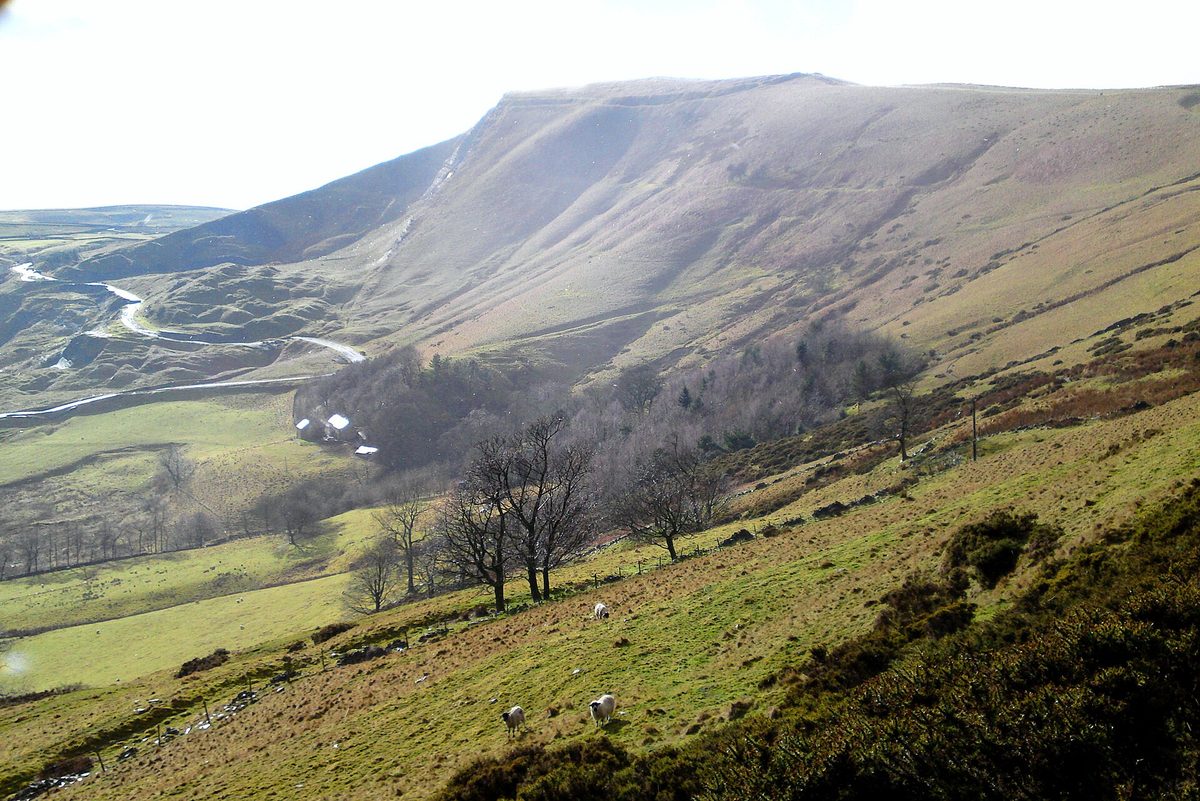
The first time I climbed Mam Tor, the wind nearly took my hat into the next valley, the Hope Valley was laid out below like a green map, and I understood why people get a bit evangelical about this place. The Peak District isn’t England’s prettiest postcard park, and it isn’t the most dramatic. It’s something better: the one you can actually reach on a train from a big city, walk yourself silly in, eat well in, and come home from changed.
This Peak District travel guide is the full how-to-visit: where to base yourself, which walks are worth your legs, how to see the caverns and great houses, when to come, and exactly how to do it all without a car. I’ve leaned on years of return trips and a lot of soggy boots.
Quick Answer: How to Plan a Peak District Travel Guide Trip
For a first visit, give the Peak District three to five days and split your time between the wild north (the Dark Peak: Edale, Castleton, the high moors) and the gentle south (the White Peak: Bakewell, Dovedale, the dales). Base yourself near a Hope Valley railway station if you’re car-free. Walk Mam Tor, tour a Castleton cavern, eat a Bakewell pudding, and you’ve nailed the essentials.
At a Glance: Areas, Bases and Stations
Here’s the whole park boiled down to one table. I’ll expand on every row below.
| Area | Highlights | Good base town | Nearest train station |
|---|---|---|---|
| Edale & the high moors | Mam Tor, Kinder Scout, the Great Ridge, Pennine Way start | Edale | Edale (Hope Valley line) |
| Hope Valley & Castleton | Blue John caverns, Winnats Pass, Cave Dale | Castleton (no station) | Hope (then bus/walk) |
| Eastern edges | Stanage Edge, Burbage, gritstone climbing | Hathersage | Hathersage (Hope Valley line) |
| Bakewell & central White Peak | Monsal Trail, Bakewell pudding, markets | Bakewell (no station) | Hathersage or Buxton, then bus |
| Buxton & High Peak | Spa town, Pavilion Gardens, Poole’s Cavern | Buxton | Buxton (Manchester line terminus) |
| Southern dales | Dovedale stepping stones, Thor’s Cave, Matlock | Matlock | Matlock (branch from Derby) |
| Great houses | Chatsworth House, Haddon Hall | Bakewell | Hathersage / Matlock, then bus |
Dark Peak vs White Peak: Understanding the Two Halves
Before you book anything, understand that the Peak District is really two parks wearing one name, and which one you choose shapes the whole trip.
The Dark Peak is the wild north. It’s high gritstone moorland: peat bogs, dramatic crags, plateaus like Kinder Scout, and those long ridge lines that make your photos look like a film set. It’s emptier, weather changes faster, and a couple of the walks genuinely need navigation skills. This is where the Edale, Castleton and Hathersage country sits.
The White Peak is the gentle south. Pale limestone, rolling green fields stitched with drystone walls, and beautiful river valleys (the dales) like Dovedale and the Manifold. Walks here are shorter and softer; villages are prettier in a chocolate-box way; and this is Bakewell, Tideswell and the great houses’ territory.
My honest advice: don’t pick one. The magic of a Peak District itinerary is doing both. A morning on a Dark Peak ridge and an afternoon ambling a White Peak dale gives you the full range, and the contrast is the whole point. If you only have a day, go Dark Peak around Castleton and Edale; it’s the more memorable scenery. If you want a guide to how this park stacks up against England’s others, see the best national parks in England.
Where to Base Yourself: The Best Towns and Villages
There’s no single “centre” of the Peak District, so where you sleep really matters. Here are the bases I’d actually recommend, and who each one suits.
Edale: for hikers who want the wild stuff
Tiny, surrounded by moor, and the start of the Pennine Way. Edale is barely a village (a couple of pubs, a church, a station), but it’s the front door to Kinder Scout and the western end of the Great Ridge. If your trip is mostly about walking the Dark Peak and you don’t need shops or nightlife, this is the dream. It also has its own railway station, which is gold for car-free trips.
Castleton: the all-rounder
If I had to send a first-timer to one base, it’s Castleton. You get four show caverns on the doorstep, Mam Tor and the Great Ridge a stride away, the gorgeous Winnats Pass, ruined Peveril Castle on the hill, and a cluster of proper pubs and cafés. The catch: Castleton has no train station. You reach it by bus or a roughly two-mile walk from Hope station, which is easily done. More on that below.
Hathersage: car-free convenience plus character
My pick for travellers without a car who still want a real village. Hathersage sits right on the Hope Valley line with its own station, has good places to eat and stay, an outdoor-gear shop or two, and Stanage Edge looming above. It’s also walkable distance to other valley villages. Bonus literary trivia: it’s tangled up with Charlotte Brontë’s Jane Eyre.
Bakewell: the foodie market town
The only actual town inside the national park, and the capital of the White Peak. Bakewell has the famous pudding, a Monday market, a handsome medieval bridge, more accommodation choice than anywhere else, and the Monsal Trail nearby. It’s a lovely, lived-in base for the gentler southern half, and it’s close to both Chatsworth and Haddon Hall. No station of its own, though, which I’ll cover in the transport section.
Buxton: the elegant spa town
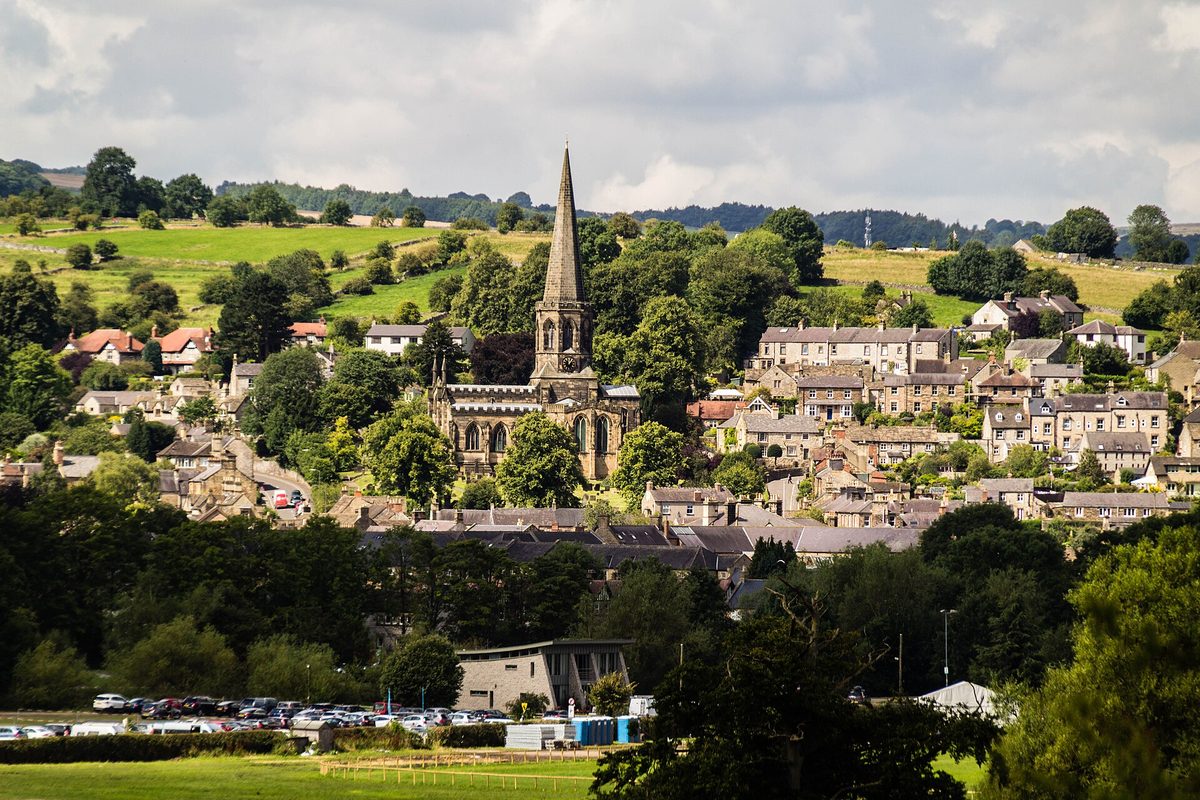
Buxton sits just on the edge of the park and feels like a different world: Georgian and Victorian grandeur, an opera house, the lovely Pavilion Gardens, and Poole’s Cavern on the outskirts. It’s the best-connected town if you’re coming from Manchester, because it’s the terminus of its own railway line. If you want comfort, architecture and easy rail access over rugged walking, Buxton’s your spot.
Matlock and Matlock Bath: the southern gateway
Down in the south, Matlock and quirky Matlock Bath give you cable cars, illuminated riverside evenings in autumn, and a station on a branch line from Derby. Handy if you’re approaching from the south or the East Midlands, and a good launch point for Dovedale and the southern dales.
For more on choosing the right kind of bolthole anywhere in the country, my broader notes on where to stay in England are worth a skim.
The Best Walks, Sorted by How Hard They Are
This is the heart of any Peak District trip. I’ve organised the classics by effort, not by area, so you can match a walk to how energetic you’re feeling. Times and distances are approximate; weather in the Dark Peak can turn a moderate walk into a serious one.
Gentle and family-friendly
Dovedale stepping stones (White Peak). The most photographed spot in the park, and rightly loved. The stones hop you across the River Dove beneath the pointed hill of Thorpe Cloud. You can keep it short and flat along the river, or make a circular route of around 5.5 miles (give it 2 to 3 hours) by adding Thorpe Cloud. It gets very busy on sunny weekends, so go early. Great for kids; see also my easy walks in England round-up.
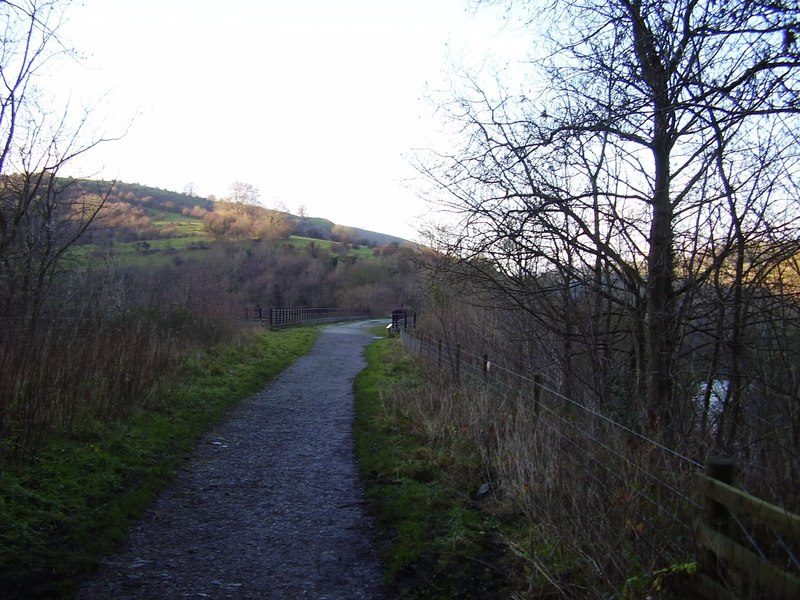
Monsal Trail (White Peak). Not a hill walk at all but a former railway line, now a flat, traffic-free path running roughly 8.5 miles between near Bakewell and Blackwell Mill, through lit tunnels and over the spectacular Headstone Viaduct above Monsal Dale. Walk a section or hire a bike at either end (about 45 minutes to cycle the whole thing). The Headstone Viaduct view is one of the great Peak District photographs.
Thor’s Cave (White Peak). A dramatic gaping cave mouth high in the Manifold Valley. The shortest route up from the valley is only about 1.5 miles round trip but it’s a steep, occasionally slippery scramble at the end; a fuller circular loop from Wetton runs around 5.5 miles. The view back down the valley from the cave mouth is worth every panted breath.
Moderate: the ones most people come for
Mam Tor and the Great Ridge (Dark Peak). If you do one walk, do this. From Castleton or Edale, you climb the “Shivering Mountain” of Mam Tor, then walk the airy Great Ridge for nearly 3.5km to Hollins Cross and Lose Hill, with the Edale Valley on one side and the Hope Valley on the other. The full circular is around 6.5 to 8 miles. On a clear day it’s one of the finest ridge walks in England, and the paved path up Mam Tor itself makes the steep bit manageable.
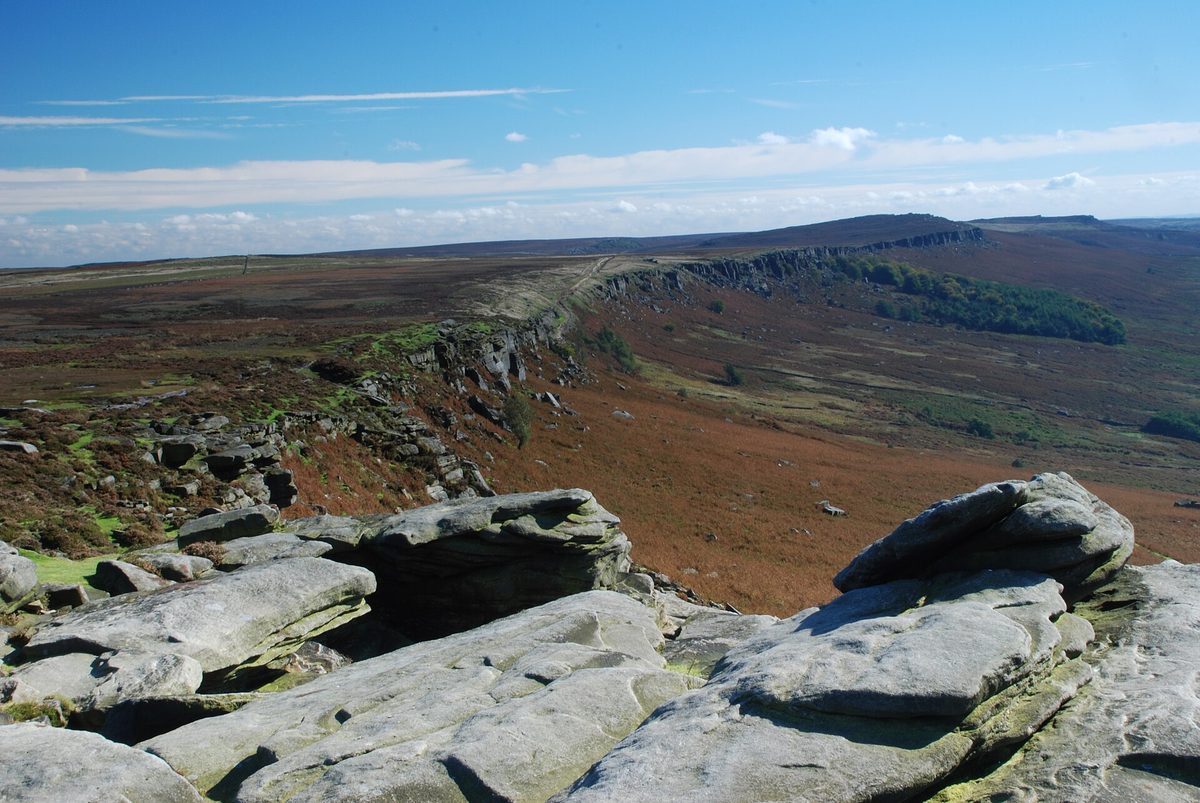
Stanage Edge (Dark Peak). A long gritstone escarpment above Hathersage, beloved of rock climbers. A short circular taking in the edge is about 3 miles and an hour or two; the views west over the moors are huge, and the millstones abandoned at the base are wonderfully atmospheric. Easy to combine with a Hathersage base.
Strenuous: for confident walkers only
Kinder Scout (Dark Peak). The roof of the Peak District, a high peat plateau famous for the 1932 Mass Trespass that helped win public access to the hills. The classic route from Edale climbs Jacob’s Ladder, loops along the plateau edge past Kinder Downfall, and comes back down, around 8 to 9 miles with real ascent. The top is a maze of peat groughs where the path vanishes and a map, compass and the skill to use them are genuinely needed in cloud. Save it for good weather and pack for cold even in summer.
If a structured trip with a guide or a planned route sounds more your speed, look at walking holidays in England, and for context on how Peak District hiking compares nationally, England’s national parks for hiking is the place to start.
Caves, Caverns and Great Houses
Walking is only half the story. When your legs need a rest, the Peak District has world-class underground and stately-home attractions.
Castleton’s show caverns
Castleton sits on the only place in the world where Blue John stone is found, a banded purple-and-yellow mineral, and that geology gave it four spectacular show caves. Treak Cliff Cavern is my favourite for the Blue John veins and stalactites (admission around £16 for adults as of 2026). Blue John Cavern is the largest network. Speedwell Cavern is reached by an eerie boat trip along a flooded mine tunnel. And Peak Cavern, with its enormous natural entrance once full of rope-makers’ cottages, has the unforgettable old nickname “the Devil’s Arse.” Even one cavern visit is a memorable couple of hours; on a rainy day they’re a godsend.
Chatsworth House
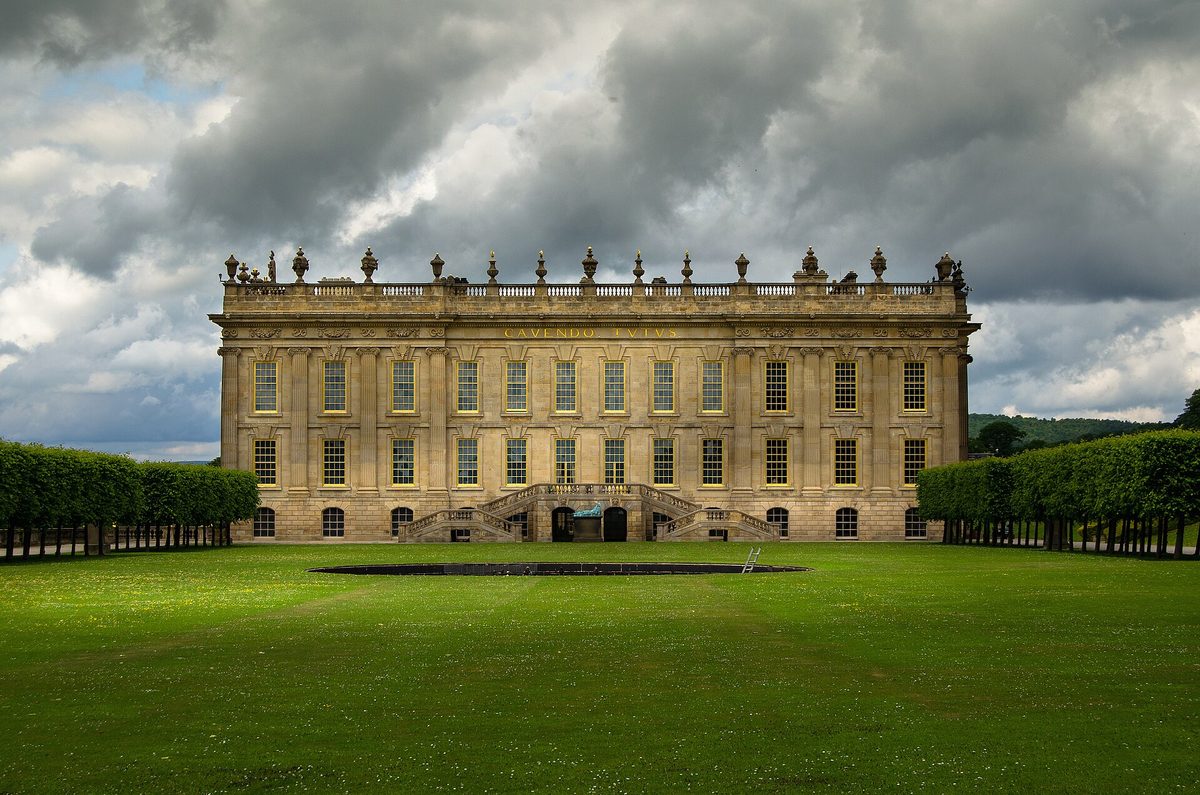
The big one. Chatsworth, seat of the Dukes of Devonshire, is a vast Baroque palace stuffed with art, set in gardens with trick fountains and a famous cascade, and surrounded by parkland you can roam free. Budget a half-day at least. Opening is roughly 10:00 to 16:30 in season, with house-and-garden tickets around the high £20s for adults (book online, and your parking can be included). The grounds and farmyard alone fill a happy family day; see my notes on England with kids.
Haddon Hall
If Chatsworth is grand, Haddon Hall is romantic. A beautifully preserved medieval and Tudor manor, over 900 years old, with Elizabethan walled gardens tumbling with roses in June. It’s been a film location many times (it does a very convincing Jane Eyre and Pride and Prejudice), and it’s open seven days a week through the 2026 season. Smaller and quieter than Chatsworth, and all the more atmospheric for it.
Getting There and Around Without a Car
Here’s where the Peak District genuinely shines compared with most national parks: you can visit it entirely by public transport. Doing the Peak District without a car is not a compromise here, it’s a great way to travel, and it lets you do linear walks (catch a train at one end, walk to a station at the other).
Trains into the park
The star is the Hope Valley line, the Northern Trains service that runs roughly hourly between Manchester Piccadilly and Sheffield, slicing straight through the heart of the Dark Peak. The villages with their own stations on this line are, west to east: Edale, Hope, Bamford, Hathersage and Grindleford. Memorise that list, because it’s the backbone of any car-free trip.
Rough journey times as of 2026: Edale is about 44 minutes from Manchester and 32 from Sheffield; Hope is about 49 minutes from Manchester and 25 from Sheffield. Sheffield is the closer gateway for the eastern stations.
Separately, the Buxton line runs from Manchester Piccadilly to Buxton (the end of the line) through fine scenery, serving the western High Peak. And a branch line from Derby reaches Matlock in the south. For the nuts and bolts of buying tickets and railcards, my England train travel guide covers it.
The one to remember: Castleton has no station
This trips people up constantly, so I’ll say it plainly: Castleton does not have a railway station. You get there from Hope station, which is the nearest, by a local bus or a walk of around two miles up the valley. It’s an easy, pretty walk if the weather’s kind. Edale, by contrast, does have a station right in the village, which is why hikers love it.
Buses to fill the gaps
Buses connect the bits the trains don’t. Service 62, for example, links Buxton, Chapel-en-le-Frith, Edale, Hope and Castleton, and connects with trains. Other services run from Sheffield, and the Trans Peak corridor links Buxton, Bakewell and Matlock down to Derby, which is how car-free travellers reach Bakewell and the great houses. Bus frequencies thin out on Sundays and in winter, so check timetables the night before. For the strategy of stitching trains and buses together across the country, see travelling around England without a car.
Driving and parking, if you must
If you do drive, the trade-off is freedom for the southern dales versus parking pain at honeypots. Castleton, Edale, Bakewell and the Dovedale car park all fill by mid-morning on sunny weekends, and parking is typically a few pounds for a few hours. Honestly, for the popular Hope Valley, the train is less stressful than hunting for a space.
When to Go: The Peak District Through the Seasons
The Peak District is a year-round destination, but each season is a different trip.
Spring (April to June) is my favourite: lengthening days, lambs in the fields, dales lined with wildflowers, and Haddon Hall’s gardens coming into bloom. Late June gives you nearly 17 hours of daylight to play with.
Summer (July and August) has the warmest, most reliable weather and the longest evenings, but it’s also the busiest: Bakewell, Castleton and Dovedale heave, and accommodation books up. Walk early, eat late.
Autumn (September to November) is glorious for colour, with the woods around Chatsworth and the dales turning gold and the crowds thinning after the school holidays. The light is beautiful for photography. If autumn tempts you, I’ve written more on England in autumn.
Winter (December to February) strips the park back to something stark and beautiful. The White Peak dales are atmospheric and walkable, but the high Dark Peak moors (Kinder especially) demand proper kit, navigation skill and respect; days are short, weather can be brutal, and some buses run reduced timetables. For wider national planning, my best time to visit England guide puts the Peak District in context.
Food and Drink: More Than Just the Pudding
You will eat well here, and you must, of course, settle the great Bakewell debate.
The Bakewell pudding is the original and the local point of pride: a buttery puff-pastry case, a layer of jam, and a rich, almost gooey almond-and-egg custard filling. Have it warm with cream. The Bakewell tart is the supermarket version’s ancestor: a shortcrust case, jam, and a firmer almond sponge on top, often iced. They are genuinely different things, and Bakewell folk will gently correct you if you muddle them. Try the pudding at one of the historic pudding shops in town.
Beyond that, the Peak District does excellent walkers’ pubs (think log fires, local ale and a slab of pie after a wet ridge), good farm shops, Hartington’s cheeses, and a growing crop of smart cafés in Bakewell, Hathersage and Buxton. A pub lunch in Castleton after Mam Tor is one of life’s small perfect things.
A Suggested 3-Day Itinerary (Car-Free)
To make this concrete, here’s how I’d spend three car-free days, basing myself in Hathersage or Castleton.
Day 1, the big walk. Train to Hope, bus or walk to Castleton, and tackle Mam Tor and the Great Ridge. Reward yourself with a Castleton pub lunch, then drop into Treak Cliff Cavern in the afternoon.
Day 2, gentler and grander. Bus toward Bakewell, walk a stretch of the Monsal Trail (or hire a bike), eat a Bakewell pudding, then visit Chatsworth House or Haddon Hall in the afternoon.
Day 3, edges and easing off. From Hathersage, walk up to Stanage Edge for the views, then spend the afternoon mooching the village or riding the train one stop to Grindleford for a famous café stop at the old station.
Want a longer or differently themed plan? My main England travel guide helps you slot the Peak District into a bigger trip.
Final Thoughts
What keeps pulling me back to the Peak District is how much it packs into so little space, and how generous it is to people without a car. In a single weekend you can stand windblown on a high gritstone ridge, sit underground among veins of Blue John, wander a Baroque palace, walk a flat trail through a tunnel-lit dale, and finish with pudding and a pint by a fire. Few places give you that range, and almost none let you do it stepping off a train.
If you take one thing from this Peak District travel guide, let it be this: book a base near a Hope Valley station, do both halves of the park, and don’t over-schedule. Leave room for the unplanned pub, the longer-than-expected view, the second pudding. The Peak District rewards the unhurried. For where to go next in the region, my Yorkshire Dales travel guide is the natural follow-on.
Research and Source Notes
Walk distances, ridge and trail lengths, and the Dark Peak/White Peak distinction are drawn from the Peak District National Park Authority and the park’s own walking and visiting resources; treat all distances and times as approximate, as conditions vary. Train routes, the Hope Valley line station list (Edale, Hope, Bamford, Hathersage, Grindleford) and rough journey times are based on National Rail and Northern Trains information current as of 2026; always confirm live timetables, as services thin out on Sundays and in winter. Cavern admission figures (for example, Treak Cliff Cavern around £16 for adults) and great-house ticket and opening details for Chatsworth and Haddon Hall are taken from those attractions’ official sources and are hedged as “around” and “as of 2026”; prices and hours change seasonally, so book and verify directly before you travel. Property and parkland access details follow National Trust guidance for the sites it manages in the area.
Photo Credits
- Hikers on the grassy summit ridge of Mam Tor looking over the Hope Valley, a Peak District travel guide highlight — Photo: Chris Morgan / CC BY-SA 2.0 via Wikimedia Commons. Source
- The medieval stone bridge over the River Wye in Bakewell with traditional shops behind — Photo: Peter McDermott / CC BY-SA 2.0 via Wikimedia Commons. Source
- The long gritstone escarpment of Stanage Edge with climbers and moorland views at golden hour — Photo: Rob Bendall (Highfields) / Attribution via Wikimedia Commons. Source
- The grand Baroque facade of Chatsworth House reflected in the River Derwent with formal gardens — Photo: Rprof / CC BY-SA 3.0 via Wikimedia Commons. Source
- The stone Headstone Viaduct on the Monsal Trail arching across the green valley of Monsal Dale — Photo: Ashley Dace / CC BY-SA 2.0 via Wikimedia Commons. Source
Frequently asked questions
How many days do you need in the Peak District?
Three to five days is the sweet spot. A day-trip from Manchester or Sheffield works for a taster, but to enjoy both the wild Dark Peak and the gentle White Peak, with a couple of walks, a cavern and a great house, you want at least three days. A week lets you slow right down and never feel rushed.
Can you visit the Peak District without a car?
Yes, easily, and it's one of the most car-friendly-free national parks in England. The Hope Valley railway line drops you straight into the heart of the park, with buses filling the gaps. Base yourself near a station like Hathersage or Edale, and you can do superb linear walks between stations without driving at all.
Which Peak District villages have train stations?
On the Hope Valley line, the villages with their own stations are Edale, Hope, Bamford, Hathersage and Grindleford. Buxton and Matlock have stations on separate lines. Note that Castleton does not have a station; you reach it by bus or a two-mile walk from Hope.
What is the most famous walk in the Peak District?
Mam Tor and the Great Ridge is the signature walk: a roughly 6.5-mile circular from Castleton or Edale along an airy ridge with views over two valleys. Kinder Scout is the most challenging classic, and Dovedale stepping stones the gentlest crowd-pleaser. Stanage Edge is the best short option.
Is the Peak District better than the Lake District?
They're different. The Lake District has bigger mountains and lakes; the Peak District has easier access by train, gentler valleys alongside wild moors, and more variety in a small area. For a head-to-head, see my Lake District vs Peak District comparison. Honestly, for a car-free short break, the Peak District often wins.
What food is the Peak District known for?
The Bakewell pudding above all, a jammy almond-custard pastry that originated in Bakewell and shouldn't be confused with the cakier Bakewell tart. Beyond that, expect hearty walkers' pubs, Hartington cheeses, local ales and excellent farm shops scattered through the dales.