Sheet 18 · England Road Trips · 16 min read
Yorkshire Road Trip
Plan the perfect Yorkshire road trip: a routed loop linking York, the Dales, the moors and the coast with real drive times, bases and viewpoints.
 Sheet 18
Contents 10 sections
The first time I drove over the Buttertubs Pass, I had to stop the car. Not for a photo, though I took plenty. I stopped because the road simply tips off the edge of the world, drops into Swaledale, and leaves you blinking at a valley so green it looks colour-graded. That single ribbon of tarmac is the reason I keep coming back to Yorkshire with a steering wheel in my hands rather than a train ticket in my pocket.
A Yorkshire road trip is best done as a loop from York, taking in three completely different landscapes: the limestone drama of the Yorkshire Dales, the heather plateau of the North York Moors, and a fishing-village coastline around Whitby. Allow five to seven days, base yourself in two or three towns rather than packing every night, and let the roads themselves be the attraction.
That, in a nutshell, is the trip. Below I’ll route it properly, leg by leg, with the bases I actually use, rough drive times, and the viewpoints worth the detour.
Quick Answer: How to Plan a Yorkshire Road Trip
A Yorkshire road trip works best as a clockwise loop from York: head west into the Yorkshire Dales (Wensleydale, Swaledale, Malham), drop south to Brontë country and the spa town of Harrogate, then swing east across the North York Moors to the coast at Whitby, Robin Hood’s Bay and Scarborough before returning to York. Five to seven days is ideal.
You can do a stripped-back version in a long weekend, but the magic of this region is the contrast. Within a single county you get cathedral-grey cities, dry-stone-walled dales, purple moorland, and cliff-edge harbours. Trying to rush them all into three days means you spend the trip in the car instead of on the moor tops. Give it a week if you can.
A few things worth saying upfront. You absolutely need a car. Public transport between the Dales and the Moors is slow and patchy, and half the joy here is the driving itself. The roads are narrow, walled, and often single-track with passing places, so journeys take longer than the mileage suggests. And the weather changes by the hour, so pack for four seasons even in July.
At a Glance: The Yorkshire Loop
Here’s the whole circuit laid out. Drive times are rough and assume you’re not stuck behind a tractor or a coach, which you will be at least once. Treat them as “around” figures.
| Leg | Area | Rough drive time | Highlights |
|---|---|---|---|
| 1. York (base) | Historic city hub | — | York Minster, the Shambles, city walls, Railway Museum |
| 2. York to Hawes | Wensleydale & Swaledale | ~1 hr 45 min | Aysgarth Falls, Wensleydale Creamery, Hardraw Force |
| 3. Buttertubs loop | Northern Dales | ~1 hr (plus stops) | Buttertubs Pass, Thwaite, Ribblehead Viaduct |
| 4. Hawes to Malham | Southern Dales | ~1 hr 15 min | Malham Cove, Gordale Scar, Settle, Ribblesdale |
| 5. Malham to Haworth | Brontë country | ~50 min | Brontë Parsonage, Top Withens, Worth Valley Railway |
| 6. Haworth to Harrogate | Spa towns & abbeys | ~1 hr | Bolton Abbey, Harrogate, Fountains Abbey nearby |
| 7. Harrogate to Helmsley | Moors gateway | ~1 hr 15 min | Helmsley Castle, Rievaulx Abbey, Hutton-le-Hole |
| 8. Helmsley to Whitby | North York Moors drive | ~1 hr | Blakey Ridge, Goathland, moors steam railway |
| 9. Whitby to Scarborough | Yorkshire coast | ~50 min | Whitby Abbey, Robin Hood’s Bay, Staithes, Scarborough |
| 10. Scarborough to York | Return | ~1 hr 15 min | Castle Howard detour, Vale of York |
For a sense of how Yorkshire fits into a longer trip, my guide to driving distances in England puts these legs in context, and this loop pairs neatly with the wider north England road trip if you’ve got more time.
York: The Hub I Always Start From
York is the obvious base, and for once the obvious choice is the right one. It sits roughly in the middle of the county, has fast rail links if you’re flying in and renting a car here, and it’s a genuinely brilliant city in its own right rather than just a launchpad.
Give it a full day before you drive anywhere. Climb the central tower of York Minster for the rooftop view, walk a stretch of the medieval city walls (the section near Monk Bar is my favourite), and get lost in the Shambles, the lopsided medieval street that allegedly inspired Diagon Alley. The National Railway Museum is free and far better than that makes it sound, especially if anyone in the car is even mildly into trains, which by the end of this trip they will be.
One practical note. York’s centre is a nightmare to drive in and parking is dear. Use a Park and Ride on the edge of town, leave the car, and walk in. As of 2026 the Park and Ride sites are cheap and run every ten minutes or so. York is one of England’s great short-break destinations in its own right, and I rank it among the best cities to visit in England for exactly this reason.
When you’re ready to leave, point the car west and northwest towards Wensleydale. The scenery sharpens within forty minutes.
The Yorkshire Dales: Walls, Waterfalls and That Pass
This is the heart of the trip for me, and the section I’d protect if I had to cut anything. The Yorkshire Dales road trip portion deserves at least two nights, and Hawes makes the perfect base.
Wensleydale and a base in Hawes
The drive from York to Hawes takes around an hour and three quarters and gets prettier with every mile. Hawes is a proper working dales town: a cobbled market, sheep wandering the edges, and the Wensleydale Creamery where they’ve been making that crumbly white cheese for centuries. Do the Cheese Experience, buy a wedge for the car, and don’t judge me.
Just outside town, Aysgarth Falls is a trio of broad limestone cascades stepping down the River Ure, easy to reach and lovely in spate after rain. A little further, Hardraw Force is the highest single-drop waterfall in England above ground, over 100 feet, tucked behind a pub. You pay a small fee through the inn to reach it, around a few pounds as of 2026, and it’s worth it.
The Buttertubs Pass and Swaledale
Now for the road I mentioned at the top. The Buttertubs Pass runs roughly five and a half miles between Hawes and Thwaite in Swaledale, climbing over wild open moor with sheer drops and tight single-track sections walled in by stone. Jeremy Clarkson once called it England’s only truly spectacular road, and the Tour de France climbed it in 2014, which tells you something. The “buttertubs” themselves are deep limestone potholes near the summit where farmers once kept butter cool on market days.
Drive it slowly. Use the passing places. Pull over at the top and walk fifty yards onto the moor for the silence. Then drop into Swaledale, the loveliest of all the dales in my opinion, with its hay meadows, barns, and tumbling becks. Loop back through Thwaite and Muker, or push on for the Ribblehead detour described next.
Ribblehead Viaduct and the southern dales
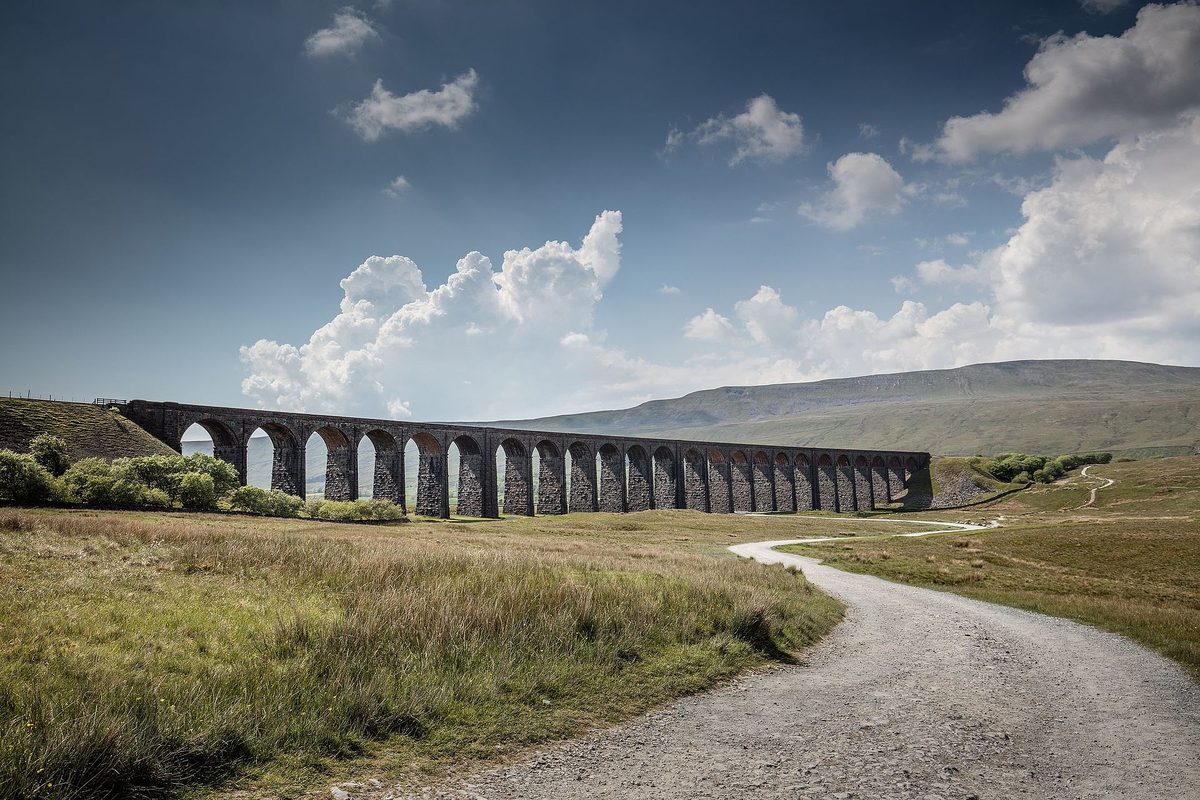
West of Hawes, about twenty minutes on the B6255, stands the Ribblehead Viaduct: twenty-four stone arches striding 400 metres across boggy Batty Moss, 100-odd feet above the ground. It carries the Settle to Carlisle line, the last great mainline railway built in Britain, and the construction cost so many navvies’ lives that the railway paid to extend the local graveyard. Time it for a passing train if you can, then walk out beneath the arches with Whernside looming behind.
From here you can loop south towards Settle and then to Malham, the limestone-and-pavement showpiece of the southern Dales.
Malham Cove and Gordale Scar
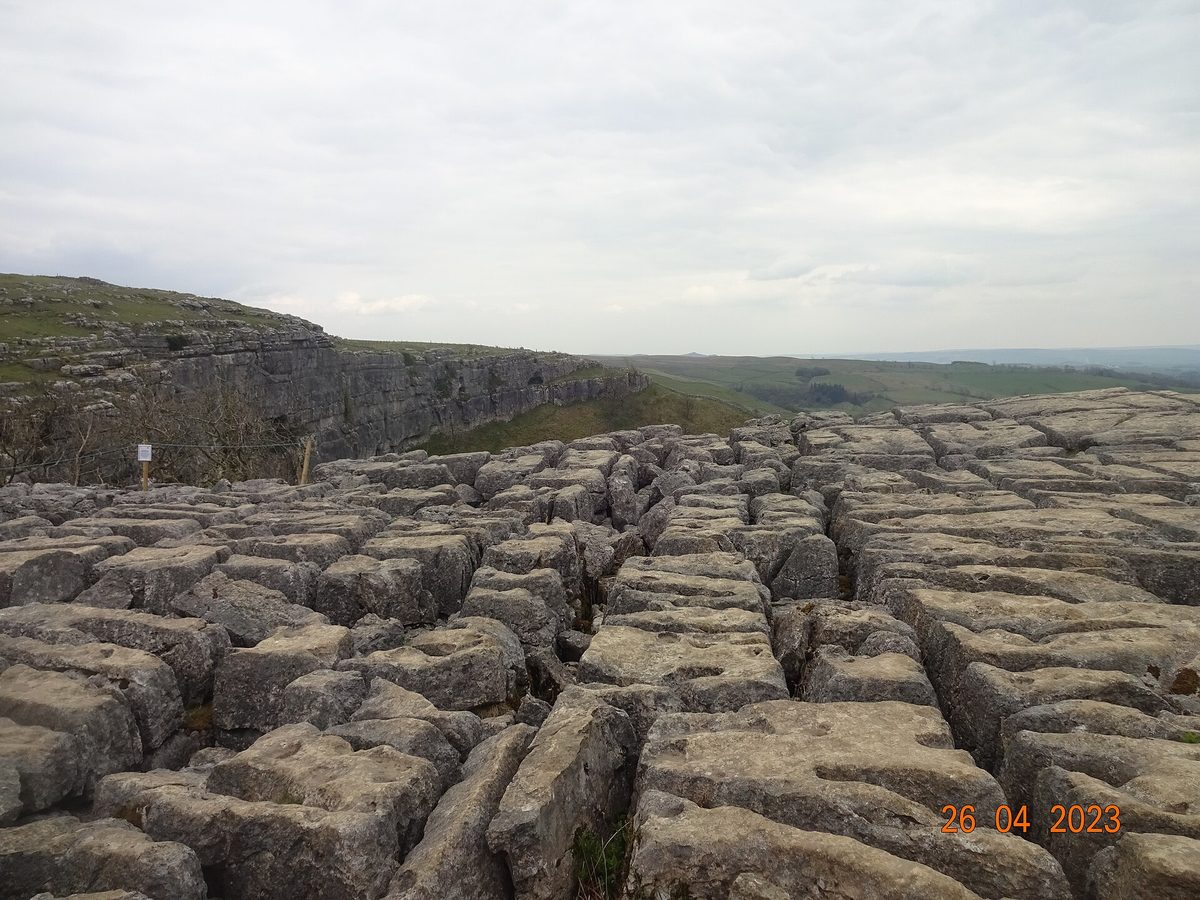
Malham village is tiny and gets busy, so arrive early. Malham Cove is a 230-foot curved cliff of pale limestone with a famous “pavement” of fissured rock along the top, the bit that doubled as a filming location for a certain boy wizard’s camping scenes. The classic walk loops the cove, the amphitheatre gorge of Gordale Scar, and the pretty waterfall of Janet’s Foss in around five miles. It’s one of the finest short walks in the country and a highlight of any England national parks hiking plan.
The Dales are, frankly, one of the most beautiful places in England, and if you only have time for one landscape on this loop, make it this one.
Brontë Country and the Spa Towns
From Malham it’s under an hour southeast to Haworth, the cobbled mill village that the Brontë sisters called home. This is a gentle, atmospheric detour rather than a long one, and it bridges the wild Dales with the gentler country around Harrogate.
Haworth
Park at the top and walk down the steep, cobbled Main Street. The Brontë Parsonage Museum, the family’s old home, holds the most important collection of Brontë material anywhere and is genuinely moving even if you’ve never read the novels. Behind the village, the moors roll out towards Top Withens, the ruined farmhouse said to have inspired Wuthering Heights, a boggy but rewarding walk. The Keighley and Worth Valley Railway runs heritage steam trains through the valley if you fancy a ride.
Bolton Abbey and the road to Harrogate
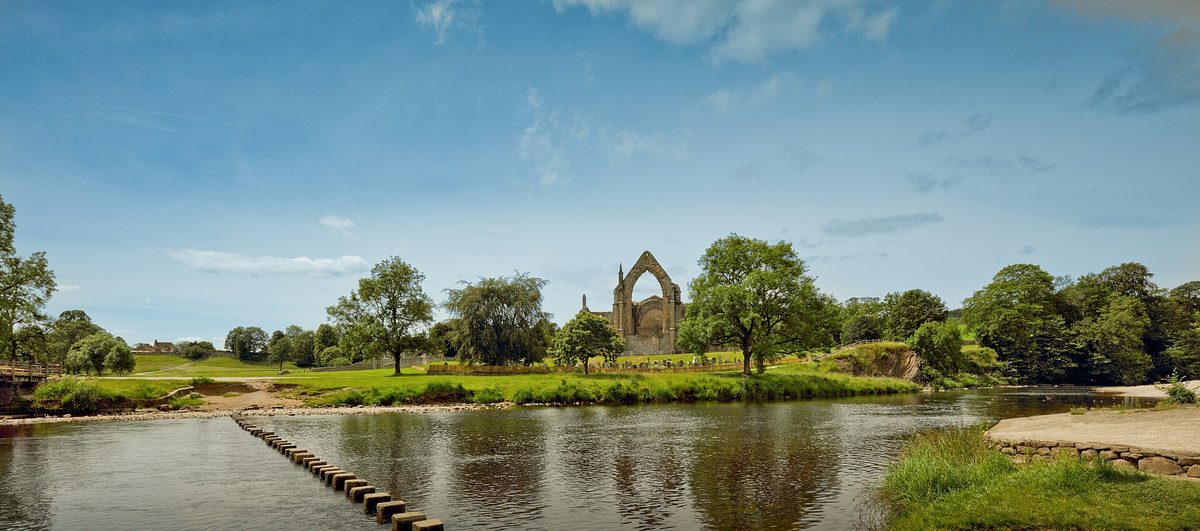
Heading east towards Harrogate, break the drive at Bolton Abbey, where the romantic ruins of a priory sit on a bend of the River Wharfe. Don’t miss the Strid, a deceptively narrow, dangerous channel where the whole river funnels through a gap you could almost step over, though absolutely do not try. It’s a beautiful, slightly eerie spot.
Harrogate
Harrogate is the genteel counterpoint to all that moorland: a Victorian spa town of elegant terraces, floral gardens and proper afternoon tea. Take the waters’ history at the Pump Room Museum, brave the gloriously Moorish Turkish Baths if you’ve pre-booked, and wander the boutiques of the Montpellier Quarter. Bettys tea rooms here are an institution, and yes, there’ll be a queue. Harrogate is one of my favourite historic towns in England, and a relaxed night here is the perfect halfway reset before the moors and coast.
The North York Moors: Heather, Steam and Big Skies
From Harrogate, drive northeast towards Helmsley, the handsome gateway town on the southern edge of the North York Moors. This is roughly an hour and a quarter, and the landscape shifts again, from dales to a vast open plateau of heather.
Helmsley, Rievaulx and Hutton-le-Hole
Helmsley has a ruined castle, a pretty market square, and excellent food. A couple of miles out, Rievaulx Abbey is the most complete and majestic abbey ruin in England, founded in 1132 and set in a hushed wooded valley. You can walk to it from Helmsley along the Cleveland Way, which I’d recommend over driving, as parking at Rievaulx is tight.
Then take the moors road north. The drive up over the open tops towards Hutton-le-Hole, a postcard village of greens and grazing sheep, is one of the loveliest stretches of the whole loop. The famous Lion Inn at Blakey Ridge sits at the highest point of the moors, a remote pub that’s a welcome stop in any weather.
The moors road and the steam railway
The classic North York Moors drive runs across the high heather on roads like the A169 and the moorland lanes around Goathland. Time your trip for mid-to-late August into September and the whole plateau turns deep purple with blooming heather, an astonishing sight that’s worth planning around.
Goathland is the postcard moors village, doubling as Hogsmeade in the first Harry Potter film and as Aidensfield in the old TV series Heartbeat. It’s also a stop on the North Yorkshire Moors Railway, the heritage steam line that runs eighteen miles between Pickering and Whitby via Grosmont. You can drive the moors and ride the train, or park at one station and let the steam do the work for a leg. Either way it’s a highlight, and worth checking the timetable in advance.
The Yorkshire Coast: Whitby, Robin Hood’s Bay and Beyond
Drop off the moors and you hit the sea at Whitby, the obvious base for the coastal leg. This is where a Yorkshire coast road trip earns its name, with a string of fishing villages strung along dramatic cliffs.
Whitby
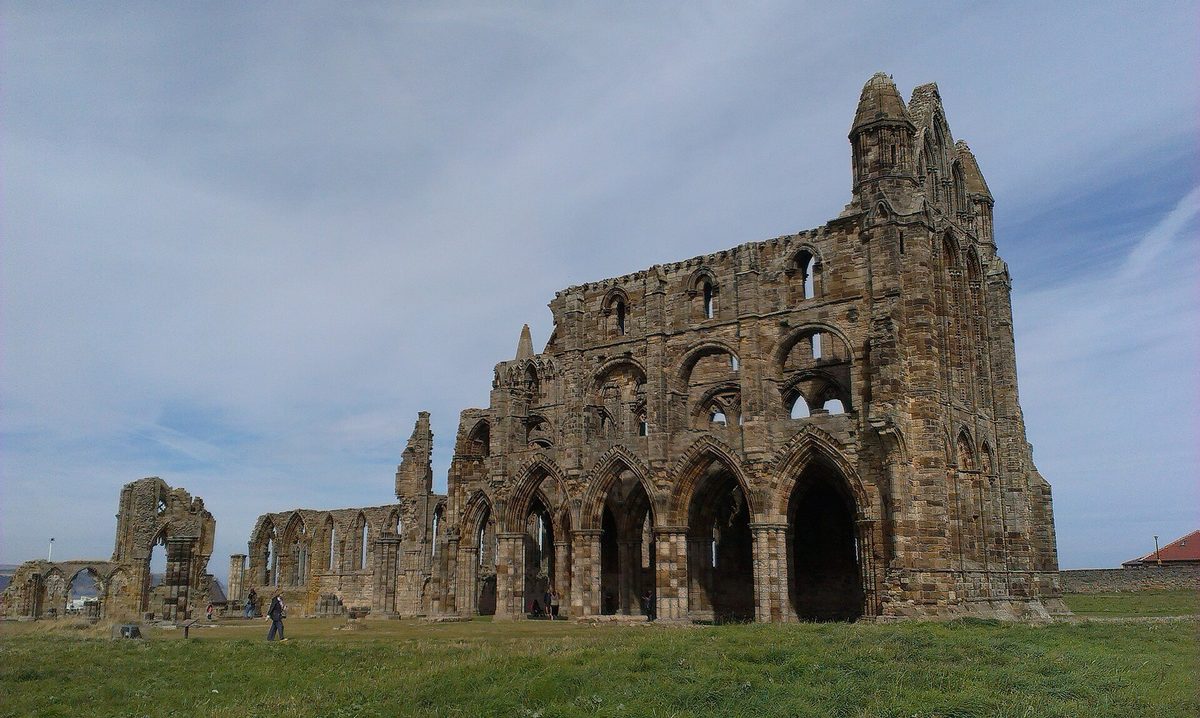
Whitby is wonderful: a working harbour split by the River Esk, red-roofed cottages, and the gaunt ruins of Whitby Abbey crowning the headland. The abbey, reached by the famous 199 steps from the old town, inspired Bram Stoker’s Dracula, and the place still has a faintly gothic edge that it leans into happily. Eat fish and chips by the harbour, browse for Whitby jet jewellery, and climb those steps at least once. Parking is easiest at the English Heritage car park near the abbey at the top.
Robin Hood’s Bay and Staithes
Just south, Robin Hood’s Bay is a tumble of cottages and smugglers’ alleys pouring down a cliff to a rocky shore. You must park at the top in the pay-and-display car parks and walk down the steep hill, as cars can’t get into the old village. It’s a five-mile, nine-minute drive from Whitby Abbey, and one of the prettiest villages on the English coast.
North of Whitby, tiny Staithes is its quieter twin: a cobbled, colour-washed fishing village wedged in a cleft of the cliffs, beloved of artists and the boyhood home of Captain Cook. It’s around twenty minutes’ drive. Both villages are firmly on my list of England’s hidden gems, even if the secret is well and truly out.
Scarborough
Round off the coast at Scarborough, Yorkshire’s grand old seaside resort, with two sweeping sandy bays split by a headland and a clifftop castle. It’s a different mood entirely, all amusements and ice cream and faded Victorian glamour, and a good place to let everyone unwind before the drive back. This stretch shows off some of the best of England’s coast and beaches, and there’s more in my guide to the wider England coast and beaches.
The Drive Back to York
From Scarborough it’s about an hour and a quarter back to York across the Vale of York. If you’ve got an afternoon spare, detour to Castle Howard, the colossal baroque stately home and grounds northeast of York, before returning the car. It’s a fitting grand finale, and it slots neatly onto this loop without much backtracking.
Practical Tips for Driving in Yorkshire
A few hard-won notes. The rural roads are narrow, walled, and often single-track with passing places, especially in the Dales and on the moors. Be ready to reverse to a passing place, give way to oncoming traffic with a wave, and never assume a blind summit is clear. Country lanes add real time, so a 68-mile hop can easily be two hours.
Fuel up in towns. Petrol stations are scarce up on the moors and in the high dales, and you don’t want to be running low on the Buttertubs Pass. If you’re hiring, pick the smallest car you’re comfortable in, as the lanes are tight, and check the policy on single-track and unsealed roads. My guide to renting a car in England covers the paperwork and insurance side.
For timing, late spring and early autumn are my favourites: long days, fewer crowds, and the moors at their best. Late August brings the heather but also the busiest roads. Decide what you’re optimising for, and the best time to visit England guide goes deeper on the seasonal trade-offs.
Final Thoughts
I’ve driven a lot of England, and Yorkshire is the trip I recommend most often, because it gives you three holidays in one. You get the cathedral hush of York, the limestone theatre of the Dales, the purple emptiness of the moors, and the gull-cry harbours of the coast, all stitched together by roads that are an attraction in their own right.
If you take one thing from this, it’s to slow down. Don’t try to tick every village in three days. Pick your bases, leave gaps in the plan, and pull over when a dale opens up in front of you, because it will. That stop on the Buttertubs Pass, all those years ago, is still the clearest memory I have of the place.
For the bigger picture, this loop is one chapter of my main England road trips guide. If you’re weaving Yorkshire into something longer, see the England road trip itinerary for 10 days, and if you’re tempted to push north afterwards, the neighbouring Lakes loop is an easy and gorgeous add-on. Wherever you go, sort your where to stay in England bases first, then let the roads do the rest.
Research and Source Notes
Drive times, distances and prices are approximate and hedged as of 2026; always check current opening hours, fees and timetables before you travel. Route legs and viewpoints are based on my own driving plus the following official and authoritative sources:
- Welcome to Yorkshire / Yorkshire.com (yorkshire.com) — regional guidance on York, Haworth, Harrogate, Helmsley and the coast.
- Yorkshire Dales National Park Authority (yorkshiredales.org.uk) — Buttertubs Pass, Ribblehead Viaduct, Malham Cove and Dales walking routes.
- North York Moors National Park Authority (northyorkmoors.org.uk) — moorland driving, heather seasons and the North Yorkshire Moors Railway.
- VisitBritain (visitbritain.com) — national context on driving in the UK, seasons and travel planning.
- North Yorkshire Moors Railway (nymr.co.uk) and English Heritage (english-heritage.org.uk) — heritage railway timetables and details for Whitby Abbey, Rievaulx Abbey and Helmsley Castle.
Photo Credits
- Aerial view of York Minster rising above the medieval rooftops at the start of a Yorkshire road trip — Photo: Mtaylor848 / CC BY-SA 4.0 via Wikimedia Commons. Source)
- Walkers on the curving limestone amphitheatre of Malham Cove in the Yorkshire Dales — Photo: lasagna165 / CC BY-SA 4.0 via Wikimedia Commons. Source
- The gothic ruins of Whitby Abbey silhouetted above the Yorkshire coast at dusk — Photo: aude / CC BY-SA 3.0 via Wikimedia Commons. Source
- A steam train crossing the 24 arches of Ribblehead Viaduct on a Yorkshire road trip — Photo: Michael D Beckwith (CC0) via Wikimedia Commons. Source
- The ruins of Bolton Abbey reflected in the River Wharfe in the Yorkshire Dales — Photo: Michael D Beckwith (CC0) via Wikimedia Commons. Source
Frequently asked questions
How many days do you need for a Yorkshire road trip?
Five to seven days is the sweet spot to comfortably link the Dales, the North York Moors and the coast without rushing. A long weekend works if you focus on one or two areas, while ten days or more lets you slow right down, add extra walks, and explore Brontë country and the spa towns properly along the way.
What is the best base for a Yorkshire road trip?
York is the best single base thanks to its central location and transport links, but for this loop I'd split nights. Use Hawes or Skipton for the Dales, Helmsley or Pickering for the North York Moors, and Whitby for the coast. Splitting bases means less backtracking and far more time actually out on the roads and trails.
Do you need a car to explore Yorkshire?
Yes, a car is essential for this kind of trip. Public transport between the Dales and the Moors is slow and infrequent, and many of the best villages, viewpoints and passes simply aren't reachable otherwise. The driving itself, particularly roads like the Buttertubs Pass, is a genuine highlight rather than just a way of getting around.
What is the best time of year for a Yorkshire road trip?
Late spring and early autumn offer long days, quieter roads and reliable scenery. For the famous purple heather on the North York Moors, aim for mid-to-late August into September, accepting busier roads in school holidays. Winter brings atmospheric, empty moors but short days and the risk of snow closing the high passes, so plan flexibly.
Is the Buttertubs Pass safe to drive?
Yes, the Buttertubs Pass is safe for any confident driver in good weather, but it is narrow, steep and single-track in places with sheer drops. Drive slowly, use the marked passing places, and avoid it in ice, fog or heavy snow when the high moorland road can be treacherous. In summer it is one of the most rewarding drives in England.
Can you combine the Yorkshire Dales and coast in one trip?
Absolutely, and doing so is the whole point of this loop. From the western Dales it is roughly two to three hours across the North York Moors to the coast at Whitby, with the moorland drive being a scenic leg in itself. Allow a full day with stops, and base yourself near the coast for a night or two to make the most of it.