Sheet 40 · England Castles and Historic Sites · 17 min read
Tudor England Travel Guide
My first-hand Tudor England travel guide: Hampton Court, Hever Castle, the Tower, Hardwick Hall and Kenilworth, with stories and rough 2026 prices.
 Sheet 40
Contents 8 sections
I came around the corner into Hampton Court’s Tudor kitchens on a grey November afternoon, and the first thing that hit me was the smell of woodsmoke. They keep the great fires lit. Standing there, watching the flames lick up a chimney that once roasted whole oxen for Henry VIII’s court, I finally understood why this period gets under people’s skin. The Tudors weren’t a textbook. They were a family of show-offs, schemers and survivors, and they left their fingerprints all over England in brick and stone.
Good Tudor England travel means following those fingerprints: the palaces Henry built to dazzle, the castle where Anne Boleyn grew up and the chapel where she was buried, the glittering houses Elizabeth’s courtiers raised to flatter her. This guide covers the human stories behind each place, what to actually see, rough prices hedged for 2026, and how to string a couple of days together around London and out into the Midlands. I’ve wandered most of these myself, and I’ll tell you where I’d spend my money.
Quick Answer: What Tudor England Travel Covers
Tudor England travel is about the period from 1485 to 1603 — the reigns of Henry VII, Henry VIII, Edward VI, Mary I and Elizabeth I. The headline sites are Hampton Court Palace and the Tower of London (both in or near the capital), Hever Castle in Kent, plus a cluster of Elizabethan houses further north: Hardwick Hall in Derbyshire, Kenilworth Castle in Warwickshire and Burghley House in Lincolnshire. Down on the south coast, Portsmouth’s Mary Rose tells the naval story.
A quick word on labels, because it trips people up. Tudor is post-medieval. The Middle Ages are usually said to end around 1485 when Henry Tudor won at Bosworth, so these places belong to a different world than the great fortress castles — more comfort, more glass, more swagger. If you want the older, draughtier story, I’ve put it in the medieval England itinerary. And if you’re choosing castles purely on grandeur, my castles ranking does that job. This article sticks to the Tudors.
All of these sit under the broader England castles and historic sites guide, which is the place to start if you’re mapping out a wider history trip and want to see how the eras fit together.
At a Glance: The Essential Tudor Sites
Here’s how the main sites stack up, with rough adult prices and the one thing I wouldn’t leave without seeing. Prices are indicative and as of 2026 — always check the official site before you book, because they nudge up most springs.
| Site | Tudor connection | Where | Rough ticket (adult, 2026) | Don’t miss |
|---|---|---|---|---|
| Hampton Court Palace | Henry VIII’s pleasure palace | SW London | Around £29 online | The Tudor kitchens and Great Hall |
| Tower of London | Anne Boleyn & Catherine Howard executed here | Central London | Around £37 online | The scaffold site and St Peter ad Vincula chapel |
| Hever Castle | Anne Boleyn’s childhood home | Kent | Around £25-26 (castle & gardens) | Anne’s own Book of Hours, signed |
| Hardwick Hall | Built by Bess of Hardwick | Derbyshire | Around £21 (house, halls & grounds) | The Long Gallery and “more glass than wall” facade |
| Kenilworth Castle | Robert Dudley’s bid to woo Elizabeth I | Warwickshire | Check English Heritage; around £16-17 | The recreated Elizabethan Garden |
| Burghley House | William Cecil, Elizabeth’s chief minister | Lincolnshire | Around £18-20 | The painted Heaven and Hell Rooms |
| The Mary Rose | Henry VIII’s flagship, raised from the seabed | Portsmouth | Via dockyard ticket, around £40+ | The hull itself, and Tudor sailors’ belongings |
| Sutton House | A Tudor merchant’s London townhouse | Hackney, London | Around £8 | Original linenfold oak panelling |
| Layer Marney Tower | England’s tallest Tudor gatehouse | Essex | Around £8-9 | Climbing the eight-storey tower |
| Shakespeare’s Birthplace | Tudor Stratford, born 1564 | Stratford-upon-Avon | Around £25 online | The half-timbered birth room |
If I had to pick three to build a trip around, it’d be Hampton Court for the spectacle, Hever for the intimacy of Anne Boleyn’s story, and Hardwick for the sheer Elizabethan ambition of it.
Henry VIII’s Palaces England Still Has
Hampton Court Palace
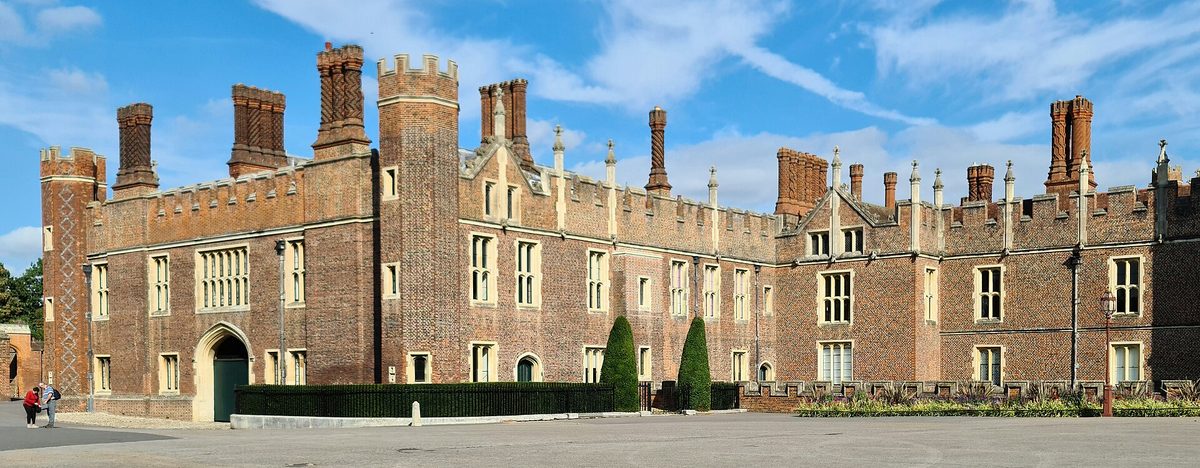
Start here. Hampton Court is the single best place in the country to feel the Tudor court, and it’s a comfortable day trip from central London — about 35 minutes by train from Waterloo to Hampton Court station, then a short walk over the bridge. Adult tickets run around £29 online as of 2026, per Historic Royal Palaces (hrp.org.uk), and booking ahead saves a little over the gate price. Give it the best part of a day.
The palace started life as Cardinal Wolsey’s, before Henry took it off him in 1529 as Wolsey fell from favour — your first lesson in how dangerous it was to outshine this king. Henry then poured money into it. The Great Hall, with its hammerbeam roof and Flemish tapestries, was where the court ate and showed off. The Chapel Royal is still a working chapel and still has its astonishing blue-and-gold vaulted ceiling.
But the Tudor kitchens are my favourite corner of any palace in England. They sprawl across dozens of rooms and were built to feed a court of around a thousand people, twice a day. On busy days costumed cooks have the fires going and something turning on a spit, and the whole place smells of it. Henry’s heir, the future Edward VI, was born here in 1537; his mother Jane Seymour died here days later. This is also where Henry was told of Catherine Howard’s alleged adultery, and the “Haunted Gallery” supposedly echoes with her screams. Whether or not you buy the ghost, the history is real.
One honest 2026 note: Historic Royal Palaces has conservation work running at Hampton Court, so a few rooms or routes may be closed or restricted — check before you go so you’re not disappointed by a shut door. The gardens and the famous maze are worth your time too, and if you’re under-budget there’s a £1 ticket scheme for visitors on certain UK benefits.
The Mary Rose and Tudor Portsmouth
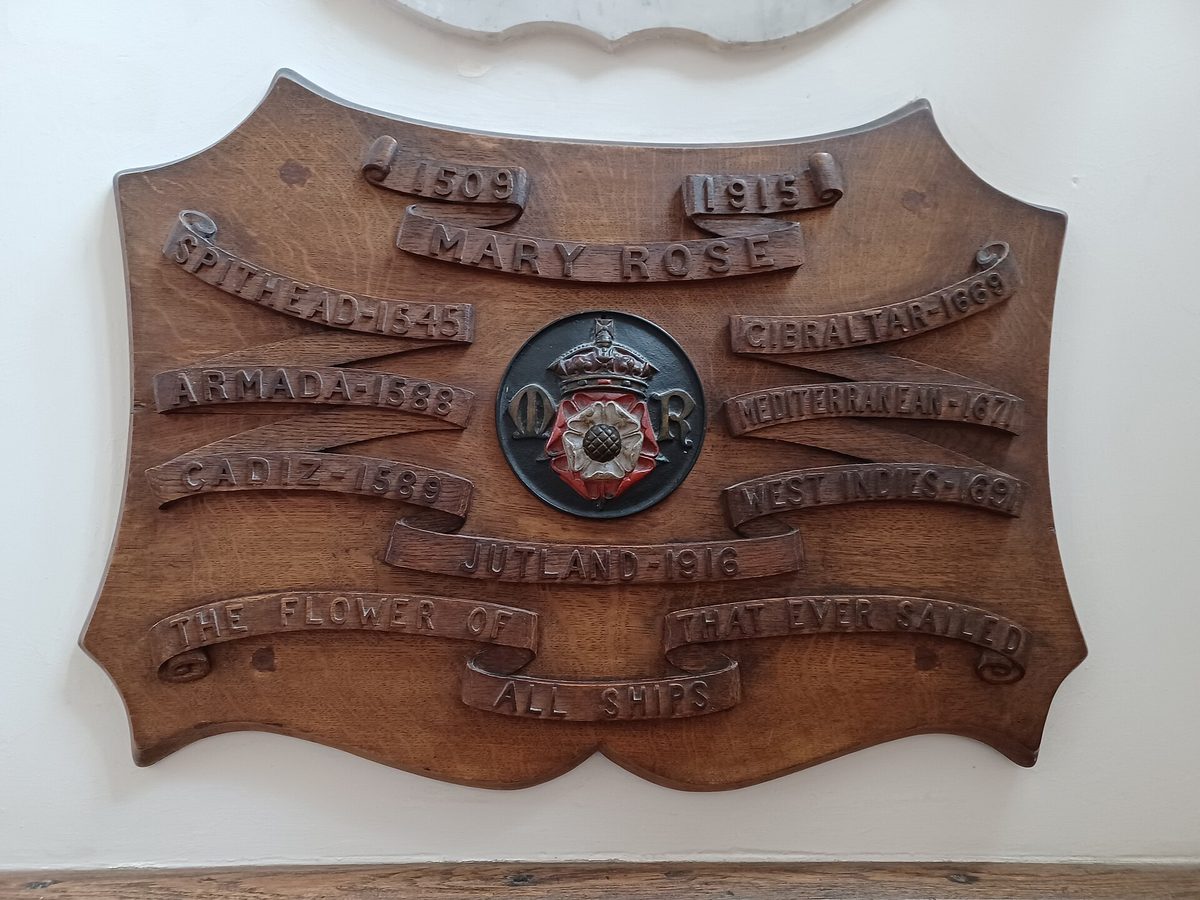
Down on the south coast, Portsmouth holds the most haunting Tudor object I know: the Mary Rose, Henry VIII’s flagship, which heeled over and sank in the Solent in 1545 while the king reportedly watched from shore. She lay in the silt for over 400 years until she was raised in 1982 in one of the great feats of marine archaeology.
What you see now is a huge slice of the actual oak hull, conserved and lit, with thousands of recovered objects laid out alongside — longbows, a barber-surgeon’s tools, leather shoes, even the skeleton of the ship’s dog. It puts you closer to ordinary Tudor lives than any palace. The Mary Rose sits inside Portsmouth Historic Dockyard, and you visit it on a dockyard ticket that also covers HMS Victory and other ships; reckon on around £40 or more for an adult, valid for a year, as of 2026 (check maryrose.org and the dockyard site). Portsmouth is roughly 90 minutes to two hours by train from London Waterloo, so it’s a long but doable day.
Anne Boleyn and the Six Wives
Hever Castle
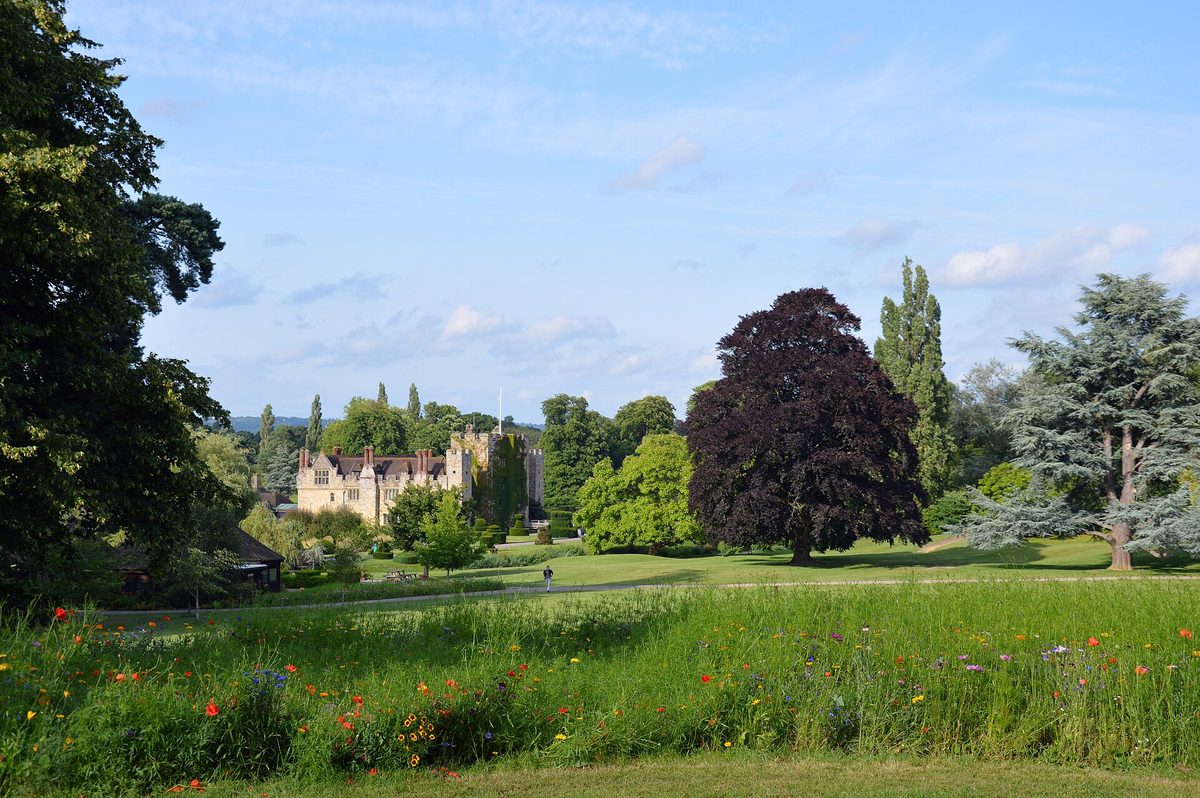
If Hampton Court is about the king’s power, Hever is about the woman who upended it. This moated castle in the Kent countryside was the childhood home of Anne Boleyn, and walking its low, panelled rooms is the closest you’ll come to her as a real person rather than a tragic headline. Adult tickets for the castle and gardens are around £25-26 online as of 2026, per the official site (hevercastle.co.uk), with a cheaper gardens-only option.
The treasure here is upstairs: two illuminated Books of Hours that belonged to Anne, one of them inscribed in her own hand. There’s also one of the finest collections of Tudor portraits in private hands, and a long-gallery exhibition telling her story. After Anne’s fall, in a twist the Tudors would have appreciated, the castle later passed to Anne of Cleves — wife number four — as part of her divorce settlement. So two of Henry’s queens are stitched into this one house.
Hever is about 40 minutes by train from London Bridge to Edenbridge or Hever station, then a taxi or a walk, and it pairs beautifully with the wider day trips from London circuit. The gardens are genuinely spectacular in their own right — a Tudor herb garden, a yew maze, and a vast lake the Astor family added when they restored the place in the early 1900s. Honestly, I’d give the grounds as much time as the house.
The Tower of London: Where the Story Ended
The Tower is a thousand years of history, but its Tudor chapters are the ones that draw the crowds. This is where Anne Boleyn was beheaded in 1536, brought low less than three years after she’d been crowned queen at Westminster. Catherine Howard, wife number five, followed her to the block in 1542. Both women are buried under the floor of the little Chapel Royal of St Peter ad Vincula, just yards from where they died — a detail that stops most people cold when they realise it.
A glass memorial now marks the approximate scaffold site on Tower Green. It’s a quiet, oddly moving spot in the middle of a very busy fortress. The Yeoman Warder tours, included in your ticket and led by genuinely funny guides, lean hard into the Tudor stories, and they’re the best free thing in London. Adult tickets are around £37 online as of 2026, per Historic Royal Palaces, rising a little at the gate; the Tower opens daily from 9am with last admission mid-afternoon, so go early.
For the architecture and the medieval bones of the place, I treat the Tower as a castle too — there’s more on that in my castles guide. But for a Tudor trip, come for the human tragedy, and don’t skip the chapel.
While we’re on the wives: if you want to complete the set, Katherine Parr — the one who survived him — is buried at Sudeley Castle in Gloucestershire, and Catherine of Aragon lies in Peterborough Cathedral. Both make worthy detours if you’re a serious Tudor pilgrim, though I’d anchor a first trip on Hampton Court, Hever and the Tower.
Elizabethan Houses to Visit
Elizabeth I never married, and her long reign (1558-1603) produced a building boom of a particular kind: the “prodigy house,” a vast, glittering pile raised by an ambitious courtier in the hope the queen might visit on one of her summer progresses. These are some of the most ambitious Tudor palaces England ever produced, and they’re where the period really shows off.
Hardwick Hall
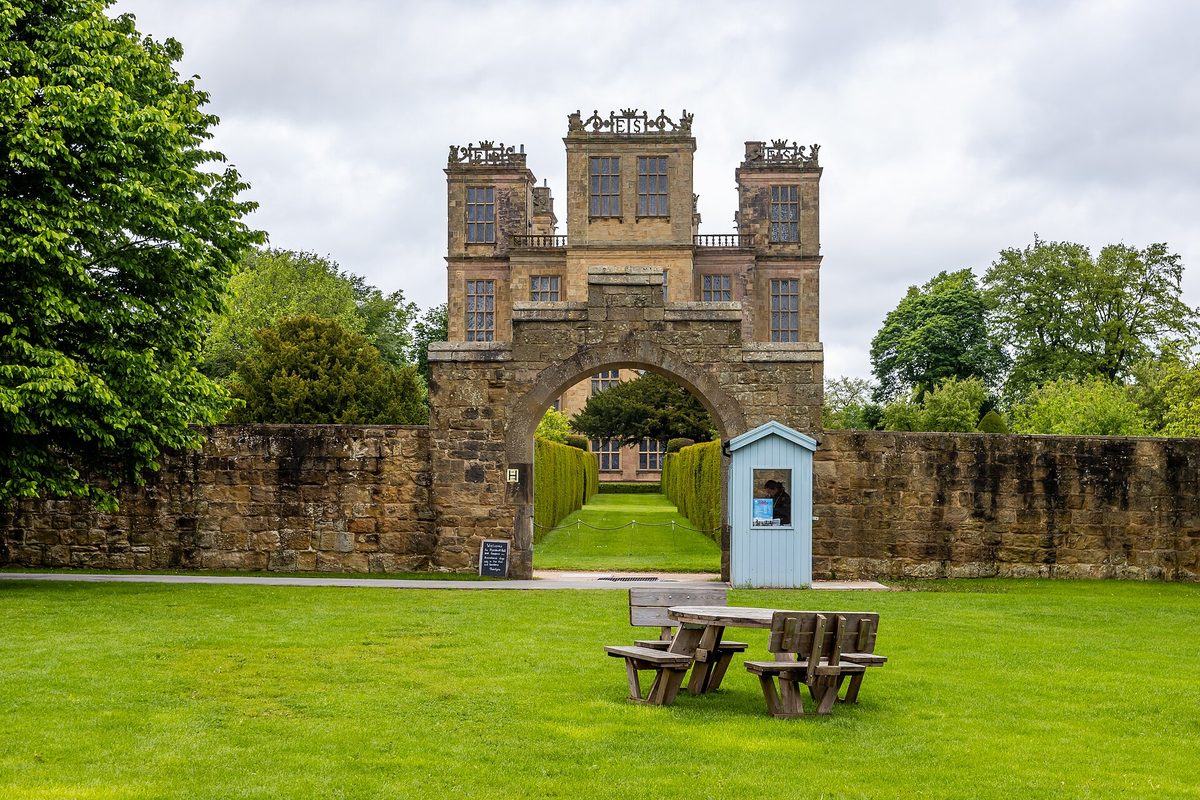
Hardwick is my favourite of the lot. It was built in the 1590s for Elizabeth Talbot, Countess of Shrewsbury — “Bess of Hardwick” — one of the richest and most formidable women of the age, who married her way up through four husbands and ended up second in wealth only to the queen. She wanted everyone to know it. Her initials, “ES,” are carved in stone along the rooftop balustrades, repeated like a logo.
The famous line is “Hardwick Hall, more glass than wall,” and it’s true: the windows grow larger as the house rises, an outrageous display of wealth at a time when glass cost a fortune. Inside, the Long Gallery runs the length of the top floor, hung with tapestries and portraits, and the house keeps the finest collection of 16th-century needlework and textiles in the world. It feels astonishingly intact — you’re seeing an Elizabethan interior more or less as it was meant to look.
Hardwick is in Derbyshire, off the M1, and it’s a National Trust property, so members get in free; a non-member adult ticket for the house, gardens and grounds is around £21 as of 2026 (nationaltrust.org.uk). Next door stand the romantic ruins of Hardwick Old Hall, looked after by English Heritage. On the pass question — whether National Trust or English Heritage membership pays off for a trip like this — I’ve laid out the maths in the English Heritage vs National Trust comparison, which is worth a read before you buy anything.
Kenilworth Castle
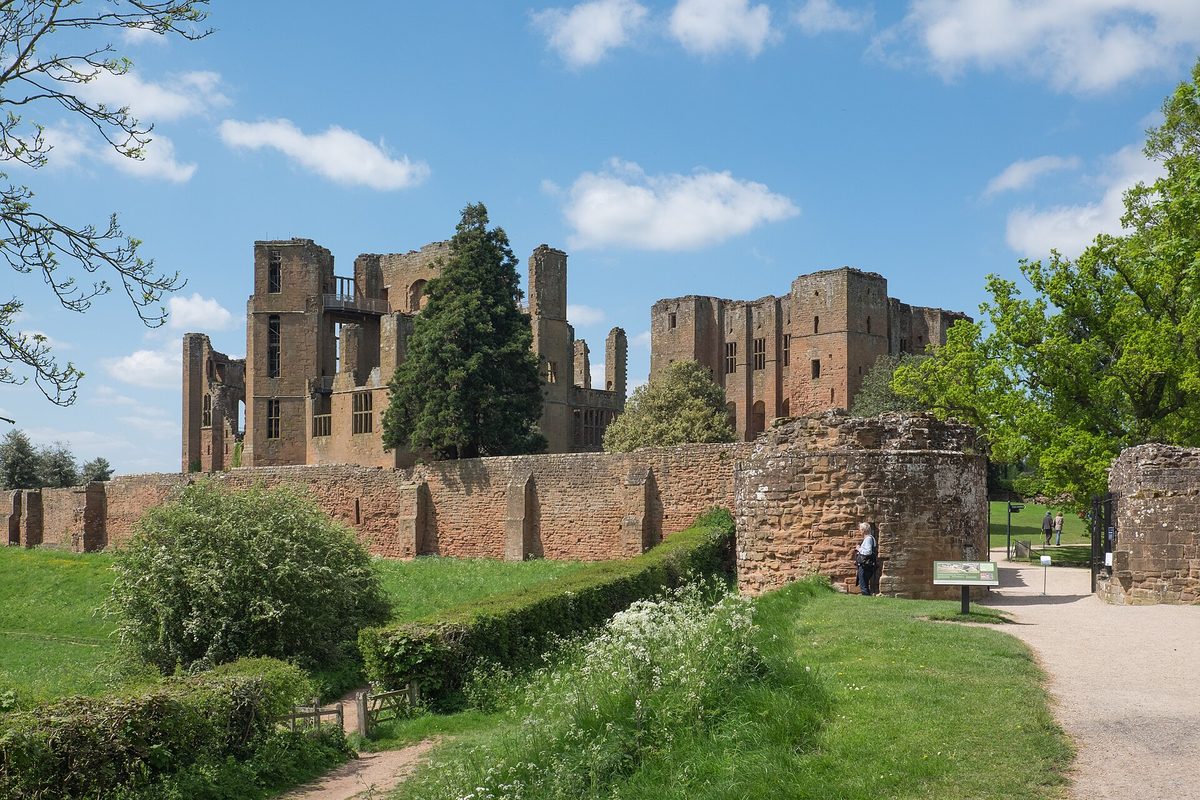
Kenilworth is where Elizabethan ambition turned into something close to a love story. Robert Dudley, Earl of Leicester, was the queen’s lifelong favourite — possibly the one man she’d have married if politics had allowed it. He spent a fortune transforming this old Warwickshire castle into a palace fit to host her, and in 1575 he threw her a 19-day visit so lavish it became legendary: fireworks, pageants, hunting, and a specially built Italianate garden.
That garden has been painstakingly recreated by English Heritage, complete with an 18-foot marble fountain and a scented aviary, based on a contemporary eyewitness letter. Standing in it, you can almost picture the queen on Dudley’s arm. The castle itself is now a dramatic red sandstone ruin you can climb through, including Dudley’s purpose-built Leicester’s Building. Adult admission is around £16-17 as of 2026 — check the current price on English Heritage (english-heritage.org.uk), and members go free.
Kenilworth pairs naturally with a Midlands run, and it’s an easy add-on to a Stratford visit (more on that below). I’d happily give it half a day.
Burghley House
Burghley, near Stamford in Lincolnshire, was built between roughly 1555 and 1587 by William Cecil, Lord Burghley — Elizabeth I’s Lord High Treasurer and the steadiest hand in her government for forty years. If Hardwick is about one woman’s swagger, Burghley is about quiet, immense power. The exterior is all Elizabethan turrets and chimneys, a skyline you don’t forget.
The interiors were grandly remodelled in later centuries, so this is partly an Elizabethan shell with a baroque heart — the showstopping painted “Heaven Room” and “Hell Staircase” came later. I’d still send any Tudor traveller here for the architecture and the sense of the man who effectively ran England for the queen. Advance adult tickets are around £18 as of 2026, a little more on the day (burghley.co.uk). The Capability Brown parkland is free to roam and lovely for a picnic.
Burghley is one of several grand houses where the Tudor story bleeds into later centuries. If your interest tilts toward the big stately piles of the Georgian and Victorian age — Chatsworth, Blenheim and the like — those live in my stately homes guide, where there’s room to do them justice.
Layer Marney Tower and Sutton House
Two smaller places round out the Tudor picture, and I have a soft spot for both. Layer Marney Tower in Essex is the tallest Tudor gatehouse in England — an eight-storey tower of glowing red brick and Italian terracotta, begun around 1520 by Henry, Lord Marney, as the grand entrance to a palace he never lived to finish. You can climb it for big views over the Essex flatlands. It’s privately owned, opens seasonally, and entry is around £8-9 as of 2026 (layermarneytower.co.uk).
Sutton House, tucked in Hackney in east London, is the surprise. Built in 1535 for one of Henry VIII’s courtiers, it’s the oldest house in the borough and a rare survival of a Tudor merchant’s home rather than a palace. The oak-panelled rooms and carved fireplaces are the draw, and at around £8 for a National Trust adult ticket it’s the cheapest Tudor day out in the capital. It keeps limited opening days, so check before you trek across town.
Tudor Towns: Stratford-upon-Avon
For half-timbered Tudor streetscape rather than a single grand building, point yourself at Stratford-upon-Avon, where William Shakespeare was born in 1564, deep in Elizabeth’s reign. Shakespeare’s Birthplace is a genuine timber-framed Tudor house on Henley Street, restored to show how a reasonably prosperous glover’s family lived. Adult tickets are around £25 online as of 2026 (shakespeare.org.uk), and a combined ticket lets you add Anne Hathaway’s thatched cottage on the edge of town for a few pounds more.
Even if you skip the paid houses, Stratford’s centre is a pleasure to wander, with crooked black-and-white frontages on nearly every street. It pairs perfectly with Kenilworth and Warwick for a Midlands Tudor day, and it’s a regular fixture on the historic towns in England circuit. From London it’s a couple of hours, which makes it one of the better day trips from London by train if you start early.
How I’d Build a Tudor Couple of Days
Here’s the shape I’d actually use, depending on how much time you’ve got.
Two days, London-based. Day one: Hampton Court in the morning (go for opening, do the kitchens and Great Hall before the crowds, then the gardens), back into town and the Tower of London late afternoon for the Yeoman Warder tour and the chapel. Day two: a Kent day trip to Hever Castle, with time for both the house and the gardens. That’s a tight, satisfying Tudor weekend with almost no driving.
Add a Midlands night. If you can spare a third day and a car or a couple of train hops, head up to Warwickshire and Derbyshire: Kenilworth Castle and Stratford-upon-Avon together make a full day, and Hardwick Hall is a stop on the way back down the M1. Burghley near Stamford is an easy fit if you’re routing through Lincolnshire.
A note on Windsor. Windsor Castle has deep Tudor connections — Henry VIII and Jane Seymour are both buried in St George’s Chapel there — and it makes a natural pairing with Hampton Court since both sit west of London. I’ve covered the logistics of getting out there in the London to Windsor day trip guide.
For working out which base makes the most sense and where to lay your head between these sites, I lean on the where to stay in England guide, and the broader England travel guide ties the whole country together if this is one thread of a longer trip.
Final Thoughts
The thing I love about chasing the Tudors around England is how physical the stories become. You read about Anne Boleyn’s fall in a hundred books, but it lands differently when you’re standing on the grass where the scaffold stood, then walk a few yards into the chapel where she lies. You can picture Henry’s appetite for spectacle, but you only really feel it standing in those smoke-blackened kitchens.
So if you take one thing from this, it’s that Tudor England travel rewards going slow and reading the room you’re in. Pick three or four sites, give them proper time, and let the human stories do the work. Start with Hampton Court, the Tower and Hever for the drama of Henry and his wives, then head north to Hardwick and Kenilworth for the swagger of Elizabeth’s courtiers. You’ll come home seeing red brick and mullioned glass everywhere.
Research and Source Notes
Before writing, I read the most widely used guides to Tudor sites, including History Hit’s Tudor and Henry VIII roundups, the Trainline’s “footsteps of Henry VIII” piece, The Tudor Travel Guide, and English Heritage’s “lesser-known places linked to Henry VIII.” The questions travellers ask most often circle around the best Tudor palace, the order and burial places of the six wives, and the difference between Tudor and medieval — which is why I built the FAQ and the at-a-glance table around exactly those questions, and went deeper on the human stories than most listicles do.
Facts and prices were verified against official sources and hedged as “around” and “as of 2026,” since admission tends to rise each spring. Hampton Court and the Tower of London: Historic Royal Palaces (hrp.org.uk), including the 2026 conservation-work and £1-ticket notes. Hever Castle: the official site (hevercastle.co.uk), for the castle-and-gardens pricing and Anne Boleyn collections. Hardwick Hall: the National Trust (nationaltrust.org.uk), for the build date, “more glass than wall,” and Bess of Hardwick. Kenilworth Castle: English Heritage (english-heritage.org.uk), for Robert Dudley, the 1575 visit and the recreated Elizabethan Garden. The Mary Rose: the Mary Rose Trust (maryrose.org) and Portsmouth Historic Dockyard. Burghley House (burghley.co.uk), Shakespeare’s Birthplace (shakespeare.org.uk), Sutton House (National Trust) and Layer Marney Tower (layermarneytower.co.uk) were checked against their own sites. Where prices weren’t fully published for 2026, I’ve said “check the official site” rather than guess — always confirm before you book.
Photo Credits
- The Tudor west front of Hampton Court Palace, the essential starting point for any Tudor England travel itinerary — Photo: Ricardalovesmonuments / CC BY-SA 4.0 via Wikimedia Commons. Source
- The conserved hull of the Mary Rose, Henry VIII’s warship, on display in Portsmouth — Photo: Simon Burchell / CC BY-SA 4.0 via Wikimedia Commons. Source
- Hardwick Hall in Derbyshire, “more glass than wall,” the grandest of the Elizabethan prodigy houses — Photo: Mike Peel / CC BY-SA 4.0 via Wikimedia Commons. Source
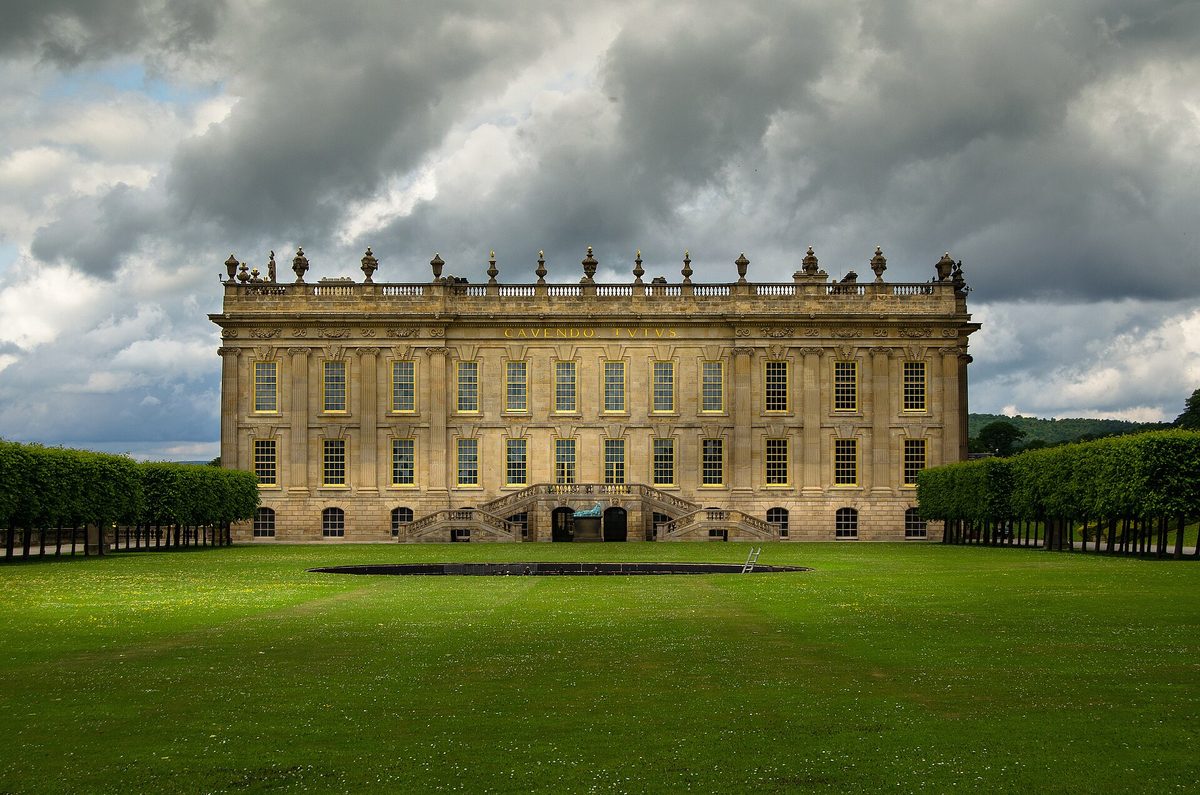
- The moated towers of Hever Castle in Kent, Anne Boleyn’s childhood home — Photo: DimiTalen (CC0) via Wikimedia Commons. Source
- The red sandstone ruins of Kenilworth Castle, where Robert Dudley courted Elizabeth I — Photo: DeFacto / CC BY-SA 4.0 via Wikimedia Commons. Source
Frequently asked questions
What is the best Tudor palace to visit in England?
Hampton Court Palace, without much hesitation. It's the most complete and atmospheric Tudor royal palace in the country, with the Great Hall, the Chapel Royal and those extraordinary working kitchens, plus the gardens and maze. It's an easy train ride from central London and gives you a full day. If you want intimacy over scale, Hever Castle runs it close.
How are Tudor sites different from medieval castles?
The Tudor period (1485-1603) comes after the Middle Ages, so its great buildings lean toward comfort and display rather than defence. You'll see vast windows, ornate brickwork, long galleries and gardens instead of arrow slits and murder holes. Many Tudor "palaces" were built to impress, not to withstand a siege — a genuinely different mood from a true fortress castle.
Where can I see Henry VIII's six wives connected sites?
The two Tower of London queens, Anne Boleyn and Catherine Howard, are buried in St Peter ad Vincula at the Tower. Hever Castle was Anne Boleyn's home. Jane Seymour lies at Windsor; Katherine Parr at Sudeley Castle in Gloucestershire; Catherine of Aragon at Peterborough Cathedral; Anne of Cleves at Westminster Abbey. Hampton Court touches several of their stories.
Do I need a National Trust or English Heritage pass for Tudor sites?
It depends on your route. Hardwick Hall and Sutton House are National Trust; Kenilworth Castle and Hardwick Old Hall are English Heritage. Hever, Hampton Court, the Tower, Burghley and the Mary Rose all sit outside both. If you're visiting several Trust or EH places, a membership can pay off — I break down the maths in my dedicated comparison guide.
How much does it cost to see Tudor sites in England?
Budget around £8 for the smaller houses like Sutton House up to roughly £37 for the Tower of London, with most palaces and prodigy houses landing in the £21 to £30 bracket as of 2026. Booking online usually shaves a few pounds off the gate price, and members of the National Trust or English Heritage get into the relevant sites free.
Can I do Tudor sites as day trips from London?
Yes, comfortably. Hampton Court and the Tower are within London itself. Hever Castle is about 40 minutes by train into Kent, Portsmouth's Mary Rose is around 90 minutes to two hours, and even Stratford-upon-Avon is doable as a long day by train. For the Midlands prodigy houses like Hardwick and Kenilworth, I'd stay a night to do them properly.