Sheet 12 · Cotswolds Travel Guide · 15 min read
Cotswolds Day Trip From London
A Cotswolds day trip from London is very doable. Compare coach tours, self-drive and train honestly, with sample plans, costs and booking tips for 2026.
 Sheet 12
Contents 9 sections
I have made the Cotswolds run from London more times than I can count — sometimes on a minibus with fourteen strangers, once in a hire car I picked up in a multi-storey near Marble Arch, and twice the slow, slightly stubborn way by train and country bus. Here is the honest version nobody selling tickets quite tells you.
A Cotswolds day trip from London is absolutely worth doing, and you can see two to four pretty villages in a single day if you plan it well. The catch is that the Cotswolds is big, the villages are spread out, and public transport is thin. The way you travel decides how much of it you actually get. Choose the method to match what you want, not the other way round.
Quick Answer: Is a Cotswolds Day Trip From London Worth It?
Yes — a Cotswolds day trip from London works, but manage your expectations. The region sits roughly two hours away by road and 90 minutes by direct train. In one day you can comfortably enjoy three or four honey-stone villages on an organised tour, or one or two if you go independently. For most first-timers, a small-group coach or minibus tour is the easiest and most rewarding option.
If you remember only one thing, make it this: the Cotswolds is not a single town you “visit.” It is a 90-mile patchwork of villages connected by narrow lanes, and the entire game is how many of those villages you can string together before you have to turn back for London. A tour solves that problem for you. Going it alone, you solve it yourself — and sometimes you don’t, and you end up seeing one village beautifully instead of four.
That is not a bad outcome, by the way. But you should choose it on purpose.
The Three Ways to Do It (At a Glance)
Here is the comparison I wish someone had handed me the first time. All figures are hedged and accurate as of 2026 — fares, fuel and tour prices move, so treat these as planning numbers, not quotes.
| Method | Cost (per adult, around) | Time each way | What you realistically see | Best for |
|---|---|---|---|---|
| Small-group coach / minibus tour | £70–£95 | ~2–2.5 hrs (driver does it) | 3–4 villages: typically Burford, Bibury, Bourton-on-the-Water, Stow-on-the-Wold | First-timers, no driving, no planning, want the classics |
| Self-drive (car hire) | £45–£80 hire + ~£25–£40 fuel/parking | ~2 hrs | 3–5 villages, your choice, your pace; plus hidden spots | Confident drivers, couples/families, flexibility lovers |
| Train + local bus / taxi | £40–£75 rail + £5–£15 local | ~90 min train + 25–40 min bus | 1–2 villages, done properly | Solo travellers, slow-travel fans, no car, no tour |
A blunt steer before we go deeper: by train alone you’ll see one village well; a tour shows you four. Choose accordingly. There is no wrong answer here — only a mismatch between what you booked and what you hoped for.
Option 1: The Organised Tour (Usually the Winner — Here’s Why)
I’ll say it plainly: for a first Cotswolds day trip from London, an organised small-group tour is usually the best choice, and I send most people this way without much hesitation.
The reason is geography. The “greatest hits” villages — Burford, Bibury, Bourton-on-the-Water, Stow-on-the-Wold — are scattered across the northern and central Cotswolds with no through public transport linking them. A car can connect them; so can a minibus with a driver who already knows the lanes, the parking, and which lay-by gives you the photo. You sit in the back, look out of the window at sheep, and someone else fights the single-track roads and the tractor that appears at the worst possible bend.
What a typical tour delivers:
- Door-to-door from central London. Most depart from a central pickup (Earl’s Court, Victoria, Gloucester Road and similar) and return there. No hire desk, no station, no parking app.
- Four villages in a day. The classic loop is Burford → Bibury → Bourton-on-the-Water → Stow-on-the-Wold, with free time at each. You’re not rushed at every stop, but you’re not lingering for hours either.
- A guide who talks. The good ones weave in history — wool money, drovers’ roads, why the stone glows gold at sunset — which turns a row of cottages into a story.
- Around 9 to 9.5 hours total. You’ll leave London mid-morning-ish and be back early evening.
The honest trade-offs. You go where the bus goes. Bibury’s Arlington Row will be busy, because every tour stops there. Small-group minibuses (often capped around 14–16 people) feel far more civilised than the big 50-seat coaches, and I’d happily pay the extra £15–£25 for one. Costs sit around £70–£95 per adult as of 2026, sometimes with lunch, sometimes not — read the inclusions before you book, because “lunch included” versus “free time for lunch” is a real difference to your wallet.
Coach vs minibus, quickly. A big-coach tour is cheaper and perfectly fine if you just want to tick off the villages. A small-group minibus reaches lanes coaches physically can’t, feels less like a school trip, and the guide can actually answer your question rather than shout it down a microphone. For the Cotswolds specifically — narrow lanes, small villages — I lean minibus every time.
If you want the dedicated deep-dive on this option, including operators and a tighter cost breakdown, see our companion guide to the London to Cotswolds day trip. And if the Cotswolds is one of several day trips you’re weighing up, the wider day trips from London roundup puts it in context.
Option 2: Self-Drive (Maximum Freedom, If You’re Up For the Lanes)
Hiring a car is my personal favourite when I’m travelling with someone and we want to wander off the tour-bus script. You go where you like, stop when a view ambushes you, and you’re not herded back to a vehicle at 1:45 sharp.
The realistic picture:
- Pick-up. Grab a car from a central London depot or, better, from Heathrow if your trip allows — central London hire desks can be pricey and the drive out through traffic is grim. Expect around £45–£80 a day for a small car as of 2026, plus fuel and parking.
- The drive. It’s roughly two hours each way via the M40 (for the northern villages around Burford and Stow) or the M4 then up (for the south around Castle Combe and Bibury). Add traffic-jam insurance to your mental clock — leave London early and you’ll dodge the worst.
- What you can fit in. With your own wheels you can realistically do four or five villages: say Burford, Bibury, Bourton-on-the-Water and Stow, with a detour to a viewpoint or a country pub. That’s a fuller day than the train allows and arguably matches a tour while letting you skip the crowds when you fancy.
The catches I’m honest about. Cotswold lanes are narrow, often single-track with passing places, and edged with dry-stone walls that do not forgive. Village parking fills up by late morning in summer — Bourton and Bibury especially. And if you’re not used to driving on the left, a day trip is a stressful place to learn. Driving in the UK has its own rhythm; our guide to car hire in England covers the licence, insurance and roundabout etiquette before you commit.
Do it if: you’re a confident driver, you value flexibility over hand-holding, and the idea of finding your own quiet lane appeals more than a guide’s commentary. Skip it if: the thought of reversing into a passing place for an oncoming Range Rover makes you sweat.
Option 3: Train + Bus (Doable, But Set Your Expectations)
This is the option people most often misjudge. Yes, you can do a Cotswolds day tour from London by public transport. No, you cannot see four villages this way in a day. Be at peace with that and it’s a lovely, low-stress trip. Fight it and you’ll spend the day at bus stops.
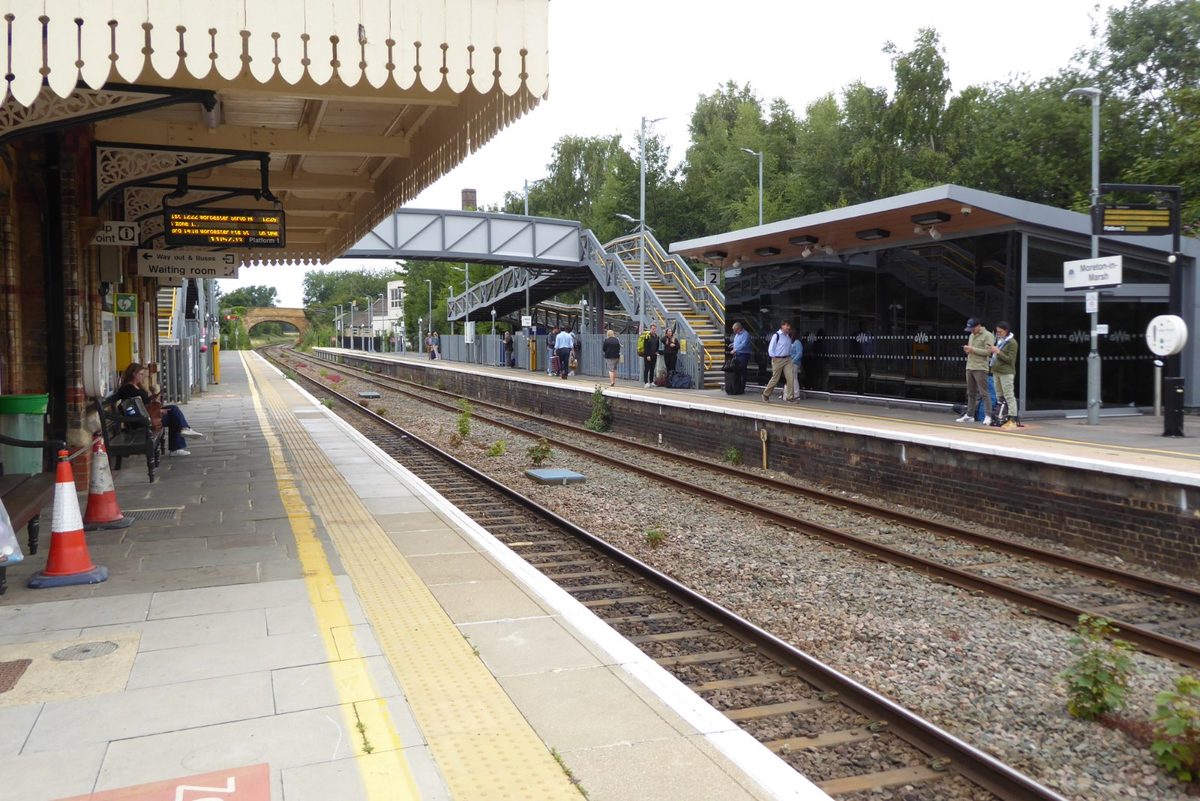
The train part is genuinely good. Direct GWR services from London Paddington reach the heart of the Cotswolds in about 90 minutes:
- Moreton-in-Marsh — around 90 minutes, the best all-round base. It’s a proper market town (Tuesday market is a treat) and, crucially, a bus hub.
- Kingham — about 1 hr 20, gateway to Chipping Norton and the Daylesford estate.
- Charlbury — about 1 hr 10, on the eastern edge near Blenheim Palace.
- Kemble — about 1 hr 5, the station for Cirencester (around four miles away) and the southern villages.
From London Marylebone, direct trains to Banbury (under an hour) reach the north-eastern fringe.
The bus part is where reality bites. The standout connection is the Pulhams 801 bus from Moreton-in-Marsh station forecourt, now timed to meet trains from London. It runs roughly hourly to Bourton-on-the-Water (about 26 minutes) via Stow-on-the-Wold, and on towards Cheltenham. That single, reliable link is what makes a car-free day genuinely work — total Paddington-to-Bourton time is around 2 to 2.5 hours.
But step off that route and buses thin out fast. Many villages have a handful of services a day, none on Sundays, and the timetables assume you live there and aren’t in a hurry. Bibury, for instance, is famously awkward to reach without a car. So the honest car-free formula is: pick one good village (or a tight pair like Stow and Bourton on the 801), do it properly with a long lunch and a walk, and head back. You’ll have a calmer, more local day than the tour crowd — you just won’t have seen four villages.
For the full mechanics of timetables, taxi-fill-ins and which combinations actually connect, we’ve written it up separately in doing the Cotswolds car-free. The booking and ticketing side is covered in our rail booking guide, and if you’re comparing rail day trips more broadly, the rail day trips piece is the natural next click.
Two Realistic Sample Day Plans
Here are two plans I’d actually run, with honest timings. I’ve deliberately not crammed them.
Sample Plan A — The Tour Day (Most Popular)
- 08:30–09:00 — Meet your minibus at the central London pickup. Coffee in hand.
- ~11:00 — Arrive Burford, the “gateway to the Cotswolds.” Walk the sloping high street down to the bridge; 45 minutes here.
- ~12:00 — Bibury. Photograph Arlington Row, peer into the trout farm, accept that you’re sharing it. 45 minutes.
- ~13:15 — Bourton-on-the-Water for lunch. Bridges over the Windrush, a pub or a riverside bench. The longest stop, around 90 minutes.
- ~15:15 — Stow-on-the-Wold. The famous yew-flanked church door, antique shops, a market square. An hour.
- ~16:30 — Begin the drive back.
- ~18:30–19:00 — Back in central London, slightly sunburnt, phone full of cottages.
Verdict: four villages, zero logistics, no driving. This is the day most people want from a Cotswolds day trip from London.
Sample Plan B — The Independent Train Day (Car-Free)
- 08:00 — Train from London Paddington to Moreton-in-Marsh (~90 min). Pre-book the fare; off-peak is cheaper.
- ~09:45 — Step off and onto the 801 bus from the station forecourt.
- ~10:15 — Stow-on-the-Wold. Coffee, the church door, the antique shops, a slow hour.
- ~11:30 — 801 onward to Bourton-on-the-Water (a short hop). Walk the river, browse, settle in for a long pub lunch.
- ~14:30 — Optional gentle walk to the nearby Slaughters (Upper and Lower Slaughter) if your legs are willing — about 20–30 minutes on foot through fields.
- ~16:00 — 801 back to Moreton-in-Marsh.
- ~16:45 — Train back to Paddington, home by early evening.
Verdict: one or two villages, properly savoured, entirely car-free. Slower, more local, and you’ll have walked rather than watched. If you tried to add Bibury or Burford to this, the buses simply won’t line up — don’t attempt it.
What’s Achievable in a Day — And What Isn’t
Let me draw the line clearly, because over-ambition is the single biggest way people ruin this trip.
Achievable in one day:
- Three to four classic villages by tour or car.
- One to two villages by train and bus, with a proper lunch and a short walk.
- A genuine feel for the landscape: the stone, the hills, the hedgerows, a country pub.
- Headline sights: Arlington Row, Bourton’s bridges, Stow’s church door, Burford’s high street.
Not achievable in one day (don’t try):
- “Seeing the Cotswolds.” It’s 90 miles across. You’re sampling, not covering it.
- The far south (Castle Combe, Lacock) and the north (Stow, Bourton) in the same day — pick one cluster.
- A relaxed pace and a long village checklist. You get one or the other.
- Bibury by public transport without significant faff. It’s a car-or-tour village, realistically.
If your heart is set on slowing down — staying for a sunset, eating somewhere properly, waking up in a village before the day-trippers arrive — then honestly, give it a night. We’ve mapped exactly that in the Cotswolds 2-day itinerary, and the Cotswolds accommodation guide will sort your base. A day trip is a wonderful taster; two days is where the region opens up.
Booking Advice (Save Yourself the Avoidable Mistakes)
A few hard-won pointers:
- Book tours ahead in summer. Small-group minibuses sell out in peak months (June–September) and around holidays. A week’s notice is comfortable; same-day is a gamble.
- Read the tour inclusions. “Lunch included” vs “free time for lunch,” entry fees, and exact pickup point all vary. The cheapest headline price isn’t always the cheapest day.
- Pre-book train tickets and travel off-peak. GWR advance fares are far cheaper than buying on the day, and off-peak returns dodge the morning premium. The England rail explainer explains the fare system.
- Reserve hire cars early and consider Heathrow pickup. Central London desks are dear and the city drive is slow. Check the car hire basics first.
- Check the bus timetable the night before. If you’re going car-free, the 801 is your friend — but confirm times, and remember Sundays are sparse. The coach travel guide and car-free England guides cover the wider network.
- Avoid Sundays for public transport. Rural bus services drop sharply or vanish. Tours and self-drive don’t care, but buses do.
For the bigger picture of moving around the country — trains, coaches, hire cars and how they stitch together — our England transport overview is the parent page worth bookmarking.
Final Thoughts
A Cotswolds day trip from London is one of the best single days you can have in England — golden-stone villages, sheep-dotted hills, a proper country pub lunch, and that quiet sense of having stepped a century backwards. The only way to get it wrong is to misjudge the format.
So here’s my closing steer. If you want the classics with zero hassle, book a small-group tour and let someone else drive the lanes. If you want freedom and you’re confident on the left, hire a car and go where the mood takes you. If you’d rather move slowly and live like a local for a few hours, take the train to Moreton-in-Marsh, ride the 801, and fall in love with one village instead of skimming four.
And if, by the end of the day, you find yourself wishing you didn’t have to leave — that’s the Cotswolds working exactly as intended. When that happens, come back and stay a night. Start with the full Cotswolds guide, and the whole region will be waiting. If you’re building a wider trip, slot it into your England itinerary alongside the other rundown of where to go, with the London travel guide anchoring your base.
Research and Source Notes
- Travel times and station detail drawn from Great Western Railway’s London-to-Cotswolds guidance and Cotswolds tourism transport pages: direct Paddington services reach Moreton-in-Marsh in around 90 minutes, Kemble around 1 hr 5, Charlbury around 1 hr 10, Kingham around 1 hr 20.
- The Pulhams 801 bus detail (Moreton-in-Marsh forecourt to Bourton-on-the-Water via Stow, roughly hourly, around 26 minutes, timed to meet London trains) reflects Pulhams Coaches and Cotswold Line Promotion Group information, current as of 2026.
- Tour structure and pricing (small-group minibus, ~9–9.5 hours, classic Burford–Bibury–Bourton–Stow loop, around £70–£95 per adult) reflect a cross-section of operators including Viator, GetYourGuide, Evan Evans, Anderson Tours, Rabbie’s and Go Cotswolds, as advertised for 2026.
- Self-drive estimates (≈2 hours each way via M40/M4, hire from around £45–£80/day plus fuel and parking) are planning figures based on typical 2026 UK car-hire and motoring costs.
- The “manage your expectations” theme — focus on one cluster, 2–4 villages, northern Cotswolds for day trips — echoes guidance from explorethecotswolds.com, cotswoldinsider.com and Rick Steves community forums.
- All prices and times are hedged as “around” and reflect best available information as of mid-2026. Fares, fuel, parking and tour prices change — confirm current figures before booking.
Photo Credits
- Arlington Row honey-stone cottages in Bibury, a classic stop on a Cotswolds day trip from London — Photo: John H Darch / CC BY-SA 2.0 via Wikimedia Commons. Source
- Low stone bridges over the River Windrush in Bourton-on-the-Water, a popular Cotswolds day trip stop — Photo: David Honeyman / CC BY-SA 2.0 via Wikimedia Commons. Source
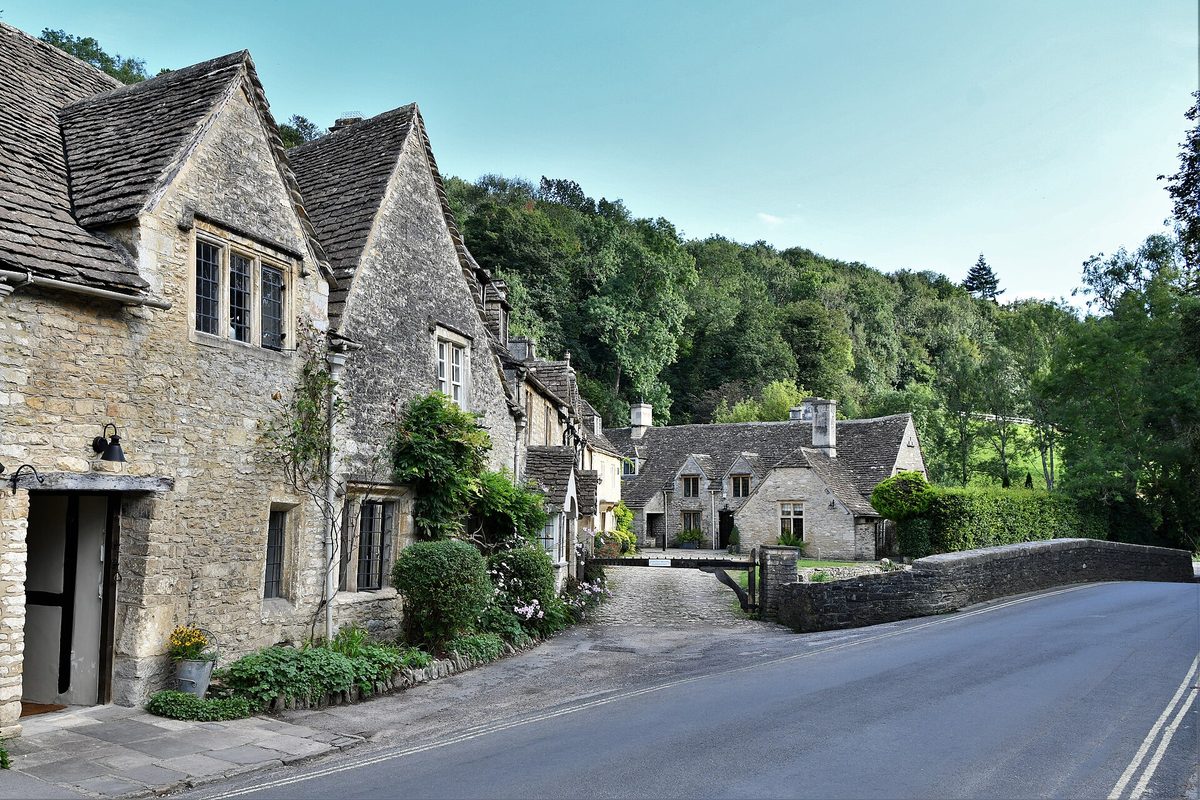
- The honey-stone main street of Castle Combe, reachable on a self-drive Cotswolds day trip from London — Photo: Michael Garlick / CC BY-SA 2.0 via Wikimedia Commons. Source
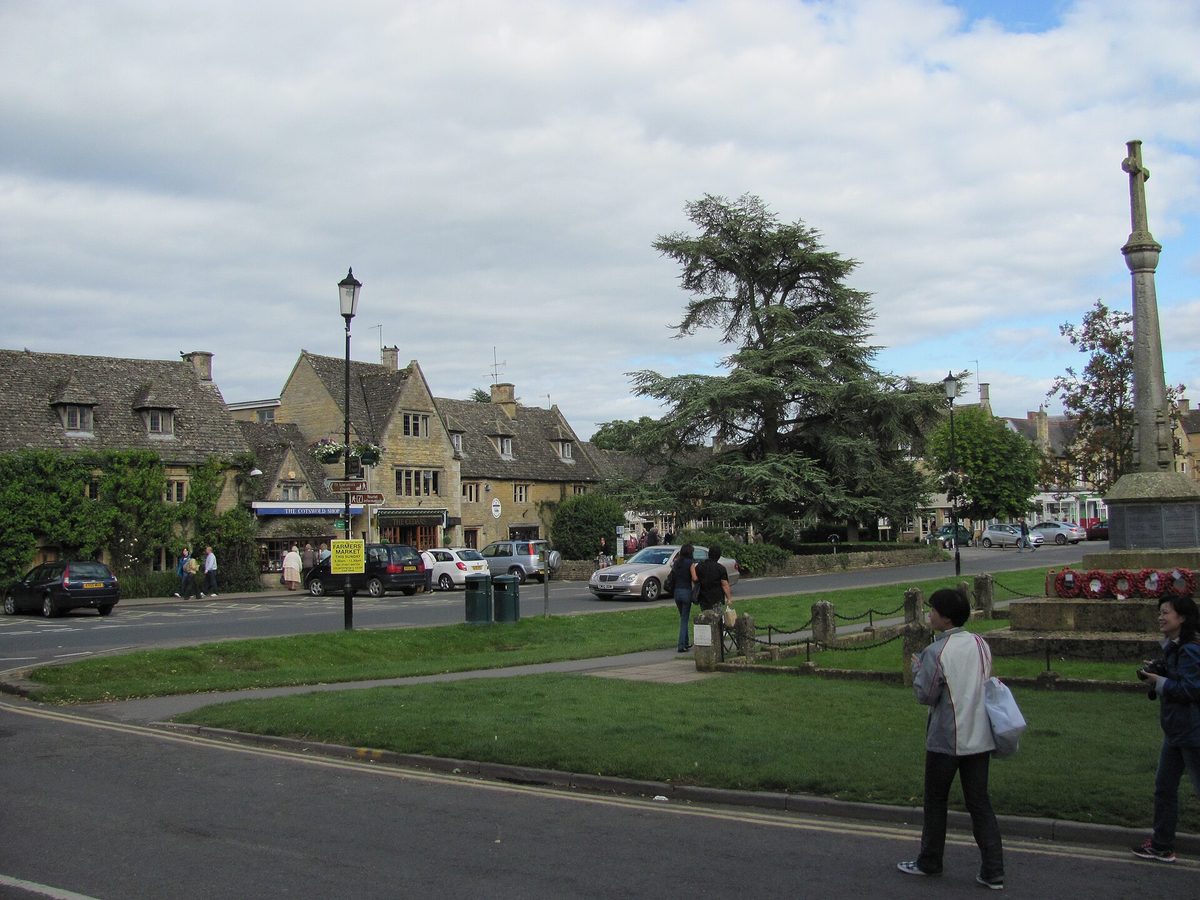
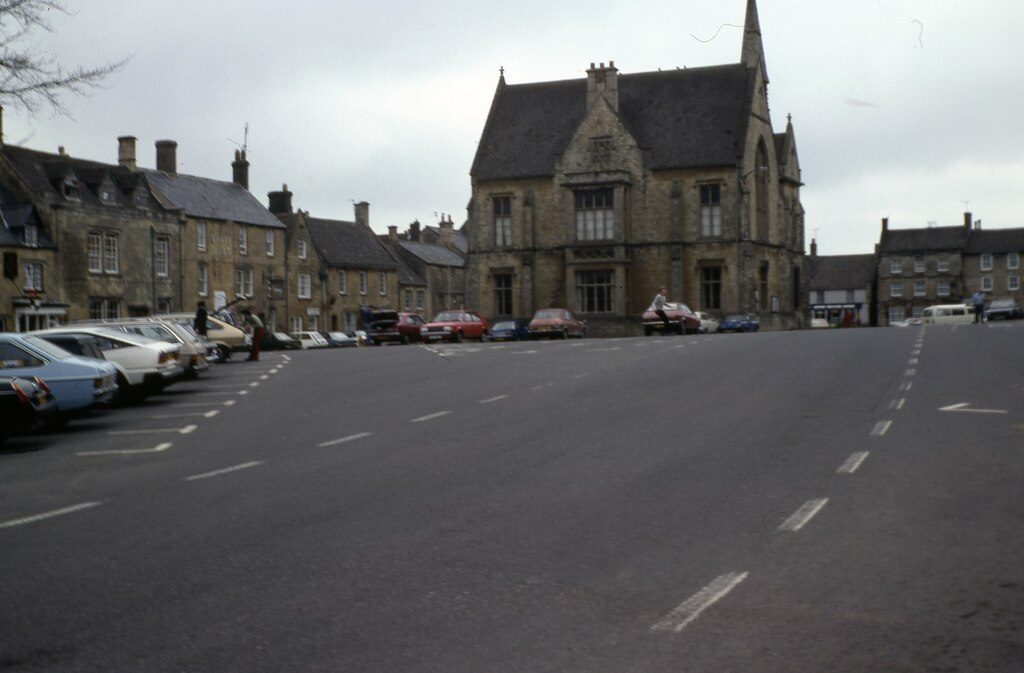
- The market square and historic buildings of Stow-on-the-Wold in the northern Cotswolds — Photo: Martin Richard Phelan / CC BY-SA 2.0 via Wikimedia Commons. Source
Frequently asked questions
How long is a Cotswolds day trip from London?
Plan for a full day of around 9 to 11 hours door to door. Travel is roughly two hours each way by road or about 90 minutes by direct train, plus a local bus. Organised tours typically run 9 to 9.5 hours total, leaving mid-morning and returning early evening. Build in buffer time for traffic or missed bus connections.
Can you visit the Cotswolds from London in one day?
Yes, easily. The Cotswolds sits about two hours by road and 90 minutes by direct train from London, so a day trip is very doable. Just don’t try to see everything — aim for three to four villages on a tour or by car, or one to two if you travel by train and bus. Pick one cluster and enjoy it properly rather than rushing.
Is it better to take a tour or do a Cotswolds day trip independently?
For most first-timers, a small-group tour is better. It connects four scattered villages with no driving or planning, which public transport simply can’t match in a day. Self-drive suits confident drivers who want flexibility. Train and bus suits independent travellers happy to see one or two villages slowly. Match the method to your priorities.
What’s the best way to get from London to the Cotswolds without a car?
Take a direct GWR train from London Paddington to Moreton-in-Marsh (around 90 minutes), then the hourly Pulhams 801 bus to Stow-on-the-Wold and Bourton-on-the-Water. That single reliable connection makes a car-free day work. Other villages, like Bibury, are awkward without a car, so keep your plan tight. See our car-free Cotswolds guide.
Which Cotswolds villages can you see in a day from London?
On a tour or by car, the classic four are Burford, Bibury, Bourton-on-the-Water and Stow-on-the-Wold — all in the northern and central Cotswolds. By public transport, focus on Stow and Bourton via the 801 bus from Moreton-in-Marsh. For a fuller rundown of which villages are worth your limited time, see the Cotswolds villages guide.
How much does a Cotswolds day trip from London cost?
As of 2026, a small-group minibus tour runs around £70 to £95 per adult, sometimes including lunch. Self-drive costs roughly £45 to £80 for car hire plus £25 to £40 in fuel and parking. By train, expect around £40 to £75 for rail fares plus £5 to £15 for local buses. Booking ahead and travelling off-peak keeps costs down.