Sheet 73 · Bath, Stonehenge, Oxford and Cambridge · 17 min read
Cambridge Travel Guide
A first-person Cambridge travel guide: King's College Chapel, punting the Cam, the Fitzwilliam, the Backs, plus how to spend a day or two and get there.
 Sheet 73
Contents 8 sections
The first time I drifted under the Mathematical Bridge with a pole in my hands and absolutely no idea what I was doing, a swan glared at me like I’d parked badly. That, more than any lecture hall, is my Cambridge: green water, honey-coloured stone, a city you can cross on foot in twenty minutes that somehow holds eight centuries of brainpower. This Cambridge travel guide is the one I wish someone had handed me — the real sights, the rough costs, and how to actually spend your time.
If you only read one paragraph: Cambridge is a compact, walkable university city about 50 minutes north of London by train, best known for King’s College Chapel, punting on the River Cam, and a clutch of world-class free museums. One full day covers the headline sights; two lets you slow down and breathe it in.
Quick Answer: How to Use This Cambridge Travel Guide
This Cambridge travel guide assumes you’re arriving with a day or two and want the essentials without the fluff. Start at King’s College Chapel, punt the River Cam past the Backs, give the Fitzwilliam Museum a couple of hours, climb Great St Mary’s tower for the view, and wander the colleges. Below you’ll find an at-a-glance table, then everything in detail.
A quick note on scope. I’m covering Cambridge the city — what to see, where to walk, how to get around. If you’re weighing Cambridge against its rival, I send you to my Oxford vs Cambridge comparison. And if you want the nitty-gritty of which colleges you can actually enter, opening times, and guided options, that lives in the dedicated Oxford and Cambridge college tours guide. Here, I keep it to the sightseeing.
Cambridge at a Glance
| Detail | What to know (as of 2026) |
|---|---|
| Getting there | Direct trains from London King’s Cross, around 50 min fastest, roughly 1 hr 15 typical |
| Time needed | 1 day for highlights; 2 days to relax |
| Signature sight | King’s College Chapel, entry around £16–17 |
| Best thing to do | Punting on the River Cam, around £24–£35/hour self-hire |
| Best free museum | Fitzwilliam Museum, free admission |
| Best view | Great St Mary’s tower, 123 steps, around £6 |
| Getting around | Walk everything; cycling is excellent; Park & Ride if driving |
| Best months | May to September for punting and long evenings |
The Colleges and King’s College Chapel
Let me clear up the most common confusion first: “Cambridge University” is not one campus. It’s a federation of 31 colleges scattered through the city, founded from 1209 onward, each with its own gatehouse, chapel, dining hall and fiercely guarded lawns. You don’t tour “the university.” You wander between colleges, and the city itself is the campus. Once that clicks, Cambridge makes sense — you’re not looking for a single entrance, you’re drifting through a medieval town where the grand buildings just happen to be places people still study and sleep.
A word on those lawns, because it trips up every visitor: the immaculate green quadrangles (“courts,” in Cambridge-speak) are usually off-limits to all but fellows of the college. You walk the paths around them, not across them. Don’t be the tourist who strides onto the grass to get a photo and gets a porter in a bowler hat marching over. The porters, by the way, are the gatekeepers of college life — part security, part concierge, entirely unimpressed by you — and a polite question at the lodge will usually tell you whether visitors are welcome that day.
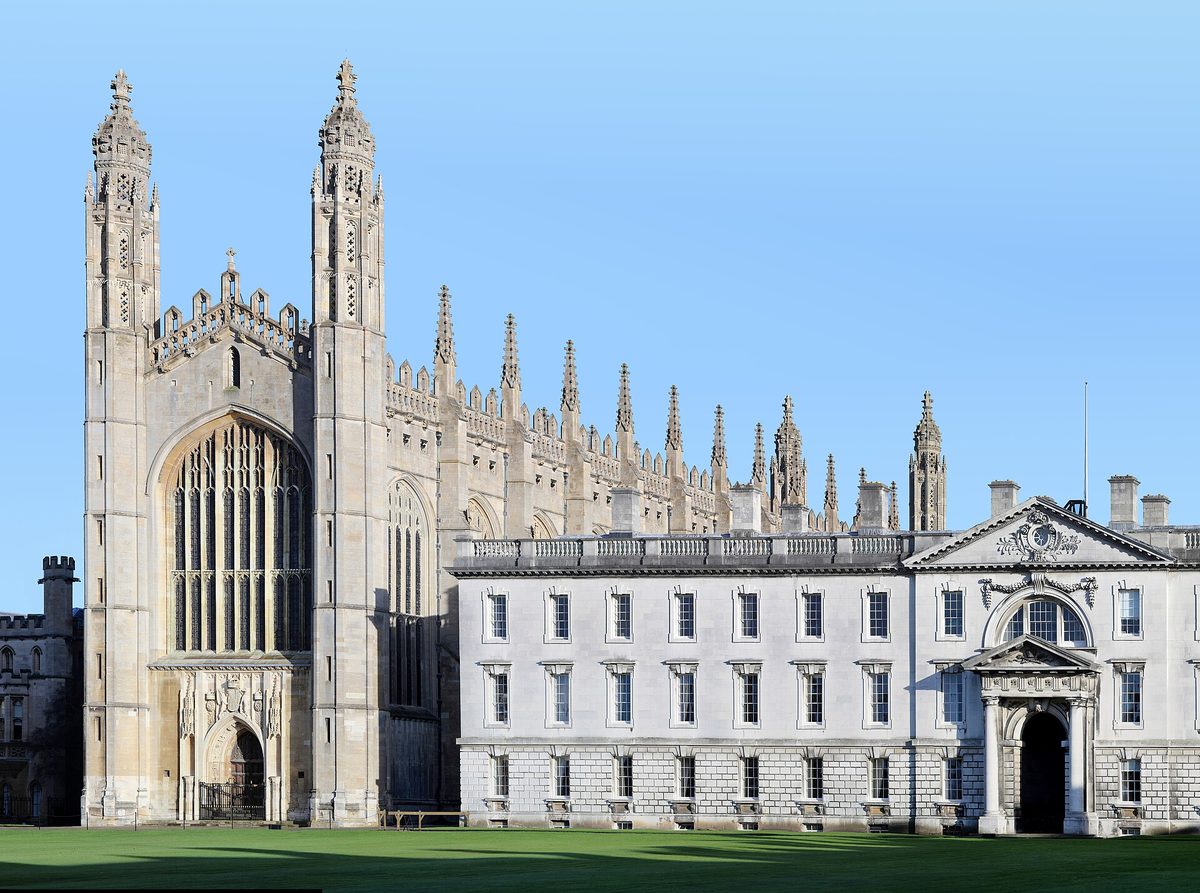
The one you cannot skip is King’s College Chapel. Photos undersell it. You walk in and your neck just tilts back — the fan-vaulted ceiling is the largest of its kind anywhere, an impossible stone canopy that’s been hanging there since the early 1500s. Behind the altar there’s a Rubens, The Adoration of the Magi. The stained glass is original Tudor work that somehow survived the Reformation and a civil war. I’ve been three times and I still get the same involuntary “oh.”
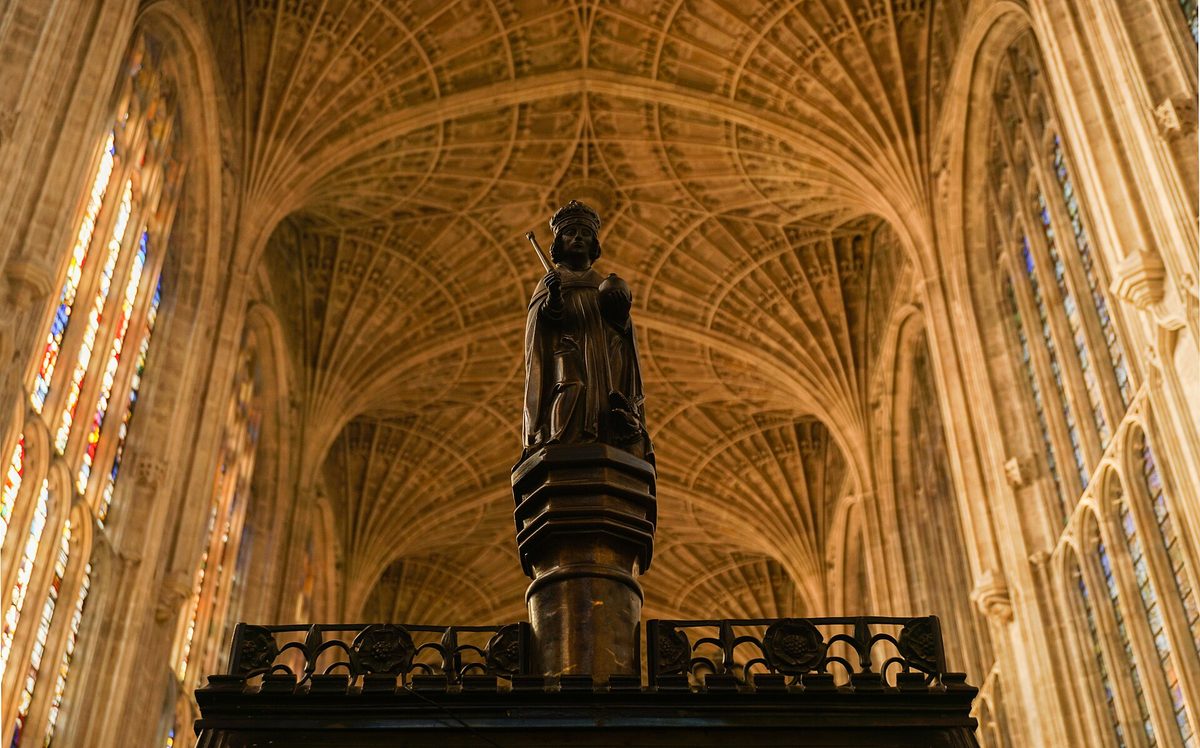
As of 2026, chapel entry runs around £16–17 for adults, with discounts for students and free entry for younger children visiting with family — always worth checking kings.cam.ac.uk before you go, because hours flex around services, exams and concerts. Typical opening is roughly 9:30am to mid-afternoon on weekdays, more limited at weekends. Buy ahead online; numbers are capped and walk-up tickets aren’t guaranteed.
Here’s my favourite trick, and it costs nothing: come to Evensong. The world-famous King’s College Choir sings most days during term, and attending the service is free. You sit in those candlelit stalls while boy trebles fill the vault with sound, and honestly it’s one of the great free experiences in England. Term dates matter, so confirm before relying on it. Turn up fifteen or twenty minutes early, because the chapel fills, and remember it’s an act of worship, not a concert — you sit quietly, you don’t applaud, and you’ll leave a little stunned anyway. If you’re in Cambridge in December, the Festival of Nine Lessons and Carols on Christmas Eve is the broadcast version the whole world hears, and getting in means queueing for hours in the cold — beautiful, but a commitment.
One thing the chapel does that surprises people: it tells a story in stone and glass about the men who built it. The Tudor rose, the portcullis and the initials of Henry VII and Henry VIII are carved everywhere, a deliberate bit of royal branding from the dynasty that finished the place after the Wars of the Roses interrupted construction. Look up at the great organ screen too — it was Henry VIII’s gift, and the carved initials “HA” for Henry and Anne Boleyn are still up there, never removed after her execution. Cambridge is full of these quiet historical footnotes if you slow down enough to spot them.
Beyond King’s, the colleges I’d nudge you toward are Trinity (largest, grandest court, Newton’s old haunt), St John’s (for the Bridge of Sighs, best seen from Kitchen Bridge), Queens’ (home of the Mathematical Bridge — more on that shortly), and Clare with its pretty riverside garden. Whether each is open to visitors, and what entry costs, shifts constantly — I won’t pretend otherwise here. For the live mechanics of getting inside, see the college tours guide.
The Mathematical Bridge
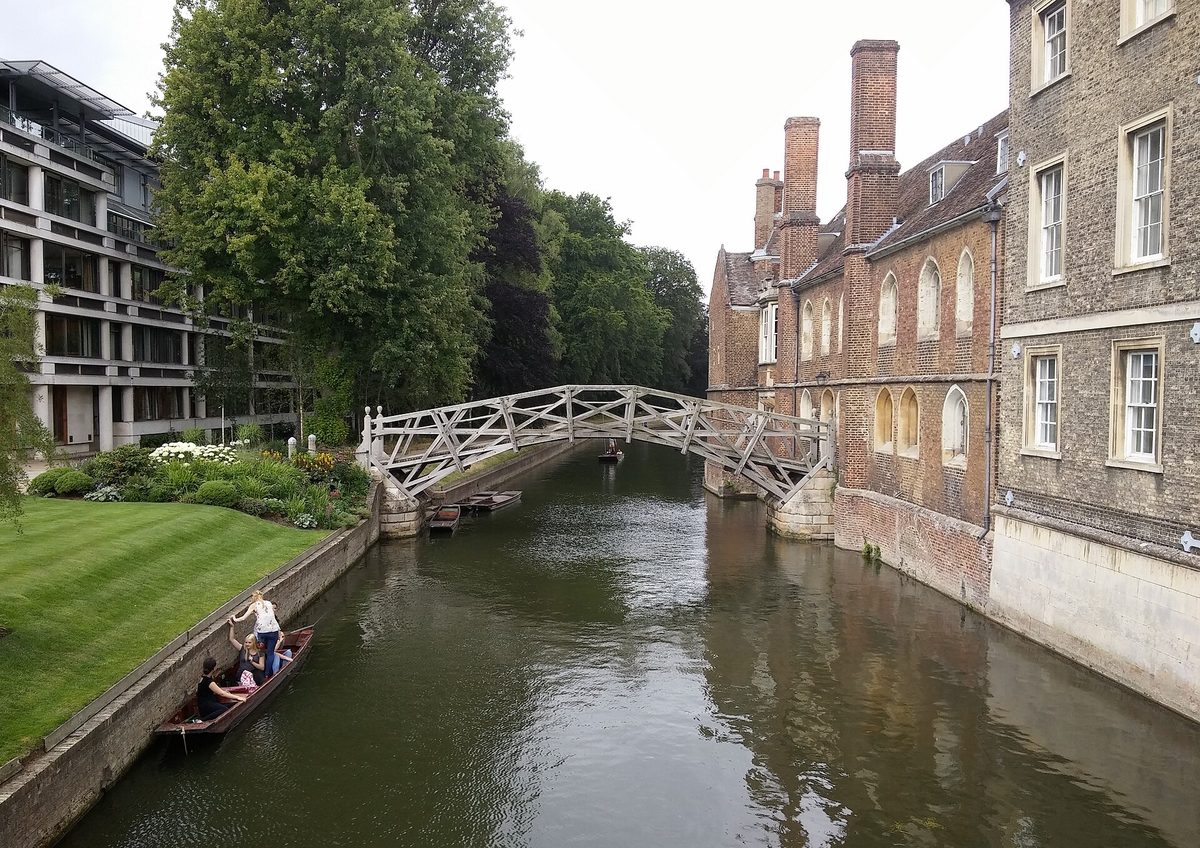
The Mathematical Bridge at Queens’ College is the photo everyone wants — a wooden footbridge over the Cam that looks curved but is built entirely from straight timbers, an elegant bit of 1749 engineering. There’s a persistent myth that Isaac Newton designed it and that students once took it apart and couldn’t reassemble it. Both are lovely stories and both are nonsense; Newton was long dead by 1749. You can see it for free from the public Silver Street bridge, which is where most people snap it, or up close if you go into Queens’. I’d grab the free view and save your entry money for King’s.
The River Cam and Punting in Cambridge
If you do one thing here, make it this. Punting in Cambridge is the city’s signature ritual, and gliding past the backs of the colleges from water level is a completely different experience than walking. You see the bridges as they were meant to be seen, the willows trailing into the green, undergraduates sprawled on lawns you’re not allowed to touch.
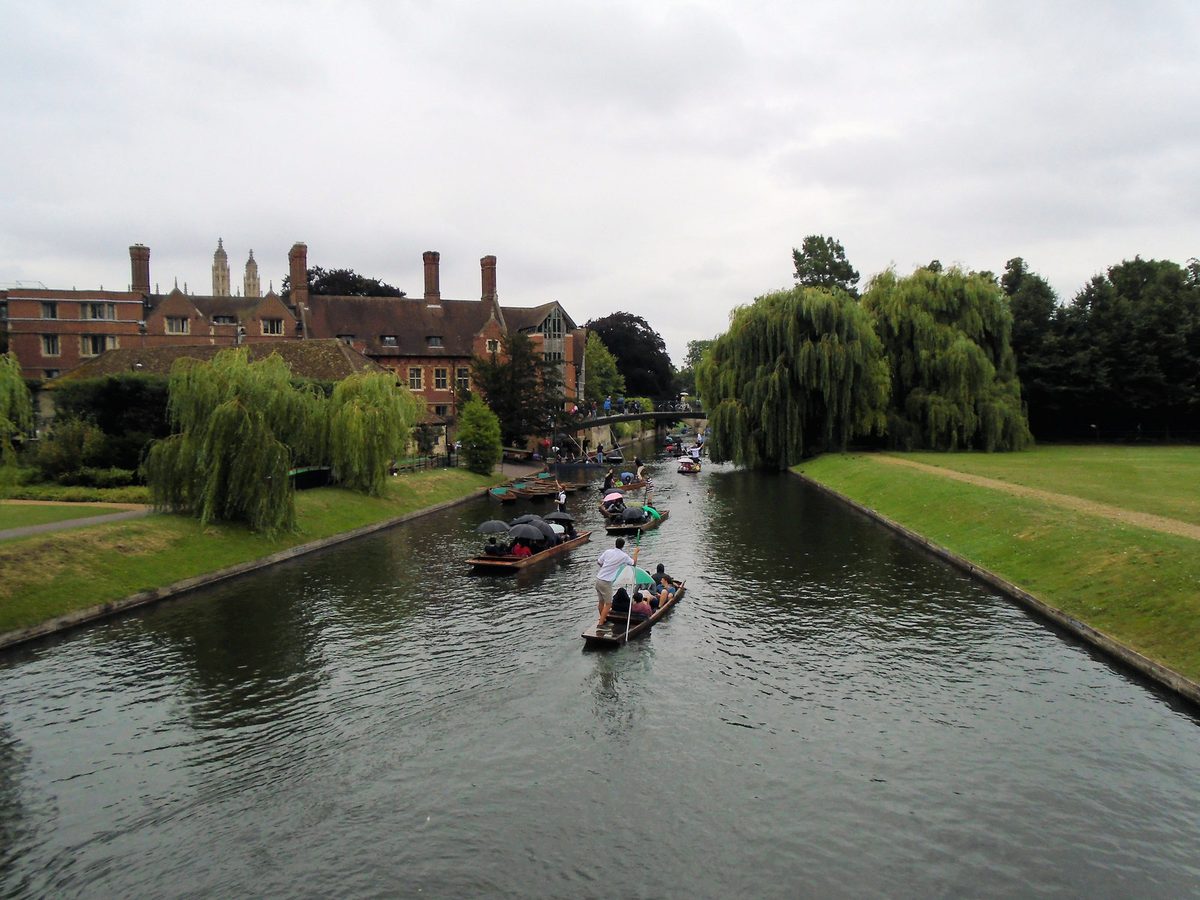
You’ve got two ways to do it. Chauffeured means a guide does the work and narrates — a typical tour runs around 45–50 minutes and costs roughly £20–£30 per person as of 2026, often cheaper if you book online and grab an early slot before the river fills up. Self-hire means you take the pole yourself: expect somewhere around £24–£35 per hour for the whole boat (which seats four to six), usually with a refundable deposit of £60–£80. Split between a group, self-hire is the better value and a lot more fun, provided you don’t mind looking like a clown for the first ten minutes. Everyone does.
A few hard-won tips. The main launch points are Mill Lane / Mill Pond (the southern, prettier college stretch) and Quayside near Magdalene Bridge (the northern stretch up toward the Backs). Scudamore’s, founded back in 1910, is the big established operator, but there are several. The tout-heavy spots near the bridges will quote you on-the-spot prices that are noticeably higher than booking ahead — booking online can save a serious chunk, sometimes up to 40 percent off the walk-up rate. Mornings are calmest; mid-afternoon on a sunny Saturday is bumper-cars-on-water.
If you’ve never punted, a thirty-second primer so you don’t embarrass yourself as thoroughly as I did. A punt is a flat-bottomed boat you propel by pushing a long aluminium pole against the riverbed — you stand at the back (in Cambridge; Oxford does it from the front, which Cambridge people find hilarious), drop the pole, push, then trail it behind like a rudder to steer. The river’s only a few feet deep. The two genuine hazards are getting the pole stuck in the mud and either letting go or being yanked off the back, and ramming other boats under the low bridges, where everyone bottlenecks. Go slow, keep one hand on the pole, and laugh it off. Nobody on that river is judging you, because they were all hopeless once too.
A safety note worth saying plainly: it is a river, the water’s cold, and people do occasionally go in. Wear shoes you don’t mind getting wet, keep phones zipped away, and don’t punt after a long lunch in the pub — sober steering is much easier steering. Life jackets aren’t standard for adults on self-hire, so a moment of sense goes a long way, especially with children aboard.
If you self-hire and you’re feeling ambitious, you can punt the longer route upriver to the village of Grantchester — about three miles, a proper afternoon’s effort, ending at a meadow and the famous Orchard Tea Garden where Rupert Brooke and friends used to lounge. It’s a gorgeous, sleepy thing to do on a warm day. Don’t attempt it if it’s your first time with a pole and the river’s busy; save it for when you’ve got the hang of steering.
The Backs
The Backs is the strip of green along the river behind King’s, Clare, Trinity and St John’s, and it gives you the postcard view of Cambridge with zero admission fee. Stroll it on foot — the path runs roughly between Silver Street and Magdalene Bridge — and you’ll get those framed shots of King’s Chapel across the lawns. In spring it’s carpeted with crocuses and daffodils. Bring a rain jacket whatever the forecast; the path turns to mud fast and there’s little shelter between colleges. This, plus the punt, is the two-part heart of Cambridge.
The Museums
Here’s the part budget travellers love: Cambridge’s best museums are free, funded as part of the university.
The Fitzwilliam Museum is the headliner and genuinely one of the finest small museums in Britain — people compare it to a mini British Museum, which undersells how beautiful the building itself is. You get Egyptian coffins, Greek and Roman antiquities, illuminated manuscripts, and a painting collection that runs from Titian and Rubens to Monet, Renoir and Cézanne, all under one grand columned roof. General admission is free; special exhibitions sometimes carry a separate ticket. As of 2026 it’s typically open 10am–5pm Tuesday to Saturday and 12–5pm Sundays, closed Mondays, with last entry around 4:40pm. Check fitzmuseum.cam.ac.uk for current hours. Give it at least 90 minutes; I always lose two hours and skip lunch.
If you’ve got more time or a curious kid, the university runs a whole family of free museums, and they’re criminally under-visited because everyone funnels into the Fitzwilliam. The Sedgwick Museum of Earth Sciences is wall-to-wall fossils and dinosaurs, including a giant ground sloth and bits of the very rocks Darwin collected. The Polar Museum at the Scott Polar Research Institute tells the story of Scott’s doomed Antarctic expedition through the explorers’ own letters and gear, and it will genuinely move you — the last messages home are hard to read dry-eyed. The Whipple Museum is full of beautiful old scientific instruments, globes and early calculating machines. The Museum of Archaeology and Anthropology and the Zoology Museum (with a full whale skeleton hanging over the entrance) round it out. And the Cambridge University Botanic Garden — over 8,000 plant species across 40 acres, with glasshouses and a lovely lake — is a small paid entry but a calm, green escape about ten minutes’ walk south of the centre, perfect when you’ve overdosed on stone and stained glass. For a single museum stop, though, make it the Fitzwilliam; it’s the one that justifies the word “world-class.”
Walking, Climbing and the Market
Cambridge rewards aimless wandering more than almost any English city, because the whole historic core is tiny and walkable. But a few specific stops anchor a good ramble.
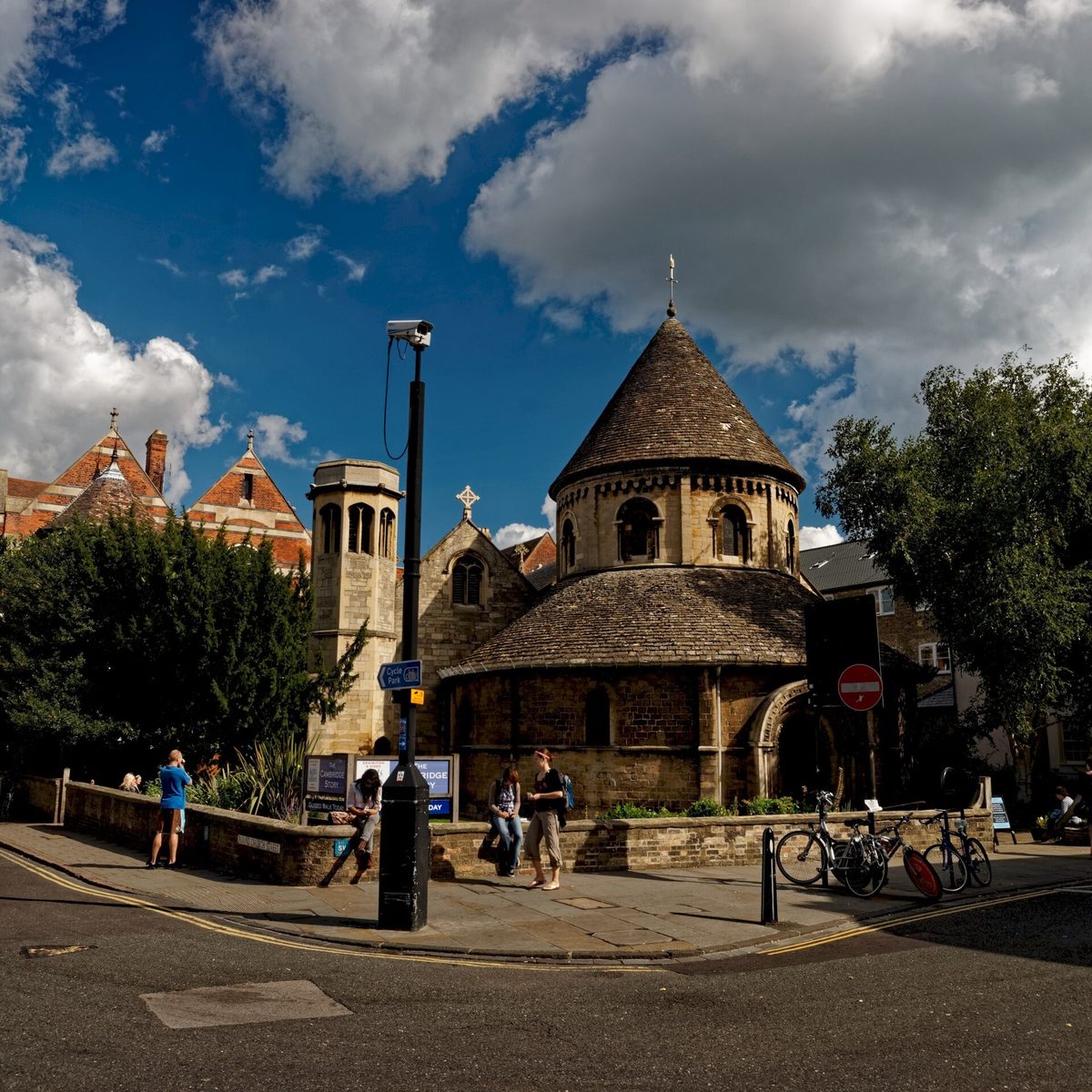
The Round Church (officially the Church of the Holy Sepulchre) on Bridge Street is one of only four medieval round churches still standing in England, founded around 1114–1131 and inspired by the Holy Sepulchre in Jerusalem. It’s a strange, squat, Norman thing among all the Gothic, and there’s a small entry charge of a few pounds. Quick visit, but worth the detour for how odd and ancient it feels.
For the best view in the city, climb the tower at Great St Mary’s, the university church right on the market square. It’s 123 steps up a tight spiral — you go in timed slots — and at the top you get a full panorama: King’s Chapel, the rooftops, the colleges laid out, and on a clear day apparently as far as Ely Cathedral on the horizon. Costs around £6 for adults as of 2026. The church below is free. Do this and you’ll finally understand the geography of the place.
Right at the foot of the tower is the Market Square, where stalls have traded since the Middle Ages. There’s a general market most days plus food stalls (cheese, pies, street food — great for a cheap lunch), and the layout still follows medieval lines. It’s the genuine beating centre of the city, not a tourist trap. Grab lunch here, then for browsing wander Green Street between Trinity and Sidney Sussex, or the independent bookshops Cambridge is rightly famous for.
When you’re ready to eat properly, the lanes around the colleges hide good pubs — The Eagle on Bene’t Street is the famous one (Crick and Watson announced the structure of DNA here, and there’s RAF graffiti on the ceiling), touristy but worth a pint for the history. For something quieter, head a few minutes out to Mill Road, Cambridge’s brilliantly multicultural food street, for everything from Bangladeshi to Italian at non-tourist prices.
Practicalities and Planning
Getting there. The easy answer is the train. Direct services run from London King’s Cross (and St Pancras / Liverpool Street too) with the fastest around 50 minutes and typical journeys closer to 1 hour 15. Great Northern and Thameslink run frequent trains. One thing the guidebooks bury: Cambridge station is not in the centre — it’s about a 20–25 minute walk, or a short bus, taxi or Uber, into the colleges. Don’t expect to step off the platform into the cobbles. I cover routes and ticket tips in the London to Cambridge day trip guide, and for fares and railcards generally, the England train travel guide is your friend. Cambridge is also one of the standout entries in my best day trips from London by train roundup.
Driving and parking. Don’t drive into the centre if you can avoid it — the medieval streets weren’t built for cars and parking is painful. Use one of the five Park & Ride sites on the city’s edge: parking is generally free, you pay a small bus fare, and you’re in the centre in around 12–15 minutes. Much less stressful.
Getting around once there. Walk everything. Seriously, the historic core is so compact that you’ll rarely need anything else. If you want to feel local, hire a bike — Cambridge is flat and laced with cycle paths, and it’s how half the city actually moves. Taxis and Uber exist for the station run or a tired evening.
When to go. May to September is prime, when the punts are out, the gardens are blooming and the evenings stretch long. June can be busy around graduation and exam season (and some college access tightens then). Spring on the Backs is magic for flowers. Winter is quiet and atmospheric, with that lovely low light on the stone, but punting loses some appeal in the cold.
One day vs two. You can absolutely do Cambridge in a day if you’re disciplined — chapel, punt, Fitzwilliam, tower, a wander, done. Here’s the rhythm I’d use: King’s College Chapel first thing while it’s quiet and the light’s soft, punt the Cam late morning before the river clogs up, lunch at the market, the Fitzwilliam in the early afternoon, then climb Great St Mary’s for golden hour and end with a pint at The Eagle. That’s a full, satisfying day and you’ll sleep well on the train home.
But Cambridge truly rewards an overnight, and it’s a different city after the day-trippers leave on the last fast train. With two days you can slow right down: explore more colleges in the morning, punt out to Grantchester for a long lunch in the meadow, wander the Botanic Garden, linger over Evensong as the light fades, and eat properly on Mill Road in the evening. Staying over also means you get the colleges at their most photogenic — early morning and late evening, when the courts empty and the stone glows. If you’re staying the night, my where to stay in England guide has area tips; in Cambridge itself, booking somewhere within the historic core or a short walk of it is well worth a small premium, because you’ll be on foot the whole time.
If you’re touring more broadly, Cambridge pairs naturally with other classic stops — it’s a key stop on the Bath, Stonehenge, Oxford and Cambridge circuit, and it sits comfortably among England’s best cities to visit and its loveliest historic towns. If you’re choosing just one university city, again, my Oxford vs Cambridge piece will settle it — and the standalone Oxford travel guide covers the other side if you decide to do both.
Final Thoughts
What I love about Cambridge is that it doesn’t perform for you. Oxford can feel like a film set; Cambridge feels like a working town that happens to be staggeringly beautiful — students cycling to lectures, the market trading like it has for 800 years, the Cam slipping green and quiet behind the colleges. Get the pole in your hands at least once, even badly. Sit in King’s at Evensong and let the choir do its thing. Climb Great St Mary’s at the end of the day when the stone goes gold. That’s the Cambridge that stays with you, long after you’ve stopped laughing about the swan.
Research and Source Notes
Prices, hours and journey times above are approximate and hedged as of 2026 — always confirm with official sources before you travel, as they change with seasons, services and exam terms. Key references: King’s College Cambridge (kings.cam.ac.uk) for chapel hours and entry; the Fitzwilliam Museum (fitzmuseum.cam.ac.uk) for opening times and free admission; and Visit Cambridge (visitcambridge.org) for general things to do, punting operators and the Backs. Punting prices reflect a range of established 2026 operator listings; tower climb and Round Church figures reflect recent published visitor pricing. Train times reflect Great Northern and Thameslink schedules from Lond
Photo Credits
- King’s College Chapel reflected in the River Cam, the signature image of any Cambridge travel guide — Photo: Dmitry Tonkonog / CC BY-SA 3.0 via Wikimedia Commons. Source
- The fan-vaulted ceiling of King’s College Chapel, the centrepiece of any Cambridge travel guide — Photo: Sumit Surai / CC BY-SA 4.0 via Wikimedia Commons. Source
- A traditional punt gliding past the colleges on the River Cam in Cambridge — Photo: Paul Gillett / CC BY-SA 2.0 via Wikimedia Commons. Source
- The Mathematical Bridge over the River Cam at Queens’ College, Cambridge — Photo: TheKaphox (CC0) via Wikimedia Commons. Source
- The medieval Round Church on Bridge Street, a quiet highlight in this Cambridge travel guide — Photo: User:Txllxt TxllxT / CC BY-SA 4.0 via Wikimedia Commons. Source
Frequently asked questions
Is Cambridge worth visiting?
Absolutely yes. It's a compact, gorgeous, history-soaked university city you can walk end to end in twenty minutes, with one of the most beautiful chapels in the world, free world-class museums, and punting you won't find anywhere else in England. It's also one of the easiest day trips from London. First-timers to England rarely regret adding it.
How many days do you need in Cambridge?
One full day covers the headline sights — chapel, punt, the Fitzwilliam, the tower, a wander — if you keep moving. Two days is the sweet spot: it lets you slow down, see more colleges, punt out to Grantchester, catch Evensong and eat well without rushing. Three days suits anyone using Cambridge as a base for the wider region.
How much does punting in Cambridge cost?
As of 2026, chauffeured tours run roughly £20–£30 per person for around 45–50 minutes, often cheaper booked online in advance. Self-hire is about £24–£35 per hour for the whole boat (seats four to six) plus a refundable deposit of £60–£80. Split among a group, self-hire is the better value — and far more entertaining.
Can you visit King's College Chapel?
Yes. King's College Chapel is open to visitors most weekdays, roughly 9:30am to mid-afternoon, with more limited weekend hours, and entry costs around £16–17 as of 2026. Hours shift around services and events, so check kings.cam.ac.uk first. The cheapest way in is to attend Evensong, which is free and sung by the famous choir during term.
Is the Fitzwilliam Museum free?
Yes, general admission to the Fitzwilliam Museum is free, like most University of Cambridge museums. Only some temporary special exhibitions charge separately. It's typically open 10am–5pm Tuesday to Saturday and 12–5pm Sundays, closed Mondays. Allow at least 90 minutes for the antiquities and the painting galleries — it punches well above its size.
What is the best way to get from London to Cambridge?
The train, hands down. Direct services from London King's Cross take around 50 minutes at fastest, closer to 1 hour 15 typically, and run frequently throughout the day. Just remember Cambridge station sits about a 20–25 minute walk from the colleges, so factor in a bus, taxi or stroll at the other end.